
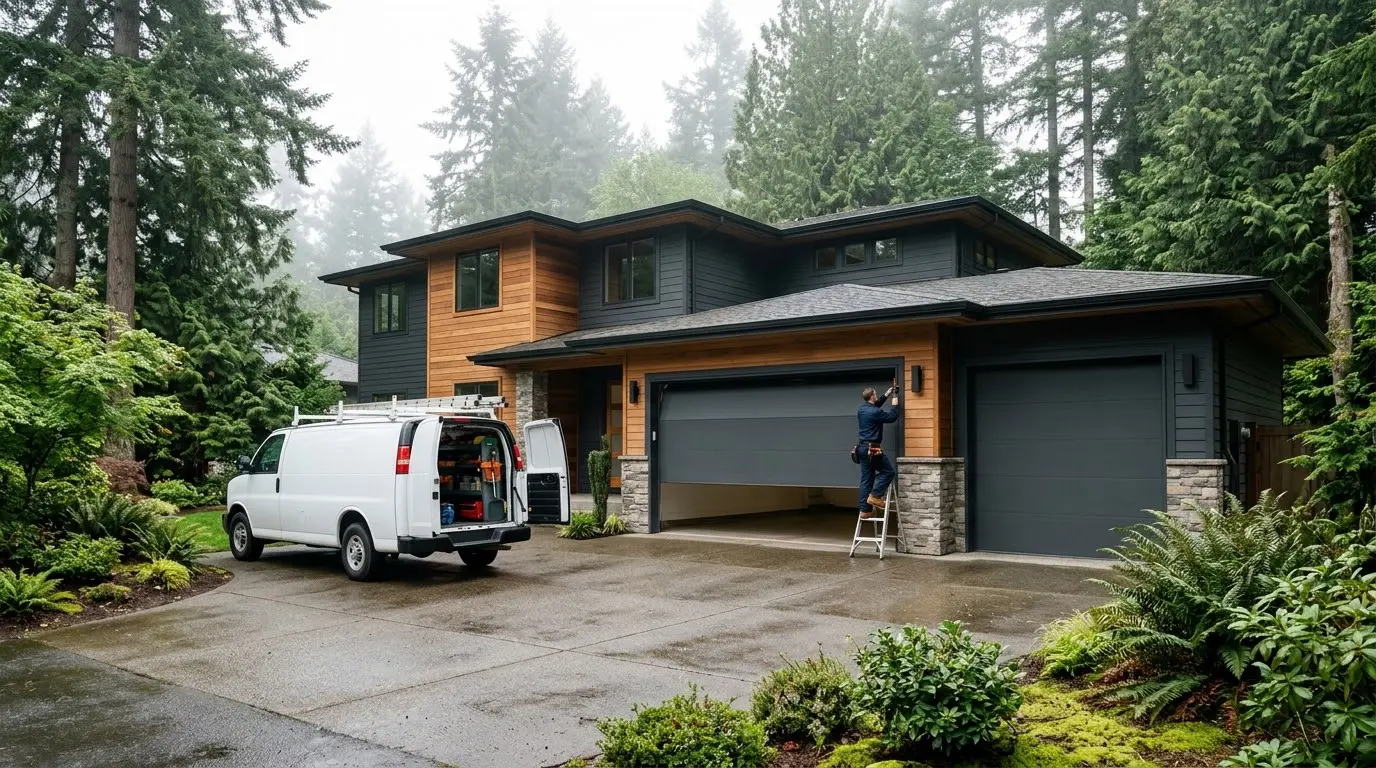
Garage doors in the Eugene-Springfield area work harder than most people realize. Between October and May, the southern Willamette Valley sees long stretches of gray skies, steady rain, morning fog, and the occasional ice storm. Summers are dry and warm, which means your door also goes through a full cycle of swelling and drying every year.
A little seasonal attention keeps it quiet, safe, and efficient, and helps you catch small problems before they turn into expensive ones.
This guide covers what homeowners can check themselves, and when it is time to call a professional.
Rain, Moisture, and Your Door Material
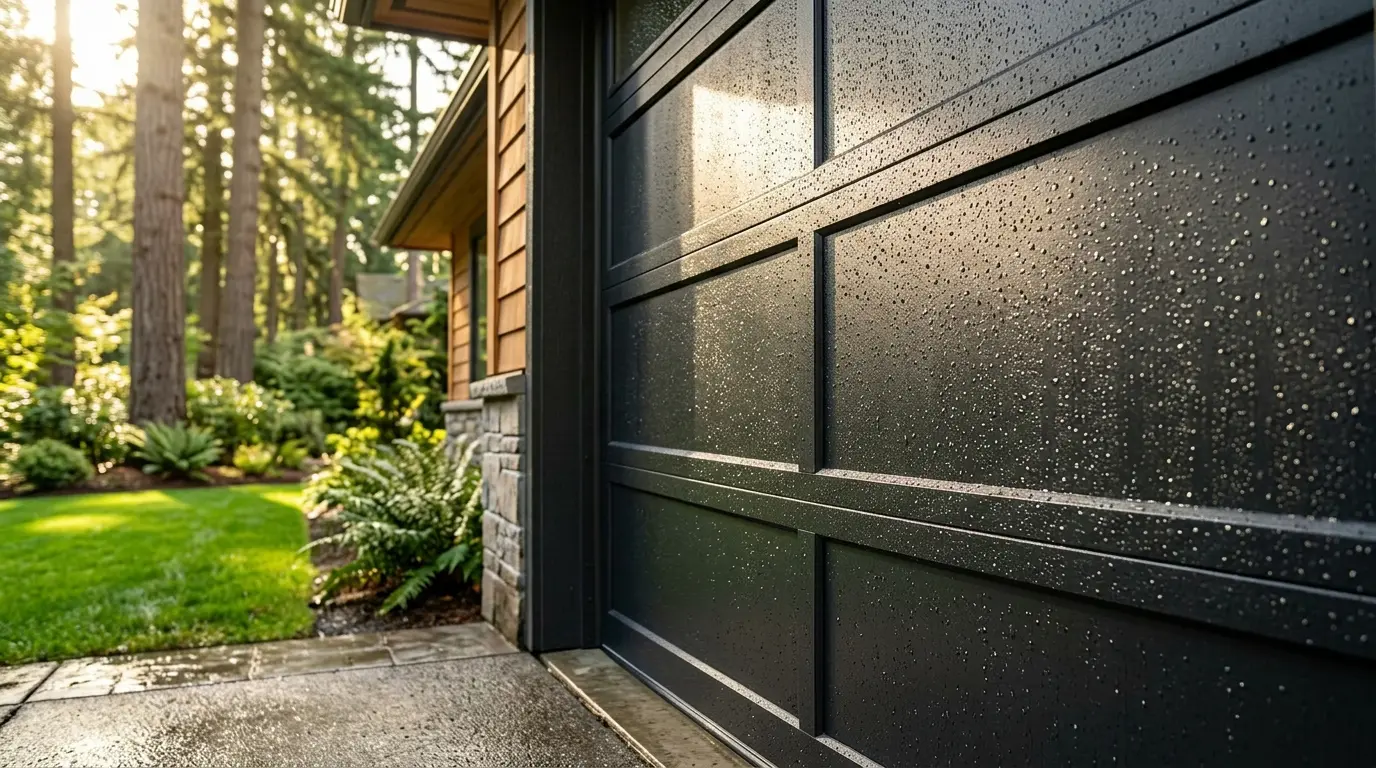
Constant moisture affects every type of garage door, just in different ways.
- Wood doors are beautiful but vulnerable. Water that gets past the finish causes swelling, warping, peeling paint, and eventually rot along the bottom panels. Inspect the finish each fall and reseal or repaint any bare or cracked spots before the rainy season settles in.
- Steel doors resist rot but can rust where the paint is scratched or chipped. Touch up scratches promptly, especially along the bottom edge.
- Composite and fiberglass doors handle moisture well.
Whatever your door is made of, wash it a few times a year with mild soap and water. Damp, shaded lots grow mildew and moss quickly. Also check that gutters and downspouts carry water away from the driveway apron so it does not pool against the door.
Weather Seals: Your First Line of Defense
Weather seals keep wind-driven rain, leaves, and pests out of your garage. Most doors have three: a bottom seal attached to the lowest panel, perimeter stops along the sides and top of the frame, and thin seals between the panels on many insulated doors.
Rubber and vinyl break down over time, and repeated wet-dry cycles speed that up. Signs that a seal needs replacing include:
- Daylight visible under or around the closed door
- Puddles or damp patches just inside the garage after a storm
- Cracked, flattened, brittle, or torn rubber
- Spiders, mice, or leaf debris getting in along the edges
Bottom seals are inexpensive; just match the profile to your door’s retainer track.
Insulation and Condensation
Eugene winters are mild, but insulation still matters here because of condensation. When cold air meets a warmer, humid garage, moisture collects on the inside of an uninsulated steel door. Over a wet winter, that leads to rust, mildew, and musty storage.
An insulated door, usually rated by R-value, keeps the inner surface warmer and reduces condensation. If you already have an insulated door, check that the insulation panels are intact and that the seals between sections close tightly. Running a dehumidifier or improving ventilation in the garage can also help during the wettest months.
Hardware in a Damp Climate
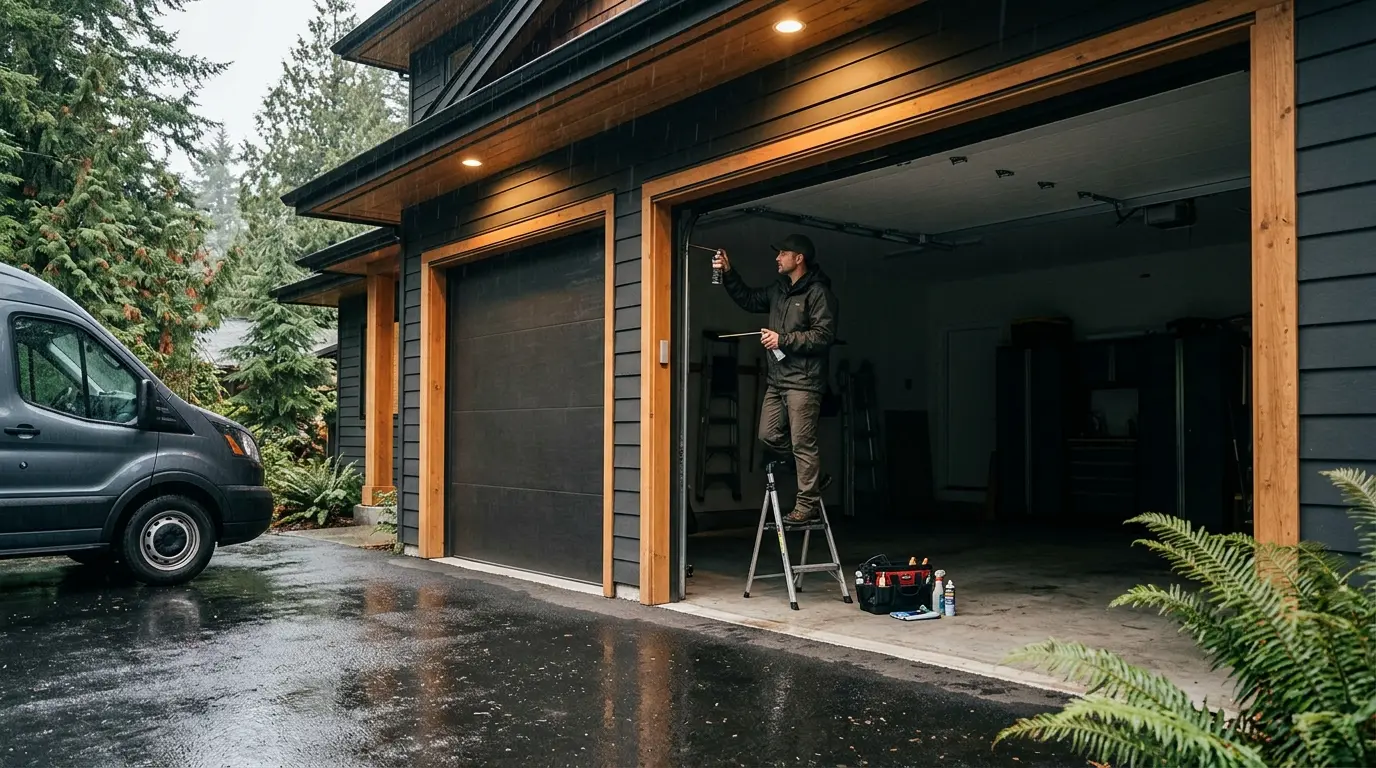
Humidity is hard on metal. Springs, hinges, rollers, cables, and track brackets can all develop surface rust, which adds friction and wear.
- Springs carry the weight of the door. Torsion springs mount above the opening; extension springs run along the horizontal tracks. Rust on a spring increases the chance of it snapping.
- Rollers with steel bearings can seize when corroded. Nylon rollers run quieter and resist rust better.
- Hinges and brackets loosen with daily vibration. Gently snug the bolts with a socket wrench once or twice a year.
- Tracks should be kept clean and aligned, but not greased. Grease attracts grit and makes rollers bind.
Use a garage-door-specific lubricant or a silicone or lithium spray on hinges, roller bearings, springs, and the opener rail.
Professional Garage Door Repair and Maintenance
Cleaning, lubricating, tightening bolts, and replacing a bottom seal are reasonable homeowner tasks. Springs, cables, and bottom brackets are different. They hold enormous tension, and adjusting them without the right tools and training can cause serious injury. The same goes for a door that has come off its track. For that kind of work, a local provider such as Overhead Door Company of Eugene-Springfield can inspect the door and explain your repair options.
Many homeowners also schedule a professional tune-up every year or two, especially before winter. A technician can adjust spring tension, check cable wear, align tracks, and test the opener’s safety features.
A Simple Seasonal Routine
A good rhythm for the Willamette Valley is a thorough check in early fall, before the rains arrive, and a lighter one in late spring.
- Watch and listen as the door opens and closes. It should move smoothly, without jerking, scraping, or grinding.
- Test the balance. With the door closed, pull the opener’s release cord and lift the door by hand to about waist height. A balanced door stays put; one that drops or rises has a spring problem.
- Test the auto-reverse. Place a block of wood or a roll of paper towels under the door and close it. It should reverse on contact. Also wave something through the photo-eye beam while it closes.
- Lubricate moving parts and wipe the tracks clean.
- Inspect seals, the bottom panel, and the finish for damage.
- Clean the photo-eye lenses, which collect cobwebs and grime in damp weather.
Common Problems to Watch For
- New noises. Squeaks usually mean dry hardware. Grinding, popping, or banging can point to worn rollers, loose parts, or a failing spring.
- A door that sticks or reverses. Swollen wood, a misaligned track, or a dirty photo eye are frequent causes after a wet stretch.
- Frozen bottom seals. During a freeze, the seal can bond to the concrete. Don’t force it with the opener; free it gently and keep the floor dry.
- Frayed cables. Lift cables near the bottom brackets can rust and unravel.
- A gap that appears on one side. This can signal uneven spring tension or a bent track.
- Opener trouble. Moisture can affect remote signals, wiring, and the photo-eye connections.
In a climate this wet, steady upkeep pays off. A door that is sealed, balanced, and lubricated will open reliably on the stormiest January morning and last many years longer.