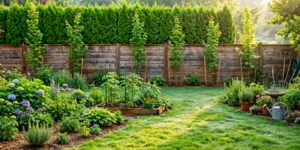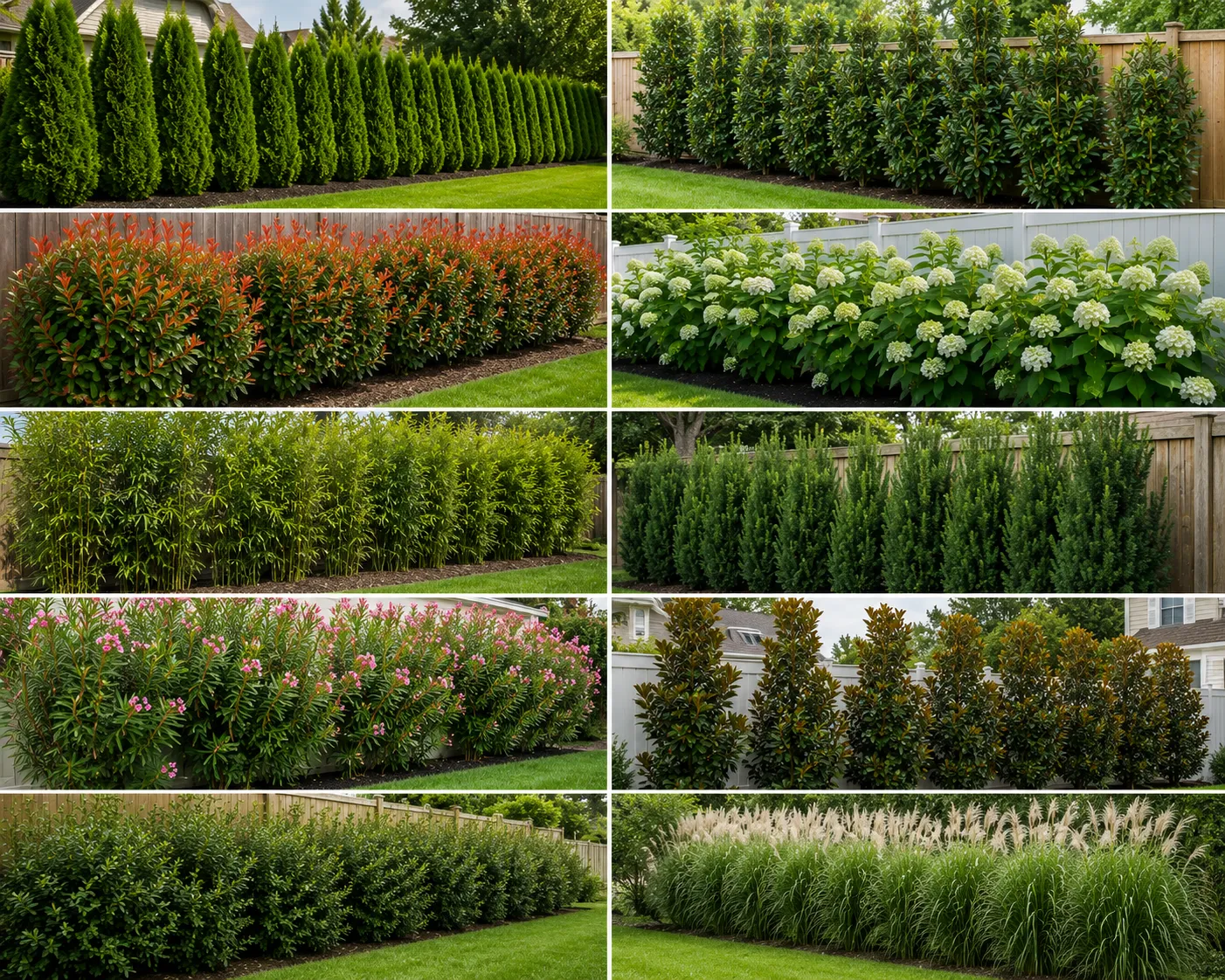
Thuja ‘Green Giant’ and Leyland cypress lead the fastest growing shrubs for most US yards, and wax myrtle keeps pace with them in warmer zones. Each adds roughly 3 to 5 feet (0.9 to 1.5 m) of height per year once established. Privet and Nellie R. Stevens holly trail close behind. Zone matters most. Before you buy, match every pick to your U.S. Department of Agriculture (USDA) hardiness zone. New to choosing shrubs? Start with our guide to types of shrubs, or see our low-maintenance shrubs and best shrubs for landscaping.
Key Takeaways
- Thuja ‘Green Giant’ is the fastest growing evergreen shrub for privacy in USDA Zones 5 to 8, adding up to 3 to 5 feet (0.9 to 1.5 m) per year.
- Emerald Green arborvitae fits narrow yards because it stays only 3 to 4 feet (0.9 to 1.2 m) wide at maturity.
- Leyland cypress screens a yard fast, but it often dies from Seiridium canker, so it makes a risky single-species hedge.
- Privet, butterfly bush and English laurel grow fast, but several US states list or regulate them as invasive.
- Early fall is the best planting season in most US zones because warm soil speeds root growth before winter.
- A mixed-species hedge planted in two staggered rows fills gaps faster and survives a single pest or disease outbreak.
What Are the Fastest Growing Shrubs?
The fastest growing shrubs in the US are Thuja ‘Green Giant’, Leyland cypress and wax myrtle, each adding roughly 3 to 5 feet (0.9 to 1.5 m) of height per year in full sun and well-drained soil. Two shrubs come next. Nellie R. Stevens holly and privet grow about 2 to 3 feet (0.6 to 0.9 m) per year.
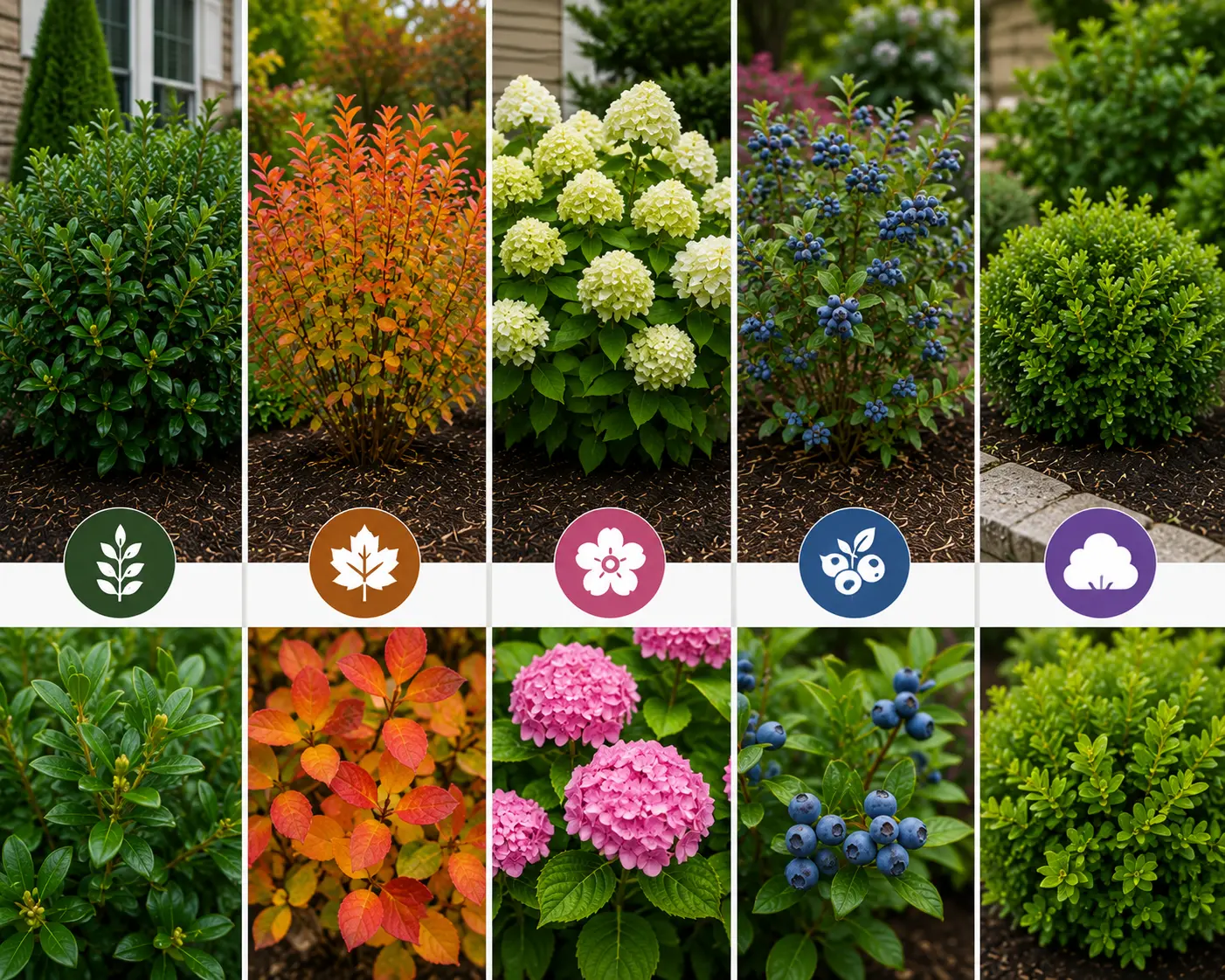
Fastest growing shrubs are woody plants that add more than 24 inches (61 cm) of height per year under good conditions. Nothing builds a living fence quicker.
Want one answer to what is the fastest growing shrub for privacy? Pick Thuja ‘Green Giant’ in Zones 5 to 8 or wax myrtle in Zones 7 to 10, since both form dense evergreen foliage. Both take pruning well.
Site decides speed. A shrub that a nursery catalog rates as fast will crawl along in heavy clay or deep shade, and drought slows it just as hard. Before you chase speed, confirm your hardiness zone and match the plant’s light and soil needs to your yard.
How Growth Rate Is Measured
Growth rate is the height a shrub adds in one growing season after its roots have settled into the surrounding soil. The Arbor Day Foundation sets the bands. Fast growers add 25 inches (64 cm) or more per year, medium growers add 13 to 24 inches (33 to 61 cm) and anything under 12 inches (30 cm) counts as slow.
Expect a slow start. New shrubs spend their first year pushing roots into the native soil, so the tops barely move. Gardeners call the pattern “sleep, creep, leap”: little visible growth in year one, moderate growth in year two and full speed from year three.
Does Fast Growth Shorten Shrub Lifespan?
Yes, fast growth often comes with a shorter lifespan or weaker wood. Leyland cypress and butterfly bush decline sooner than slower shrubs. Two exceptions stand out. Sited well, Thuja ‘Green Giant’ and Nellie R. Stevens holly pair quick growth with long life, which makes them the safer bets for a hedge you plan to keep.
Weak wood snaps under snow and ice. In Zones 5 and 6, choose fast growers with flexible branches, and brush heavy snow off the hedge after each storm before the weight splits the leaders.
Fast Growing Shrubs Compared by Speed and Size
Thuja ‘Green Giant’, Leyland cypress and wax myrtle lead all fast growing shrubs on yearly growth. Slower picks earn a spot too. Emerald Green arborvitae and panicle hydrangea grow at a gentler pace, as does forsythia, yet each stays small enough for a compact yard. Weigh growth rate against mature height before choosing, and confirm the hardiness zone last.
This table compares typical yearly growth, mature height, USDA zones and foliage type for 12 popular fast growing shrubs.
| Shrub | Growth per Year (ft / m) | Mature Height (ft / m) | USDA Zones | Type |
|---|---|---|---|---|
| Thuja ‘Green Giant’ | 3 to 5 (0.9 to 1.5) | 40 to 60 (12 to 18) | 5 to 8 | Evergreen |
| Leyland Cypress | 3 to 4 (0.9 to 1.2) | 60 to 70 (18 to 21) | 6 to 10 | Evergreen |
| Wax Myrtle | 3 to 5 (0.9 to 1.5) | 10 to 20 (3 to 6) | 7 to 10 | Native evergreen |
| Nellie R. Stevens Holly | 2 to 3 (0.6 to 0.9) | 15 to 25 (4.6 to 7.6) | 6 to 9 | Evergreen |
| Cherry Laurel | 2 to 3 (0.6 to 0.9) | 10 to 18 (3 to 5.5) | 6 to 8 | Evergreen |
| Privet | 2 to 3 (0.6 to 0.9) | 8 to 15 (2.4 to 4.6) | Varies by species | Semi-evergreen |
| Emerald Green Arborvitae | 0.5 to 1 (0.15 to 0.3) | 12 to 15 (3.7 to 4.6) | 3 to 7 | Evergreen |
| Butterfly Bush | Regrows full height yearly | 6 to 10 (1.8 to 3) | 5 to 9 | Deciduous |
| Panicle Hydrangea | 1 to 2 (0.3 to 0.6) | 6 to 15 (1.8 to 4.6) | 3 to 8 | Deciduous |
| Forsythia | 1 to 2 (0.3 to 0.6) | 8 to 10 (2.4 to 3) | 5 to 8 | Deciduous |
| Red Twig Dogwood | 1 to 2 (0.3 to 0.6) | 6 to 9 (1.8 to 2.7) | 3 to 8 | Native deciduous |
| American Elderberry | Fast, spreads by suckers | 5 to 12 (1.5 to 3.7) | 3 to 9 | Native deciduous |
Every rate in the table assumes full sun and well-drained soil, plus regular water once the roots have established themselves. Poor soil cuts that pace. So do partial shade and drought.
What Is the Fastest Growing Evergreen Shrub for Privacy?
Thuja ‘Green Giant’ is the fastest growing evergreen shrub for privacy across USDA Zones 5 to 8. Each year it adds up to 3 to 5 feet (0.9 to 1.5 m) and keeps its green foliage through winter, while dodging the canker diseases that kill Leyland cypress. That mix is hard to beat. It’s the default fast growing privacy hedge for good reason.
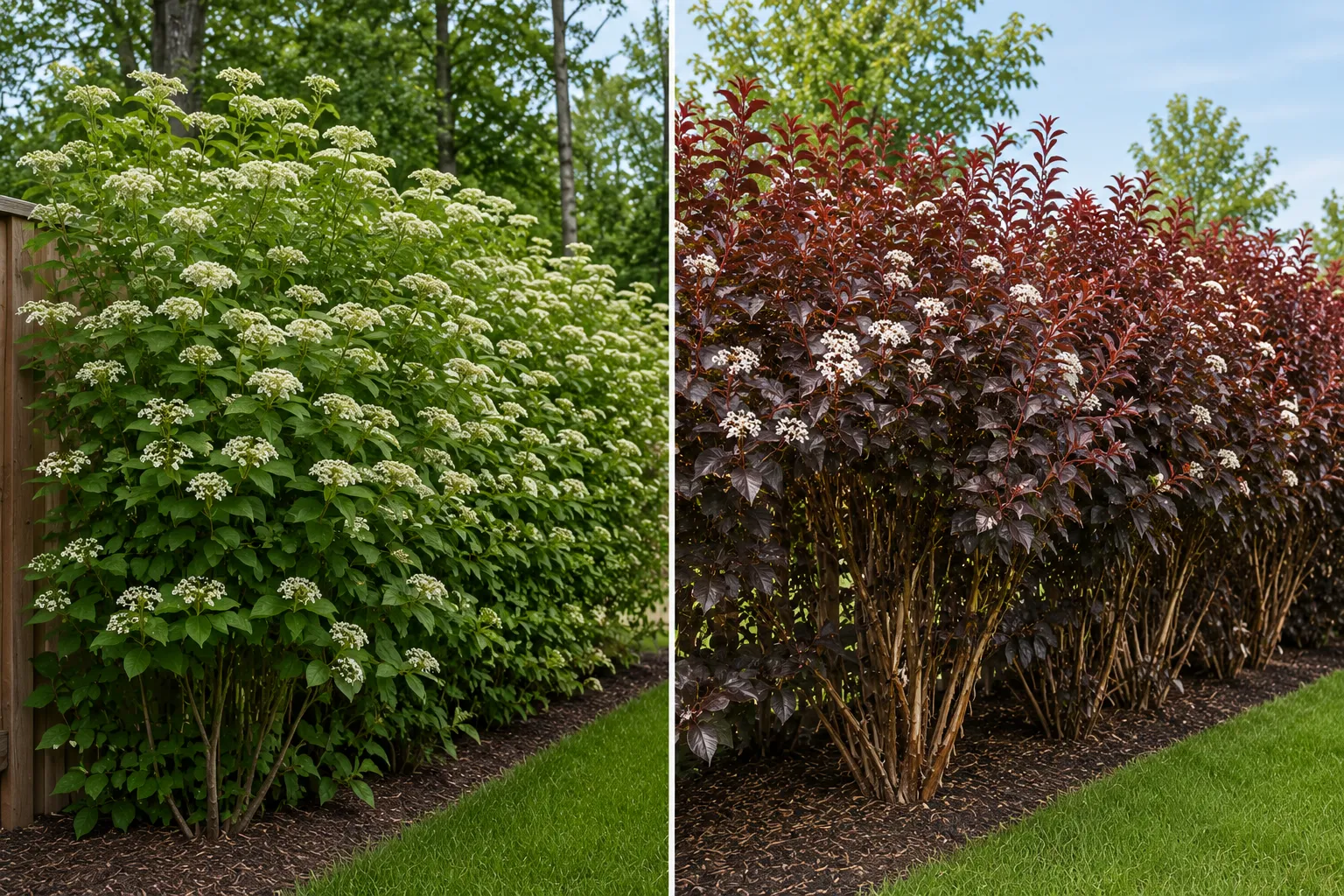
What are the fastest growing evergreen shrubs beyond Green Giant? Leyland cypress, wax myrtle, Nellie R. Stevens holly and cherry laurel all qualify. None is flawless. Each trades away either cold hardiness or disease resistance, and some spread into wild areas.
How Fast Does Thuja Green Giant Grow?
Thuja ‘Green Giant’ grows 3 to 5 feet (0.9 to 1.5 m) per year once established. It gets big. At maturity it reaches 40 to 60 feet (12 to 18 m) tall and 12 to 20 feet (3.7 to 6.1 m) wide. Set out plants 3 to 4 feet (0.9 to 1.2 m) tall and 5 to 6 feet (1.5 to 1.8 m) apart, and you’ll have a solid screen in about 3 to 4 growing seasons.
Green Giant prefers full sun to partial shade and moist, well-drained soil. Shear the sides lightly in late spring or early summer to keep the hedge dense, then top it once it hits the height you want. Light cuts keep it full.
Green Giant’s mature height suits long property lines. Keep it well away from power lines and small patios, where a tree that tops 40 feet (12 m) quickly becomes a problem.
Which Fast Evergreen Suits Narrow Yards?
Emerald Green arborvitae suits narrow yards because it grows 12 to 15 feet (3.7 to 4.6 m) tall but only 3 to 4 feet (0.9 to 1.2 m) wide. It adds about 6 to 12 inches (15 to 30 cm) per year. That’s slow. The payoff is a tidy columnar shape.
Emerald Green is hardy to Zone 3, which makes it the better pick wherever Green Giant freezes out, including much of the upper Midwest. Deer love it, though. In high-deer areas, fence young plants or choose another shrub.
Broadleaf Evergreens for Warmer Zones
Broadleaf evergreens give the Southeast and lower Midwest fast privacy with glossy leaves instead of needles. Three stand out.
- Nellie R. Stevens holly grows 2 to 3 feet (0.6 to 0.9 m) per year in Zones 6 to 9, reaches 15 to 25 feet (4.6 to 7.6 m) tall and bears red berries. Its spiny leaves discourage deer.
- Wax myrtle is a native Southeast evergreen for Zones 7 to 10. It grows 3 to 5 feet (0.9 to 1.5 m) per year, tolerates salt spray and wet soil and feeds birds with waxy berries.
- Cherry laurel grows 2 to 3 feet (0.6 to 0.9 m) per year in Zones 6 to 8 and tolerates shade. English laurel (Prunus laurocerasus) spreads invasively in the Pacific Northwest, so skip it there.
Is Leyland Cypress a Good Privacy Hedge?
No, Leyland cypress is a poor long-term privacy hedge for most US yards. Two canker diseases, Seiridium and Botryosphaeria, kill or disfigure plants, and bagworms add to the damage, especially in hot, drought-stressed Southeast gardens. Speed isn’t the issue. Leyland cypress does grow 3 to 4 feet (0.9 to 1.2 m) a year and screens a property quickly.
In Zones 6 to 10, Leyland cypress reaches 60 to 70 feet (18 to 21 m) tall and 15 to 25 feet (4.6 to 7.6 m) wide. Few yards have room. Many homeowners still plant it far too close together, crowding the roots and trapping humidity that speeds disease spread.
Canker shows up as browning branches scattered through the plant and sunken, oozing patches on the bark near the dying wood. No spray cures it. The only control is pruning out infected branches with sterilized tools.
Already have one? Water a Leyland hedge deeply during droughts, and skip pruning in wet weather so fresh cuts don’t invite new infections.
Safer Alternatives to Leyland Cypress
The safest Leyland cypress replacement is Thuja ‘Green Giant’, which matches its speed with far fewer serious disease problems over the life of the hedge. Other zones have options too.
This table compares Leyland cypress alternatives by hardiness and main advantage.
| Alternative | USDA Zones | Why It Is Safer |
|---|---|---|
| Thuja ‘Green Giant’ | 5 to 8 | Similar speed, few serious diseases |
| Nellie R. Stevens Holly | 6 to 9 | Deer resistant, long-lived, few pests |
| Wax Myrtle | 7 to 10 | Native, salt tolerant and fast |
| Eastern Red Cedar | 2 to 9 | Native, drought tolerant and very hardy |
| Mixed-Species Hedge | Varies | One disease cannot wipe out the hedge |
Fast Growing Flowering and Deciduous Shrubs
Panicle hydrangea, forsythia, butterfly bush, red twig dogwood and elderberry are the fastest growing flowering and deciduous shrubs for US yards. Within one to two seasons, these shrubs reward you with blooms or berries, and red twig dogwood adds bright winter stems. The catch? Every one drops its leaves in fall, so the screen lasts only from spring through autumn.

Panicle hydrangea (Hydrangea paniculata) grows 1 to 2 feet (0.3 to 0.6 m) per year in Zones 3 to 8 and blooms on new wood. That’s handy. Cut it back in late winter and it’ll still flower the same summer, since the buds form on the current year’s stems.
Forsythia grows 1 to 2 feet (0.3 to 0.6 m) per year in Zones 5 to 8 and covers its bare branches in yellow flowers in early spring. Timing matters here. Prune right after the flowers fade, because forsythia sets next year’s buds on old wood.
Butterfly bush (Buddleja davidii) regrows to full height every season after a hard spring cutback and draws pollinators all summer. It also seeds aggressively. Washington and Oregon regulate butterfly bush as a noxious weed, so plant only sterile, seedless cultivars where state law allows them, or pick a native shrub instead.
Red twig dogwood (Cornus sericea) is a native deciduous shrub that grows 1 to 2 feet (0.3 to 0.6 m) per year and thrives in wet soil. Young stems color best. Cut out one-third of the oldest stems each late winter to keep fresh red bark coming.
American elderberry (Sambucus canadensis) grows fast and feeds birds with dark purple fruit. It also spreads by suckers. Give it plenty of room along a back fence or wet corner, because elderberry forms a thicket rather than a tidy single shrub.
This table compares the bloom season, pruning time and main feature of each fast flowering shrub.
| Shrub | Bloom Season | Prune Timing | Best Feature |
|---|---|---|---|
| Panicle Hydrangea | Mid to late summer | Late winter | Large cone-shaped blooms, very cold hardy |
| Forsythia | Early spring | Right after flowering | First color of spring |
| Butterfly Bush | Summer to fall | Early spring | Pollinator magnet, invasive in some states |
| Red Twig Dogwood | Late spring | Late winter | Red winter stems, wet soil tolerance |
| American Elderberry | Early summer | Late winter | Native wildlife food |
Fast Growing Native Shrubs by Region
The best fast growing native shrubs are wax myrtle in the Southeast, red twig dogwood and American elderberry in the Midwest and Northeast, Texas sage in the Southwest and Pacific wax myrtle in the Pacific Northwest, because native species feed local wildlife and rarely spread into natural areas.
Natives are also low-maintenance. Native shrubs are already adapted to local rainfall and winter lows, as well as regional soils, so once established they need less water and fewer sprays.
This table compares a native pick and a fast nonnative pick for each US region.
| Region | Typical USDA Zones | Native Pick | Fast Nonnative Pick |
|---|---|---|---|
| Northeast | 3 to 7 | Arrowwood viburnum | Thuja ‘Green Giant’ |
| Southeast | 7 to 10 | Wax myrtle | Nellie R. Stevens holly |
| Midwest | 3 to 6 | Red twig dogwood | Panicle hydrangea |
| Southwest | 7 to 10 | Texas sage | Oleander (toxic to people and pets) |
| Pacific Northwest | 6 to 9 | Pacific wax myrtle | Thuja ‘Green Giant’ |
Eastern red cedar (Juniperus virginiana) is a native evergreen option across most of the eastern half of the country. It shrugs off drought and poor soil. One caution: the tree hosts cedar-apple rust, so keep it away from apple orchards.
What Fast Growing Shrubs Grow in Shade?
Cherry laurel, wax myrtle, Nellie R. Stevens holly, red twig dogwood and American elderberry are fast growing shrubs that grow in partial shade, though every one of them grows slower and thinner with fewer than 4 hours of direct sun per day.
Trees make it harder. Under a mature canopy, tree roots compete for every drop, so water shade plantings more often during their first two summers.
Which shade shrubs stay evergreen? Cherry laurel, wax myrtle and Nellie R. Stevens holly all keep their leaves through winter in partial shade, so they block views year round.
This table compares shade tolerance, foliage type and zones for fast shrubs that handle less sun.
| Shrub | Light Tolerance | Evergreen | USDA Zones |
|---|---|---|---|
| Cherry Laurel | Full sun to partial shade | Yes | 6 to 8 |
| Wax Myrtle | Full sun to partial shade | Yes | 7 to 10 |
| Nellie R. Stevens Holly | Full sun to partial shade | Yes | 6 to 9 |
| Red Twig Dogwood | Full sun to partial shade | No | 3 to 8 |
| American Elderberry | Full sun to partial shade | No | 3 to 9 |
What Fast Growing Shrubs Are Deer Resistant?
Nellie R. Stevens holly, wax myrtle, forsythia and Leyland cypress are fast growing shrubs that deer usually avoid, while Emerald Green arborvitae, panicle hydrangea and red twig dogwood get browsed heavily, so pick spiny, aromatic or tough-leaved shrubs for yards with frequent deer traffic.
Thuja ‘Green Giant’ sits in the middle. Deer browse it less often than Emerald Green arborvitae, though hungry herds still nibble young plants hard during lean winter months.
Does deer resistance vary by region? Yes. Deer eat almost any shrub when herds are large or food is scarce, so a plant rated resistant in one county can get stripped in another. Rutgers New Jersey Agricultural Experiment Station rates ornamental plants by how often deer damage them. Use that rating to rank options.
Young plants suffer most. Protect any new hedge with deer netting or a temporary fence for its first two winters, while every branch is still within reach.
Are Fast Growing Shrubs Invasive?
No, most fast growing shrubs are not invasive, but Chinese privet, European privet, butterfly bush, English laurel and Amur honeysuckle spread by seed into forests and wetlands and appear on invasive or noxious weed lists in multiple US states, so check local rules before planting fast growing hedges.
Birds do the spreading. They eat the berries of privet, English laurel and bush honeysuckle, then drop the seeds miles away in woods and wetlands. Native plants that wildlife depends on get crowded out.
This table compares common invasive fast growers with native shrubs that fill the same role.
| Invasive Shrub | Main Problem Regions | Native Alternative |
|---|---|---|
| Chinese Privet | Southeast | Wax myrtle |
| European Privet | Northeast and Midwest | Arrowwood viburnum |
| Butterfly Bush | Pacific Northwest | Buttonbush |
| English Laurel | Pacific Northwest | Pacific wax myrtle |
| Amur Honeysuckle | Midwest and East | American elderberry |
How to Check Your State Invasive Plant List
Check your state list before you buy, because a nursery across the state line can legally sell plants your state restricts. Don’t skip this step.
- Search your state department of agriculture website for its noxious weed list.
- Open your state invasive species council list for plants that are invasive but not yet regulated.
- Look up the shrub on EDDMapS to see recorded wild populations in your county.
- Call your county Cooperative Extension Service office for local advice.
- Read the plant tag for the words “sterile” or “seedless” before you buy butterfly bush.
How Far Apart Should You Plant Privacy Shrubs?
Plant privacy shrubs closer than their mature width so branches touch within three to four seasons, which means about 5 to 6 feet (1.5 to 1.8 m) apart for Thuja ‘Green Giant’, 3 to 4 feet (0.9 to 1.2 m) for Emerald Green arborvitae and 6 to 8 feet (1.8 to 2.4 m) for Leyland cypress.
Set the row back from fences and sidewalks by at least half the shrub’s mature width, and use the same rule along property lines. Branches stay on your side. You’ll also have room to prune.
This table compares single-row and staggered-row spacing for popular shrubs for privacy.
| Shrub | Single Row (ft / m) | Staggered Rows (ft / m) |
|---|---|---|
| Thuja ‘Green Giant’ | 5 to 6 (1.5 to 1.8) | 8 to 10 (2.4 to 3) |
| Emerald Green Arborvitae | 3 to 4 (0.9 to 1.2) | 5 to 6 (1.5 to 1.8) |
| Leyland Cypress | 6 to 8 (1.8 to 2.4) | 10 to 12 (3 to 3.7) |
| Nellie R. Stevens Holly | 5 to 6 (1.5 to 1.8) | 8 to 10 (2.4 to 3) |
| Wax Myrtle | 5 to 6 (1.5 to 1.8) | 8 to 10 (2.4 to 3) |
| Privet (Formal Hedge) | 1.5 to 2 (0.5 to 0.6) | 3 (0.9) |
Tighter spacing screens faster. Crowding shrubs closer than the ranges in the table invites disease, and the lower branches thin out as the plants shade each other.
One Row or Two Staggered Rows?
Plant two staggered rows when you have at least 8 feet (2.4 m) of depth to spare. The offset is what matters. Setting each back-row plant behind a gap in the front row closes holes faster and hides any single shrub that dies.
A single row suits narrow side yards and formal sheared hedges, where a second row would eat up space you don’t have. Tight spot? Plant one row of Emerald Green arborvitae.
How to Plan a Mixed-Species Privacy Hedge
A mixed-species hedge combines two to four shrubs with similar light and soil needs, so a single disease or pest cannot wipe out the whole screen. Diversity is the point.
- Measure the length of the area you need to screen and the depth you can give it.
- Choose one fast evergreen, such as Thuja ‘Green Giant’, as the backbone.
- Add a second evergreen, such as Nellie R. Stevens holly, for different foliage texture.
- Mix in one or two flowering or native deciduous shrubs for seasonal color and wildlife.
- Repeat the pattern in groups of three rather than alternating single plants.
- Stagger the evergreens in the back row and the deciduous shrubs in the front row.
When Is the Best Time to Plant Privacy Shrubs?
Early fall is the best time to plant privacy shrubs in most US zones, because warm soil drives root growth while cool air limits stress; plant at least six weeks before the ground freezes, use spring as the second-best window and plant through winter in Zones 9 and 10.
Skip midsummer. In that heat, new roots can’t keep up with the water lost through the leaves, so the shrubs stress before they settle in.
How to Plant a Fast Growing Privacy Hedge
For fast establishment, correct planting depth and steady early watering matter far more than any fertilizer you could add to the hole. Get those two right.
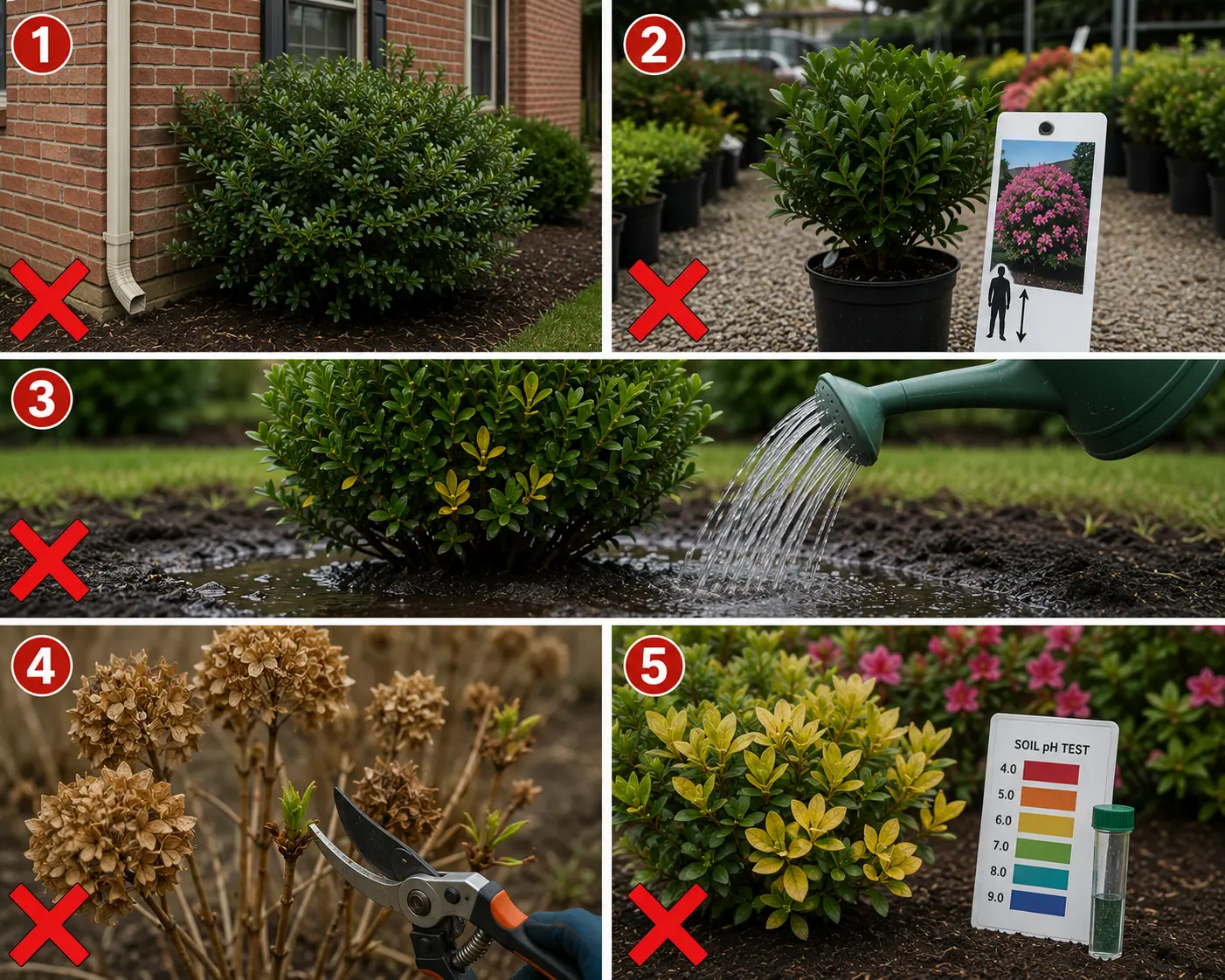
- Call 811 a few business days before digging so utility companies mark buried lines for free.
- Test your soil through your county extension office to check pH and drainage.
- Mark the row with string and stakes at your chosen spacing.
- Dig each hole two to three times as wide as the root ball and no deeper.
- Loosen circling roots and set the root flare level with or slightly above the soil.
- Backfill with the native soil you removed, firming it gently to remove air pockets.
- Water slowly until the whole root zone is soaked.
- Spread 2 to 3 inches (5 to 7.6 cm) of mulch, keeping it a few inches off the trunk.
How Often Should You Water New Shrubs?
Water new shrubs deeply two to three times per week for the first few weeks, then about once a week through their first two growing seasons. Aim for roughly 1 inch (2.5 cm) of water per week. Rain counts toward that total.
A finger test works best. Push a finger 2 inches (5 cm) into the soil before watering, and water only if it feels dry. If the soil feels damp, wait, since soggy ground rots roots just as fast as a drought kills them outright.
For a long hedge, lay a soaker hose or drip line along the row, which waters every plant evenly with far less waste than a sprinkler. Set it on a timer.
Frequently Asked Questions
What Bush Grows the Fastest for Privacy?
Thuja ‘Green Giant’ grows the fastest for privacy in Zones 5 to 8, adding 3 to 5 feet (0.9 to 1.5 m) yearly. Wax myrtle matches that pace in warmer Zones 7 to 10.
How Long Does a Privacy Hedge Take to Grow?
A privacy hedge planted with fast evergreens such as Thuja ‘Green Giant’ usually screens a yard in 3 to 4 growing seasons. Bigger nursery stock and closer spacing shorten the wait. Poor soil and drought stretch it out.
What Can I Plant to Block a Neighbor’s View Fast?
Plant Thuja ‘Green Giant’ or wax myrtle in two staggered rows for the quickest year-round screen. A trellis with a fast annual vine covers the gaps during the first season.
Which Shrub Stays Green All Winter and Grows Fast?
Thuja ‘Green Giant’ holds green foliage all winter and grows quickly in most northern and central states. Farther south, Nellie R. Stevens holly and wax myrtle fill that role.
Should I Fertilize New Privacy Shrubs?
No. Fertilizer at planting can burn new roots. Wait until the following spring, and feed lightly only if a soil test shows a nutrient shortage or the foliage looks pale.
Conclusion
The fastest growing shrubs reward planning more than raw speed. Thuja ‘Green Giant’ and Nellie R. Stevens holly deliver quick privacy that lasts, and wax myrtle does the same in warm zones. Others carry baggage. Leyland cypress brings disease risk, while privet and butterfly bush can escape into wild areas over time.
This season is the time to start. Confirm your zone and check your state invasive list, then call 811 before the shovel hits the ground. A staggered, mixed-species hedge planted in early fall will screen your yard within a few years and stay healthy for decades.
There’s a longer payoff, too. Gardeners who favor native species and diverse plantings build yards that hold up better as summers get hotter and new pests move north.