
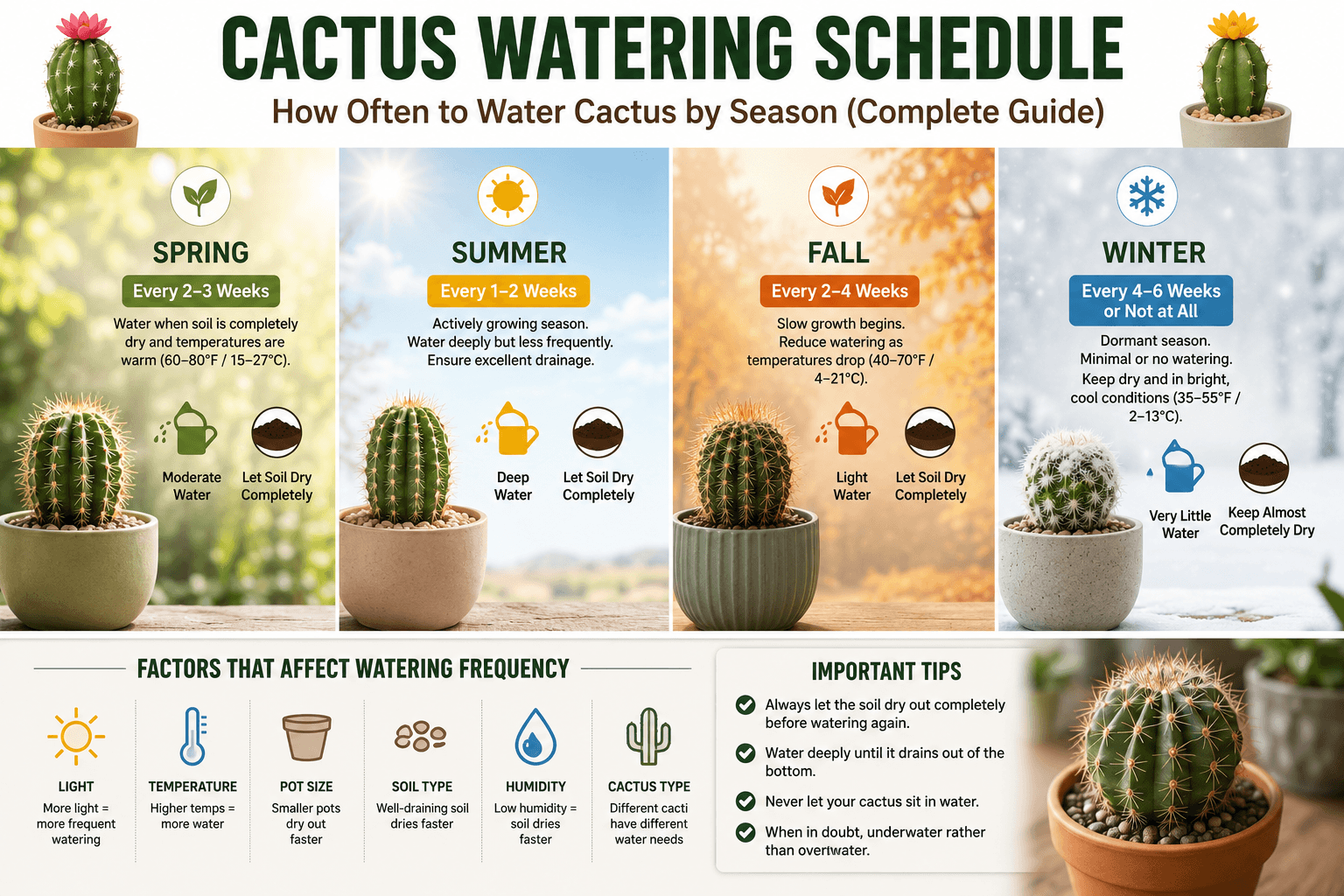
Water cactus every 10–14 days in spring and summer, and every 4–6 weeks in fall and winter. Always check that soil is completely dry before watering again. Overwatering is the #1 cause of cactus death — when in doubt, wait.
Most cactus owners kill their plant with kindness. Watering too often is the leading mistake. A cactus stores water in its thick stems and fleshy tissue. It evolved in desert environments where months pass without rain. Your job is not to water frequently — it is to water deeply, then step back.
This guide covers the exact watering frequency for every season, indoors and outdoors, plus a species-by-species breakdown. You will also find clear signs that tell you when your cactus is thirsty — and when you have gone too far.
Cactus Watering Schedule by Season
Cacti do not follow a calendar. Their water needs shift with the seasons because their growth cycle changes. Spring and summer is the active growth period. Fall and winter is dormancy. The watering frequency changes dramatically between the two.
| Season | Growth Stage | Indoor Frequency | Outdoor Frequency |
| Spring (March–May) | Active growth starts | Every 10–14 days | Every 14–21 days |
| Summer (June–Aug) | Peak active growth | Every 10–14 days | Every 7–14 days (heat) |
| Fall (Sept–Nov) | Growth slows | Every 3–4 weeks | Every 3–4 weeks |
| Winter (Dec–Feb) | Full dormancy | Every 4–6 weeks | Minimal or none |
Note: These are guidelines, not rigid rules. Soil dryness is the real trigger. Always check before you water.
Spring: Wake the Plant Up Slowly
In early spring, cacti begin coming out of dormancy. Start watering cautiously, not on a heavy schedule right away. Wait until the top 2 inches (5 cm) of soil are fully dry. The first 2–3 waterings of the season should be light. Once you see new growth, switch to a full deep soak every 10–14 days.
Summer: Water More, but Never Overdo It
Summer is peak growing season. Outdoor cacti exposed to full sun and heat dry out faster. Water every 7–10 days during extreme heat spells above 100°F (38°C). Indoor cacti near a sunny window dry more slowly due to stable indoor temperatures — every 10–14 days is fine. Always perform the finger test first.
Fall: Taper Off Gradually
As days shorten in September, growth slows. Reduce watering every 2–3 weeks to ease the cactus into dormancy. Do not stop suddenly. A gradual transition helps roots adjust to lower moisture levels.
Winter: Near-Zero Watering
Most desert cacti need almost no water in winter. Reduce to once every 4–6 weeks. Many experienced growers stop watering entirely from November through February, which closely mirrors natural desert rainfall patterns in winter. Dormant cacti should have only enough water to prevent severe shriveling. Never soak a dormant cactus.
Indoor vs. Outdoor Cactus Watering: 4 Key Differences
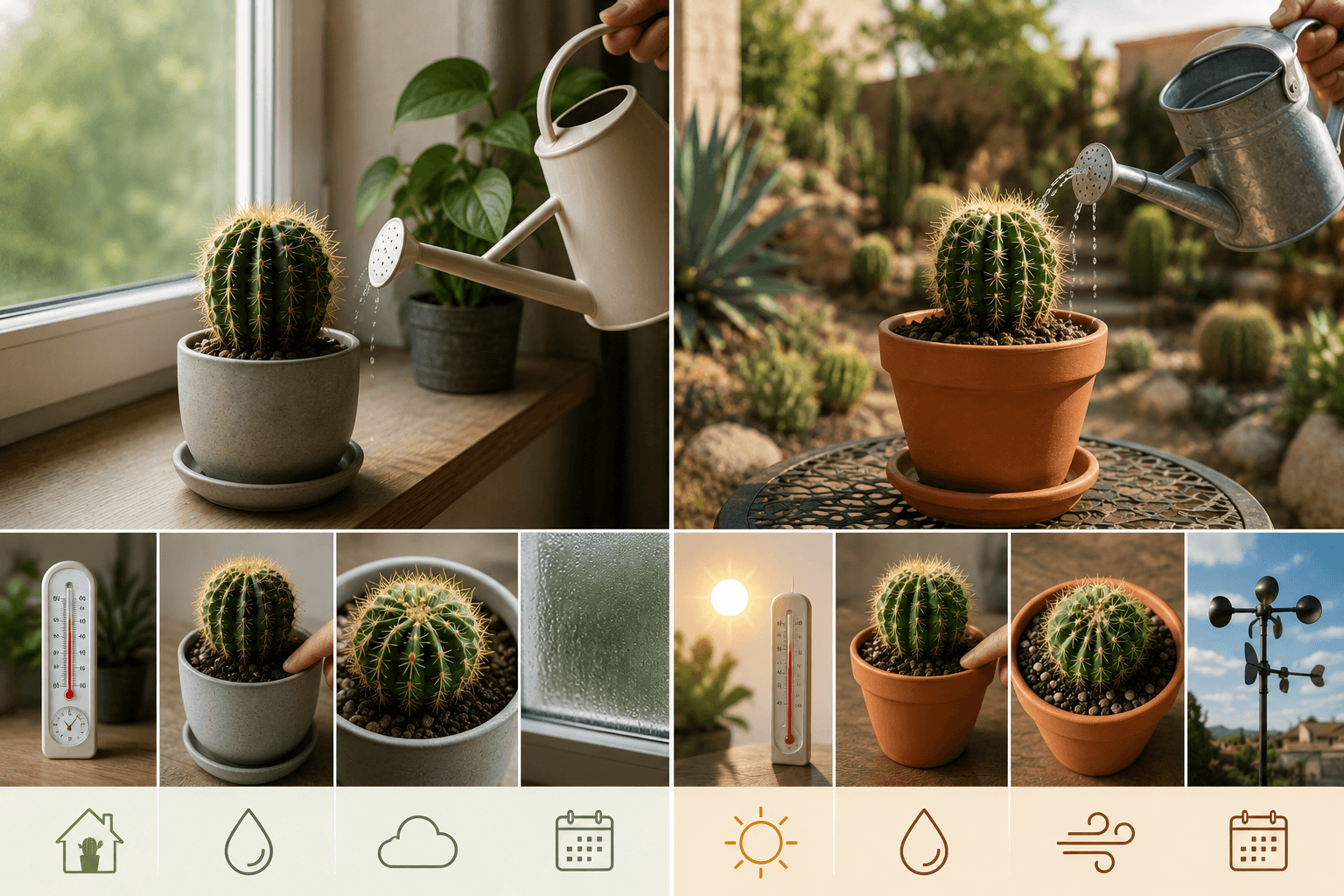
Indoor and outdoor cacti share the same seasonal rhythm, but their environments create 4 important differences in how you apply the schedule.
1. Sunlight Intensity
Outdoor cacti in direct sun dry out faster. A cactus in full sun at 95°F (35°C) can drain its soil moisture in 7 days. An indoor cactus in a south-facing window under indirect light may take 14–18 days. Check the soil, not the calendar.
2. Humidity Levels
High indoor humidity from kitchens or bathrooms slows soil drying. If your home stays above 60% relative humidity, add 3–5 days between waterings. Dry climates with low indoor humidity (below 30%) mean soil dries faster.
3. Pot Material
Terracotta pots dry 30–40% faster than plastic or glazed ceramic. A cactus in a 4-inch terracotta pot may need water every 7–10 days in summer. The same cactus in a plastic pot needs water every 12–16 days. Adjust based on what you observe, not a fixed interval.
4. Rainfall Exposure
Outdoor cacti receive natural rainfall. In rainy seasons or climates with frequent summer storms, skip scheduled waterings entirely. One inch (25 mm) of rain is enough for 2–3 weeks of hydration for most desert species. Use a rain gauge to track what falls.
Watering Frequency by Cactus Type
Not all cacti have the same water needs. Desert cacti need far less water than tropical or forest cacti. Here are the 3 categories every grower needs to understand.
Desert Cacti (Least Water Needed)
Desert cacti include barrel cactus (Ferocactus), saguaro (Carnegiea gigantea), prickly pear (Opuntia), and golden ball cactus (Echinocactus). These are adapted to months-long drought. During the growing season, water only when soil is completely dry at root level — every 3–4 weeks in most indoor conditions. In winter, skip watering entirely for 6–8 weeks.
Tropical and Forest Cacti (More Frequent Watering)
Christmas cactus (Schlumbergera) and Easter cactus (Hatiora) originate from Brazilian rainforests. They need water when the top 1 inch (2.5 cm) of soil dries out — roughly every 7–10 days during their growing period. They tolerate more moisture than desert types, but still require good drainage. Their bloom cycle differs: they actively grow in fall and winter, so do not reduce watering for them during those months.
Newly Purchased Cacti
Wait 7–10 days before watering any cactus you just brought home. Nursery soil often retains moisture from recent watering. Shipping and handling cause stress that makes roots temporarily vulnerable. Let the plant settle. When slight puckering appears at the base, begin regular watering.
3 Ways to Test Soil Moisture Before Watering
The biggest mistake in cactus care is watering on a schedule instead of checking soil moisture. Use one of these 3 methods every time before you water.
- Finger Test (Best for beginners): Push your finger 2 inches (5 cm) into the soil near the edge of the pot. If soil feels dry and pulls away cleanly, water. If it feels cool or slightly damp, wait 3 more days and test again.
- Wooden Skewer Test: Insert a clean wooden skewer to the bottom of the pot. Leave it 60 seconds. Pull it out. Dry skewer with no soil sticking = time to water. Damp skewer with soil attached = wait.
- Moisture Meter (Most accurate): Insert the probe 3–4 inches (8–10 cm) deep into the soil. A reading of 1–2 on a standard 1–10 scale means dry enough to water. Above 3 = wait. The meter gives a precise reading unaffected by human feel.
How to Water a Cactus: The Soak and Dry Method
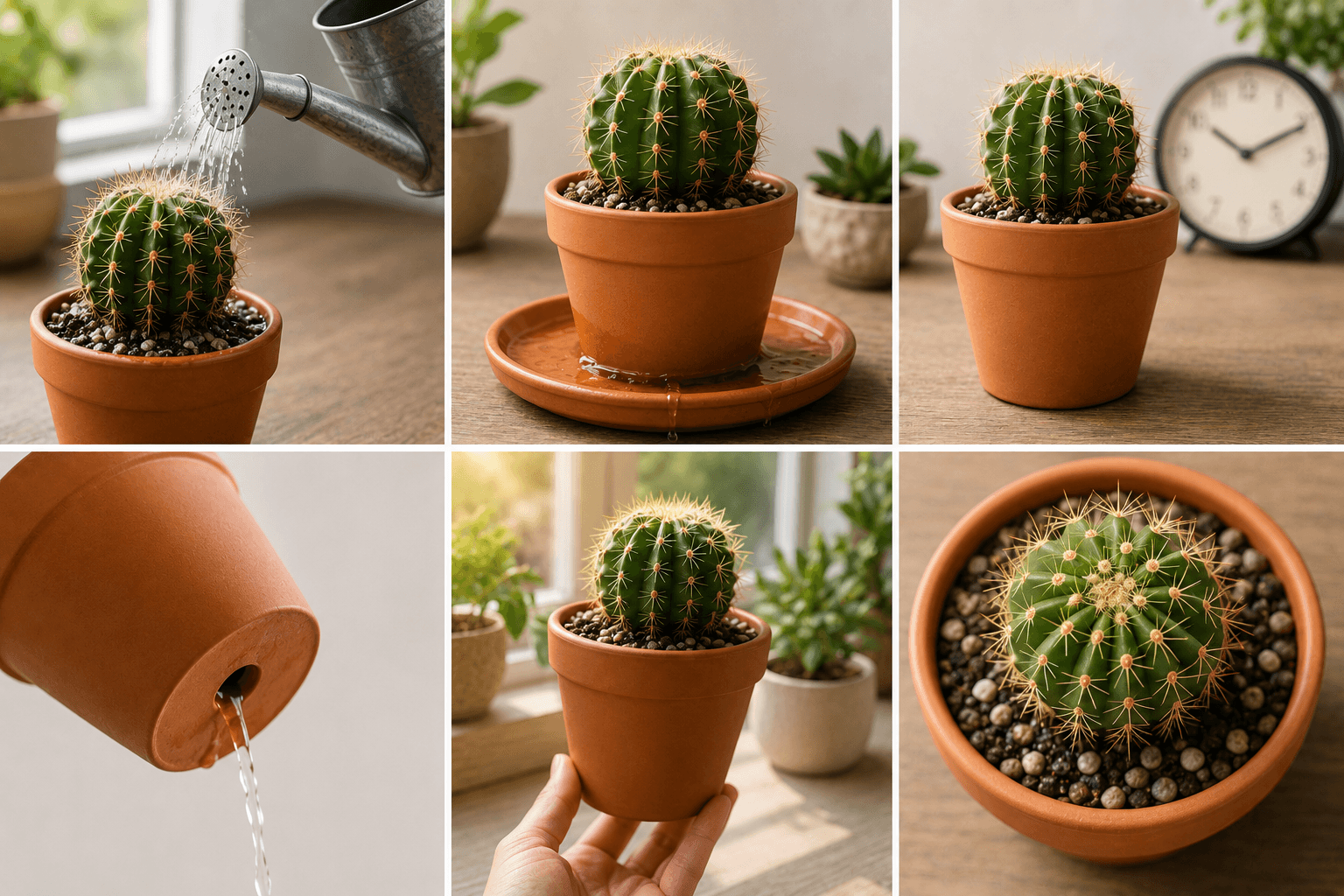
When you water, water thoroughly. A small splash at the surface does not reach the roots. The soak and dry method mimics how rain falls in a desert: a heavy downpour followed by weeks of dry conditions.
Step 1: Check that soil is completely dry using the finger test or moisture meter.
Step 2: Pour room-temperature water (ideally rainwater or distilled water) slowly at the base of the cactus. Aim for the soil, not the stem.
Step 3: Water until it flows freely from the drainage hole at the bottom of the pot. This ensures the full root zone receives moisture.
Step 4: Empty the saucer under the pot immediately after drainage stops. A cactus sitting in standing water will develop root rot within days.
Step 5: Do not water again until the soil has dried out completely from top to bottom.
Water temperature matters. Cold tap water can shock cactus roots. The ideal water temperature is 68–75°F (20–24°C). Let tap water sit for 30 minutes before using, or collect and use rainwater.
Avoid misting. Misting does not hydrate desert cacti. It creates surface moisture that encourages stem rot and fungal infections. Apply all water at soil level only.
7 Signs of an Overwatered Cactus
Overwatering is the #1 cause of cactus death. Root rot begins within days of excess moisture in the soil. Catch these 7 signs early.
- Soft or mushy texture at the base: The normally firm, rigid stem feels spongy when pressed. Healthy cactus tissue is firm. Softness signals cell wall rupture from excess stored water.
- Yellow or translucent patches on the stem: Yellow discoloration that spreads from the base upward indicates root rot is progressing through the plant.
- Brown or black discoloration: Dark spots that feel mushy confirm rot. Black at the base is the most urgent sign. The plant may still be saved if rot is caught before it reaches the core.
- Foul smell from soil: A rotten, fermented odor from the pot means root decay is already underway. Healthy cactus soil is odorless.
- Plant leaning or collapsing: Waterlogged roots can no longer support the cactus’s weight. If the plant tilts when untouched, root structure is compromised.
- Blisters or scabs on the surface: These indicate water trapped under the cactus skin, causing cell damage just below the surface.
- No growth despite normal conditions: Stunted or absent new growth during the growing season, combined with any of the above symptoms, points to overwatering as the root cause.
How to Save an Overwatered Cactus
Step 1: Stop watering immediately.
Step 2: Remove the cactus from its pot. Wear thick gloves and wrap the cactus in several layers of newspaper to protect your hands from spines.
Step 3: Inspect the roots. Healthy roots are white or tan and firm. Rotted roots are brown, black, and mushy. Cut all rotted roots off with sterilized scissors.
Step 4: Let the cactus and roots dry in a warm, well-ventilated area for 3–7 days before repotting.
Step 5: Repot in fresh, dry cactus mix (60–70% mineral components such as perlite, pumice, or coarse sand). Use a pot with drainage holes.
Step 6: Wait 10–14 days before watering the repotted cactus.
5 Signs of an Underwatered Cactus
Underwatering is less dangerous than overwatering — most cacti recover quickly once watered. These 5 signs indicate the cactus needs water soon.
- Shriveling or wrinkling skin: The cactus skin wrinkles or pulls inward as stored water reserves run low. This is the clearest, most reliable sign of a thirsty cactus.
- Brittle or dry-feeling spines: Spines lose strength and may break off when touched. This signals dehydration at the cellular level.
- Deflated or flattened appearance: The cactus looks less round or full than usual. The stem stores water; visible shrinkage means those reserves are depleted.
- Dry brown spots: Dry, papery brown patches (not mushy) on the surface indicate sun stress worsened by dehydration.
- Slow or no growth: An underwatered cactus in the growing season produces little or no new growth because it lacks the water needed to sustain photosynthesis.
The key difference: underwatered cacti are firm and wrinkled. Overwatered cacti are soft and discolored. If you are unsure, check the roots. Firm, white roots = underwatered. Brown, mushy roots = overwatered.
Soil and Pot: 2 Factors That Control Your Watering Schedule
The right soil and pot determine how quickly water drains and how soon the cactus needs water again. Get these two wrong, and no schedule will save your plant.
Soil: Use a Gritty, Well-Draining Mix
Standard potting soil retains too much moisture. The ideal cactus soil contains 60–70% mineral components. A reliable DIY mix is:
- 2 parts standard potting soil
- 1 part perlite (improves drainage and aeration)
- 1 part coarse horticultural sand or pumice (adds grit and prevents compaction)
Commercial cactus mixes are available at most garden centers. Check the label to confirm the mix contains perlite or pumice. Mixes heavy in peat or vermiculite retain moisture and are not suitable for desert cacti.
Pot: Always Use Drainage Holes
Never plant a cactus in a pot without drainage holes. Standing water at the bottom of a sealed pot is the fastest way to cause root rot. If your decorative pot has no holes, place the cactus in a plastic nursery pot with holes inside the decorative outer pot, and remove it to water properly.
Pot size also matters. A pot much larger than the root ball retains excess soil moisture around the roots. Choose a pot only 1–2 inches (2.5–5 cm) wider than the cactus itself.
Frequently Asked Questions
How often should I water a cactus indoors?
Water an indoor cactus every 10–14 days in spring and summer and every 4–6 weeks in fall and winter. Always confirm the soil is completely dry before watering.
Can I water cactus with tap water?
Yes, but tap water contains minerals like calcium and chlorine that accumulate in soil over time. Rainwater or distilled water is better for long-term cactus health. If using tap water, let it sit in an open container for 1–2 hours to allow chlorine to dissipate.
Should I water a newly repotted cactus?
No. Wait 10–14 days after repotting before watering. Repotting damages fine root hairs. Watering immediately causes those damaged roots to rot instead of healing.
Why is my cactus turning yellow?
Yellow color in a cactus is almost always a sign of overwatering or root rot. Check the soil moisture immediately. If the soil feels damp or smells bad, unpot the cactus and inspect the roots. Yellow can rarely indicate insufficient light, but check watering first.
Do I need to fertilize my cactus?
Fertilize once per month during the active growing season (spring and summer) only. Use a diluted cactus fertilizer at half the recommended strength. Never fertilize a dormant cactus or a stressed plant. Overfertilizing causes salt buildup in the soil that damages roots.
How does USDA hardiness zone affect my cactus watering schedule?
Zone affects outdoor cacti significantly. In USDA zones 9–11 (hot, dry climates), outdoor cacti may need water every 7–10 days in peak summer. In zones 5–8 with cooler summers, every 14–21 days is sufficient. Always monitor local rainfall and adjust accordingly.
Related Guides on ZonedGarden.com
These articles will help you build a complete cactus care routine:
- Best Soil Mix for Cactus and Succulents — How to choose or make the right gritty mix that dries fast and prevents rot
- Cactus Root Rot: How to Identify, Treat, and Prevent It — Step-by-step rescue guide when overwatering damage is visible
- How to Repot a Cactus Without Getting Hurt — Tools, technique, and the right time to repot
- Cactus Fertilizer Guide: When and How to Feed Your Plant — Seasonal feeding schedule to support healthy growth
- Christmas Cactus Care: Complete Growing Guide — Water, light, and blooming schedule for Schlumbergera
Conclusion
Cactus watering ka koi fixed formula nahi hota — asli skill soil check karna hai, calendar nahi dekhna. Desert mein mahino tak baarish nahi hoti, isliye aapka cactus khud paani store karta hai. Aapka kaam sirf itna hai: jab mitti poori tarah dry ho jaye, tab deeply water karo, phir door ho jao.
Spring aur summer mein har 10–14 din mein ek deep soak kaafi hai. Fall aate hi watering taper karo. Winter mein cactus dormant hota hai — mahine mein ek baar, ya bilkul bhi nahi, yahi best hai. Overwatering ek din mein damage karti hai jo underwatering weeks mein bhi nahi karti. Jab shak ho, rukk jao aur kal check karo.
Sahi mitti, drainage holes wala pot, aur ek simple finger test — yahi teen cheezein aapke cactus ko saalon tak healthy rakhti hain. Koi expensive tool nahi chahiye, koi complicated schedule nahi. Bas observe karo, respond karo, aur trust karo ki aapka plant tumhe khud bata dega jab use paani chahiye.