

My landscaper wanted to cut my crepe myrtle down to stumps. Showed me exactly where he’d chop—about 4 feet from the ground in a straight line across all branches. I almost said yes. Then someone on Reddit mentioned “crape murder” and my entire approach changed. I started researching crepe myrtle pruning like my tree’s life depended on it. Because it did.
Turns out most people butcher these trees without realizing the damage. The crepe myrtle pruning time matters, but the technique matters even more. I was about to destroy a perfectly healthy 15-year-old tree because I didn’t know better.
Here at Zoned Garden, we help homeowners avoid expensive mistakes with their landscape plants. I’m sharing everything I learned about crepe myrtle pruning so you don’t kill your tree like I nearly did.
What Actually Counts as Crepe Myrtle Pruning
Real crepe myrtle pruning focuses on removing problem branches, not hacking the entire tree in half. Most people confuse heavy topping with proper maintenance.
What you should actually remove:
- Suckers growing from the base
- Crossing or rubbing branches
- Dead or diseased wood
- Branches growing inward at bad angles
My tree had about 20 suckers sprouting from the trunk base. Those needed to go. Everything else? Barely needed touching.
The landscaper wanted to cut every single branch back to create “knuckles” that would force more blooms. This practice is called topping or crape murder.
It ruins the natural shape. Creates weak branch structure. Shortens the tree’s lifespan by decades.
I fired that landscaper after doing my research. Best decision I made for my tree’s health.

Crepe Myrtle Pruning Time That Actually Works
The best crepe myrtle pruning time is late winter when the tree is dormant. I do mine in February here in central Texas.
Why late winter works:
- Tree is dormant and not actively growing
- You can see the branch structure clearly
- Cuts heal faster when spring growth starts
- Less stress on the tree overall
I tried pruning crepe myrtle in summer once. Big mistake. The tree was actively growing and pushing resources to new leaves and blooms.
Cutting during active growth shocked the system. New growth slowed dramatically for weeks.
Can you trim crepe myrtles in the fall? Technically yes, but it’s not ideal. Fall pruning can stimulate new growth right before winter, and that tender growth gets damaged by cold temperatures.
Stick to late winter. It’s the safest window for crepe myrtle pruning that won’t backfire.
Similar to how we time pruning for other flowering shrubs at Zoned Garden, timing with the dormant season protects the plant’s energy reserves.
When Is It Too Late to Prune Crepe Myrtles
People ask when is it too late to prune crepe myrtles constantly. The answer depends on your goals.
If you’re doing maintenance pruning (removing suckers, dead wood, crossing branches), you can do this any time of year. These cuts improve tree health regardless of season.
If you’re doing structural pruning (shaping, thinning the canopy), late winter is your window. Once buds start swelling in early spring, you’ve missed the ideal timing.
I pushed my pruning to late March one year. Buds were already forming on branch tips. Every cut I made removed potential bloom clusters.
The tree bloomed 30% less that summer because I pruned too late in spring.
After mid-April, skip major pruning completely. Just remove obvious dead wood and suckers. Save everything else for next February.
Pruning Crepe Myrtle After Flowering
Pruning crepe myrtle after flowering is one approach some gardeners use. The blooms finish in late summer, so you’d be cutting in August or September.
I tried this method once. Results were mixed.
Pros of post-bloom pruning:
- You’ve already enjoyed the flowers
- Can shape without sacrificing current season blooms
- Good for removing spent seed heads
Cons I experienced:
- Stimulated new growth that wasn’t hardened before winter
- Some tender shoots got frost damage in December
- Tree looked scraggly during fall and winter
The new growth pushed out after summer pruning stayed green and soft. When our first freeze hit in November, those shoots turned black and died back.
Now I skip pruning crepe myrtle after flowering completely unless I’m just removing suckers or obvious dead branches.
My Crepe Myrtle Pruning Technique
I’ve refined my crepe myrtle pruning approach over five years. This routine keeps my trees healthy without the crape murder nonsense.
Step 1: Remove all basal suckers. These shoots come from the trunk base or roots. They steal energy from the main canopy.
Step 2: Identify and remove dead wood. I scratch the bark with my fingernail. Green underneath means alive. Brown means dead.
Step 3: Look for crossing branches. When two branches rub against each other, both get damaged over time. I remove the weaker of the two.
Step 4: Thin crowded areas. If multiple branches emerge from the same spot, I select the strongest 2-3 and remove the rest.
Step 5: Step back and evaluate. I never remove more than one-third of the canopy in a single year.
Check out our guide on proper pruning techniques at Zoned Garden for detailed photos showing correct cut placement and angles.
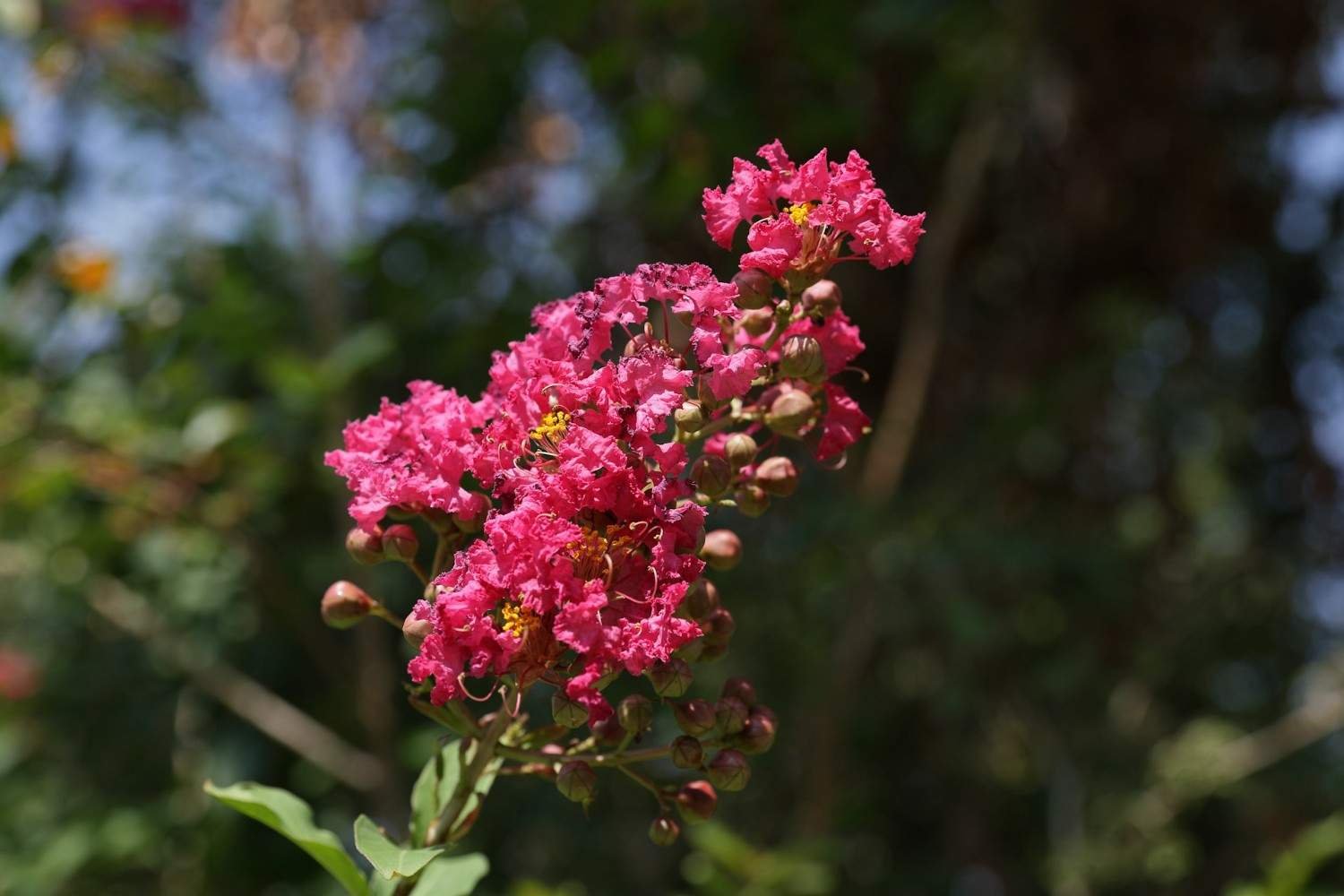
What Happens If You Top Your Crepe Myrtle
My neighbor topped his three crepe myrtles two years ago. Now he regrets it completely.
The trees responded by sending up dozens of weak shoots from each cut. These shoots are called a “witch’s broom” because of how they look.
Problems he’s dealing with:
- Branches are thin and weak
- They droop heavily after rain
- Several broke completely during storms
- Trees look deformed and unnatural
His landscaper convinced him topping would create more flowers. Technically true—more branch tips mean more bloom clusters.
But the branches can’t handle the weight. Half his blooms end up on the ground after any significant rain.
The natural shape is gone forever unless he does serious rehabilitation work. That means cutting to ground level and starting over, or selecting the strongest shoots over multiple seasons.
Both options take 3-5 years to restore a natural appearance.
FAQs About Crepe Myrtle Pruning
When is it too late to prune crepe myrtles in spring?
Once buds start swelling in early to mid-spring, major pruning will sacrifice blooms. After mid-April, skip structural pruning until next February.
Can you trim crepe myrtles in the fall?
You can remove suckers, dead wood, and crossing branches any time. Avoid major structural pruning in fall because it stimulates new growth that won’t harden before winter.
What is the best crepe myrtle pruning time?
Late winter during dormancy is ideal—typically January through early March. The tree is dormant and cuts heal quickly when spring growth starts.
Should I prune crepe myrtle after flowering?
Light maintenance like removing suckers is fine after flowering, but major pruning in late summer can stimulate tender growth that gets damaged by winter cold.
How much can I remove at once?
Never remove more than one-third of the total canopy in a single season. More aggressive pruning stresses the tree and creates weak branch structure.
Wrapping This Up
Crepe myrtle pruning is simpler than the lawn care industry wants you to believe. Remove suckers, dead wood, and crossing branches. Leave everything else alone unless it’s causing actual problems.
The crepe myrtle pruning time matters less than the technique. Late winter gives best results, but light maintenance works year-round. Avoid topping at all costs—it permanently damages tree structure and shortens lifespan. At Zoned Garden, we believe trees should look like trees, not mutilated stumps. Let your crepe myrtles grow naturally with minimal intervention for best results.