Aloe vera doesn’t ask for much: well-draining succulent soil, bright indirect light, and water roughly once every 21 days in summer, stretching to once every 42 days in winter. This is a plant that handles neglect better than it handles attention. Almost every aloe death traces back to the same cause: too much water sitting around the roots.
This guide walks through every stage of growing Aloe vera (Aloe barbadensis miller), from choosing a pot to harvesting gel from a mature leaf. Each section tackles one specific question, with real numbers instead of vague advice.
What Is Aloe Vera and Why Is It Easy to Grow
Aloe vera is a drought-tolerant succulent native to arid climates. It stores water in its thick leaves and can go long stretches without irrigation. The genus includes more than 400 species, but Aloe vera is the one everyone grows, mostly because of its gel, which people have used on minor burns and skin irritation for centuries.
Indoors, a mature plant reaches 24 to 36 inches (61 to 91 cm) tall. Outdoors in warm climates, some specimens end up wider than they are tall, spreading through pups at the base.
It’s an easy plant to recommend to beginners. It survives year-round in USDA Hardiness Zones 9 through 11, and everywhere else it just needs to come inside before frost hits.
How to Plant Aloe Vera
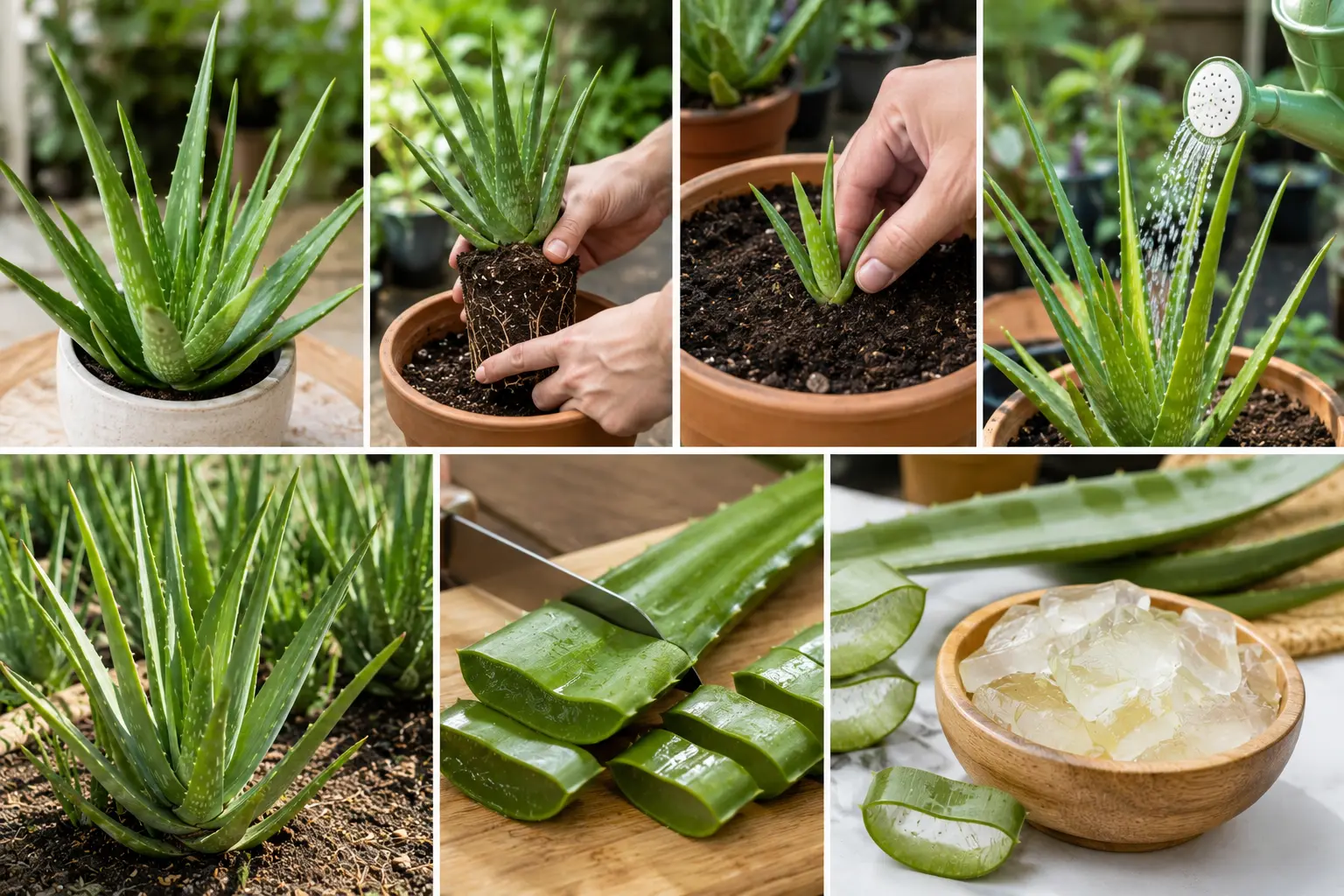
Use a terra-cotta pot with at least one drainage hole, and mix two parts potting soil to one part perlite or coarse sand. Terra-cotta matters more here than with almost any other houseplant, since it pulls moisture out of the soil faster than plastic or glazed ceramic.
Pick a container about 2 inches (5 cm) wider than the root ball, not more. Oversized pots hold extra soil that stays wet for days longer than the roots can actually use, and that’s how rot starts.
To plant or repot:
- Rinse the new pot and let it dry completely.
- Place a small piece of window screen or mesh over the drainage hole.
- Fill the pot one-third full with the perlite-and-soil mix.
- Remove the plant from its old container and brush loose soil from the roots.
- Set the plant in the center, leaving 0.75 inch (2 cm) of space below the pot rim.
- Backfill with soil around the roots without watering yet.
- Wait 7 days before the first watering, so any damaged roots can callus over.
Skip the gravel layer at the bottom of the pot. It’s a persistent bit of houseplant folklore, but it doesn’t improve drainage. The water table just forms above the gravel line anyway, so use that space for roots instead.
How Much Light Does Aloe Vera Need
Aloe vera wants 6 to 8 hours of bright light a day: direct sun outdoors, indirect light indoors. A south-facing or west-facing window is usually enough for a container plant. Be careful with direct sun through glass, though. It concentrates heat and can scorch leaves into white or pale brown patches that never turn green again.
Established outdoor plants can handle full sun, but a new transplant needs time to adjust. Give it 7 to 10 days of gradually brighter conditions rather than moving it into full sun on day one.
Too little light causes the opposite problem. Leaves stretch toward the nearest light source and the rosette loses its compact shape, a condition growers call “etiolation.” A quarter turn each week keeps growth even on all sides.
How Often to Water Aloe Vera
Water every 21 days in spring and summer, every 42 days in fall and winter, and only once the top 2 inches (5 cm) of soil have dried out completely. Check with a finger or a soil moisture meter before each watering. Indoor humidity and pot size can shift that timeline by several days either way, so treat the schedule as a starting point, not gospel.
A moisture meter reading under 3 out of 10 means it’s dry enough to water again. Above 5, the roots still have moisture to work with, and adding more just risks rot.
When you do water, soak the soil until it runs from the drainage hole, then let the pot drain fully for 15 minutes before setting it back in its saucer. Bottom watering works too: set the pot in an inch (2.5 cm) of water for 10 minutes, then pull it out and let the excess drain away.
Leaf symptoms tell you which direction you got it wrong. Soft, mushy, pale leaves mean overwatering and early root rot. Thin, wrinkled, curling leaves mean underwatering. Wrinkled leaves need a deep watering within 24 hours; mushy leaves need at least a week to dry out before you check again.
What Temperature Does Aloe Vera Need
Aloe vera does best between 55°F and 80°F (13°C and 27°C). Below 50°F (10°C), it stops growing or starts taking damage. Most indoor rooms sit in that range naturally for most of the year, which is a big part of why this plant works so well indoors in the first place.
A cold draft from a window or exterior door does more damage than a slightly chilly room overall. Keep pots at least 12 inches (30 cm) from single-pane windows in winter, and bring outdoor containers in once nighttime temperatures start dropping toward 50°F (10°C).
Heating and AC vents cause a different kind of trouble: dry, blasting air that pulls moisture out of the leaves faster than the roots can replace it. Leave a plant sitting in that airflow and you’ll often see brown leaf tips within 2 to 3 weeks.
How to Fertilize Aloe Vera
Fertilize once a month, spring and summer only, with a balanced 10-10-10 or 10-40-10 NPK formula diluted to half strength. Skip it entirely from October through February. That’s the plant’s natural dormant period, and it isn’t actively growing enough to use the nutrients anyway.
Overfertilizing shows up as white, crusty mineral buildup on the soil surface and pot rim. If you see it, flush the soil with plain water equal to twice the pot’s volume, and let it drain fully afterward.
Half strength is the number that matters most here. A liquid houseplant fertilizer at full label strength is built for fast-growing vegetables or flowering annuals, not a slow-growing succulent, and it’ll just build up salt around the roots.
How to Propagate Aloe Vera From Pups
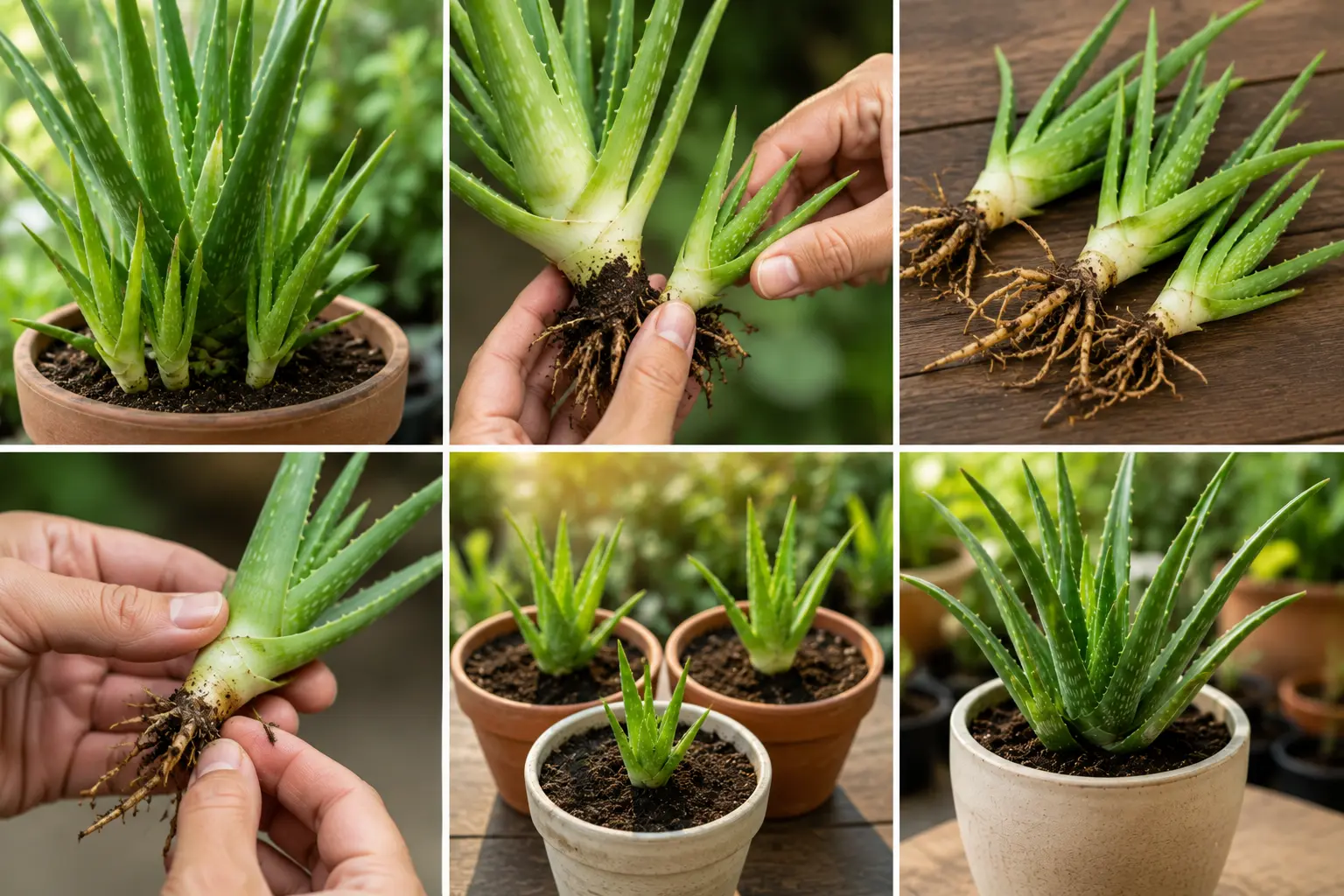
Once a pup reaches 4 to 6 inches (10 to 15 cm) tall, remove it from the base of the mother plant, let the cut end callus for 3 to 7 days, then plant it in dry succulent soil. Pups (also called offsets) grow naturally around a healthy plant’s base and share the mother’s root system until you separate them.
Here’s the process:
- Loosen the mother plant from its pot to expose the base clearly.
- Scrape soil away from where each pup connects to the main root.
- Pull the pup free by hand, or cut it away with a clean, sharp knife if it resists.
- Set the pup on a dry paper towel out of direct sun for 3 to 7 days until the cut forms a callus.
- Plant the callused pup in a small pot with succulent soil, and wait 7 days before the first watering.
Pups under 4 inches (10 cm) can survive removal too, but their root systems aren’t developed enough yet, so beginners tend to get better results waiting for the larger size. One home grower reported harvesting six pups off a single decade-old plant in a single growing season, which gives you a sense of how fast a healthy Aloe vera multiplies once it’s mature.
Leaf cuttings don’t work the same way, and it’s worth saying plainly: don’t bother trying. A severed leaf has no growth node, so it just rots instead of rooting, no matter how well it calluses.
How to Repot Aloe Vera
Repot every 2 to 3 years, or sooner if roots start emerging from the drainage hole or the plant tips over from top-heavy growth. Spring is the best time, since it gives the plant a full growing season to settle in before winter dormancy.
Go no more than 2 inches (5 cm) larger in diameter than the current pot. Otherwise, the process is the same as planting: fresh succulent mix, a 7-day wait before watering, bright indirect light while new roots establish.
A plant with a long, bare stem needs an extra step first. Trim the stem, let it callus for several days in indirect light, then plant only the calloused portion, burying it deep enough for stability.
Common Aloe Vera Pests and Diseases
Mealybugs and scale are the pests you’re most likely to run into. Root rot, soft rot, fungal stem rot, and leaf rot are the diseases, and all four trace back to excess moisture. Mealybugs look like small white, cottony clusters near leaf joints. Scale shows up as flat, brown, immobile bumps along the leaf surface.
Treat both with insecticidal soap applied directly to the affected areas, repeated every 7 days for 3 weeks to catch newly hatched insects. Isolate an infested plant from other houseplants while you treat it.
Anthracnose and aloe rust are the two fungal names worth knowing. Anthracnose causes pitted, rust-colored spots on leaves. Aloe rust produces dry, brown patches with a rough texture. Both call for removing the affected leaves and switching to a drier watering routine from then on.
Is Aloe Vera Toxic to Pets
Yes. Aloe vera is toxic to cats and dogs if ingested, and it can cause vomiting, diarrhea, lethargy, and changes in urine color. The toxic compounds, saponins and anthraquinones, sit in the outer leaf skin rather than the clear inner gel, though a chewing pet rarely bothers to separate the two.
Keep pots on high shelves or in rooms pets can’t get into, especially if you’ve got a cat that likes to chew on houseplant leaves out of curiosity. If a pet shows these symptoms after contact with an aloe plant, get it to a vet promptly. Dehydration from the vomiting and diarrhea can escalate within hours.
Does Aloe Vera Bloom
Yes, mature Aloe vera plants bloom, usually in late winter or early spring, sending up a tall flower stalk called a raceme topped with tubular yellow or orange flowers. It takes several years of maturity plus near-ideal outdoor growing conditions to get there, which is why most indoor plants never flower at all.
A raceme can reach 24 to 36 inches (61 to 91 cm), well above the rosette of leaves below it. Flowers open in sequence up the stalk, with the lower blooms maturing first.
Indoor conditions rarely replicate the temperature swings and light intensity that trigger flowering in the wild. So if your plant hasn’t bloomed after 5 or more years indoors, that’s normal, not a failure on your part.
How to Harvest Aloe Vera Gel
Cut a mature outer leaf at its base, slice it lengthwise, and scoop out the clear gel with a spoon. Go for thick, lower leaves at least 8 inches (20 cm) long. Older leaves store more water and gel than new growth near the center.
Apply the gel directly to minor burns, scrapes, or sunburned skin. Refrigerate what’s left over in a sealed container for up to 7 days, or freeze it in an ice cube tray for use over the following months.
One rule matters more than the rest: never take more than one-third of a plant’s leaves at once. Strip too many in a single session and you’ll slow the plant’s recovery, sometimes stunting growth for the rest of the season.
Aloe Vera Troubleshooting Guide
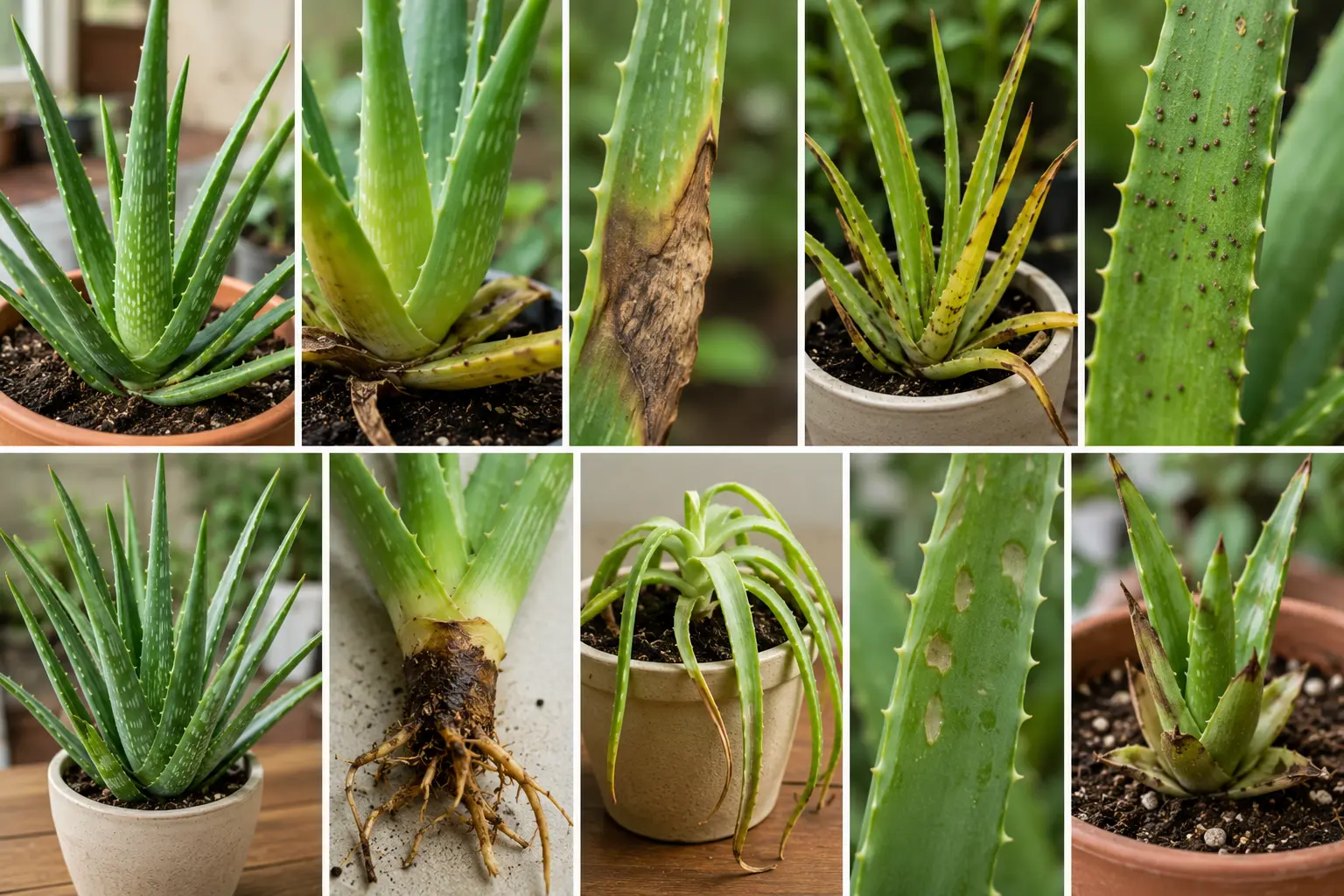
| Symptom | Likely Cause | Fix |
| Soft, mushy, discolored leaves | Overwatering or root rot | Stop watering for 2 weeks; check roots for black, mushy sections |
| Thin, wrinkled, curling leaves | Underwatering | Water deeply within 24 hours; resume normal schedule |
| White or brown scorched patches | Sunburn from sudden direct light | Move to indirect light for 2 weeks, then reintroduce gradually |
| Leggy, stretched growth | Insufficient light | Relocate to a south-facing or west-facing window |
| White cottony spots near joints | Mealybugs | Apply insecticidal soap weekly for 3 weeks |
| Flat brown bumps on leaves | Scale insects | Apply insecticidal soap weekly for 3 weeks |
| Plant tips over in pot | Root-bound or top-heavy growth | Repot into a container 2 inches larger |
| No blooms after years of growth | Normal indoor limitation | No action needed; blooming requires outdoor-like conditions |
FAQs
Does Aloe vera need direct sunlight?
No. Indoor Aloe vera does better with bright indirect light. Outdoor plants can handle full sun once they’re acclimated gradually over 7 to 10 days; jumping straight to full sun causes scorching.
Can Aloe vera survive without water for a month?
Yes. An established plant can go 4 to 6 weeks without water. Those thick leaves are basically a built-in reservoir, which makes this one of the more drought-tolerant houseplants you can own.
Why are my Aloe vera leaves turning brown?
Brown leaf tips usually point to low humidity, heating vent exposure, or underwatering. Brown, mushy patches point to overwatering or root rot instead.
How long do Aloe vera plants live?
12 years or more with proper drainage and light. Some documented specimens have lasted past 25 years under consistent care.
Is tap water safe for aloe vera?
Yes, for most households. If your local water runs high in chlorine or fluoride, let it sit uncovered for 24 hours before using it.
Conclusion
Aloe vera rewards a light touch, in every sense. Good drainage, a watering interval measured in weeks rather than days, and 6 to 8 hours of bright light solve the vast majority of problems this plant runs into. Every symptom in the table above traces back to one of those three fundamentals. Which means most struggling aloe plants can bounce back once the underlying habit changes.