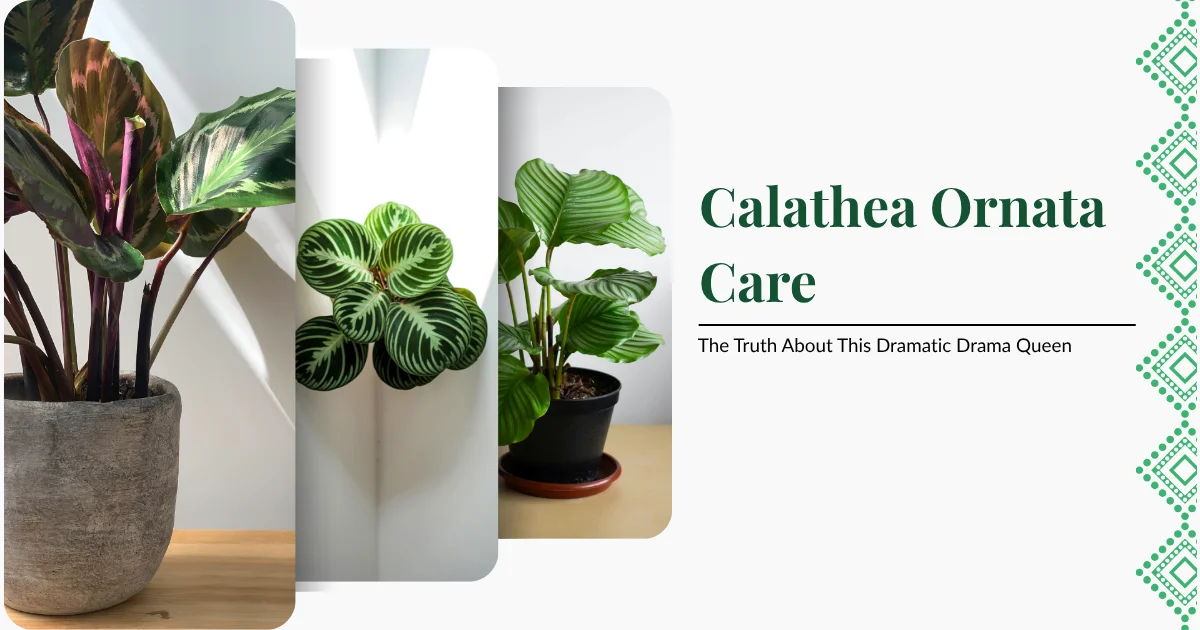
Let me be real with you – calathea ornata care is not for the faint of heart. People call these plants “dramatic little shits” for a reason. I’ve seen experienced plant parents pay over $50 for one, then nearly lose it within weeks. These pinstripe beauties will test your patience, make you question everything, and then suddenly reward you with the most gorgeous new leaf you’ve ever seen.
Here’s everything you need to know to keep this high-maintenance diva alive.
What Is Calathea Ornata (And Why It’s So Pretty)
The calathea ornata, also known as the pinstripe plant, has wide, pointed dark green leaves marked with thin stripes. The wild-type has creamy white pinstripes, but the calathea ornata pink variety features pink stripes that make it an absolute showstopper.
The underside of the leaves is a rich magenta or purple, adding another layer of visual interest.
This tropical houseplant comes from the jungle floors of Central and South America. It’s part of the Marantaceae family (now technically called Goeppertia ornata, but nobody’s ready for that change yet).
Here’s what makes it special – the leaves move. At night they fold up, during the day they lower down. It’s called nyctinasty, and it happens through water pressure changes in the stalk. First time I saw mine move out of the corner of my eye, I thought I was losing it.
Calathea Ornata Care: Light Requirements
Bright to medium indirect light. That’s non-negotiable.
What works:
- East-facing windows (perfect)
- West-facing windows (good)
- North-facing windows (acceptable)
- Several feet back from any window
What absolutely doesn’t work:
- South-facing windows (too harsh)
- Direct sunlight (will scorch and curl leaves)
- Complete darkness (stunts growth)
The harsh direct light from a south window can bleach the leaves and turn them to crisps. I learned this watching someone’s beautiful pinstripe get completely fried in a sunny spot.
Darker-leafed varieties like the pinstripe do well in even lower light than other calatheas, but they still need some brightness to thrive. For more tips on optimizing light for tropical houseplants, we’ve got detailed placement guides.
The Water Situation: Where Everyone Messes Up
This is where calathea ornata care gets tricky. These plants want moist soil but hate sitting in water. Dramatic? Absolutely.
The watering rules:
- Keep soil consistently moist (not soggy)
- Water when top inch feels dry
- ONLY use filtered, distilled, or purified water
- Room temperature water is mandatory
- Never let it completely dry out
- Never let it sit in standing water
Here’s what one grower told me: “It drinks water like a sponge and flops the minute it looks ignored. The attitude of this plant is beyond all reason. It’s a leafy teenager with a glorious sense of self-entitlement, and I am its butler.” That’s calathea ornata in a nutshell.
Why water quality matters: The plant struggles with minerals in tap water. It stores those minerals in its leaf tips, which eventually turn brown. One person I know had to boil their strong tap water first, then let it cool before watering.
Others use ZeroWater filters, Brita, or just buy distilled water. Pick your method, but tap water straight from the faucet? That’s a no. You can leave water sitting out overnight to dechlorinate, which helps remove some chemicals but not all minerals.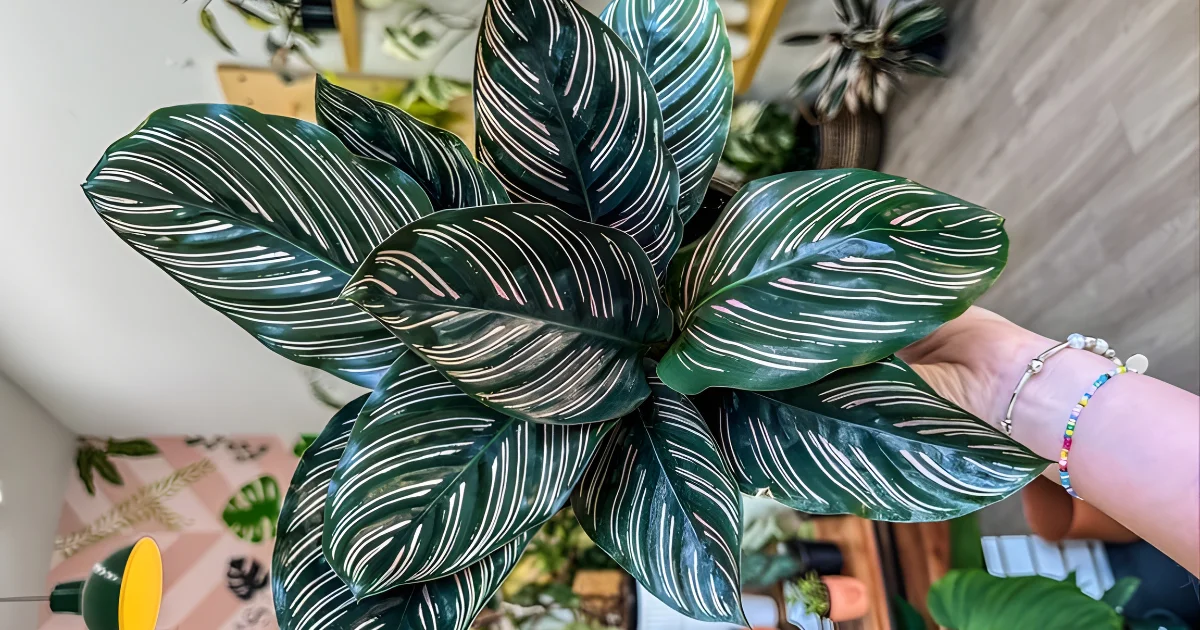
Humidity: The Make or Break Factor
High humidity isn’t optional for calathea ornata care. These plants need 50% humidity minimum, with 65%+ being ideal.
Humidity solutions:
- Run a humidifier nearby (most reliable)
- Place on pebble tray filled with water
- Group with other plants
- Keep in bathroom with window
- Mist regularly (helps but isn’t enough alone)
Without proper humidity, you’ll see brown tips and edges creeping in. This is my biggest struggle with these plants, and I’m not alone.
One grower keeps theirs in the bathroom for hot shower steam. Another groups all their calatheas together near a humidifier set to 65%.
The challenge is that high humidity plus wet soil can cause fungus gnats and mold. You need great airflow to balance it out. It’s a constant juggling act.
Soil and Drainage Requirements
Use a loose, well-draining peat-based mix that holds moisture without staying soggy.
DIY soil recipe that works:
- 2 parts peat moss
- 2 parts orchid bark
- 2 parts perlite
- 1 part organic compost
Or grab an African violet potting mix, which works great for calatheas. Some stores even sell specific calathea and maranta soil now.
Container requirements:
- Must have drainage holes
- Don’t use pots that are too big (they like it snug)
- Terracotta can work because it’s breathable
- Pour away any excess water from trays
One common mistake? Putting these in massive pots. They actually prefer being slightly root-bound. A pot that’s way too big holds too much moisture and leads to root rot.
Check out our guide on proper potting for tropical plants for more container tips.
Temperature and Environment
Keep temperatures between 65-85°F (18-27°C). These are not cold-hardy plants.
What to avoid:
- Cold drafts from windows
- Heating vents blowing directly on plant
- Air conditioning blasts
- Radiators nearby
- Fans creating constant airflow
- Anything below 60°F
Drafts don’t just create temperature swings – they suck humidity out of the air. For a plant that already demands high humidity, drafts are a death sentence.
Fertilizer Schedule
Feed with organic liquid fertilizer diluted to half-strength.
Timing:
- Every two weeks during spring and summer
- Monthly works too
- Stop in fall when growth slows
- Don’t fertilize in winter (dormant period)
- Resume in spring
This plant isn’t a huge feeder, so don’t overdo it. Too much fertilizer burns the roots and causes brown leaf tips.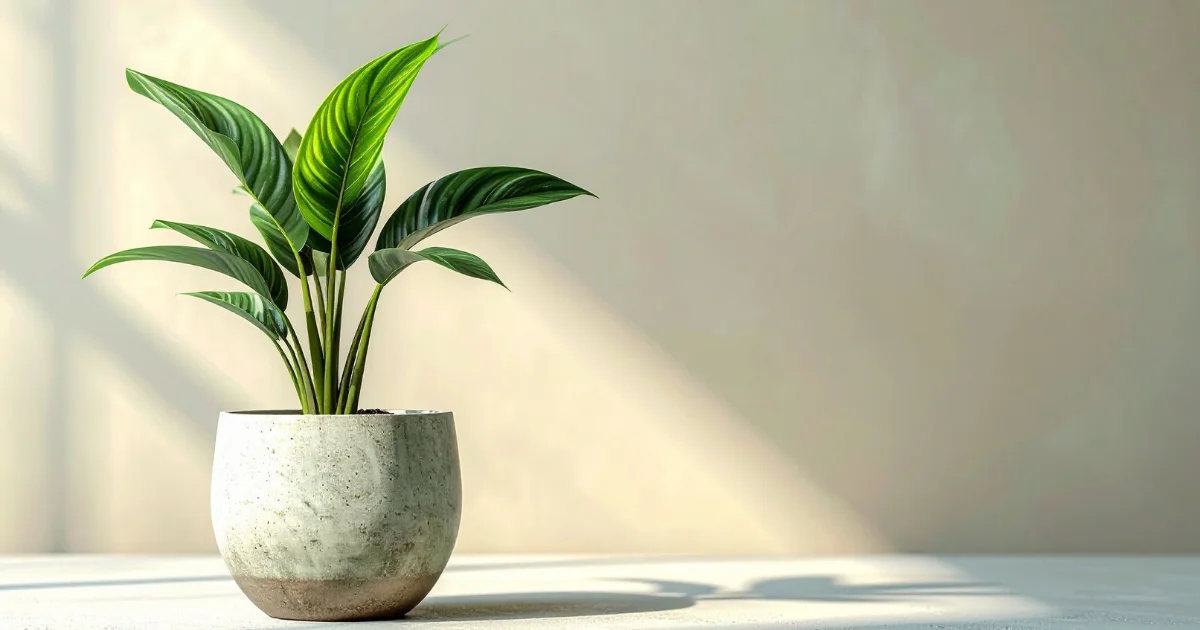
Common Problems With Calathea Ornata Care
Curling leaves:
- Plant needs water immediately
- Could be too much direct light
- Move it and give it a good soaking
Brown tips and edges:
- Low humidity (most common)
- Tap water minerals
- Dry air from heating/cooling
Yellow leaves:
- Overwatering
- Root rot starting
- Cut back on water immediately
- May need to repot and trim rotten roots
Spider mites (they’re magnets for these):
- Check leaf undersides regularly
- White specks and webbing are signs
- Treat with neem oil
- Quarantine immediately
- If you see webbing with naked eye, leaves are beyond saving (roots should be fine)
Propagation and Repotting
Propagate by dividing during repotting in spring or early summer.
Division process:
- Carefully remove from pot
- Look for clumps of roots with leaves attached
- Gently pull apart (avoid disturbing roots too much)
- Plant each division in fresh soil
- Tent plastic bag over them for humidity
- Keep warm with bright indirect light
These plants don’t like being disturbed. They’re susceptible to transplant shock, so be gentle. Repot once per year in a container just one size larger. Examine roots and cut away any rot while disturbing the root ball as little as possible.
The Reality Check on Calathea Ornata Pink
The pink pinstripe variety is stunning but just as finicky as the white-striped version. Same care requirements, same drama, just prettier stripes.
One person told me they finally figured theirs out after it was a “headache and a half” for months. New growth started coming in well, and now it’s gorgeous. The key? Neem oil, filtered water, proper humidity, and patience.
Another grower got theirs as a rescue plant from a Buy Nothing group. It looked neglected, had white flecks (possibly spider mites), and seemed hopeless. A year later? Very happy and thriving in a north-facing window with bright indirect light.
FAQs
Is calathea ornata care difficult?
Yes, these plants are tricky and high-maintenance. They’re dramatic about water, light, humidity, and temperature. Not recommended for beginners.
How often should I water calathea ornata?
Water when the top inch of soil feels dry, keeping soil consistently moist but not soggy. Use only filtered or distilled water at room temperature.
Why are my calathea ornata leaves turning brown?
Brown tips indicate low humidity or tap water minerals. Brown curling leaves mean too much light. Brown yellowing leaves suggest overwatering or root rot.
What humidity does calathea ornata need?
Minimum 50%, ideally 65% or higher. Use a humidifier, pebble tray, or group plants together to maintain humidity.
Is calathea ornata toxic to pets?
No, it’s non-toxic to cats, dogs, and humans, making it safe for pet-friendly homes despite its care challenges.
How do I propagate calathea ornata? Divide the plant during repotting in spring or summer. Gently separate clumps of roots with attached leaves and pot separately in fresh soil.
Final Thoughts on Calathea Ornata Care
Look, I’m not going to lie and say this plant is easy. It’s not. People call them “dramatic little shits,” “bloody divas,” and “prima donnas” for legitimate reasons.
But if you can nail the basics – bright indirect light, filtered water, high humidity, well-draining soil, and consistent temperatures – you’ll have one of the most stunning houseplants around.
The calathea ornata pink variety especially makes a statement with those gorgeous pink pinstripes against dark green leaves.
Just go in with realistic expectations. This plant will test you. But when that new leaf unfurls perfectly? Worth every frustrating moment.
Read More Exciting Blogs at Zoned Garden.