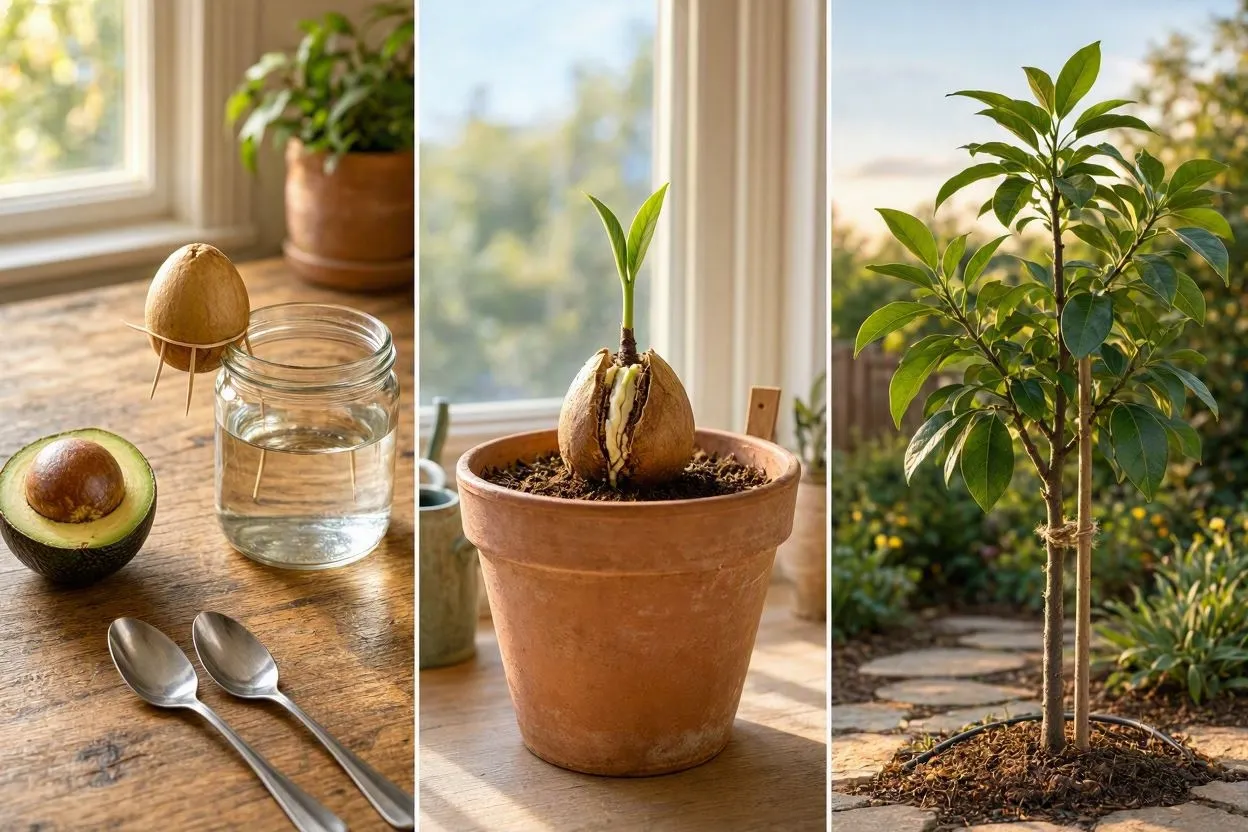
You grow avocado from a pit by washing the seed, suspending it over water with toothpicks (or planting it directly in soil), and waiting two to eight weeks for roots and a stem to emerge before transplanting it into a pot. Both methods work. The water method lets you watch the root system develop through a glass jar, while the soil method skips a step and tends to produce fewer mold problems. Either way, you end up with a free houseplant grown from something most people throw in the trash.
This guide covers both propagation methods in full detail, plus the care schedule, common failure points, and the variety differences that actually affect your success rate. UF/IFAS Extension notes that avocado trees (Persea americana) grown from seed rarely produce fruit that matches the parent, but they make attractive, low-maintenance houseplants regardless.
What You Need to Grow Avocado from Pit
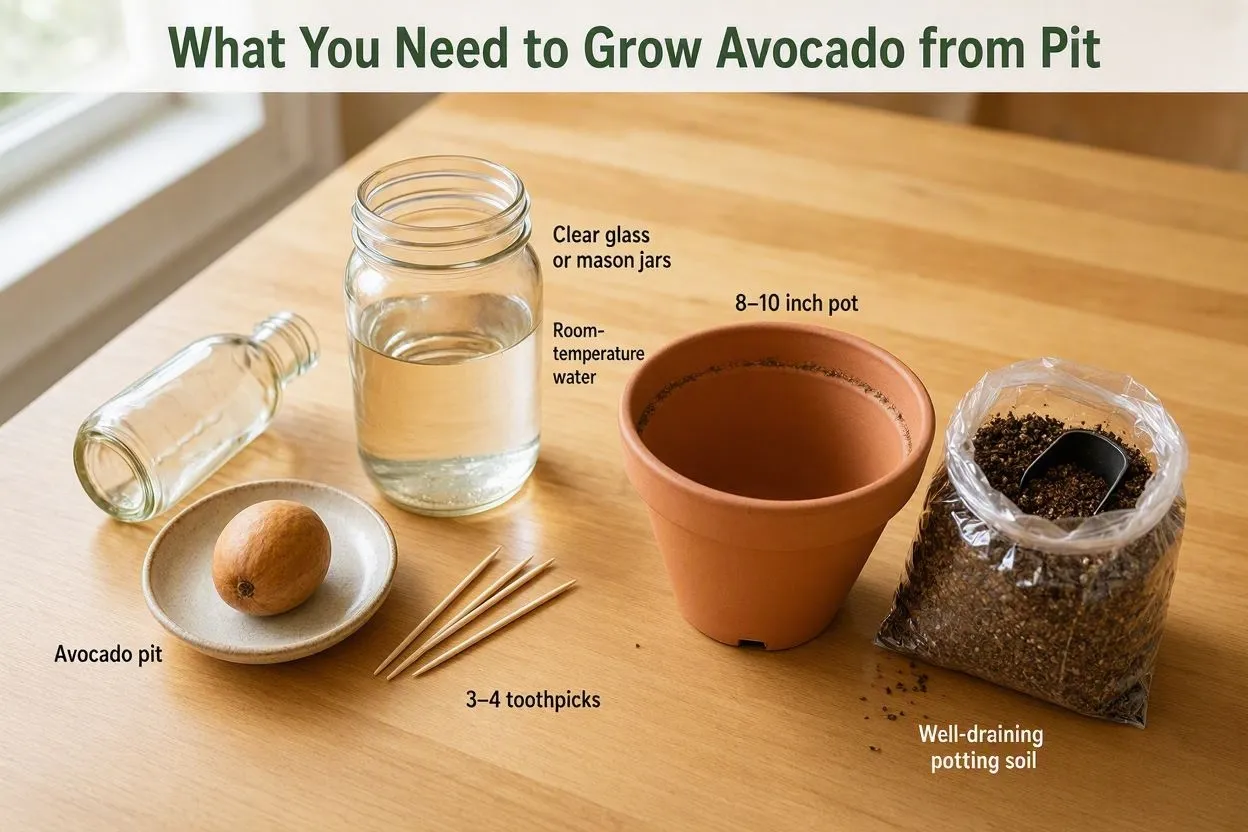
You need six items: an avocado pit, three or four toothpicks, a glass or jar, water, a pot with drainage holes, and well-draining potting soil. Nothing on this list costs more than a few dollars, and most kitchens already have everything except the pit itself.
- Avocado pit (from a ripe, unrefrigerated avocado)
- 3–4 toothpicks
- A clear glass, mason jar, or narrow-necked bottle
- Room-temperature water
- A pot, 8–10 inches (20–25 cm) in diameter, with drainage holes
- Well-draining potting mix (not garden soil)
If you plan to skip the water stage entirely, you can drop the toothpicks and glass from the list and plant the washed pit straight into moist soil instead. That variation saves a step but makes root development harder to monitor.
How to Remove and Prepare an Avocado Pit
Removing the pit correctly means cutting around it with a spoon rather than a knife, then washing off all the fruit residue before it dries out. A dull edge, not a sharp blade, protects the seed from nicks that can prevent germination.
Start by slicing the avocado in half lengthwise and twisting the two halves apart. Instead of prying the pit out with a knife tip — which risks slicing into the seed itself — scoop underneath it with a spoon. Rinse the pit under warm water and rub off any clinging pulp with your fingers. Some growers peel away the thin brown seed coat at this stage, since removing it may speed up germination slightly, particularly on thicker-skinned pits. Peeling isn’t required, though skipping it sometimes delays the crack that signals root growth.
Timing matters here: an avocado pit left to dry out for more than a few days loses viability fast. If a friend hands you three avocado pits from last night’s guacamole, treat them the same evening rather than storing them on the counter for a week.
How to Grow Avocado From Pit in Water (Toothpick Method)
Suspending the pit over a glass of water with three or four toothpicks is the classic way to grow avocado from pit, and it lets you watch the entire root process from day one. This method takes slightly longer to reach the soil stage than planting directly in dirt, but it’s the more reliable way to confirm a seed is viable before committing a pot to it.
- Identify top and bottom. Avocado pits are slightly egg-shaped. The pointed end faces up; the flatter, broader end faces down and is where roots emerge.
- Insert the toothpicks. Push three or four toothpicks into the seed at its widest point, angled slightly downward, spaced evenly around the circumference.
- Suspend over water. Rest the toothpicks on the rim of a jar or glass filled with water, so the bottom inch (2.5 cm) of the pit sits submerged. The pointed top should stay dry and exposed to air.
- Place in a warm, bright spot. A windowsill that gets indirect light works well; direct, intense sun can overheat the water and stress the seed.
- Change the water weekly. Swap it out every five to seven days to prevent bacterial buildup and the cloudy film that often signals rot.
- Watch for the split. Within two to four weeks, the pit typically cracks down one side. A root emerges from the base shortly after, followed by a stem from the top.
- Keep the water level topped off as it evaporates. A root that dries out even for a day or two can stall growth or kill the emerging seedling entirely.
How to Grow Avocado From Pit in Soil (Direct Method)
Planting the washed pit directly into moist potting soil, broad end down, skips the water stage entirely and reduces the mold risk that sometimes affects the toothpick method. Growers who’ve tried both often report the soil method as faster to a rooted seedling, though you lose the ability to watch root development.
Fill a 6-inch (15 cm) pot with well-draining potting mix and moisten it thoroughly before planting. Push the pit into the soil broad-end down, burying about two-thirds of it while leaving the top third exposed above the surface. Water the pot until it drains freely from the bottom, then keep the soil consistently moist — not soggy — for the next several weeks. Set the pot somewhere warm, ideally 65–75°F (18–24°C), with bright indirect light.
Check the soil surface every three or four days. If it feels dry an inch (2.5 cm) down, water again. A stem typically pushes through the surface within three to six weeks, depending on the pit’s initial moisture content and room temperature.
How Long Does It Take an Avocado Pit to Sprout?
Most avocado pits sprout within two to six weeks, though some take as long as eight weeks before showing any growth. If a pit shows zero signs of splitting, rooting, or sprouting after eight weeks, discard it and start over with a fresh one rather than continuing to wait.
Room temperature drives most of this variation. A pit kept near 70–75°F (21–24°C) germinates noticeably faster than one sitting on a cold windowsill in a drafty kitchen. Consistent warmth and fresh water explain most of the difference between a pit that sprouts on schedule and one that stalls.
How to Transplant an Avocado Seedling Into Soil
Transplant a water-grown seedling into soil once its roots reach 2–3 inches (5–7.5 cm) long, or once the stem itself grows to 6–7 inches (15–18 cm) tall. Waiting for one of those two thresholds, whichever comes first, gives the seedling enough root mass to survive the move without transplant shock.
Choose a pot 10 inches (25 cm) in diameter with at least one drainage hole. Add a few inches of potting mix to the bottom, then hold the seed so its top sits roughly level with the pot’s rim. Backfill soil around the roots, firming gently, and leave the top third to half of the seed exposed above the soil line — burying it completely can cause rot. Water thoroughly right after planting so the roots make solid contact with the new soil.
Some growers cut the stem back to about 6 inches (15 cm) right before transplanting, snipping just above a leaf node. That pruning step feels drastic, but it encourages a stockier, bushier plant instead of one tall, thin stalk.
How to Care for an Avocado Plant After Potting
A potted avocado plant needs bright indirect light, soil that dries slightly between waterings, feeding every four to six weeks during the growing season, and regular pinching to control its shape. Get those four variables right, and the plant typically grows 12–24 inches (30–60 cm) per year indoors.
Light Requirements
Avocado plants need at least six hours of bright, indirect light daily, ideally near a south- or east-facing window. Direct, intense afternoon sun through glass can scorch young leaves, so a sheer curtain or a spot a few feet back from the window works better than a sill in full sun.
Watering Schedule
Water an avocado plant when the top inch (2.5 cm) of soil feels dry to the touch, then soak thoroughly until water drains from the bottom. Overwatering causes far more avocado deaths than underwatering; root rot from soggy, undrained soil is one of the most common causes of avocado houseplant failure.
Fertilizing
Feed an avocado plant every four to six weeks during spring and summer using a balanced, water-soluble fertilizer or a citrus-specific blend, then stop entirely once the plant goes dormant in fall and winter. Applying fertilizer to a dormant plant does nothing but risk burning the roots, since the plant isn’t actively taking up nutrients at that stage.
Pruning for Bushier Growth
Pinch back the newest growth every time a stem extends 6 inches (15 cm) or more, cutting just above a leaf node to force two new stems where there was one. A single unpruned avocado plant tends to grow leggy and top-heavy within a year, so this step matters more than most new growers expect.
Why Won’t My Avocado Seed Sprout? Troubleshooting Common Problems
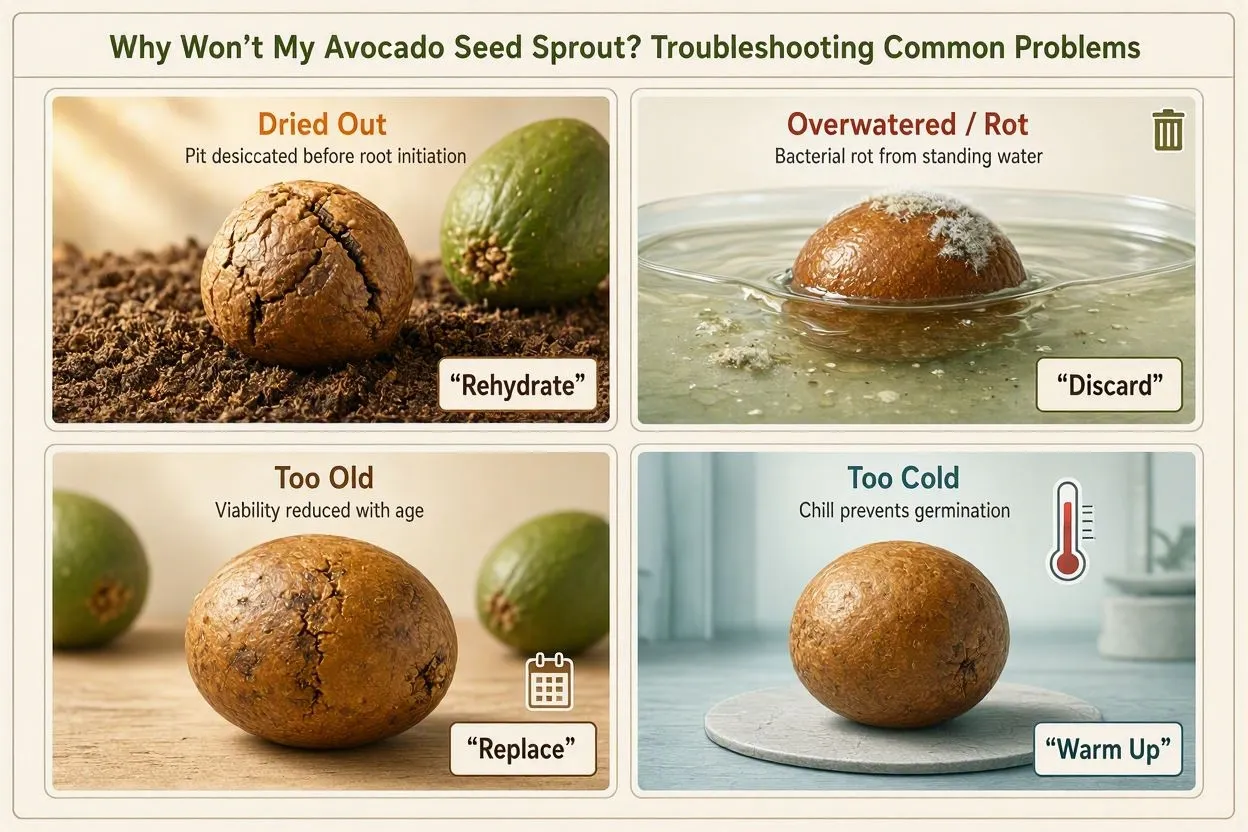
A seed that won’t sprout usually has one of four problems: it dried out before starting, it rotted from staying too wet, it’s simply too old, or the room is too cold. Diagnosing which of these four applies determines whether the pit is salvageable or needs replacing.
- Mold or a foul smell: The pit is rotting from bacterial buildup, often from water that hasn’t been changed. Discard it and start with a fresh pit and clean water.
- No cracking after eight weeks: The seed is likely non-viable, possibly from being cut during removal or left out too long before starting. Toss it and try a different avocado.
- Cracked but no root after two extra weeks: This can still resolve on its own — give it another week before giving up, since some pits split well before the root actually emerges.
- Sprouted but leaves turning brown at the tips: This points to tap water with high mineral content or chlorine. Switching to filtered or distilled water often resolves it within a few waterings.
If mold appears on a pit that’s otherwise splitting and rooting normally, a quick rinse under running water usually clears it without setting back the germination timeline.
Temperature swings cause a surprising number of failed attempts, too. A pit sitting on a windowsill above an active heating vent experiences wide day-to-night temperature shifts that stress the seed even when the room itself feels comfortable. Moving the glass or pot a few feet away from vents, drafty windows, and exterior doors removes one more variable from a process that already has enough of them. Consistency, not warmth alone, is what most stalled seeds are missing.
Will an Avocado Grown From a Pit Produce Fruit?
Yes, an avocado grown from a pit can eventually produce fruit, though UF/IFAS Extension puts the timeline at four to ten years — other horticultural sources put it as high as fifteen — and the fruit rarely matches the parent avocado in flavor or size. Commercial growers avoid this uncertainty entirely by grafting a known productive variety onto seedling rootstock instead of relying on seeds.
The genetic variability comes from cross-pollination. An avocado tree grown from seed doesn’t reproduce true to type, meaning the fruit could taste better, worse, or nothing like the avocado the pit came from. A tree also needs to reach several feet in height and full maturity before flowering even becomes possible, and indoor-grown plants rarely reach that size or receive the pollination conditions needed to set fruit. Most home growers treat a seed-grown avocado as a houseplant project rather than a future food source, and that expectation avoids disappointment years down the line.
Best Avocado Varieties to Grow From Pit
Hass avocado pits make the best houseplants because of their smaller mature size; Florida-type pits tend to germinate more reliably and grow faster. Choosing between them comes down to whether compact size or germination speed matters more to you.
| Variety | Germination Reliability | Mature Indoor Height* | Best For |
| Hass | Moderate | 6–10 ft (1.8–3 m) | Small spaces, apartments |
| Florida-type (green-skin) | High | 10–15+ ft (3–4.6 m) | Faster growth, larger pits to work with |
| Bacon | Moderate | 8–12 ft (2.4–3.7 m) | Cold-tolerant regions |
Indoor container height is naturally constrained by pot size and pruning; expect the lower end of these ranges under typical houseplant conditions.
Grocery-store avocados sold in the United States are almost always Hass, so most people growing avocados from pits at home are working with that variety by default. Florida-type pits, when available, are noticeably larger and easier to handle for beginners and kids.
Seed size affects more than just ease of handling. A larger Florida-type pit stores more starch reserves, which fuels the seedling through its first several weeks before roots are established enough to draw nutrients from soil or water. Smaller Hass pits carry fewer reserves, so consistent moisture and warmth matter even more for that variety — a two- or three-day dry spell that a Florida-type seedling shrugs off can stall a Hass seedling for a week or longer.
Can You Grow Avocado Outdoors From a Pit?
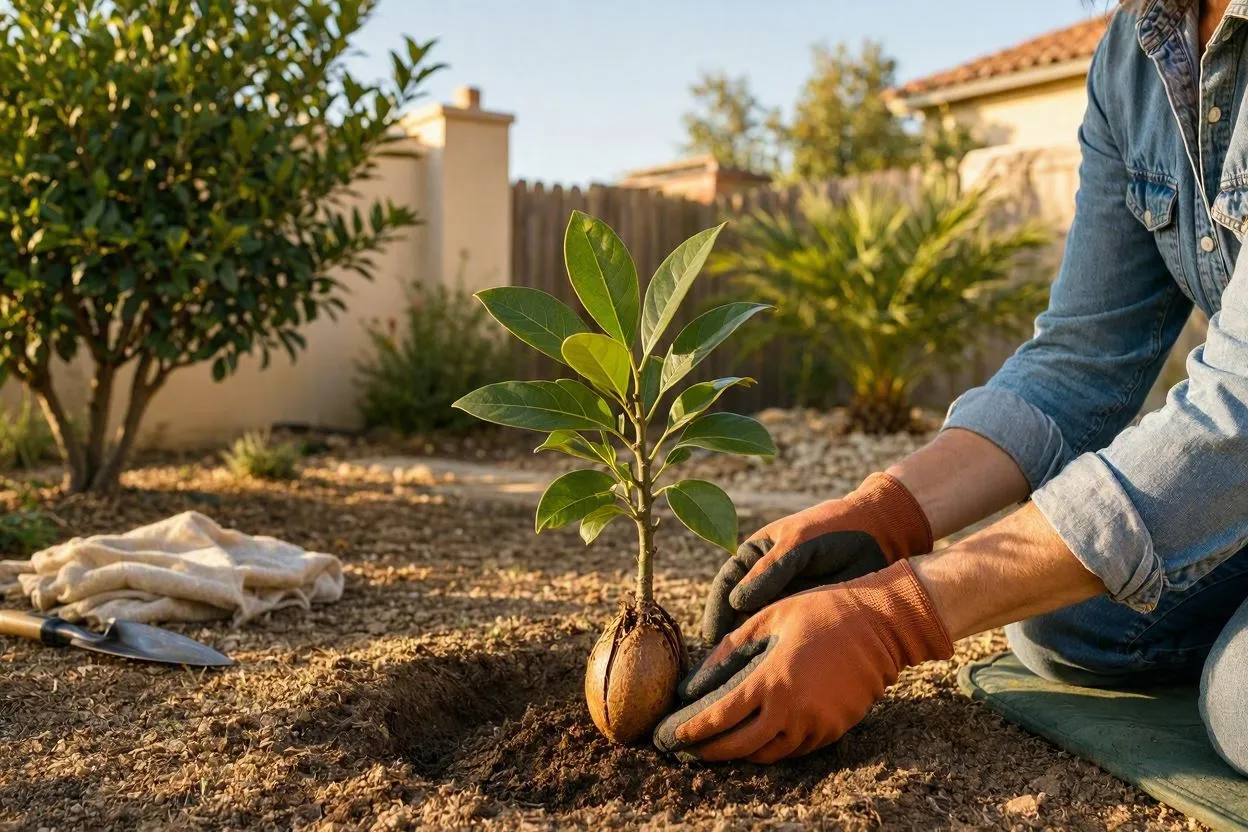
Yes, you can grow avocado outdoors from a pit, if your location falls within USDA Hardiness Zones 9b through 11. Outside that range, hard freezes can damage or kill an avocado tree within a single winter, with exact cold tolerance varying by variety.
Consult the USDA Plant Hardiness Zone Map before committing a seedling to the ground, since even a borderline Zone 9a location can lose a young tree to a hard frost. Gardeners in Southern California, South Florida, and parts of Texas and Arizona have the climate conditions to grow avocado trees outdoors long-term. Everyone else can still start the seedling indoors and move the pot outside seasonally, bringing it back in before nighttime temperatures drop below 50°F (10°C).
FAQs
Does an avocado seed need sunlight to germinate?
No — avocado seeds germinate in warmth and moisture, not light. Keep the glass or pot in a warm spot; bright light matters more once the stem and leaves appear.
How many toothpicks does an avocado pit need?
Three or four toothpicks, spaced evenly around the widest point of the pit, provide enough support to suspend it over the water without tipping.
Can you grow avocado from a store-bought avocado?
Yes, any ripe avocado sold in U.S. grocery stores works, provided the pit hasn’t been cut or dried out during removal from the fruit.
Why did my avocado seed turn black?
A black, mushy pit has rotted, usually from stagnant water or a crack that let bacteria in. Discard it and start over with a fresh seed.
Do I need to peel the brown skin off the avocado pit?
No, peeling isn’t required, though removing the thin brown seed coat may speed up germination slightly on thicker-skinned pits.
Conclusion
Growing an avocado from a pit takes nothing more than a washed seed, a few toothpicks or a pot of soil, and two to eight weeks of patience. Either method ends the same way: a seedling ready for its own pot, steady indirect light, and a pruning schedule that keeps it full rather than leggy. Fruit, if it ever comes, is years away and not the point — the point is a full-grown houseplant grown from something that would otherwise have gone straight into the compost bin.