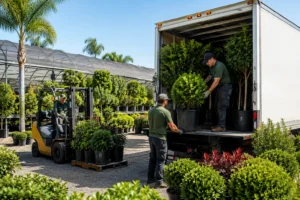
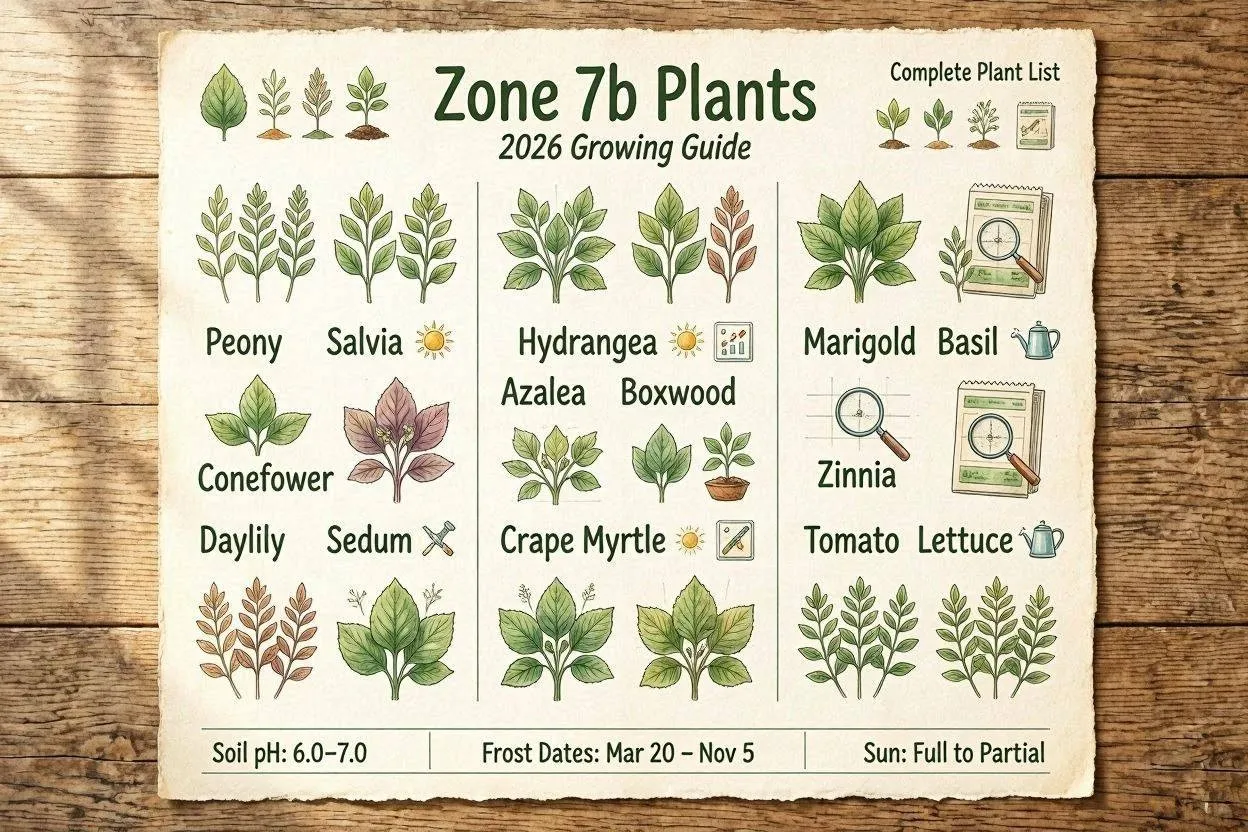
7b zone plants are perennials, shrubs, trees, and vegetables that survive minimum winter temperatures between 5°F and 10°F (-15°C to -12.2°C). The United States Department of Agriculture (USDA) places Zone 7b in a mild gardening climate that stretches across parts of Virginia, North Carolina, Georgia, Oklahoma, northern Texas, and the Pacific Northwest. Gardeners in this zone enjoy one of the longest growing seasons in North America: around 235 frost-free days of planting, growing, and harvesting.
That long growing season is the real prize for any gardener. You can harvest homegrown tomatoes in July, sow a second crop of spinach seeds in September, and still cut camellia blooms from the garden in November. This gardening guide covers 40+ proven plants, exact 2026 frost dates, a month-by-month planting calendar, and the late-frost trick most gardeners learn the hard way.
What Is Zone 7b?
Zone 7b is a USDA Plant Hardiness Zone where average annual minimum winter temperatures fall between 5°F and 10°F (-15°C to -12.2°C). The USDA divides North America into 13 zones based on 30-year temperature records, and each zone splits into two half-zones: “a” (colder) and “b” (warmer).
The letter matters more than most gardeners realize. A fig tree that dies in Zone 7a often thrives in Zone 7b because those extra 5 degrees decide whether roots freeze or survive. Plant tags list a hardiness range, such as “Zones 5–9.” Your plant survives winter outdoors if 7b sits inside that range.
Zone 7b covers 4 distinct gardening regions: the mid-Atlantic Piedmont (Virginia, North Carolina), the Deep South uplands (Georgia, Alabama), the southern Plains (Oklahoma, northern Texas), and the maritime Pacific Northwest (Washington, Oregon). Each region shares the same winter lows but grows plants in different rainfall, humidity, and garden soil. A lavender plant loves the dry Oklahoma summer and sulks in humid Georgia clay soil. Check both your hardiness zone and your local garden conditions before buying plants.
Zone 7a vs Zone 7b: What Is the Difference?
Zone 7a has minimum winter temperatures of 0°F to 5°F (-17.8°C to -15°C), while Zone 7b stays warmer at 5°F to 10°F (-15°C to -12.2°C). That 5-degree gap changes what survives in your garden.
| Factor | Zone 7a | Zone 7b |
| Minimum winter temp | 0°F to 5°F (-17.8°C to -15°C) | 5°F to 10°F (-15°C to -12.2°C) |
| Last spring frost | April 10–20 | March 25 – April 10 |
| First fall frost | October 20–30 | November 1–15 |
| Growing season | ~215 days | ~235 days |
| Borderline plants | Figs need protection | Figs, rosemary, some camellias survive unprotected |
Zone 7b gardeners gain 3 practical advantages: earlier spring planting, a reliable fall vegetable crop, and access to borderline plants such as hardy figs (Ficus carica ‘Chicago Hardy’), rosemary, and windmill palms. Buy plants rated for Zone 7a or colder if your garden sits on the 7a/7b boundary, because one harsh winter erases the difference.
Zone 7b Frost Dates and Growing Season
The last spring frost in Zone 7b lands between March 25 and April 10, and the first fall frost arrives between November 1 and November 15. These dates give you an outdoor growing window of roughly 235 days, which is 7.5 months of active gardening.
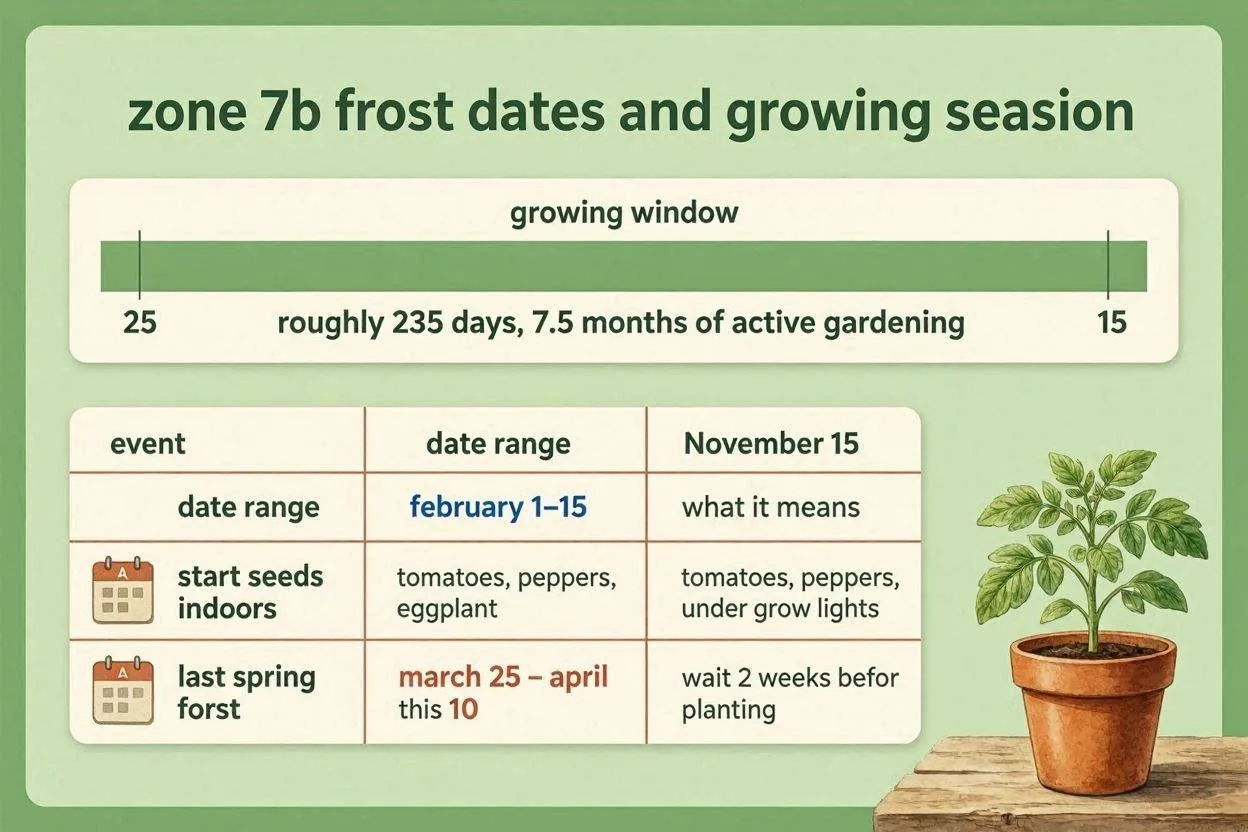
| Event | Date Range | What It Means |
| Start seeds indoors | February 1–15 | Tomatoes, peppers, eggplant under grow lights |
| Last spring frost | March 25 – April 10 | Wait 2 weeks after this before planting warm-season crops |
| Safe transplant date | April 15–20 | Move tomatoes, peppers, and basil outdoors |
| Fall planting window | August 15 – September 30 | Second crop of kale, spinach, lettuce, and garlic |
| First fall frost | November 1–15 | Harvest tender crops before this date |
Frost dates are averages, not guarantees. A late cold snap hits Zone 7b roughly 1 year in 4, so keep row covers ready through mid-April. Local weather stations and your county cooperative extension office publish exact dates for your zip code.
Did Your Zone Change? The 2023 USDA Map Update
Yes, millions of American gardens shifted half a zone warmer when the USDA released its updated Plant Hardiness Zone Map in November 2023. The new gardening map used temperature data from 13,412 weather stations, up from 7,983 in the 2012 version, and about half of all US gardens moved to the next warmer half-zone. Large areas that gardened as Zone 7a for a decade now plant as Zone 7b.
This shift changes 3 plant-buying decisions in 2026. First, plants once labeled “risky” for your garden, such as crape myrtle in the northern Piedmont, now carry an official green light. Second, your seed-starting and transplanting dates move about a week earlier. Third, some cool-loving garden plants, such as certain lilacs and peonies that need winter chill, bloom slightly worse than they did 15 years ago. Confirm your current hardiness zone by entering your zip code on the USDA map tool before ordering seeds or plants this season.
Best Perennials for Zone 7b
The 12 best perennials for Zone 7b are coneflower, daylily, black-eyed Susan, hosta, lavender, sedum, dianthus, coreopsis, gaura, goldenrod, foxglove, and salvia. Each returns every spring without replanting, and each tolerates the zone’s winter lows and summer heat.
- Coneflower (Echinacea purpurea) — Blooms June through September in full sun. Goldfinches eat the seed heads all winter, so skip the fall cut-back.
- Daylily (Hemerocallis) — Each flower lasts one day, but a mature clump produces 200–400 blooms per season. Divide clumps every 4 years.
- Black-Eyed Susan (Rudbeckia fulgens) — Native, drought-tolerant, and blooms for 10 weeks. Deer usually leave the fuzzy leaves alone.
- Hosta — The workhorse for shade. ‘Sum and Substance’ reaches 5 feet (1.5 m) wide. Slugs are the only serious enemy.
- Lavender (Lavandula angustifolia) — Needs sharp drainage. Plant in gravel-amended soil or raised mounds, never in wet clay.
- Sedum ‘Autumn Joy’ — Succulent leaves shrug off drought. Pink flower heads turn copper in October and stand through snow.
- Dianthus — Spicy-scented blooms in April and May. Shear after flowering for a second flush in September.
- Coreopsis — Blooms nonstop from May to frost if deadheaded. Thrives in poor, sandy soil where other perennials starve.
- Gaura — White or pink flowers float on 3-foot (90 cm) stems. Handles heat, drought, and humidity without complaint.
- Goldenrod (Solidago) — Feeds late-season pollinators in September and October. Goldenrod does not cause hay fever; ragweed does.
- Foxglove (Digitalis) — Tall spires for part shade. All parts are toxic, so plant away from areas where children and pets play.
- Salvia ‘May Night’ — Purple spikes from May onward. Hummingbirds visit daily, and rabbits avoid the aromatic foliage.
Best Shrubs for Zone 7b
The 8 best shrubs for Zone 7b are camellia, hydrangea, azalea, loropetalum, gardenia, boxwood, distylium, and oakleaf hydrangea. These shrubs anchor a garden year-round and handle both winter lows and humid summers.
- Camellia — Blooms October through March when nothing else flowers. Sasanqua types handle more sun than japonica types.
- Hydrangea macrophylla — Flower color follows soil pH: blue in acidic soil below pH 6.0, pink above pH 7.0.
- Azalea — Needs acidic soil (pH 4.5–6.0) and afternoon shade. Encore® varieties bloom in spring and again in fall.
- Loropetalum — Purple foliage all year plus fringe-like pink flowers in March. Grows 24 inches (60 cm) per year once established.
- Gardenia — Fragrant white blooms in June. ‘Frostproof’ and ‘Kleim’s Hardy’ survive 7b winters that kill older varieties.
- Boxwood — Evergreen structure for hedges and borders. Choose blight-resistant varieties such as ‘Green Beauty’ or NewGen® types.
- Distylium — The low-maintenance replacement for disease-prone laurels and hollies. Evergreen, pest-free, and drought-tolerant once rooted.
- Oakleaf Hydrangea (Hydrangea quercifolia) — Native shrub with white summer blooms, burgundy fall leaves, and peeling winter bark. Four seasons of interest from one plant.
Best Trees for Zone 7b
The 6 best trees for Zone 7b are crape myrtle, redbud, dogwood, Japanese maple, serviceberry, and ‘Chicago Hardy’ fig. Each stays small enough for a home landscape, and each earns its space in at least two seasons.
- Crape Myrtle — Blooms 90–120 days from June to September. Never top the tree (“crape murder”); it ruins the natural vase shape.
- Eastern Redbud (Cercis canadensis) — Rosy-pink flowers coat bare branches in March. Native, and reaches only 25 feet (7.6 m).
- Flowering Dogwood (Cornus florida) — White April blooms and red fall berries that feed 36 bird species. Plant in part shade.
- Japanese Maple (Acer palmatum) — Fine-cut foliage in red, orange, or green. Protect from hot afternoon sun and drying wind.
- Serviceberry (Amelanchier) — White spring flowers, edible June berries that taste like blueberry-almond, and orange fall color.
- ‘Chicago Hardy’ Fig — Produces 2 crops of figs per year in Zone 7b without winter protection. Fruit ripens August through October.
Vegetables and Fruits for Zone 7b

Zone 7b supports 2 full vegetable seasons: a warm-season crop planted in April and a cool-season crop planted in August. Few US zones give you both a long tomato summer and a productive fall garden, so use the full window.
Warm-season vegetables (plant April 15–May 1): tomatoes, peppers, okra, squash, cucumbers, beans, corn, and sweet potatoes. Okra and sweet potatoes love 7b summers and produce until frost.
Cool-season vegetables (plant August 15 – September 30): kale, spinach, lettuce, broccoli, carrots, radishes, and garlic. Kale sweetens after the first light frost because cold converts starches to sugar. Plant garlic cloves in October for a June harvest.
Fruits for Zone 7b: peaches, plums, blueberries, blackberries, muscadine grapes, and figs. Rabbiteye blueberries (Vaccinium virgatum) suit 7b better than northern highbush types because they tolerate heat and resist pests. Blueberries need acidic soil between pH 4.5 and 5.5, so test your soil first through a county cooperative extension office; most offices charge under $10 (about £8 or €9) per sample.
Fruit trees also need chill hours: cumulative winter hours between 32°F and 45°F (0°C and 7°C). Zone 7b receives 800–1,200 chill hours per winter, enough for nearly every peach, apple, and plum variety on the market.
Zone 7b Planting Calendar 2026
Start seeds indoors in February, transplant outdoors in mid-April, and plant your fall garden in late August. This month-by-month calendar covers the full 2026 season.
| Month | Tasks |
| January | Order seeds; prune dormant fruit trees; sow onion seeds indoors |
| February | Start tomatoes, peppers, and eggplant indoors; plant bare-root trees |
| March | Direct-sow peas, radishes, and spinach; last frost approaches at month end |
| April | Transplant tomatoes and peppers after April 15; plant perennials and shrubs |
| May | Direct-sow okra, squash, and beans; mulch beds 3 inches (7.5 cm) deep |
| June | Harvest early tomatoes; deadhead perennials; water deeply once weekly |
| July | Harvest daily; sow pumpkins for Halloween; take softwood cuttings |
| August | Start fall crops: kale, broccoli, and carrots from August 15 |
| September | Plant lettuce and spinach; divide overgrown perennials; seed cool-season lawns |
| October | Plant garlic, tulips, and daffodils; plant new trees and shrubs |
| November | First frost arrives; harvest remaining tender crops; rake leaves into compost |
| December | Mulch tender plants; protect figs in exposed sites; plan next year’s beds |
October deserves a highlight: fall is the best tree-planting season in Zone 7b, not spring. Roots grow all winter in the still-warm soil, so an October-planted tree outpaces an April-planted one by a full season.
How to Protect 7b Zone Plants From Late Frost
To protect 7b zone plants from late frost, cover them with frost cloth before sunset, water the soil in the afternoon, and delay pruning until after April 15. Zone 7b gardeners in the Southeast call the danger period “Blackberry Winter”: a warm spell in March pushes plants into early bloom, then a cold snap in April kills the new growth.
Five protection methods work, ranked by effectiveness:
- Cover plants with frost cloth or old bedsheets — Covers trap ground heat and raise the temperature underneath by 4–8°F (2–4°C). Anchor edges to the soil and remove covers by mid-morning.
- Water soil in the afternoon before a freeze — Moist soil holds 4 times more heat than dry soil and releases that heat overnight.
- Delay spring pruning until after April 15 — Pruning triggers tender new growth, and tender growth dies first in a freeze.
- Move containers against a south-facing wall — Walls radiate stored daytime heat and add roughly half a zone of protection.
- Skip early fertilizing — Nitrogen fertilizer in March forces soft growth that an April frost destroys. Feed plants after the last frost date instead.
Peach and plum blossoms sit at the highest risk because both trees bloom in early March. Commercial orchards run wind machines on freeze nights; home gardeners get similar protection from a double layer of frost cloth over a small tree.
Zone 7b Equivalents for Gardeners Around the World
Zone 7b matches Royal Horticultural Society (RHS) rating H5 for UK gardeners, most gardens in the Netherlands and northern France, and gardens in southern Hokkaido, Japan. The USDA hardiness system measures only winter lows, so gardeners outside the United States can convert their local plant hardiness rating and grow every plant on the lists in this gardening guide.
| Country/Region | Equivalent to USDA Zone 7b |
| United Kingdom | RHS H5 (hardy: -15°C to -10°C); most of England and Wales |
| Europe | Netherlands, Belgium, northern France, coastal Germany |
| Japan | Southern Hokkaido, highland Honshu |
| Australia | No direct match; coldest alpine areas reach Zone 8 |
| China | Beijing region sits near Zone 7a/7b boundary |
One caution applies to gardeners worldwide: winter lows match, but summer growing conditions differ. A London garden (H5) rarely tops 86°F (30°C), while an Oklahoma garden hits 100°F (38°C) every July. Heat-loving plants such as crape myrtle and okra bloom weakly in a cool UK garden even though winter never threatens them. Match both the winter hardiness rating and your summer heat before you buy plants.
5 Common Mistakes Zone 7b Gardeners Make
The 5 most common Zone 7b gardening mistakes are planting warm-season crops too early, ignoring soil testing, choosing plants by bloom alone, watering shallowly, and skipping fall planting.

- Planting tomatoes in March — One warm week fools everyone. Soil below 60°F (15.5°C) stunts tomatoes for weeks even if frost never comes. Wait until April 15.
- Ignoring soil testing — Zone 7b clay soil often reads pH 5.0–5.5, too acidic for vegetables. A $10 test from a cooperative extension office prevents $100 in dead plants.
- Buying whatever blooms at the nursery — April bloomers look great in April and boring for 11 months. Read the tag for hardiness range, mature size, and sun needs first.
- Watering shallowly every day — Daily sprinkles create shallow roots that fry in July. Water deeply once or twice a week; aim for 1 inch (2.5 cm) each time.
- Skipping fall planting — Gardeners who stop in June waste 3 productive months. The August-to-November window grows better lettuce and kale than spring does.
FAQs About 7b Zone Plants
What temperature is Zone 7b?
Zone 7b has average minimum winter temperatures of 5°F to 10°F (-15°C to -12.2°C). Summer highs are not part of the rating.
What is the difference between Zone 7a and 7b?
Zone 7b is 5°F (2.8°C) warmer than Zone 7a in winter. The gap lets 7b gardeners grow borderline plants such as figs and rosemary without protection.
When should I plant tomatoes in Zone 7b?
Transplant tomatoes outdoors between April 15 and May 1. Start seeds indoors in early February, 8 weeks before the last frost.
Do hydrangeas grow in Zone 7b?
Yes, all major hydrangea types thrive in Zone 7b. Bigleaf, oakleaf, panicle, and smooth hydrangeas all survive the zone’s winter lows.
Can I grow palm trees in Zone 7b?
Yes, windmill palm (Trachycarpus fortunei) and needle palm (Rhapidophyllum hystrix) survive Zone 7b winters. Plant both in spring near a south-facing wall for extra protection.
Conclusion
Zone 7b gives you 235 frost-free days, winter lows of only 5°F to 10°F (-15°C to -12.2°C), and a plant palette that stretches from camellias to figs. Few growing zones offer that combination. The gardeners who get the most from it follow 3 habits: they wait until April 15 to transplant warm-season crops, they test their soil before planting, and they treat August as a second spring instead of the end of the season.
Start with the plants proven in this guide. Pick 3 perennials, 1 shrub, and 1 tree from the lists above, plant them this fall, and let winter root growth do the early work for you. Add the frost-protection steps to your phone calendar for March, and your first Blackberry Winter will cost you nothing. A Zone 7b garden rewards planning more than luck, and now the plan sits in front of you.