Shrubs That Last, Grow, and Look Good Doing It

Shrubs are the most valuable long-term investment in any landscape. Plant one correctly and it pays dividends for 20, 30, sometimes 50 years. This collection covers every shrub topic you need — from choosing the right type for your zone to pruning timing, propagation methods, and landscaping ideas that actually work.

Expert guides
0 +
Shrub varieties
0 +
USDA zones
0 +

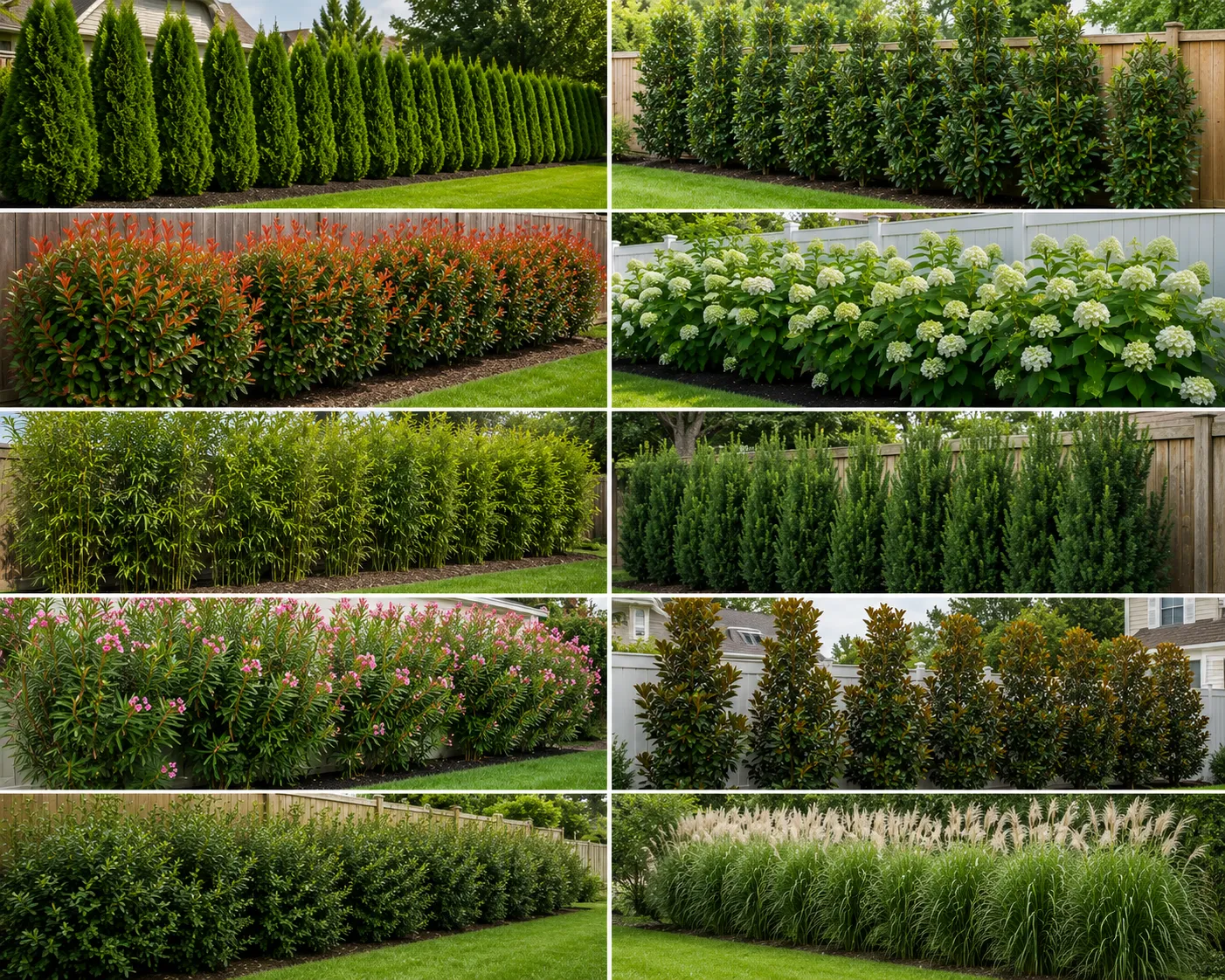
Best Shrubs for Privacy Fence: 10 Plants That Actually Block Views

The best shrubs for a privacy fence are Emerald Green Arborvitae, Skip Laurel, Green Giant Arborvitae, Holly, Boxwood, Juniper, Lilac, Viburnum, Rose of Sharon, and Forsythia. Each blocks sightlines effectively when planted at the right spacing — but the right choice depends on your USDA zone, lot size, and whether you need year-round coverage. A privacy fence alone tops out at 6 ft (1.8 m) in most neighborhoods. Shrubs planted along that fence push your screen to 12, 15, even 20 ft (3.6–6 m) — far beyond what any fence ordinance allows. They also absorb noise, block wind, and attract

Read Full Guild »

All shrub guides

The 6 Main Types of Shrubs

Every shrub falls into one of these six categories. Understanding which type you’re working with determines how you plant it, when you prune it, what conditions it needs, and what role it plays in the garden long-term. Getting this right from the start prevents years of frustration.

Evergreen Shrubs

Retain foliage year-round. Provide structure, privacy, and color through every season including winter. The single most valuable type for year-round garden interest.
Best examples: Boxwood, Arborvitae, Skip Laurel, Holly, Camellia

Flowering Shrubs

Woody perennials that produce flowers on a reliable seasonal schedule. Bloom period ranges from 2–4 weeks (lilac) to continuous summer-long (butterfly bush, crape myrtle).
Best examples: Hydrangea, Rose, Lilac, Forsythia, Weigela

Dwarf Shrubs

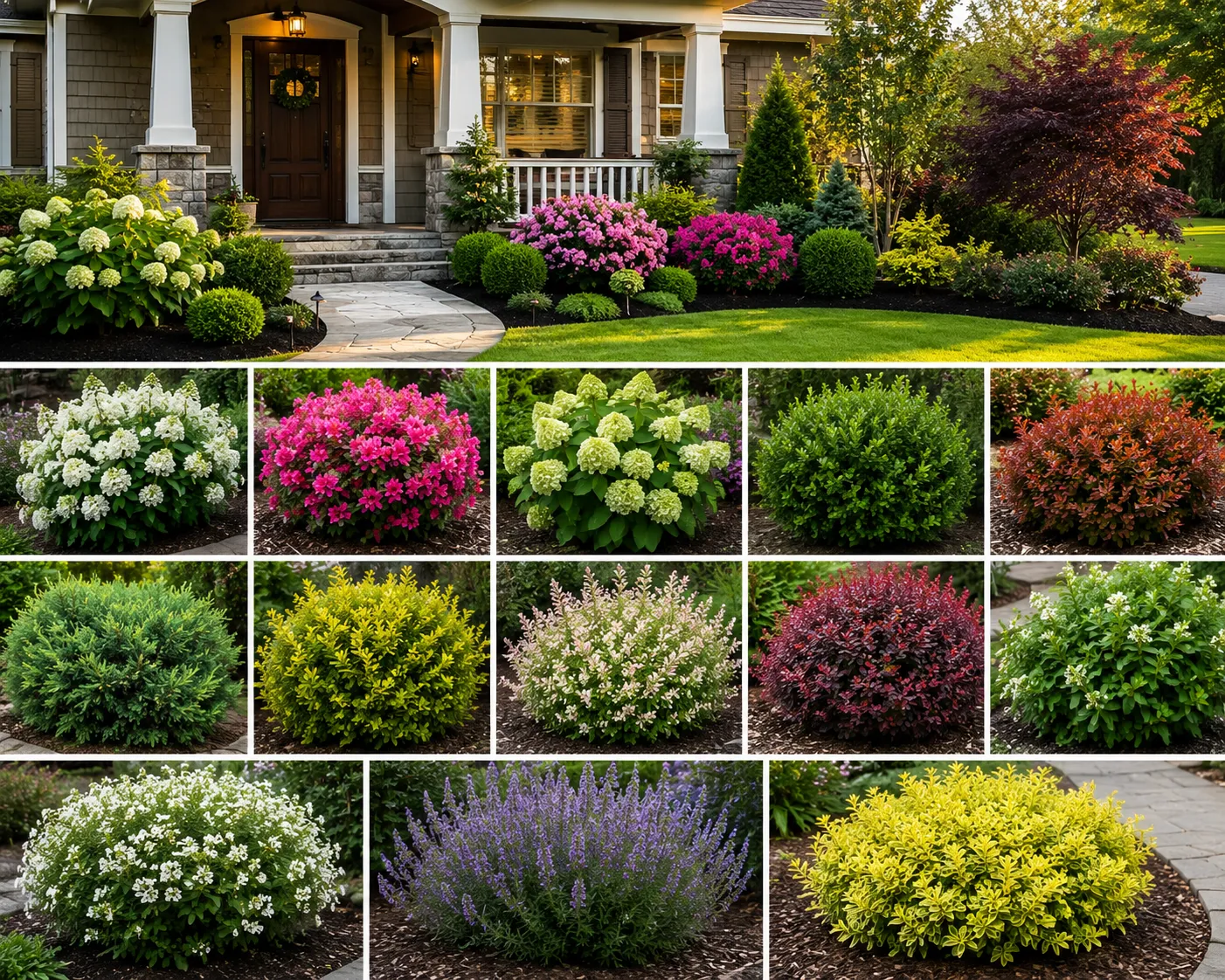
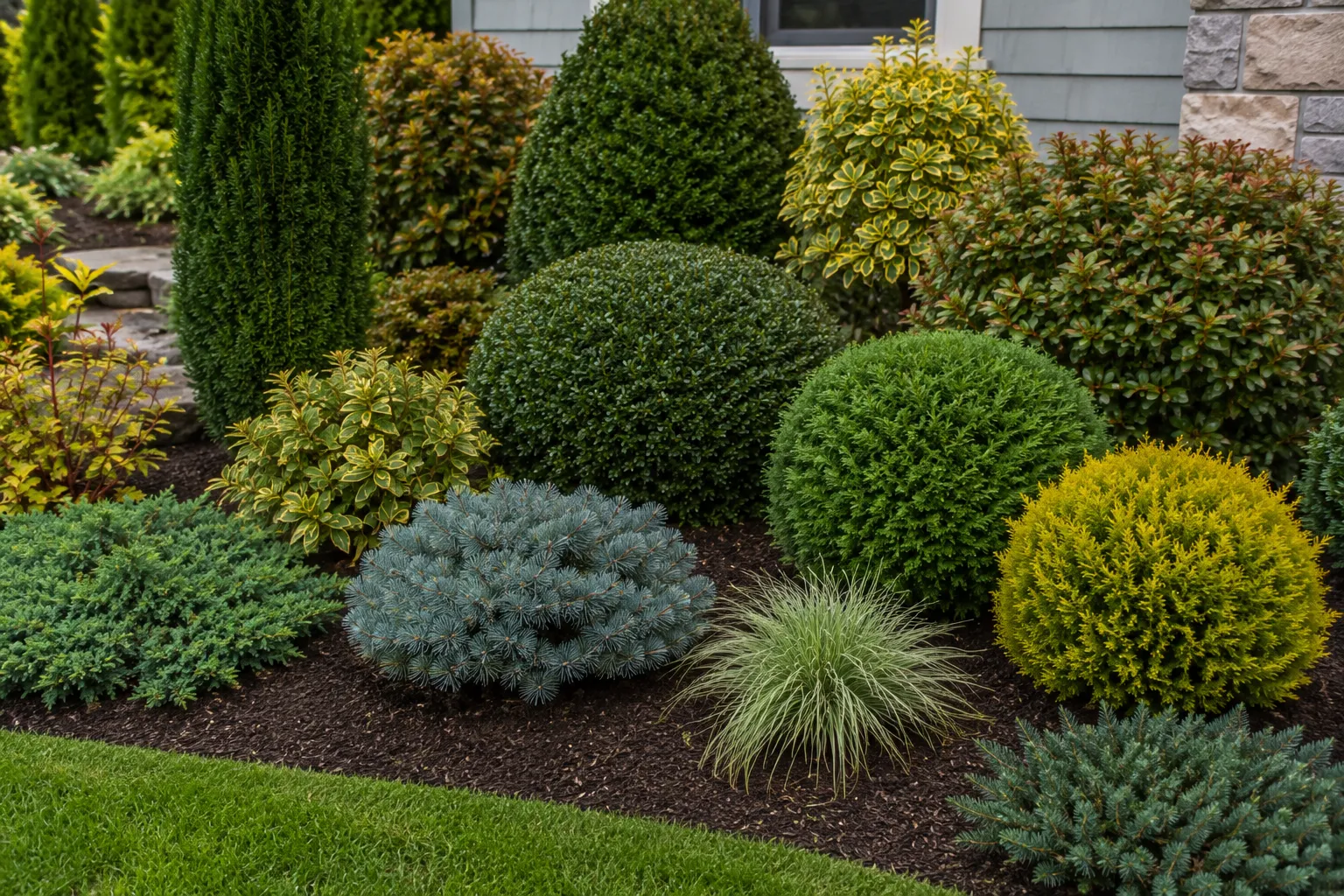
Compact-growing varieties reaching 1–3 feet at maturity. Ideal for containers, foundation plantings, and small-space gardens where full-sized shrubs would overwhelm the space.
Best examples:Mugo Pine, Dwarf Arborvitae, Compact Boxwood, Nandina

Deciduous Shrubs

Drop their leaves in fall after delivering spring or summer flowers and often striking fall color. Bare in winter — but this reveals interesting branching structure and winter bark texture.
Best examples: Elderberry, Serviceberry, Currant, Gooseberry, Rose (hips)

Fruiting Shrubs

Produce berries, hips, or edible fruit after flowering. Dual-purpose plants providing both ornamental value and food for wildlife or harvest. Often the best wildlife plants in a garden.
Best examples: Boxwood, Arborvitae, Skip Laurel, Holly, Camellia

Native Shrubs

Species native to your region that evolved alongside local pollinators and wildlife. Support 4–10× more native bee species than non-native equivalents. Lowest maintenance once established.
Best examples: Buttonbush, Ninebark, Sweetspire, American Beautyberry

Shrub Selection Guide: Match Plant to Purpose

Before buying any shrub, define what job it needs to do in your landscape. The table below maps common landscaping goals to the best shrub choices and their key requirements.

Landscaping Goal Best Shrubs Zones Sun Key Advantage
Year-round privacy screen Emerald Green Arborvitae, Skip Laurel, Green Giant 3–9 Full–Part sun Dense evergreen foliage blocks sightlines 12 months
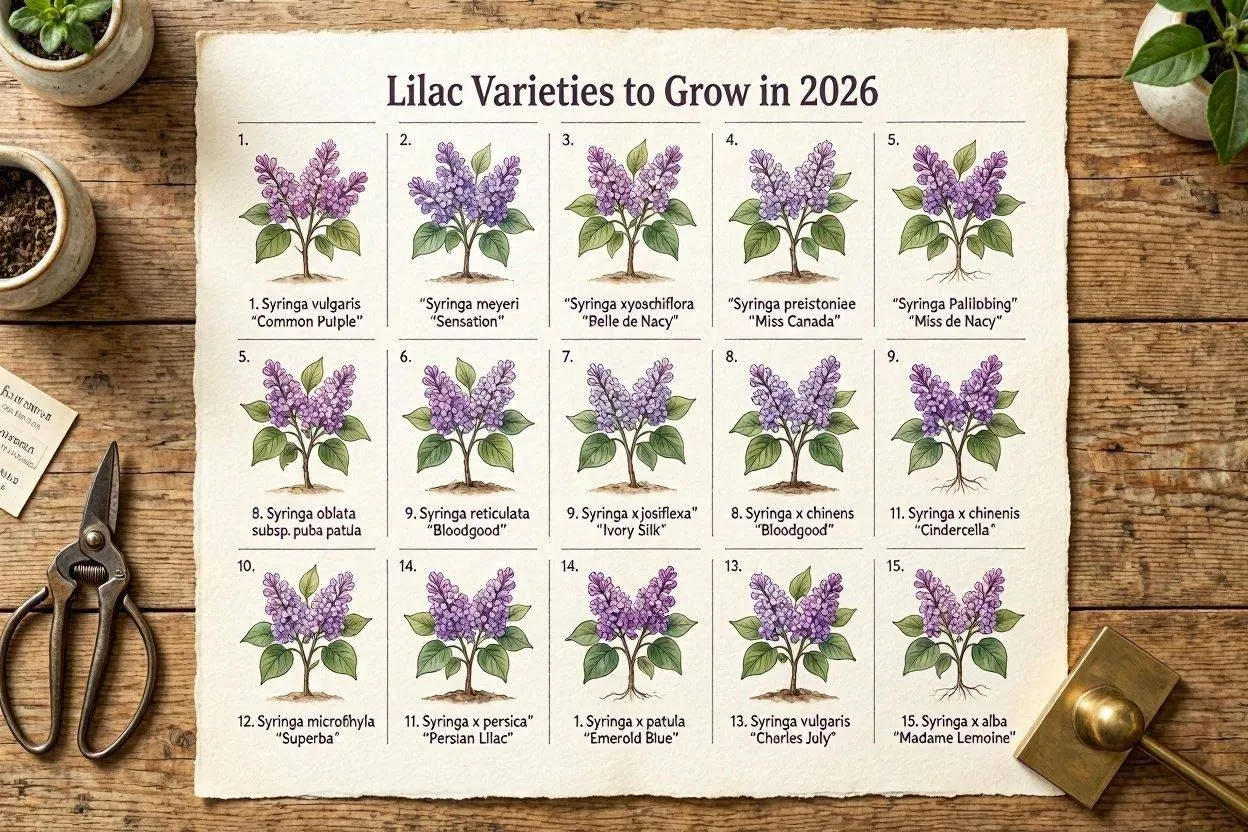
Spring color & fragrance Lilac, Forsythia, Azalea, Rhododendron 3–9 Full–Part sun Massive seasonal bloom display; some extraordinarily fragrant
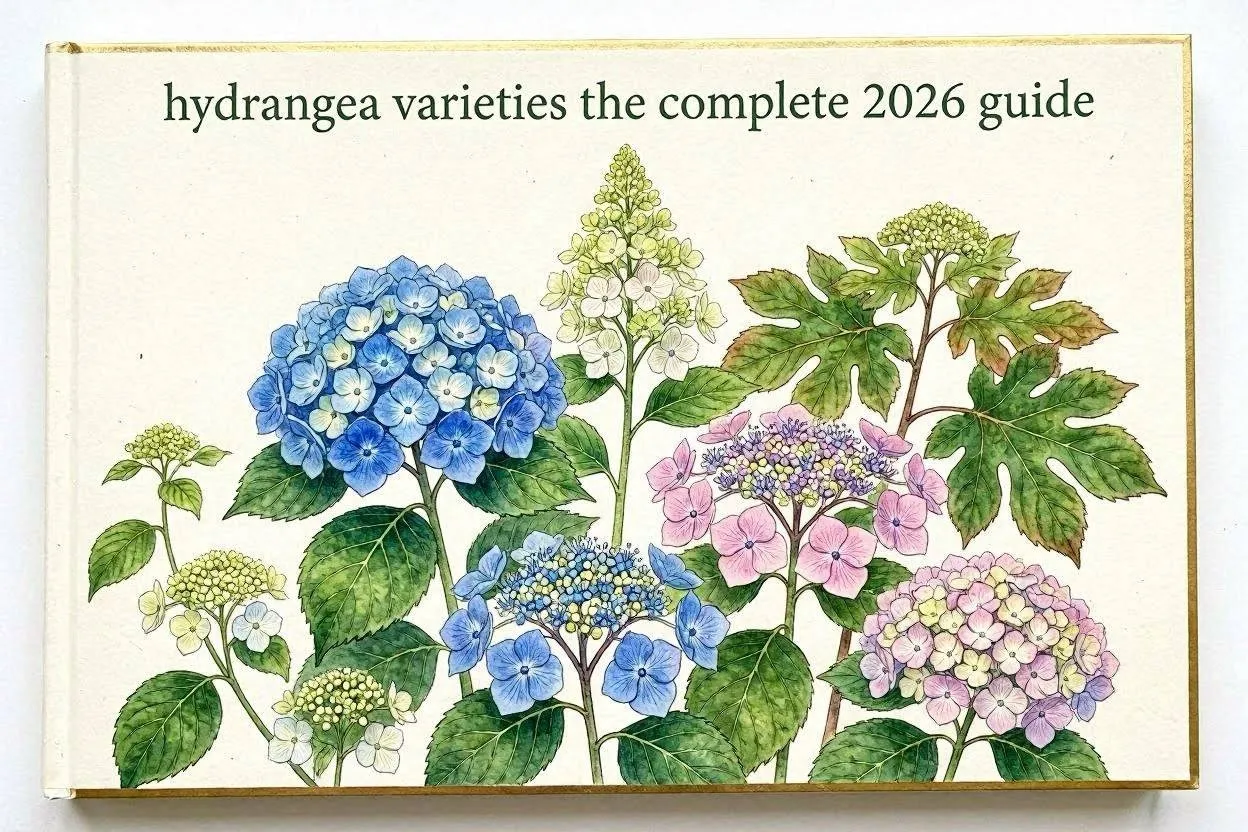
Summer-long flowering Hydrangea, Butterfly Bush, Crape Myrtle, Rose 4–10 Full sun Repeat or continuous bloom from June through frost
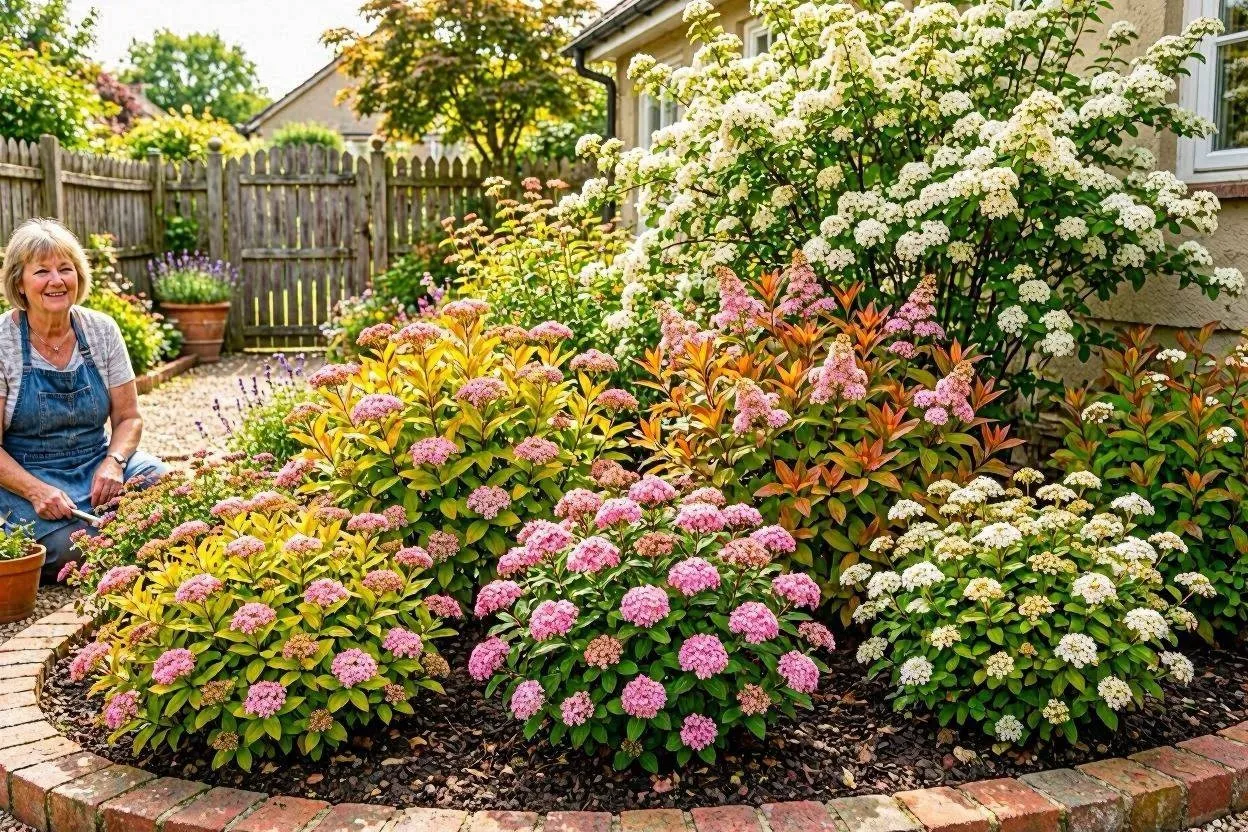
Low maintenance border Spirea, Abelia, Nandina, Knockout Rose 4–9 Full–Part sun Minimal pruning, drought tolerant once established
Foundation planting Boxwood, Mugo Pine, Dwarf Arborvitae, Japanese Pieris 3–9 Full–Part sun Compact size, evergreen, no overgrowing windows
Pollinator garden Butterfly Bush, Lilac, Viburnum, Beautyberry 3–9 Full–Part sun High nectar production; attracts bees, butterflies, birds
Slope erosion control Forsythia, Juniper, Cotoneaster, Spirea 3–8 Full sun Deep spreading roots stabilize soil on grades
Winter interest Witch Hazel, Beautyberry, Holly, Red-twig Dogwood 3–9 Full–Part sun Berries, winter flowers, or colorful stems visible all winter
Shade garden shrub Azalea, Mountain Laurel, Kerria, Oakleaf Hydrangea 4–9 Part–Full shade Bloom and perform well with 3–5 hours of dappled light
Drought-tolerant landscape Spirea, Juniper, Russian Sage, Weigela 3–9 Full sun Established plants handle extended dry periods without irrigation

When to Plant Shrubs — Season by Season

Planting timing affects how quickly a shrub establishes, how much supplemental watering it needs, and how well it performs in its first season. Here is what to do — and what to avoid — in each season.

Spring

Best overall planting window. Soil warms, roots establish quickly before summer heat. Plant as soon as the ground is workable. Water regularly for the first 8 weeks.

Summer

Possible but requires consistent irrigation. Plant in early summer only — mid to late summer planting in zones 7+ stresses plants before winter. Mulch heavily to retain moisture.

Fall

Excellent for evergreen shrubs and woody perennials in zones 5–9. Cooler temperatures reduce transplant stress. Roots establish over winter. Allow 6 weeks before first hard frost.

Winter

Not recommended except in zones 8–11 where soil never freezes. Use only for dormant bare-root plants from specialist nurseries. Regular container-grown plants should wait for spring.

Keep Your Shrubs Healthy & Productive

The most common reason shrubs underperform is not disease or pests — it’s incorrect care at the wrong time. These six principles apply to virtually every shrub in the garden.

Prune at the right time for each type

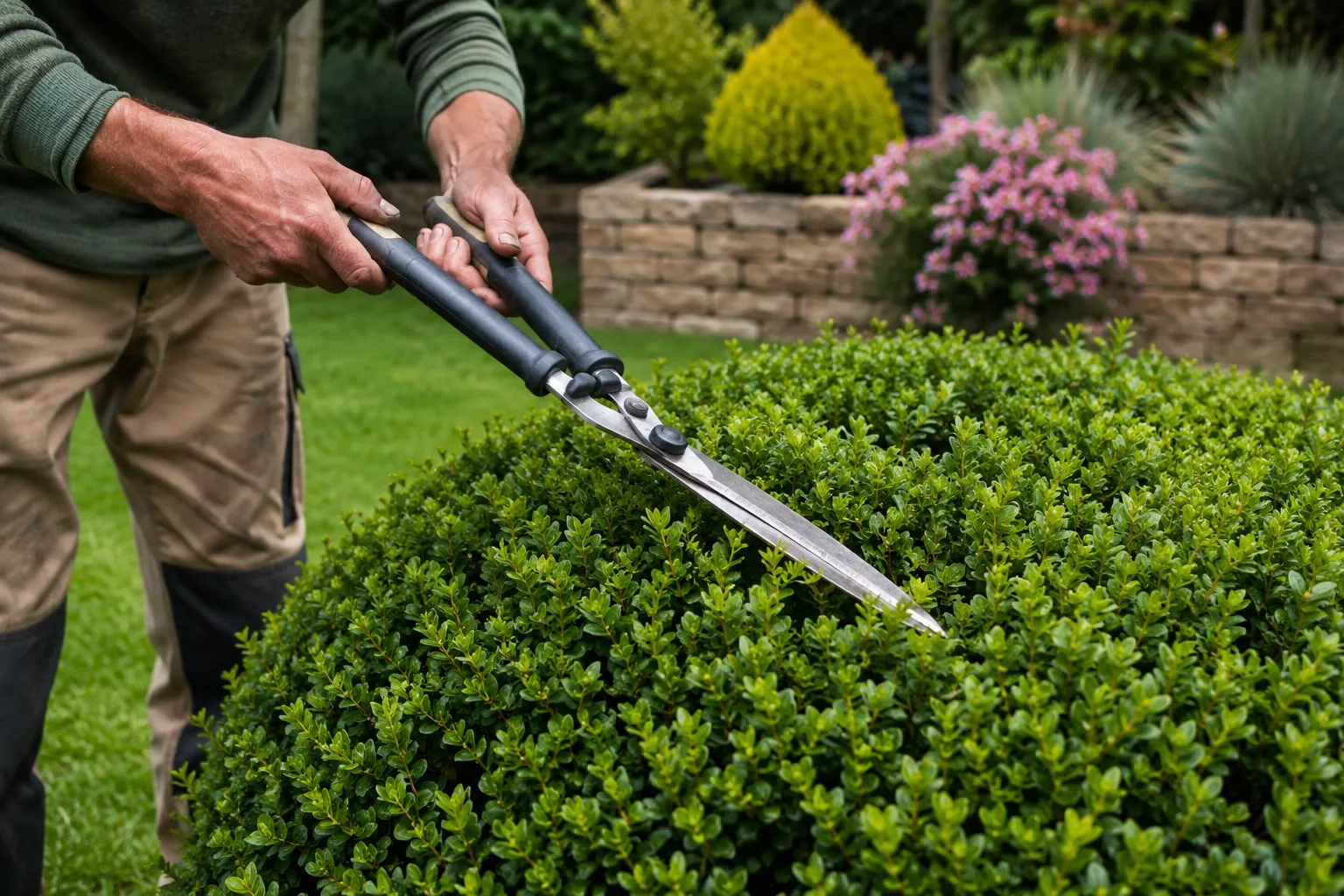
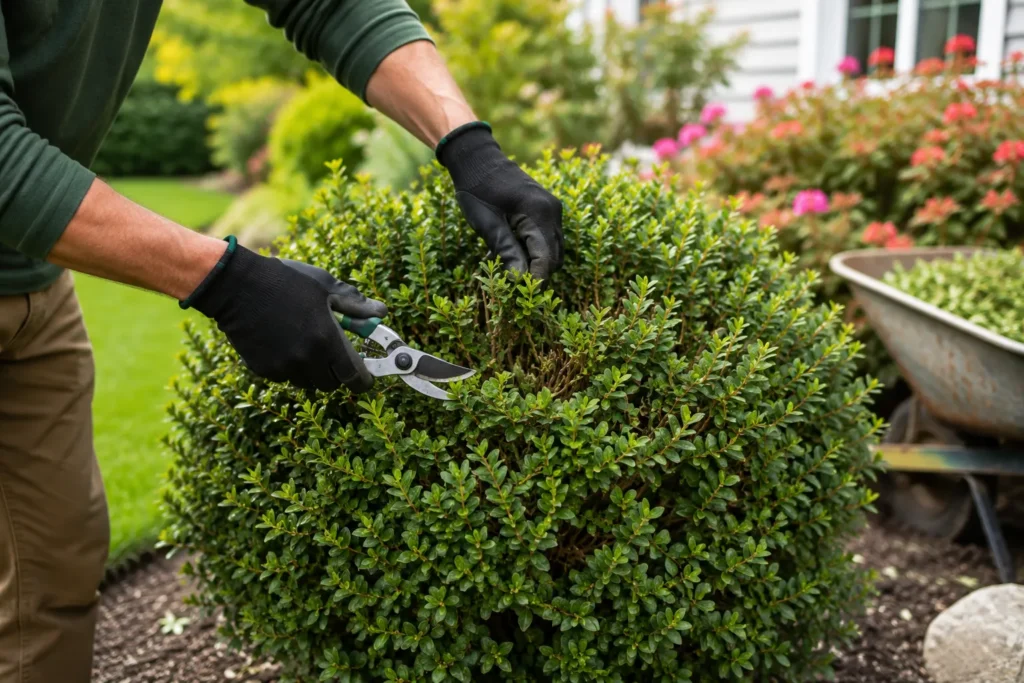
Spring-blooming shrubs (lilac, forsythia, azalea) bloom on old wood — prune them immediately after flowering, never in fall or early spring before they bloom. Summer-blooming shrubs (hydrangea, butterfly bush, crape myrtle) bloom on new wood — prune in late winter or early spring before growth starts. Prune evergreens lightly in late spring after new growth has hardened.

Deep and infrequent, not shallow and often

Newly planted shrubs need deep watering twice a week for the first growing season to establish a strong root system. Once established — typically after the first full year — most shrubs are drought tolerant and need supplemental water only during extended dry periods of 3+ weeks. Shallow daily watering encourages surface roots and creates dependency on irrigation. Water deeply and let the soil partially dry between sessions.

2–3 inches, away from the stem

Apply 2–3 inches of organic mulch (wood chips, shredded bark, or leaf mould) in a ring extending to the drip line. Keep mulch 2–3 inches away from the base of the stem — mulch piled against stems traps moisture, invites fungal disease, and creates habitat for bark-chewing rodents. Refresh mulch annually in spring. Mulch reduces watering needs by up to 30% and suppresses weeds through the growing season.

Less is more — especially for established plants

Most established shrubs growing in reasonable soil need no supplemental fertilizer once mature. Over-fertilizing — particularly with high-nitrogen products — encourages rapid soft growth that is prone to pest damage and winter dieback. If a shrub is growing poorly, confirm the cause (soil pH, drainage, sun) before reaching for fertilizer. If fertilizer is genuinely needed, apply a slow-release balanced granular product in early spring as new growth begins.

Drainage matters more than soil fertility

Most shrub failures trace back to poor drainage, not lack of nutrients. Roots sitting in waterlogged soil suffocate within days. Before planting, test drainage by digging a 12-inch hole, filling it with water, and checking whether it drains within an hour. If not, amend with coarse grit, build a raised bed, or choose a different planting site. Acid-loving shrubs (azalea, rhododendron, camellia) need a soil pH of 4.5–6.0 — test and amend with sulfur if your soil runs alkaline.

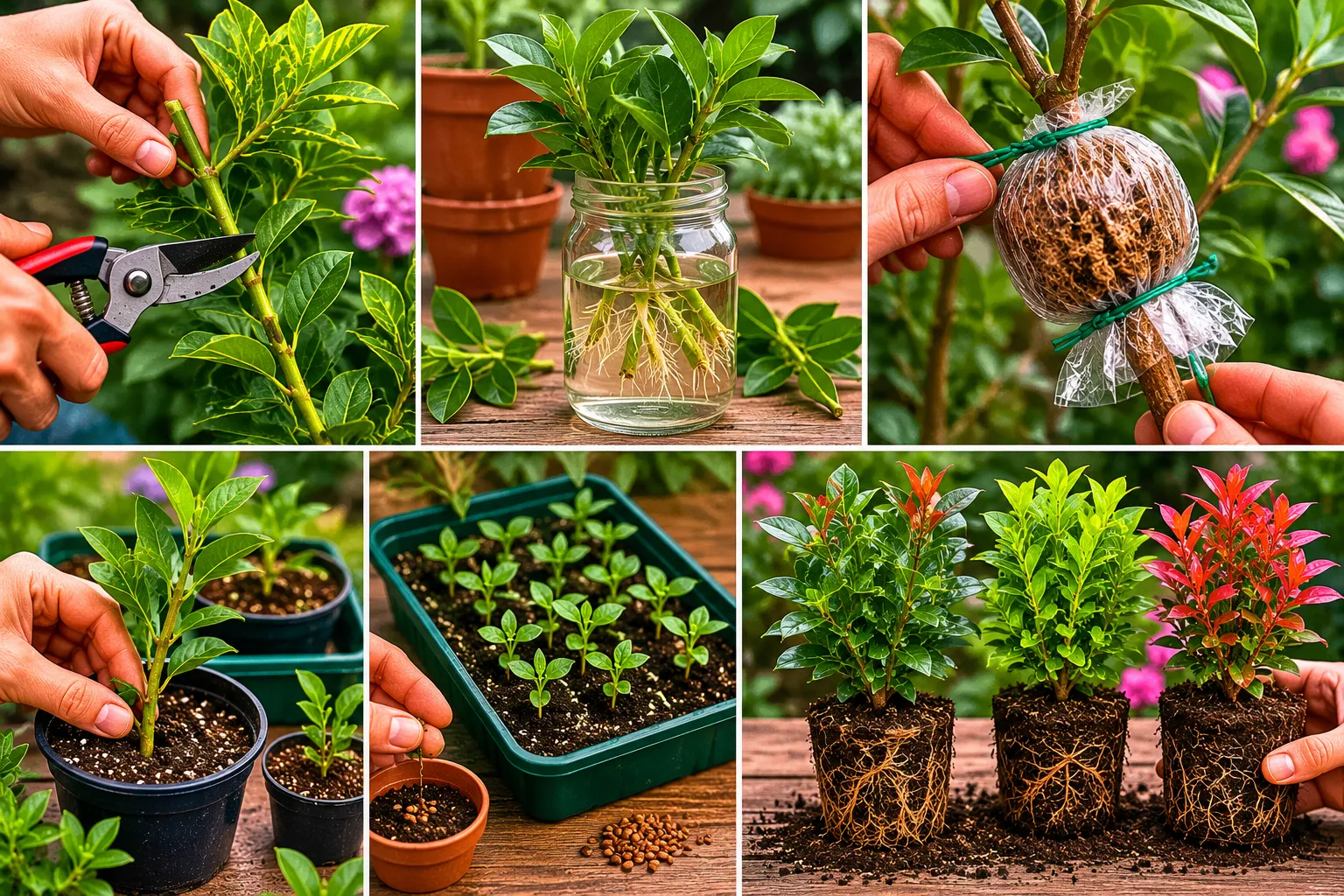
Multiply your best performers for free

Most shrubs can be propagated from cuttings, layering, or division — multiplying your best-performing plants at no cost. Softwood cuttings taken in late spring root reliably in 4–8 weeks with basic equipment. Layering — pinning a low branch to the ground and waiting for it to root before severing — works for magnolias, rhododendrons, and other slow-rooting species. Division works for multi-stemmed suckering shrubs like lilac, forsythia, and spirea by digging and separating rooted offshoots in early spring.

Everything You Need to Know About Shrubs

Whether you’re planting your first shrub or redesigning an established border, understanding the fundamentals makes the difference between a shrub that thrives for decades and one that struggles from season one.

Why Shrubs Are the Best Long-Term Investment in Your Landscape

A well-chosen shrub planted correctly is the highest-ROI plant in any garden. Unlike annuals that require replanting each season, or perennials that take three to five years to reach their potential, many shrubs deliver meaningful visual impact within their first or second year and continue improving for decades. A lilac planted today will still be performing beautifully in 50 years. A Skip Laurel privacy hedge planted this fall could be screening a neighboring property by next summer. The key phrase is "planted correctly." More shrubs fail from wrong site selection — wrong sun exposure, poor drainage, incorrect soil pH — than from any pest or disease. Solve the site first and the plant almost always takes care of itself.

Evergreen vs. Deciduous Shrubs: How to Choose

The choice between evergreen and deciduous often comes down to what you need the shrub to do in winter. If you're planting for privacy — blocking a neighboring property or screening a road — an evergreen is almost always the right choice. Deciduous privacy hedges leave you exposed for four to five months of the year, which defeats the purpose for most applications. If you're planting for ornamental value and accept (or even prefer) winter structure without foliage, deciduous shrubs offer some of the most spectacular spring and fall performances in the plant kingdom — lilacs, forsythia, beautyberry, and witch hazel among them. Many gardeners choose a mix of both types to achieve four-season interest with year-round structural backbone.

Choosing Shrubs by USDA Hardiness Zone

USDA hardiness zones define the minimum winter temperature a plant can survive — but they're only one part of the picture. A plant rated for Zone 7 may thrive in the cool, moist Pacific Northwest Zone 7 climate and fail in the hot, humid Southeast Zone 7 summer. Heat tolerance, humidity, soil drainage, and rainfall distribution all affect shrub performance as much as winter cold. At Zoned Garden, our shrub guides include not just zone ratings but regional performance notes — because we know that "Zone 6 hardy" means different things in New England, the Midwest, and the Pacific Northwest. Always read the full zone guidance, not just the number.

How Many Shrubs Do You Need? Spacing & Coverage

One of the most common planting mistakes is underestimating how much a shrub will spread at maturity and spacing plants too close to achieve immediate impact. Plants that look sparse at 2-foot spacing often become overcrowded and diseased at 5–7 years when they reach their mature spread. Always space based on the plant's mature width, not its size at purchase. For privacy hedges, spacing depends on species: Arborvitae 'Emerald Green' every 3–4 feet; Skip Laurel every 5–6 feet; Green Giant Arborvitae every 5–6 feet. For border plantings, group odd numbers (3, 5, 7) of the same variety for the most naturalistic effect. For foundation plantings, allow the mature spread plus 18 inches clearance from walls and walkways.