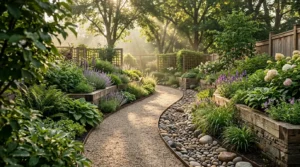
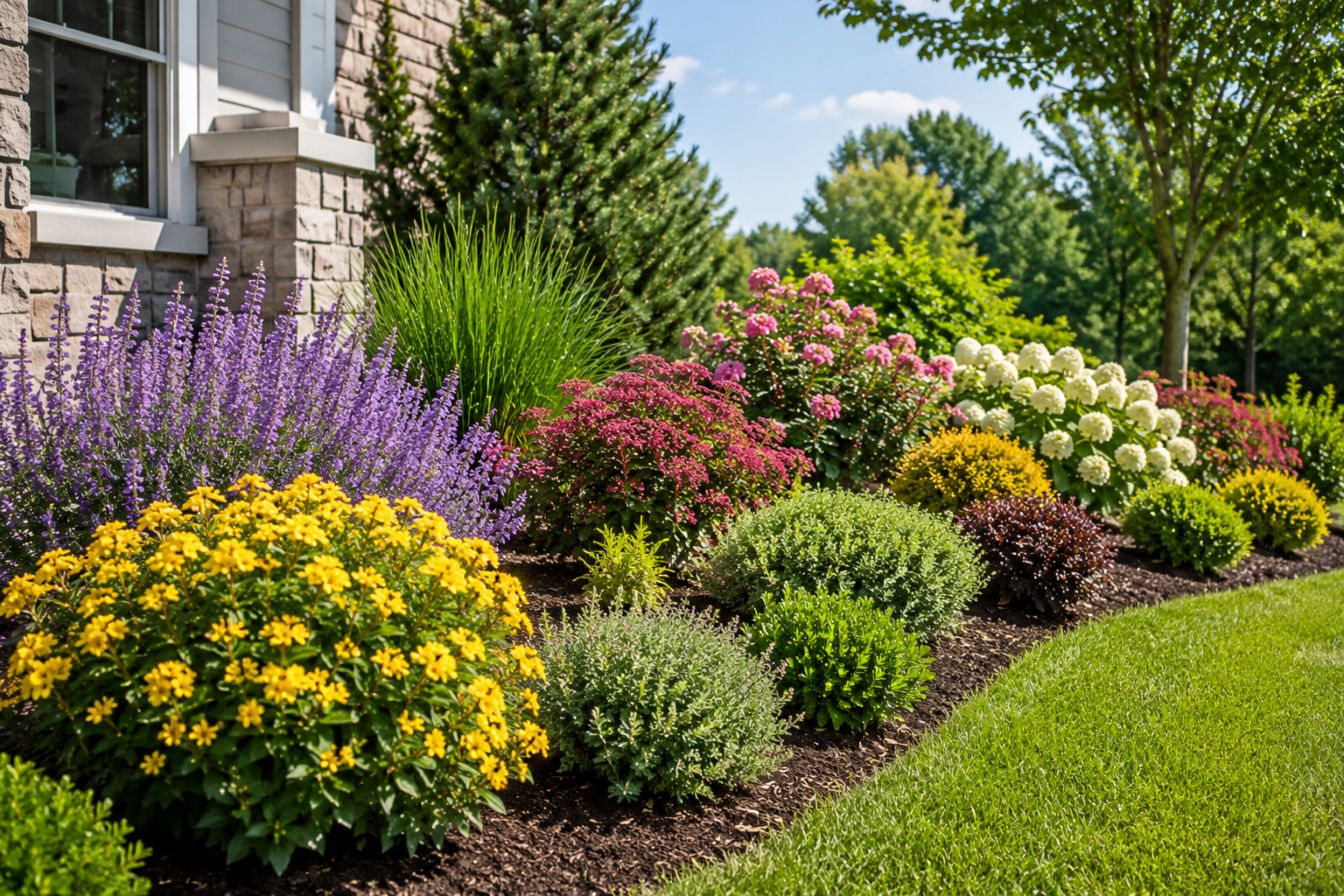
Full sun means 6 or more hours of direct sunlight per day. Most gardens have at least one full sun border, bed, or slope — and the right shrubs in those spots grow stronger, flower more, and need less water than plants forced into conditions they don’t suit.
These 22 shrubs are organised by purpose: flowering, evergreen structure, privacy and hedging, drought tolerance, and fast growth. Every entry includes USDA zone range, mature size in feet and metres, and the one pruning rule you need to know.
What ‘Full Sun’ Actually Means — and Why It Matters in Hot Climates

Full sun is defined as 6+ hours of direct sun measured between 9 AM and 5 PM. But that definition needs a practical adjustment for gardeners in zones 7–10.
In northern zones (3–6), 6 hours of full sun is exactly what most shrubs want. In southern zones (7–10), intense afternoon sun from 2–5 PM reaches temperatures that scorch foliage and stress root systems — even on shrubs rated as full sun plants.
| Zone Range | Sun Recommendation | Why It Matters |
| Zones 3–6 | 6+ hours, any time of day | Sun intensity is moderate — all-day sun rarely causes scorch |
| Zones 7–8 | Morning sun preferred, light afternoon shade acceptable | Afternoon sun exceeds 95°F (35°C) in summer — stresses roots |
| Zones 9–10 | Morning sun, afternoon shade strongly preferred | Afternoon temperatures hit 100–110°F (38–43°C) regularly |
A shrub thriving in 8 hours of zone 5 sun may struggle in the same 8 hours of zone 9 sun. Check zone before assuming full sun tolerance means the same thing everywhere.
Full Sun Flowering Shrubs: 7 Best Picks
These 7 shrubs produce the strongest flowering performance in direct sun — more blooms, more vivid colour, and longer flowering seasons than the same plants grown in part shade.
1. Lilac (Syringa vulgaris)
Lilac delivers the most intensely fragrant flowers of any common garden shrub. Flower clusters up to 10 inches (25 cm) long appear in May and fill the surrounding air with a scent detectable from 30 feet (9 m) away. Full sun is not optional — lilacs in shade produce fewer flowers every year until they stop altogether.
- Zones: 3–7 — needs cold winters to set flower buds; fails in zones 8+
- Size: 8–15 ft (2.4–4.5 m) tall, 6–12 ft (1.8–3.6 m) wide
- Bloom time: May, lasting 2–3 weeks
- Pruning rule: prune immediately after flowering — never in fall or winter
- Best compact variety: ‘Bloomerang Purple’ — reblooms in late summer, stays 4–5 ft (1.2–1.5 m) tall
Space lilacs 6–8 ft (1.8–2.4 m) apart. Poor air circulation causes powdery mildew — the most common lilac problem. Good spacing prevents it without any spraying.
2. Mock Orange (Philadelphus coronarius)
Mock orange produces white flowers with a scent so close to orange blossom that visitors regularly check for a citrus tree nearby. Blooms in late May through June. Extremely unfussy about soil and tolerates conditions that kill softer shrubs.
- Zones: 4–8
- Size: 6–10 ft (1.8–3 m) tall, 8–10 ft (2.4–3 m) wide — give it room
- Bloom time: late May through June
- Sun: full sun produces most flowers; tolerates part shade but blooms less
- Pruning rule: remove one-third of the oldest stems to ground level immediately after flowering
‘Avalanche’ is the best compact cultivar — 4 ft (1.2 m) tall, flowers white, intensely fragrant, works in smaller gardens.
3. Weigela (Weigela florida)
Weigela produces pink, red, or white trumpet flowers in May–June, then reblooms intermittently through summer. Modern cultivars add coloured foliage — burgundy, gold, or variegated — so the plant earns its space even when not in flower.
- Zones: 4–9
- Size: 2–10 ft (60 cm–3 m) depending on cultivar
- Bloom time: May–June, with rebloom in summer
- Best rebloomer: ‘Sonic Bloom Pink’ — zones 4–8, 4–5 ft (1.2–1.5 m), flowers spring through frost
- Best foliage: ‘Midnight Wine’ — dark burgundy leaves, 2 ft (60 cm) tall, compact border plant
Prune after the first main flush of flowering. Cut back by one-third to encourage strong new growth for summer rebloom.
4. Spirea (Spiraea spp.)
Spirea is the most reliable flowering shrub for zones 3–9. It flowers in white or pink from spring through early summer, offers gold, orange, or lime-green foliage through the growing season, and turns red or orange in fall. No other shrub gives this much seasonal interest at this price point.
- Zones: 3–9
- Size: 2–5 ft (60 cm–1.5 m) tall and wide
- Bloom time: late spring through early summer
- Best for foliage: ‘Double Play Gold’ — lime-yellow leaves spring through fall, pink flowers, 2–3 ft (60–90 cm)
- Best for cold climates: ‘Anthony Waterer’ — zone 3 hardy, rose-pink flowers, 3–4 ft (90 cm–1.2 m)
Cut spirea back hard — to 6–8 inches (15–20 cm) from the ground — every 3–4 years in early spring. This rejuvenation pruning restores flowering vigour on plants that have become woody and sparse.
5. Roses (Rosa spp.) — Knock Out Series
Traditional roses are high maintenance. Knock Out roses are not. The Knock Out series blooms continuously from May through November without deadheading, resists black spot and powdery mildew without spraying, and survives drought once established.
- Zones: 4–9
- Size: 3–5 ft (90 cm–1.5 m) tall, 4 ft (1.2 m) wide
- Bloom time: May through November without stopping
- Sun: 6+ hours required — fewer hours dramatically reduces flower production
- Pruning: cut back by one-third in early spring — that’s all
Note: Deer eat Knock Out roses in zones where deer pressure is heavy. If deer are a problem in your garden, choose barberry or spirea instead.
6. Butterfly Bush (Buddleja davidii)
Butterfly bush produces 12–18 inch (30–45 cm) flower spikes in purple, white, pink, or red from July through September. Named for its ability to attract 20+ butterfly species — a single plant in full bloom attracts 15–30 butterflies simultaneously on a warm July afternoon.
- Zones: 5–9
- Size: 4–8 ft (1.2–2.4 m) tall and wide
- Bloom time: July through September
- Pruning: cut back hard to 12 inches (30 cm) from the ground in early spring — this is mandatory for strong flowering
- Check local invasiveness: sterile cultivars ‘Miss Molly’ and ‘Pugster Blue’ are safe alternatives in regulated areas
7. Rose of Sharon (Hibiscus syriacus)
Rose of Sharon is the latest-blooming hardy flowering shrub — it flowers from August through October when nearly everything else has finished. Large hibiscus-like blooms in white, pink, purple, or bicolour on an upright, columnar plant.
- Zones: 5–9
- Size: 8–12 ft (2.4–3.6 m) tall, 6–8 ft (1.8–2.4 m) wide
- Bloom time: August through October
- Pruning: cut each branch back to 2 buds in early spring — produces fewer, much larger flowers
- Best white variety: ‘Diana’ — pure white flowers, sterile (no weedy seedlings), zones 5–9
Evergreen Shrubs for Full Sun: 5 Best Picks
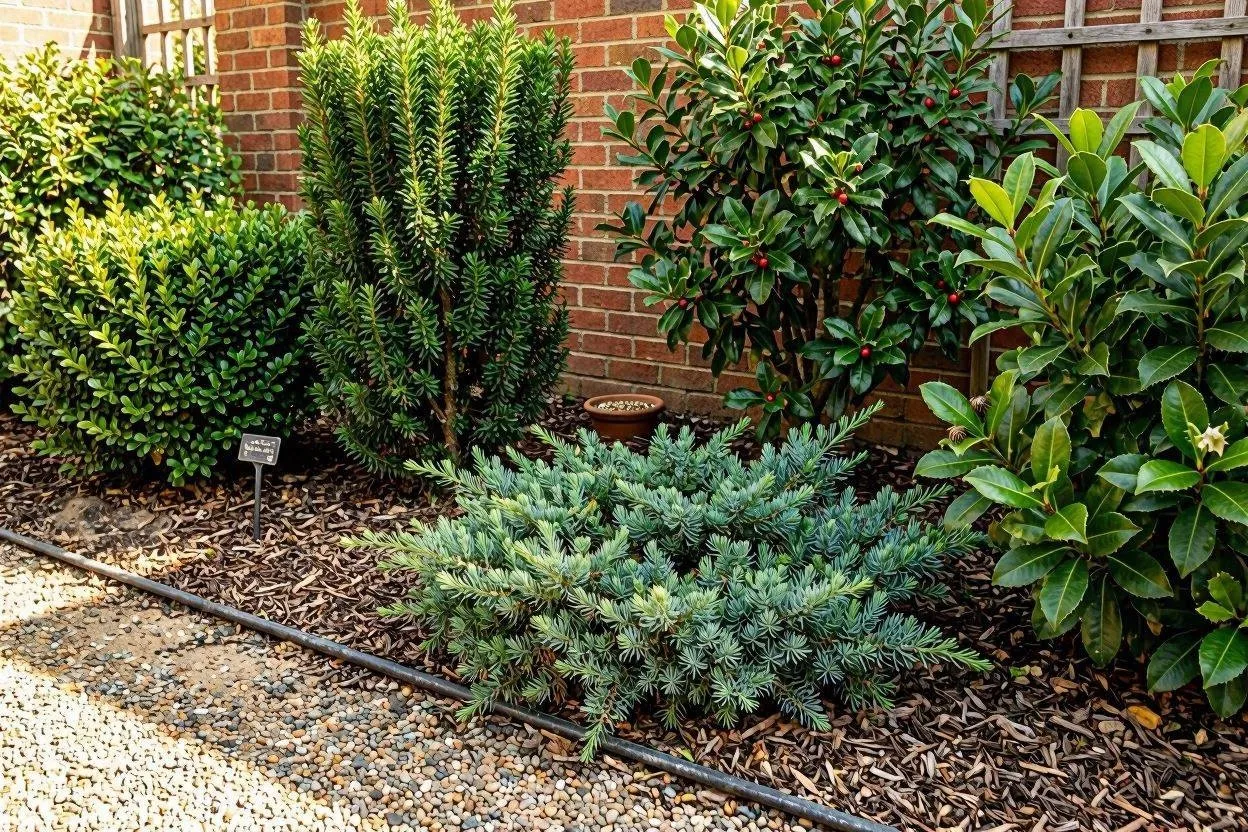
Evergreen shrubs in full sun provide year-round structure — the garden backbone that stops borders looking abandoned in January. These 5 hold their leaves in all but the most extreme winters.
8. Boxwood (Buxus sempervirens)
Boxwood is the most versatile full sun evergreen. Clipped formal or left natural, as a low hedge, topiary, or loose specimen — it works in every garden style. Full sun produces the densest, most compact growth.
- Zones: 5–9
- Size: 2–15 ft (60 cm–4.5 m) depending on cultivar — ‘Green Velvet’ stays 2–3 ft (60–90 cm)
- Pruning: one trim in late spring after new growth hardens; second light trim in August for formal shapes
- UK note: box blight is widespread — choose ‘Buxus sempervirens Blauer Heinz’ or switch to Ilex crenata for blight-free alternative
For formal hedging, plant boxwood 12–18 inches (30–45 cm) apart. For specimen use, plant at mature spacing — half the mature spread.
9. Juniper (Juniperus spp.)
Junipers cover more situations than any other full sun evergreen. Ground cover types spread 6–8 ft (1.8–2.4 m) wide at 12 inches (30 cm) tall. Columnar types reach 15–20 ft (4.5–6 m) tall at 2–3 ft (60–90 cm) wide. All tolerate drought, poor soil, and full exposure that kills softer plants.
- Zones: 2–9 depending on species
- Size: 1 ft (30 cm) to 20 ft (6 m) depending on variety — check label carefully
- Best ground cover: ‘Blue Chip’ — 10 inches (25 cm) tall, 8 ft (2.4 m) wide, silver-blue foliage
- Best columnar: ‘Sky Rocket’ — 15 ft (4.5 m) tall, 2 ft (60 cm) wide, zones 3–8
- Zero pruning needed — never shear junipers into balls, which exposes dead brown interior
Junipers are the most deer-resistant full sun evergreen available. If deer pressure is severe in your garden, juniper is the reliable choice.
10. Lavender (Lavandula angustifolia)
Lavender is a full sun subshrub that produces fragrant purple spikes from June through August. The silver-grey foliage provides year-round interest. Extremely drought tolerant once established — plants in their second year survive weeks without rain in zones 5–8.
- Zones: 5–8 (English lavender); zones 7–10 (French lavender, L. stoechas)
- Size: 18–24 inches (45–60 cm) tall, 24–30 inches (60–75 cm) wide
- Bloom time: June through August; cut back after first flush for a second bloom
- Soil: sharp drainage is essential — lavender dies in wet, poorly drained soil faster than any other condition
- Pruning: cut back by one-third in early spring — never cut into old woody stems below the green growth
Plant lavender on a slope, raised bed, or amended with 30% horticultural grit if your soil drains slowly. Wet roots in winter kill lavender more reliably than cold does.
11. Barberry (Berberis thunbergii)
Barberry provides year-round colour — purple, gold, or lime-green foliage depending on cultivar — with zero maintenance beyond optional annual pruning. Fiercely deer resistant. Tolerates drought, poor soil, and urban pollution.
- Zones: 4–8
- Size: 2–6 ft (60 cm–1.8 m) depending on cultivar
- Best gold foliage: ‘Mellow Yellow’ — lime-gold leaves, 4 ft (1.2 m) tall, zones 4–8
- Best purple: ‘Royal Burgundy’ — deep purple, 4 ft (1.2 m) tall, red berries in fall, zones 4–8
- Check local invasiveness: B. thunbergii is invasive in some US states — verify before planting
12. Smokebush (Cotinus coggygria)
Smokebush produces smoke-like plumes in summer that give the plant its name. Purple-leaved cultivars hold intense colour from April through October, then turn orange-red in fall. Full sun is essential — shade produces green leaves on purple-leaved cultivars.
- Zones: 4–8
- Size: 10–15 ft (3–4.5 m) as a specimen; cut hard annually for 6–8 ft (1.8–2.4 m) foliage shrub
- Best cultivar: ‘Royal Purple’ — deepest purple foliage, plum-red smoke plumes, zones 4–8
- Pruning option: cut all stems to 6 inches (15 cm) in early spring — produces enormous leaves but no smoke plumes
Shrubs for Full Sun Privacy and Hedging: 4 Best Picks
These 4 shrubs grow dense enough to block sight lines and create a living boundary. All thrive in full sun with minimal maintenance once established.
13. Privet (Ligustrum spp.)
Privet is the fastest-growing hedging shrub for full sun. Grows 2–3 ft (60–90 cm) per year in good conditions. Dense evergreen foliage year-round in zones 6–10; semi-evergreen in zones 4–5. White fragrant flowers appear in June if left untrimmed.
- Zones: 4–10 depending on species — Amur privet (L. amurense) is cold-hardy to zone 4
- Size: 8–15 ft (2.4–4.5 m) at maturity; clip to any desired height
- Growth rate: 2–3 ft (60–90 cm) per year — fastest widely available hedging shrub
- Plant spacing for hedging: 2–3 ft (60–90 cm) apart for quick dense screening
- One trim in late spring + one trim in August maintains formal shape year-round
14. Arborvitae — Emerald Green (Thuja occidentalis ‘Smaragd’)
Emerald Green arborvitae is the most planted privacy shrub in North America. Natural pyramidal form requires no pruning to maintain shape. Dense, feathery foliage stays bright green year-round without bronze winter discolouration that affects other arborvitae.
- Zones: 3–8
- Size: 12–14 ft (3.6–4.2 m) tall, 3–4 ft (90 cm–1.2 m) wide — naturally narrow
- Growth rate: 6–9 inches (15–22 cm) per year — moderate
- Plant spacing: 3 ft (90 cm) apart for a solid screen, 4–5 ft (1.2–1.5 m) for a looser hedge
- Deer can be a problem in zones 3–5 — wrap with burlap in winter or choose deer-resistant alternatives
15. Forsythia (Forsythia × intermedia)
Forsythia provides an informal privacy screen with an explosive yellow flowering display in March–April that announces spring weeks before other shrubs wake up. Grows fast, tolerates any soil, and requires minimal maintenance.
- Zones: 5–8
- Size: 6–10 ft (1.8–3 m) tall, 10–12 ft (3–3.6 m) wide
- Growth rate: 2 ft (60 cm) per year when young — establishes quickly
- Pruning: remove one-third of the oldest stems to ground level immediately after flowering
- Best compact hedge variety: ‘Show Off Starlet’ — 3 ft (90 cm) tall and wide, zone 4–9
16. Crape Myrtle (Lagerstroemia indica) — Zones 6–9 Only
Crape myrtle flowers from July through September with clusters of frilly blooms in white, pink, red, or purple. Exfoliating bark provides winter interest after leaves drop. One of the best multi-season full sun shrubs for warm climates.
- Zones: 6–9 — does not survive zone 5 winters reliably
- Size: 3–30 ft (90 cm–9 m) depending on variety — dwarf types stay 3–5 ft (90 cm–1.5 m)
- Bloom time: July through September — longest bloom season of any hardy flowering shrub
- Pruning: never top-prune crape myrtles (called ‘crape murder’) — this ruins the natural form permanently. See the complete crape myrtle bark guide
for correct pruning technique and what the peeling bark means.
Drought-Tolerant Shrubs for Full Sun: 4 Best Picks
These 4 shrubs survive extended dry periods once established — typically after one full growing season of regular watering. All perform best in full sun and decline in shade.
17. Russian Sage (Perovskia atriplicifolia)
Russian sage produces silver-grey aromatic stems covered in lavender-blue flowers from July through September. Looks like lavender on a larger scale. One of the most drought-tolerant and heat-tolerant full sun plants available in zones 4–9.
- Zones: 4–9
- Size: 3–5 ft (90 cm–1.5 m) tall, 3–4 ft (90 cm–1.2 m) wide
- Bloom time: July through September
- Soil: needs sharp drainage — wet or clay soil causes root rot
- Pruning: cut to 6 inches (15 cm) from ground in early spring — this is essential for strong upright growth
Russian sage is deer resistant, rabbit resistant, and ignored by most garden pests. Plant with ornamental grasses and coneflowers for a long-season drought-tolerant border that needs zero irrigation after year one.
18. Potentilla (Potentilla fruticosa)
Potentilla flowers continuously from May through October — the longest uninterrupted bloom season of any hardy shrub. Bright yellow, white, or orange flowers cover the plant until frost. Survives zone 2 winters, dry summers, poor soil, and full exposure.
- Zones: 2–7
- Size: 2–4 ft (60 cm–1.2 m) tall and wide
- Bloom time: May through October without interruption
- Drought tolerance: high — survives weeks without rain once established
- Pruning: one light trim with shears in early spring — nothing else needed all season
‘Goldfinger’ is the best yellow variety — larger flowers than the species, 3–4 ft (90 cm–1.2 m) tall, zones 2–7. ‘Abbotswood’ is the best white — 2–3 ft (60–90 cm), zones 2–7.
19. Ninebark (Physocarpus opulifolius)
Ninebark is an underused North American native shrub with peeling bark that reveals layers of orange-brown beneath — similar to crape myrtle but cold-hardy to zone 2. White or pink flower clusters in June, followed by red seed clusters that persist through fall.
- Zones: 2–7
- Size: 5–10 ft (1.5–3 m) tall and wide depending on cultivar
- Best purple-leaved variety: ‘Diablo’ — deep burgundy foliage, 8–10 ft (2.4–3 m) tall, zones 2–7
- Best compact: ‘Little Devil’ — 3–4 ft (90 cm–1.2 m) tall, dark foliage, zones 3–7
- Drought tolerance: confirmed by nursery owners — survives major droughts without irrigation once established
20. Lavender Cotton (Santolina chamaecyparissus)
Lavender cotton is a compact, mounding evergreen subshrub with silver-grey aromatic foliage and yellow button flowers in July. Thrives in the driest, sunniest spots where other plants fail — gravel gardens, south-facing slopes, coastal gardens with salt spray.
- Zones: 6–9
- Size: 12–24 inches (30–60 cm) tall, 24–36 inches (60–90 cm) wide
- Bloom time: July
- Soil: poor, dry, well-drained — rich soil and regular watering causes floppy, short-lived plants
- Pruning: cut back by half in early spring to prevent woody, open growth
Fast-Growing Shrubs for Full Sun: 2 Best Picks
21. Elderberry (Sambucus nigra)
Black elderberry grows 6–12 ft (1.8–3.6 m) in one season when cut to the ground in early spring. ‘Black Lace’ produces deeply cut, near-black lacy foliage all season — then flat-topped white flower clusters in June, followed by elderberries in late summer.
- Zones: 4–7
- Size: 6–8 ft (1.8–2.4 m) in a single season when treated as a cut-back shrub
- Growth rate: fastest foliage shrub for full sun in zones 4–7
- Pruning: cut all stems to 6 inches (15 cm) in early spring for maximum foliage effect — no flowers or berries if cut hard
- Best foliage cultivar: ‘Black Lace’ — near-black dissected leaves, zones 4–7
22. Butterfly Bush (Fast-Growing Use Case)
Butterfly bush deserves a second mention for fast growth. Cut to the ground in early spring, it reaches 6–8 ft (1.8–2.4 m) by July and flowers from that point until frost. No other shrub provides this combination of fast growth and long flowering in one plant.
- Zones: 5–9
- Annual growth rate: 4–6 ft (1.2–1.8 m) from a cut-back base
- Use case: fill a large gap in a new border quickly with flowering impact
22 Full Sun Shrubs: Quick Reference
| Shrub | Zones | Size | Bloom Time | Best For |
| Lilac | 3–7 | 8–15 ft (2.4–4.5 m) | May | Fragrance, cold climates |
| Mock Orange | 4–8 | 6–10 ft (1.8–3 m) | May–June | Fragrance, any soil |
| Weigela | 4–9 | 2–10 ft (0.6–3 m) | May–June+ | Rebloom, coloured foliage |
| Spirea | 3–9 | 2–5 ft (0.6–1.5 m) | Late spring | 3-season colour, cold hardiness |
| Knock Out Rose | 4–9 | 3–5 ft (0.9–1.5 m) | May–Nov | Continuous flowering |
| Butterfly Bush | 5–9 | 4–8 ft (1.2–2.4 m) | July–Sept | Pollinators, late summer |
| Rose of Sharon | 5–9 | 8–12 ft (2.4–3.6 m) | Aug–Oct | Latest bloomer |
| Boxwood | 5–9 | 2–15 ft (0.6–4.5 m) | — | Formal hedging, topiary |
| Juniper | 2–9 | 1–20 ft (0.3–6 m) | — | Ground cover to screen |
| Lavender | 5–8 | 18–24 in (45–60 cm) | June–Aug | Fragrance, drought tolerance |
| Barberry | 4–8 | 2–6 ft (0.6–1.8 m) | Spring (minor) | Foliage colour, deer resistance |
| Smokebush | 4–8 | 6–15 ft (1.8–4.5 m) | Summer plumes | Drama, fall colour |
| Privet | 4–10 | 8–15 ft (2.4–4.5 m) | June (if left) | Fast privacy hedge |
| Emerald Arborvitae | 3–8 | 12–14 ft (3.6–4.2 m) | — | Privacy, narrow form |
| Forsythia | 5–8 | 6–10 ft (1.8–3 m) | March–April | Early spring, informal screen |
| Crape Myrtle | 6–9 | 3–30 ft (0.9–9 m) | July–Sept | South warm climates |
| Russian Sage | 4–9 | 3–5 ft (0.9–1.5 m) | July–Sept | Drought, deer resistance |
| Potentilla | 2–7 | 2–4 ft (0.6–1.2 m) | May–Oct | Longest bloom, cold hardiness |
| Ninebark | 2–7 | 5–10 ft (1.5–3 m) | June | Native, drought, cold |
| Lavender Cotton | 6–9 | 12–24 in (30–60 cm) | July | Dry/gravel gardens |
| Elderberry | 4–7 | 6–12 ft (1.8–3.6 m) | June (if kept) | Fast foliage effect |
| Butterfly Bush | 5–9 | 4–8 ft (1.2–2.4 m) | July–Sept | Fast growth + flowering |
How to Plant Shrubs in Full Sun: 4 Steps
Step 1 — Measure Your Bed Before Buying
Use the ZonedGarden’s free Garden Area Calculator to get exact square footage (ft²) and square metres (m²) before ordering shrubs or mulch. This prevents the most common planning mistake — buying for a 20 sq ft space when you have 45 sq ft.
Step 2 — Improve Drainage in Heavy Soil
Most full sun shrubs die from wet roots faster than drought kills them. Before planting in clay or compacted soil:
- Dig a 12 inch (30 cm) deep trench across the bed
- Add 4–6 inches (10–15 cm) of horticultural grit or coarse sand to each hole — not fine sand
- Alternatively, build raised beds 10–12 inches (25–30 cm) above existing soil level for drought-tolerant and Mediterranean plants
Step 3 — Plant at the Right Depth
Set the root flare — where roots meet stem — 1–2 inches (2.5–5 cm) above surrounding soil. Backfill with removed soil mixed with 20–30% compost. Firm gently around roots. Water deeply immediately.
Step 4 — Mulch and Water Through Year One
Apply 2–3 inches (5–7.5 cm) of bark mulch, keeping it 2 inches (5 cm) away from stems. Water every 5–7 days through the first summer if rain is less than 1 inch (25 mm) per week. After year one, most full sun shrubs described above need no irrigation.
4 Common Full Sun Shrub Mistakes

- Planting a zone 8 plant in zone 5: a shrub rated ‘full sun’ in zone 8 (e.g. crape myrtle, lavender cotton) dies to the ground or fails to return in a zone 5 winter. Check the zone range on the label — not just the sun requirement.
- Confusing afternoon sun tolerance in hot climates: shrubs rated full sun in zones 3–6 often scorch in zones 7–9 afternoon sun. Position full sun shrubs to receive morning sun and dappled afternoon shade south of zone 6. Lavender, spirea, and knock out roses handle afternoon sun better than lilac or mock orange in hot climates.
- Pruning spring-flowering shrubs in late summer or fall: lilac, forsythia, mock orange, and weigela set next year’s flower buds on growth made after they flower. Pruning in August, September, or winter removes those buds. The shrub leafs out normally but produces zero flowers for the entire following season.
- Skipping the drainage step for Mediterranean shrubs: lavender, lavender cotton, and Russian sage die in wet, poorly drained soil within one winter — even when everything else about the planting is correct. Poor drainage is the leading cause of death for these plants in temperate gardens. If drainage is not sharp, build a raised bed.
FAQs
What is the best shrub for full sun and low maintenance?
Potentilla fruticosa is the single best combination of full sun performance and low maintenance. It blooms from May through October, survives zone 2 winters, tolerates drought and poor soil, and needs only one light trim in early spring. Nothing else gives this much performance with this little care.
Which full sun shrubs grow fastest?
The 3 fastest-growing full sun shrubs are privet (2–3 ft / 60–90 cm per year), butterfly bush (4–6 ft / 1.2–1.8 m from a spring cutback), and elderberry (6–12 ft / 1.8–3.6 m from a spring cutback). For a fast privacy hedge, privet is the most reliable choice across zones 4–10.
What full sun shrubs are drought tolerant?
The 5 most drought-tolerant full sun shrubs are: Russian sage (zones 4–9), potentilla (zones 2–7), lavender (zones 5–8), juniper (zones 2–9), and ninebark (zones 2–7). All survive extended dry periods once established after one growing season of regular watering. None tolerate wet or poorly drained soil.
Do full sun shrubs need watering?
Yes in year one — water every 5–7 days through the first summer if rainfall is under 1 inch (25 mm) per week. From year two onward, most full sun shrubs listed above need no irrigation except during prolonged drought (4+ weeks without significant rain). Drought-tolerant species like potentilla and Russian sage need even less.
Can full sun shrubs grow in containers?
Yes. Lavender, boxwood, spirea, and knock out roses all perform well in containers in full sun. Use containers at least 18 inches (45 cm) diameter. Containers in full sun dry out fast — water every 2–3 days in summer heat. Apply slow-release fertiliser in spring since container watering flushes nutrients from the soil over the season.
What is the difference between full sun and part sun?
Full sun means 6 or more hours of direct sun per day. Part sun or part shade means 3–6 hours. Most flowering shrubs produce significantly more flowers in full sun than part sun — spirea, weigela, and roses in 4 hours of sun bloom at 30–50% of their full sun potential. Lilac and forsythia rarely flower well below 5 hours of sun.
Which full sun shrubs have the longest flowering season?
The 4 full sun shrubs with the longest flowering seasons are: potentilla (May through October — 5+ months), knock out rose (May through November), butterfly bush (July through frost), and spirea (late spring through early summer, with reblooming types through fall). Potentilla has the longest documented uninterrupted bloom season of any cold-hardy shrub.