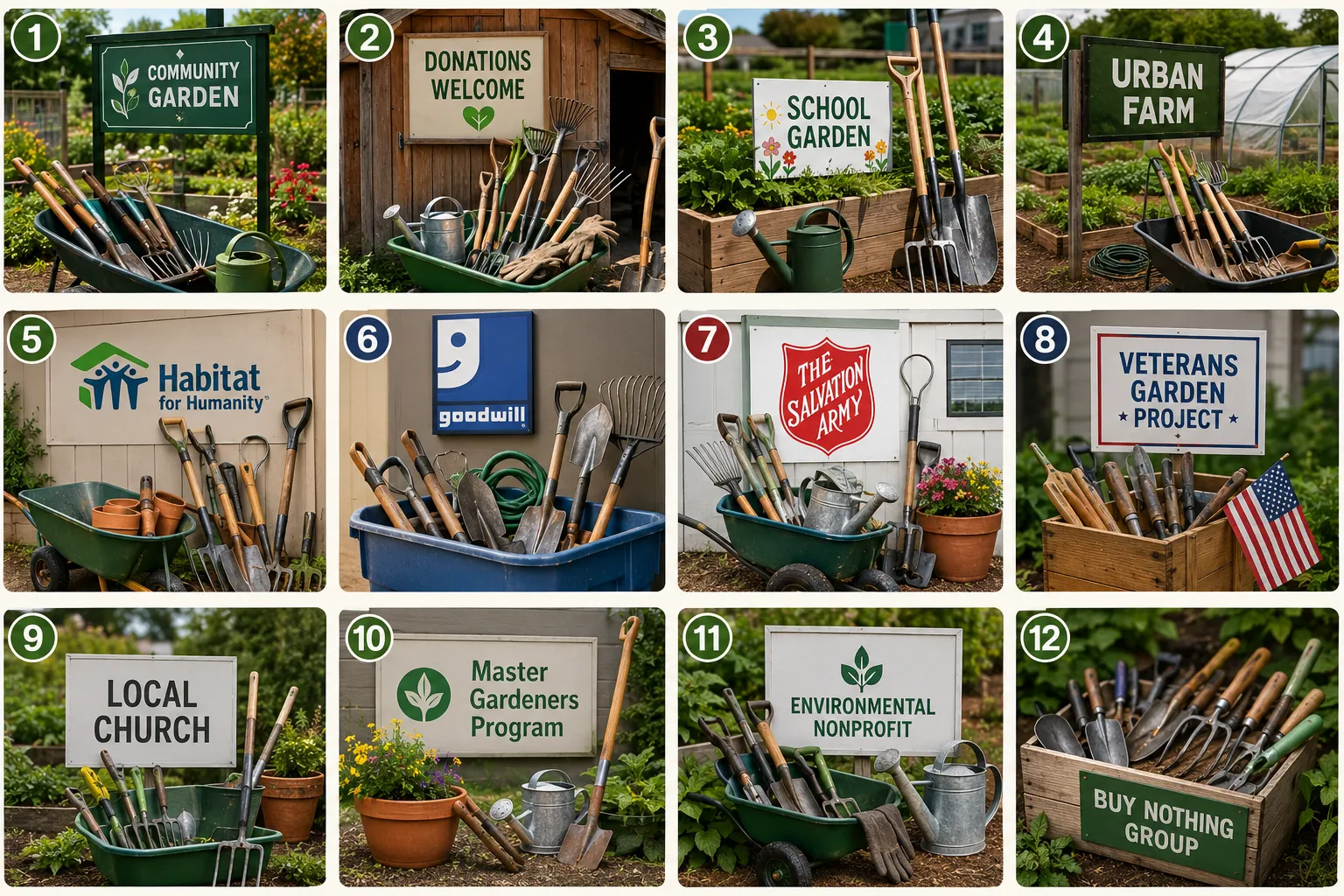
You can donate garden tools to Habitat for Humanity ReStores, Goodwill, The Salvation Army, or local tool libraries. Each accepts hand tools, power equipment, or both, and most provide a tax receipt on request.
A garage full of duplicate rakes, an old tiller, or 3 mismatched trowels takes up space you could use for something else. Donating those tools keeps usable equipment out of landfills and puts it into the hands of new gardeners, students, or families building their first vegetable patch.
This guide names 12 specific organizations that accept garden tool donations, explains the IRS rules for claiming a deduction, and tells you what condition your tools need to be in before you hand them over.
Where Can You Donate Garden Tools Locally?
You can donate garden tools locally at a Habitat for Humanity ReStore, a Goodwill donation center, or a Salvation Army Thrift Store. All 3 organizations operate thousands of physical locations across the United States and accept walk-in drop-offs during normal business hours.
Local drop-off avoids shipping costs and lets a staff member inspect your tools immediately, so you know right away whether an item qualifies. Bring a valid photo ID if you plan to request a receipt on the spot, since some locations require it for their donation log.
Habitat for Humanity ReStore
Habitat for Humanity ReStores sell donated tools, building materials, and appliances, with proceeds funding home construction for families in need. You can locate your nearest ReStore by entering your ZIP code on the Habitat donation page, and many locations offer free pickup for large items like tillers or wheelbarrows.
Goodwill Industries
Goodwill accepts hand tools, lawn equipment, and small to medium power tools at more than 3,300 locations across North America. Use the Goodwill donation site locator to find a drop-off point, then bring tools during posted donation hours.
Goodwill resells donated items to fund job training, career counseling, and placement services in 12 countries. Most locations have a dedicated donation attendant who can sort tools while you wait, so a typical drop-off takes less than 10 minutes.
The Salvation Army
More than 1,300 Salvation Army Thrift Stores accept tools of all kinds, including lawn and garden equipment. You can schedule a free pickup through their donation page if you have heavy items like a lawn mower or a wood chipper.
Which National Charities Accept Garden Tool Donations?
Goodwill, The Salvation Army, and Vietnam Veterans of America rank among the largest national charities accepting garden tool donations. Each organization resells tools to fund job training, veteran services, or community programs.
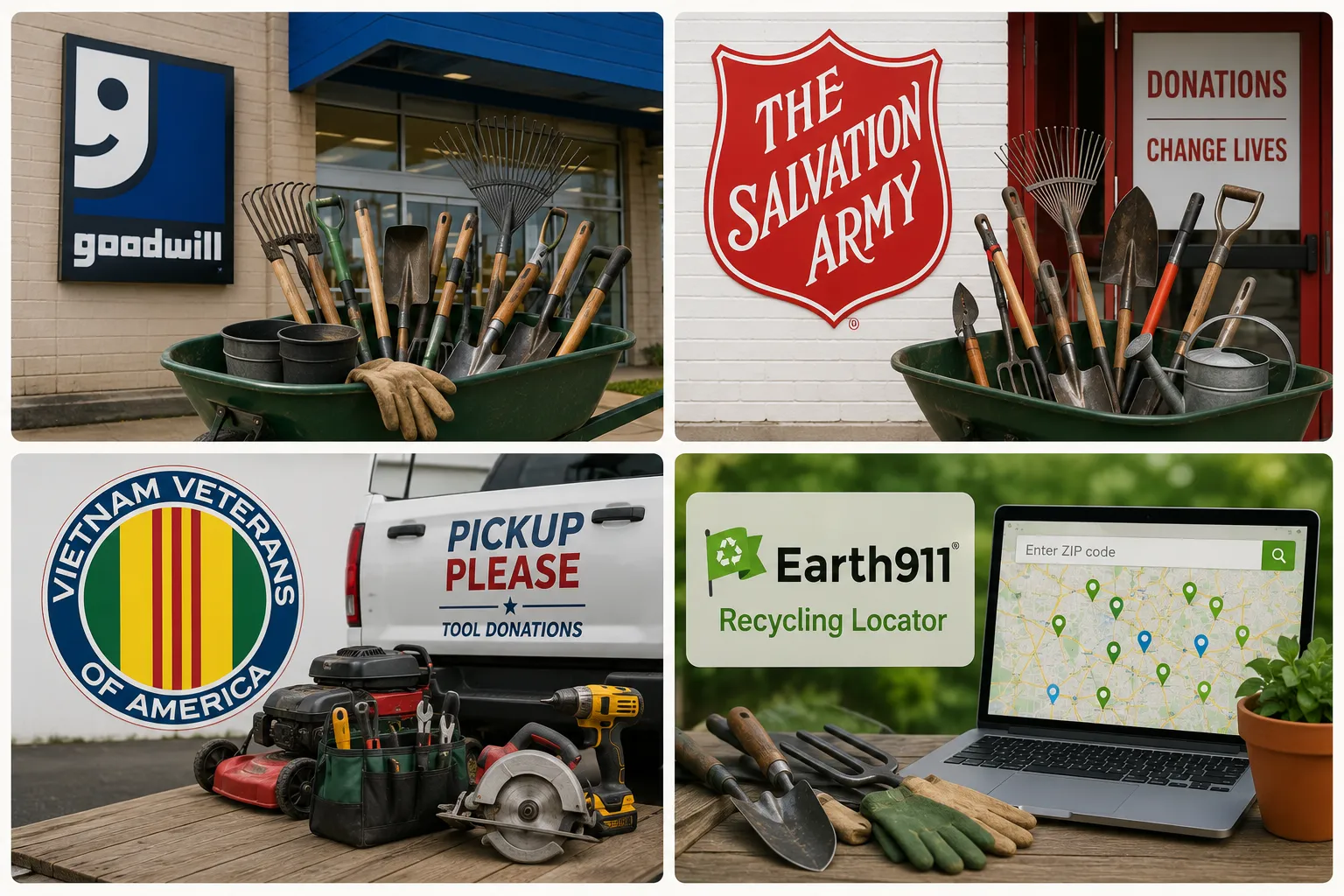
Vietnam Veterans of America
Vietnam Veterans of America runs the Pickup Please program, which sends a driver to your home to collect hand and power tools at no cost. Items must be light enough for one driver to load alone, so heavier equipment like riding mowers may not qualify.
Earth911 Recycling Locator
Earth911 lets you search by ZIP code to find both donation centers and recycling facilities near you. This tool works well when you have a mix of tools, some fit for donation and others too damaged to reuse.
How to Donate Garden Tools That Need Repair
To donate garden tools that need repair, contact a vocational training nonprofit or a community tool library rather than a general thrift store. These organizations often repair tools before redistributing them.
Workaid accepts tools in any condition for shipment to vocational training programs in Africa, provided electrical garden items display a CE mark. Community tool libraries, such as those serving Seattle’s neighborhoods, accept clean and rust-free garden tools and sometimes operate dedicated repair workshops staffed by volunteers.
Where to Donate Power Tools and Lawn Equipment?
You can donate power tools and lawn equipment to Goodwill, The Salvation Army, or specialized junk removal companies that route usable items to local charities instead of landfills.
Eco-focused removal services pick up larger lawn equipment, like tillers and chainsaws, and either donate or recycle each item depending on condition. If you want a deeper look at preparing your beds before donated equipment arrives, check our Raised Garden Bed Plans for layout ideas that pair well with hand-tool gardening.
Schools and Community Gardens
Many public schools and community garden programs accept tool donations directly, bypassing thrift stores entirely. Contact your local school district’s facilities office or community garden coordinator to ask about current needs before dropping items off.
School woodworking classes often need basic hand tools like hammers, screwdrivers, and hand saws, while school gardening clubs look for trowels, watering cans, and child-sized rakes. Community gardens frequently maintain a shared tool shed, so a single donation can serve dozens of plot holders throughout the growing season.
Can You Mail Garden Tools to a Charity?
Yes. Several nonprofits accept mailed tool donations when no local drop-off point exists nearby. Workaid, for example, publishes a mailing address and accepts shipments of hand tools, tape measures, and electric garden equipment that carries a CE safety mark.
Pack tools in a sturdy box with padding around sharp edges, and wrap power cords separately to prevent damage in transit. Include a note with your name and address if you want a written acknowledgment mailed back for your tax records.
What Tools Should You Donate vs. Recycle?
Donate tools that are clean, rust-free, and fully functional. Recycle tools that are broken, badly rusted, or missing parts, since most charities cannot resell damaged equipment.
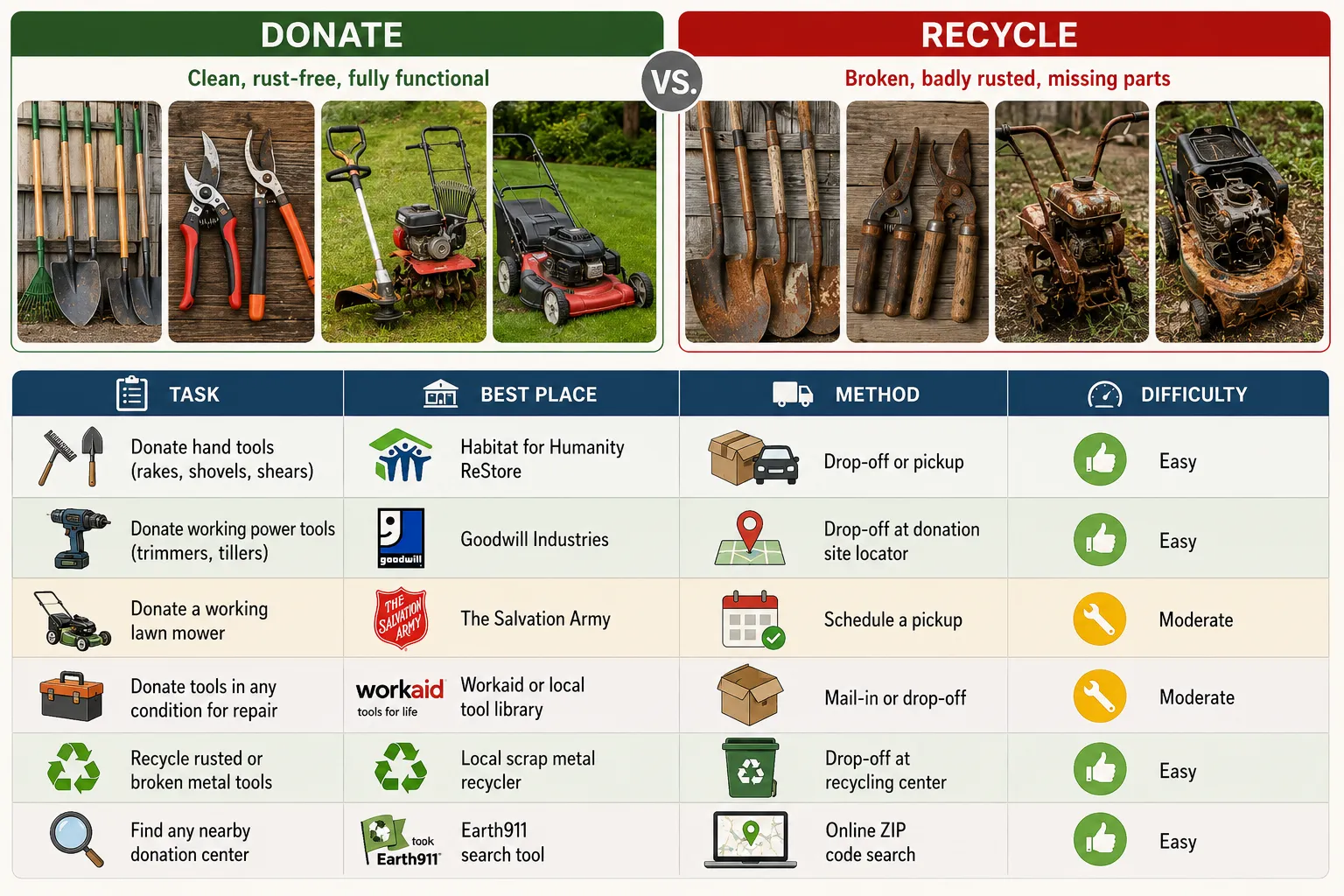
Hand tools like shovels, spades, and pruning shears are the most accepted items. Power equipment such as tillers, cultivators, and lawn mowers also qualifies at most locations, as long as the motor starts and runs.
| Task | Best Place | Method | Difficulty |
| Donate hand tools (rakes, shovels, shears) | Habitat for Humanity ReStore | Drop-off or pickup | Easy |
| Donate working power tools (trimmers, tillers) | Goodwill Industries | Drop-off at donation site locator | Easy |
| Donate a working lawn mower | The Salvation Army | Schedule a pickup | Moderate |
| Donate tools in any condition for repair | Workaid or local tool library | Mail-in or drop-off | Moderate |
| Recycle rusted or broken metal tools | Local scrap metal recycler | Drop-off at recycling center | Easy |
| Find any nearby donation center | Earth911 search tool | Online ZIP code search | Easy |
How to Get a Tax Deduction for Tool Donations
To get a tax deduction for tool donations, you must itemize deductions on Schedule A and donate to an IRS-recognized 501(c)(3) organization. The deduction equals the fair market value of the tools on the date you donate them.
Donations made on or before December 31 count toward that tax year, so a December cleanout can lower your bill on the return you file the following spring. Check an organization’s status using the IRS Tax Exempt Organization Search Tool before you donate if you are unsure whether it qualifies.
For donations under $250, keep a receipt from the charity listing the date and a description of the items. For donations of $250 or more, you need a written acknowledgment from the organization before filing your return. If your total noncash donations exceed $500, you must complete IRS Form 8283 and attach it to your tax return. Donations valued above $5,000 per item or group require a qualified appraisal.
Determining Fair Market Value
Fair market value is the price a willing buyer would pay a willing seller for your used tools today, not their original purchase price. Check resale listings for similar used tools, or ask the receiving charity whether they provide a valuation guide.
A used shovel in good condition might carry a fair market value of 5 dollars (4.5 euros), while a working tiller could be worth 80 to 150 dollars (73 to 137 euros) depending on age and brand. Photograph each item before donating, since photos help support your valuation if the IRS ever requests documentation.
How to Prepare Garden Tools Before Donating
To prepare garden tools before donating, clean off dirt and rust, sharpen blades where needed, and test power equipment to confirm the motor starts. Fall, after the growing season ends, is the ideal time to do this since tools come out of regular use anyway. Spring works too, especially if you are upgrading to new equipment before planting season begins.
- Wipe down metal surfaces and remove caked dirt with a wire brush
- Sand away light rust spots, then apply a thin coat of oil to blades
- Test power tools by starting the engine or motor before donating
- Tighten loose handles and replace any missing screws if possible
- Bundle small hand tools together so charities can sort them faster
Once your tools are clean and your beds are ready for the season, pair your donation routine with a Watering Schedule suited to your climate zone, so the plants you grow with your remaining tools thrive year-round.
What Items Do Donation Centers Refuse to Accept?
Donation centers refuse items that are structurally broken, contain hazardous fluids, or pose a safety risk to staff and future users. Staff inspect every item at intake, and items failing inspection get returned to you rather than placed on the sales floor.
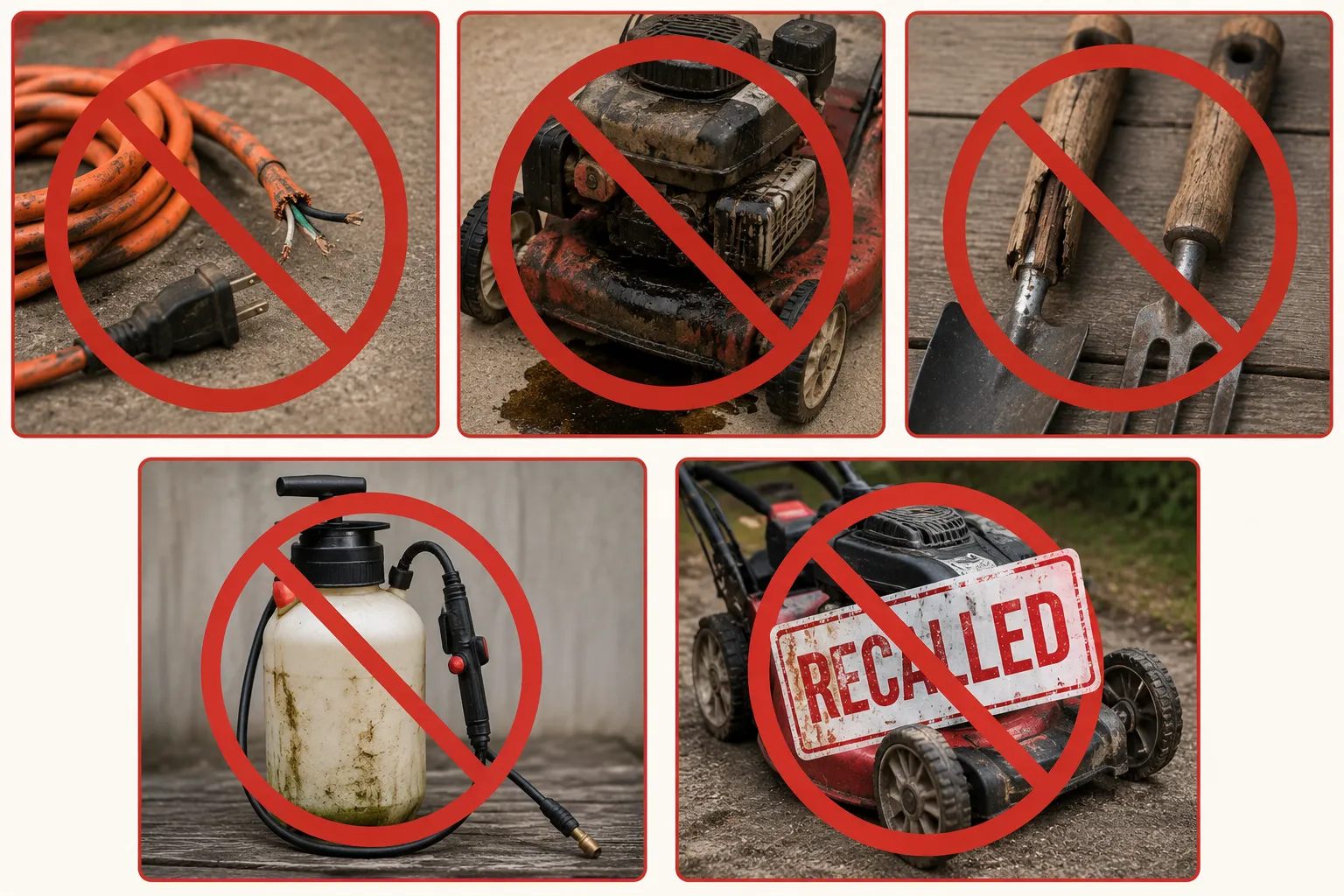
- Tools with exposed wiring or frayed electrical cords
- Power equipment with leaking fuel, oil, or hydraulic fluid
- Hand tools with cracked or splintered wooden handles
- Chemical sprayers that previously held pesticides or herbicides
- Equipment recalled by the manufacturer for safety defects
If your equipment falls into one of these categories, a scrap metal recycler is usually your best option. Once your shed is cleared out, refresh the soil with guidance from our Mulch Guide to keep new plantings protected through the next season.
Frequently Asked Questions
Can you donate broken garden tools?
No. Most charities only accept tools in safe, working condition. Broken tools should go to a scrap metal recycler instead, since charities cannot resell items that pose a safety risk.
Do you need a receipt to donate garden tools?
Yes, for any donation worth $250 or more. Request a written acknowledgment from the charity at the time of drop-off so you have documentation ready for tax season.
Is donating a lawn mower tax deductible?
Yes. A working lawn mower qualifies for a deduction equal to its fair market value, provided you donate it to an IRS-recognized 501(c)(3) organization and keep proper documentation.
Will Goodwill pick up large garden equipment?
No, Goodwill typically requires drop-off rather than pickup. The Salvation Army and several junk removal services offer scheduled pickup for large items like tillers and mowers instead.
Can schools accept garden tool donations directly?
Yes. Many schools running student gardens or woodworking classes accept tool donations directly. Call the facilities office first to confirm current needs before delivering items.
Start Clearing Your Shed Today
Donating garden tools clears space in your shed, supports vocational training and home-building programs, and earns you a tax deduction when you follow IRS documentation rules. Pick one organization from this list, gather your unused tools, and schedule a drop-off or pickup this week.