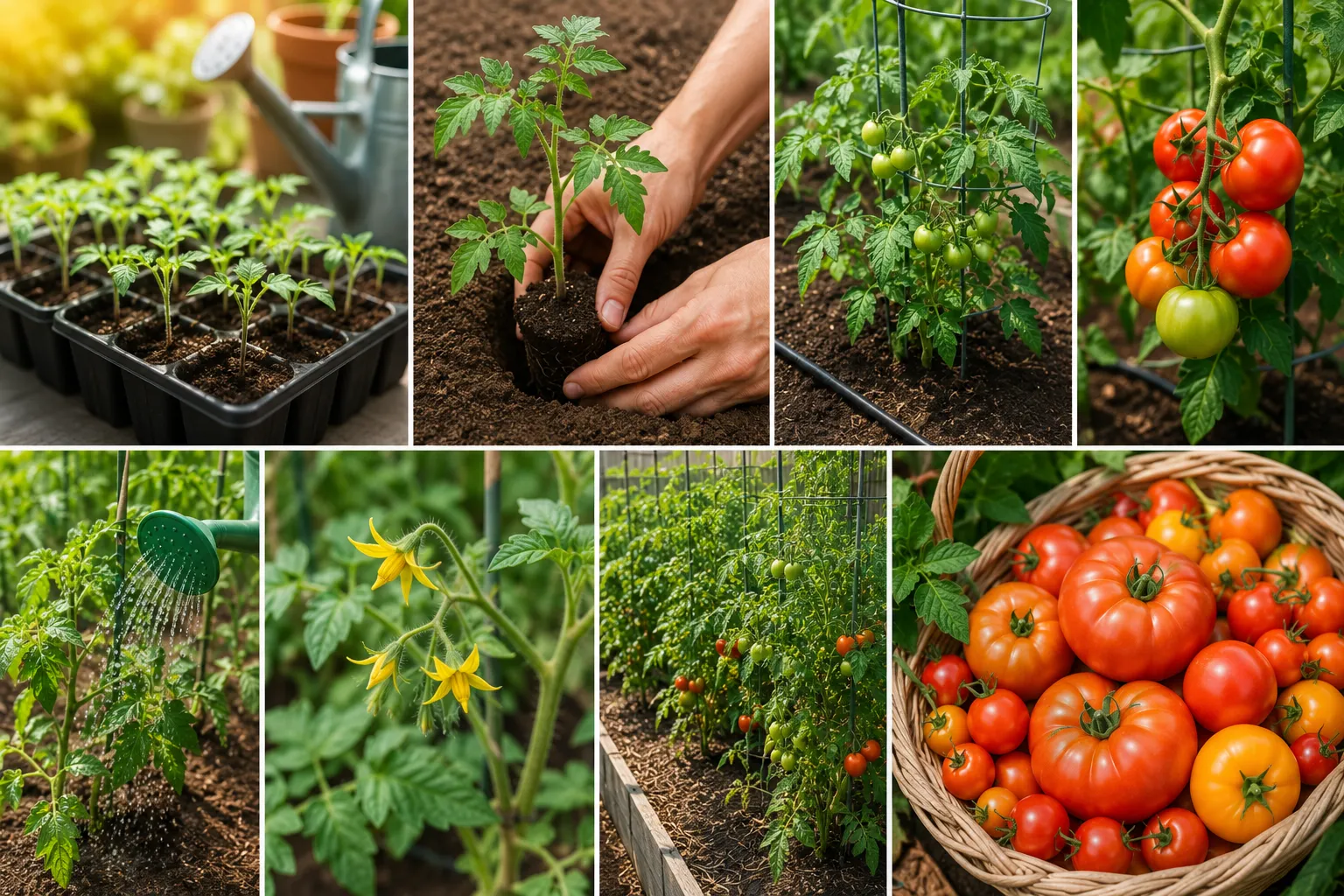
To grow tomatoes, plant seedlings in full sun after your last frost date, bury two-thirds of the stem, water 1-2 inches (2.5-5 cm) per week, and feed with low-nitrogen fertilizer once flowers appear. Follow that formula and one plant hands you 10-30 pounds (4.5-13.6 kg) of fruit by late summer.
I killed my first three tomato plants. Overwatered one, planted another too early, and let hornworms eat the third down to a stump. The plants in my backyard garden now produce more than my family can eat. The difference wasn’t luck. It was fixing 5 specific gardening habits, and this guide covers all of them, whether you’re planting a garden bed, a corner of the lawn, or pots on a patio.
Why Grow Your Own Tomatoes?
Growing your own tomatoes saves $35-65 per plant each season. A seedling costs $5-15 at the nursery. That single plant produces 10-30 pounds of fruit worth $50-80 at 2026 grocery prices. Multiply by four plants and you’ve covered a family’s tomato needs from June through October.
Money is only half the story. Store tomatoes get picked green and gassed with ethylene to turn red in trucks. A vine-ripened Brandywine or Cherokee Purple from your home garden tastes so different you’ll wonder if it’s the same fruit. That flavor gap is why tomatoes stay the number one crop in American vegetable gardens year after year. The tomato (Solanum lycopersicum) belongs to the nightshade family, and its flavor compounds develop fully only when fruit ripens on the plant.
You also control what touches your food. No pesticides, no wax coating, no mystery.
Which Tomato Variety Should You Pick?
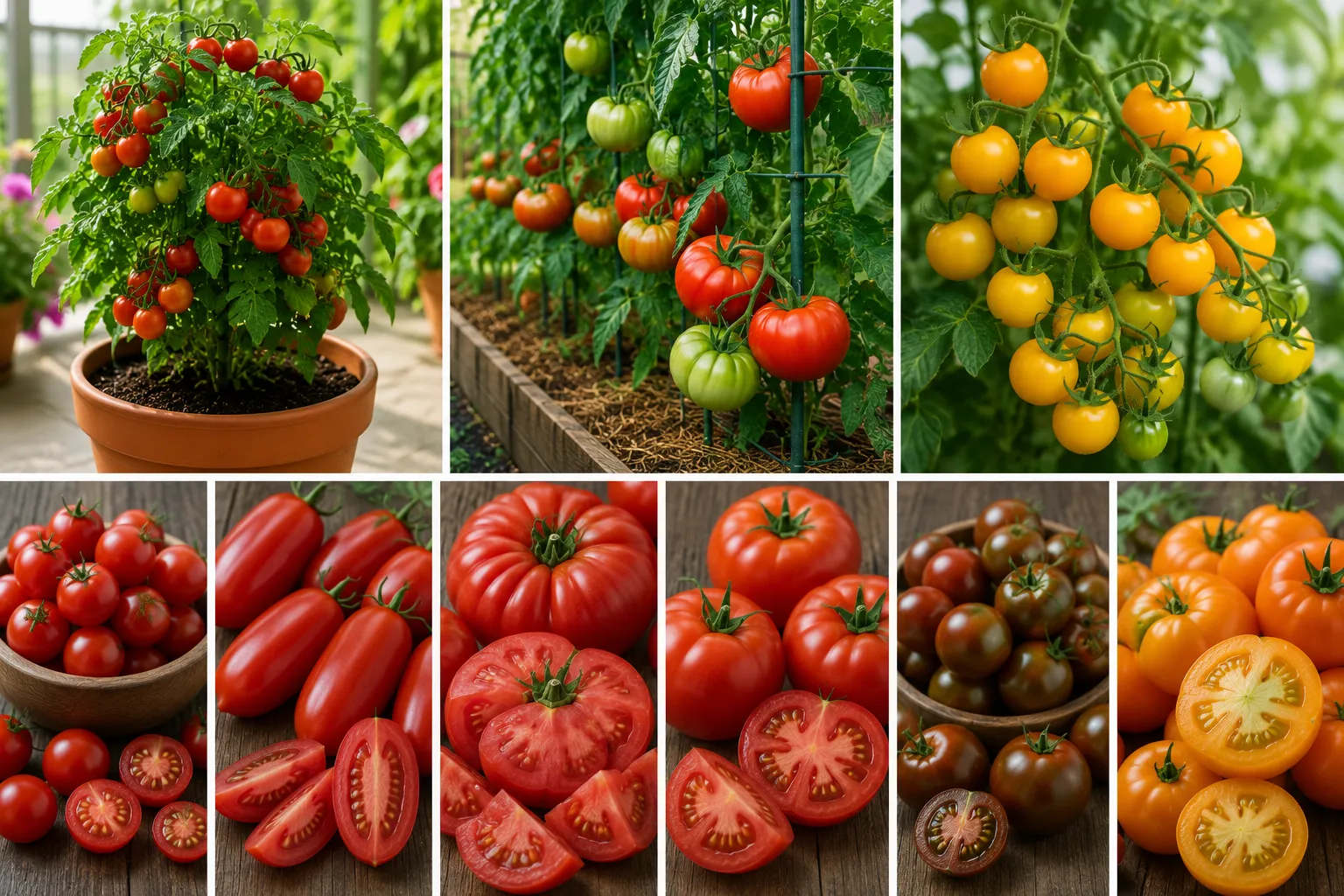
Pick a cherry tomato like Sun Gold for your first season. Cherry varieties forgive watering mistakes, resist cracking, and produce fruit 2 weeks earlier than large slicers.
Answer these 3 questions to narrow your choice:
- How much space do you have? Small space or containers point to determinate varieties, which stop at 3-4 feet (0.9-1.2 m) and fruit all at once. Roma and Celebrity fit this group. A big garden bed handles indeterminate varieties, such as Brandywine, Better Boy, and Sun Gold, which climb 6-8 feet (1.8-2.4 m) and produce until frost kills them.
- What will you do with the fruit? Sauce makers want Roma or San Marzano because these paste types carry less water. Sandwich lovers want Beefsteak or Big Boy. Snackers want Sun Gold or Chocolate Cherry.
- How long is your growing season? Northern gardeners in zones 3-5 need short-season varieties like Early Girl, which ripens in 50-60 days. Southern gardeners in zones 8-10 can grow anything, including 85-day heirlooms.
Check the tag for disease resistance codes too. Letters like V, F, and N mean the variety resists verticillium wilt, fusarium wilt, and nematodes.
When to Plant Tomatoes in the USA
Plant tomatoes outdoors 1-2 weeks after your last frost date, once soil hits 60°F (15.5°C) and nights stay above 50°F (10°C). One cold night below 50°F stunts a tomato plant for weeks.
The USDA revised its Plant Hardiness Zone Map in late 2023, and about half of US gardeners shifted a half-zone warmer. Old planting charts run 1-2 weeks late for many regions, so check your zone at the USDA website before trusting a calendar from 2020.
Here’s the 2026 planting window by zone:
| USDA Zone | Start Seeds Indoors | Transplant Outdoors |
| Zone 3-4 | Early April | Early-Mid June |
| Zone 5-6 | Mid-Late March | Mid-Late May |
| Zone 7 | Early March | Mid-Late April |
| Zone 8 | Mid February | Late March-Early April |
| Zone 9 | January | Late February-March |
| Zone 10 | Dec-Jan and August | February and September |
Zone 10 gardeners in Florida and southern Texas get two seasons because summer heat above 95°F (35°C) shuts down fruit set. Skip July and August, then plant a fall crop.
How to Start Tomato Seeds Indoors
To start tomato seeds, sow them ¼ inch (0.6 cm) deep in seed starting mix 6-8 weeks before your last frost, and keep the soil at 75-90°F (24-32°C). Seeds sprout in 5-10 days at that temperature.
Follow these 6 steps:
- Fill small pots with seed starting mix, not garden soil. Garden soil compacts and carries fungus that kills seedlings.
- Plant 2 seeds per pot at ¼ inch (0.6 cm) depth, then thin to the stronger seedling later.
- Keep soil warm and moist. A heat mat speeds germination from 10 days to 5.
- Give seedlings 14-16 hours of light daily once they sprout. A sunny window rarely delivers enough, so hang a basic LED grow light 2-3 inches (5-7.5 cm) above the leaves and raise it as plants grow.
- Pot up to 4-inch containers when seedlings show 2-3 sets of true leaves.
- Harden off before transplanting. Set plants outside for 1 hour on day one, then add an hour daily for 7-10 days. Skipping this step sunburns the leaves white.
No time for seeds? Buy nursery seedlings instead. Pick stocky plants with thick stems and dark green leaves. Leave the tall, leggy, flowering ones on the shelf.
How to Prepare Soil for Tomatoes
Tomatoes need well-drained soil with a pH of 6.0-6.8 and at least 2-3 inches (5-7.5 cm) of compost mixed into the top 12 inches (30 cm). Rich soil at planting time matters more than any fertilizer you add later.
Get a soil test through your county Cooperative Extension office for $10-20. The report tells you exact pH and nutrient levels, which beats guessing. Cornell and NC State extension programs both rank soil testing as the single most skipped step among home gardeners.
Pick the sunniest spot in your yard, whether that’s a raised garden bed, an in-ground vegetable garden, or a strip carved out of the lawn along a south-facing fence. Then work in compost or well-rotted manure. Skip the spot where you grew tomatoes, peppers, potatoes, or eggplant last year. These nightshade cousins share soil diseases, and rotating beds every 3 years breaks the disease cycle.
How to Transplant Tomato Seedlings
To transplant tomatoes, dig a hole deep enough to bury two-thirds of the stem, strip the lower leaves, and set the plant in up to its top leaf cluster. Tomato stems grow roots from every buried node, so deep planting builds a root system twice the normal size.
This one trick separates experienced growers from beginners. A deeper root system pulls water from lower soil and shrugs off dry spells that wilt shallow-planted neighbors.
Space plants 18-24 inches (45-60 cm) apart for determinate types and 24-36 inches (60-90 cm) for indeterminate types. Crowded plants trap humidity, and humidity breeds early blight.
Drive your stake or set your cage the same day you plant. Adding support to a 4-foot plant later tears the roots you worked to grow.
Water each transplant with 1 quart (about 1 liter) right away.
How to Water Tomato Plants
Water tomatoes deeply 2-3 times per week, delivering 1-2 inches (2.5-5 cm) total, and always at the base of the plant. Consistency matters more than quantity. Swinging between drought and flood cracks fruit and triggers blossom end rot.
Match your watering to the plant’s stage:
| Growth Stage | Frequency | Amount Per Plant |
| Seedling (indoors) | When top ½ inch dries | Light, even moisture |
| First 2 weeks after transplant | Daily | 1 quart (1 liter) |
| Vegetative growth | 2 times per week | 1-2 gallons (4-7.5 L) |
| Flowering and fruiting | 2-3 times per week | 2-3 gallons (7.5-11 L) |
| Container plants in summer | Daily, sometimes twice | Until water drains out |
Water in the morning so leaves dry before nightfall. Wet leaves overnight invite septoria leaf spot and blight. A soaker hose or drip line solves this automatically.
After the soil warms in early summer, spread 2-3 inches (5-7.5 cm) of straw or shredded leaf mulch around each plant. Mulch holds moisture steady, blocks weeds, and stops rain from splashing disease spores onto lower leaves.
How to Fertilize Tomatoes
Feed tomatoes a balanced fertilizer at planting, then switch to a low-nitrogen formula like 5-10-10 when the first flowers open. Nitrogen grows leaves. Phosphorus and potassium grow fruit. Feed heavy nitrogen all season and you’ll get a gorgeous 7-foot plant with 4 tomatoes on it.
Cornell’s vegetable program recommends about half a cup of 5-10-5 worked into the soil around each plant. Repeat feeding every 2-3 weeks once fruit sets, a practice growers call side-dressing. Compost-rich soil needs less. Sandy soil needs more because nutrients wash through it.
Calcium deserves a mention here. Blossom end rot, the black sunken patch on a fruit’s bottom, comes from calcium failing to reach the fruit. Your soil almost always has enough calcium. Irregular watering blocks the plant from moving it, so fix the watering before buying calcium sprays.
Quick Answers
How long do tomatoes take to grow? 60-85 days from transplant, 100-120 days from seed.
How much sun do tomatoes need? 8 hours of direct sunlight for the biggest harvest, 6 hours minimum.
How often should you water tomatoes? Deeply 2-3 times per week, totaling 1-2 inches (2.5-5 cm).
Can you grow tomatoes in pots? Yes, in containers of 5 gallons (19 liters) or larger.
When do you plant tomatoes? 1-2 weeks after your last frost date, once nights stay above 50°F (10°C).
How to Prune and Support Tomato Plants
To prune tomatoes, pinch off suckers, the shoots sprouting from the joint between the main stem and each branch, while they’re under 3 inches (7.5 cm) long. Pruned indeterminate plants ripen fruit 1-2 weeks earlier and breathe better, which cuts disease.
Leave determinate varieties alone. They set a fixed amount of fruit, so every sucker you remove costs you tomatoes.
For support, cheap wire cones from the garden center collapse under a loaded indeterminate plant by August. Use a 5-6 foot (1.5-1.8 m) stake, a heavy-duty square cage, or a cattle panel trellis. Tie stems loosely with cloth strips or garden velcro every 12 inches (30 cm) as they climb.
Snip off any leaves touching the ground once the plant establishes. Ground contact is the front door for soil-borne disease.
How to Grow Tomatoes in Containers
Grow container tomatoes in a 5-gallon (19-liter) or larger pot with drainage holes, filled with potting mix, and placed where it gets 8 hours of sun. Container gardening works on balconies, patios, decks, and driveways, and it lets renters without a lawn or garden bed grow serious food.
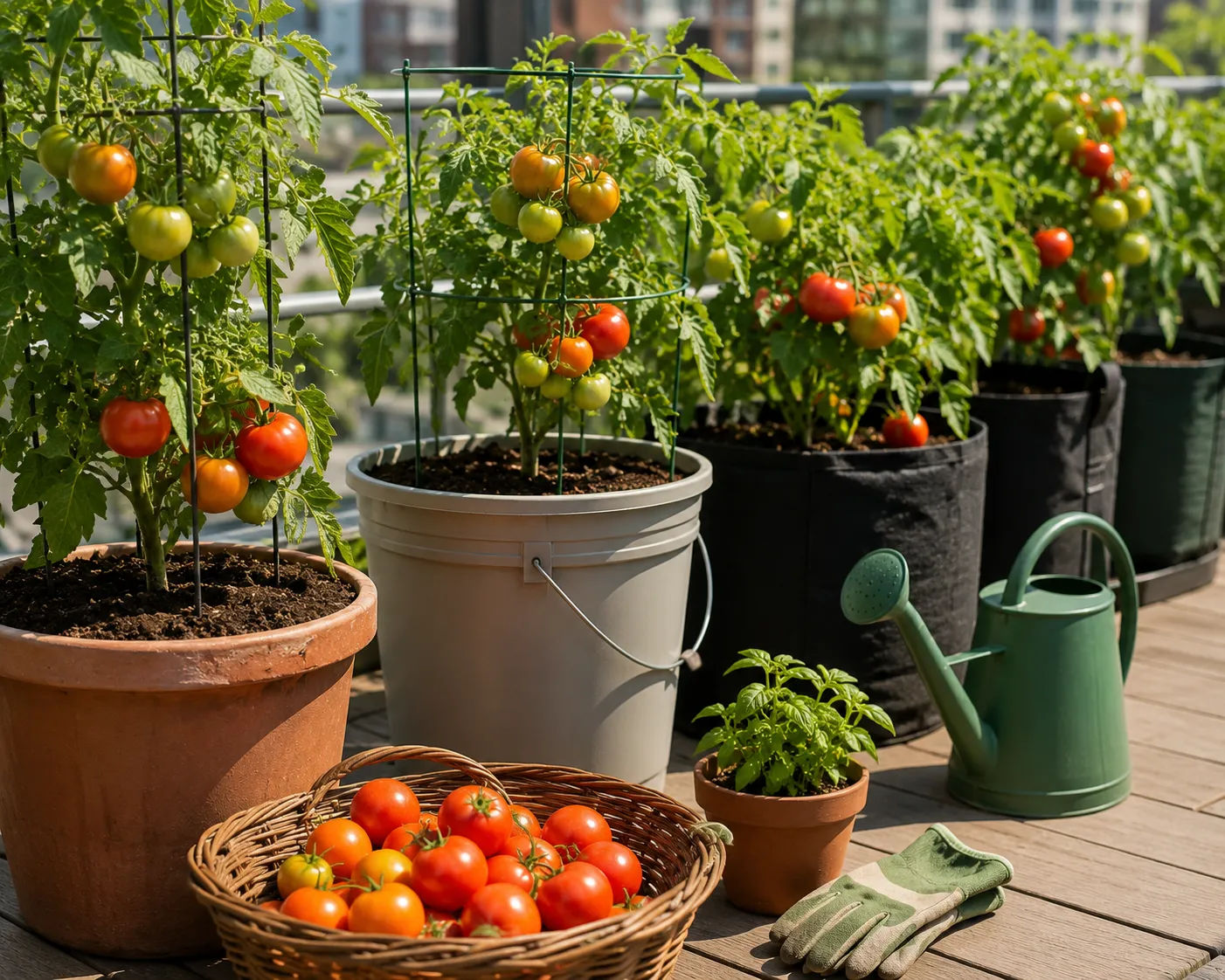
Container growing changes 4 rules:
- Size up. A 5-gallon bucket is the minimum, and a 10-15 gallon (38-57 liter) fabric pot grows a noticeably bigger plant.
- Water daily in summer. Pots dry out fast. In July heat, some need water morning and evening. Stick a finger 2 inches into the mix; if it feels dry, water until it runs out the bottom.
- Feed more often. Constant watering flushes nutrients, so fertilize every 10-14 days instead of every 3 weeks.
- Pick compact varieties. Determinate and dwarf types like Roma, Celebrity, and Patio Choice thrive in pots. An 8-foot Brandywine in a bucket becomes a daily rescue mission.
What to Expect in the First 30 Days After Transplanting
Expect slow top growth for the first 2 weeks while roots establish, then a visible growth spurt in weeks 3-4. New gardeners panic during the quiet phase and start overwatering or overfeeding. Don’t. The plant is building underground.
Week 1: Leaves may droop slightly at midday. Normal. Water daily and skip fertilizer.
Week 2: New leaves appear at the top. Cut watering to every 2-3 days to push roots deeper.
Week 3: The plant doubles in size. Tie it to its support and start watching for suckers.
Week 4: First flower clusters open on early varieties. Switch to your low-nitrogen fertilizer and begin the regular feeding schedule.
A purple tint on leaves during a cold week means temporary phosphorus lockout, and it fades as soil warms. Yellow lower leaves on an otherwise growing plant usually just mean the plant is redirecting energy upward.
Tomato Problems and Fixes
Most tomato problems trace back to 3 causes: irregular watering, wet leaves, or temperature extremes. Find your symptom below:
| Problem | Cause | Fix |
| Black sunken spot on fruit bottom | Blossom end rot from uneven watering | Water on a schedule, mulch heavily |
| Cracked fruit | Heavy rain or watering after drought | Keep moisture consistent, pick fruit early before storms |
| Flowers drop, no fruit | Heat above 95°F (35°C) or nights below 55°F (13°C) | Wait for moderate weather, shake flower clusters at midday to aid pollination |
| Yellow lower leaves with brown spots | Early blight fungus | Remove affected leaves, mulch, water at the base only |
| Leaves stripped overnight | Tomato hornworm | Hand-pick the green caterpillars at dusk |
| Tiny white insects under leaves | Whiteflies | Spray neem oil every 5-7 days |
| Curled leaves in hot weather | Heat stress, not disease | Provide afternoon shade cloth, keep watering steady |
| Whole plant wilts despite wet soil | Fusarium or verticillium wilt | Remove the plant, rotate beds, plant VFN-resistant varieties next year |
7 Mistakes That Kill Tomato Plants
The 7 mistakes that kill tomato plants are planting too early, shallow planting, overwatering, overfeeding nitrogen, skipping support, crowding, and ignoring suckers.
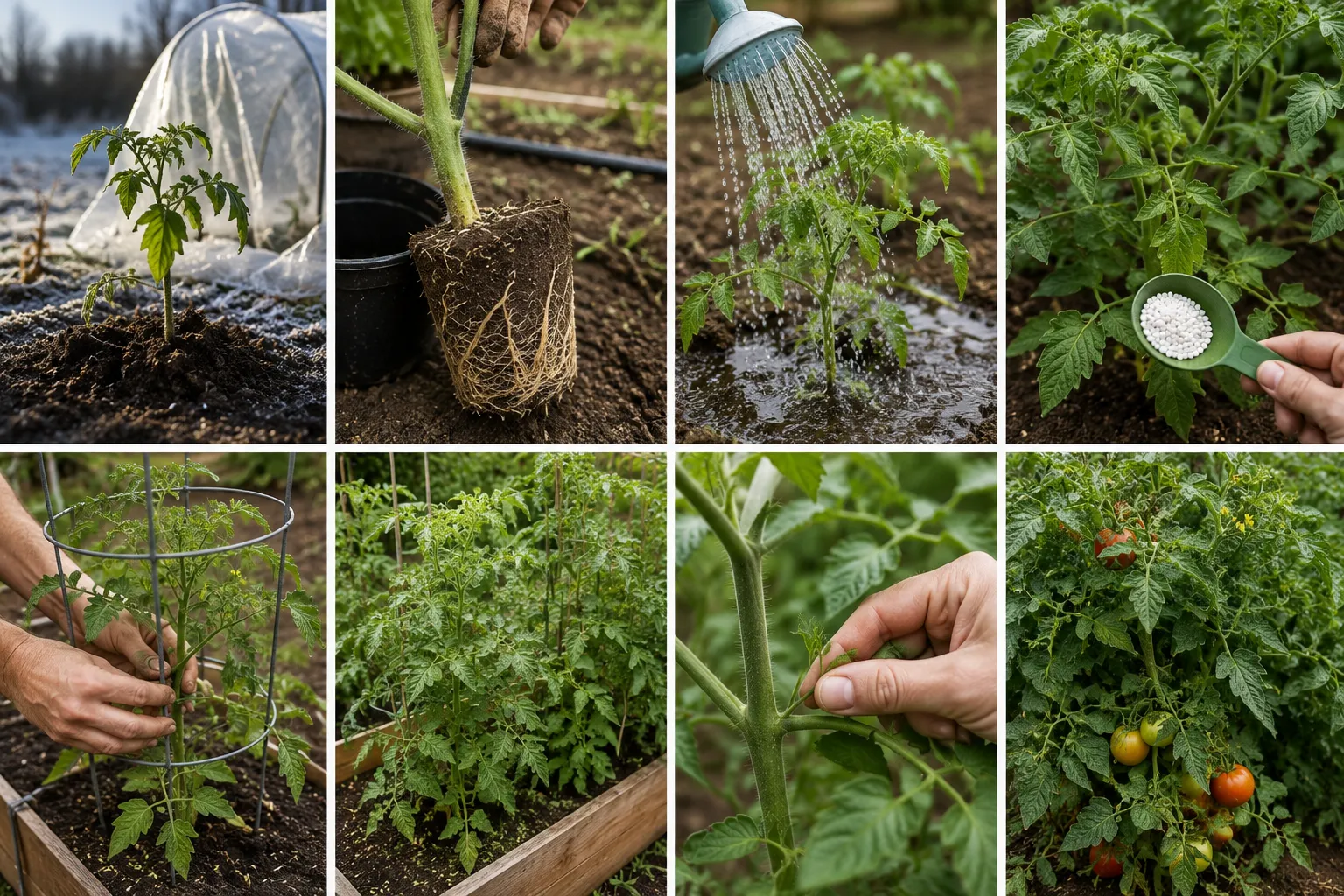
- Planting before the soil warms. A tomato set out in 50°F soil sulks for a month while its later-planted neighbor blows past it.
- Planting at nursery-pot depth. Shallow roots mean weak plants. Bury that stem.
- Watering a little every day. Shallow daily sips train roots to stay near the surface, where they fry in July.
- Feeding high-nitrogen lawn fertilizer. You’ll grow a tomato tree with no tomatoes.
- Adding support after the plant is big. You’ll snap branches and slice roots.
- Squeezing plants 12 inches apart. Airflow drops, humidity climbs, and blight moves in.
- Letting suckers run wild on indeterminate types. The plant becomes a tangled jungle that ripens fruit late and hides hornworms.
When and How to Harvest Tomatoes
Harvest tomatoes when the fruit shows full color and gives slightly under gentle pressure, usually 60-85 days after transplanting. Twist the fruit upward off the vine or snip it with pruners to avoid tearing the branch.
You can also pick at the “breaker stage,” when the bottom third blushes pink. A breaker-stage tomato has already sealed itself off from the vine, so it ripens on your counter with zero flavor loss. Pick at breaker stage before big storms to beat the cracking.
Never refrigerate a ripe tomato. Cold below 55°F (13°C) destroys the flavor compounds and turns the texture mealy. Counter storage at room temperature keeps fruit good for 5-7 days.
When fall frost threatens, pull every green tomato that has reached full size. Wrap each in newspaper, box them in a single layer, and check weekly. Most ripen indoors over 2-4 weeks, and green tomatoes past the mature size stage ripen with real flavor.
FAQs
How long does it take to grow tomatoes?
Tomatoes take 60-85 days from transplant and 100-120 days from seed. Cherry varieties like Sun Gold finish fastest, and big heirlooms like Brandywine take the longest.
Do tomatoes need full sun?
Yes. Tomatoes need 6 hours of direct sun at minimum, and 8 hours produces roughly double the fruit. No variety fruits well in shade.
Why do my tomato plants flower but produce no fruit?
Temperature blocks pollination. Fruit set stops above 95°F (35°C) daytime or below 55°F (13°C) at night. Shake flowering branches gently at midday to release pollen while you wait for better weather.
Can I grow tomatoes indoors year-round?
Yes, with a grow light running 14-16 hours daily and a dwarf variety like Patio Choice in a 5-gallon (19-liter) pot. A window alone won’t deliver enough light for fruit.
Should I remove leaves from my tomato plant?
Yes, remove leaves touching the soil and any leaf showing dark spots. Keep the healthy upper canopy intact, because those leaves shade fruit from sunscald and feed the plant.
Conclusion
Growing tomatoes comes down to 5 fundamentals: 8 hours of sun, deep planting, consistent watering, low-nitrogen feeding after flowers appear, and early support. Get those right and the variety, the weather, and the occasional hornworm become minor details.
Every gardening season teaches you something new. Your first year in the garden might bring cracked fruit or a blight scare, and that’s fine, because the fixes in this guide cover all of them. By year two, you’ll be the neighbor handing out extra tomatoes over the fence. Home gardening rewards patience faster than almost any hobby, and no crop proves it like a tomato ripening in the summer sun on your own patio or backyard garden bed.
The 2026 season is wide open. Your zone chart is above, your watering schedule is set, and your troubleshooting table is one scroll away.