
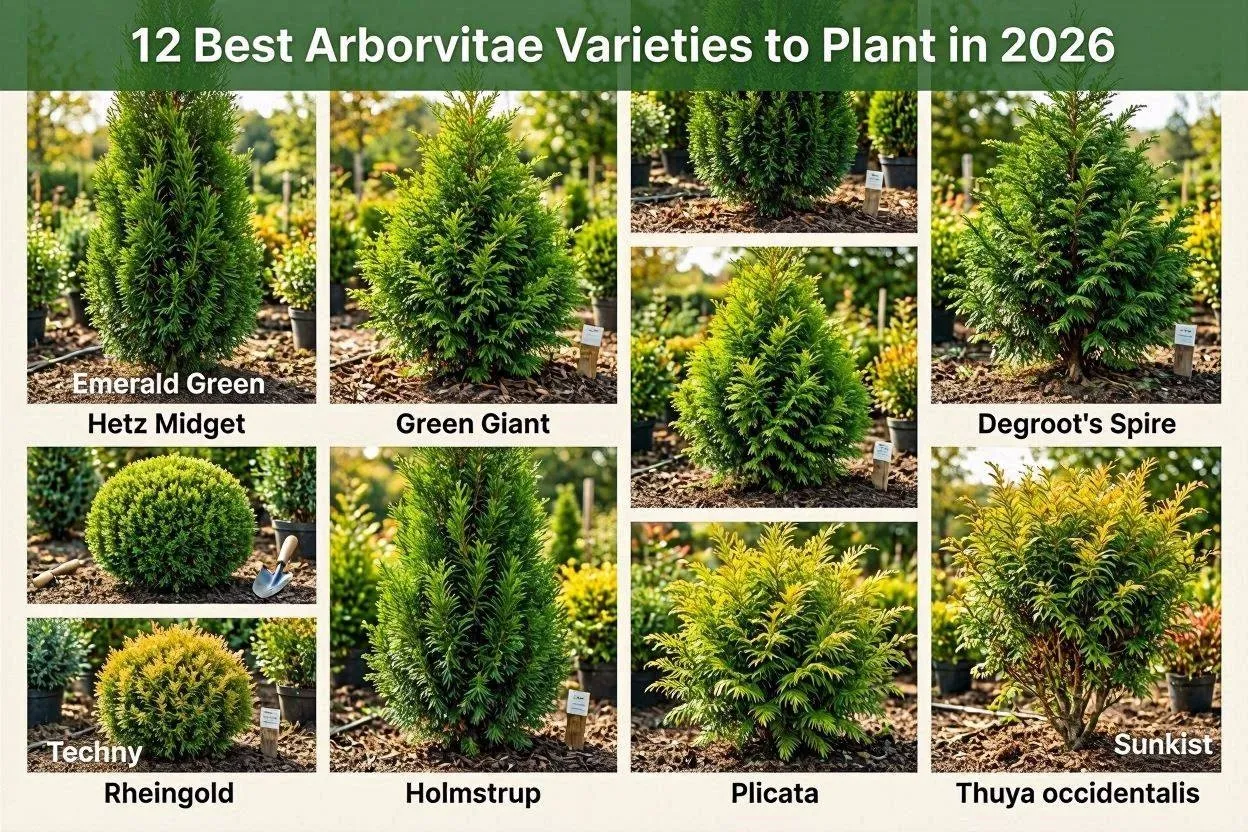
Arborvitae varieties divide into 3 functional groups: tall privacy trees, mid-size hedge shrubs, and dwarf accent plants. The right variety depends on 4 factors: your USDA hardiness zone, available space, deer pressure in your area, and whether you need year-round green foliage or can accept winter bronzing. This guide profiles 12 named cultivars with exact height, spread, growth rate, and zone ratings — so you buy the correct plant the first time.
Arborvitae (Thuja spp.) is a genus of 5 conifer species in the cypress family. The 2 most widely planted garden species are Thuja occidentalis (American arborvitae, also called eastern arborvitae) and Thuja plicata (giant arborvitae, also called western red cedar). American arborvitae is hardy across USDA Zones 2 through 8 and carries hundreds of named cultivars. Giant arborvitae is native to the Pacific Northwest, grows faster, and is more deer resistant than the American species, but it tops out at Zone 5 in cold hardiness.
Arborvitae Varieties Quick-Reference Comparison Table 2026
Use this table to match variety to garden use before reading the full profiles below.
| Variety | Height x Spread | Zones | Growth Rate | Best Use |
| Emerald Green | 12-14 ft x 3-4 ft (3.7-4.3m x 90cm-1.2m) | 2-7 | 6-9 in/yr (15-23cm) | Formal hedge, privacy screen |
| Green Giant | 30-40 ft x 12-20 ft (9-12m x 3.7-6m) | 5-8 | 3 ft/yr (90cm) | Tall screen, windbreak |
| North Pole | 10-15 ft x 3-5 ft (3-4.6m x 90cm-1.5m) | 3-7 | 6-12 in/yr (15-30cm) | Narrow hedge, specimen |
| Sting | 15-20 ft x 1-1.5 ft (4.6-6m x 30-45cm) | 3-8 | 12 in/yr (30cm) | Architectural accent |
| DeGroot’s Spire | 20 ft x 4-5 ft (6m x 1.2-1.5m) | 2-7 | 4-6 in/yr (10-15cm) | Formal topiary, entryway |
| Techny (Mission) | 10-15 ft x 6-8 ft (3-4.6m x 1.8-2.4m) | 3-7 | 6-8 in/yr (15-20cm) | Windbreak, wide hedge |
| Fluffy (Thuja plicata) | 5-10 ft x 3-5 ft (1.5-3m x 90cm-1.5m) | 5-8 | 6-12 in/yr (15-30cm) | Specimen, mass planting |
| Tater Tot | 12-24 in x 12-24 in (30-60cm) | 3-7 | 1-2 in/yr (2.5-5cm) | Container, border edging |
| Anna’s Magic Ball | 12-15 in x 12-15 in (30-38cm) | 3-7 | 1 in/yr (2.5cm) | Rock garden, container |
| Golden Globe | 2-3 ft x 2-3 ft (60-90cm) | 2-8 | 3-4 in/yr (7.6-10cm) | Foundation plant, edging |
| Hetz Midget | 3-4 ft x 3-4 ft (90cm-1.2m) | 2-7 | 2-3 in/yr (5-7.6cm) | Rock garden, container |
| Zebrina (Thuja plicata) | 30+ ft x 8-12 ft (9m+ x 2.4-3.7m) | 5-7 | 12 in/yr (30cm) | Tall accent, tall screen |
Best Arborvitae Varieties for Privacy Screens and Hedges
Privacy-screen arborvitae varieties need 3 qualities: dense foliage from base to top, a narrow spread relative to height, and year-round green color. These 4 cultivars deliver all 3.
Emerald Green — the most planted hedge arborvitae
Height x Spread: 12-14 ft x 3-4 ft (3.7-4.3m x 90cm-1.2m) | Zones 2-7 | Growth rate: 6-9 in/yr (15-23cm)
Emerald Green — sold as ‘Smaragd’ in Europe, where the name means emerald — holds glossy bright-green foliage in all 4 seasons without the winter bronzing that affects most American arborvitae cultivars. The narrow footprint of 3 to 4 ft (90cm-1.2m) wide lets you plant Emerald Green at 3 to 4 ft (90cm-1.2m) on center for a dense hedge without overcrowding. At 12 to 14 ft (3.7-4.3m) tall, Emerald Green screens a standard 6 ft (1.8m) fence line and adds 6 to 8 ft (1.8-2.4m) of additional height above it. Hardy down to USDA Zone 2, Emerald Green survives -50°F (-45°C) winters. The main limitation is slow growth — 6 to 9 in (15-23cm) per year means a hedge takes 4 to 5 years to fill in fully. If speed matters, plant Green Giant instead.
Best for: Formal hedges, privacy screens in Zones 2-7, and narrow side-yard plantings where width is restricted.
Green Giant — fastest growing arborvitae for tall screens
Height x Spread: 30-40 ft x 12-20 ft (9-12m x 3.7-6m) | Zones 5-8 | Growth rate: 3 ft/yr (90cm)
Green Giant (Thuja ‘Green Giant’) is a hybrid between Thuja standishii and Thuja plicata. It grows 3 ft (90cm) per year — 4 to 6 times faster than Emerald Green — and reaches 30 to 40 ft (9-12m) in height with a spread of 12 to 20 ft (3.7-6m). No arborvitae variety matches Green Giant for speed and ultimate height. The foliage stays glossy dark green year-round. Unlike Thuja occidentalis cultivars, Green Giant shows strong deer resistance because its waxy, scale-like foliage is less palatable than the soft needles of American arborvitae. Space Green Giant 6 to 8 ft (1.8-2.4m) apart for a screen, or 12 to 15 ft (3.7-4.6m) apart as individual specimens. Plant Green Giant only in Zones 5 through 8 — it does not survive the -30°F (-34°C) winters of Zones 2 through 4.
Best for: Tall windbreaks, fast-growing privacy screens, and large-property specimen planting in Zones 5-8.
North Pole — best narrow arborvitae for Zone 3-7 gardens
Height x Spread: 10-15 ft x 3-5 ft (3-4.6m x 90cm-1.5m) | Zones 3-7 | Growth rate: 6-12 in/yr (15-30cm)
North Pole (Thuja occidentalis, Proven Winners ColorChoice) maintains dark green foliage through winter without bronzing — an unusual quality for a Thuja occidentalis cultivar in cold climates. The narrow 3 to 5 ft (90cm-1.5m) spread suits tight side yards, narrow borders, and urban gardens where Green Giant’s 12 to 20 ft (3.7-6m) spread would overwhelm the space. At 10 to 15 ft (3-4.6m) tall, North Pole provides solid privacy screening at a more manageable height than Green Giant. Plant North Pole 3 to 4 ft (90cm-1.2m) apart for a formal hedge, or 5 ft (1.5m) apart for a loose screen.
Best Columnar Arborvitae Varieties for Vertical Accents
Columnar arborvitae varieties solve a specific design problem: you need height without width. These 2 cultivars grow as narrow spires rather than pyramids, making them useful in tight spaces where a standard pyramidal form would crowd neighboring plants.
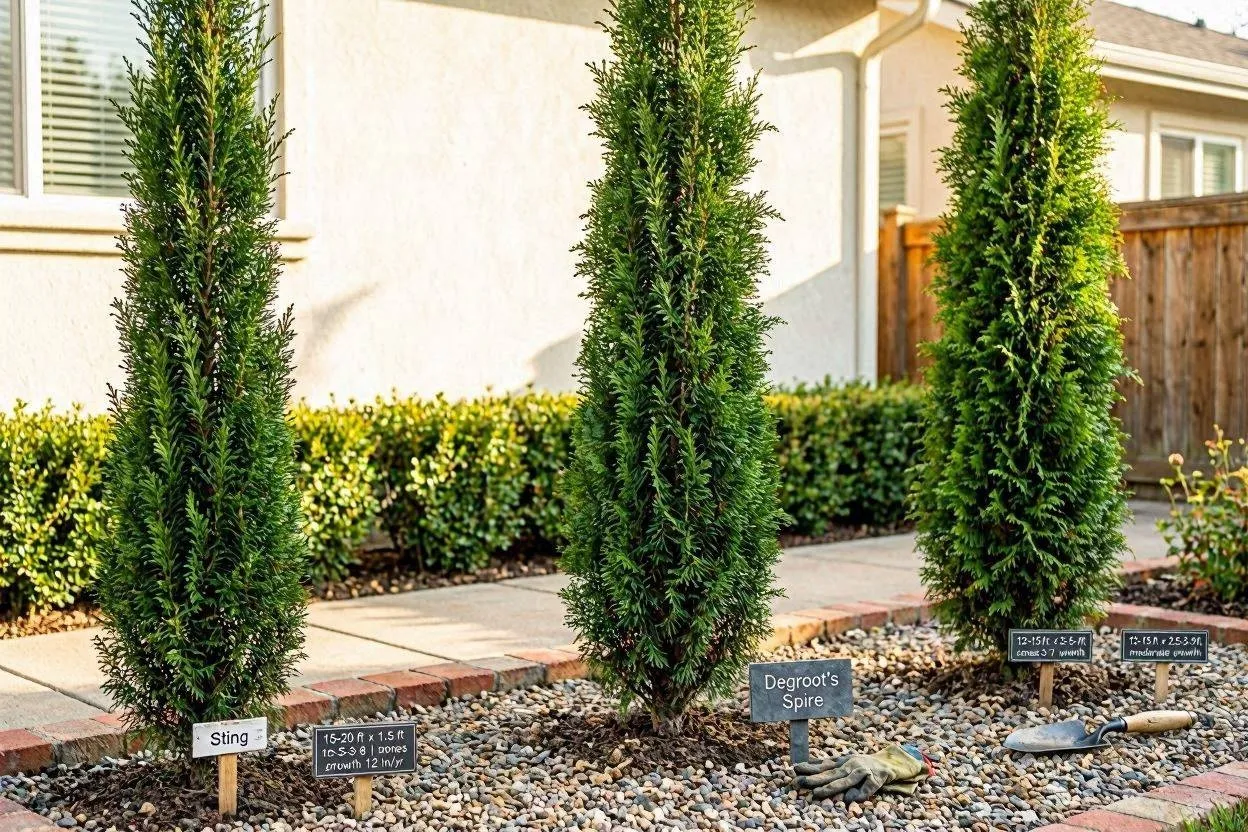
Sting — ultra-narrow sword-shaped arborvitae
Height x Spread: 15-20 ft x 1-1.5 ft (4.6-6m x 30-45cm) | Zones 3-8 | Growth rate: 12 in/yr (30cm)
Sting (Thuja occidentalis, Proven Winners) grows as a near-perfect column just 12 to 18 in (30-45cm) wide at 15 to 20 ft (4.6-6m) tall. No other named arborvitae variety achieves this ratio of height to width. Plant Sting in pairs at an entryway, or in a row along a tight alley where a standard pyramidal form would block the path within 5 years. Sting is hardy to Zone 3, surviving -40°F (-40°C) winters. The slender form is susceptible to snow load damage in heavy-snow climates — shake accumulated snow off gently with a broom rather than letting it compact and bend the leader.
DeGroot’s Spire — slow-growing narrow fastigiate form
Height x Spread: 20 ft x 4-5 ft (6m x 1.2-1.5m) | Zones 2-7 | Growth rate: 4-6 in/yr (10-15cm)
DeGroot’s Spire grows with a spiral, twisted foliage texture that distinguishes it from every other narrow arborvitae variety. At 4 to 5 ft (1.2-1.5m) wide and 20 ft (6m) tall at maturity, DeGroot’s Spire occupies a middle ground between the ultra-narrow Sting and a standard Emerald Green hedge. The mossy-green foliage takes on a slight bronze tint in winter. The slow growth rate — 4 to 6 in (10-15cm) per year — is a limitation for quick screening but an advantage in formal gardens and entryways where you want a controlled, sculptural shape without constant trimming. Hardy to Zone 2, this cultivar suits northern climates where Green Giant would not survive.
Best Arborvitae Varieties for Windbreaks
Windbreak arborvitae need wide, dense foliage from ground level upward, strong branch structure that resists ice load, and fast establishment in the first 2 years. These 2 cultivars meet all 3 requirements.
Techny (Mission) — the cold-climate windbreak standard
Height x Spread: 10-15 ft x 6-8 ft (3-4.6m x 1.8-2.4m) | Zones 3-7 | Growth rate: 6-8 in/yr (15-20cm)
Techny — also sold as ‘Mission’ — was discovered at a monastery in Techny, Illinois, and has been a Midwest garden staple for decades. The wide, 6 to 8 ft (1.8-2.4m) spread fills in ground-level gaps that narrower columnar varieties leave open, making Techny far more effective as a windbreak base. The foliage holds its dark green color through winter without bronzing — a consistent quality that Emerald Green also shares but that standard Thuja occidentalis species plants often do not. Space Techny 5 to 6 ft (1.5-1.8m) apart for a solid windbreak row. Before planting any new arborvitae, read the complete guide on how to mulch around new trees at ZonedGarden.com — correct mulching in the first season increases arborvitae survival rates by 30 to 50%.
Zebrina — variegated giant arborvitae for large screens
Height x Spread: 30+ ft x 8-12 ft (9m+ x 2.4-3.7m) | Zones 5-7 | Growth rate: 12 in/yr (30cm)
Zebrina (Thuja plicata ‘Zebrina’) is aptly named for two-toned foliage — dark green sprays banded with golden-yellow accents along the outer edges. The narrow pyramidal form and fast growth rate (12 in / 30cm per year) make Zebrina an effective large screen in Zones 5 through 7. At 30+ ft (9m+) tall with an 8 to 12 ft (2.4-3.7m) base spread, Zebrina requires substantially more space than a standard hedge — plant it where the full pyramid can develop without crowding structures or neighboring plants. Like all Thuja plicata cultivars, Zebrina resists deer more effectively than American arborvitae because deer find the waxy, resin-scented foliage unpalatable.
Best Dwarf Arborvitae Varieties for Small Gardens and Containers
Dwarf arborvitae varieties grow 1 to 4 in (2.5-10cm) per year and reach mature heights under 4 ft (1.2m). These 4 cultivars suit containers, rock gardens, border edging, and foundation plantings where full-sized varieties would overwhelm the space within 3 years.
Tater Tot — best dwarf for containers and small borders
Height x Spread: 12-24 in x 12-24 in (30-60cm) | Zones 3-7 | Growth rate: 1-2 in/yr (2.5-5cm)
Tater Tot (Thuja occidentalis, Proven Winners ColorChoice) grows as a dense, rounded mound and maintains its globe shape without pruning. At 12 to 24 in (30-60cm) in both directions, Tater Tot fits in a 12 in (30cm) container and stays structurally tidy for years. The green foliage holds color through winter in Zones 3 through 7. Use Tater Tot as a front-of-border evergreen anchor, a container specimen, or a low edging plant along a walkway. The ultra-slow growth rate — 1 to 2 in (2.5-5cm) per year — means you plant it once and walk away.
Anna’s Magic Ball — smallest named arborvitae variety
Height x Spread: 12-15 in x 12-15 in (30-38cm) | Zones 3-7 | Growth rate: 1 in/yr (2.5cm)
Anna’s Magic Ball (Thuja occidentalis, Proven Winners ColorChoice) is the smallest named arborvitae cultivar in wide commercial availability. At just 12 to 15 in (30-38cm) in both directions, Anna’s Magic Ball adds a splash of golden-yellow foliage to rock gardens, small containers, and perennial bed edges without crowding. The rounded form requires no pruning to maintain its shape. In cold climates, the yellow foliage intensity deepens through winter rather than fading — making this cultivar genuinely ornamental in all 4 seasons.
Golden Globe and Hetz Midget — classic gold and blue-green dwarfs
Golden Globe: 2-3 ft x 2-3 ft (60-90cm) | Zones 2-8 | Hetz Midget: 3-4 ft x 3-4 ft (90cm-1.2m) | Zones 2-7
Golden Globe maintains a bright gold rounded form year-round, intensifying in color during full-sun winter conditions. At 2 to 3 ft (60-90cm) in both directions and hardy to Zone 2, Golden Globe is one of the most cold-tolerant gold-foliage conifers available. Pair Golden Globe with dark-green Emerald Green arborvitae in a foundation planting for a high-contrast, low-maintenance evergreen pairing that delivers year-round interest. Hetz Midget produces blue-green foliage arranged in lacy sprays that give it a softer texture than other Thuja occidentalis cultivars. The foliage bronzes in winter but returns to blue-green in spring. Both cultivars suit rock gardens, containers, and low borders requiring no annual pruning.
Best Arborvitae Varieties by USDA Hardiness Zone
Not every arborvitae variety performs in every climate. Match variety to zone before purchasing.
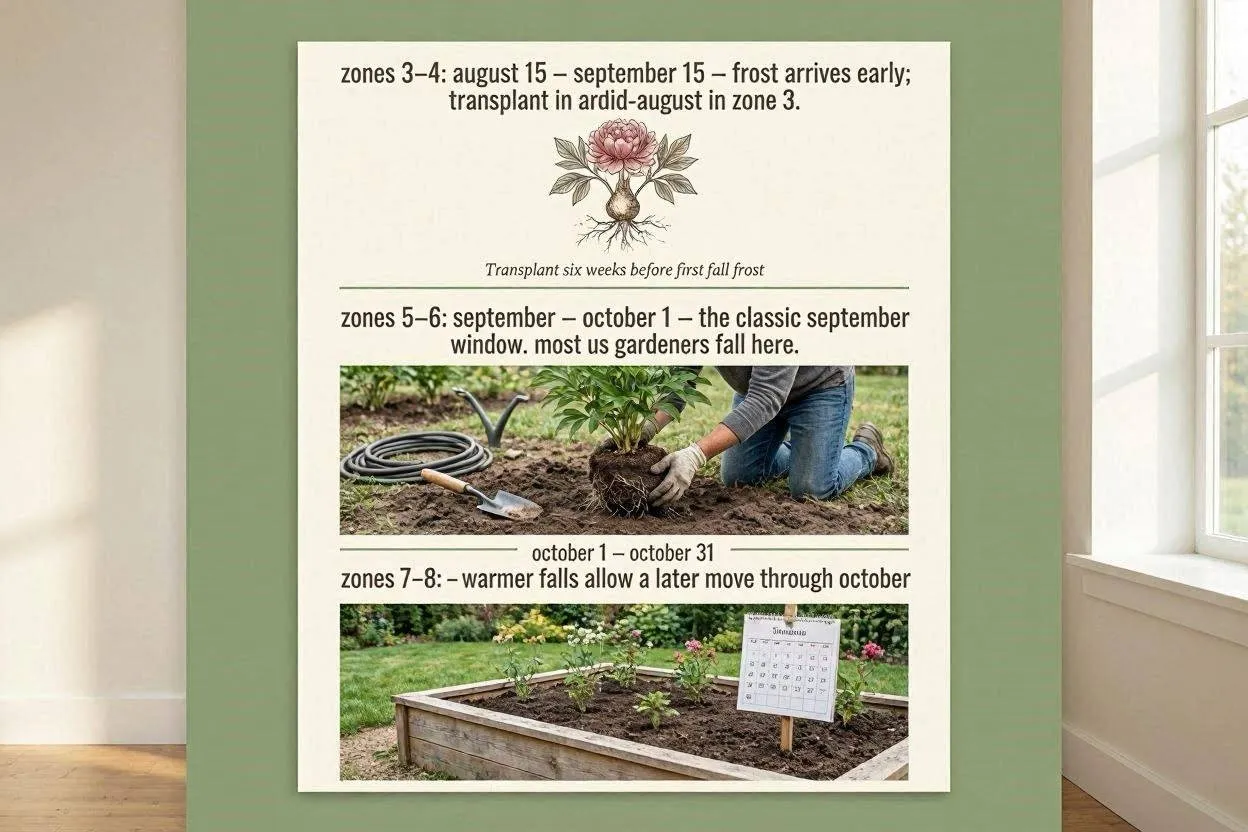
- Zones 2-3 (extreme cold, -50°F / -45°C): Emerald Green, Golden Globe, Hetz Midget, DeGroot’s Spire. All 4 survive severe northern winters without winter protection or anti-desiccant sprays.
- Zones 4-5 (cold temperate, -30°F / -34°C): All Thuja occidentalis cultivars in this guide perform well. Green Giant and Zebrina (Thuja plicata) become viable starting at Zone 5.
- Zones 6-7 (cool to mild, 0°F / -18°C): All 12 varieties in this guide perform in Zones 6-7. Green Giant reaches peak growth rate. Fluffy (Thuja plicata) delivers its best ornamental effect.
- Zone 8 (warm temperate, 10°F / -12°C): Sting and Green Giant are the 2 best choices. Thuja occidentalis cultivars including Emerald Green, North Pole, and DeGroot’s Spire decline in Zone 8 heat and humidity — replace with Thuja plicata cultivars or Leyland cypress in Zone 8 Southern gardens.
How to Plant Arborvitae Varieties Correctly
To plant arborvitae correctly, dig the planting hole 2 to 3 times wider than the root ball but no deeper than the root ball’s height. Setting the crown too deep causes root suffocation and kills arborvitae within 2 to 3 seasons — the most common planting mistake with this genus.
Soil, drainage, and sun requirements
Arborvitae grows in most soil types — sandy loam, clay, and loam — provided drainage is adequate. Waterlogged soil causes root rot within one growing season. Full sun (6+ hours daily) produces the densest, greenest foliage. Partial shade reduces foliage density and makes arborvitae more susceptible to needle blight. Variegated cultivars like Zebrina and Anna’s Magic Ball lose their gold color in positions with under 4 hours of direct sun.
Spacing for hedges, screens, and specimens
Spacing depends entirely on the intended use and the variety’s mature spread:
- Formal hedge: plant at 50% of mature spread — Emerald Green at 2 ft (60cm) apart; North Pole at 2.5 ft (75cm) apart.
- Privacy screen: plant at 60-70% of mature spread — Emerald Green at 2.5-3 ft (75-90cm) apart; Green Giant at 6-8 ft (1.8-2.4m) apart.
- Windbreak: plant Techny or Green Giant at 5-6 ft (1.5-1.8m) apart for a single-row windbreak; stagger 2 rows at 8-10 ft (2.4-3m) apart for maximum wind reduction.
- Specimen: plant at full mature spread from any structure, fence, or neighboring tree.
Watering and establishment
Water newly planted arborvitae twice per week for the first 8 to 10 weeks, delivering 1 in (2.5cm) of water per session directly to the root zone. After the first growing season, established arborvitae tolerates drought well. The exception is container-grown dwarf varieties — those need weekly watering through summer because container soil dries faster than in-ground planting. For a long-term evergreen garden plan, browse
crape myrtle varieties for companion flowering trees that pair with arborvitae in Zones 5-8 without competing for the same space.
How to Prune Arborvitae Varieties
To prune arborvitae, cut only into green foliage — never back to bare wood. Arborvitae does not regenerate growth from bare wood the way deciduous shrubs do. Cutting into bare brown stems creates permanent gaps.
- Prune in early spring before new growth starts, or in late summer after the main growth flush hardens.
- Remove dead or diseased branches at the point where they leave the trunk — do not leave stubs.
- Maintain a wider base than top — if you prune arborvitae into a narrower base, lower branches shade out and die.
- Never cut the central leader — removing the top permanently stops upward growth and produces a flat-topped form that cannot be corrected.
- For formal hedges: shear 2 times per year — once in late spring after the first growth flush, and once in late summer.
- Dwarf varieties like Tater Tot, Anna’s Magic Ball, and Hetz Midget need no pruning to maintain their natural shape.
Arborvitae Varieties: Common Pests and Problems
Arborvitae is one of the lowest-maintenance conifers in American gardens, but 3 problems appear regularly across all varieties.
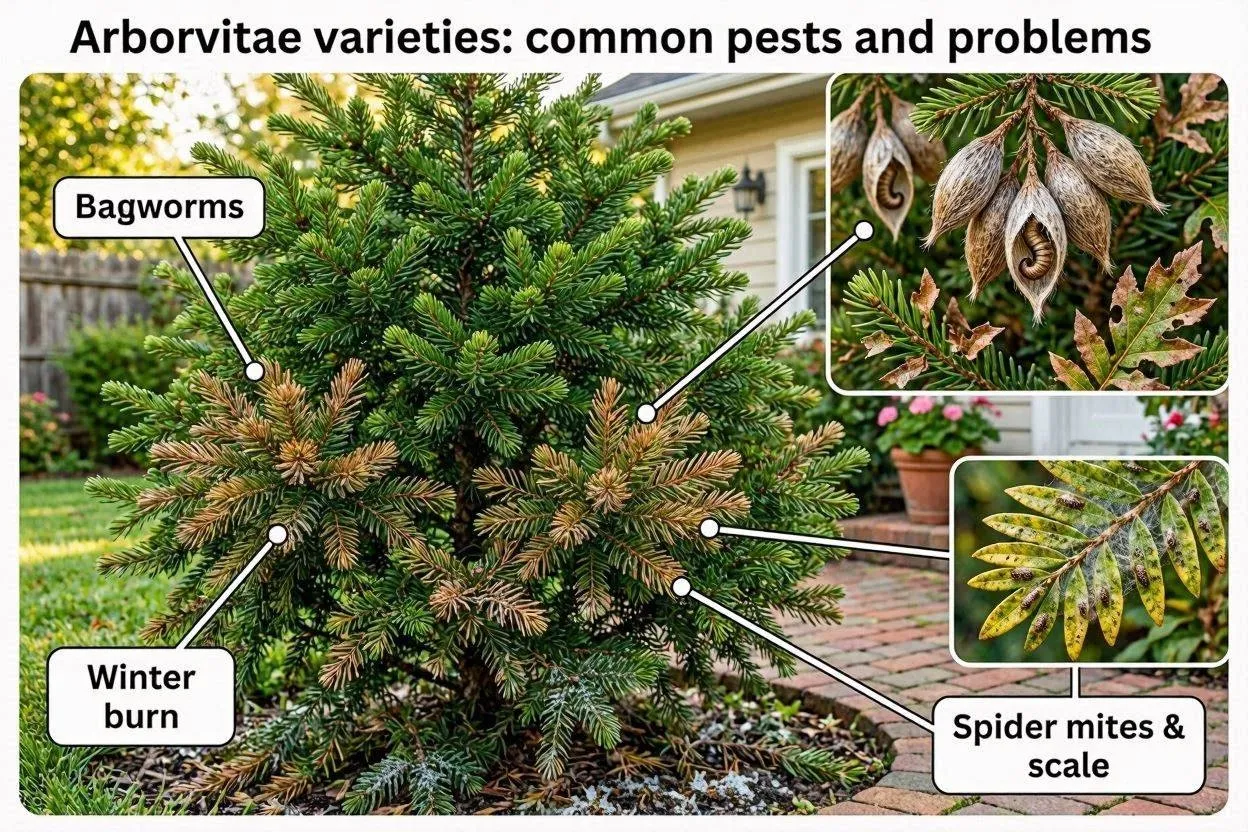
Bagworms — the most damaging arborvitae pest
Bagworms (Thyridopteryx ephemeraeformis) are caterpillars that spin spindle-shaped silk bags and feed on arborvitae foliage from the inside out. A heavy infestation defoliates entire branches before you notice the damage. Pick bags off by hand in winter when the caterpillars are dormant. Apply Bacillus thuringiensis (Bt) spray in late May to early June when larvae are newly hatched and under 0.5 in (1.3cm) long — larger larvae are harder to control. Check arborvitae weekly through June and July.
Spider mites — second most common problem
Spider mites (primarily Tetranychus urticae) appear in hot, dry summers and cause dusty gray-brown stippling on foliage. A strong water spray from a hose knocks mites off foliage effectively. Repeat every 3 to 4 days for 2 weeks. Avoid broad-spectrum insecticides that kill beneficial predatory mites — the natural predator population rebounds faster than spider mite populations when left unsprayed. For ongoing evergreen shrub options that are naturally mite-resistant, ZonedGarden’s FAQ covers the most common alternative evergreens by zone.
Winter burn — a zone and variety issue, not a disease
Winter burn is foliage browning caused by desiccation when the soil freezes before evergreen foliage stops transpiring. American arborvitae (Thuja occidentalis) is most susceptible in exposed, windy positions in Zones 3 through 5. Emerald Green and North Pole show the lowest winter burn rates of any Thuja occidentalis cultivar. Thuja plicata cultivars — Green Giant, Fluffy, Zebrina — show almost no winter burn because their waxy foliage holds moisture better. Anti-desiccant sprays applied in November and January reduce winter burn on susceptible varieties by 40 to 60%.
FAQs About Arborvitae Varieties
Do all arborvitae varieties turn brown in winter?
No. Some Thuja occidentalis cultivars bronze in winter, including Hetz Midget and DeGroot’s Spire. Emerald Green, North Pole, and Techny maintain green color year-round. All Thuja plicata varieties — Green Giant, Zebrina, Fluffy — stay green in all seasons. Buy a variety with confirmed winter color retention if year-round green appearance is a priority.
Which arborvitae variety is the most deer resistant?
Thuja plicata cultivars — Green Giant, Zebrina, and Fluffy — are the most deer-resistant arborvitae varieties. Deer consistently prefer the softer, less resinous foliage of Thuja occidentalis. In high-deer-pressure gardens, choose Green Giant over Emerald Green for screening — both perform the same function but Green Giant loses significantly less foliage to deer browsing.
How far apart should I plant arborvitae for a privacy hedge?
2 to 3 ft (60-90cm) apart for Emerald Green and North Pole. 6 to 8 ft (1.8-2.4m) apart for Green Giant. Planting closer than these spacings creates immediate density but results in fungal needle blight within 5 to 7 years from poor air circulation between crowded plants.
Can dwarf arborvitae varieties grow in containers year-round?
Yes, with 2 conditions: the container must be frost-resistant (glazed ceramic, fiberglass, or thick concrete), and the container must hold at least 5 gallons (19 liters) of potting mix for Tater Tot and Anna’s Magic Ball. In Zones 2 through 4, move containers to an unheated garage or shed when temperatures drop below -10°F (-23°C) to protect the container itself from cracking.
How fast does Emerald Green arborvitae grow per year?
6 to 9 in (15-23cm) per year in average conditions. A newly planted Emerald Green at 3 ft (90cm) tall reaches its 12 ft (3.7m) screening height in approximately 12 to 15 years. Improve speed by planting in full sun, mulching the root zone, and watering consistently through the first 2 growing seasons. Green Giant, by comparison, grows 3 ft (90cm) per year and reaches a 15 ft (4.6m) screen in 4 to 5 years.
Which Arborvitae Variety Should You Choose?
Choose Emerald Green for a formal 12 ft (3.7m) hedge in Zones 2 through 7 where year-round green color is required. Choose Green Giant for fast screening at 20+ ft (6m+) in Zones 5 through 8 with high deer pressure. Choose North Pole for a narrow 10 to 15 ft (3-4.6m) hedge in cold climates without bronzing. Choose Tater Tot or Anna’s Magic Ball for containers and small-garden edging that need no pruning.
Every variety in this guide suits the planting conditions covered across ZonedGarden.com — zone-matched, tested, and selected for real garden performance. Confirm your USDA zone, measure your available space, then select the variety whose mature size fits without intervention. The best arborvitae is the one you never have to fight to keep in bounds.