
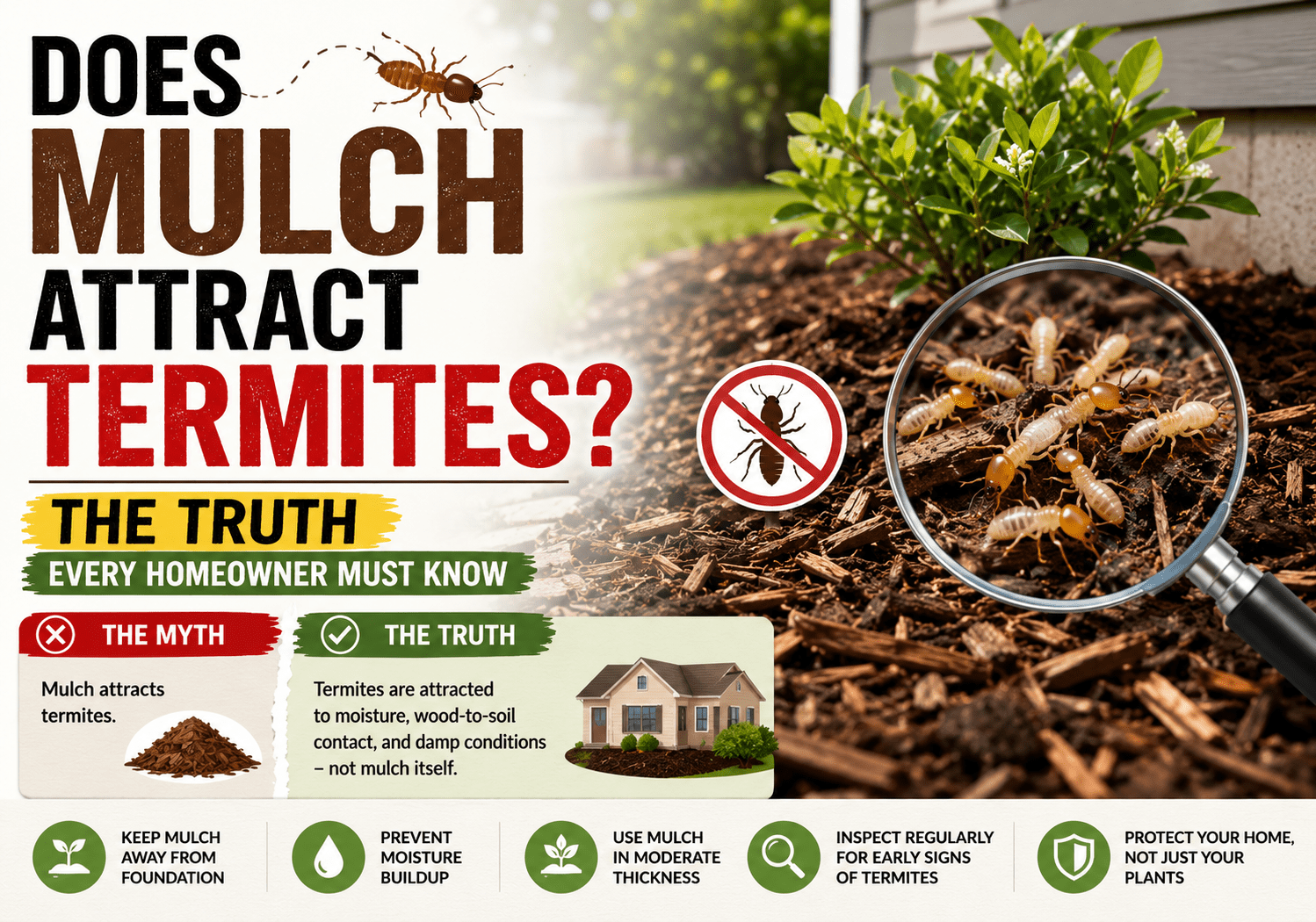
No — mulch does not attract termites. But it creates moist, sheltered conditions that help termites survive and expand if they are already present nearby. That is a critical difference, and understanding it will help you mulch smarter without inviting a costly infestation into your home.
Iowa State University’s research confirms: there is no evidence that moist mulch actively draws termite foragers from the surrounding landscape. Termites that wander into a hospitable habitat simply stay — they are not summoned by the mulch itself.
What the Science Actually Says About Mulch and Termites
The University of Maryland’s Structural IPM Program ran a field study testing subterranean termites (Reticulitermes virginicus) under 4 mulch types: shredded hardwood, pine bark, pea gravel, and eucalyptus bark. Termites appeared with equal frequency under all 4 — including bare, uncovered soil. Sustained activity was actually higher under gravel than wood mulch.
In the lab, termites fed on eucalyptus, hardwood, and pine bark mulch showed significantly lower survival rates compared to termites fed white birch, the standard control. Wood mulch is not a preferred food source. What mulch does do is retain moisture, and moisture is what termites need to tunnel, forage, and build colonies.
Bottom line: it is the damp soil under mulch — not the mulch itself — that makes conditions favorable for termites.
Why Mulch Still Creates a Termite Risk for Your Home
Mulch creates 3 conditions that help termites thrive:
- Moisture retention: Organic mulch holds water in the soil surface layer, giving subterranean termites the humid environment they need to survive and tunnel up to 300 feet (91 meters) from their nest.
- Shelter and cover: A thick mulch layer hides termite mud tubes from view. Termites use these pencil-sized tunnels to travel from soil to wood without exposure to air and sunlight, which quickly kill them.
- A bridge to your home: Mulch piled against your foundation or siding acts as a direct highway past any termiticide-treated soil, letting termites enter your walls undetected.
A mulch depth over 3 inches (7.5 cm) is the threshold where risk increases noticeably. Florida’s UF/IFAS Extension warns that 4–6 inches (10–15 cm) or more creates the warm, damp conditions termites prefer year-round.
5 Mulch Types That Increase Termite Risk

Not all mulches carry equal risk. These 5 types are most likely to encourage termite activity:
- Pine bark mulch: Retains heavy moisture and is a preferred feeding material for subterranean termites. Avoid near foundations.
- Loblolly pine mulch: Rated as highly preferred by termites in multiple studies. High cellulose content, high moisture retention.
- Cypress sapwood mulch: Often sold as ‘cypress mulch’ but made from sapwood, not heartwood. Sapwood provides termites an easy food source. Only heartwood has resistance.
- Straw and hay mulch: Decomposes fast, holds moisture, and provides cellulose. Common in vegetable gardens but should stay well away from structures.
- Cardboard sheet mulch: Washington State University researchers note that termites actively prefer cardboard over wood-based mulch due to its higher nutrient content. Never use cardboard near your home’s perimeter.
4 Termite-Resistant Mulch Types You Should Use Instead
These 4 mulch options give you better protection without sacrificing garden health:
- Melaleuca (paper bark) mulch: A University of Florida study found fewer than 15% of termites survived on melaleuca heartwood — the lowest survival rate of any mulch tested. Termites actively avoid it. It is the strongest natural deterrent available.
- Cypress heartwood mulch: Only 15% termite survival in the same study. Extracts from cypress heartwood repel termites. Important: most store-bought cypress mulch is sapwood, not heartwood. Look specifically for heartwood products.
- Cedar mulch: Contains thujone, a natural insecticidal compound that deters termites and other insects. Cedar’s strong aroma adds a secondary repellent layer. Effectiveness fades as mulch dries out and ages — refresh annually.
- Inorganic mulch (gravel, rubber, or stone): Zero cellulose, zero food value for termites. Gravel and stone do not retain moisture the same way organic mulch does. Best choice for the 12-inch (30 cm) buffer zone immediately around your foundation.
6 Warning Signs of Termites in Your Mulch
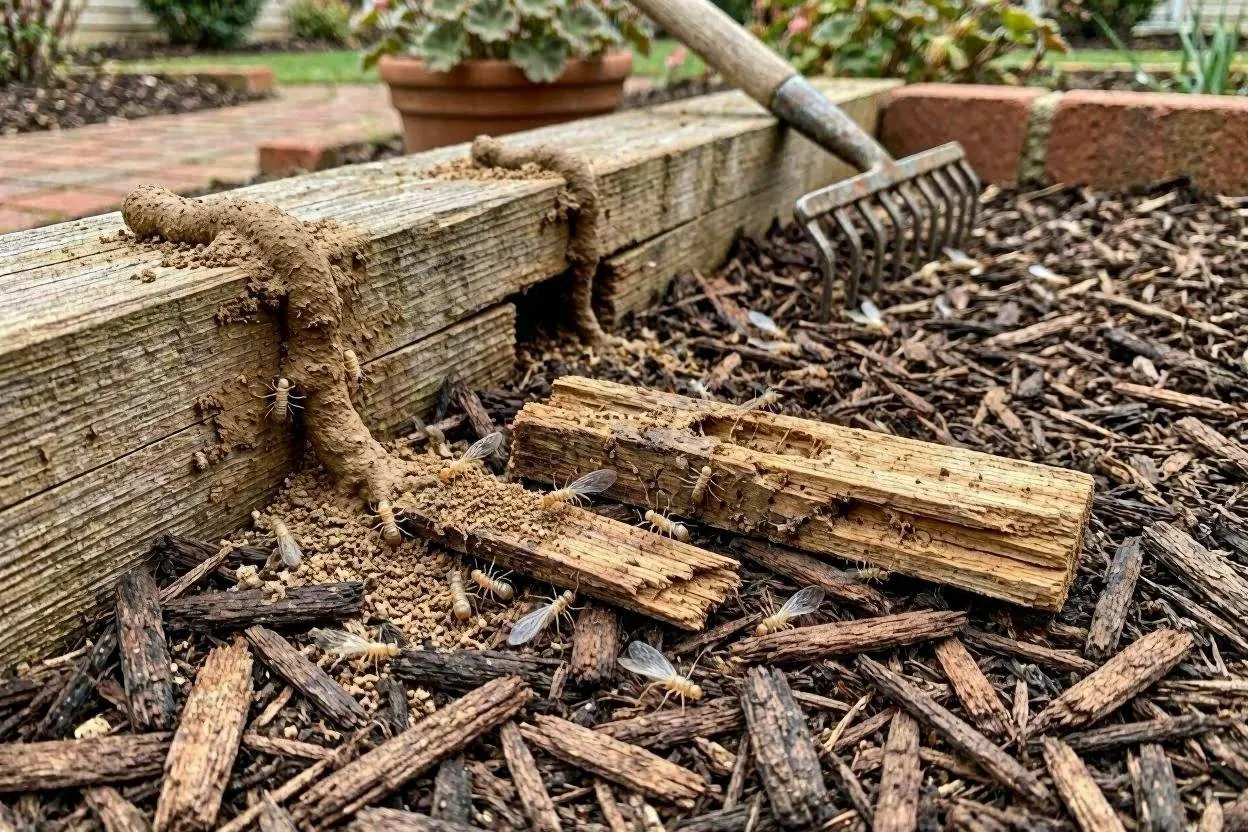
Do not look for termites in the mulch itself — look for these 6 signs beneath and around it:
- Mud tubes on foundation blocks or siding — pencil-sized tunnels made of soil and termite saliva
- Discarded wings near doors or windows — swarmers shed wings after mating flights in spring
- Flying ant-like insects (swarmers) around mulched areas in warm weather
- Hollow-sounding wood when you tap siding or structural timber near mulched beds
- Blistering or bubbling paint on wood surfaces close to mulch lines
- Tiny frass (termite droppings) that look like sand or sawdust near wood surfaces
If you see any of these signs, contact a licensed pest control professional immediately. Termite damage costs U.S. homeowners over $5 billion annually, and most damage happens before it is visible.
7 Proven Ways to Prevent Termites in Mulch Around Your Home

Follow these 7 steps to use mulch safely without increasing termite risk:
- Keep a 6–12 inch (15–30 cm) mulch-free buffer zone: Maintain a dry, bare zone directly against your foundation. Use pea gravel here if you want coverage. This single step eliminates the most common termite bridge into your home.
- Limit mulch depth to 2–3 inches (5–7.5 cm): Thicker layers trap more moisture and heat. Stay under 3 inches to keep the soil surface from becoming a termite-friendly habitat.
- Never let mulch touch siding, door frames, or window frames: Any direct wood-to-mulch contact is an open door. Leave a visible gap between mulch and all wooden elements.
- Replace mulch once a year: Old, decomposed mulch retains more moisture and harbors more insects. Fresh mulch helps reset conditions. Remove old layers before adding new ones.
- Fix drainage and moisture issues near your foundation: Repair leaking pipes, fix gutters, and ensure the ground slopes away from your home at a rate of 6 inches (15 cm) per 10 feet (3 meters). Less standing water means fewer termites.
- Never bury wood debris under mulch: Tree stumps, old roots, and construction timber buried in soil act as underground termite food highways that lead straight to your house. Remove all wood debris before mulching.
- Schedule annual termite inspections: Especially if you have had a previous infestation or live in a high-risk region (Southeast U.S., Gulf Coast, Hawaii). Early detection prevents structural damage worth thousands of dollars.
Can Bagged Store-Bought Mulch Contain Live Termites?
Extremely unlikely. Termites have very low odds of surviving the wood-chipping process used to make bagged mulch. Any that do survive are separated from their colony and die quickly without the support structure of colony workers, moisture sources, and tunneling networks. Store-bought mulch from major retailers has never been credibly linked to termite infestations — the rumors circulating online are unsubstantiated.
Does Cedar Mulch Attract Termites?
No. Cedar mulch contains thujone, a natural insecticidal compound that repels termites and other insects. Cedar is one of the safer choices for mulching near structures. However, effectiveness decreases as the mulch dries out and the natural oils dissipate — typically within one season. Refresh cedar mulch annually for sustained protection. A University of Hawaii study also found that termite resistance in western red cedar was “moderately correlated with redness,” meaning darker, redder cedar heartwood performs better.
Related Gardening Guides on Zoned Garden
For more mulching tips and pest prevention strategies, explore these related guides on Zoned Garden:
- Best Mulch for Vegetable Gardens — Learn which organic mulch types improve soil health and boost vegetable yields.
- How to Mulch Around Trees — Proper mulching techniques prevent tree disease and pest entry.
- Common Garden Pests and How to Stop Them — A complete guide to identifying and managing garden pests naturally.
- Inorganic Mulch vs Organic Mulch: Which Is Better? — Side-by-side comparison to help you pick the right mulch for your landscape.
- How Deep Should Mulch Be? — The exact mulch depth guidelines for every plant type and season.
Frequently Asked Questions
Does mulch near the house attract termites?
Mulch near the house does not attract termites from a distance, but if termites are already foraging nearby, mulch against the foundation gives them moisture, cover, and a direct bridge inside. Keep a 6–12 inch (15–30 cm) bare gravel zone against the foundation.
Does rubber mulch attract termites?
No. Rubber mulch contains no cellulose and does not retain moisture the same way organic mulch does. It is one of the safest options for mulching near structures from a termite risk standpoint.
How do I know if I have termites in my mulch?
Look for 4 signs: mud tubes on your foundation, discarded swarmer wings near doors and windows, hollow-sounding wood near the mulch line, and blistering paint on nearby wood surfaces.
Should I remove mulch if I find termites?
Not necessarily. Removing mulch removes the habitat but does not eliminate the colony, which lives underground. Contact a pest control professional for proper inspection and treatment before making changes.
Does black mulch attract termites more than other colors?
Color does not affect termite behavior. Black mulch is typically dyed organic wood mulch — the same moisture retention and cellulose content applies. The dye itself has no repellent or attractant properties.
Conclusion
Mulch does not attract termites — but poor mulching practices create the exact conditions termites need to survive and spread to your home. The fix is simple: choose termite-resistant types like melaleuca or cedar heartwood, keep depth at 2–3 inches (5–7.5 cm), maintain a bare gravel buffer zone 6–12 inches (15–30 cm) from your foundation, and inspect annually.
Mulch delivers real benefits — moisture retention, weed suppression, soil health, and temperature regulation. Do not stop mulching. Mulch smarter. The 7 prevention steps in this guide protect both your plants and your home year-round.