
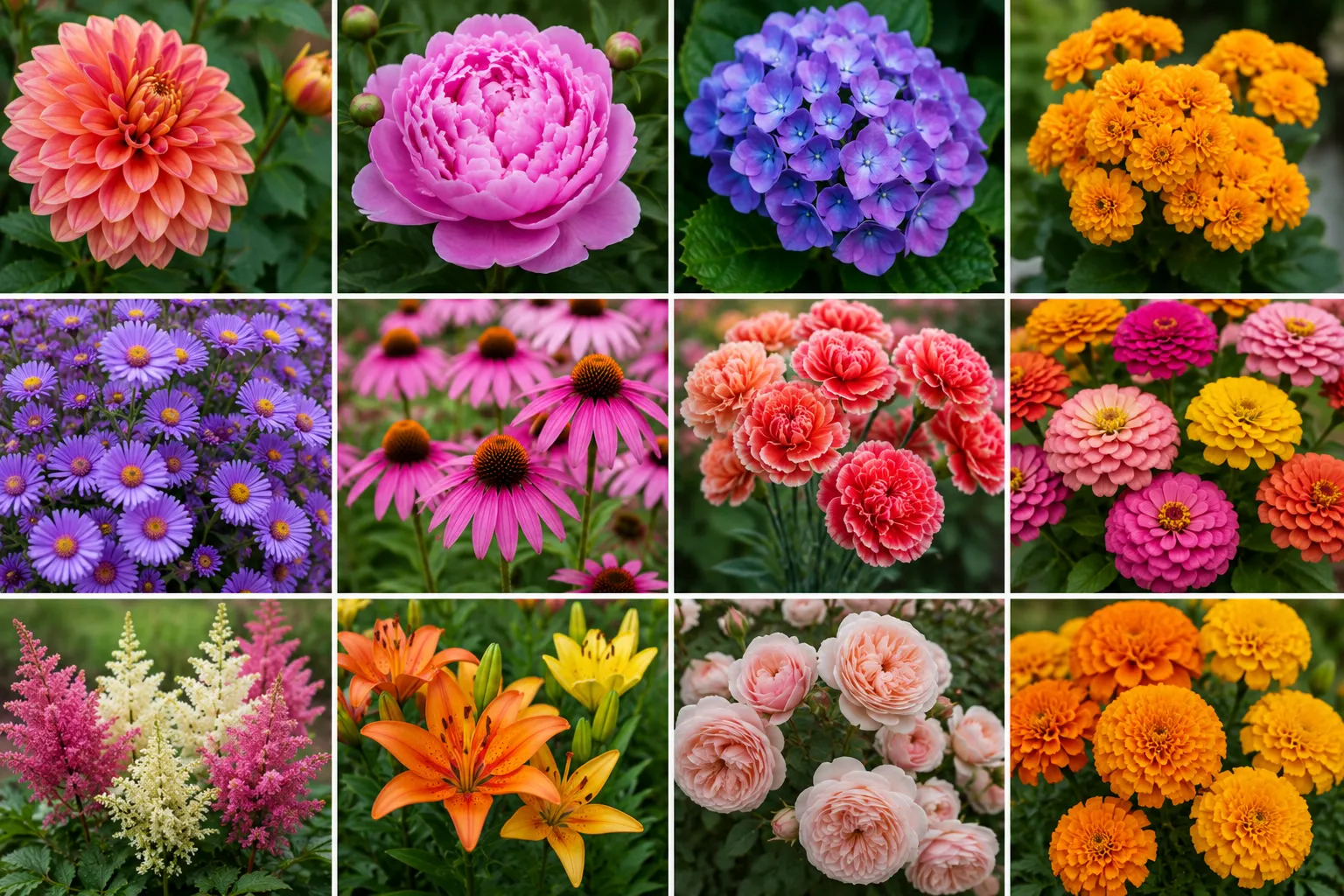
Chrysanthemums are fall’s most reliable garden flower. Dense petals, weeks of color, and hardiness through the first frost make mums a go-to for nearly every gardener. But if you want that same bold, layered bloom without planting the same thing every year, 12 flowers deliver exactly that look — some even outperform mums on bloom time, pollinator appeal, and cold hardiness.
Every flower on this list shares at least 2 visual traits with chrysanthemums: multi-layered petals arranged around a central disk, and the ability to carry color from late summer through fall. Several belong to the same plant family — Asteraceae — which explains the strong resemblance.
What Makes a Flower Look Like a Chrysanthemum?
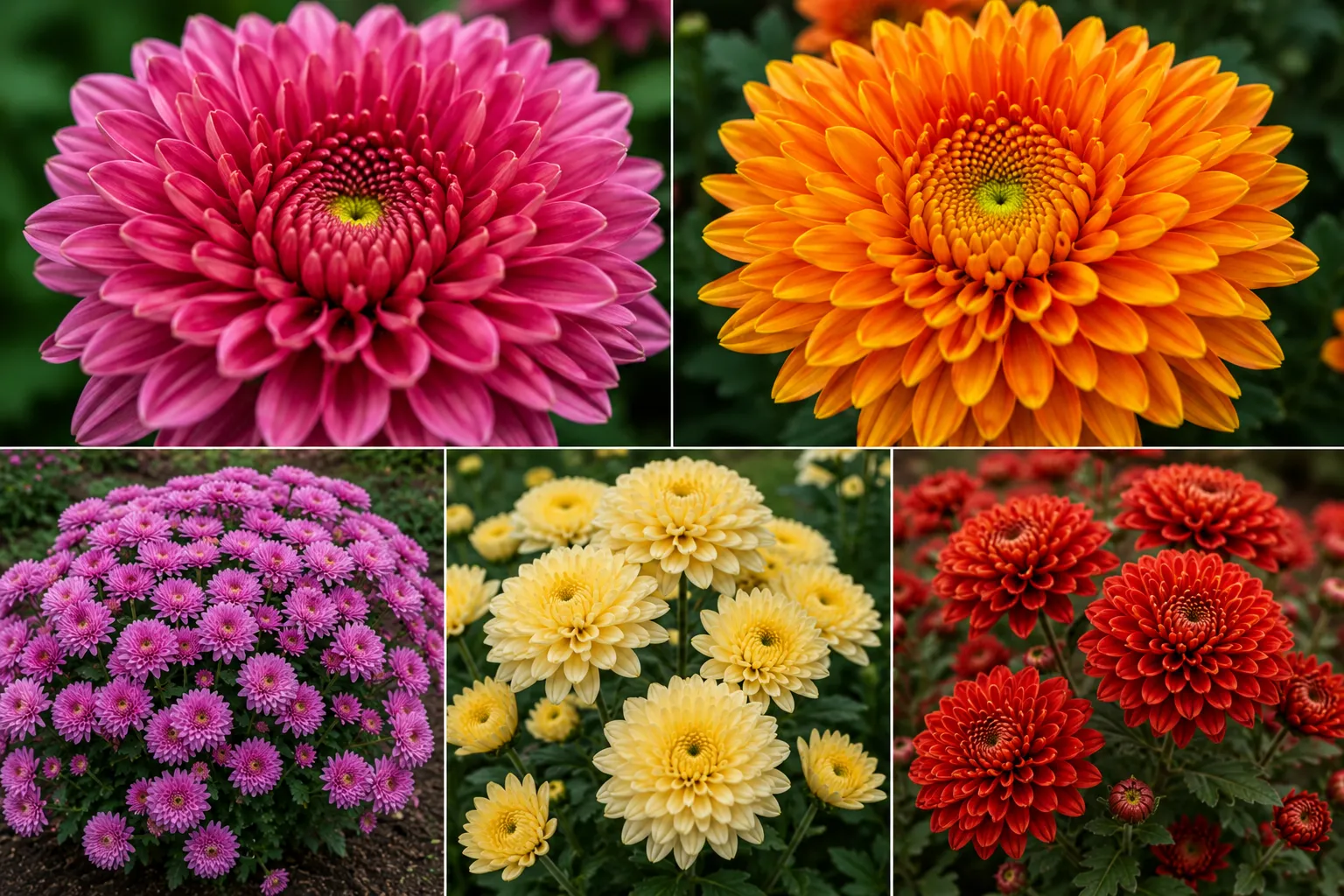
Chrysanthemums produce compound flowers made of 2 distinct parts: ray florets (the outer petal-like structures) and tubular disk florets at the center. This structure is the defining trait of the Asteraceae family, one of the largest plant families with 20,000+ species.
A flower looks like a chrysanthemum when it shares 3 features:
- Multiple rows of ray petals radiating from a central disk
- Dense, symmetrical bloom shape — rounded, cushion-like, or pompon-style
- Late summer to fall bloom window
Some look-alikes, like dahlias and ranunculus, are not in Asteraceae but still produce full, multi-layered blooms that read as chrysanthemum-like from any distance.
12 Flowers Similar to Chrysanthemum
1. Dahlia
Dahlias are the closest visual match to chrysanthemums in the garden. Both produce dense, layered blooms with tightly packed petals — ball dahlias and pompon dahlias are nearly indistinguishable from mums at a glance.
If you encounter a full, layered bloom in a garden bed and can’t immediately tell whether it is a pompon dahlia or a cushion mum, using a mobile Plant Identifier App provides instant species confirmation. Dahlias bloom from midsummer through the first hard frost, giving them a longer season than most mums.
Bloom diameter ranges from 2 inches (5 cm) for pompon types to 12+ inches (30+ cm) for dinner-plate varieties. Colors cover every shade except true blue. Dahlias grow in USDA hardiness zones 8–11 as perennials; gardeners in zones 3–7 dig and store the tubers each winter.
Best for: gardeners wanting the largest, most dramatic chrysanthemum-like blooms.
2. Aster (Symphyotrichum)
Asters produce daisy-like flowers with a yellow central disk and narrow ray petals in purple, pink, blue, or white — exactly the single-flowered look of species chrysanthemums. New England aster (Symphyotrichum novae-angliae) and New York aster (Symphyotrichum novi-belgii) are the 2 most common garden varieties.
Unlike mums, asters are native to North America and act as keystone plants for pollinators. Bees and butterflies depend on aster nectar in late September and October when most other flowers have finished. Asters grow in zones 4–8, reach 1–4 feet (30–120 cm) in height, and thrive in full sun to light shade.
Best for: wildlife-friendly gardens that need a mum-like bloom with native plant benefits.
3. Zinnia
Zinnias produce bold, layered blooms in every color of the spectrum — red, orange, yellow, pink, white, and bicolor. Double zinnia varieties produce fully packed, pompon-style flowers that look almost identical to small chrysanthemums. ‘Benary’s Giant’ and ‘Zowie Yellow Flame’ are 2 double varieties with the strongest mum resemblance.
Zinnias bloom from early summer through the first frost, giving them one of the longest flowering seasons of any annual. They grow 12–48 inches (30–120 cm) tall depending on variety and perform best in full sun with well-drained soil. For gardeners interested in how double petal structures vary across the mum family, the guide to
mum classes and varieties explains how pompon and ball forms develop — the same principle applies to double zinnias.
Best for: summer-to-fall color with low maintenance and zero overwintering effort.
4. Gerbera Daisy (Gerbera jamesonii)
Gerbera daisies produce large, bold blooms up to 5 inches (12 cm) across with multiple rows of flat ray petals and a prominent central disk. Double and semi-double varieties develop enough petal layers to closely resemble chrysanthemum single and anemone forms. Colors include red, orange, yellow, pink, and cream.
In the USA, gerberas grow as perennials in zones 8–11. Gardeners in colder zones (3–7) grow them as annuals or container plants brought inside before frost. Gerberas produce excellent cut flowers with stems reaching 18 inches (45 cm). They bloom spring through fall in mild climates and peak in summer in most US gardens.
Best for: cut flower gardens and container displays needing a tropical chrysanthemum look.
5. Black-Eyed Susan (Rudbeckia hirta)
Black-eyed Susans produce cheerful, daisy-like flowers with golden-yellow ray petals and a dark brown to black central cone. The flower form mirrors single-flowered chrysanthemum varieties almost exactly. Double rudbeckia cultivars like ‘Cherry Brandy’ and ‘Indian Summer’ add enough petal layers to rival semi-double mums.
Black-eyed Susans grow in zones 3–9, tolerate drought, poor soil, and neglect, and bloom from June through October. Plants reach 1–3 feet (30–90 cm) tall. They self-seed readily, filling garden beds year after year without replanting. Native to North America, they attract bees, butterflies, and goldfinches.
Best for: low-maintenance gardens that need reliable fall color with strong pollinator value.
6. Shasta Daisy (Leucanthemum × superbum)
Shasta daisies are direct botanical relatives of chrysanthemums — both belong to the tribe Anthemideae within Asteraceae. Classic Shasta daisies produce white ray petals around a yellow center disk, matching single-flowered mum varieties precisely. Double cultivars like ‘Aglaia’ and ‘Wirral Supreme’ produce enough petal rows to read as fully double chrysanthemums.
Shasta daisies grow in zones 4–9, reach 1–3 feet (30–90 cm), and bloom June through September. They perform best in full sun with well-drained soil. Regular deadheading extends the bloom season by 4–6 weeks. Divide clumps every 2–3 years to keep plants vigorous.
Best for: classic white garden beds where the chrysanthemum look is the goal.
7. Marigold (Tagetes)
African marigolds (Tagetes erecta) produce fully double, pompon-style blooms in orange and yellow that look almost identical to small chrysanthemums. Dense, tightly packed petals form a rounded bloom 2–4 inches (5–10 cm) across. French marigold varieties produce smaller, flatter flowers with visible centers, closer to single-flowered mum forms.
Marigolds grow as annuals across all USDA zones, blooming from early summer until frost — a longer season than most mums. They reach 6–36 inches (15–90 cm) depending on the variety. African marigolds thrive in full sun and tolerate dry conditions exceptionally well. They also repel deer, rabbits, and some soil nematodes.
Best for: gardeners who want chrysanthemum-style blooms that require almost zero care.
8. Cosmos (Cosmos bipinnatus)
Cosmos produce delicate, bowl-shaped flowers with 8 broad ray petals around a yellow center — the same daisy-form structure as single chrysanthemum varieties. Double cosmos cultivars like ‘Double Click’ develop extra petal rows that build the fuller, layered look of semi-double mums. Bloom colors range from white and pink to deep burgundy.
Cosmos grow as fast-growing annuals in all zones, blooming 7–8 weeks after sowing seed directly in the garden. Plants reach 2–4 feet (60–120 cm). They self-seed prolifically, returning year after year in many gardens without replanting. Full sun and lean soil produce the best blooms — rich soil causes excessive foliage with fewer flowers.
Best for: cottage gardens and cutting gardens where a light, airy chrysanthemum look fits better than dense mums.
9. Blanket Flower (Gaillardia × grandiflora)
Blanket flowers produce bold, bicolor blooms with yellow-tipped red petals and a raised dark central disk. The ray petal arrangement around a prominent center mirrors single and semi-double chrysanthemum forms. ‘Arizona Sun’ and ‘Goblin’ are 2 compact varieties reaching 10–12 inches (25–30 cm) — similar in scale to dwarf mums.
Blanket flowers grow in zones 3–10, tolerate drought, poor soil, and heat better than chrysanthemums, and bloom from June through October. Full sun and well-drained soil are the only requirements. Deadheading spent blooms triggers continuous flowering. Plants self-seed moderately — seedlings may vary from the parent in color.
Best for: hot, dry garden spots where mums struggle but the look is still desired.
10. Coneflower (Echinacea purpurea)
Coneflowers produce ray petals — typically purple-pink, white, or orange — drooping downward from a raised, spiky central cone. The multi-petaled structure and late-summer bloom window match single chrysanthemum varieties in timing and basic form. Double coneflower cultivars like ‘Magnus’ and ‘Cheyenne Spirit’ develop fuller, more horizontal petals with a stronger mum resemblance.
Coneflowers grow in zones 3–9, reach 2–4 feet (60–120 cm), and bloom July through September. Native to North American prairies, coneflowers attract bees, butterflies, and finches. The seed heads remain decorative through winter and provide bird food when left standing. Plants establish slowly but return reliably for 5+ years.
Best for: native plant gardens that want a chrysanthemum-period bloomer with strong ecological value.
11. Ranunculus (Ranunculus asiaticus)
Ranunculus produces some of the most chrysanthemum-like blooms of any flower outside the Asteraceae family. Tightly packed, papery petals build into dense, layered spheres almost identical to fully double pompon chrysanthemums. Blooms reach 3–5 inches (7–12 cm) across in white, pink, red, orange, yellow, and bicolor combinations.
In the USA, ranunculus grow as cool-season bloomers, planted in fall in zones 8–11 for spring flowers, or planted in early spring in zones 4–7 for summer blooms. They reach 12–18 inches (30–45 cm) tall and produce excellent long-stemmed cut flowers lasting 7–10 days in a vase.
Best for: cutting gardens and spring arrangements where the pompon chrysanthemum look is the priority.
12. Painted Daisy (Tanacetum coccineum)
Painted daisies produce vivid flowers with long, narrow ray petals in red, pink, salmon, or white around a yellow center — matching single-flowered chrysanthemum varieties in structure and proportion. Painted daisies are botanical relatives of chrysanthemums; both share membership in the tribe Anthemideae.
Plants grow in zones 3–7, reach 12–24 inches (30–60 cm), and bloom in early summer — earlier than most mums. A second flush of blooms appears in late summer when plants are cut back after the first flowering. Full sun and well-drained soil produce the most flowers. Painted daisies make excellent cut flowers with a 5–7 day vase life.
Best for: cold-climate gardens in zones 3–5 where most mums struggle to perennialize.
Quick Comparison: All 12 Flowers at a Glance
The table below shows bloom time, USDA hardiness zones, and the closest chrysanthemum form each flower resembles.
| Flower | Bloom Season | USDA Zones | Mum Form It Resembles |
| Dahlia | Midsummer–frost | 3–11 (store tubers) | Pompon / ball |
| Aster | Late summer–fall | 4–8 | Single / daisy |
| Zinnia | Summer–frost | Annual (all zones) | Pompon / double |
| Gerbera Daisy | Spring–fall | 8–11 (annual 3–7) | Single / semi-double |
| Black-eyed Susan | June–October | 3–9 | Single / daisy |
| Shasta Daisy | June–September | 4–9 | Single / double |
| Marigold | Summer–frost | Annual (all zones) | Pompon / double |
| Cosmos | Summer–frost | Annual (all zones) | Single / semi-double |
| Blanket Flower | June–October | 3–10 | Single / daisy |
| Coneflower | July–September | 3–9 | Single / anemone |
| Ranunculus | Spring or summer | 4–11 (seasonal) | Pompon / double |
| Painted Daisy | Early summer + fall | 3–7 | Single / daisy |
How to Choose the Right Chrysanthemum Look-Alike for Your Garden
The right choice depends on 4 factors: your USDA zone, the bloom period you need, whether you want an annual or perennial, and how the flower will be used.
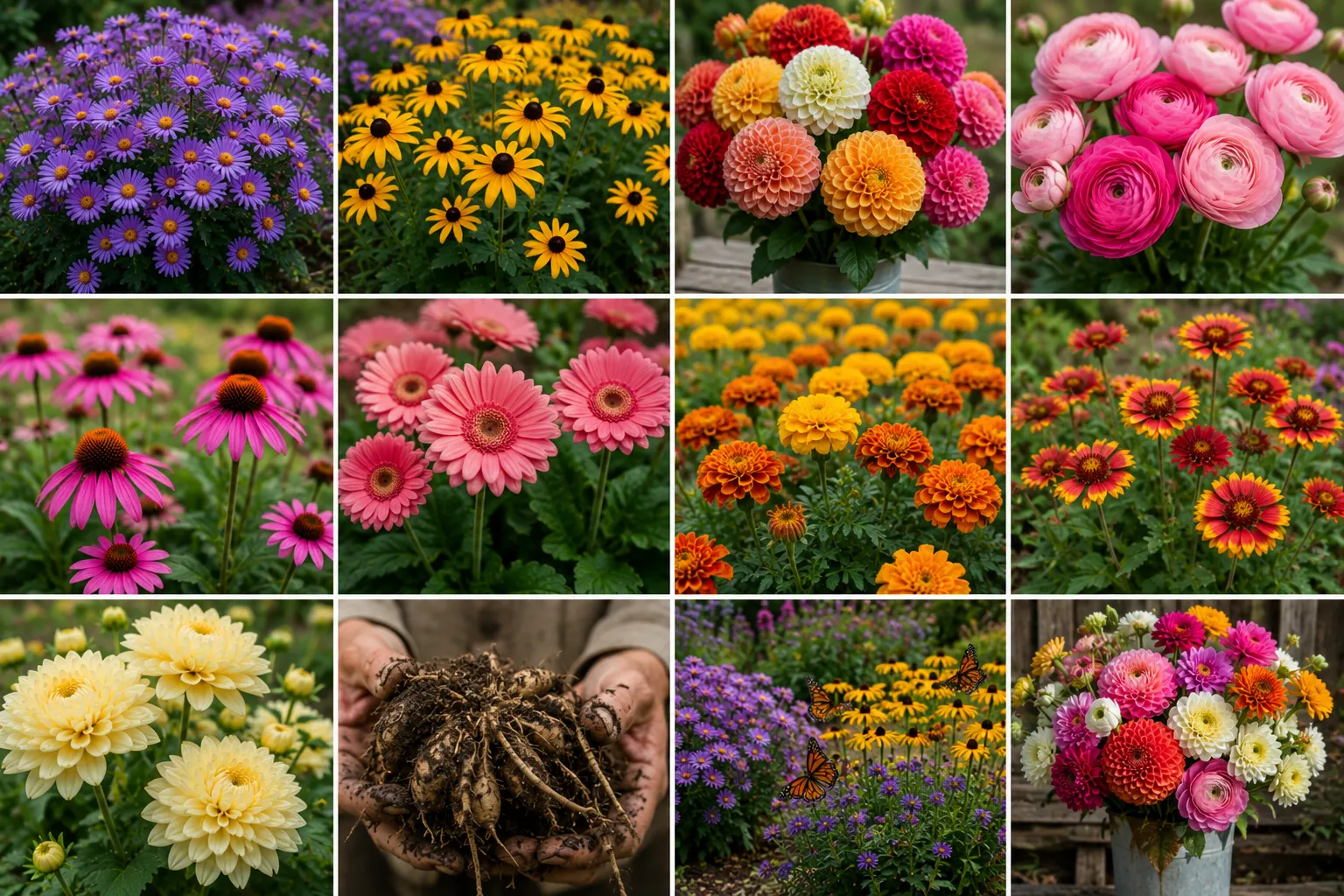
For fall garden color in zones 3–6: asters and black-eyed Susans are the most cold-hardy perennials on this list. Both survive winters that kill most garden mums.
For cut flowers: dahlias, ranunculus, gerbera daisies, and painted daisies all produce long-stemmed blooms with strong vase life. Dahlias last 5–7 days cut; ranunculus holds 7–10 days.
For pollinator gardens: asters, coneflowers, and black-eyed Susans are native plants that support bees, butterflies, and finches better than any cultivated chrysanthemum variety.
For zero-maintenance color: marigolds and blanket flowers tolerate drought, poor soil, and neglect. Both bloom from summer through frost without deadheading.
For the most mum-like appearance: dahlias and ranunculus produce the densest, most chrysanthemum-identical blooms on the entire list.
Growing Tips for Chrysanthemum Look-Alikes
Sunlight
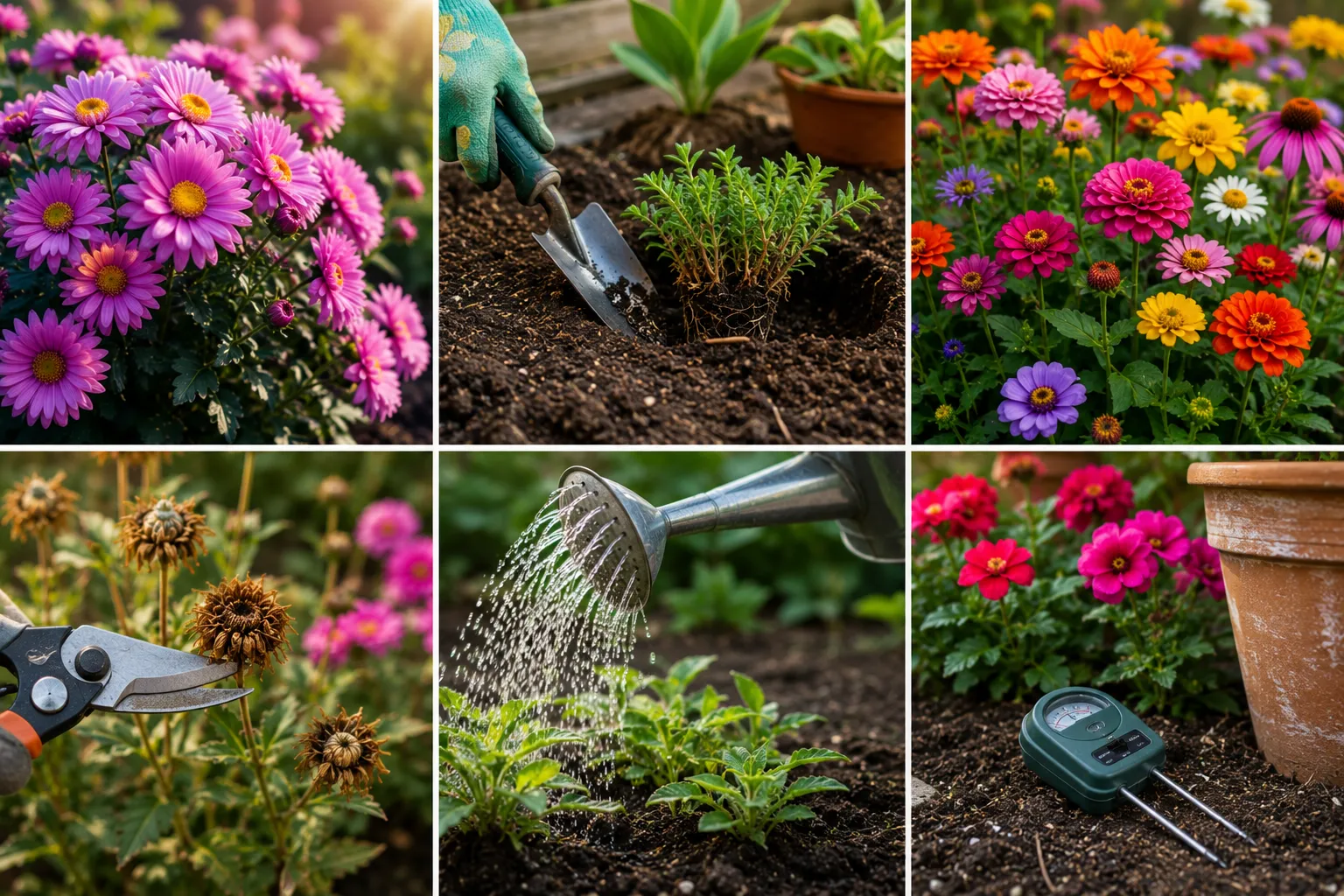
All 12 flowers on this list prefer full sun — a minimum of 6 hours of direct sunlight per day. Asters and coneflowers tolerate partial shade but produce fewer blooms. The rest perform poorly in shade and will stretch toward light, weakening stems.
Soil
Well-drained soil is the single most important requirement for every flower on this list. Soggy roots kill dahlias, ranunculus, and blanket flowers within one season. Amend heavy clay soil with compost before planting — aim for a pH of 6.0–7.0 for most varieties.
Deadheading
Remove spent blooms on zinnias, cosmos, marigolds, blanket flowers, and gerbera daisies regularly. Deadheading prevents seed formation and signals the plant to produce new buds. Plants that are not deadheaded slow down flower production by late summer. Asters, black-eyed Susans, and coneflowers do not require deadheading — they self-clean or produce ornamental seed heads.
Watering
Water deeply once or twice per week rather than shallowly every day. Deep watering encourages roots to grow downward. Marigolds, blanket flowers, and black-eyed Susans tolerate dry spells; ranunculus and gerbera daisies need consistent moisture. Water at the base of plants — wet foliage promotes fungal disease on zinnias and dahlias.
Frequently Asked Questions
What flower looks most like a chrysanthemum?
Dahlia looks most like a chrysanthemum. Pompon and ball dahlias produce dense, rounded blooms with tightly packed petals that are nearly indistinguishable from double mum varieties when cut for a vase.
Are zinnias in the same plant family as chrysanthemums?
Yes. Zinnias and chrysanthemums both belong to Asteraceae, the daisy family. Both produce ray florets around a central disk — the structure that gives both flowers their characteristic layered appearance.
What perennial flower looks like a chrysanthemum in fall?
New England aster (Symphyotrichum novae-angliae) blooms in September and October with purple, pink, or white ray petals around a yellow center — the same timing and form as garden mums. Asters are perennial in zones 4–8 and return reliably each fall.
Can I use these flowers as chrysanthemum substitutes in floral arrangements?
Yes. Dahlias, ranunculus, gerbera daisies, and shasta daisies all make excellent cut flower substitutes for chrysanthemums. Ranunculus lasts 7–10 days in a vase. Dahlias hold 5–7 days when stems are cut at an angle and placed in clean water immediately after cutting.
Do any of these flowers grow in colder climates than chrysanthemums?
Yes. Black-eyed Susans, coneflowers, and painted daisies grow in zone 3, where most garden mums winter-kill. Asters survive to zone 4. All 3 native plants are more cold-tolerant than the tender garden mums sold at most nurseries.
Conclusion
Chrysanthemums earn their place in fall gardens — but they are not the only option. The 12 flowers on this list match or exceed mums in visual impact, bloom duration, and garden performance. Dahlias deliver the most identical look. Asters and black-eyed Susans add native plant value. Blanket flowers and marigolds handle neglect that would finish most mums.
Start with 2 or 3 from different categories — one for cut flowers, one for the border, one for pollinators. By the second season, the layered, chrysanthemum-style blooms will cover your garden from midsummer through the first hard frost.