
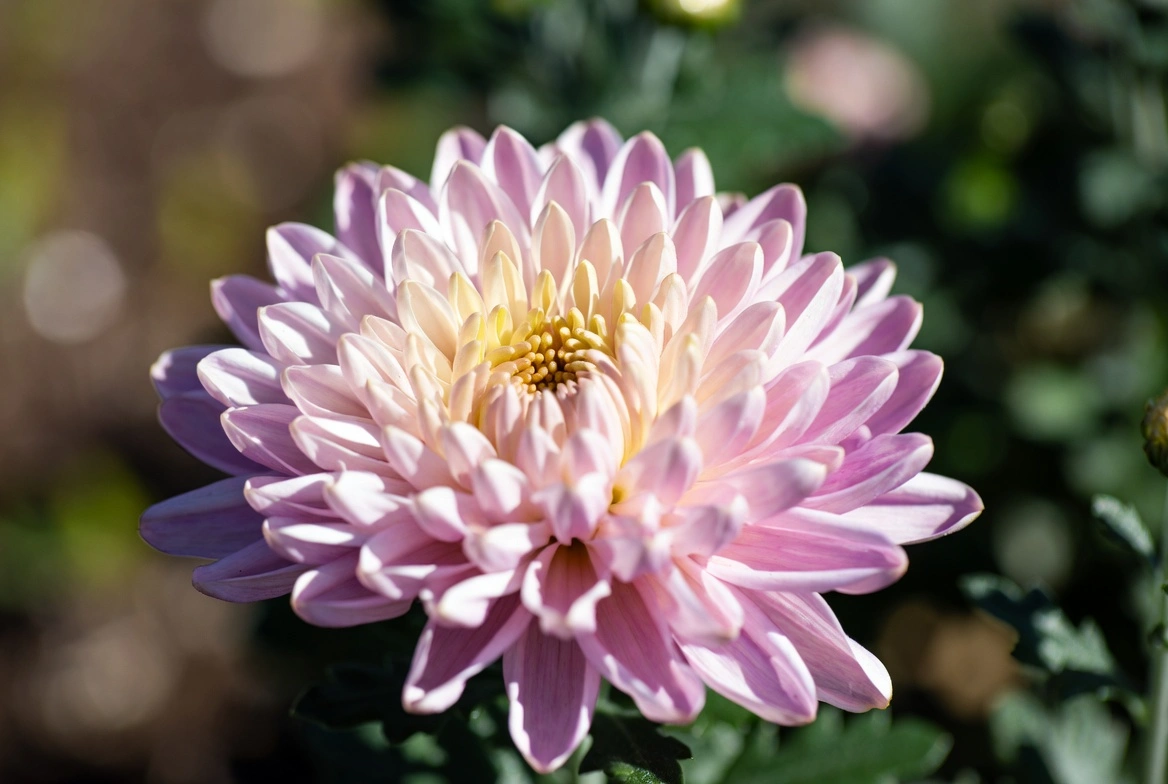
You bought those gorgeous fall mums from the garden center. They looked amazing on your porch for three weeks. Then they died. And you’re wondering why everyone says chrysanthemums are “easy” when yours didn’t even make it to Thanksgiving. I’ve been there. Five times, actually.
The problem isn’t you. It’s that nobody tells you there are three completely different types of mums, and only one is meant to live past Halloween.
I finally figured this out after killing $200 worth of plants. Now I’ve got seven-year-old chrysanthemum plants that come back bigger every season, and I’ll show you exactly what changed.
This guide covers:
- The real difference between garden mums and florist mums (this is the game-changer)
- All 13 types of chrysanthemum flowers and which ones to actually buy
- When to plant so your mums don’t die in winter
- Care tips that work in real backyards, not just on Instagram
No fluff. Just what works.
What Are Chrysanthemums Flowers?
Chrysanthemums are fall-blooming perennial flowers in the Asteraceae family—same group as daisies and sunflowers.
The scientific name is Chrysanthemum morifolium. You might also see Dendranthema grandiflora (the old name before botanists reclassified it in 1999).
Here’s the cool part: each “flower” you see isn’t one flower. It’s hundreds. The center contains disc florets (tiny tubular flowers), and those showy “petals” are ray florets (individual flowers that look like petals). This composite structure is why one chrysanthemum bloom can produce 300+ seeds.
Chrysanthemum Quick Facts:
- Native to: China and East Asia (cultivated for 3,000+ years)
- Hardiness zones: USDA Zones 5-9 (some varieties survive Zone 4)
- Bloom season: Late summer through first hard frost (August-November)
- Mature height: 1-4 feet depending on variety
- Sun needs: Full sun (minimum 6 hours daily)
- Soil preference: Well-drained, pH 6.5-7.0
- Colors available: White, yellow, red, pink, purple, orange, bronze, burgundy, green
The name “chrysanthemum” comes from Greek: chrysos (gold) + anthemon (flower). Makes sense—the original Chinese varieties were all golden yellow.
Garden Mums vs. Florist Mums vs. Perennial Mums
This is where everyone screws up. Including me for the first three years. There are three types of chrysanthemums sold in the USA, and they’re not interchangeable:

1. Florist Mums (Indoor/Temporary)
- What they are: Tender varieties grown in green houses, forced to bloom early using artificial light manipulation.
- Where you find them: Grocery stores, florists, gas stations—anywhere selling “potted plants” year-round.
- Hardiness: Not hardy. Will die if planted outside in fall or winter.
- Lifespan: 2-4 weeks as a houseplant, then done.
Best for: Indoor decoration, gifts, temporary color.
I bought six of these my first year thinking I was getting a deal. Planted them in October. They were dead by November. Zero came back in spring.
2. Garden Mums (Fall Annuals)
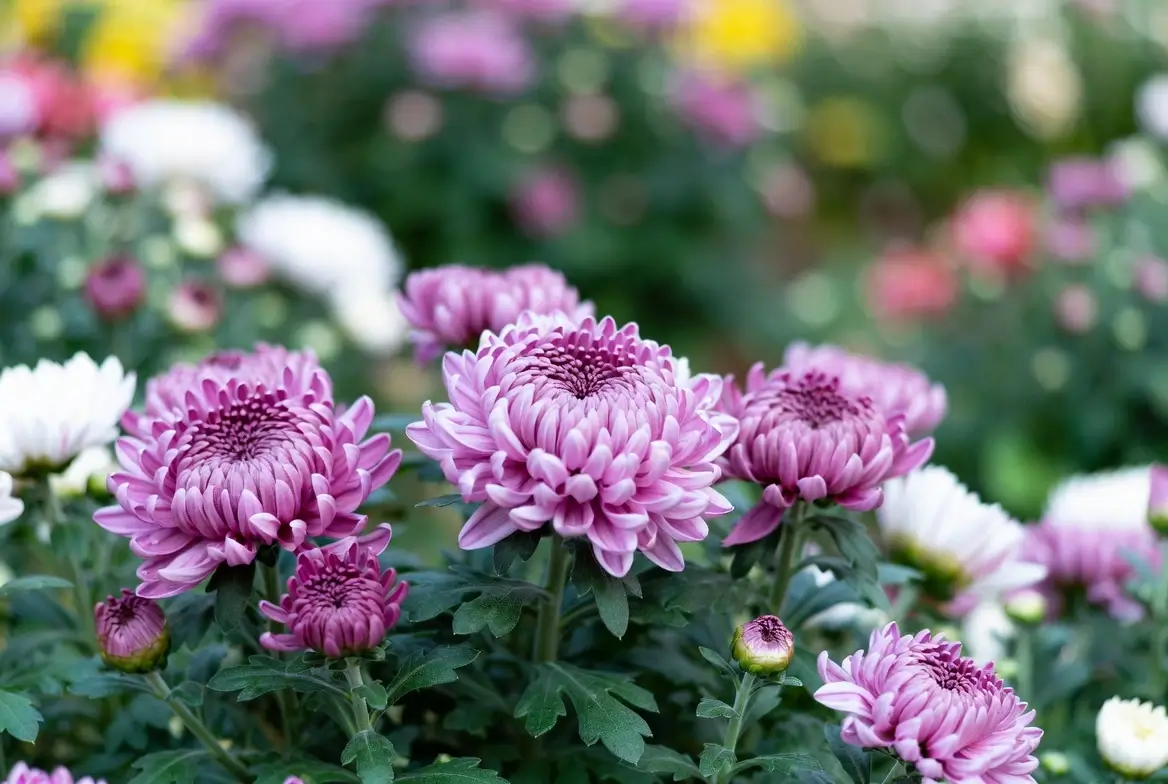
- What they are: Hardy varieties bred for outdoor color, sold in fall when already blooming
- Where you find them: Garden centers, big box stores in August-October.
- Hardiness: Can be hardy in Zones 5-9, but usually die because they don’t have time to root before winter.
- Lifespan: One season if planted in fall. Perennial if planted in spring.
Best for: Fall porch displays, seasonal color.
The trick: these can become perennials, but only if you plant them in spring (March-May) so they root deeply before winter. Fall-planted garden mums rarely survive.
3. Hardy Perennial Mums (The Real Deal)
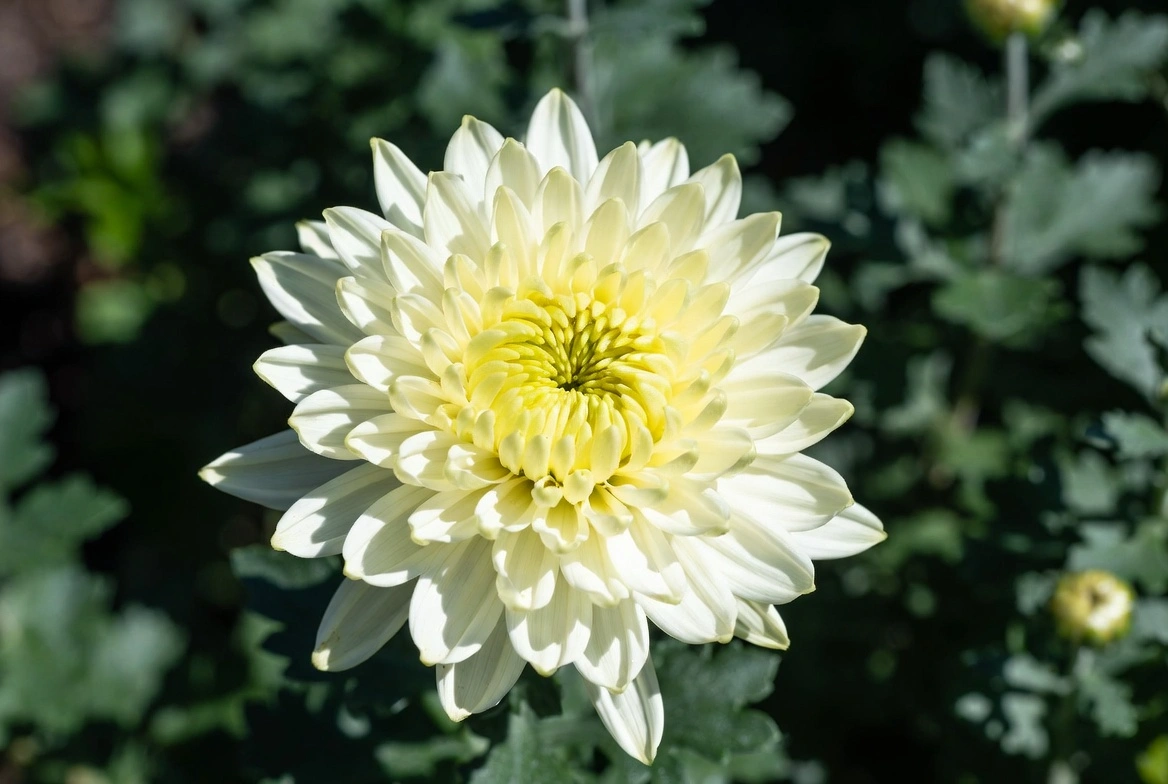
- What they are: Hardy chrysanthemum varieties specifically bred for cold tolerance and sold as dormant plants or rooted cuttings in spring.
- Where you find them: Specialty nurseries, online retailers, perennial sections (not the fall display tables).
- Hardiness: Zones 4-9 depending on cultivar.
- Lifespan: 5-10+ years with proper care. I have plants going on year seven.
Best for: Permanent garden plantings, perennial borders.
Key difference: These are labeled as “hardy mums” or “perennial chrysanthemums” and typically sold in spring before they bloom.
Quick Decision Guide:
- Want temporary fall color for your porch? Buy garden mums in September
- Want plants that come back every year? Buy hardy perennial mums in spring
- Want a houseplant that blooms? Buy florist mums and enjoy for a few weeks
Types of Chrysanthemum Flowers: The 13 Official Classifications
The National Chrysanthemum Society classifies mums into 13 categories based on petal shape and bloom form. You don’t need to memorize all of them. But knowing the main types helps you pick varieties that fit your garden style.
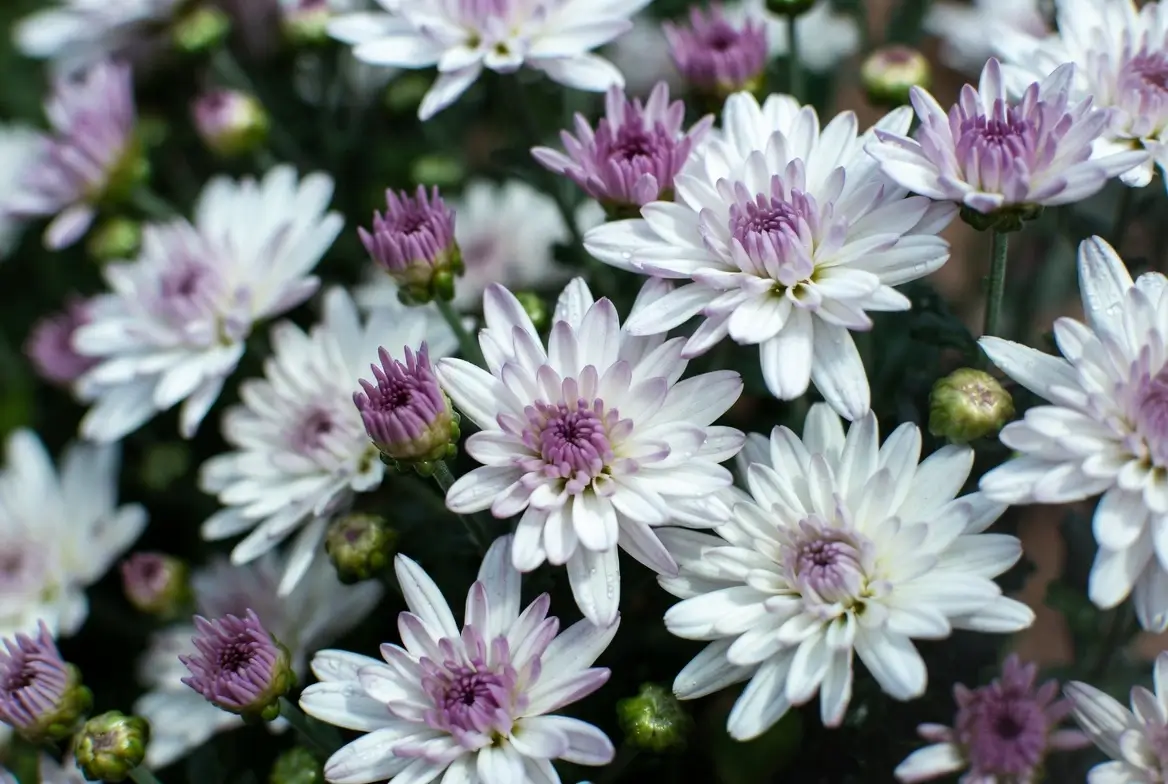
1. Irregular Incurve Chrysanthemums
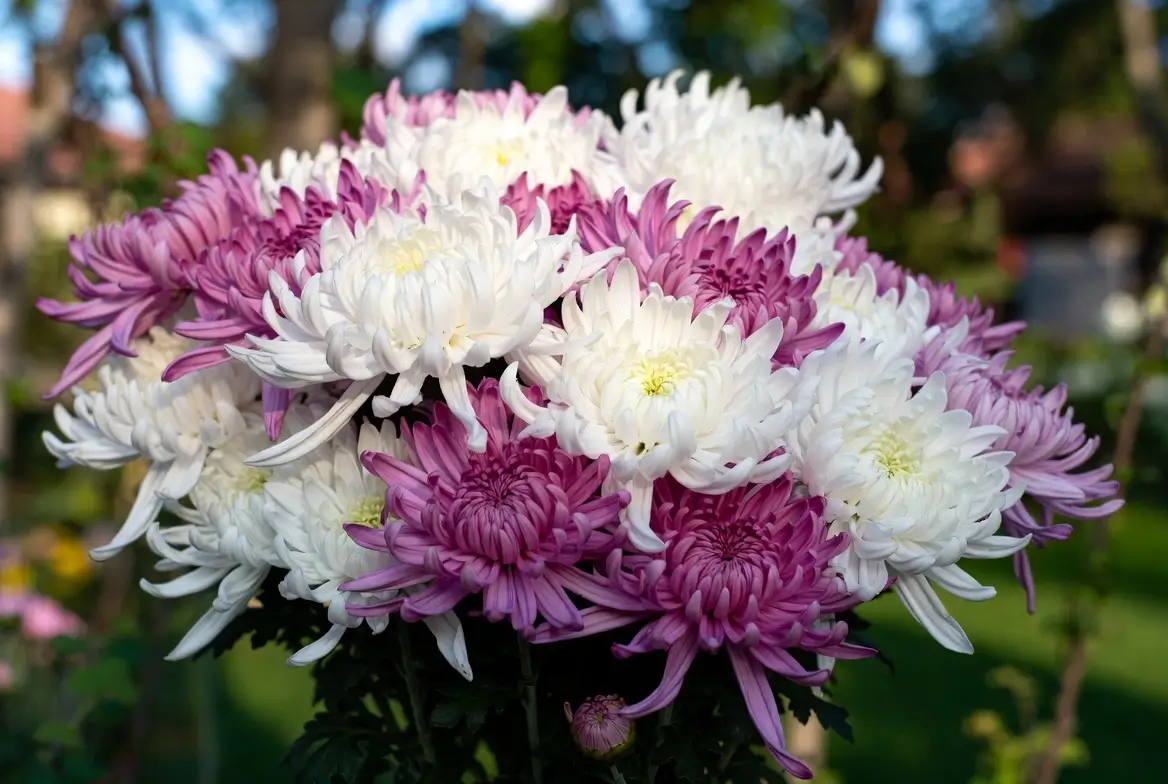
The giants. Massive blooms with petals that loosely curve inward toward the center. Lower petals hang down like a skirt.
- Size: 6-10 inches across, plants grow 4 feet tall.
- Nicknamed: “Football mums” (think homecoming corsages).
- Best for: Show gardens, cutting, statement pieces.
- Staking needed: Yes.
- Popular varieties: ‘Bola de Oro’ (gold), ‘Jefferson Park’ (bronze).
These are dramatic but need support. I grew ‘Kokka Bunmi’ last year and needed to stake it by August or it flopped everywhere.
2. Reflex Chrysanthemums
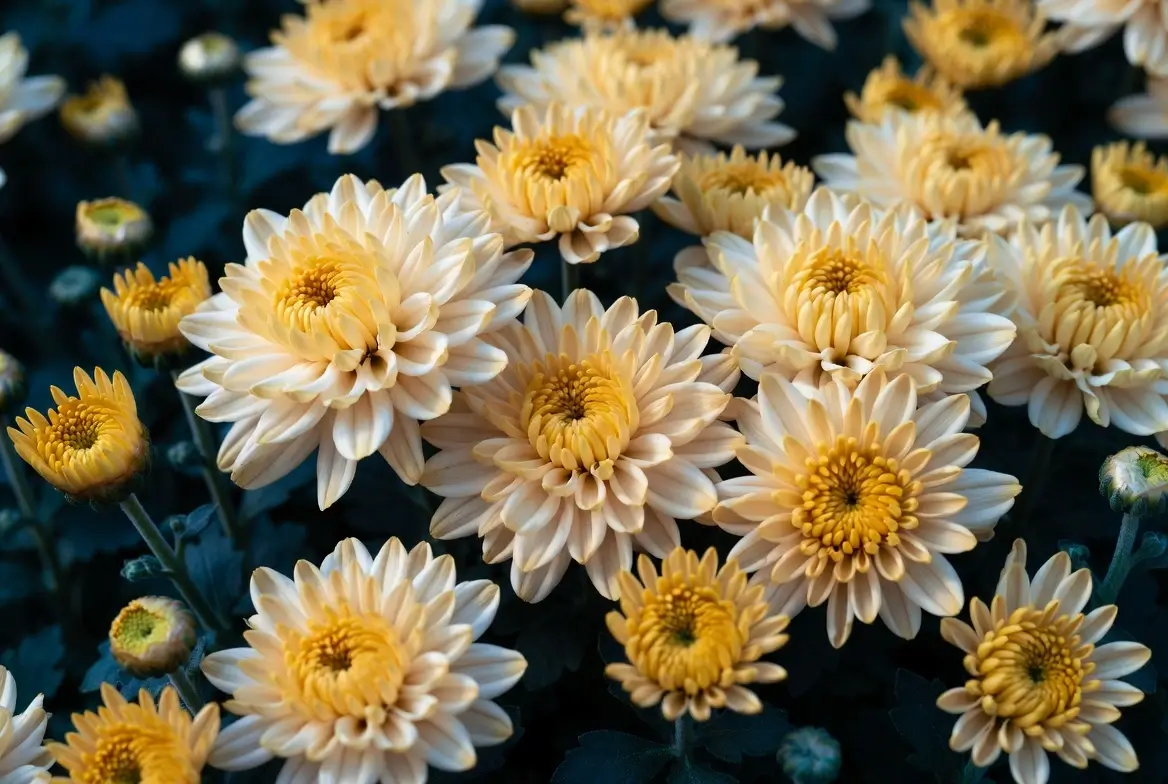
Petals curve downward and overlap, creating a mophead or bird-plumage look. The top is somewhat flat.
- Size: 4-6 inches across.
- Look: Shaggy, full, dramatic.
- Popular varieties: ‘King George’ (red/yellow), ‘Domingo’ (vibrant mix).
These are my favorite for cutting flowers. The reflex shape holds up better in vases than tight pompoms.
3. Regular Incurve Chrysanthemums
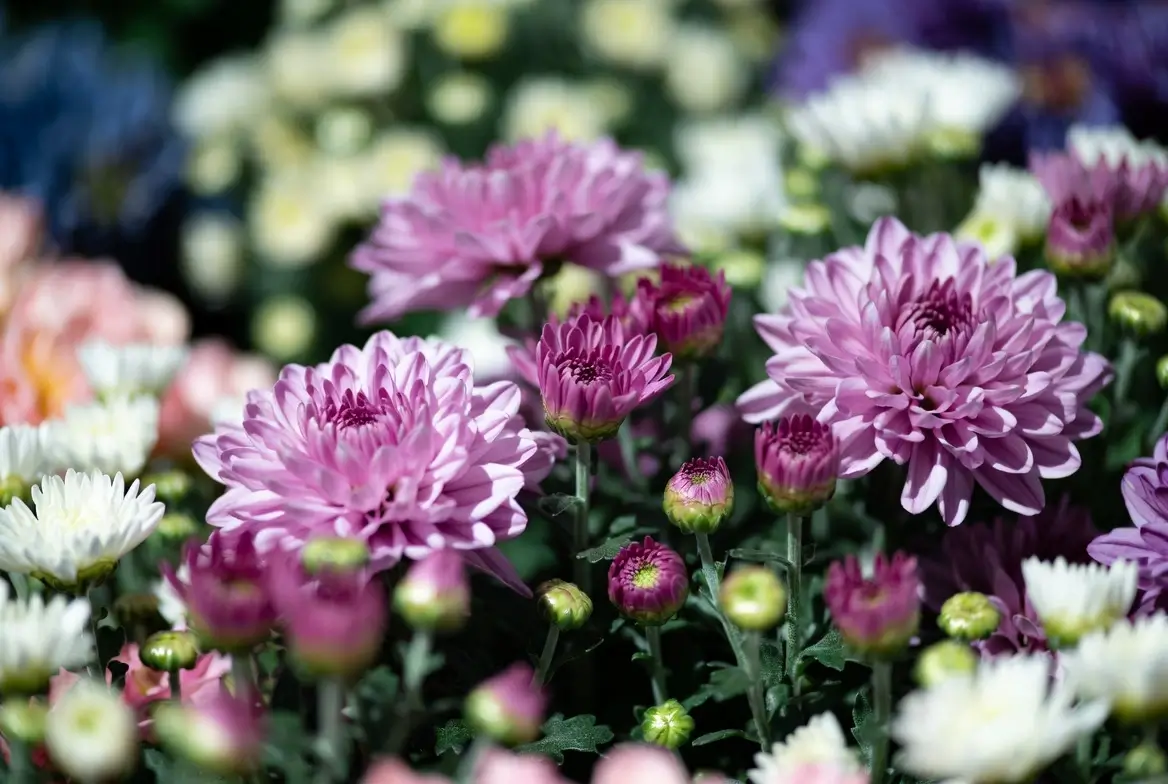
Perfect spheres. Petals curve smoothly inward to form a complete ball shape.
- Size: 4-6 inches, very symmetrical.
- Best for: Formal gardens, exhibitions.
Popular varieties: ‘Gillette’ (pink), ‘Heather James’ (bronze).
Gorgeous but high-maintenance. You need to disbud (remove side shoots) to get that perfect ball shape.
4. Decorative Chrysanthemums
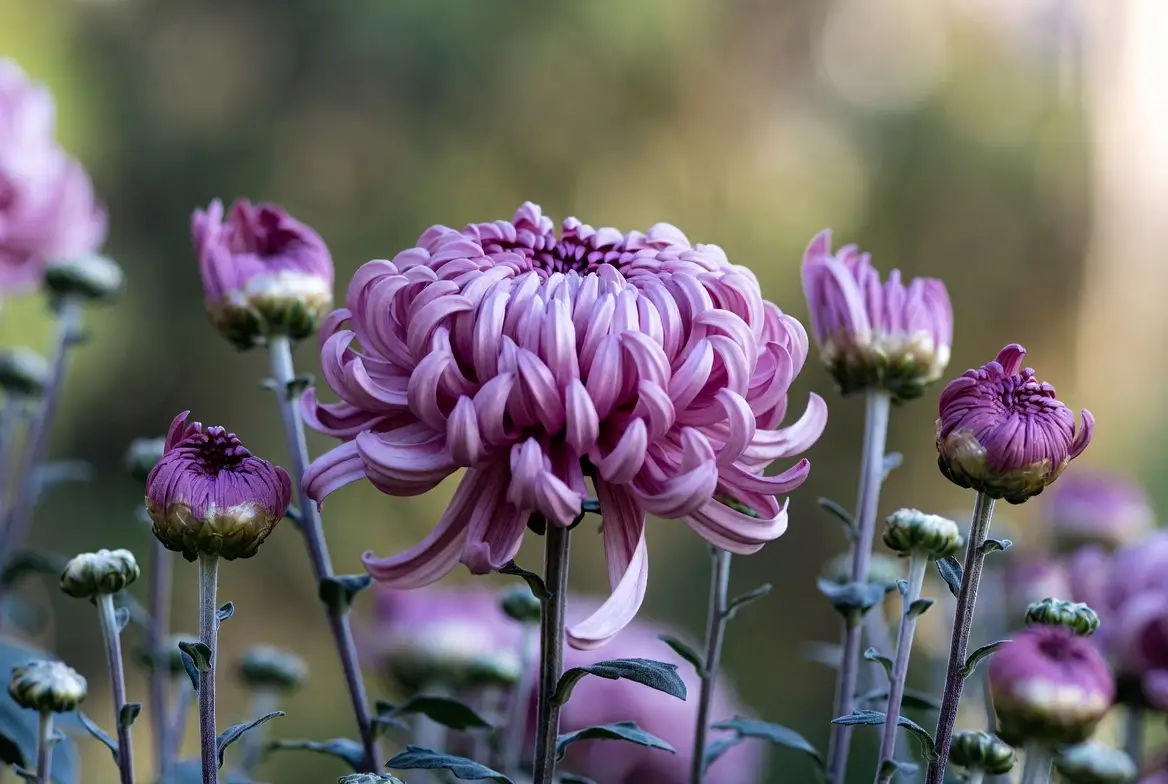
The most common garden mums. Flattened blooms with short petals—upper ones curve up, lower ones curve down.
- Size: 1-4 inches across.
- Best for: Garden beds, containers, mass plantings.
- Why they’re everywhere: Hardy, compact, floriferous (produce tons of blooms).
This is what you see at Home Depot in fall. Varieties like ‘Indian Summer’ (bronze) and most “garden ready” mums fall into this class.
5. Intermediate Incurve Chrysanthemums
Smaller than irregular incurves, with partially incurved petals and a more open appearance.
- Size: 3-5 inches.
- Look: Like a hybrid between irregular incurve and regular incurve.
- Popular varieties: ‘Le Mans’ (pink/coral).
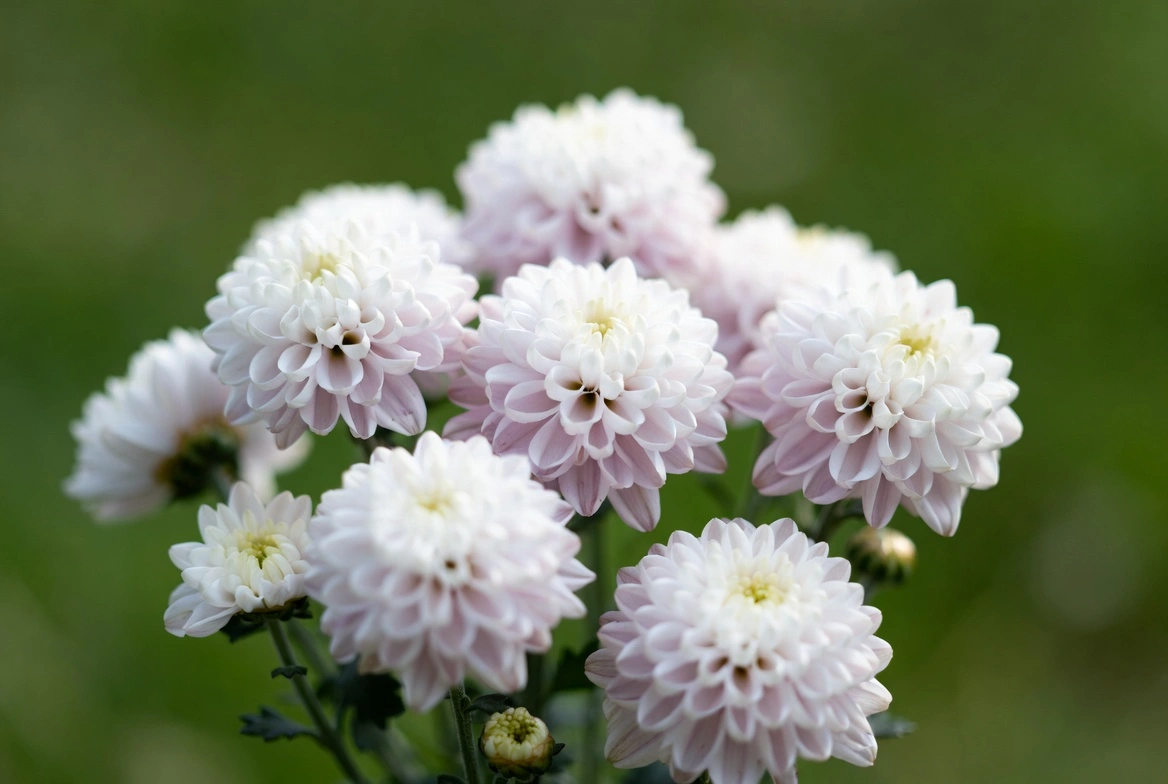
6. Pompon Chrysanthemums
Small, globe-shaped blooms that look like fuzzy balls. Petals curve up or down in a perfect sphere.
- Size: 1-4 inches (button types are under 1 inch).
- Staking needed: No.
- Best for: Cutting gardens, containers, whimsical displays.
- Popular varieties: ‘Kermit’ (green!), ‘Feeling Green’ (lime).
Pompons are workhorses. They don’t need staking, bloom prolifically, and make amazing filler in bouquets.
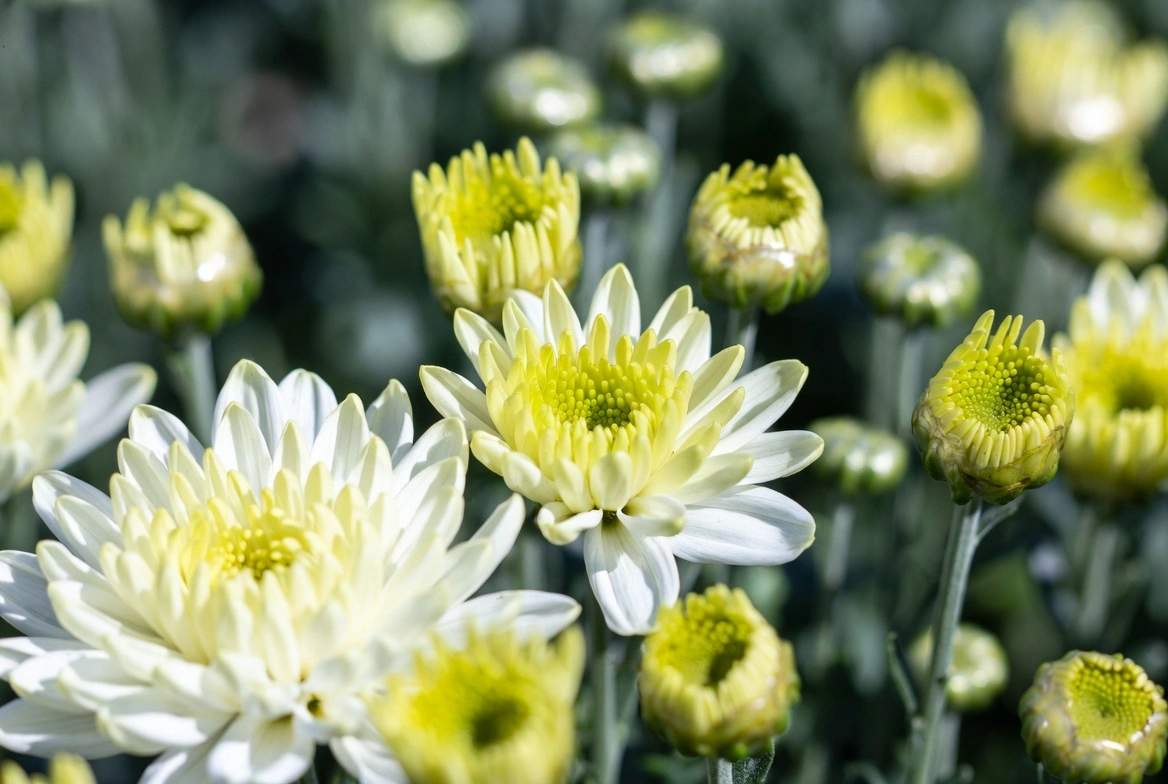
7. Single and Semi-Double Chrysanthemums
Daisy-like. Central disc surrounded by 1-7 rows of ray petals.
- Size: 2-3 inches.
- Look: Rustic, cheerful, cottage garden vibes.
- Mature height: 1-3 feet.
- Popular varieties: ‘Icey Isle’ (white), ‘Donna’ (pink).
These are great for pollinator gardens. Bees love the exposed central disc.
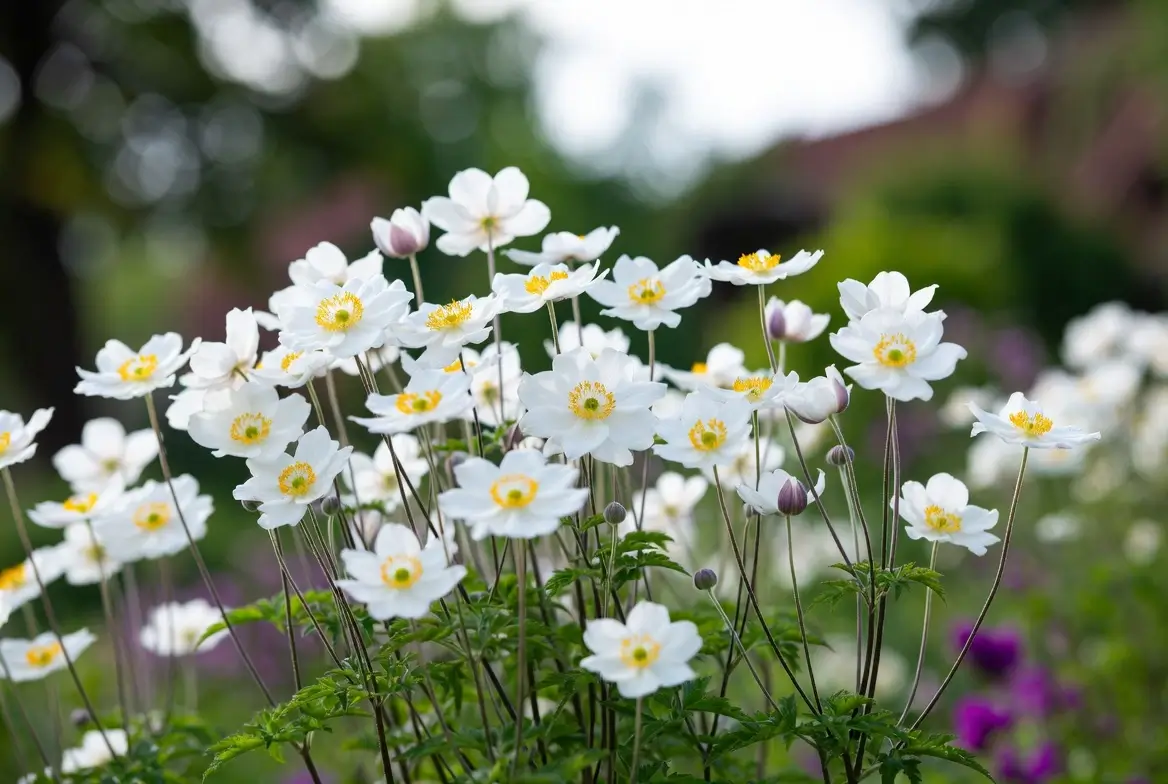
8. Anemone Chrysanthemums
Raised pincushion center surrounded by 1-3 rows of flat petals.
- Size: 2-6 inches.
- Look: Like a pincushion stuck in a daisy.
- Staking needed: Yes for taller varieties.
Super unique. They stand out in mixed plantings.
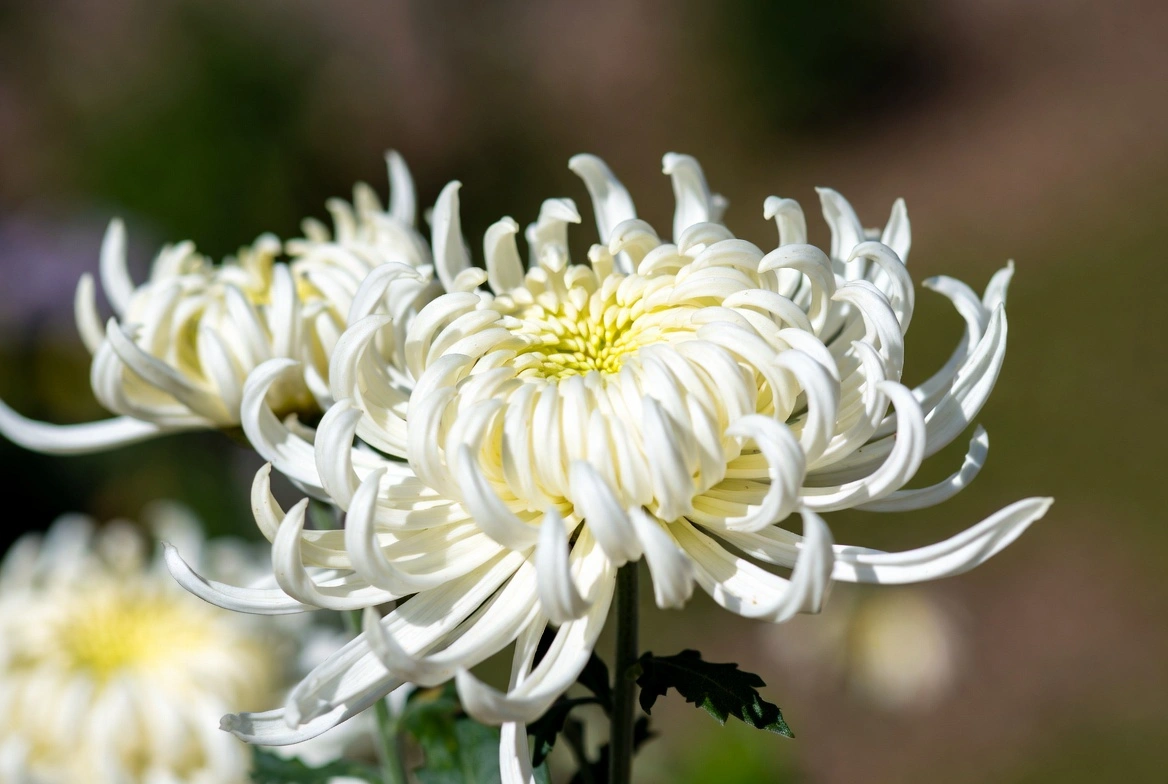
9. Spoon Chrysanthemums
Long tubular petals that flare out at the tips like spoons. Central disc visible.
- Size: 2-4 inches.
- Staking needed: No.
- Popular varieties: ‘Redwing’ (burgundy with yellow tips).
These are conversation starters. Nobody expects spoon-shaped petals.
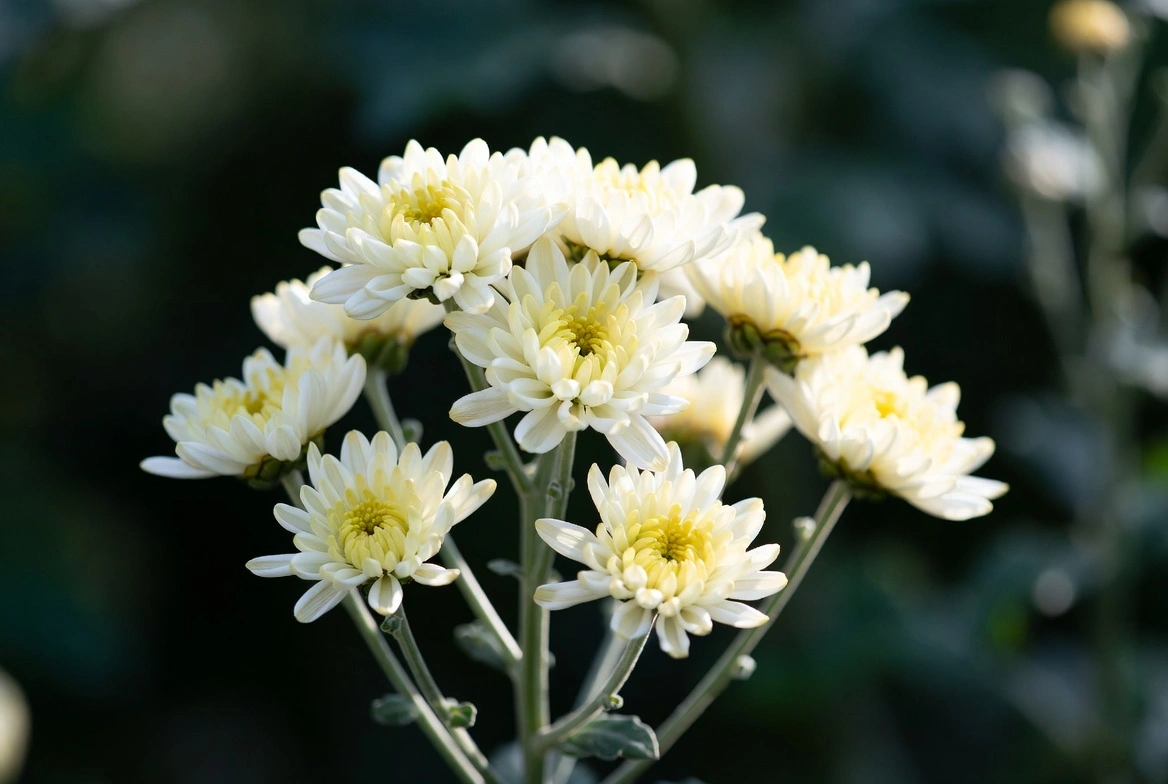
10. Quill Chrysanthemums
Straight tubular petals with open tips that look like quills or tubes. Fully double blooms.
- Size: 3-5 inches.
- Look: Spiky, architectural, modern.
These have a sculptural quality that works great in contemporary gardens.
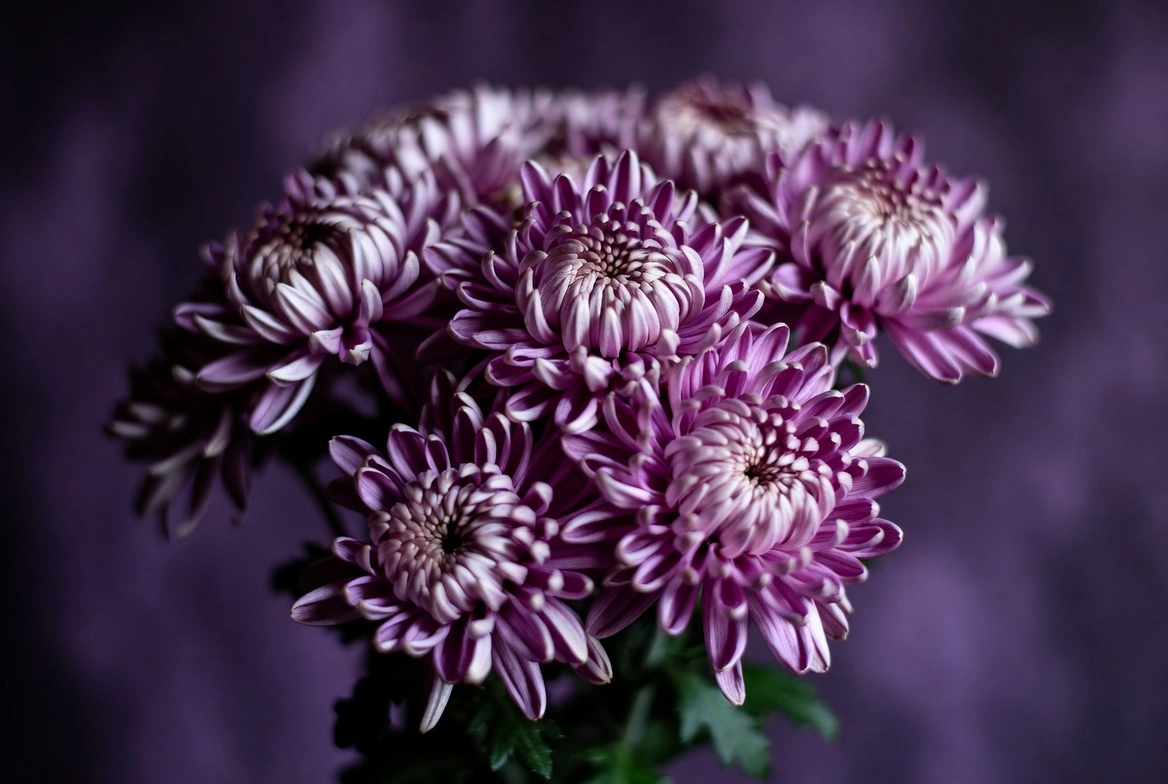
11. Spider Chrysanthemums
Long, tubular petals that twist and curl at the ends, creating a spidery, wild appearance.
- Size: 4-8 inches.
- Look: Dramatic, exotic, unkempt (in a good way).
- Popular varieties: ‘Anastasia Green’ (lime green), ‘Tarantula Red’.
Spider mums are showstoppers. I grew ‘Anastasia Green’ last year and every garden visitor asked about it.
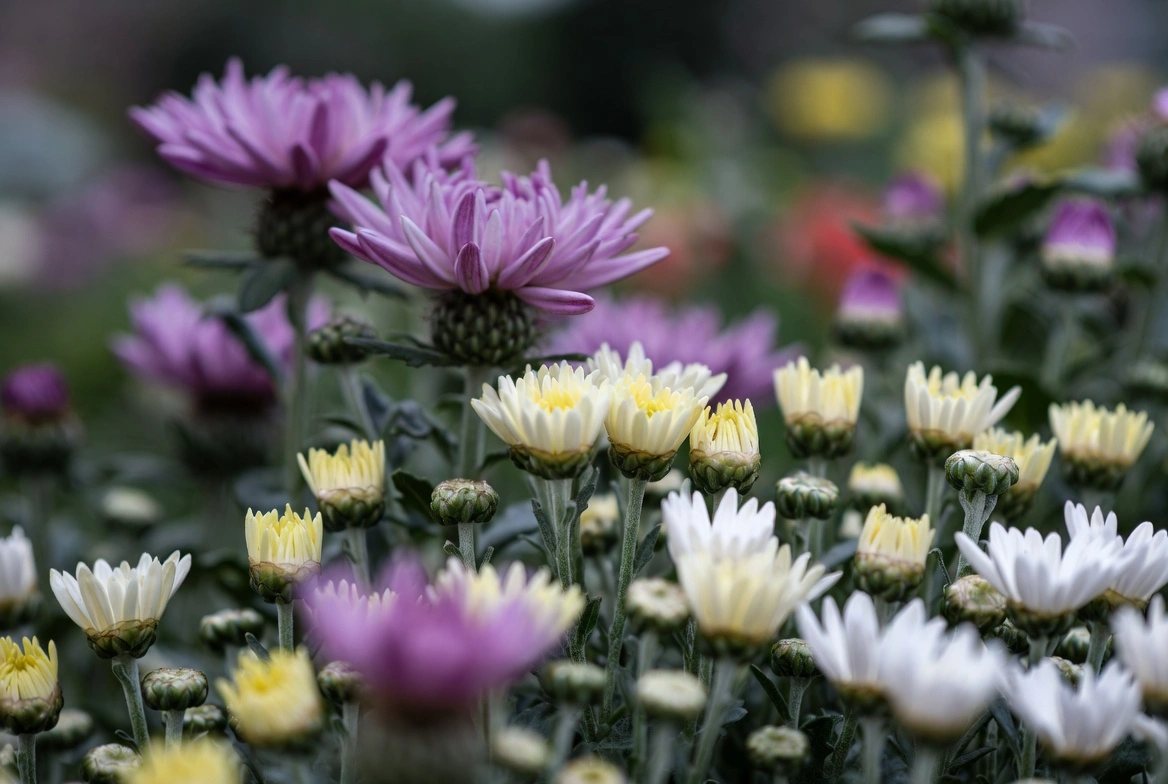
12. Brush and Thistle Chrysanthemums
Fine tubular petals either grow upright (brush form) or twist around the stem (thistle form).
- Size: 3-6 inches.
- Look: Like a paintbrush or thistle flower.
These are rare in garden centers but common in botanical exhibitions.
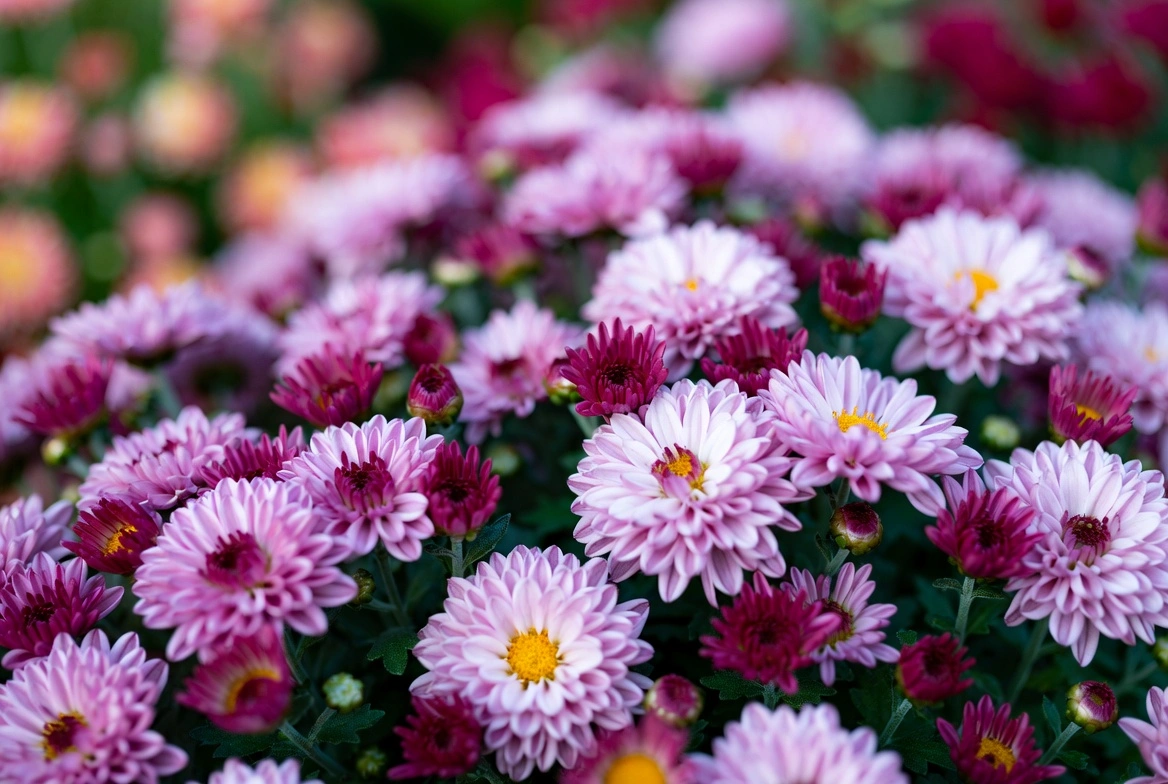
13. Unclassified/Exotic Chrysanthemums
Blooms that don’t fit other categories or exhibit multiple characteristics.
- Examples: Edo varieties used in Japanese cascade displays, unusual spider hybrids.
- Look: Wildly varied—twisted petals, multiple colors, unconventional shapes.
The “catch-all” category for breeders getting creative.
Which Types Should You Grow?
- For beginners: Decorative, pompon, or single/semi-double varieties. Low maintenance, no staking needed.
- For cut flowers: Reflex, spider, or pompon types. Long vase life and interesting shapes.
- For show gardens: Irregular incurve or regular incurve. High impact but need staking and disbudding.
- For pollinator gardens: Single, semi-double, or anemone types. Exposed centers attract bees.
How to Grow Chrysanthemums (Timing Is Everything)
Here’s what nobody tells you: when you plant matters more than how you plant. The chrysanthemums in fall when they’re already blooming? They’ll probably die over winter because they didn’t establish roots.
Plant them in spring as small starts? They root deeply all summer and come back for years.
Best Time to Plant Chrysanthemums
For perennial success (plants that return):
- Plant in spring: March-May after last frost
- Why: Gives plants 6+ months to develop deep root systems before winter
- Result: 80%+ survival rate in Zones 5-9
For one-season color:
- Plant in late summer/fall: August-September
- Why: Instant color for fall displays
- Result: Beautiful for 6-8 weeks, unlikely to survive winter
I learned this the expensive way. Five years of fall plantings = zero survivors. One spring planting = still going strong.
Where to Plant Chrysanthemums (Location Requirements)
Chrysanthemums need three things to thrive:
- Full sun (6+ hours daily)
- Morning sun is essential
- Afternoon shade okay in Zones 8-9 (prevents heat stress)
- Less than 6 hours = leggy plants, fewer blooms
- Well-drained soil
- Mums hate wet feet
- Root rot is the #1 killer of chrysanthemums
- If your soil puddles after rain, amend it or plant in raised beds
- Good air circulation
- Space plants 18-24 inches apart
- Prevents powdery mildew and other fungal issues
- Don’t crowd them against walls or fences
Soil Preparation for Chrysanthemums
Ideal soil:
- Rich, loamy soil with lots of organic matter
- pH 6.5-7.0 (slightly acidic to neutral)
- Well-draining but moisture-retentive
How to prep your bed:
- Test drainage: Dig a hole, fill with water, wait. If it drains within 6 hours, you’re good. If not, amend.
- Add organic matter: Mix in 2-3 inches of compost or aged manure before planting.
- Check pH: Use a soil test kit. Add lime if too acidic, sulfur if too alkaline.
- Improve drainage: Add perlite or coarse sand to heavy clay soil. Or build raised beds.
I grow my mums in native Kansas clay amended with 30% compost. Works great as long as I don’t overwater.
Planting Chrysanthemums: Step-by-Step
What you need:
- Rooted cuttings or small potted plants (spring planting)
- Or garden-ready mums in containers (fall planting)
- Compost or aged manure
- Shovel
- Mulch
Steps:
- Dig holes 2x the width of the root ball and same depth as the container. Don’t plant deeper—stem rot is real.
- Mix compost into the removed soil (50/50 blend).
- Remove the plant from the container gently. Loosen circling roots with your fingers.
- Set the plant at the same depth it was growing in the pot. Backfill with amended soil.
- Water deeply to settle soil and eliminate air pockets.
- Mulch around plants (2-3 inches) but keep mulch 2 inches away from stems.
- Space plants 18-24 inches apart for good air flow.

Pinching Chrysanthemums for More Blooms
This is the secret to bushy plants loaded with flowers instead of tall, leggy plants with a few blooms.
What pinching means: Removing the growing tip to force side branches to develop.
When to pinch:
- First pinch: When plants reach 6 inches tall (late April-May)
- Second pinch: When they hit 12 inches (June)
- Final pinch: Mid-July at the latest (100 days before you want blooms)
How to pinch:
- Use your fingers or pruning shears
- Remove top 3/4 inch of each stem, cutting just above a leaf set
- Repeat on all new shoots
What happens:
- Each pinch doubles the number of stems
- More stems = exponentially more flowers
- Plants stay compact and bushy instead of flopping over
I pinch mine three times every spring. My unpinched chrysanthemum had 12 blooms. My pinched one had 60+.
Chrysanthemum Plant Care: What They Actually Need
Mums are “easy” once you understand what they want. Here’s the real care routine.
Watering Chrysanthemums
During growing season (spring-summer):
- Water deeply 1-2x per week
- Soil should stay consistently moist but never soggy
- Check top 2 inches—if dry, water
- Morning watering prevents fungal issues
During bloom time (fall):
- Increase watering slightly
- Blooming plants need more moisture
- Don’t let containers dry out completely
In winter (established plants):
- Minimal watering
- Only if fall is unusually dry
- Stop watering after hard frost
Signs you’re overwatering:
- Yellow leaves
- Wilting despite wet soil
- Mushy stems at base
Signs you’re underwatering:
- Crispy leaf edges
- Drooping flowers
- Leaves dropping off
I use a moisture meter ($10 at any garden center) to avoid guessing. Game changer.
Fertilizing Chrysanthemums
Mums aren’t heavy feeders, but they need consistent nutrition.
Spring (after planting or when new growth appears):
- Apply balanced fertilizer: 10-10-10 or 5-10-5
- Or use compost top-dressing (2 inches)
- Work into top 3 inches of soil
Early summer (June-July):
- Apply liquid fertilizer monthly
- Use balanced formula: 10-10-10
- Or fish emulsion for organic option
Late summer (after buds form):
- Stop fertilizing completely
- Too much nitrogen delays blooming
- Excess nitrogen = leafy plants, few flowers
I messed this up year one: kept fertilizing through August. My mums didn’t bloom until late October and got hit by frost before fully opening.
Staking Chrysanthemums (Which Ones Need It)
Varieties that need staking:
- Irregular incurve (giant blooms)
- Reflex types
- Anemone varieties over 2 feet tall
- Any mum in a windy location
Varieties that don’t:
- Decorative types
- Pompons
- Cushion mums
- Spoon types
Best staking method:
- Install stakes or grow-through netting in late spring before plants get big
- Use bamboo stakes or tomato cages for individual plants
- Use horizontal netting at 18″ and 36″ heights for beds
- Tie loosely with soft plant ties or twine
I use leftover tomato cages. Works perfectly and I already have them.
Deadheading Chrysanthemums: Should you deadhead mums?
How to deadhead:
- Remove spent blooms by cutting stem back to next leaf set
- Or ignore it—mums look fine with faded blooms mixed in
After first hard frost:
- Cut entire plant back to 3-4 inches above soil
- Remove all dead foliage
- Apply 4-6 inches of mulch for winter protection
Dividing Chrysanthemums (Keep Them Vigorous)
When to divide: Every 2-3 years in early spring when new shoots are 1-3 inches tall.
Why divide:
- Older clumps lose vigor
- Centers die out
- Fewer flowers over time
- Division rejuvenates plants
How to divide:
- Dig entire clump with a spade, getting as many roots as possible
- Shake off excess soil so you can see the root structure
- Cut or pull apart sections using a sharp knife or spade. Each section needs 3-5 shoots and good roots.
- Discard woody center (it’s old and won’t grow well)
- Replant divisions immediately at same depth, spacing 18-24 inches apart
- Water deeply and keep moist until established
I divided a seven-year-old clump last spring and got 12 new plants. Gave away eight, kept four, and they all bloomed like crazy that fall.
Overwintering Chrysanthemums (How to Get Them Back Next Year)
This is where people lose plants they thought were “hardy.”
In-Ground Chrysanthemums (Zones 5-9)
After first hard frost:
- Cut stems back to 3-4 inches above soil line
- Remove all dead foliage (prevents disease)
- Apply 4-6 inches of mulch: Straw, shredded leaves, or pine needles
- Don’t remove mulch until new growth appears in spring (April-May)
In Zone 5 or colder:
- Add extra mulch (6-8 inches)
- Or dig up prized varieties and overwinter in pots in an unheated garage
Common mistake: Removing mulch too early. Wait until you see green shoots. I pulled mine off in March one year and a late frost killed the emerging growth.
Container Chrysanthemums
Option 1: Treat as annuals (easiest)
- Enjoy the show, then compost after frost
- Buy new ones next year
Option 2: Overwinter indoors (for special varieties)
- Cut back after frost
- Move pots to unheated garage, basement, or shed
- Keep soil barely moist (water monthly)
- Move back outside in spring after last frost
Option 3: Plant in ground (if bought in spring)
- Remove from container
- Plant in garden bed following spring planting guidelines
- Much better survival rate than keeping in pot
I’ve tried overwintering containers in my garage. The success rate is about 50%. Now I just plant everything in the ground.
Zone-Specific Tips
Zones 8-9 (warmer climates):
- Less mulch needed (2-3 inches)
- May need afternoon shade to prevent summer heat stress
- Water more frequently
Zones 5-6 (colder areas):
- Heavy mulch essential (6+ inches)
- Choose cultivars labeled “extra hardy”
- Plant in protected locations (south-facing, sheltered from wind)
Zone 4 (challenging):
- Only the hardiest varieties survive
- Consider digging and storing roots indoors
- Or treat as annuals and enjoy one season
Common Chrysanthemum Problems (And How to Fix Them)
1. Yellowing Leaves
Causes:
- Overwatering (most common)
- Root rot
- Nutrient deficiency
- Natural aging
Solutions:
- Check soil moisture before watering
- Ensure good drainage
- Apply balanced fertilizer if nutrient-starved
- Remove lower yellow leaves (normal on mature plants)
2. Wilting Despite Wet Soil
Cause: Root rot from overwatering or poor drainage
Solution:
- Stop watering immediately
- Check roots—if mushy and brown, plant is likely done
- For future plants, improve drainage before planting
3. Powdery Mildew (White Powder on Leaves)
Causes:
- Poor air circulation
- Overhead watering
- Humid conditions
Solutions:
- Space plants further apart
- Water at soil level, not overhead
- Apply neem oil or sulfur fungicide
- Remove heavily infected leaves
4. Aphids (Tiny Green/Black Bugs)
Damage: Cluster on new growth, distort leaves, leave sticky residue
Solutions:
- Spray off with strong water stream
- Apply insecticidal soap
- Release ladybugs (natural predators)
- Spray neem oil
I had an aphid explosion on my ‘Kermit’ pompoms last June. Blasted them off with the hose daily for a week. Problem solved.
Here is the detailed related guide for Chrysanthemum Problems: How to Fix Yellow Leaves, Pests & Dying Mums
5. Spider Mites (Stippled Leaves, Fine Webbing)
Damage: Leaves look dusty or bronze, fine webbing between stems
Solutions:
- Increase humidity (mites hate moisture)
- Spray undersides of leaves with water daily
- Apply insecticidal soap or neem oil
- Remove heavily infested plants
6. Leggy Plants with Few Flowers
Causes:
- Not enough sun (less than 6 hours)
- Skipped pinching
- Too much nitrogen
Solutions:
- Move to sunnier location next season
- Pinch regularly in spring
- Reduce fertilizer
7. Buds Form But Don’t Open
Causes:
- Early frost
- Planted fall varieties too late in season
- Underwatering during bud development
Solutions:
- Plant earlier (spring for perennials, early August for fall displays)
- Protect from early frost with row covers
- Keep soil consistently moist when buds form
8. Plants Die Over Winter
Causes:
- Planted florist mums instead of hardy varieties
- Planted in fall without time to root
- Insufficient mulch
- Poor drainage causing root rot
Solutions:
- Plant hardy perennial varieties in spring
- Apply heavy mulch after ground freezes
- Improve soil drainage
Chrysanthemum Colors and Their Meanings
Chrysanthemums come in almost every color except true blue. Each color carries cultural significance, especially in Asian traditions.
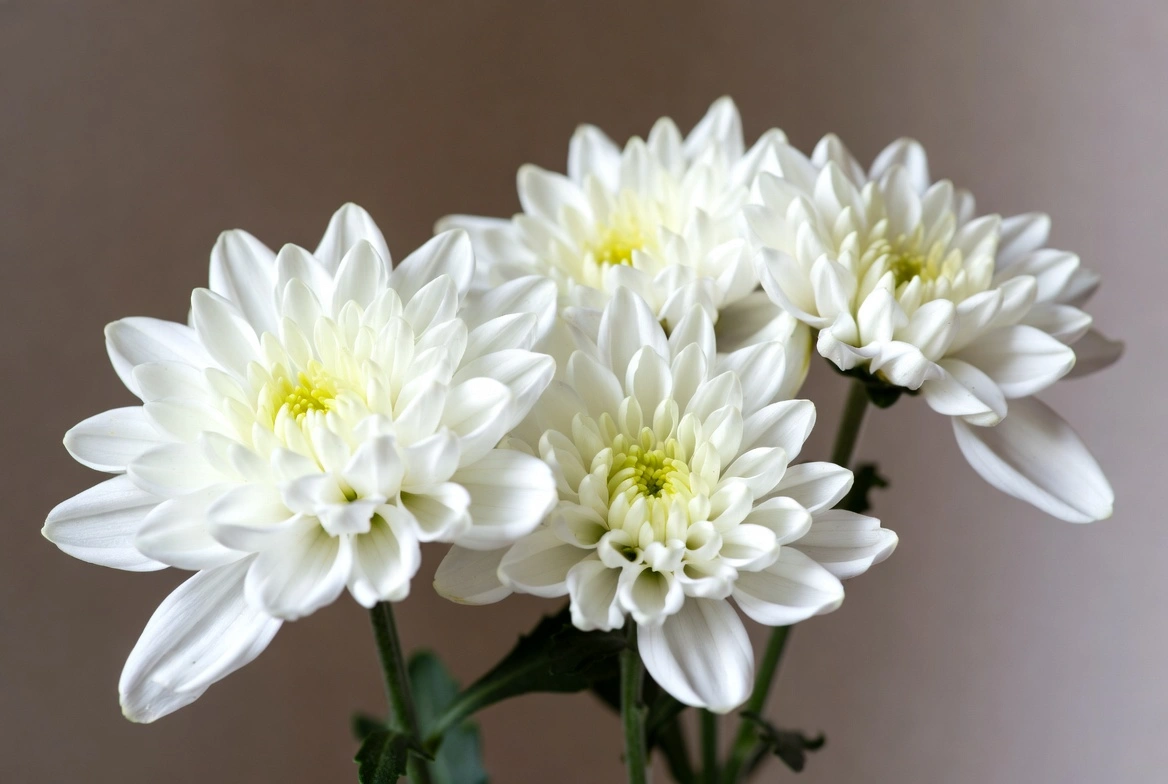
White chrysanthemums:
- Symbolism: Purity, loyalty, honesty, truth
- Cultural note: Used for funerals in Belgium, France, Austria
- Popular in: Weddings, sympathy arrangements
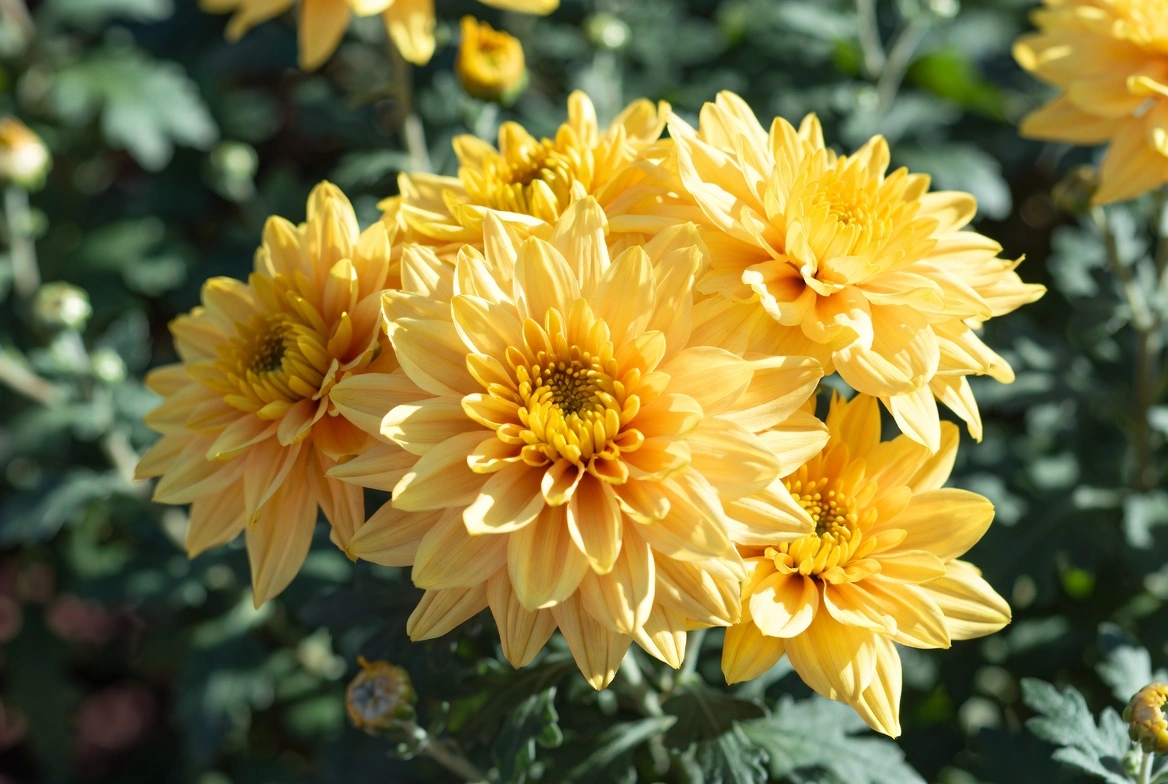
Yellow chrysanthemums:
- Symbolism: Joy, optimism, celebration (USA), neglected love (Victorian era)
- Best for: Birthday bouquets, cheerful displays
- Prominent in: Chinese New Year celebrations
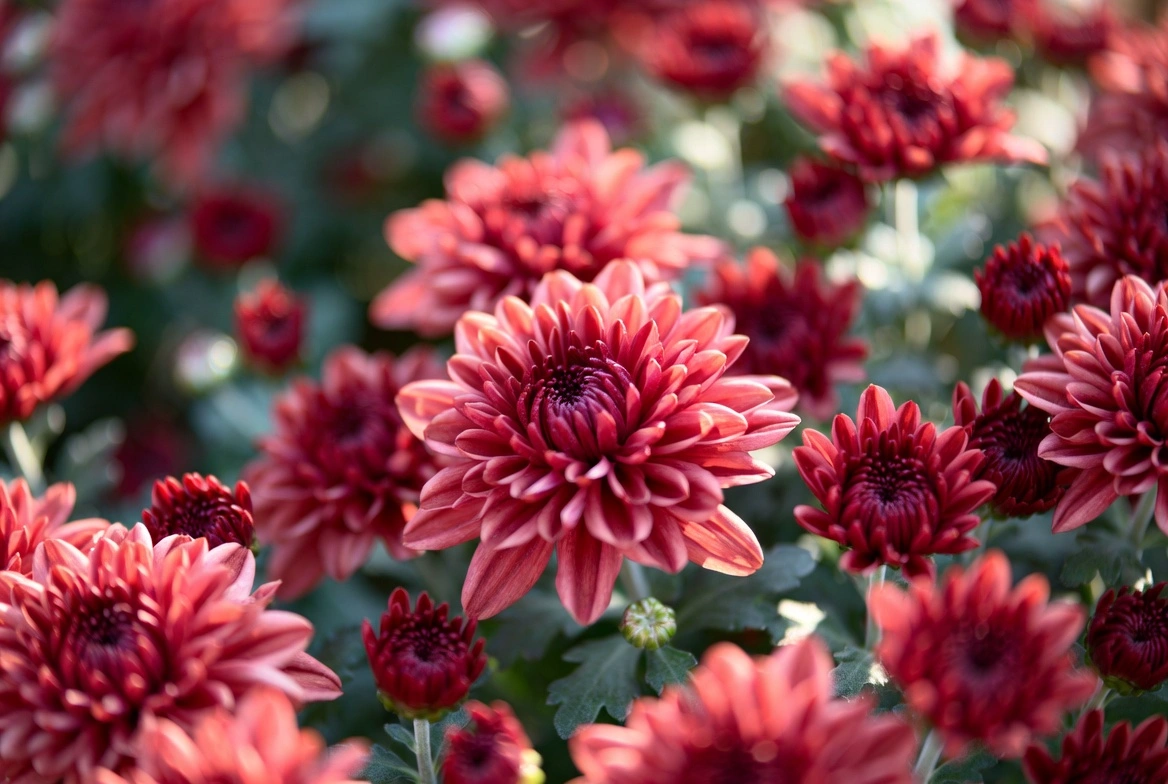
Red chrysanthemums:
- Symbolism: Love, passion, deep affection
- Best for: Romantic gifts, Valentine’s alternatives
- Statement color: Bold garden accent
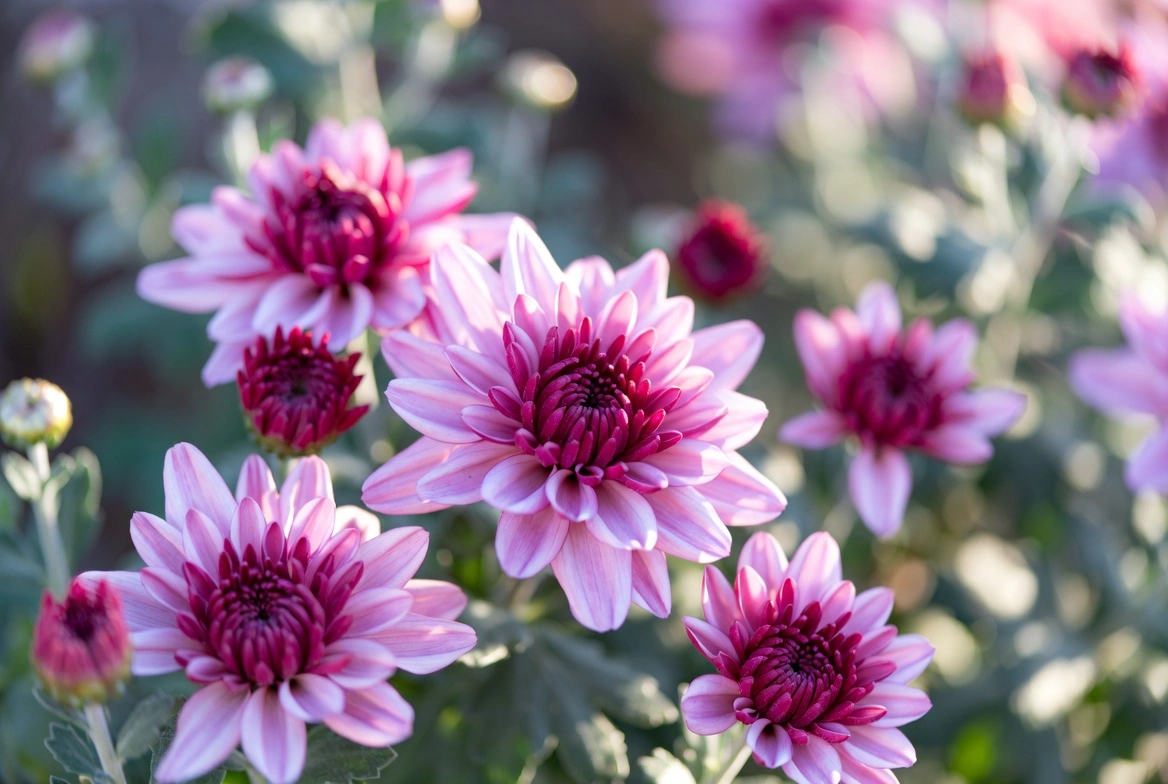
Pink chrysanthemums:
- Symbolism: Gentle affection, longevity (Japan)
- Best for: First dates, new relationships, Mother’s Day
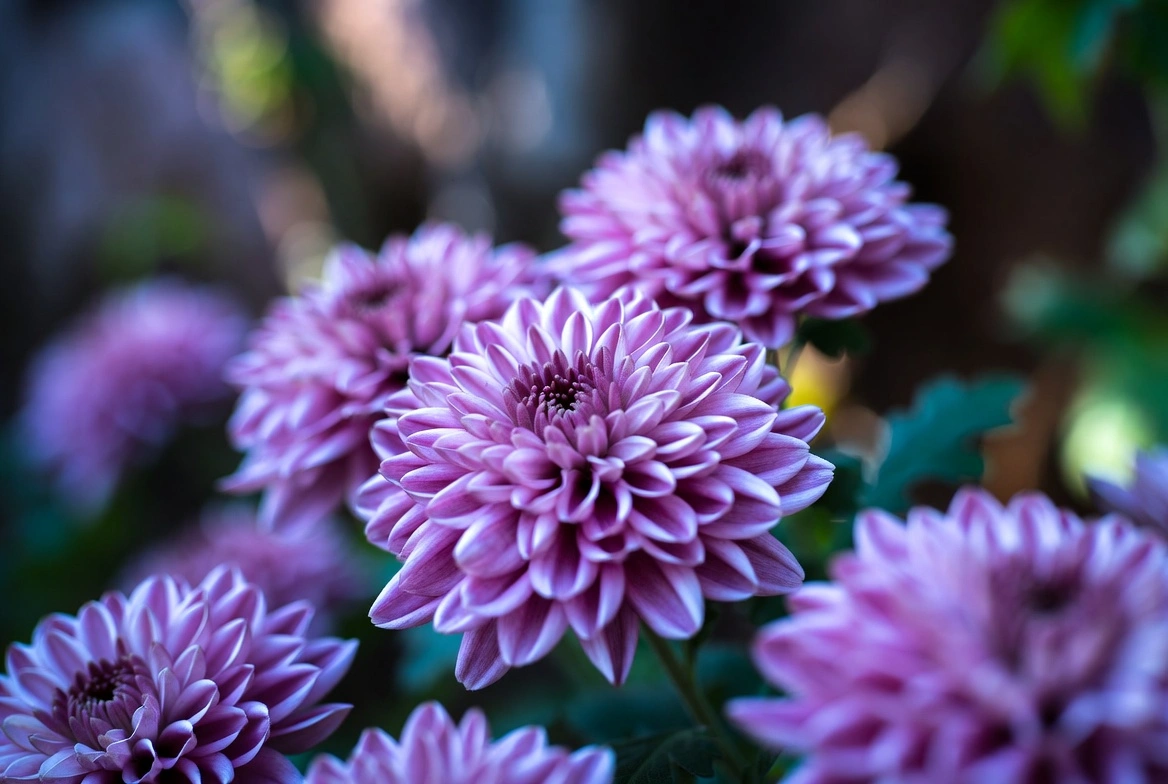
Purple/Violet chrysanthemums:
- Symbolism: Get-well wishes, royalty, thoughtfulness
- Best for: Hospital gifts, thank-you bouquets
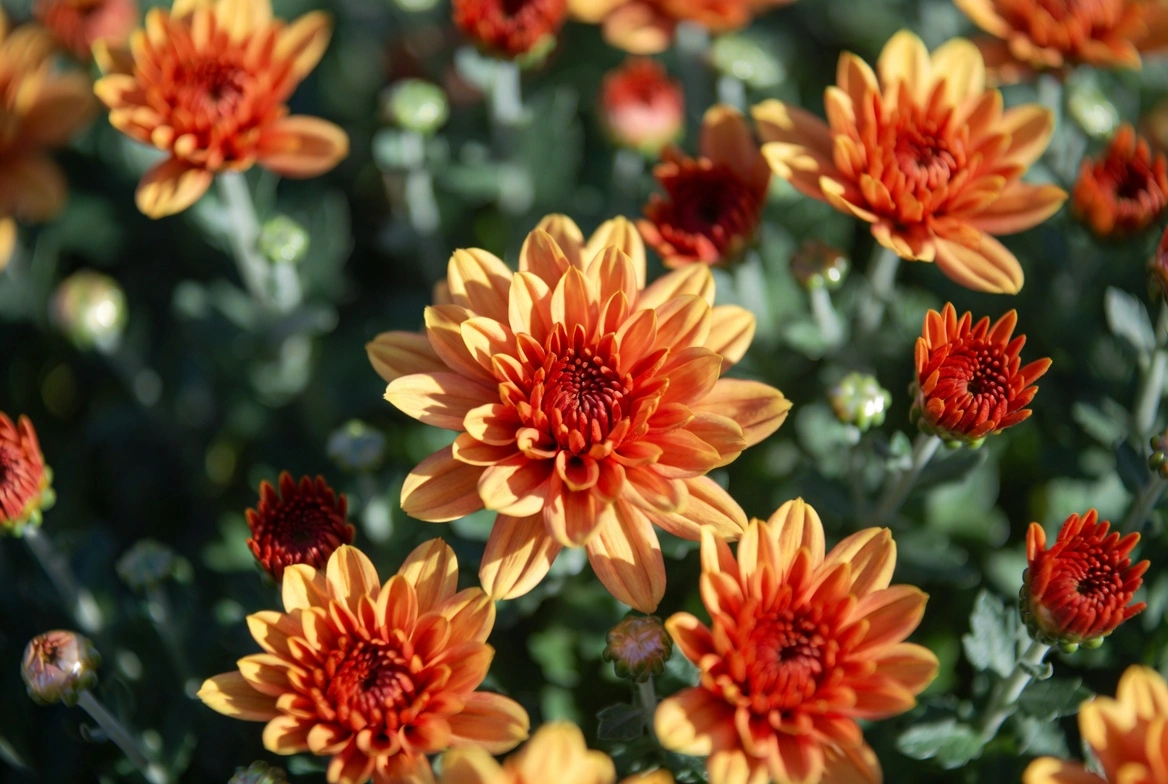
Orange chrysanthemums:
- Symbolism: Enthusiasm, excitement, energy
- Best for: Fall décor, harvest themes
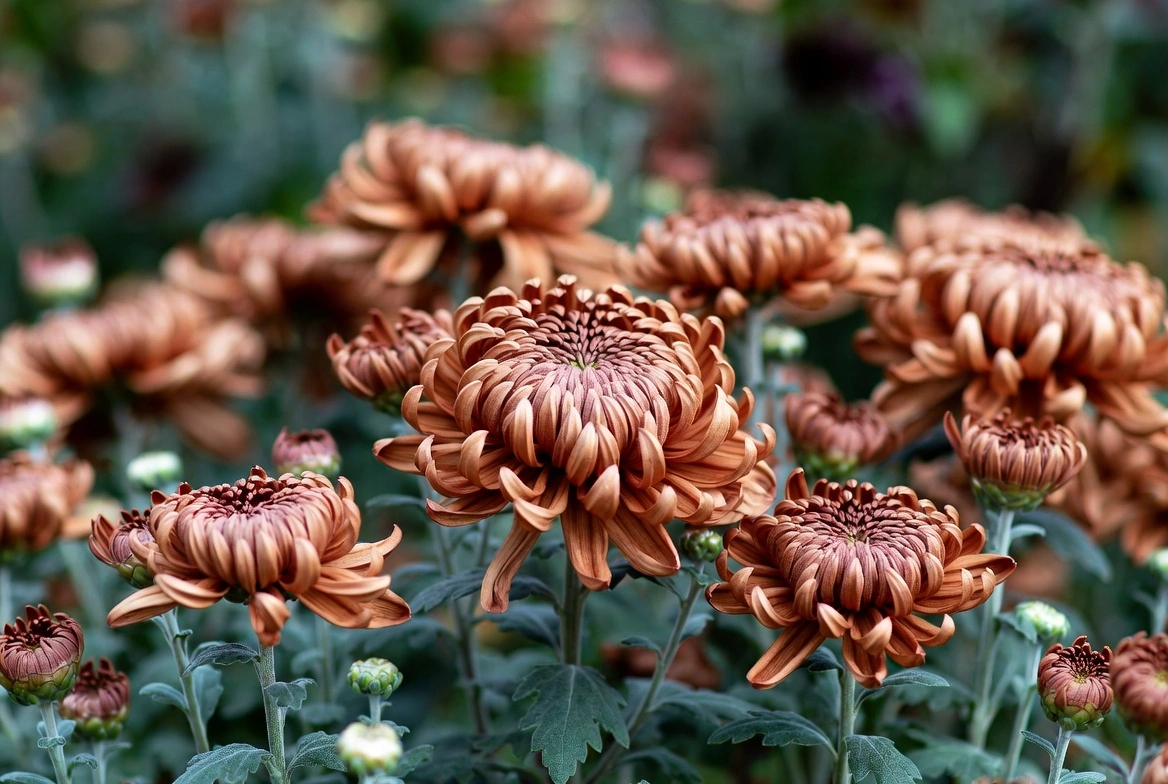
Bronze chrysanthemums:
- Symbolism: Warmth, autumn, earthiness
- Most popular: Fall landscape plantings
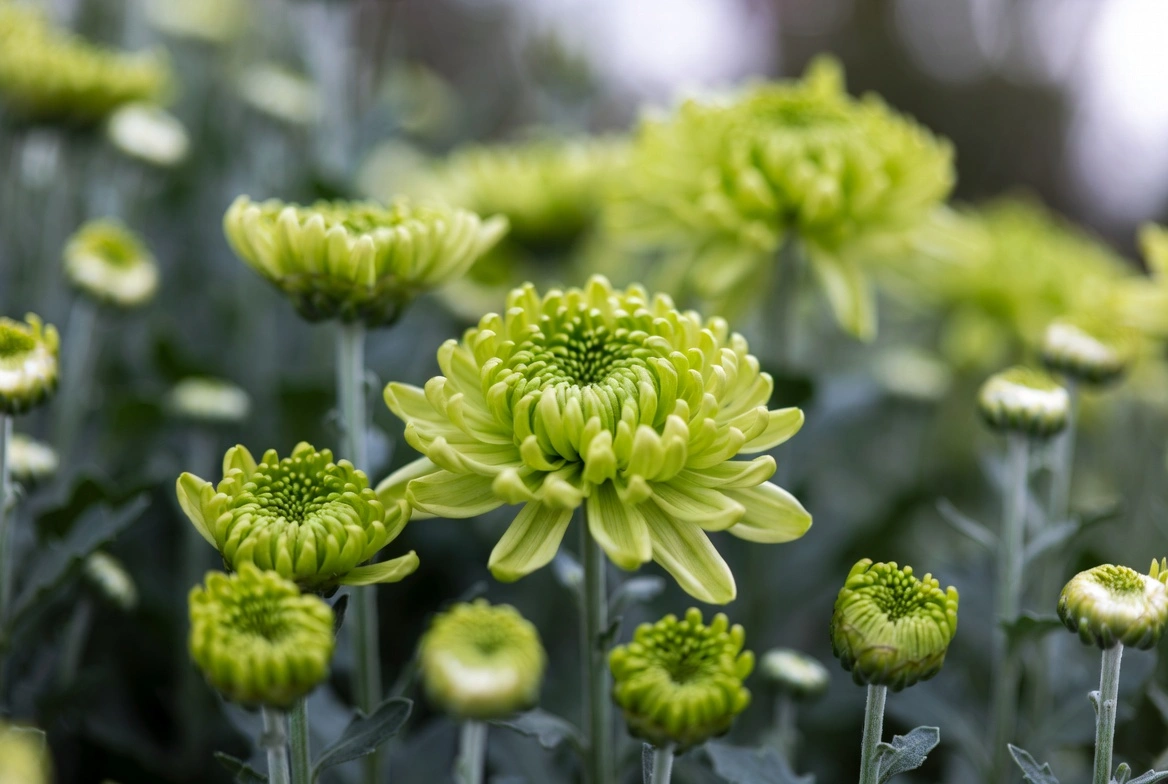
Green chrysanthemums:
- Symbolism: Rebirth, renewal, good fortune
- Rare find: ‘Kermit’ and ‘Feeling Green’ pompons
Cultural importance:
- China: One of the “Four Gentlemen” (plum, orchid, bamboo, chrysanthemum), symbolizes longevity and nobility
- Japan: National flower, represents the emperor, Imperial Seal has 16-petaled chrysanthemum
- USA: Generally positive, associated with fall and Thanksgiving
- Europe: Mixed meanings depending on country
Explore more flower meanings and symbolism
FAQ About Chrysanthemums
How long do chrysanthemum flowers last?
On the plant: 6-8 weeks from first bloom to hard frost (typically September-November Birth Flower). As cut flowers: 7-14 days in a vase with fresh water changed every 2-3 days. Potted florist mums: 2-4 weeks indoors with proper care.
Can chrysanthemums survive winter?
Chrysanthemums can survive winter if hardy types are planted early, mulched, and well-drained—but they often fail if planted late or if tender florist varieties are used.
Are chrysanthemums perennials or annuals?
When should I plant chrysanthemums?
For perennial success: Plant in spring (March-May) after last frost. Gives plants 6+ months to establish roots.
For one-season color: Plant in late summer/early fall (August-September) for immediate impact.
Do chrysanthemums need full sun?
Yes. Chrysanthemums need a minimum of 6 hours of direct sun daily. Less sun = leggy plants, fewer blooms, increased disease risk. Afternoon shade is okay in hot climates (Zones 8-9) but morning sun is essential.
How often should I water chrysanthemums?
In-ground plants: 1-2x per week deeply, more during bloom time. Soil should stay consistently moist but not soggy.
Container plants: Daily in hot weather, every 2-3 days in cooler weather. Check soil moisture before watering.
Winter: Minimal watering for dormant plants.
Why are my chrysanthemum leaves turning yellow?
Most common causes:
- Overwatering (soggy soil, poor drainage)
- Root rot (from chronic overwatering)
- Nutrient deficiency (nitrogen shortage)
- Natural aging (lower leaves yellow as plant matures)
Check soil drainage first. Most yellow leaf issues come from too much water.
Can I grow chrysanthemums indoors?
Florist mums: Yes, but only as temporary houseplants (2-4 weeks). They need bright indirect light and won’t rebloom.
Garden/hardy mums: Not ideal. They need winter dormancy to survive long-term and won’t thrive indoors year-round.
How do I get my chrysanthemums to bloom?
Requirements for blooming:
- Enough sun: Minimum 6 hours daily
- Stop fertilizing in late summer: Too much nitrogen delays blooms
- Stop pinching by mid-July: Plants need 8-10 weeks to develop buds
- Consistent water: Especially when buds form
- Correct day length: Mums are short-day plants that bloom when nights lengthen (naturally happens in fall)
What’s the difference between cushion mums and garden mums?
“Cushion mums” describes a growth habit (low, mounding, cushion-shaped plants).
“Garden mums” is a general term for hardy chrysanthemum varieties bred for outdoor planting.
Many garden mums have a cushion growth habit, so the terms often overlap. Both refer to hardy varieties suitable for landscape use.
Can I propagate chrysanthemums from cuttings?
Yes. Take 4-6 inch cuttings from healthy new growth in spring:
- Remove lower leaves
- Dip cut end in rooting hormone
- Insert in sterile potting mix or perlite
- Keep moist and warm (70-75°F)
- Roots form in 2-3 weeks
I propagate all my favorites this way. It’s how I turned one $5 plant into twelve.
Are chrysanthemums toxic to pets?
Yes. Chrysanthemums are toxic to cats, dogs, and horses if ingested.
Symptoms: Vomiting, diarrhea, drooling, dermatitis, lack of coordination.
If ingested: Contact your vet or ASPCA Poison Control (1-888-426-4435).
Keep mums out of reach if you have curious pets.
Why didn’t my chrysanthemums come back after winter?
Most common reasons:
- Wrong type: You planted florist mums (not hardy) or garden mums in fall (no time to root)
- Poor drainage: Root rot over winter from soggy soil
- Insufficient mulch: Plants froze without protection
- Planted too late: Fall-planted mums rarely survive winter
Solution: Plant hardy perennial varieties in spring for best survival.
Conclusion: Growing Chrysanthemums That Actually Come Back
Here’s what actually matters with chrysanthemums:
Buy the right type. Hardy perennial mums planted in spring will return for years. Florist mums and fall-planted garden mums won’t.
Plant in spring, not fall. This single change took my survival rate from 10% to 95%.
Give them sun and drainage. Six hours of sun minimum. Soggy soil kills more mums than winter cold.
Pinch in spring, stop in summer. Creates bushy plants loaded with blooms.
Mulch after the first hard frost. Four to six inches of mulch is the difference between dead and dormant.
That’s it. No magic fertilizers. No complicated techniques.
I’ve got plants pushing seven years old now that started as $6 rooted cuttings. They’re bigger, fuller, and more floriferous every season.
If you’re tired of buying new mums every fall, try the spring planting strategy. Buy hardy varieties as bare roots or small plants in March or April. Give them all summer to establish.
That first fall won’t be as dramatic as store-bought mums in full bloom. But the second year? You’ll have massive, established plants that make garden center mums look anemic.
And they’ll keep coming back.