
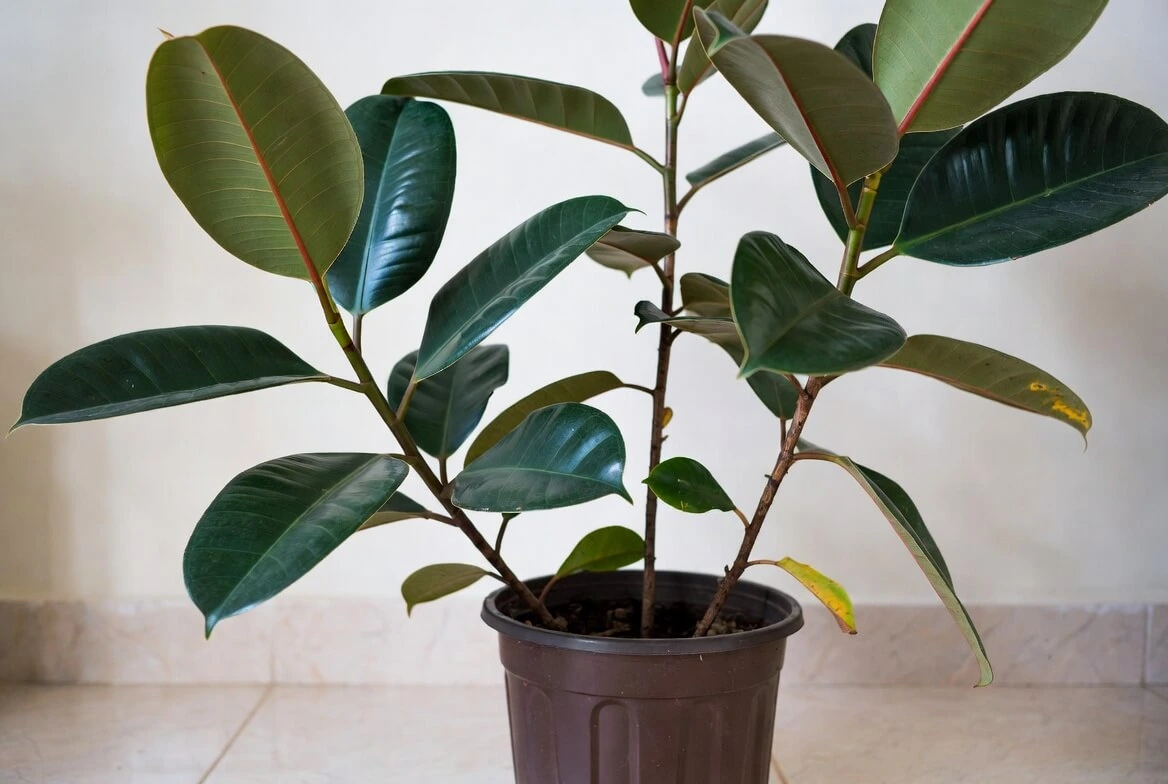
I wasted three months trying to propagate a rubber plant from a single leaf. Spoiler alert: it didn’t work. Here’s what nobody tells you upfront: rubber tree plant propagation from leaves alone doesn’t create new plants. You need a stem with nodes. Always.
Let me show you what actually works so you don’t waste your time like I did.
Why Most People Fail at Rubber Tree Plant Propagation
The internet is full of videos showing single leaves rooting in water. They get roots. They look promising. Then nothing happens. No new plant grows. Just a leaf with roots that eventually dies.
I fell for this twice before I learned the truth: you need stem tissue with leaf nodes for new growth to emerge. That’s the difference between a rooted leaf and an actual new plant.
The Three Real Methods for Rubber Tree Plant Propagation
Method 1: Water propagation with stem cuttings Method 2: Soil propagation with stem cuttings
Method 3: Air layering for mature plants
I’ve used all three. Each has specific situations where it works best. At Zoned Garden, we’ve tested these methods extensively and can confirm what actually produces results versus what wastes your time.
Water Propagation: The Visual Method
This is my favorite for one reason: you can watch the roots grow.
Here’s my exact process:
Step 1: Take the cutting
- Cut 6-8 inches of healthy stem
- Must have 3-4 leaf nodes minimum
- Cut just below a node at 45-degree angle
- Use clean, sharp scissors
Step 2: Prep the cutting
- Remove bottom 2-3 leaves
- Keep 1-2 leaves at the top
- Let milky sap stop dripping (takes 5-10 minutes)
Step 3: Water setup
- Fill clean jar with room temperature water
- Place cutting so nodes are submerged
- Keep leaves above water line
- Put in bright indirect light
Step 4: Maintenance
- Change water weekly (this is critical)
- Rinse cutting when changing water
- Watch for white bumps (roots starting)
- Wait 4-6 weeks for 2-inch roots
I’ve rooted five rubber tree plant cuttings this way. Four succeeded. The one that failed got moldy because I forgot to change the water for three weeks.
Pro tip: Add golden pothos cutting to the same jar. It releases natural rooting hormones that help the rubber plant root faster.
Soil Propagation: The Reliable Method
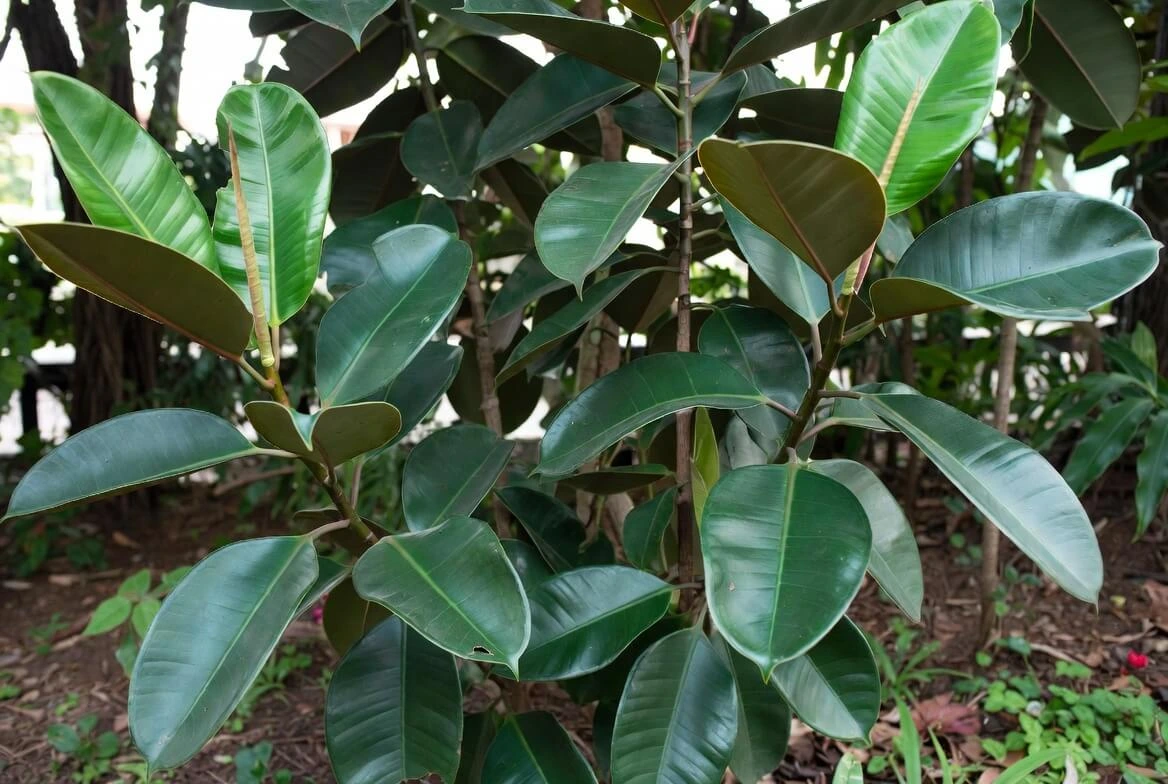
Soil propagation has a higher success rate than water. The roots develop stronger.
My soil propagation steps:
Cutting preparation (same as water method):
- 6-8 inch stem with nodes
- Remove lower leaves
- Let sap stop flowing
Planting process:
- Fill small pot with well-draining mix
- I use 60% potting soil + 40% perlite
- Dip cut end in rooting hormone (optional but helps)
- Stick cutting 2-3 inches deep in soil
- Firm soil around it
Create humidity:
- Cover pot with clear plastic bag
- Don’t let bag touch leaves
- Poke 2-3 small holes for air
- Or use a humidity dome if you have one
Care during rooting:
- Keep soil moist but not soggy
- Bright indirect light only
- Check moisture every 3-4 days
- Don’t disturb for 3-4 weeks
Test for roots by gently tugging the cutting after 4 weeks. Resistance means roots formed. My success rate with soil is about 80%. Much better than my water propagation results.
For comprehensive care after your cutting roots, check out our complete guide on rubber plant care at Zoned Garden.
Air Layering: For Mature Woody Stems
This is the advanced method. I only use it on mature plants with woody stems that won’t root in water.
When to use air layering:
- Stems are thick and woody
- Plant is mature (2+ years old)
- You want to rejuvenate a leggy plant
- Standard cuttings keep failing
Air layering process:
Step 1: Choose and wound the stem
- Pick a healthy 12-18 inch section
- Make two cuts around stem, 1 inch apart
- Cut deep enough to reach wood center
- Remove bark between the cuts
- Scrape off soft green tissue
Step 2: Apply hormone and wrap
- Dust wound with rooting hormone
- Wrap with damp sphagnum moss (soaked and wrung out)
- Cover moss with plastic wrap
- Secure with twist ties or tape
Step 3: Wait and monitor
- Check weekly that moss stays moist
- Re-moisten if it dries out
- Wait 4-8 weeks for roots
- You’ll see roots through plastic
Step 4: Separate and plant
- Cut stem below rooted section
- Plant in pot with fresh soil
- Keep moss attached (it decomposes naturally)
I’ve done this once successfully. It took 7 weeks for roots. The new plant thrived immediately after planting. Air layering is more work but it’s your only reliable option for woody stems.
How to Propagate Rubber Plant From Leaf (The Truth)
Here’s the reality: you can’t propagate a rubber plant from just a leaf. A single leaf will root in water. I’ve done it. It looks promising for 2-3 months. Then it just sits there. No new growth. Ever.
Why leaves alone don’t work:
- Rubber plants need stem tissue for new shoots
- Leaf nodes on stems produce new growth
- Leaves without stems can’t generate new plants
- The rooted leaf eventually dies
Some plants propagate from leaves (like African violets or succulents). Rubber plants are not those plants. If you see videos claiming single-leaf propagation works, they’re either wrong or they actually have stem tissue attached (even a tiny bit of stem makes the difference). Always use stem cuttings with visible nodes. That’s the only way.
Best Time for Rubber Tree Plant Propagation
Spring to early summer. Period, The plant is actively growing. Cuttings root faster. Success rates go up dramatically. I propagated in March last year: roots in 4 weeks. Tried again in October: roots took 9 weeks and one cutting failed completely. The difference is huge.
Why spring matters:
- Plant is in active growth phase
- Parent plant recovers faster from cutting
- Ambient temperature is warmer
- More natural light available
- New growth establishes before winter
Don’t propagate in fall or winter unless you have grow lights and a heating mat.
Common Propagation Mistakes I Made
- Not changing water frequently enough: Cloudy water = bacteria = root rot. Change it weekly.
- Cutting too much at once: I took four cuttings from one plant. It struggled. Limit to 1-2 cuttings per parent plant.
- Wrong light placement: Direct sun scorched my cuttings. They need bright indirect light only.
- Impatience: I kept pulling cuttings to “check for roots.” This damages developing roots. Wait the full 4-6 weeks.
- No rooting hormone: This increases success rate by 30-40% in my experience. Worth the $8.
If you’re working with the beautiful variegated varieties like Tineke or Ruby, check out our variegated rubber plant care guide at Zoned Garden for specific tips on maintaining that gorgeous coloration.
Post-Propagation Care That Works
Once roots are 2+ inches long, transplant to soil if you rooted in water.
First month care:
- Small pot (4-6 inch diameter)
- Well-draining potting mix
- Bright indirect light
- Water when top inch is dry
- No fertilizer yet
After establishment (6-8 weeks):
- Start monthly fertilizing
- Can move to slightly larger pot if needed
- Increase light gradually
- Treat like mature plant
My propagated plants always look weak for the first 2-3 months. Then they explode with growth. That’s normal. Three of my current rubber plants started as cuttings. They’re now 3+ feet tall and thriving.
Rubber Tree Plant Propagation FAQs
Can you propagate a rubber plant from a leaf?
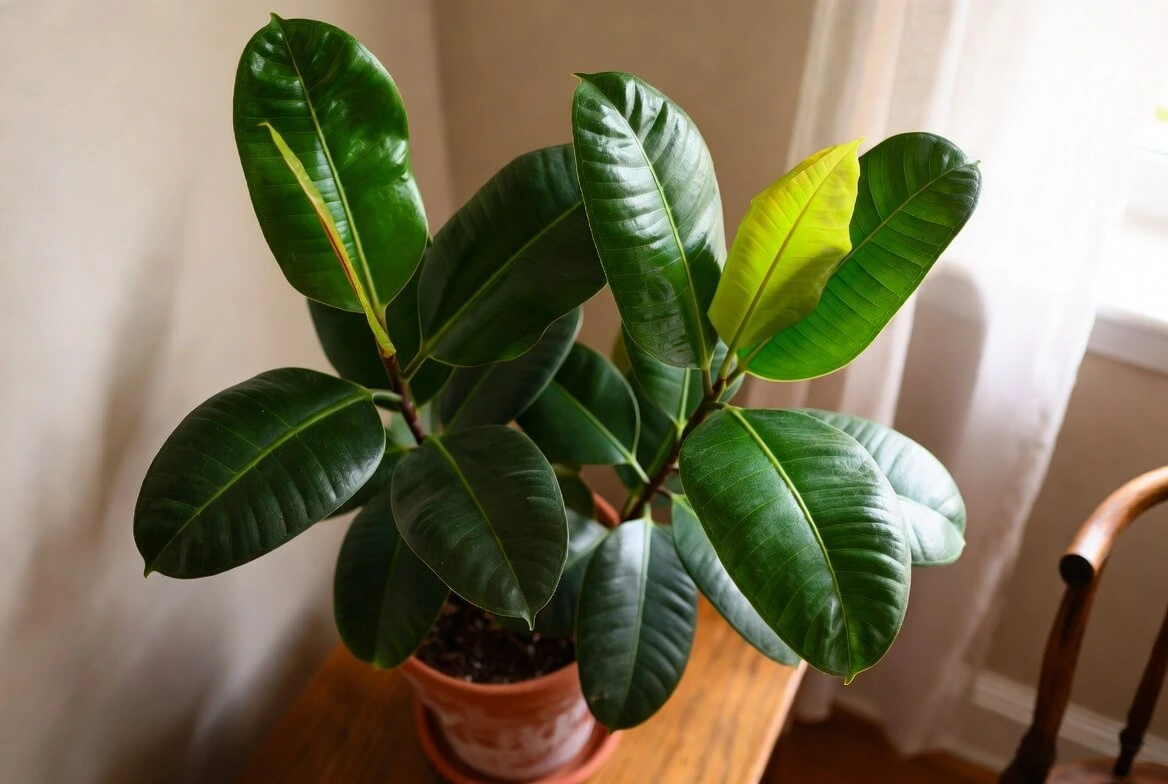
No. A single leaf without stem tissue will not produce a new plant. You need stem cuttings with leaf nodes for successful propagation. The leaf may root but won’t grow into a new plant.
how to propagate rubber tree plant?
You can propagate a rubber tree plant by cutting a healthy stem with a node, placing it in water or moist soil, and letting it root in warm, bright indirect light.
How long does rubber tree plant propagation take?
4-6 weeks for roots to develop in water or soil. Air layering takes 4-8 weeks. Full establishment after transplanting takes another 6-8 weeks.
What is the easiest method for rubber tree plant propagation?
Soil propagation with stem cuttings has the highest success rate and produces stronger roots than water propagation.
Do I need rooting hormone for rubber plant propagation?
No, but it significantly increases success rates and speeds up root development. I recommend using it.
Can I propagate rubber plants in winter?
You can, but success rates drop dramatically. Spring to early summer is ideal when the plant is actively growing.
How do I know if my cutting has rooted?
Gently tug the cutting after 4 weeks. If you feel resistance, roots have formed. New leaf growth also indicates successful rooting.
How do I propagate a rubber tree plant?
You can propagate a rubber tree plant by planting a healthy stem cutting with a node in moist, well-draining soil under bright, indirect light until it roots.
The Real Secret to Rubber Tree Plant Propagation
Stop overthinking it. Take a stem cutting with nodes. Put it in water or soil. Keep it in bright indirect light. Change water weekly or keep soil moist. Wait 4-6 weeks. That’s 90% of success right there. I’ve propagated 8 rubber plants total. 6 succeeded. The 2 failures were both from mistakes I’ve outlined here (forgot to change water, used pure leaf).
Rubber tree plant propagation isn’t complicated once you know what actually works versus what’s just internet nonsense. At Zoned Garden, we’re committed to giving you methods that actually produce results, not just pretty videos that waste your time.
For more houseplant propagation techniques and indoor gardening tips, explore our complete library of indoor plant guides.