I spent $45 on my first variegated rubber plant. Dead in six weeks. The pink variegation turned green. Then the leaves got brown edges. Then they just fell off.
Here’s what I wish someone had told me: variegated rubber plant care is different from regular rubber plants. The variegation makes them pickier about light. And that changes everything.
Why Variegated Rubber Plants Are Worth The Extra Effort
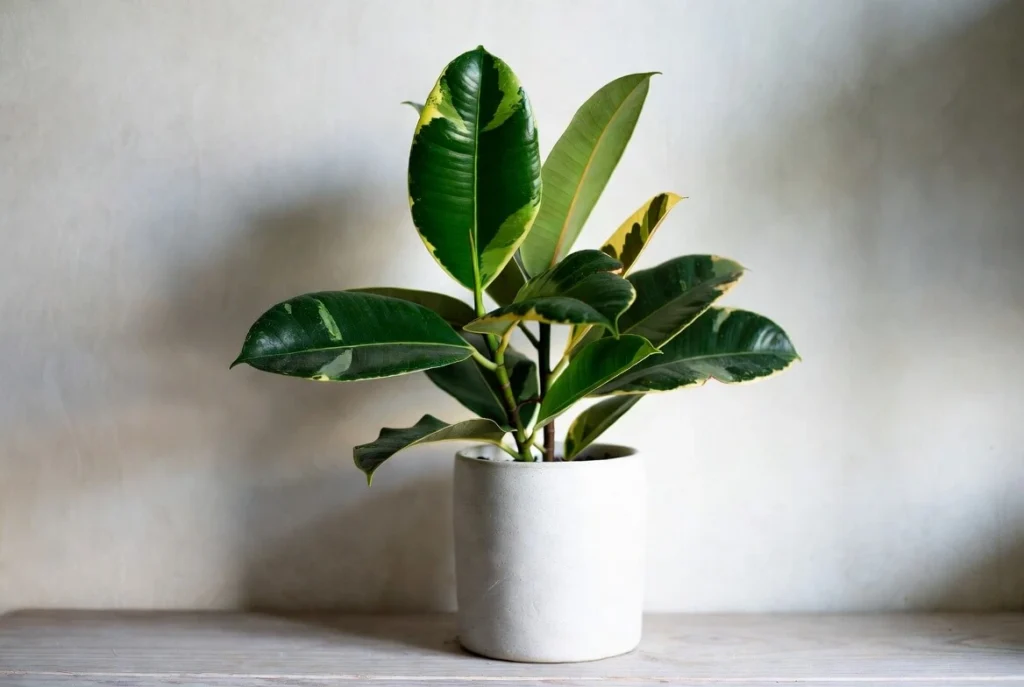
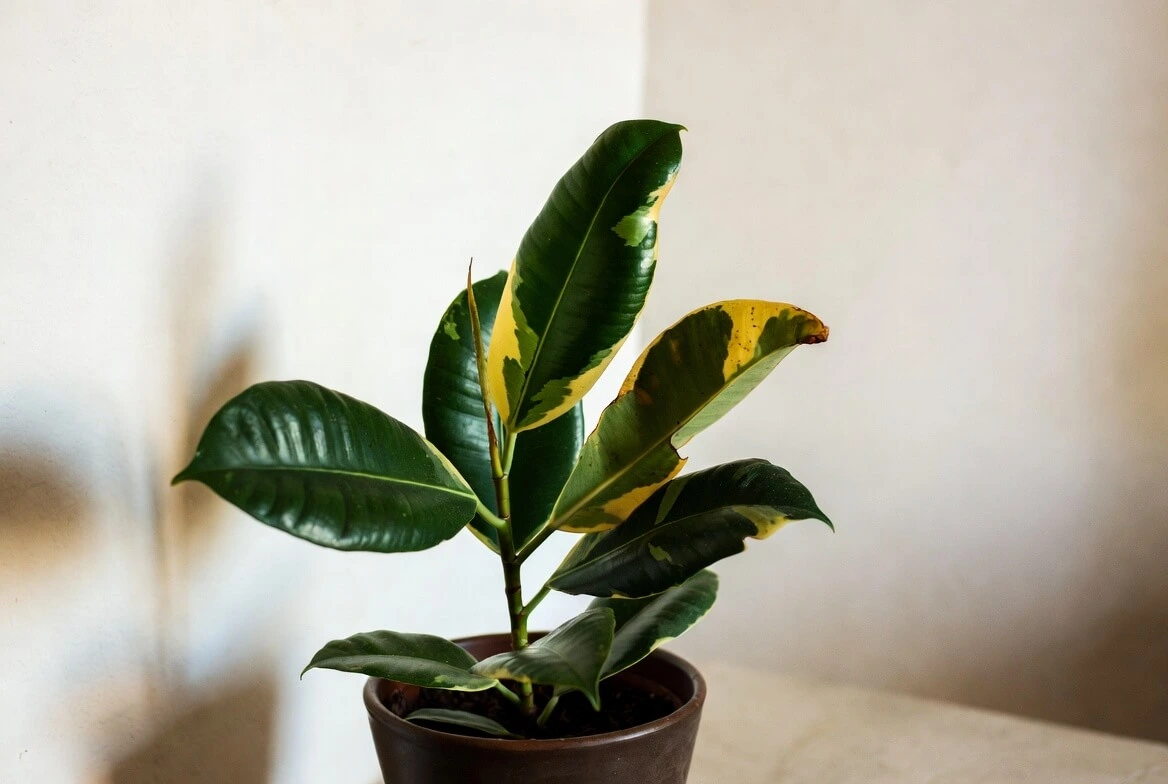
My current Ficus elastica ‘Tineke’ sits three feet from my east window. It’s doubled in size in eight months. The cream and pink leaves look like someone hand-painted them. Every new leaf unfurls with these gorgeous burgundy sheaths that eventually fade to reveal more variegation.
But here’s the deal: you need to get the basics right or you’ll lose that variegation fast.
Light: The Make-Or-Break Factor for Variegated Rubber Plant Care
Variegated plants need more light than solid green ones. This isn’t optional. The pink and cream parts of the leaves can’t photosynthesize like the green parts. So your plant needs brighter light to compensate.
Here’s my exact setup:
- East-facing window (my current spot)
- 3-4 feet from a south or west window also works
- Never direct afternoon sun
- Minimum 6 hours bright indirect light daily
I learned this the expensive way. My first plant was 8 feet from a north window. The new leaves came mostly green. The pink faded. The plant got leggy.
Moved it closer to light? Pink came back within three weeks on new growth.
Signs your light is wrong:
- Variegation fading to solid green
- New leaves smaller and greener
- Leggy stretched growth
- Lower leaves dropping
Too much direct sun? You’ll get brown spots and crispy edges instead. I rotate mine a quarter turn every two weeks. Keeps the growth even. Do it when you pay your phone bill or something regular like that.
Watering: Where Most People Kill Their Variegated Rubber Plants
Check the soil. That’s it. That’s the system.
Stick your finger 1-2 inches deep into the soil. Dry and crumbly? Water deeply. Still moist? Wait another few days.
I water mine thoroughly until water runs out the drainage holes. Then I let it drain completely before putting it back in the decorative pot.
My schedule varies:
- Summer: Every 5-7 days
- Winter: Every 10-14 days
Your schedule will be different based on your light and humidity. Overwatering kills more plants than anything else. Yellow leaves? That’s usually your first sign.
I killed my first variegated rubber plant by watering every Sunday like clockwork. Didn’t matter if the soil was wet. Sunday meant water day.
Dumb move. The plant doesn’t care what day it is. It cares about soil moisture.
Underwatering signs:
- Leaves curling inward
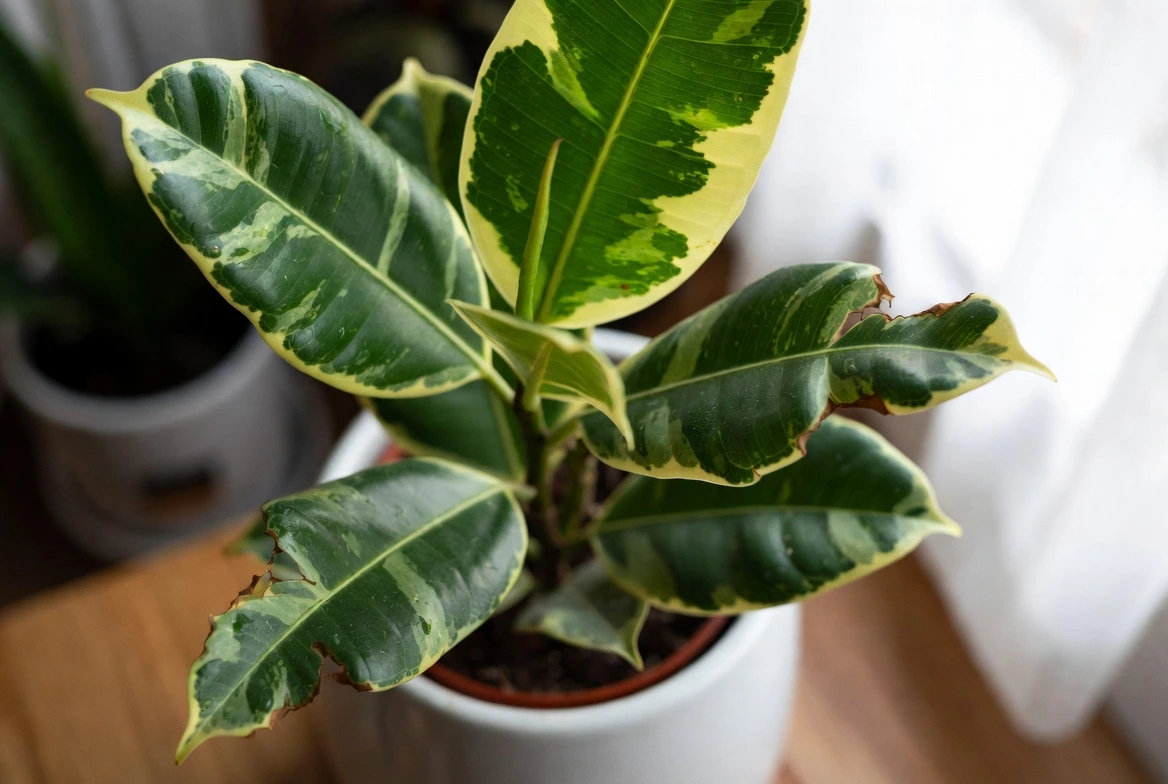
- Crispy brown edges
- Drooping stems
- Dull leaf appearance
Better to underwater slightly than overwater. These plants recover faster from being too dry than too wet.
Solving Variegated Rubber Plant Brown Edges
Brown edges drove me crazy until I figured out the actual causes.
Main reasons for brown edges:
- Too much direct sunlight (most common)
- Low humidity (less common than people think)
- Underwatering (check this first)
- Inconsistent watering
My plant got brown edges last summer when I moved it too close to a west window. The afternoon sun was cooking it. Moved it back 2 feet. Problem solved within three weeks on new leaves.
Quick fixes:
- Move away from direct sun
- Check watering consistency
- Wipe leaves with damp cloth weekly
- Increase humidity only if your house is below 30%
I don’t mist mine. Normal room humidity works fine. People overthink the humidity thing. If your home is super dry (like desert dry), put a small humidifier nearby. Otherwise, don’t worry about it.
Temperature and Environment for Variegated Rubber Plant Care
Keep it between 60-75°F. Simple. These plants hate cold drafts more than anything. I lost six leaves last winter when I left mine near a drafty door.
Keep away from:
- Cold windows in winter
- AC vents blowing directly on leaves
- Heating vents
- Exterior doors
- Anywhere below 55°F
If you’re comfortable in a t-shirt, your plant is comfortable. That’s my rule.
Soil and Potting That Actually Works
Well-draining soil is non-negotiable.
I use:
- 60% regular houseplant potting mix
- 20% perlite
- 20% orchid bark
Or just buy a good cactus mix. That works too. The pot needs drainage holes. Period. I don’t care how pretty that pot without holes is. Your plant will die in it from root rot.
I use plastic pots because they hold moisture better and I travel for work. Terra cotta dries faster if you can water more often.
Variegated Rubber Plant Propagation That Works
Spring is the best time. The plant is actively growing and recovers faster.
My process:
- Take 6-inch cutting with 4 leaf nodes
- Remove bottom leaves, keep top 1-2 leaves
- Dip cut end in rooting hormone
- Stick in well-draining mix
- Cover with plastic bag (don’t let it touch leaves)
- Wait 4-6 weeks
The plastic bag creates humidity. I prop it up with chopsticks so it doesn’t touch the cutting. Change the setup to water propagation if you want to watch roots form. Same cutting prep, but stick it in water instead. Change water weekly. Roots appear in 4-6 weeks either way.
Pro tip: The variegation comes through in new plants if you propagate from heavily variegated stems. Propagate from mostly green stems? You’ll get mostly green babies.
I’ve made three new plants from my original Tineke. All kept the pink and cream variegation. For more propagation techniques, check out our guide on [rubber plant propagation methods].
Fertilizing Your Variegated Rubber Plant
Feed every 2-4 weeks during spring and summer with diluted liquid fertilizer. I use balanced houseplant fertilizer at half strength. Full strength burns roots.
Stop fertilizing in fall and winter. The plant isn’t growing. You’re just building up salts in the soil. I fertilize from March through September. That’s it.
Common Problems With Variegated Rubber Plant Care
- Yellow leaves: Overwatering 90% of the time. Cut back on water frequency.
- Leaves falling off: Usually cold drafts or overwatering. Sometimes normal lower leaf drop as the plant grows taller.
- Variegation fading: Not enough light. Move closer to the window or add grow light.
- Brown crispy tips: Direct sun or underwatering. Check which one applies.
- Leggy growth: Insufficient light. These plants stretch toward light when they don’t get enough.
I deal with spider mites occasionally. Spray with diluted neem oil weekly for three weeks. Problem solved.
Repotting Timeline
These plants grow fast. I repot mine every spring.
Signs it needs repotting:
- Roots coming out drainage holes
- Water runs straight through without absorbing
- Growth completely stopped
- Plant tips over easily
Go up 2-3 inches in pot diameter max. I went from 6-inch to 8-inch last year. Spring repotting lets the plant recover during the active growth season.
Varieties Worth Knowing
- Ficus elastica ‘Tineke’: Green and cream with pink stems. This is what I have.
- Ficus elastica ‘Ruby’: More pink and burgundy. Needs brighter light to maintain color.
- Ficus elastica ‘Burgundy’: Almost black leaves. Not variegated but looks incredible.
Ruby needs the most light. Tineke is more forgiving. Pick based on your light situation.
Variegated Rubber Plant Care FAQs
How much light does a variegated rubber plant need? Minimum 6 hours of bright indirect light daily. More light preserves variegation. East windows are perfect. 3-4 feet from south or west windows also works.
Why is my variegated rubber plant turning green? Insufficient light. Variegated sections need more light than solid green plants. Move closer to a bright window.
How do you fix brown edges on variegated rubber plants? Move away from direct sunlight and ensure consistent watering. Variegated rubber plant brown edges usually mean too much sun or underwatering.
How often should I water my variegated rubber plant? When the top 1-2 inches of soil are completely dry. Usually every 5-7 days in summer, 10-14 days in winter. Check soil, don’t follow a schedule.
Can you propagate variegated rubber plants? Yes. Variegated rubber plant propagation works best in spring using 6-inch stem cuttings with rooting hormone. Roots form in 4-6 weeks.
The Real Secret To Variegated Rubber Plant Care
It’s not complicated.Give it enough light to maintain variegation. Water when soil is dry. Don’t overthink humidity. Keep it warm. That’s 90% of success right there. My plant thrives because I nailed the light first. Everything else is just maintenance.
Your variegated rubber plant doesn’t need you to be perfect. It needs consistent basics: proper light placement, correct watering habits, and well-draining soil. Get those three things right and you’ll have a stunning plant that grows fast and makes your space look expensive.
Read More Exciting Blogs at Zoned Garden.