
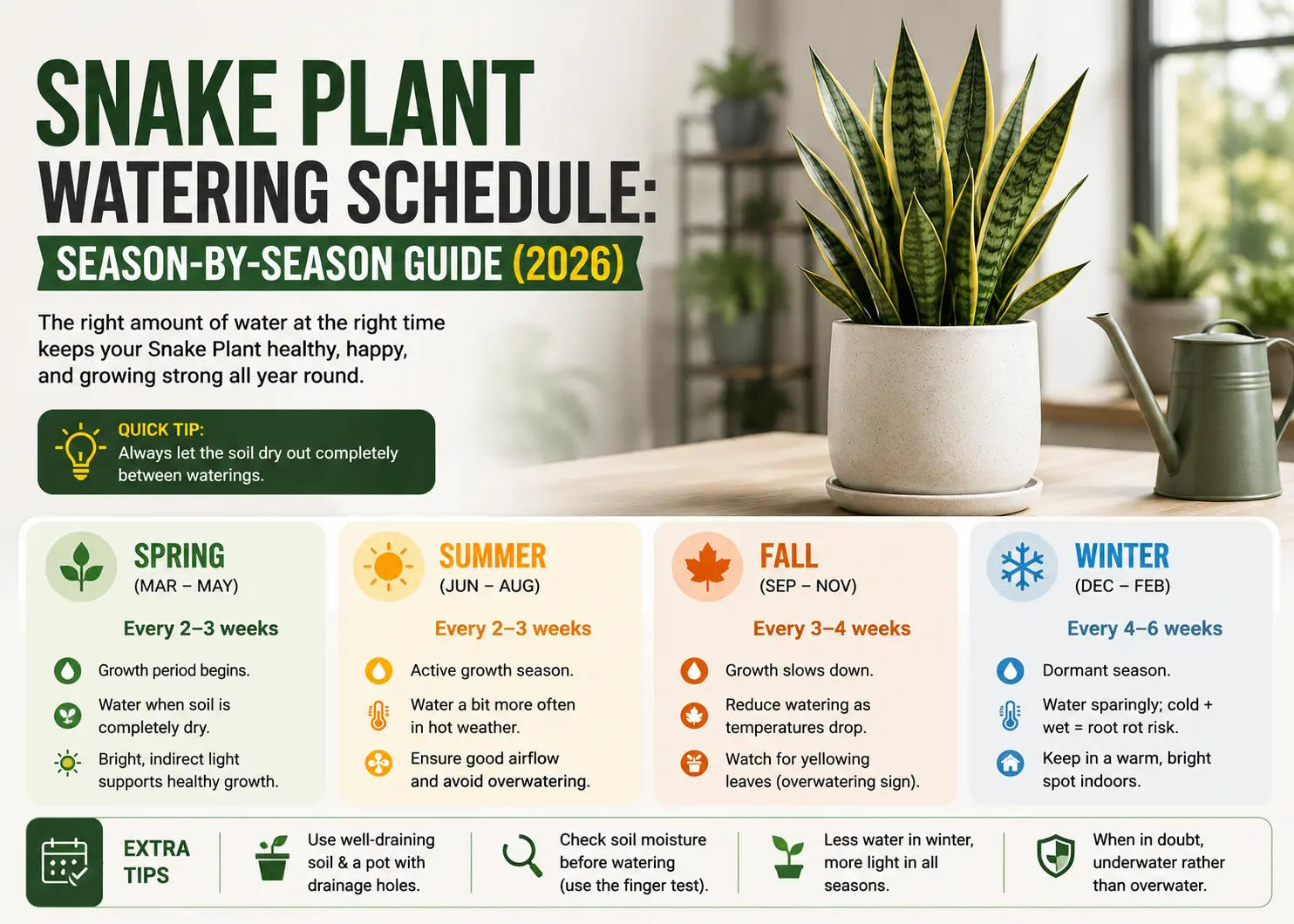
Water your snake plant every 10–45 days depending on the season, light level, and pot type. In summer, that means every 10–14 days. In winter, every 35–45 days — sometimes longer.
Most watering guides stop at ‘let the soil dry out’ — and that is not enough. Dry topsoil does not mean dry roots. You can water too soon every single time and never realize it until root rot appears three months later.
Snake plants (Dracaena trifasciata, formerly Sansevieria trifasciata) are native to the rocky, arid regions of West Africa. Their thick leaves and rhizome roots store water for weeks. This guide gives you an exact schedule for every season plus the 3 tests that prevent overwatering entirely.
Why Snake Plants Die From Overwatering — Not Underwatering
Underwatering slows growth. Overwatering kills the plant. That’s the key difference.
When roots sit in wet soil too long, rhizome rot sets in. The rhizome is the thick horizontal stem at the base of the plant — the structure that feeds every leaf. Once it rots, recovery is difficult and often impossible.
Snake plants survive 3–4 weeks without water with no permanent damage. They do not survive 2–3 weeks of consistently wet roots. This is why every watering decision should start with a soil check — not a calendar.
The Complete Snake Plant Watering Schedule by Season
This table gives exact frequencies based on typical indoor conditions — average humidity of 40–50%, indirect bright light, and a pot with drainage holes.
| Season | Frequency | Soil Check | Key Rule |
| Spring (Mar–May) | Every 14–21 days | Top 2 inches (5 cm) fully dry | Growth starts — increase slowly |
| Summer (Jun–Aug) | Every 10–14 days | Top 2 inches (5 cm) dry | More light = faster drying |
| Fall (Sep–Nov) | Every 21–28 days | Top 3 inches (7.5 cm) dry | Cut back before dormancy |
| Winter (Dec–Feb) | Every 35–45 days | Full pot nearly dry | Skipping weeks is fine |
Important: These ranges assume a terracotta or unglazed ceramic pot. Plastic pots retain moisture 30–40% longer. If you use plastic, add 5–7 extra days to each range above.
Spring Watering (March–May)
Growth resumes in spring. The plant pulls water more actively, so soil dries faster than it did in winter. Water every 14–21 days, but always confirm the top 2 inches (5 cm) of soil are dry first.
This is the season to establish your check routine. Stick your finger 2 inches into the soil every 10 days. If it still feels cool or damp, wait 3–4 more days. Never water just because it’s been two weeks.
Summer Watering (June–August)
Summer is the only season when snake plants need relatively consistent moisture. Bright light, warmer temperatures, and active growth mean soil dries in 10–14 days.
Plants near south or west-facing windows dry out fastest. If your snake plant gets 5+ hours of direct or bright indirect light daily, check soil every 8 days in summer — it may need water before the 10-day mark.
Fall Watering (September–November)
Cut back watering as soon as nights cool below 60°F (15°C). The plant starts slowing growth and storing water. Watering every 21–28 days is right for most indoor setups.
This is when most growers overwater without realizing it. The plant still looks healthy, and the schedule from summer feels normal. Resist it. Let the top 3 inches (7.5 cm) go completely dry before watering in fall.
Winter Watering (December–February)
Water every 35–45 days in winter — and some plants in low-light spaces need water only once every 6–8 weeks. Dormancy slows everything down: growth, water uptake, and soil drying.
One cold, dark winter with wet roots causes more snake plant deaths than any other factor. When in doubt during winter, skip the watering. Wait another week. The plant handles the wait far better than the water.
3 Reliable Tests to Know When to Water
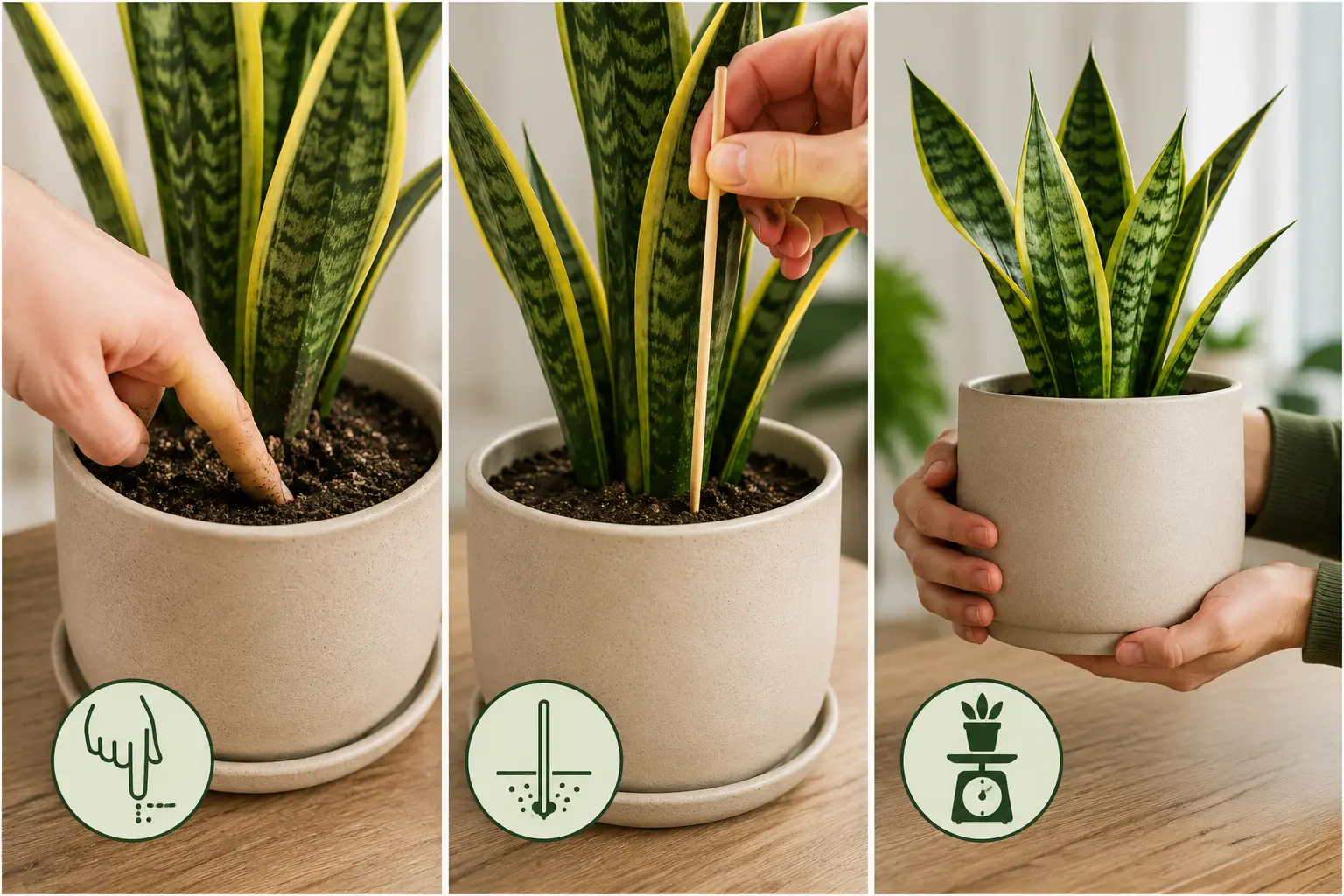
Never water by calendar alone. These 3 tests confirm whether watering is actually needed.
Test 1: The Finger Test
Push your finger 2 inches (5 cm) into the soil. If it feels even slightly cool or damp, don’t water. Only water when those 2 inches feel completely dry and room-temperature. This takes 5 seconds and eliminates most overwatering mistakes.
Test 2: The Wooden Skewer Test
Insert a clean wooden skewer or chopstick all the way to the bottom of the pot. Leave it for 10 seconds. Pull it out and check. If the skewer comes out with damp soil clinging to it, skip watering. If it comes out clean and dry, the entire pot is ready.
This test works better than the finger test for deep pots, because topsoil dries out faster than the root zone. A pot can feel dry at the surface and still hold significant moisture at the bottom.
Test 3: The Lift Test
Pick up the pot and notice the weight. A well-watered pot feels noticeably heavier than a dry one. Over a few weeks, you’ll develop a clear sense of the difference. Lightweight pot means dry soil throughout — time to water.
Terracotta pots make the lift test especially useful because they’re already heavy. Once you know the weight of your specific pot when dry, the test becomes instant and reliable.
How to Water a Snake Plant Correctly
The method matters as much as the frequency. Incorrect watering technique causes dry spots and uneven moisture — the same problems as overwatering, just from a different direction.
Top Watering Method
Pour water slowly and evenly across the entire soil surface. Don’t pour in one spot — the water channels down one path and leaves the rest of the root zone dry. Use a watering can with a narrow spout for control.
Water until it drains freely from the drainage holes. Then wait 10–15 minutes and empty the saucer completely. Never let the pot sit in standing water — roots in a saucer of water develop rot within days.
Bottom Watering Method
Bottom watering is the better method for snake plants. Place the pot in a tray or sink with 2–3 inches (5–7.5 cm) of water. The soil absorbs moisture from below through the drainage holes at its own pace.
Leave it for 20–30 minutes until the top surface of the soil feels slightly damp. Remove the pot, let it drain fully for 5 minutes, then return it to its spot. Bottom watering soaks the entire root zone evenly and keeps the leaf base dry — reducing the risk of crown rot.
Water Type and Temperature
Use room-temperature water — cold water from the tap shocks the roots. Let tap water sit in an open container overnight before using it. This also allows chlorine to dissipate.
Avoid using hard water repeatedly. Hard water causes calcium and mineral salt buildup in the soil over time, which blocks root absorption and creates white crusty deposits on the soil surface. If you notice these deposits, flush the soil thoroughly with filtered water every 3–4 months.
4 Factors That Change How Often You Water
1. Pot Material
Terracotta pots release moisture through their walls and speed up soil drying. Plants in terracotta need water 30–40% more often than plants in plastic or glazed ceramic pots of the same size. Drainage holes are non-negotiable regardless of pot material — without them, water pools at the bottom and suffocates roots.
2. Light Levels
A snake plant in a bright south-facing window uses water faster than one in a dim corner. More photosynthesis means more water consumption. Plants in high-light spots may need watering 5–7 days earlier than the seasonal schedule suggests.
3. Plant Age and Size
Young plants in small 4-inch (10 cm) pots dry out faster and need water every 2 weeks in summer. Mature plants in 8–10 inch (20–25 cm) pots have larger root systems and more leaf tissue storing water — they can go 3 weeks between summer waterings without issue.
4. Indoor Humidity
Humidity below 30% (common in winter with heating systems running) dries soil faster. Humidity above 55% (common in bathrooms or humidified rooms) slows drying significantly. In very dry climates, water 5–7 days earlier than the schedule. In humid spaces, wait 5–7 extra days before checking.
Signs Your Snake Plant Needs Water vs. Too Much Water
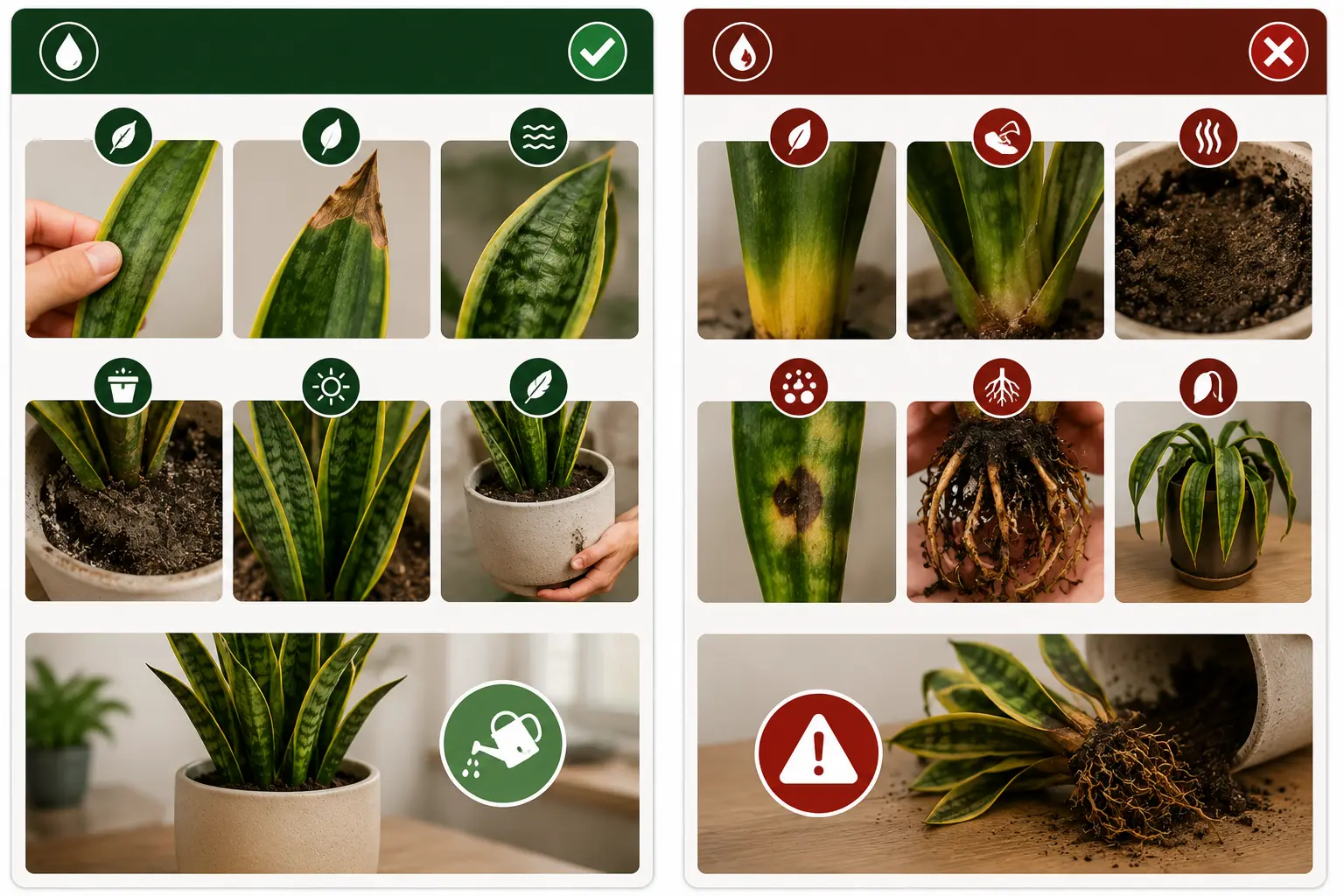
6 Signs of Underwatering
- Leaves feel dry and slightly brittle when bent
- Leaf tips turn brown and crispy
- Leaves wrinkle or pucker slightly along the edges
- Soil pulls away from the pot edges when dry
- Plant looks slightly dull — leaves lose their sheen
- Pot feels very light when lifted
Underwatered plants recover quickly. Give a deep, thorough watering and the plant bounces back within 48–72 hours. Wrinkled leaves firm up. Dull leaves regain their shine.
6 Signs of Overwatering
- Leaves turn yellow, starting from the base
- Leaf base feels soft or mushy when squeezed
- Soil smells sour or musty — a clear sign of root rot
- Brown spots appear that feel wet, not dry
- Root ends appear black and slimy when inspected
- Plant looks droopy despite wet soil
Overwatered plants need immediate action. Stop watering, let the soil dry completely, and inspect the roots. Cut off any black or mushy roots with clean scissors. If rot is extensive, repot into fresh, dry cactus mix immediately.
The Right Soil and Pot Setup for Easy Watering
The best watering schedule fails if the soil doesn’t drain properly. This is the step most growers skip.
Ideal Soil Mix
Standard potting mix holds too much moisture for snake plants. Use a cactus or succulent mix as the base — then improve it further by mixing in 20–30% perlite by volume. This increases airflow around the roots and cuts drying time significantly.
Avoid mixes with large amounts of peat. Peat compacts over time and holds moisture long after the rest of the soil dries. It also becomes hydrophobic when completely dry, making it difficult to rehydrate. Just like rubber plants that need well-draining conditions to thrive indoors, snake plants fail in dense, water-retaining mixes.
Pot and Drainage Setup
Every pot needs at least 1 drainage hole. Elevate pots on pot feet or a pebble tray — this prevents the drainage holes from sitting directly against a saucer and allows free airflow underneath.
Terracotta is the best material for snake plants. The same principle applies to many slow-growing ornamentals — proper drainage determines long-term health more than any other care factor.
Young Plants vs. Mature Plants: Different Watering Needs
Young snake plants in 4-inch (10 cm) pots need water every 2 weeks in summer and every 3 weeks in winter. The small volume of soil dries faster, and young plants are still developing their root systems.
Mature plants in 8–12 inch (20–30 cm) pots need water every 3 weeks in summer and every 5–6 weeks in winter. Their thick leaves store more water, and their root systems are better established.
Repot only when roots visibly push through drainage holes or crack the pot — snake plants perform best when slightly pot-bound, similar to many perennial plants that develop stronger root systems with some root restriction.
Frequently Asked Questions
How often should I water my snake plant in summer?
Every 10–14 days in summer — but check the top 2 inches (5 cm) of soil first. Water only when those inches are completely dry. Plants in bright direct light may need water every 8–10 days.
Can I water my snake plant once a week?
No — once a week is too frequent for almost every indoor condition. Even in peak summer, most snake plants need 10+ days between waterings. Weekly watering causes root rot within 4–6 weeks.
How long can a snake plant go without water?
3–4 weeks without damage in normal conditions. In winter dormancy, some plants go 6–8 weeks with no negative effects. Long dry periods slow growth but don’t damage the plant. Prolonged overwatering kills it.
Should I mist my snake plant?
No — misting does nothing useful for snake plants. Their leaves don’t absorb water. Misting the base increases crown rot risk. Water the soil only.
Why are my snake plant leaves turning yellow?
Overwatering is the most common cause — 9 out of 10 times. Yellow leaves that feel soft at the base confirm it. Check the soil immediately. If it’s wet and the plant hasn’t been watered in over 2 weeks, the pot likely lacks drainage.
Is tap water safe for snake plants?
Yes, tap water works — but let it sit overnight before using it. This allows chlorine to evaporate. Avoid cold tap water; room-temperature water prevents root shock.
Do snake plants need water in winter?
Yes, but rarely — every 35–45 days is enough for most indoor setups. Some plants in dark rooms or cool temperatures (below 60°F / 15°C) need water only once every 6–8 weeks during the coldest months.
Final Thoughts
Snake plant watering comes down to 3 rules: check before you water, water less in winter, and never let the pot sit in standing water.
The seasonal schedule above gives you the right frequency range. The 3 soil tests confirm whether your specific plant — in its specific pot, light, and climate — actually needs water that day. Follow both and your snake plant thrives for decades.
Want more plant care guides built around your climate zone? Explore Zoned Garden for zone-specific care, seasonal schedules, and honest growing advice.