

I planted my first peony bush 12 years ago and screwed it up completely. Planted it too deep. I waited three years. Zero blooms. I was convinced the nursery sold me a dud. Then year four hit. That bush exploded with 23 massive blooms—each one the size of a dinner plate. The fragrance filled my entire backyard. Neighbors stopped by asking what that incredible smell was.
That’s when I got it. Peony bushes aren’t hard to grow. But you have to get a few things exactly right, or you’ll waste years waiting for flowers that never come.
Here’s everything I learned growing over 30 bush peony varieties. I’ll show you the mistakes that cost me three years of blooms and exactly how to avoid them.
What Are Bush Peonies? (And Why They’re Called That)
Bush peonies are just another name for herbaceous peonies. They’re called “bush peonies” because they grow as bushy, rounded mounds—not because they’re a different species or special variety. When people say “peony bush,” they’re talking about the most common type of peony: the kind that dies back to the ground every winter and comes back from the roots each spring.
Here’s what makes bush peonies different from other types:
- Bush peonies (herbaceous) die completely to the ground in winter. Come spring, fresh shoots emerge from underground buds. By late May or early June, you’ve got a 2-3 foot tall bushy mound covered in massive flowers.
- Tree peonies keep their woody stems year-round. They look more like small shrubs. They bloom earlier (around Mother’s Day) and grow 4-7 feet tall.
- Itoh peonies are hybrids. They die back like bush types but have huge flowers like tree peonies.
Most people grow bush peonies because they’re the easiest, most affordable, and most reliable. There are hundreds of varieties available in every color except true blue.
The scientific name is Paeonia lactiflora, but you don’t need to remember that. Just know that when you see “herbaceous peony” or “bush peony,” they’re the same thing.
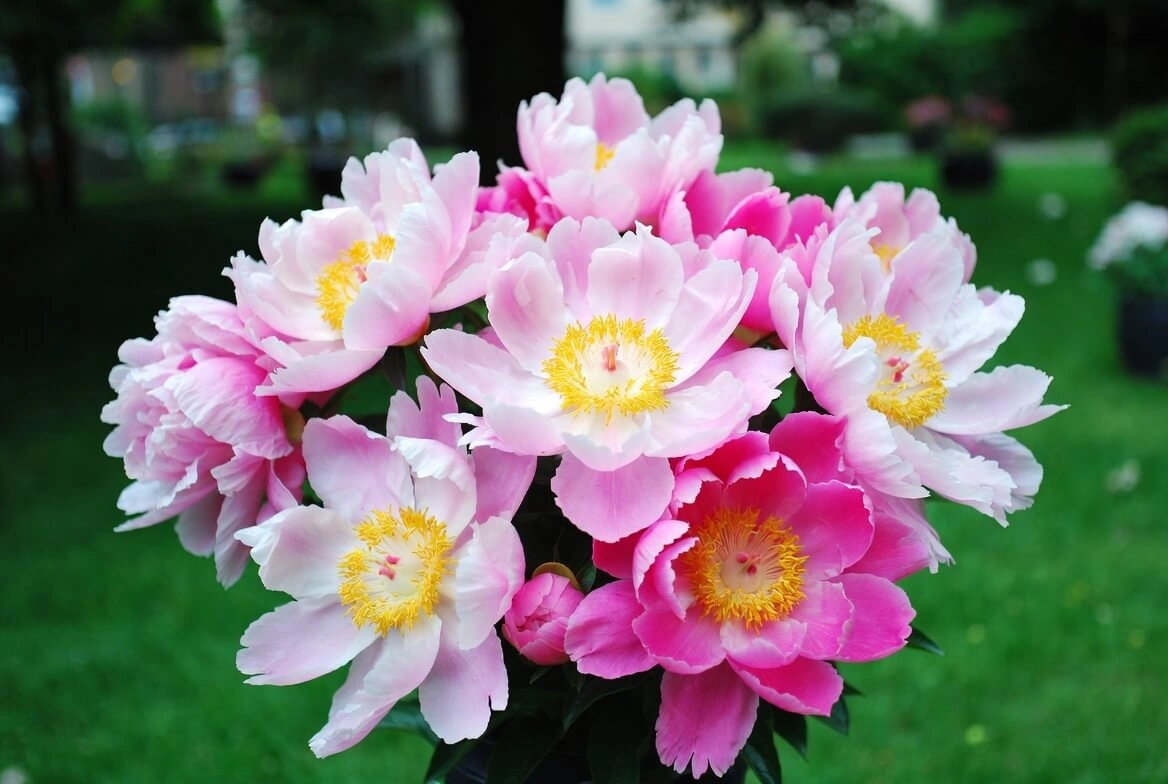
Bush peony characteristics:
- Height: 2-3 feet tall and wide when mature
- Bloom time: Late spring to early summer (May-June)
- Hardiness: Zones 3-8 (they need cold winters)
- Lifespan: 50-100+ years
- Flower size: 3-8 inches depending on variety
- Growth habit: Multiple stems from central crown, bushy and rounded
These plants are workhorses. Plant them once, get them established, and they’ll outlive you.
The One Thing That Kills Most Bush Peonies (Planting Depth)
Here’s the mistake that cost me three years of blooms: I planted my peony bush four inches deep. Four inches doesn’t sound like much. But it’s the difference between a bush that blooms every year and a bush that just grows leaves.
Bush peonies must be planted with their “eyes” (growth buds) 1-2 inches below the soil surface. That’s it. Not 3 inches. Not 4 inches. Definitely not 6 inches.
- In warmer zones (7-8), plant them 1 inch deep. In cooler zones (3-5), go 2 inches deep.
- Use a ruler. Seriously. This matters more than anything else you’ll do.
When I dug up my non-blooming bush in year four and replanted it at the correct depth, it bloomed the next spring. Three years wasted because I eyeballed the depth instead of measuring.
When to Plant Bush Peonies
Fall is best. Aim for 6 weeks before your first hard frost. Spring planting works, but expect your bush to take an extra year or two to bloom. Fall-planted peonies have time to settle in over winter and are ready to grow when spring arrives.
Bare root peonies (the ones that look like weird brown roots with pink buds) should only be planted in fall. Container-grown plants can go in spring or fall, but fall is still better.
Where to Plant Your Peony Bush
Pick the spot carefully because you’re not moving this plant. Bush peonies develop deep root systems that make transplanting a nightmare.
- Full sun is non-negotiable. These plants need 6-8 hours of direct sun per day. More is better. Shade equals weak stems and fewer blooms.
- Well-drained soil is critical. Plant bush peonies in soggy ground and they’ll rot. If water pools in your planting area after rain, choose a different spot or build a raised bed.
- Stay away from tree and shrub roots. Bush peonies hate competition. Plant them at least 3-4 feet away from other large plants.
- Space them 3-4 feet apart. This gives mature bushes room to spread and ensures good air circulation, which prevents fungal diseases.
How to Plant Bush Peonies Step-by-Step
I’ve planted dozens of peony bushes. This method works every time:
- Step 1: Dig a hole 12-18 inches deep and 2 feet wide. Yes, that’s big. These roots need room.
- Step 2: Mix the soil you removed with compost or well-rotted manure. Add a cup of superphosphate (promotes root growth).
- Step 3: Create a small mound in the center of your hole.
- Step 4: Position the bare root on the mound with eyes facing up. This is where you measure depth. Get a ruler. Make sure those eyes are exactly 1-2 inches below where the soil surface will be.
- Step 5: Backfill carefully, checking depth as you go. Don’t just dump soil and hope for the best.
- Step 6: Water thoroughly to settle the soil.
- Step 7: Add a light layer of mulch, but keep it away from the crown (where stems emerge). Mulch sitting on the crown invites rot.
That’s it. Now walk away and let the plant do its thing.
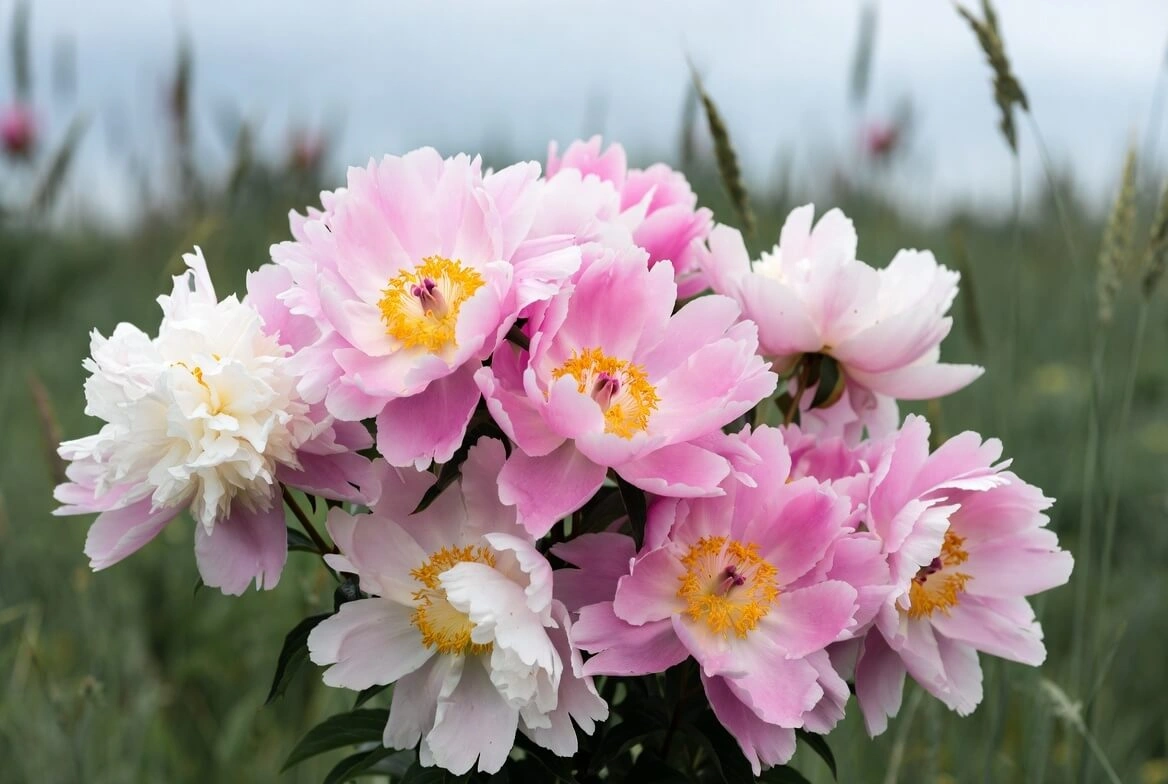
Bush Peonies Care Through the Seasons
Bush peonies are low-maintenance once established, but each season has specific tasks.
Spring Care for Peony Bushes
When shoots emerge in spring, remove any winter mulch you applied. Those shoots need air and light.
Apply fertilizer as soon as you see growth. Use a low-nitrogen formula like 10-10-10. Spread about half a cup around the base of mature bushes, quarter cup for young ones. Too much nitrogen creates lush leaves but no flowers.
Water if it’s dry. Bush peonies need about an inch of water per week in spring. If you go more than two weeks without rain, give them a deep watering.
Watch for black spots on new growth. That’s botrytis blight, a fungal disease. Cut off infected stems immediately and destroy them (don’t compost).
Debud if you want huge flowers. Each stem produces one terminal bud (at the tip) and several side buds. Remove the side buds and all the plant’s energy goes into making one massive flower. Leave the side buds if you want more flowers over a longer period.
Install support rings early. Once stems get tall, it’s too late. Peony rings (metal hoops on stakes) slip over young plants and support heavy blooms as they grow.
Summer Bush Peony Care
- Keep watering during dry spells. This is critical even after blooming finishes. Bush peonies are building next year’s flower buds underground right now. Consistent moisture matters.
- Deadhead blooms. Cut off faded flowers to keep the plant looking tidy and prevent seed formation (which drains energy).
- Watch for Japanese beetles. These pests love peony bushes. Hand-pick them in early morning when they’re sluggish, or use insecticidal soap.
- Don’t cut back foliage yet. Those leaves are feeding the roots. Leave them until fall.
Fall Care (Most Important Season)
Fall care determines how well your bush performs next year.
Wait for the first hard frost. The foliage needs to die back completely before you cut it.
Cut bush peonies to the ground. Once the foliage is brown and dead, cut all stems down to soil level. Remove every bit of debris from around the plant.
This step prevents diseases from overwintering. Botrytis and other fungi survive in dead plant material. Clean it all up and throw it away (don’t compost it).
Mark the location. Once everything’s cut back, there’s no sign of your bush. Stick a label or marker in the ground so you don’t accidentally dig into it next spring.
Apply light mulch in cold zones only. If you’re in Zone 4 or colder, add a loose 2-3 inch layer of shredded bark or pine needles after the ground freezes. Remove it in early spring before new growth starts.
Winter Care
Do nothing. Bush peonies are dormant and need cold temperatures (6 weeks below 40°F) to set buds for next year’s flowers. This is why bush peonies don’t grow well in warm climates. They need that winter chill.
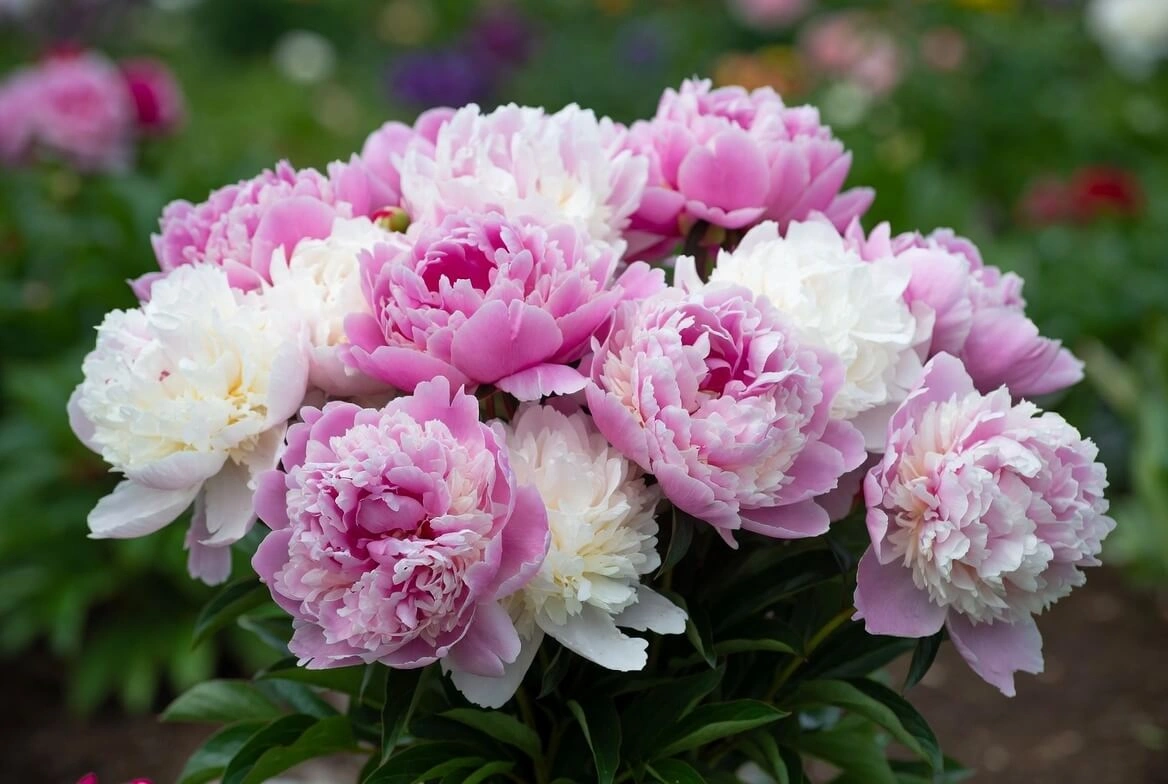
Pink Peonies Bush Varieties (Most Popular Choice)
Pink is the most popular color for bush peonies, and for good reason. The range is incredible—from barely-there blush to hot magenta. I’ve grown at least 15 pink varieties. These are the ones I’d plant again:
Soft Pink Bush Peonies
Sarah Bernhardt is the most famous pink peony in the world. Introduced in 1906, it’s still the best-selling variety over a century later.
The blooms are soft rose-pink with a slight ruffle to the petals. Fragrant, reliable, absolutely stunning. This is the bush peony everyone thinks of when they picture a peony.
I’ve got five Sarah Bernhardt bushes in my garden. They bloom late (early June here), and I cut armloads for the house. They last 7-10 days in a vase.
Pillow Talk produces massive blooms—some of the largest I’ve seen. Soft blush pink with hints of lavender. The stems are sturdy enough that you don’t need to stake them, which is rare for a peony with blooms this big.
Shirley Temple starts pale pink and fades to white as the flowers age. You get two looks from one bush. The double blooms are packed with petals.
Medium Pink Peony Bushes
Dr. Alexander Fleming is one of my most productive bushes. The cool pink color photographs beautifully, and this variety just keeps blooming.
I planted three of these six years ago. Last spring, I got 47 blooms from those three bushes. That’s productivity.
Monsieur Jules Elie has been around since 1888, and it’s easy to see why. The bomb-shaped blooms literally explode open—layers and layers of rose-pink petals bursting out. Super fragrant.
Bowl of Beauty is a Japanese-form peony, which means it has large outer petals surrounding a center of narrow petaloids. The pink outer petals with the creamy yellow center create incredible contrast.
Hot Pink and Magenta Bush Peonies
Kansas is the MVP of my entire garden. This bush produces more blooms, with stronger stems, and longer vase life than any other peony I’ve grown. The bright rose-pink flowers maintain their color without fading. They last up to two weeks in a vase.
Kansas doesn’t need staking. The petals are tough enough to handle rain without bruising. And the plant is incredibly vigorous. If you only plant one pink bush peony, make it Kansas.
Big Ben produces true magenta blooms with a strong fragrance. The color is bold and doesn’t fade. This variety tolerates heat better than most, which matters if you’re in Zone 7-8.
Felix Crousse is another magenta that’s been popular since 1881. The double blooms are densely packed with petals, and the color is intense.
For more details on pink peony varieties and colors, check out our complete peony colors guide at Zoned Garden.
White Peonies Bush Varieties (Classic Elegance)
White bush peonies are my second favorite after pink. They’re elegant, versatile, and work in any garden style.
Best White Bush Peony Varieties
Festiva Maxima is a Southern heirloom that’s been grown since the 1850s.
Pure white double blooms with tiny flecks of red on some inner petals. Incredibly productive—my four-year-old Festiva Maxima bush produced 31 blooms last spring.
The stems are strong, the plants are vigorous, and this variety handles heat better than most. If your grandmother grew white peonies, there’s a good chance she grew Festiva Maxima.
Duchesse de Nemours is my go-to white for cut flowers. The blooms are creamy white with a yellow base, and the fragrance is incredible. More delicate looking than Festiva Maxima but just as tough.
Elsa Sass produces rose-like double flowers that are intensely fragrant. Pure white, packed with petals. This is the one I cut for the house when I want the whole place to smell like peonies.
Krinkled White has unique crinkled petal edges that look like crepe paper. The texture makes it stand out, and the stems are strong enough that it rarely needs staking.
White Bush Peonies with Color Accents
Minnie Shaylor starts pale pink and fades to white as the flowers mature. The crinkled petals have the same crepe paper texture as Krinkled White.
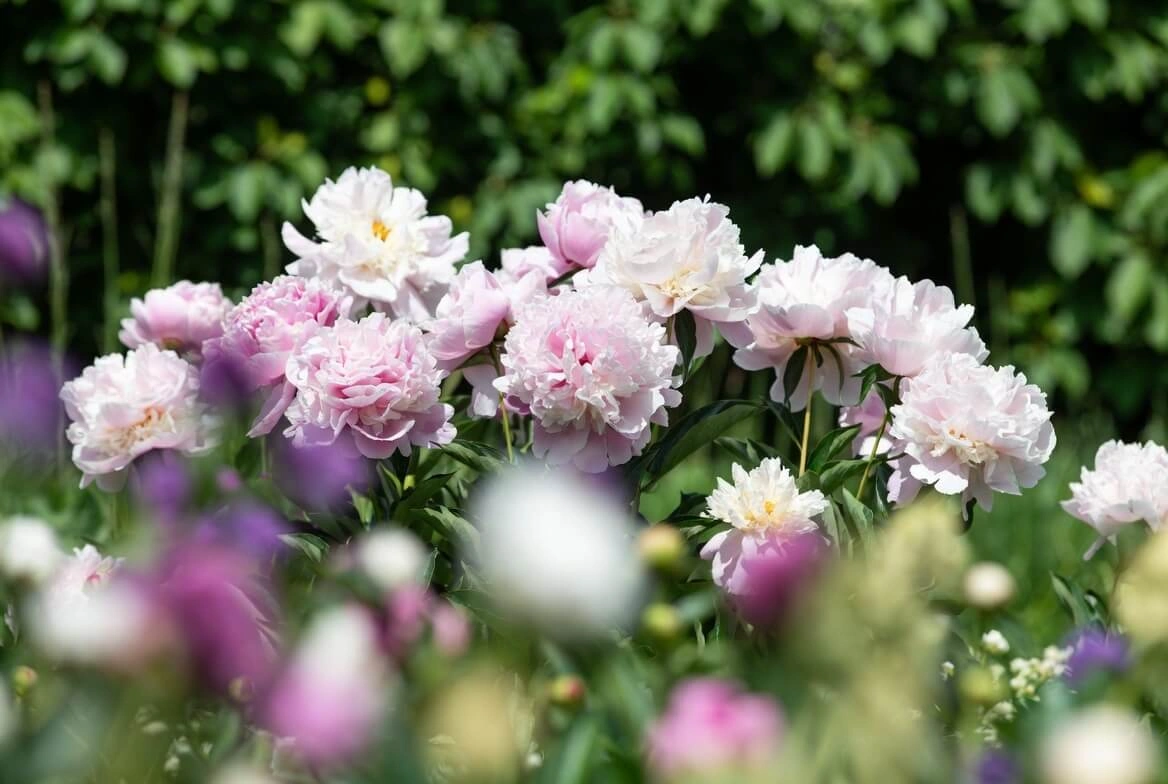
Miss America forms pale pink buds that open into cup-shaped white blooms. Another color-changer that gives you variety. White bush peonies photograph beautifully and work for everything from formal gardens to cottage-style plantings.
Troubleshooting: Why Your Bush Peony Won’t Bloom
This is the most common question I get: “My peony bush has been in the ground for three years and still won’t bloom. What’s wrong?”
Usually, it’s one of these five issues:
Problem 1: Planted Too Deep
This is the number one reason bush peonies don’t bloom. If those eyes are buried more than 2 inches below the soil surface, the plant won’t get the cold exposure it needs to set buds.
Solution: Dig it up in fall and replant at the correct depth (1-2 inches). Yes, this sets the plant back a year. But it’s the only fix. I learned this the hard way.
Problem 2: Not Enough Sun
Bush peonies need at least 6 hours of direct sun. Shade from trees, buildings, or other plants means weak growth and no flowers.
Solution: Transplant to a sunnier location in fall. Be as careful as possible with the roots, but accept that the plant will sulk for a year or two.
Problem 3: Too Much Nitrogen
High-nitrogen fertilizer creates lush green foliage at the expense of flowers.
Solution: Use a low-nitrogen, balanced fertilizer like 10-10-10. Feed once per year in spring. That’s it.
Problem 4: Plant is Too Young
Bush peonies take 2-3 years to produce full-sized blooms after planting. Sometimes longer if they were planted in spring or are struggling with conditions.
Solution: Be patient. Keep caring for the plant properly and it will bloom when it’s ready.
Problem 5: Root Competition
If your bush peony is planted near trees or large shrubs, it’s competing for water and nutrients. Bush peonies hate competition.
Solution: Either remove the competing plant or transplant the peony to a spot where it has room.
Common Bush Peony Diseases and Pests
Bush peonies are generally healthy, but a few problems pop up.
Botrytis blight shows up as black or brown spots on stems, leaves, and buds. In severe cases, stems collapse. Cut off infected parts immediately and destroy them. Improve air circulation by spacing plants properly and removing debris in fall. Use a copper-based fungicide if the problem persists.
Powdery mildew appears as white coating on leaves, usually in late summer. It’s mostly cosmetic but can weaken plants over time. Improve air circulation and avoid overhead watering. Remove affected leaves if it bothers you.
Japanese beetles are the main pest. They love peony flowers and foliage. Hand-pick them early in the morning when they’re slow. Drop them in soapy water. Or use insecticidal soap if the infestation is bad.
Ants on the buds are harmless. They’re attracted to the sweet nectar peonies produce. They don’t hurt the plant and you don’t need to do anything about them.
Bush Peonies vs Tree Peonies vs Itoh Peonies
People get confused about the different types. Here’s the quick version:
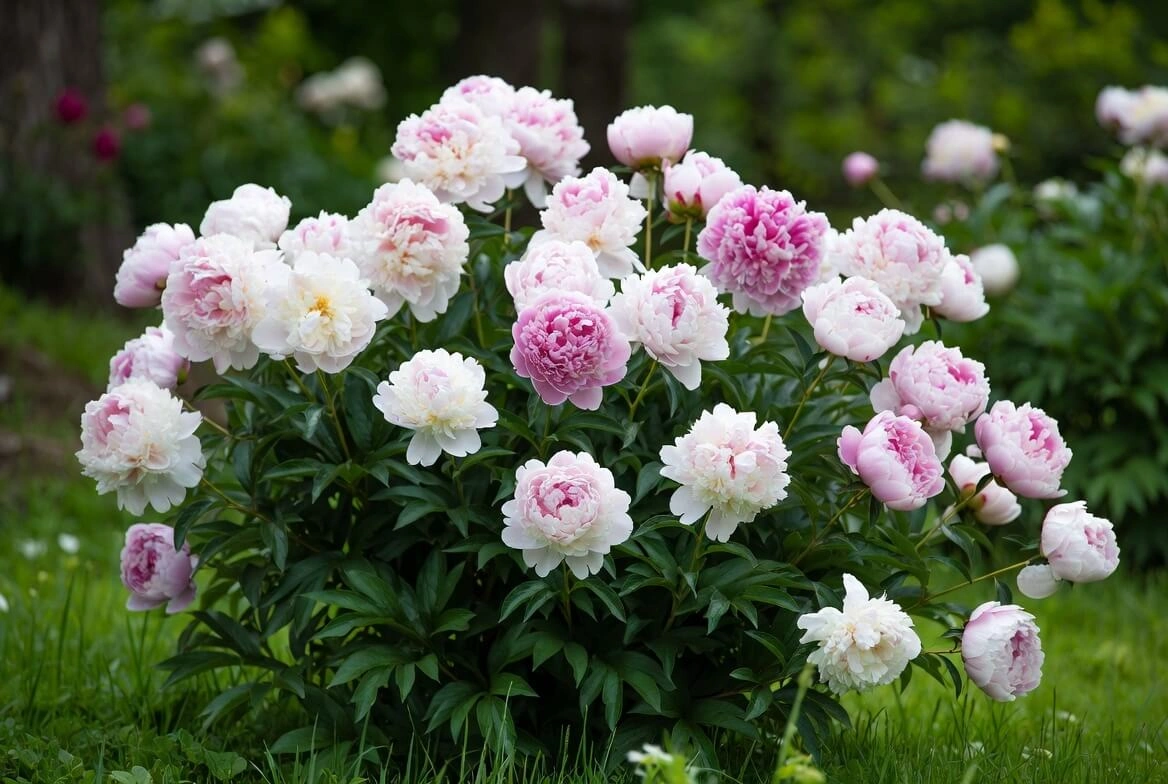
Bush peonies (herbaceous) are what most people grow. They die to the ground in winter, return in spring, grow 2-3 feet tall, and bloom late spring. Easiest to grow, most affordable, widest selection.
Tree peonies keep their woody stems year-round. They grow 4-7 feet tall, bloom earliest (around Mother’s Day), and are more expensive. Slower growing but dramatic.
Itoh peonies are hybrids that die back like bush types but have huge blooms like tree peonies. They bloom longest (up to 6 weeks) and are the most expensive.
For beginners, start with bush peonies. They’re the most forgiving and give you the most bang for your buck. For more information on different peony types and how to grow them all, see our complete peony growing guide at Zoned Garden.
Best Bush Peony Varieties for Beginners
If you’re planting your first peony bush, start with proven winners:
- Festiva Maxima (white) – Productive, vigorous, reliable, handles heat well.
- Sarah Bernhardt (pink) – Most popular variety worldwide for good reason. Proven for over 100 years.
- Kansas (red/pink) – Longest vase life, strongest stems, weather-resistant, incredibly productive.
- Coral Charm (coral) – Unique color, award-winner, color-changing blooms.
These varieties have been tested in thousands of gardens. They’re vigorous, disease-resistant, and will bloom reliably once established.
Where to buy bush peonies:
- Specialty nurseries (best selection)
- Online: Hollingsworth Peonies, Mountain Flower Farm
- Local garden centers (limited selection but you can see plants)
- Bare root in fall = best value
The Reality About Bush Peonies (Things Nobody Tells You)
They take forever to establish. Year one: a few leaves. Year two: more leaves, maybe one bloom. Year three: several blooms. Year four: explosion of flowers. This is normal. Don’t give up.
The first year blooms will be disappointing. Small, not many of them. That’s fine. The plant is still building roots.
You’ll need to stake most varieties. Those massive blooms get heavy. After a rain, they’ll flop over without support. Install peony rings early.
Ants are normal. Every spring, people freak out about ants on their peony buds. The ants aren’t hurting anything. They’re just eating nectar. Ignore them or rinse them off gently before cutting flowers.
The bloom period is short. Each bush blooms for 7-10 days. That’s it for the year. Plant early, mid, and late varieties to extend the season, but accept that peony season is brief. That’s part of what makes it special.
They’ll outlive you. Seriously. Plant a bush peony at 30 and it’ll still be blooming when you’re 80. These plants are investments in your garden’s future.
For tips on using peony blooms for arrangements and bouquets, check out our complete peony bouquet guide at Zoned Garden.
Wrapping This Up
Bush peonies are the easiest perennial you can grow—once you get past the first few years.
The key points:
- Plant eyes 1-2 inches deep (measure with a ruler)
- Full sun, well-drained soil, no root competition
- Fall planting is best
- Be patient for 2-3 years
- Cut to ground in fall, fertilize in spring
- Once established, they’ll bloom for 50-100 years
Pink bush peonies give you the widest selection of varieties. White bush peonies are classic and elegant. Both need the same care and both will perform for decades.