The top 10 desert plants are: Saguaro Cactus, Agave, Joshua Tree, Prickly Pear Cactus, Barrel Cactus, Desert Rose (Adenium), Creosote Bush, Ocotillo, Echeveria, and Aloe Vera.
These plants survive in some of earth’s harshest environments — temperatures above 120°F (49°C), rainfall below 10 inches (25 cm) per year, and soils with almost zero organic matter. They do it through extraordinary biological adaptations: water storage, reduced surface area, deep root systems, and modified photosynthesis.
Whether you’re building a drought-tolerant xeriscape garden, growing desert plants indoors, or simply curious about how these plants survive, this guide covers everything — from biology and ecology to practical care and landscaping use.
Why Desert Plants Are Worth Growing in 2026
Water scarcity is the defining environmental challenge of this decade. By 2026, over 40% of the world’s population lives in water-stressed regions. Desert plants — collectively called xerophytes — offer 4 compelling reasons to grow them:
- Water conservation: Most desert plants need 70–90% less water than conventional garden plants
- Low maintenance: Adapted to neglect, poor soil, and extreme heat — minimal effort required after establishment
- Wildlife value: Desert plants provide critical habitat, nectar, fruit, and nesting sites for birds, bees, bats, and reptiles
- Aesthetic impact: Unique shapes, textures, and colors that no conventional garden plant can match
Xeriscaping — landscaping designed to reduce or eliminate irrigation — saves the average household 50–75 gallons of water per day. Desert plants are its foundation.
→ ZonedGarden’s Complete Xeriscaping Design Guide — Build a Beautiful Low-Water Garden
1. Saguaro Cactus (Carnegiea gigantea)
Native to: Sonoran Desert, southern Arizona, southeastern California, northwestern Mexico
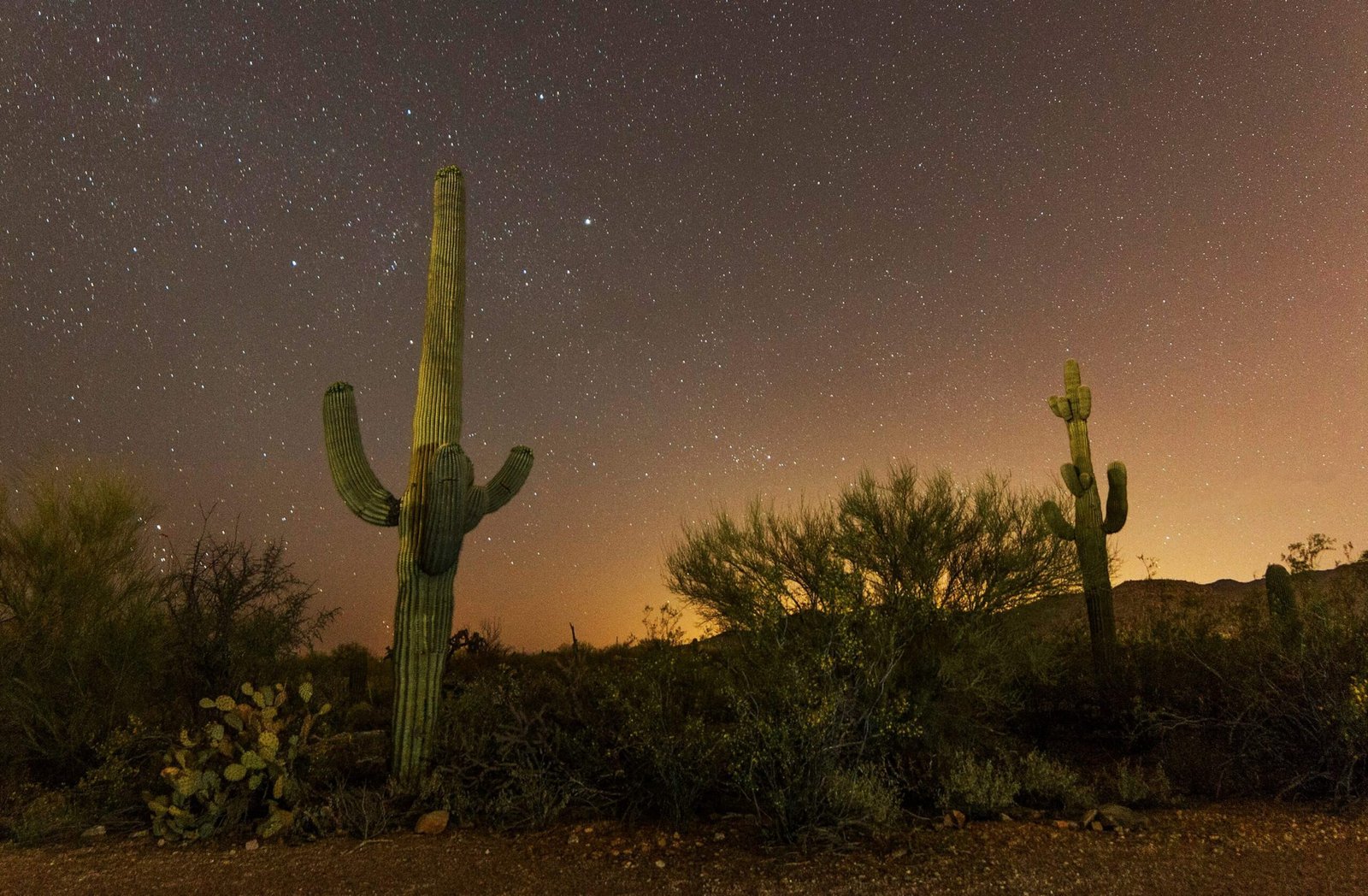
The Saguaro is the monarch of the desert and the most iconic cactus on earth. A mature Saguaro can store over 1,000 gallons (3,785 litres) of water after a single rainfall event, expanding its pleated, accordion-like body to accommodate the surge. It’s the largest cactus in North America.
The average lifespan is 150–175 years, with some individuals living over 200 years. A Saguaro doesn’t grow its first arm until it’s approximately 75 years old — meaning that multi-armed giant you picture is likely over a century old.
Survival Adaptations
- Accordion pleats allow the stem to expand 18–24 inches (45–60 cm) in diameter as it absorbs water after rain
- Shallow radial roots extend up to 50 feet (15 m) from the base to capture rainwater across a wide area
- Downward-pointing spines redirect rainwater into the root zone and cool the outer stem by shading
- White, waxy flowers open only at night to avoid daytime heat — pollinated by long-nosed bats and white-winged doves
- CAM photosynthesis (Crassulacean Acid Metabolism): stomata open at night to absorb CO₂, closing during the day to minimise water loss
Ecological Role
Saguaros are a keystone species in the Sonoran Desert ecosystem. Gila woodpeckers excavate nesting cavities in their stems; these holes are later occupied by elf owls, cactus wrens, and purple martins. The Tohono O’odham people have harvested Saguaro fruit for thousands of years — their annual harvest marks the start of the O’odham new year.
Saguaro flowers and fruits appear during the hottest, driest stretch of summer — providing critical moisture and nutrition to desert wildlife precisely when they need it most.
Growing Guide
- USDA Zones: 9–11 outdoors; container-grown indoors in colder climates
- Light: Full sun — minimum 8 hours daily; cannot tolerate shade
- Water: Established plants survive on natural rainfall; water new plants monthly for the first 2 years
- Soil: Sandy, rocky, or gravelly soil with excellent drainage — pH 6.0–8.0
- Growth rate: Very slow — grows approximately 1 inch (2.5 cm) per year
- Note: Saguaros are federally protected in Arizona; never transplant wild specimens
→ ZonedGarden’s Guide to Growing Cacti in Containers and Desert Gardens
2. Agave (Agave americana)
Native to: Mexico, southwestern USA, Central America — over 270 species
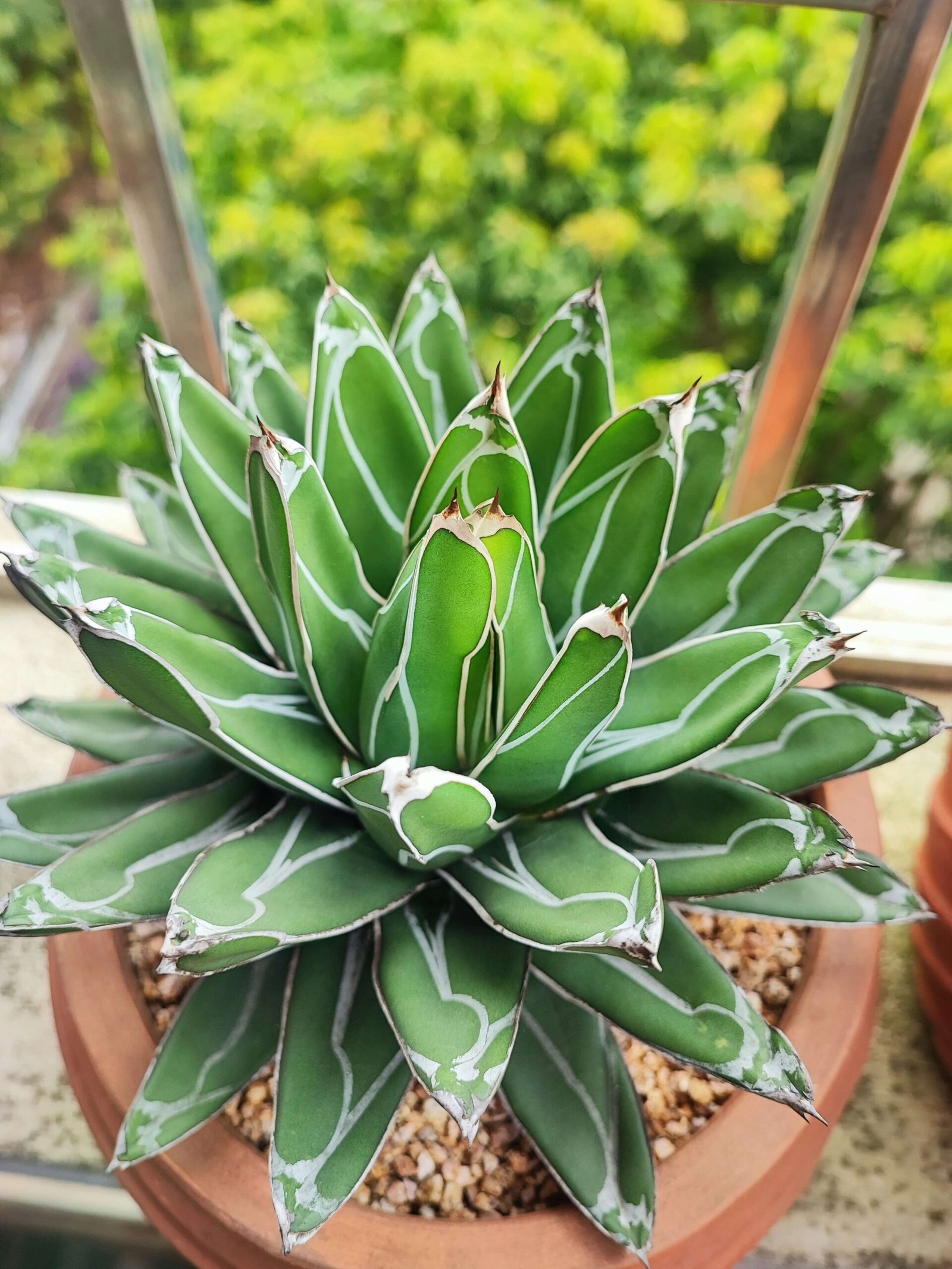
Agave is a genus of 270+ succulent species with one of the most dramatic life cycles in the plant kingdom. Most agaves are monocarpic — they grow for 10–30 years, send up a single towering flower spike up to 30 feet (9 m) tall, set seed, and then die. This single flowering event earned them the nickname ‘century plant’ — though most bloom in 10–25 years, not 100.
Agave leaves store water in thick, fleshy tissue protected by a waxy cuticle. Terminal spines and serrated margins deter herbivores. The plant’s water content and structural fibres have made it one of history’s most useful plants — tequila, mezcal, agave syrup, rope, and textiles all come from different agave species.
Survival Adaptations
- Thick, waxy leaf cuticle reduces transpiration by 60–70% compared to non-succulent plants
- Deep central tap root accesses groundwater unavailable to shallow-rooted competitors
- Rosette leaf arrangement channels rainwater toward the central root zone
- CAM photosynthesis minimises water loss during daytime heat
- Produces ‘pups’ — vegetative offsets that survive and grow even if the parent plant dies
Key Uses
- Agave tequilana (Blue Agave): source of tequila and mezcal spirits
- Agave syrup: low-glycaemic natural sweetener widely used in health food
- Sisal fibre (Agave sisalana): used in rope, twine, and biodegradable packaging
- Landscaping: architectural focal point in xeriscape, rock gardens, and Mediterranean gardens
Growing Guide
- USDA Zones: 5–11 depending on species; A. parryi hardy to -20°F (-29°C)
- Light: Full sun — 6–8 hours minimum
- Water: Monthly in summer; stop completely in winter
- Soil: Any well-draining soil; tolerates poor, rocky, alkaline conditions
- Space: Most species reach 3–6 feet (0.9–1.8 m) wide — give them room
→ Agave Varieties Guide — Which Species to Grow and How on ZonedGarden
3. Joshua Tree (Yucca brevifolia)
Native to: Mojave Desert, California, Nevada, Utah, Arizona
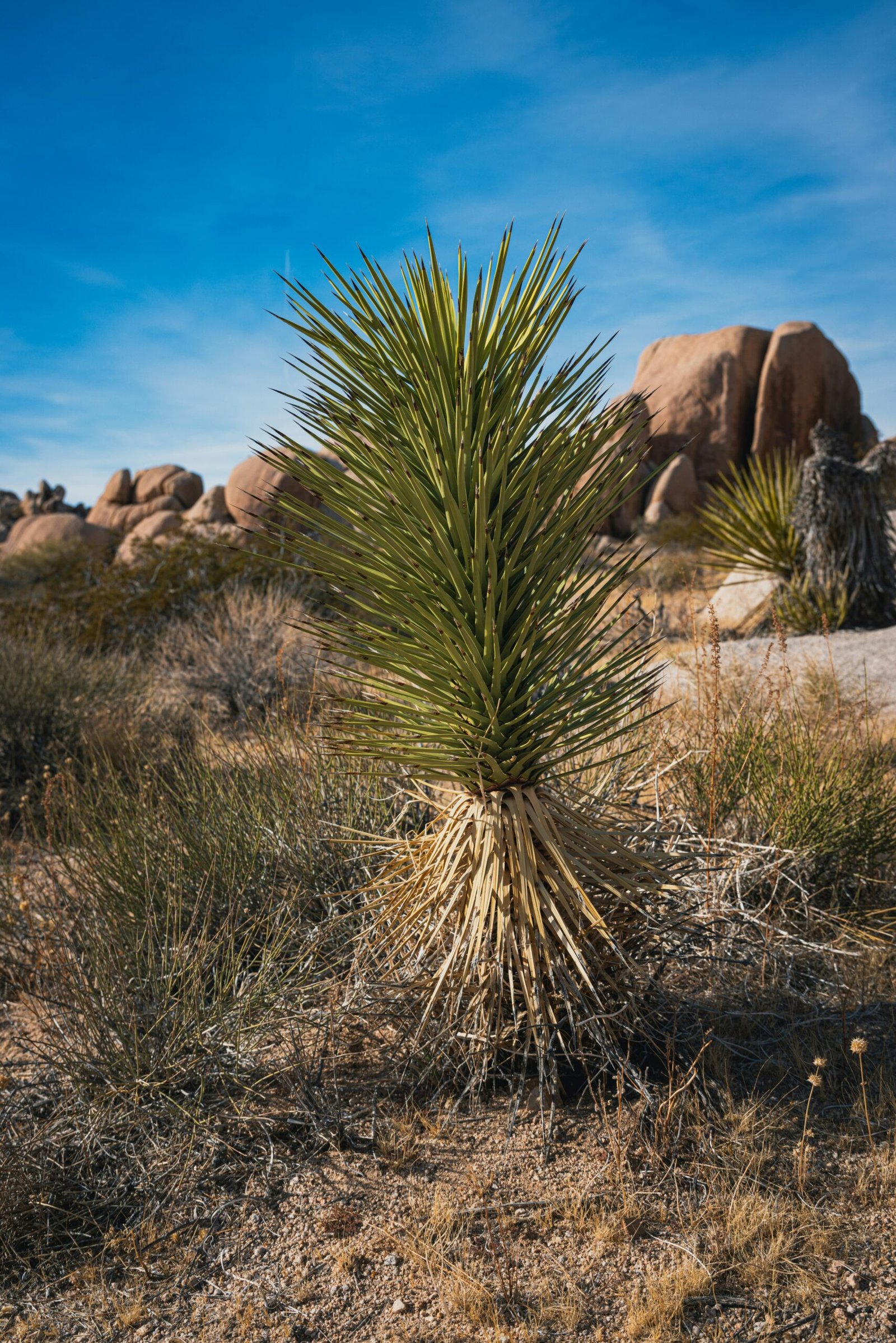
The Joshua Tree is the symbol of the Mojave Desert and one of the most distinctive plants on earth. Named by Mormon pioneers who saw its outstretched arms as the biblical Joshua leading them westward, it can reach 40 feet (12 m) tall and live over 500 years. It’s not a tree — it’s a yucca, a member of the asparagus family (Asparagaceae).
The Joshua Tree’s relationship with the yucca moth is one of nature’s most famous examples of mutualism. The moth is the sole pollinator of Joshua Tree flowers; in return, the tree is the only plant in which the moth can reproduce. Remove either species, and both face extinction.
Survival Adaptations
- Leaves reduced to narrow, stiff spines — minimises surface area and water loss
- Fibrous, moisture-storing trunk unlike true trees; no annual growth rings
- Shallow but wide root system captures surface moisture from sparse desert rains
- Blooms only after a specific sequence of cold nights followed by warm days — climate cues trigger flowering
- Branch growth is unpredictable — each ‘arm’ only grows after the terminal bud is damaged by frost or animals
Conservation Status
Climate change threatens the Joshua Tree significantly. Its range is projected to shrink by 90% by 2100 under high-emissions scenarios. The western Joshua Tree was listed as a threatened species by the California Fish and Game Commission in 2023 — the first desert plant to receive such protection in California.
Growing Guide
- USDA Zones: 6–9; needs cold winters (below 40°F / 4°C) to trigger blooming
- Light: Full sun — at least 6 hours direct sun required
- Water: Established plants need water every 2–4 weeks in summer; almost none in winter
- Soil: Deep, well-draining sandy or rocky soil; does not tolerate wet roots
- Growth rate: Approximately 3 inches (7.5 cm) per year — extremely slow
→ See ZonedGarden’s Desert Tree and Yucca Growing Guide for Outdoor Landscapes
4. Prickly Pear Cactus (Opuntia ficus-indica)
Native to: Mexico and the Americas; now naturalised across 6 continents
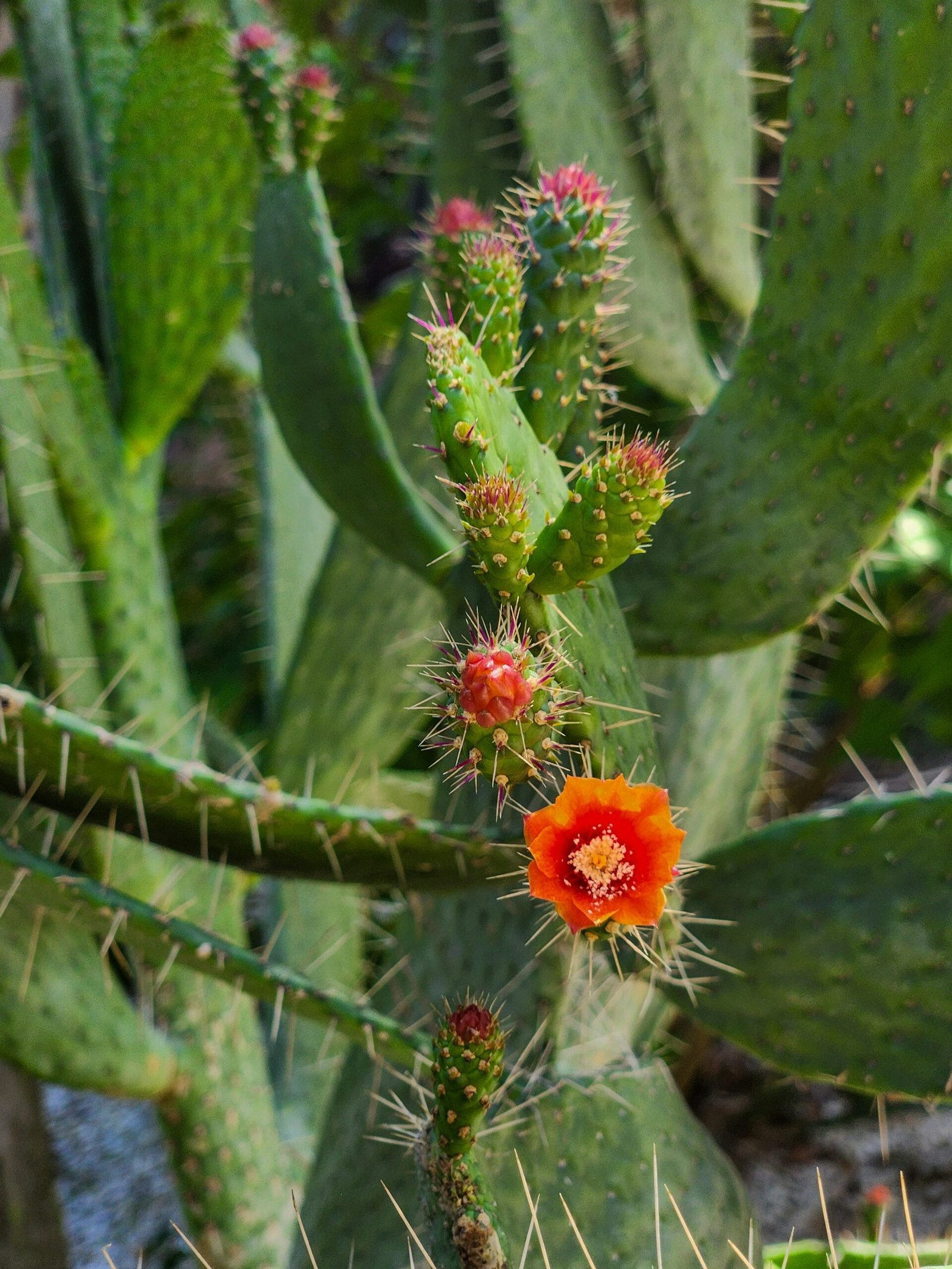
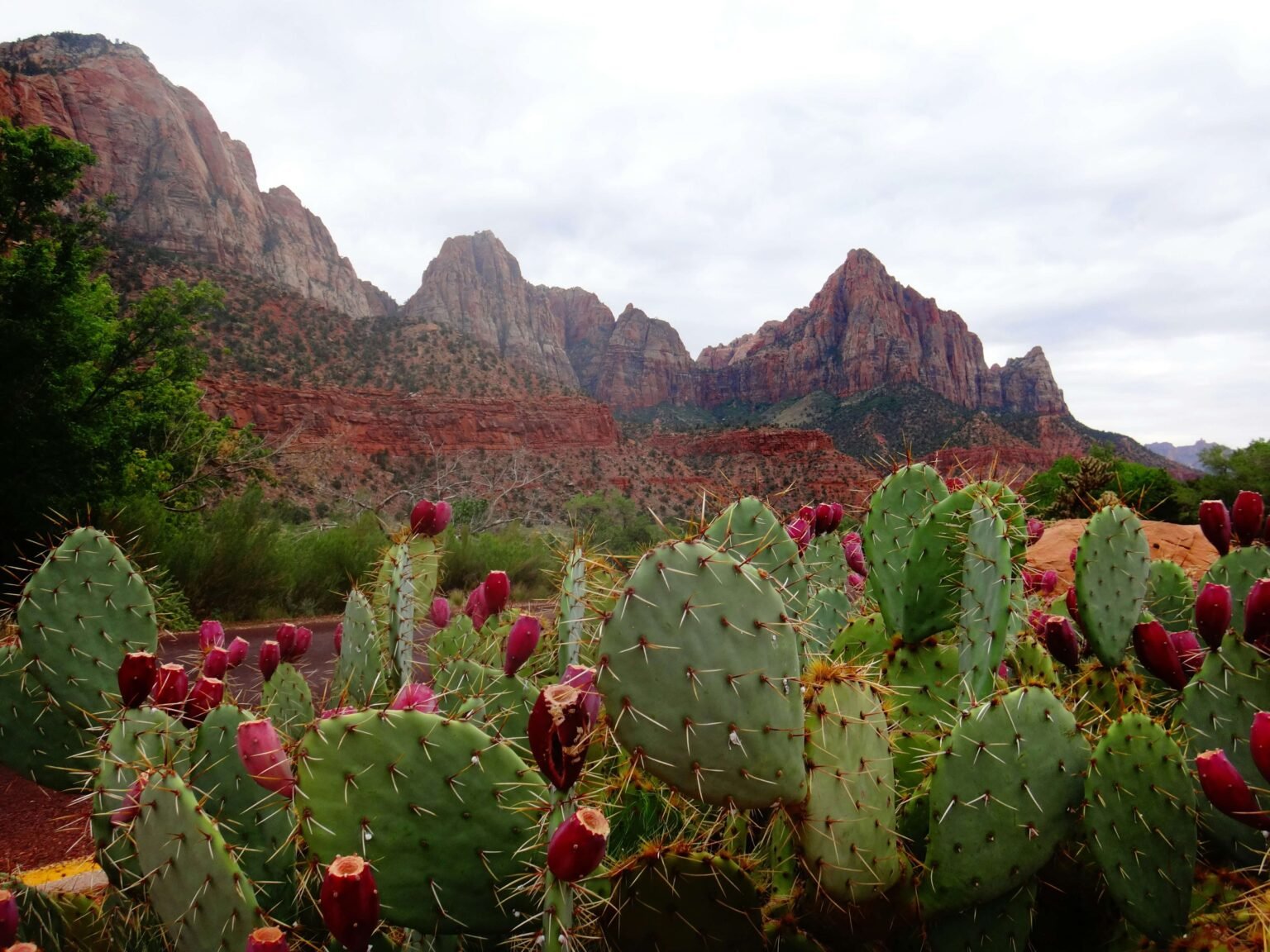
The Prickly Pear is the most widely cultivated cactus on earth and one of humanity’s oldest food plants. Its paddle-shaped pads (cladodes) store water in dense, mucilaginous tissue. The bright fruits — called tunas or prickly pears — are rich in vitamin C, antioxidants, and betalain pigments. Both pads and fruits are edible and commercially cultivated in Mexico, Italy, South Africa, and Israel.
Survival Adaptations
- Flat pads maximise surface area for photosynthesis while tough skin minimises water loss
- 2 types of spines: long, visible spines for deterrence and glochids — microscopic barbed bristles that lodge in skin and are nearly impossible to remove
- Pads detach easily and root themselves — each fallen pad becomes a new plant
- CAM photosynthesis and thick waxy cuticle allow survival in less than 5 inches (12 cm) annual rainfall
Food and Medicinal Uses
- Nopalito: young tender pads eaten cooked in Mexican cuisine — rich in fibre, vitamin C, and calcium
- Tuna fruit: eaten fresh, juiced, or made into jam; antioxidant-rich and high in vitamin C and betalains
- Prickly pear extract: studied for blood sugar regulation and hangover prevention in clinical research
- Pads used as cattle fodder in drought years across Mexico, Africa, and Mediterranean countries
Growing Guide
- USDA Zones: 3b–11 depending on species; Opuntia polyacantha survives -35°F (-37°C)
- Light: Full sun — 6–8 hours
- Water: Monthly in summer; none in winter
- Planting: Use tongs to handle; let cut pads callous 3–5 days before planting
- Soil: Sandy or rocky, sharply draining; pH 6.0–7.5
→ Prickly Pear Growing, Harvesting & Cooking Guide on ZonedGarden
5. Barrel Cactus (Ferocactus cylindraceus)
Native to: Chihuahuan and Sonoran Deserts, southwestern USA and northern Mexico
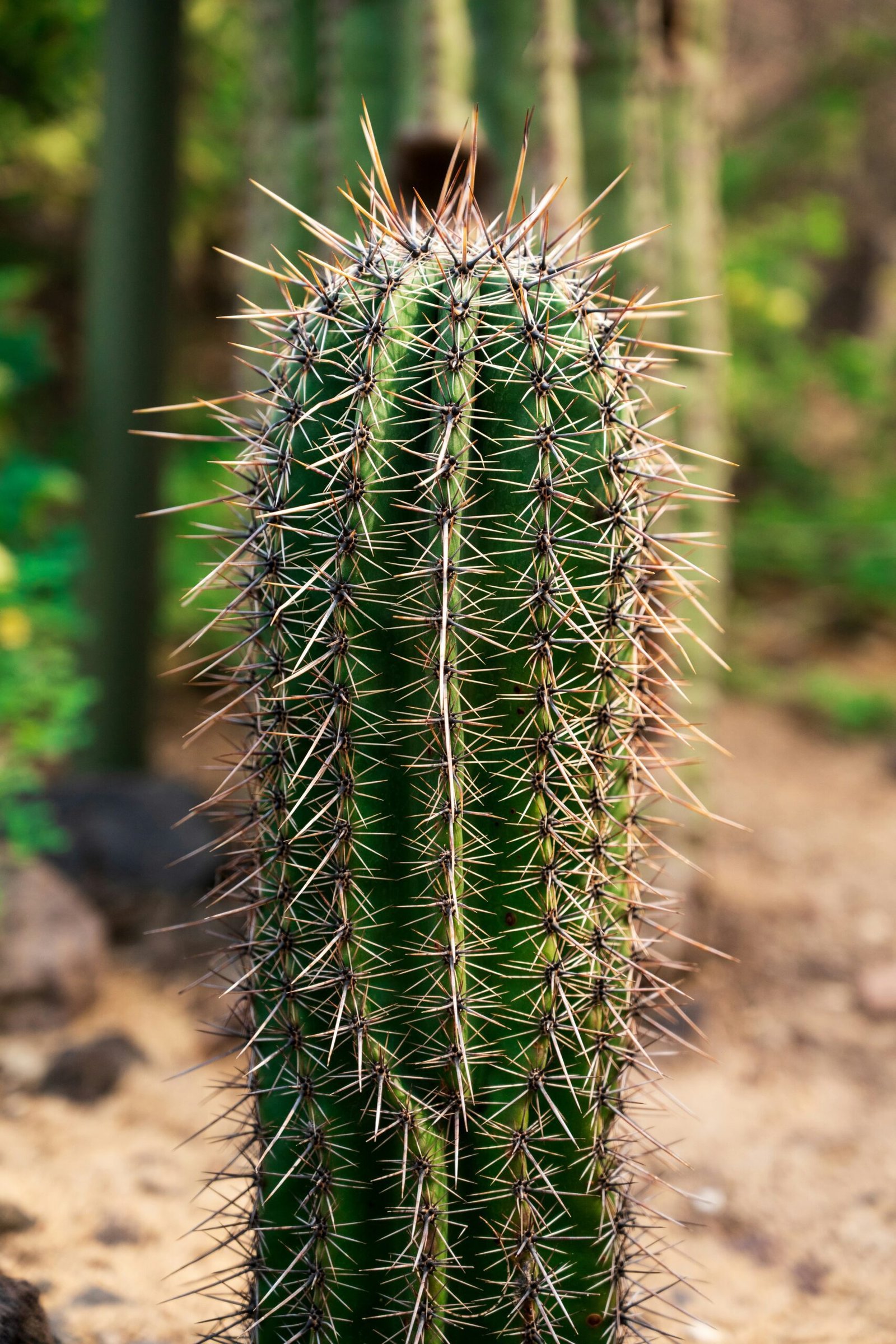
The Barrel Cactus is built like a tank. Its ribbed, cylindrical body stores hundreds of litres of water-rich mucilage and expands after rainfall, creating the characteristic rounded ‘barrel’ shape. It’s named for its use by lost desert travellers who cut open barrels to access internal moisture — though survival experts caution this is rarely effective and damages the plant.
Mature barrel cacti lean noticeably toward the southwest, earning them the nickname ‘compass cactus.’ This tilted growth maximises sun exposure during cooler winter months while reducing overheating in summer.
Survival Adaptations
- Dense, interlocking spines create a shaded microclimate around the stem surface, reducing temperature by up to 10°F (5.5°C)
- Ribs allow accordion-like expansion after rain and contraction during drought
- Long tap root accesses deep soil moisture unavailable to shallow-rooted cacti
- Flowers only after sufficient rainfall — bloom triggers are water-dependent, not calendar-dependent
Growing Guide
- USDA Zones: 9–11 outdoors; excellent container plant indoors
- Light: Full sun — 6+ hours; tolerates reflected heat from walls and pavement
- Water: Every 3–4 weeks in summer; once or twice in winter or not at all
- Soil: Well-draining sandy or gritty cactus mix; never leave in standing water
- Size: Grows to 4–10 feet (1.2–3 m) tall; very slow — adds about 1 inch (2.5 cm) per year
- Pet/child safety: Handle with extreme care — 4-inch (10 cm) hooked spines are very dangerous
→ ZonedGarden’s Guide to Growing and Displaying Barrel Cacti
6. Desert Rose (Adenium obesum)
Native to: Sub-Saharan Africa, the Arabian Peninsula, and parts of South Asia
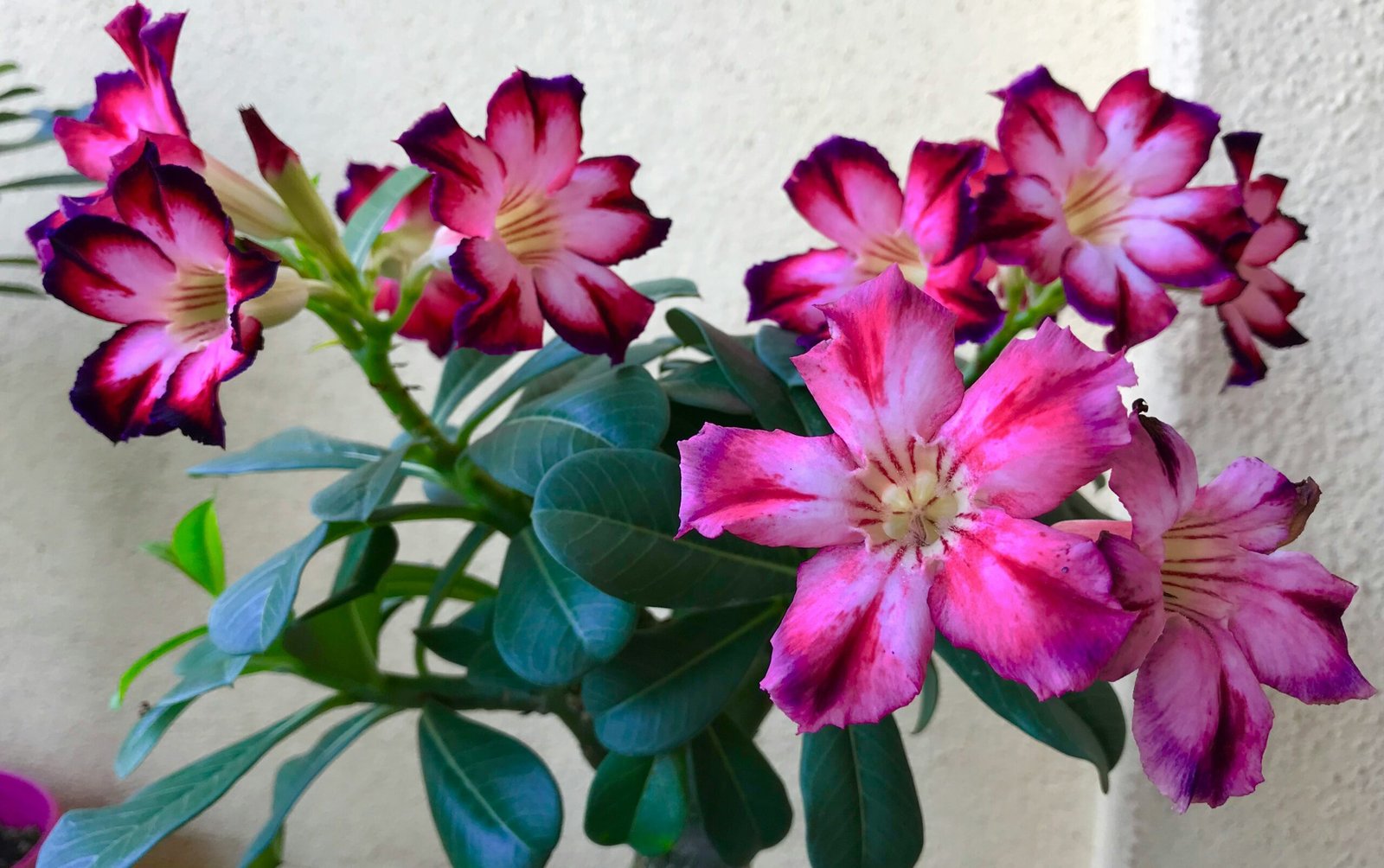
The Desert Rose is arguably the most beautiful succulent in the world. Its swollen, water-storing caudex (trunk base) can reach enormous dimensions over time, while its clusters of vivid pink, red, white, or bicolor trumpet flowers bloom for months. It’s one of the top container succulents globally and a favourite for bonsai cultivation.
Despite its delicate appearance, Adenium is a desert survivor. The caudex stores water to sustain the plant through dry seasons, and it drops leaves entirely during drought or cool temperatures — entering a dormancy period that protects it from dessication.
Survival Adaptations
- Massive caudex (swollen trunk base) stores water and nutrients across drought seasons
- Deciduous behaviour — drops all leaves during drought or cold to reduce water demand by over 80%
- Thick, waxy leaf coating and small leaf size reduce transpiration
- Produces toxic cardiac glycosides (cardenolides) in all plant parts — deters most herbivores
Growing Guide
- USDA Zones: 11–12 outdoors; excellent indoor/container plant everywhere else
- Light: Full sun — 6+ hours; direct sun produces the most blooms
- Water: Every 1–2 weeks in growing season; reduce to monthly in winter; stop if leaves drop
- Soil: Very fast-draining cactus mix; add 30% perlite or coarse sand
- Fertiliser: High-phosphorus feed (e.g., 10-30-10) monthly in spring and summer to encourage flowering
- Toxicity: All parts toxic to humans, cats, dogs — wear gloves when pruning
→ Desert Rose (Adenium) Complete Care and Flowering Guide on ZonedGarden
7. Creosote Bush (Larrea tridentata)
Native to: Mojave, Sonoran, and Chihuahuan Deserts — the most common desert shrub in North America
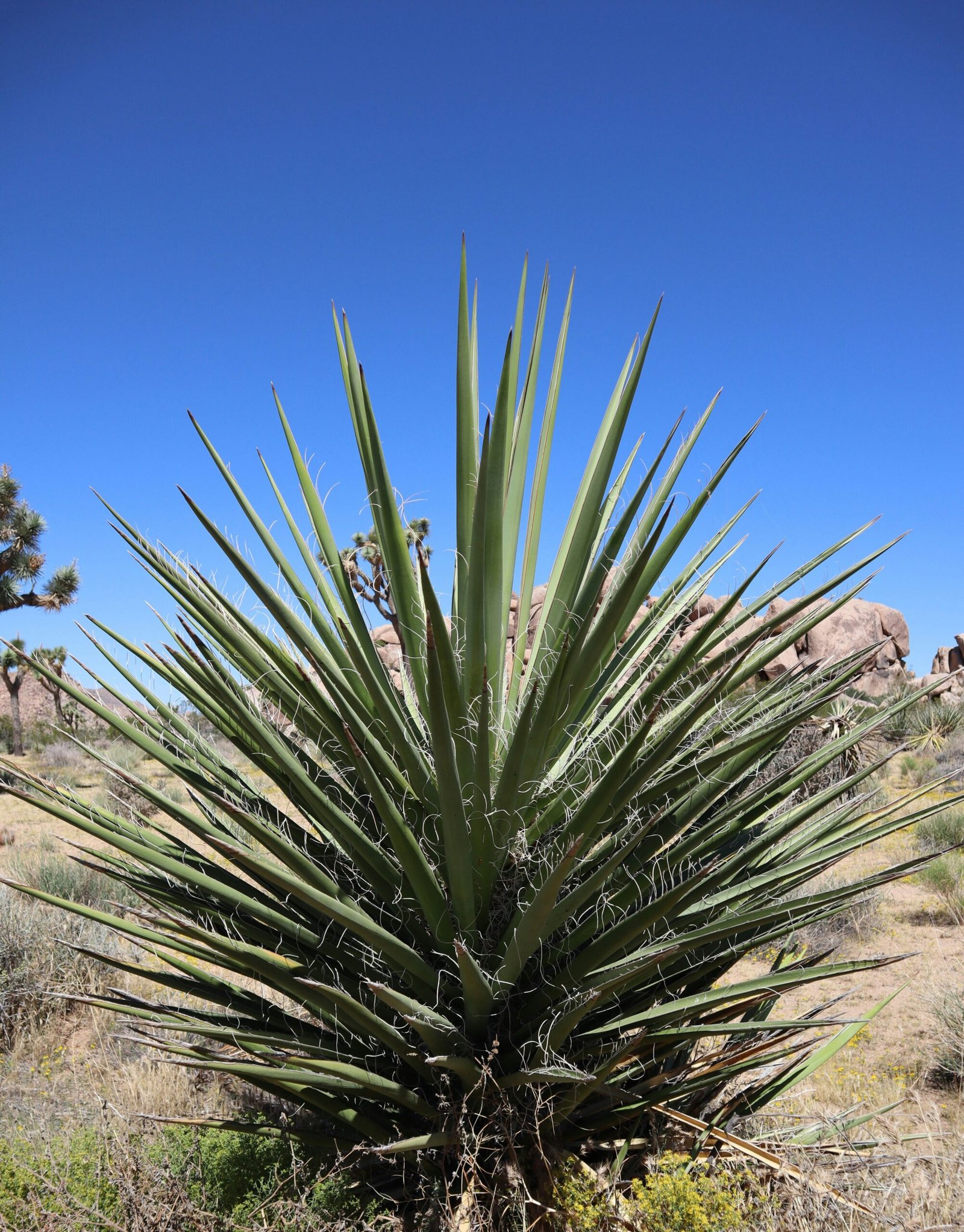
The Creosote Bush is the defining shrub of North American deserts and possibly the oldest living plant on earth. A single Creosote Bush clone in the Mojave Desert — known as ‘King Clone’ — is estimated to be over 11,700 years old, making it one of the oldest living organisms ever documented.
After rainfall, Creosote bushes release a powerful, resinous scent from their waxy leaves — a smell so distinctive that many desert dwellers describe it as the smell of rain itself. This waxy coating is the key to the plant’s extraordinary drought survival.
Survival Adaptations
- Thick, waxy resin coating on leaves reflects UV radiation and reduces water loss to near zero during drought
- Releases toxic chemicals into the soil around its root zone — prevents competing plants from establishing nearby (allelopathy)
- Leaves can lose up to 70% of their water content and still recover when rain arrives
- Self-cloning via layering — the outer ring of a clump can be genetically identical to the ancient central plant
Ecological Importance
Creosote bush is a foundational species that stabilises desert soil, prevents erosion, and provides shade, shelter, and food for over 60 species of insects, 8 lizard species, and dozens of bird species. Its small yellow flowers and fuzzy white seed balls provide critical resources across all desert seasons.
Growing Guide
- USDA Zones: 7–11
- Light: Full sun — essential; will not grow in shade
- Water: Established plants survive on rainfall alone; water new transplants every 2 weeks for the first year
- Soil: Sandy, rocky, or alkaline soils; thrives where nothing else will grow
- Landscaping use: Excellent as a native desert hedge, erosion control plant, or wildlife habitat anchor
→ ZonedGarden’s Native Desert Shrub Guide — Creosote, Brittlebush & More
8. Ocotillo (Fouquieria splendens)
Native to: Chihuahuan and Sonoran Deserts, Texas to California and Baja California
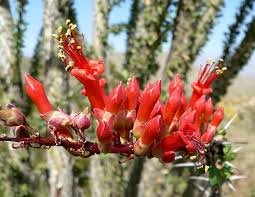
Ocotillo is unlike any other desert plant. Its 10–30 cane-like stems, each up to 20 feet (6 m) tall, emerge bare for most of the year — then explode with small green leaves within 3 days of any rain event and produce clusters of brilliant red-orange flowers at the tips in spring. Hummingbirds cross entire mountain ranges to reach blooming Ocotillo plants.
Ocotillo is not a cactus or a succulent — it’s in its own family (Fouquieriaceae). It survives drought by going leafless, then re-leafing whenever water is available, cycling through this process up to 8 times per year depending on rainfall patterns.
Survival Adaptations
- Rapid leaf production and shedding — grows leaves within 72 hours of rain; drops them within days of drought
- Photosynthesis occurs in green stem tissue when leaves are absent — the stems themselves are the primary photosynthesis organ
- Deep, extensive root system with both deep tap roots and shallow absorbing roots
- Thorny stems deter browsing by deer, rabbits, and javelinas
Growing Guide
- USDA Zones: 8–11; tolerates temperatures down to 10°F (-12°C) when established
- Light: Full sun — essential for blooming
- Water: Water monthly the first year; rainfall-sufficient once established
- Planting: Plant bareroot or from cut stems; allow cut ends to dry 1 week before planting
- Size: Reaches 6–20 feet (1.8–6 m) tall; vase-shaped habit 6–10 feet (1.8–3 m) wide
- Landscaping use: Living fence, xeriscape focal point, hummingbird garden anchor
→ Ocotillo Growing, Planting & Landscaping Guide on ZonedGarden
9. Echeveria
Native to: Mexico and Central America — over 150 species in the genus
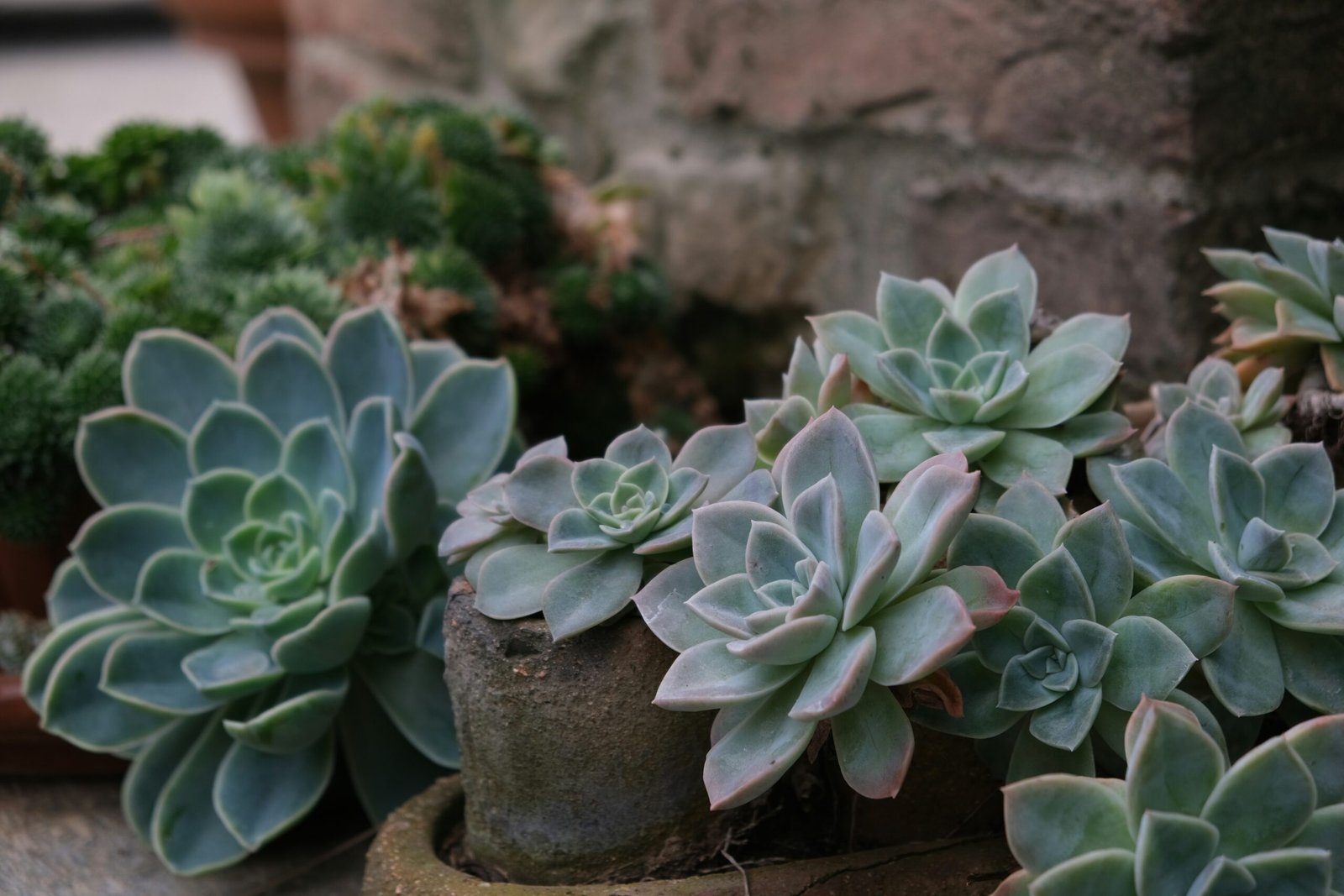
Echeveria is the most ornamental genus in the succulent world. Its perfect rosette forms — ranging from 1 inch (2.5 cm) to 12 inches (30 cm) across — come in hundreds of colours: silver-blue, rose-pink, purple-grey, green, and multicoloured. It’s the top-selling succulent globally for indoor and container gardening.
Unlike most desert plants in this list, Echeveria is genuinely beautiful in a conventional way — its symmetrical, gem-like rosettes look sculpted. Each one is surrounded by plump, water-filled leaves that tolerate periods of complete drought. Many produce coral or yellow flower spikes in spring and summer.
Survival Adaptations
- Thick, fleshy leaves store water in specialised parenchyma tissue — can sustain the plant for weeks without rain
- Waxy or powdery leaf coating (farina) reflects intense sunlight and reduces UV damage
- Rosette leaf arrangement funnels water toward the central root zone
- CAM photosynthesis reduces daytime water loss by keeping stomata closed during peak heat
Best Varieties to Grow
- Echeveria elegans: classic silver-white rosette; the most common species sold worldwide
- Echeveria ‘Lola’: pale lavender-pink rosette with transparent leaf edges
- Echeveria subsessilis: blue-grey rosette with pink blush; very sun-tolerant
- Echeveria ‘Black Prince’: deep burgundy to near-black rosette; dramatic indoor specimen
- Echeveria pulidonis: compact blue-green rosette with red tips; profuse yellow flowers
Growing Guide
- USDA Zones: 9–11 outdoors; excellent houseplant in all zones
- Light: Bright direct or indirect light — 4–6 hours minimum; avoid deep shade
- Water: Every 2–3 weeks in growing season; monthly in winter; never water into the rosette centre
- Soil: Gritty cactus mix with 50% perlite; drainage is critical
- Propagation: Leaf propagation — remove healthy leaf, let callous 3 days, lay on dry soil; roots appear in 2–4 weeks
→ ZonedGarden’s Echeveria Varieties Guide — 20 Best Species and How to Grow Them
10. Aloe Vera (Aloe barbadensis miller)
Native to: Arabian Peninsula; widely naturalised across Africa, the Mediterranean, and the Americas
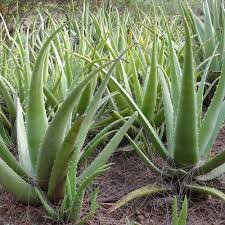
Aloe Vera is the world’s most commercially grown succulent — cultivated across over 100 countries for the cosmetic, pharmaceutical, and food industries. Called ‘the plant of immortality’ by ancient Egyptians and the ‘silent healer’ in traditional Indian medicine, it thrives in desert and semi-desert conditions with minimal water input.
A mature Aloe Vera plant stores up to 95% water in its gel-filled leaves, making it highly drought-tolerant. In the Sonoran and Chihuahuan Deserts, wild aloe relatives form essential components of the succulent scrubland ecosystem.
Survival Adaptations
- Thick, fleshy leaves with dense gel-filled parenchyma tissue store weeks of water reserves
- Serrated leaf margins and bitter-tasting latex beneath the outer skin deter herbivores
- Produces ‘pups’ — vegetative offsets that establish independently; a colony can survive even if the parent dies
- CAM photosynthesis closes stomata during day; opens at night to absorb CO₂ without water loss
Medicinal and Commercial Value
- Cosmetic industry: over $13 billion global market annually — found in skin creams, sunscreens, shampoos, and moisturisers
- Pharmaceutical: gel used in wound care, burn treatment, and anti-inflammatory preparations
- Food industry: aloe vera juice sold in health food market for digestive and immune support
- Agriculture: aloe vera extract used as organic pesticide and plant growth stimulant
Growing Guide
- USDA Zones: 9–11 outdoors; ideal indoor succulent in all climates
- Light: Bright indirect to direct morning sun — 6+ hours
- Water: Every 2–3 weeks in summer; monthly in winter; let soil dry completely
- Soil: Cactus/succulent mix with added coarse sand or perlite
- Container: Terracotta pot with drainage holes — allows soil to breathe and dry properly
→ ZonedGarden’s Complete Aloe Vera Care, Harvest & Uses Guide (also in Medicinal Plants series)
Quick Reference: Top 10 Desert Plants at a Glance
| Plant | Type | USDA Zones | Water Needs | Mature Size | Indoor? | Difficulty |
|---|---|---|---|---|---|---|
| Saguaro Cactus | Columnar cactus | 9–11 | Very low | 40 ft / 12 m | No | Easy |
| Agave | Succulent | 5–11 | Very low | 3–6 ft / 0.9–1.8 m | Yes | Easy |
| Joshua Tree | Yucca tree | 6–9 | Low | 40 ft / 12 m | No | Moderate |
| Prickly Pear | Pad cactus | 3b–11 | Very low | 3–7 ft / 0.9–2.1 m | Yes | Easy |
| Barrel Cactus | Barrel cactus | 9–11 | Very low | 4–10 ft / 1.2–3 m | Yes | Easy |
| Desert Rose | Succulent shrub | 11–12 | Low | 3–6 ft / 0.9–1.8 m | Yes | Moderate |
| Creosote Bush | Desert shrub | 7–11 | Very low | 4–8 ft / 1.2–2.4 m | No | Easy |
| Ocotillo | Desert shrub | 8–11 | Very low | 6–20 ft / 1.8–6 m | No | Moderate |
| Echeveria | Rosette succulent | 9–11 | Very low | 1–12 in / 2.5–30 cm | Yes | Easy |
| Aloe Vera | Succulent | 9–11 | Very low | 2–3 ft / 60–90 cm | Yes | Easy |
5 Essential Rules for Growing Desert Plants
1. Drainage Is the Only Non-Negotiable
Desert plants die from overwatering faster than from any other cause. Every container needs drainage holes. In garden beds, amend heavy clay soil with 50% coarse sand and gravel. Standing water around roots causes irreversible rot within 48–72 hours. If in doubt — don’t water.
2. Water Deeply, Then Wait
When you water, water thoroughly — soak the soil to 12–18 inches (30–45 cm) depth to encourage deep root growth. Then wait for the soil to dry completely before watering again. Shallow, frequent watering keeps roots near the surface where they’re vulnerable to heat stress and drought.
3. Full Sun Is Not Optional
Desert plants evolved under intense, unfiltered sunlight. Most require 6–8 hours of direct sun daily to maintain compact growth, produce flowers, and store adequate water. Shaded desert plants become etiolated — stretched, weak, pale, and susceptible to rot and pests.
4. Use the Right Soil — Always
Standard potting soil retains too much moisture for desert plants. Use a dedicated cactus and succulent mix, or create your own: 50% standard potting mix + 30% coarse perlite + 20% coarse sand. The goal is soil that drains within seconds of watering, not minutes.
5. Respect Dormancy in Winter
Most desert plants enter dormancy from October to February. Stop fertilising completely. Reduce watering to once a month or stop entirely for cacti and agaves. Cold and dry conditions trigger dormancy — do not try to force growth with heat and water in winter. Disturbing dormancy weakens the plant and can trigger rot.
→ Desert Plant Care Calendar — Month-by-Month Watering and Feeding Guide on ZonedGarden
Using Desert Plants in Xeriscaping
Xeriscaping is landscape design that eliminates or dramatically reduces irrigation needs. A well-designed xeriscape using desert plants can reduce outdoor water use by 50–75% compared to a conventional lawn, while requiring 80% less maintenance.
3 design principles for desert plant landscaping:
- Layering: Place tall columnar cacti or Agave as structure anchors, mid-height Ocotillo or Creosote as backdrop, and low Echeveria or Aloe as ground-level fill. This mirrors natural desert plant communities.
- Mulching: Cover bare soil between plants with 3–4 inches (7.5–10 cm) of decomposed granite or gravel. This reduces soil temperature by up to 20°F (11°C), retains moisture, and prevents weeds.
- Grouping by water need: Place plants with similar watering needs together. All 10 plants on this list can share the same irrigation zone — none need more than monthly watering once established.
Frequently Asked Questions
What is the most drought-tolerant plant in the world?
The Creosote Bush (Larrea tridentata) is among the most drought-tolerant plants documented. It survives with as little as 2 inches (5 cm) of annual rainfall, can lose 70% of its cellular water and recover, and individual clones have lived over 11,700 years. The Resurrection Plant (Selaginella lepidophylla) can survive complete desiccation and revive with water, but the Creosote’s longevity record is unmatched.
Can desert plants survive indoors?
Yes — 6 of the 10 plants in this list grow well indoors: Agave, Prickly Pear, Barrel Cactus, Desert Rose, Echeveria, and Aloe Vera. They need a south or west-facing window with 4–6 hours of direct sunlight daily, or a full-spectrum grow light. The key to indoor success is the same as outdoors: excellent drainage and minimal watering.
What is xeriscaping and which plants are best for it?
Xeriscaping is landscape design that reduces or eliminates irrigation. The 5 best desert plants for xeriscaping are: Agave, Prickly Pear, Creosote Bush, Ocotillo, and Barrel Cactus. All establish quickly, tolerate reflected heat from pavement, require no supplemental watering once established, and provide year-round structure to the landscape.
How often should you water desert plants in containers?
Every 2–4 weeks in summer growing season; every 4–6 weeks or not at all in winter. Always check soil first — insert a finger 2 inches (5 cm) deep. If dry, water thoroughly. If any moisture remains, wait. Overwatering is the single most common cause of death in container-grown desert plants.
Which desert plant is best for beginners?
Echeveria and Aloe Vera are the best desert plants for beginners. Both tolerate occasional overwatering better than cacti, grow well in containers indoors, signal stress clearly (wrinkling or yellowing leaves), and recover quickly from mistakes. Prickly Pear is the best beginner choice for outdoor desert gardens.
Are desert plants good for wildlife?
Yes — desert plants are critical for wildlife. Saguaro provides nesting sites for 35+ bird species. Prickly Pear fruit feeds javelinas, coyotes, and birds. Ocotillo and Agave flowers are major nectar sources for hummingbirds and bats. Creosote Bush supports over 60 insect species. A desert garden with these 10 plants creates a functional urban wildlife habitat.