
You’re staring at your tree wondering if something’s wrong. The crepe myrtle bark is peeling. Maybe it’s turning black. Maybe you see white fuzzy stuff all over it. And you’re asking yourself—is this normal or do I need to fix something?
I had the same panic three summers ago. My neighbor told me the tree was dying. A landscaper quoted me $400 to “save” it. Neither knew what they were talking about. Here’s what actually matters about crepe myrtle bark and how to handle real problems when they show up.
What Makes Crepe Myrtle Bark Different
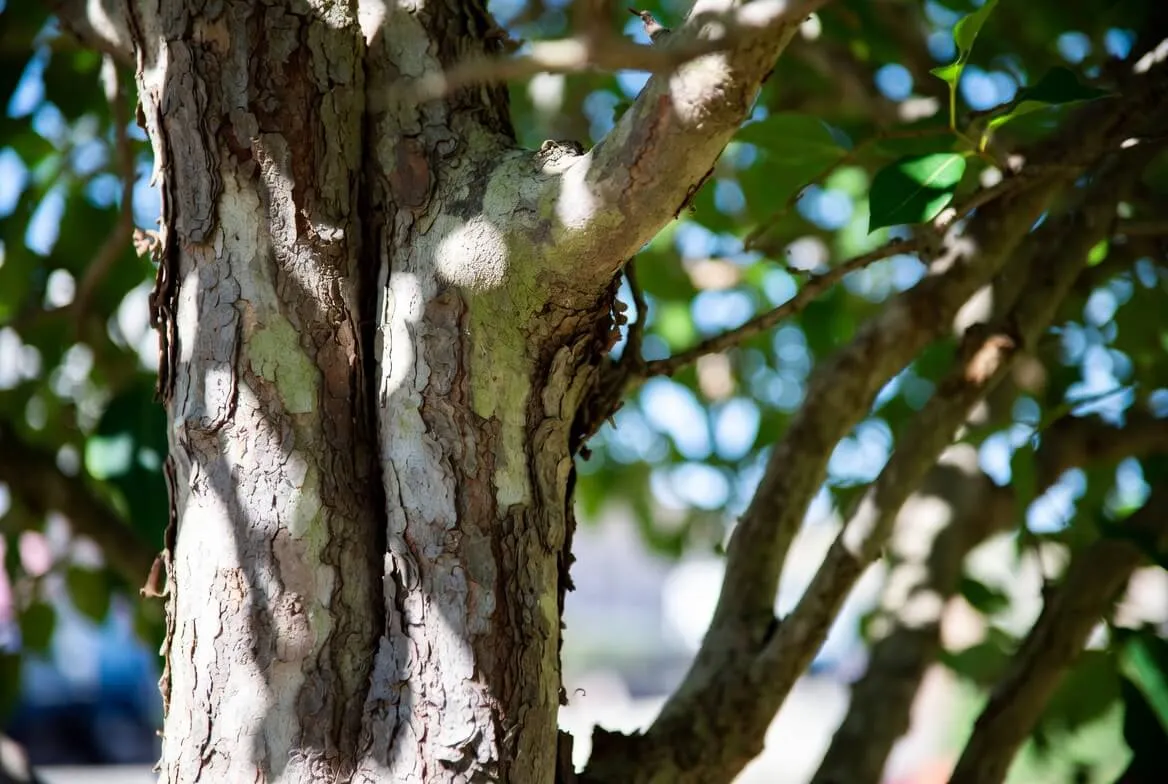
Crepe myrtle bark is one of the coolest features of these trees.
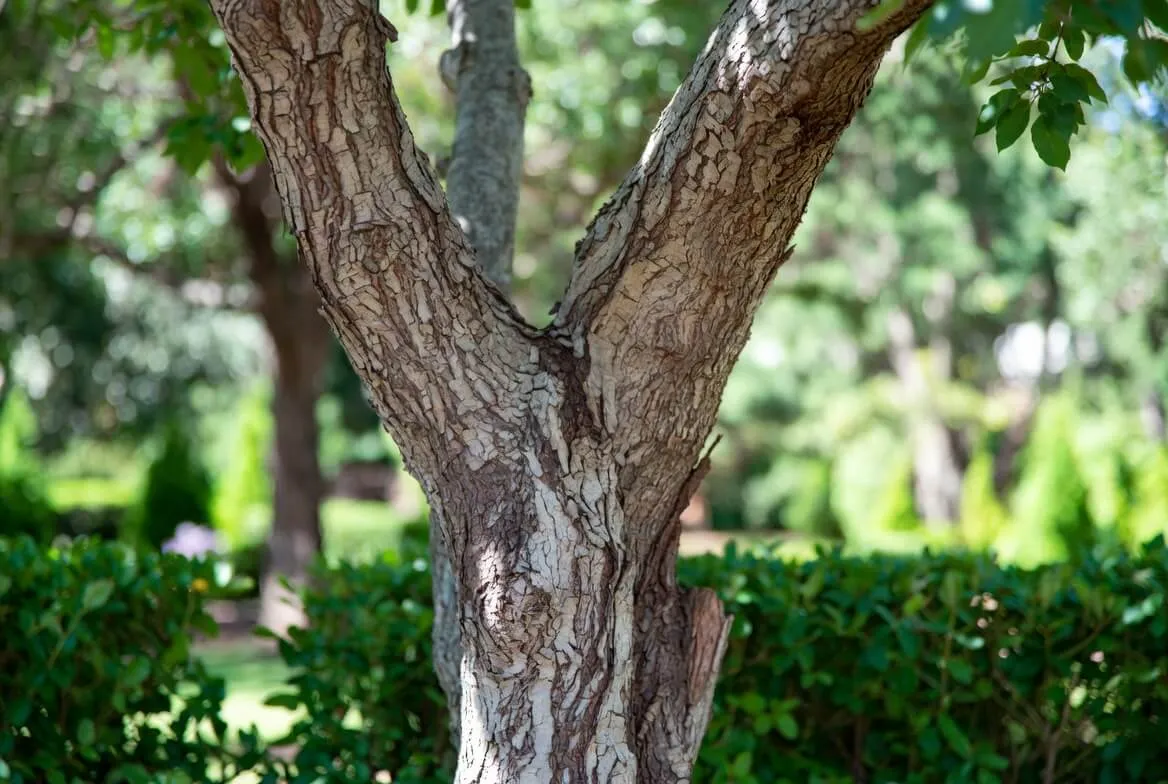
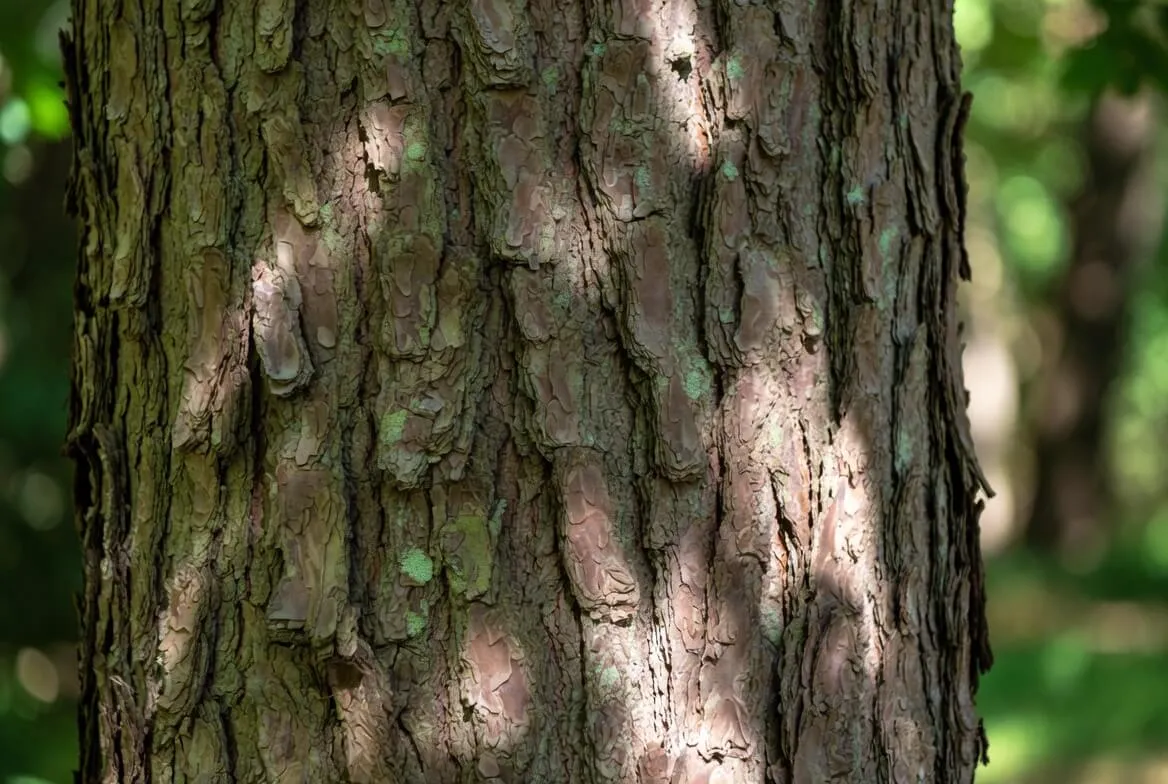
It naturally exfoliates. That means it peels and sheds in thin sheets, revealing smooth, colorful inner bark underneath. This isn’t damage—it’s a feature. Cinnamon, gray, tan, or mottled patterns emerge as the outer layer falls away.
Most people see crepe myrtle bark peeling and freak out. They think the tree is sick or stressed. But if the bark is peeling in clean sheets and showing smooth, healthy layers underneath, your tree is doing exactly what it should.
I wasted an entire weekend researching “dying crepe myrtle” before realizing mine was just doing its thing. Don’t be me.
The Real Problem: Crepe Myrtle Bark Scale
Now, if you see white or gray fuzzy spots on your crepe myrtle bark, we have an actual issue. That’s crepe myrtle bark scale. It’s an invasive insect that showed up in Texas in 2004 and has been spreading ever since. These little pests suck sap from the tree and secrete honeydew, which leads to black sooty mold.
Here’s how you identify it:
- White or gray felt-like coating on branches and trunk
- Often appears near pruning cuts or branch joints
- Pink liquid oozes when you crush the white spots
- Black sticky residue covers the bark
The scale itself won’t kill your tree outright. But it makes everything look terrible, reduces flower size, and can stunt growth. It negates the entire reason you planted a crepe myrtle in the first place.
My Experience with Bark Scale
I noticed the white spots in July. I thought it was bird droppings at first. Then I saw the black coating developing on the trunk. I did some research. Confirmed it was scale. Went to the garden center that weekend.
The treatment process took a full season, but it worked. I’ll walk you through what actually helps versus what wastes your time and money.
Crape Myrtle Bark Scale Treatment That Works
Forget the complicated schedules. Here’s what you need to do.
In late April or early May, apply a soil drench with imidacloprid or dinotefuran around the drip line of the tree. This is a systemic insecticide that the roots absorb and distribute throughout the tree. It kills the scale as they feed.
Mix the product according to the label. Pour it in a band around the outer edge of the canopy (the drip line) where the feeder roots are located. Water it in thoroughly.
During winter, when the tree has dropped its leaves, spray dormant oil on the trunk and branches. Get it into all the cracks and crevices. This suffocates overwintering scales.
You can also scrub the bark with soapy water and a stiff brush. This physically removes the female scales and egg masses. It’s tedious but reduces the population significantly.
One application usually isn’t enough. Plan on treating for 2-3 years to fully eliminate the infestation.
When Crepe Myrtle Bark Turns Black
Black crepe myrtle bark means sooty mold. This is a fungus that grows on the honeydew secreted by scale insects or aphids. The mold itself doesn’t harm the tree—it just looks disgusting and blocks sunlight from reaching the bark.
If you see black coating on your crepe myrtle bark, you have a pest problem. Either scale or aphids. Check closely for the white fuzzy scale or small green aphids on the branches.
Treat the pest and the sooty mold will eventually disappear on its own. You can wash it off with a hose or soapy water to speed things up.
I tried pressure washing mine. Bad idea. Damaged the bark. Just use a gentle spray from a garden hose instead.
Crepe Myrtle Bark Diseases to Watch For
Beyond scale, there are a few crepe myrtle bark diseases worth knowing about.
- Powdery mildew shows up as white powder on leaves, not bark. It’s mostly cosmetic. Good air circulation and fungicide sprays help if it’s severe.
- Cercospora leaf spot causes dark spots on foliage. Again, not really a bark issue. Remove infected leaves and improve drainage if needed.
- Cankers are sunken, dead areas on branches or trunk. These can be serious. Prune out infected wood and destroy it. Don’t compost it.
Honestly, crepe myrtles are tough. If you plant them in full sun with decent drainage and don’t over-prune them, disease problems are rare.
The Peeling Bark Question Everyone Asks
Is crepe myrtle bark peeling normal? Yes. Absolutely yes.
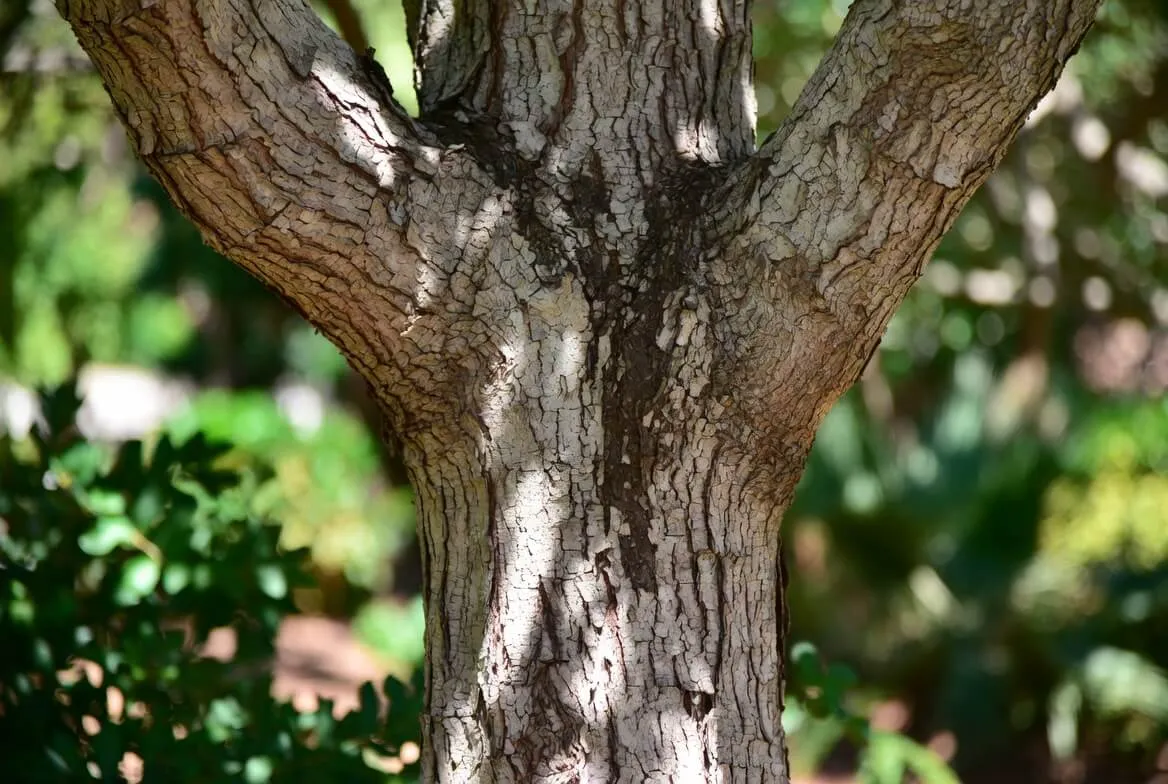
The exfoliating bark is one of the main ornamental features of these trees. As the tree grows, the outer bark splits and peels away in thin sheets. This reveals the smooth, often multicolored inner bark that gives the trunk its distinctive look.
If the bark underneath looks healthy—smooth and clean with no soft spots or oozing—then peeling is completely normal. It happens most noticeably in summer as the tree actively grows.
However, if you see extensive bark loss with mushy or discolored wood underneath, that could indicate disease or physical damage. In that case, consult an arborist.
What the Bark Actually Does
People ask about the use of crepe myrtle bark all the time. Ornamentally, it provides year-round interest. Even when the tree is bare in winter, the colorful, textured bark looks great. That’s the primary “use” in landscaping.
Medicinally, extracts from crepe myrtle have been studied in traditional medicine for anti-inflammatory and antioxidant properties. But I’m not a doctor and you shouldn’t be eating bark from your yard.
The bark also protects the vascular system of the tree. It’s a barrier against pests, disease, and environmental stress. That’s why damage to the bark can be serious if it exposes the living tissue underneath.
Things That Actually Hurt Crepe Myrtle Bark
Here’s what causes real damage:
- Lawn mowers and string trimmers: Hitting the trunk repeatedly kills the cambium layer
- Severe pruning cuts: Large wounds invite pests and disease
- Sunscald: Sudden exposure of previously shaded bark to intense sun
- Frost cracks: Rapid temperature changes in winter split the bark
I see damaged crepe myrtle bark from weed whackers constantly in my neighborhood. People get lazy with their edging and slice right into the trunk. Do that enough times and you’ll kill the tree. Put mulch around the base. Keep equipment away from the trunk. Problem solved.
Best Conditions for Healthy Bark
Where do crepe myrtles grow best? Full sun, well-drained soil, USDA Zones 7-9. Give them at least six hours of direct sunlight daily. Plant in soil that doesn’t stay soggy. Water deeply but infrequently once established.
Good growing conditions mean healthy crepe myrtle bark. Stressed trees are more susceptible to pests and diseases. Strong trees resist problems naturally.
I planted mine in a spot that gets afternoon shade. Big mistake. The growth is leggy, the bark looks dull, and it flowers half as much as it should. Learn from my stupidity.
The Disadvantages Nobody Mentions
Crepe myrtles drop stuff constantly. Leaves in fall. Seed pods in winter. Bark year-round. If you want a pristine, maintenance-free yard, this isn’t your tree. You’ll be raking and sweeping more than you’d like.
They also need full sun or they look terrible. And they’re not cold-hardy beyond Zone 6 without significant dieback. But for most situations in the South, they’re fantastic. Just go in with realistic expectations.
Quick Treatment Checklist
For crape myrtle bark scale treatment:
- Spring: Apply systemic soil drench (imidacloprid or dinotefuran)
- Winter: Spray dormant oil on trunk and branches
- Anytime: Scrub scale with soapy water and brush
- Repeat: Continue treatment for 2-3 years
For general bark health:
- Avoid mechanical damage from equipment
- Plant in full sun with good drainage
- Don’t over-fertilize or over-water
- Prune properly (no crepe murder)
FAQs
What is the use of crepe myrtle bark?
The bark provides ornamental value with its exfoliating texture and colorful inner layers. It also protects the tree’s vascular system from pests, disease, and environmental stress.
What does the crepe myrtle bark scale look like?
It appears as white or gray fuzzy spots on the bark. Underneath these coverings are pink eggs. When crushed, the scale produces a distinctive pink liquid. Heavy infestations cause black sooty mold.
How do I treat crepe myrtle bark skin?
If you mean bark scale, treat with systemic soil drenches in spring and dormant oil sprays in winter. Manually scrub scales off with soapy water. Repeat treatments for multiple years.
Why does crepe myrtle bark turn black?
Black bark indicates sooty mold growing on honeydew secreted by scale insects or aphids. The mold is harmless but unsightly. Treat the pest problem and the mold disappears.
What are the medicinal uses of Crepe Myrtle?
Traditional medicine has used extracts for anti-inflammatory and antioxidant properties. However, these uses aren’t well-studied in modern medicine and shouldn’t be attempted without professional guidance.
What are the disadvantages of crepe myrtles?
They constantly drop leaves, seed pods, and bark. They require full sun to thrive. They’re not cold-hardy beyond Zone 6. They’re susceptible to bark scale infestations.
What month do crepe myrtles get leaves?
Crepe myrtles leaf out in late April or May, depending on your climate zone. They’re one of the last trees to develop foliage in spring.
Can I save a tree if the bark is falling off?
If the bark is naturally exfoliating and showing healthy tissue underneath, the tree is fine. If large sections are falling off with damaged or diseased wood underneath, consult an arborist immediately.
Where do crepe myrtles grow best?
They thrive in USDA Zones 7-9 with full sun (6+ hours daily) and well-drained soil. They tolerate heat, humidity, and drought once established.
Bottom Line
Crepe myrtle bark peeling is normal. Black bark means you have scale or aphids. White fuzzy spots are definitely scale.Treatment works but takes consistency. Most bark “problems” aren’t actually problems—they’re just the tree doing what it naturally does.
Pay attention to what’s actually wrong versus what looks weird. That distinction will save you time, money, and unnecessary stress.
Read More Exciting Blogs at Zoned Garden.