
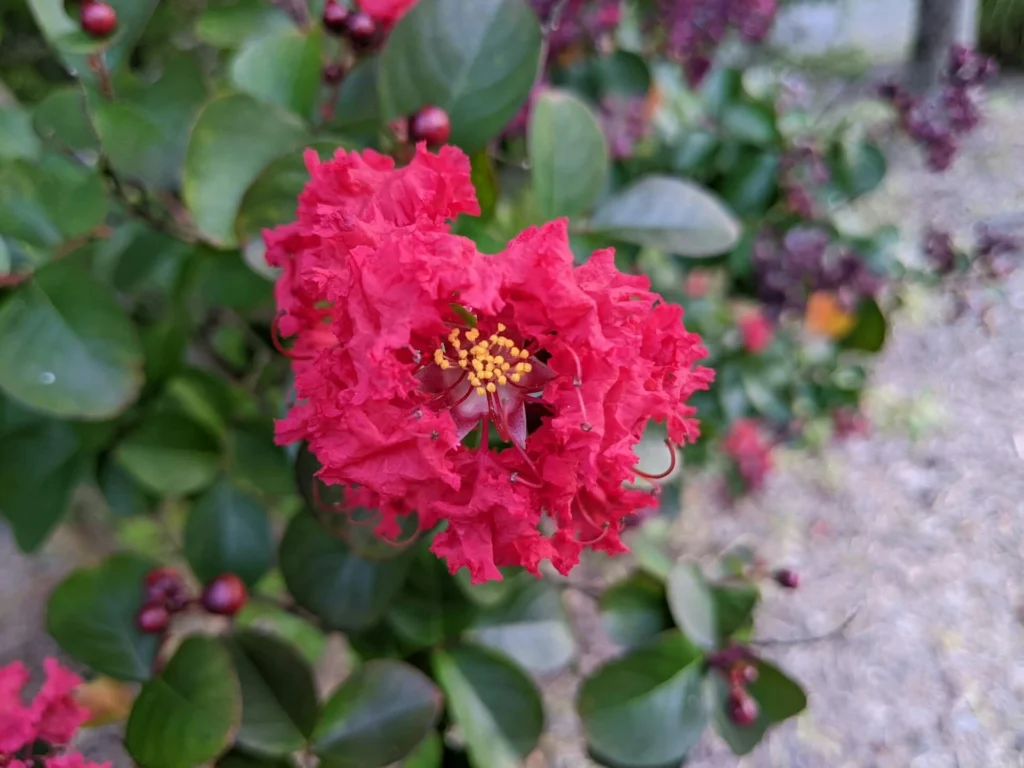
I remember the first time I planted a crape myrtle in my yard. I was standing there, staring at these weird reddish-bronze leaves, thinking I’d bought a sick plant. Turns out, that’s just how crepe myrtle leaves start their journey. Let me break down everything you need to know about these leaves so you don’t panic like I did.
The Real Deal About Crepe Myrtle Leaves
Here’s what you’re working with. The crape myrtle leaf shape is oval, typically measuring between 2 to 8 inches long. They’re not tiny, but they’re not massive either. Think somewhere between your thumb and your whole hand, depending on the variety.
The thing that threw me off at first was the color. New leaves pop out looking reddish or bronze. I thought something was wrong. But by summer, they transform into this gorgeous dark green. It’s like watching a slow-motion color change right in your backyard.
The texture varies too. Some varieties have leaves that feel almost leathery with a glossy finish. Others are more matte. I’ve got a Natchez variety, and those leaves shine like someone polished them.
Why Your Crepe Myrtle Leaves Keep Changing Colors
The color progression is actually one of the coolest parts about these trees. Let me walk you through what happens throughout the year.
- Spring: Those reddish or bronze babies emerge. Don’t freak out. This is normal.
- Summer: Everything settles into dark green. This is prime growing season, and the leaves are working overtime to feed the tree.
- Fall: This is where the magic happens. Your crepe myrtle leaves turning red create stunning shades of orange and yellow as well. Last fall, my neighbor literally stopped her car to ask what kind of tree it was. The fall color is that good.
I’ve found that the fall colors depend a lot on your specific variety and weather conditions. Cooler nights seem to trigger the best color show. If you want tips on maintaining healthy foliage year-round, check out our guide on proper watering techniques for flowering trees.
The Lobe Situation Nobody Talks About
Some crepe myrtle leaves have 5 to 7 lobes. Not all varieties show this clearly, but if you look close, you’ll notice these little divisions along the leaf edges. It’s like the leaf couldn’t decide if it wanted to be smooth or fancy, so it went somewhere in between.
Full Sun Is Non-Negotiable
Let me be straight with you. Crepe myrtle tree leaves need full sun to look their best. We’re talking at least six to eight hours of direct sunlight every day. I learned this the hard way when I planted one under a large oak tree thinking it would be fine. Wrong.
The crape myrtle leaves stayed smaller, the colors weren’t as vibrant, and worst of all, the tree barely flowered. Full sun isn’t just a suggestion. It’s the difference between a tree that looks okay and one that makes your neighbors jealous.
Sunlight also helps prevent diseases. Shady spots create the perfect environment for fungal problems. Trust me, you don’t want that headache.
When Crepe Myrtle Leaves Get Powdery Mildew
This is the thing that hits most crepe myrtles at some point. You’ll wake up one morning and notice this white, powdery substance covering your leaves. Looks like someone dusted them with flour. That’s powdery mildew, and it’s annoying but manageable.
Why it happens:
- Poor air circulation around the tree
- High humidity (hello, summer in the South)
- Shady or damp locations
- Planting trees too close together
I had this problem two summers ago. The leaves looked terrible, covered in white patches. Here’s what actually worked for me.
Prevention beats treatment:
- Plant in sunny spots with good airflow
- Space your trees properly (don’t crowd them)
- Avoid wetting the foliage when watering
- Choose resistant varieties if you’re in a humid climate
If you already have it:
- Remove infected leaves immediately
- Use a fungicide (I prefer organic options)
- Water at the base, never overhead
- Improve air circulation by pruning nearby plants
For more detailed disease prevention strategies, our comprehensive pest management guide covers all the bases.
Air Circulation Changes Everything
This might sound boring, but air circulation around your crepe myrtle leaves is huge. When air can’t move through the branches, moisture sits on the leaves. That moisture creates a fungal playground.
I spaced my first crepe myrtles about 4 feet apart because they looked small in the nursery pots. Big mistake. Within two years, they grew together, and the leaves in the middle turned into a mildew factory. Space them properly from the start. Give each tree room to breathe. Your future self will thank you.
Watering Without Creating Problems
Water regularly, especially during summer when crepe myrtle leaves are working hard. But here’s the catch—soggy soil kills these trees faster than drought.
I water deeply once or twice a week during hot months. The goal is to keep soil moist but never waterlogged. Stick your finger in the soil. If it’s wet two inches down, skip watering that day.
Never spray water directly on the leaves. Always water at the base. This simple change reduced my powdery mildew issues by probably 80%.
The Glossy Leaf Advantage
Some crepe myrtle varieties have naturally glossy leaves. This isn’t just for looks. That glossy, leathery texture actually helps repel water and reduces disease risk slightly. Not enough to save you if you’re doing everything else wrong, but it helps.
My Muskogee variety has these thick, glossy leaves that just look healthier than my other varieties. They also seem to bounce back faster from stress.
What Healthy Crepe Myrtle Leaves Should Look Like
By mid-summer, your crepe myrtle leaves should be:
- Dark green and vibrant
- Free from spots or discoloration
- Not curling or wilting
- Evenly distributed across branches
- Glossy or matte depending on variety
If they’re not hitting these marks, something’s off. Usually it’s a watering issue, sun exposure problem, or disease starting to creep in.
FAQs About Crepe Myrtle Leaves
Why are my crepe myrtle leaves turning yellow in summer?
Usually means overwatering or poor drainage. Check your soil. If it’s constantly wet, cut back on watering frequency.
What is the crape myrtle leaf arrangement?
Crape myrtle leaf arrangement is primarily opposite, though some varieties may show alternate leaves along the stems.
Is it normal for new crepe myrtle leaves to be red?
Completely normal. New growth often emerges reddish or bronze before turning green. This is actually a sign of healthy new growth.
Do all crepe myrtle leaves change color in fall?
Most do, but the intensity varies by variety and climate. Some varieties put on better fall shows than others.
How do I know if white stuff on leaves is powdery mildew?
It looks like white powder you can rub off. If it’s fuzzy or gray, might be a different fungal issue. Powdery mildew is distinctly white and powdery.
Can crepe myrtle leaves recover from disease?
The infected leaves won’t recover, but new growth will come in healthy if you fix the underlying problem. Remove diseased leaves and improve growing conditions.
Do crepe myrtle leaves change color in fall?
Yes, crepe myrtle leaves change color in fall, turning yellow, orange, or red before dropping, adding seasonal beauty to your garden.
When do crepe myrtles leaf out?
Crepe myrtles usually leaf out in early to mid-spring, with new green leaves appearing as temperatures warm.
What does a crepe myrtle look like?
A crepe myrtle is a small to medium tree or shrub with smooth, peeling bark, vibrant summer flowers, and oval green leaves that change color in fall.
Bottom Line on Crepe Myrtle Leaves
These leaves tell you everything about how your tree is doing. Color changes throughout the season are normal and beautiful. Problems show up fast when conditions aren’t right—usually as powdery mildew or color issues.
Give your crepe myrtle what it actually needs: full sun, good air circulation, proper watering, and some space to breathe. Do that, and those leaves will reward you with stunning colors from spring through fall. Skip any of those basics, and you’ll spend your time fighting problems instead of enjoying one of the best flowering trees you can grow.
The crape myrtle’s common name might vary by region, but the care stays the same. Treat it right, and those leaves will be the star of your landscape.