
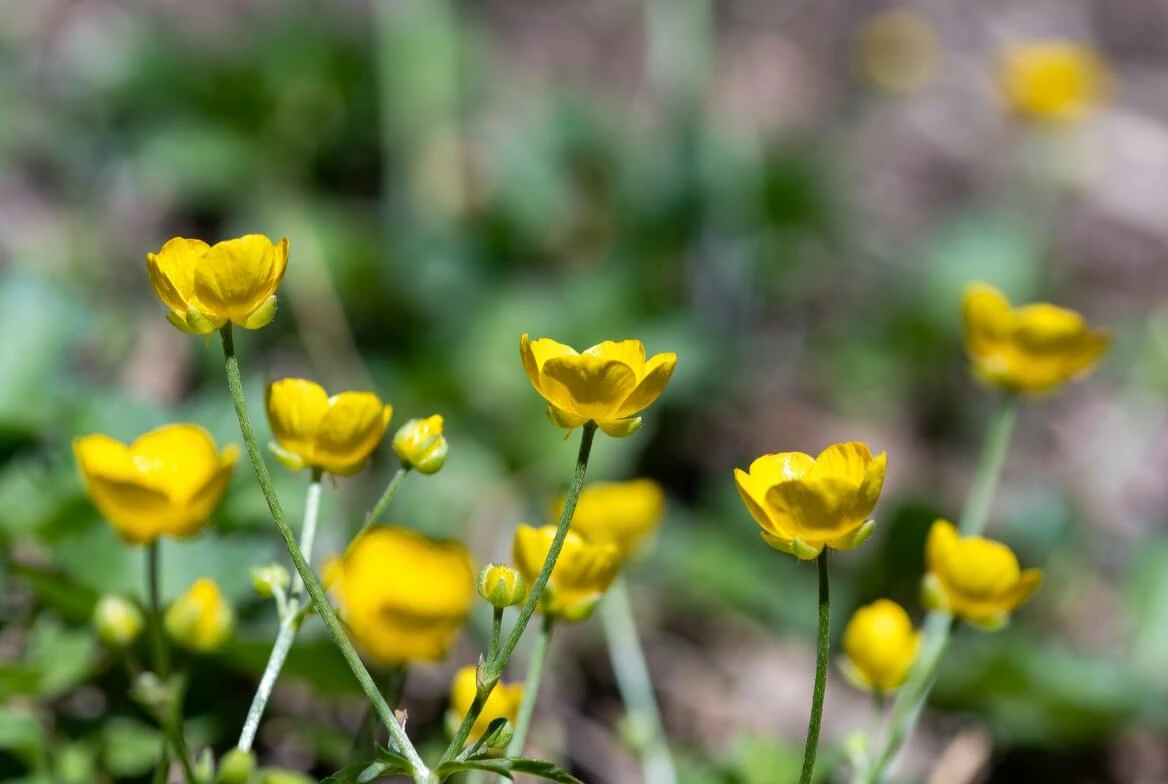
I let buttercup flowers take over half my lawn before I realized they were the problem, not the solution. I thought I was getting free wildflowers. Ended up with a mat of invasive weeds that choked out my grass and gave me a rash when I tried pulling them bare-handed.
Here’s the thing about buttercup plants: some are gorgeous garden additions. Others are aggressive spreaders that’ll dominate your yard in one season.
Let me show you the difference so you don’t waste a year fighting the wrong battle like I did.
The Buttercup Confusion Nobody Talks About
“Buttercup” covers about 600 different plant species in the Ranunculus genus. Some you buy at nurseries. Others invade on their own.
Persian buttercups (the florist kind) have those layered, tissue-paper petals in every color. They’re stunning. Expensive. Temperamental.
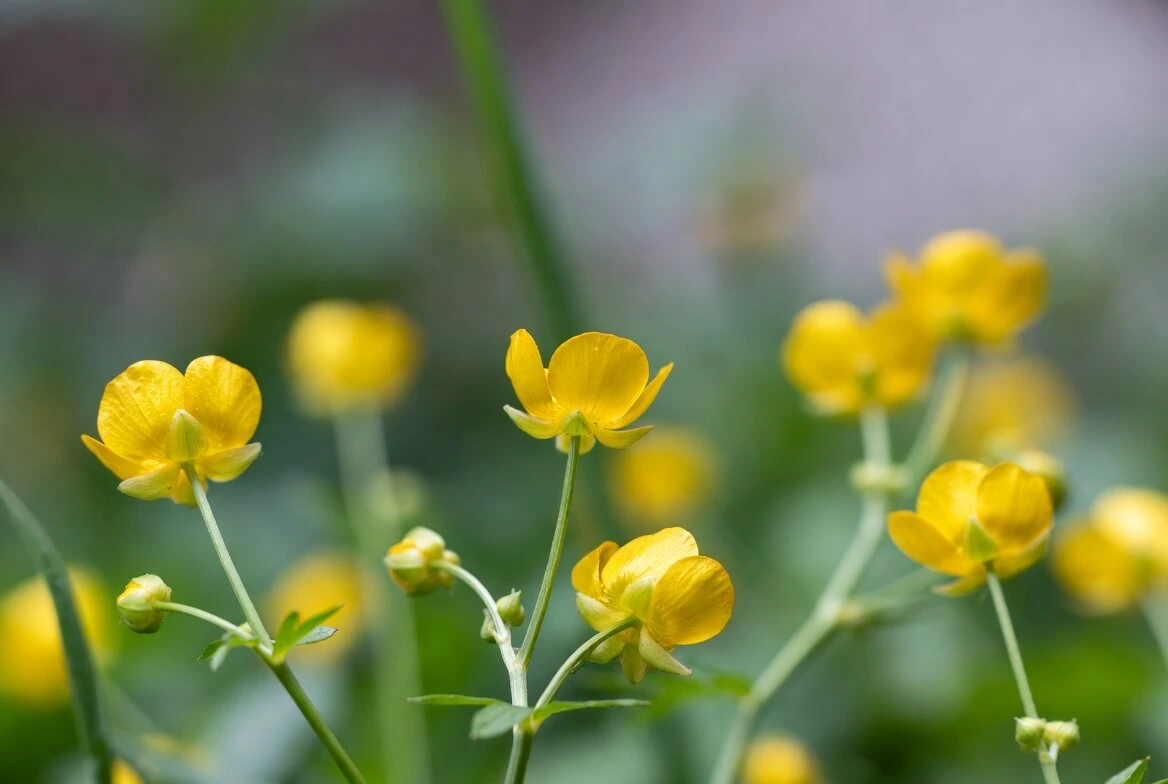
Wild buttercups (meadow, creeping, bulbous types) are the glossy yellow flowers that pop up uninvited in lawns. Hardy. Free. Invasive.
I didn’t know there was a difference until I bought Persian buttercups for my garden and watched wild creeping buttercups take over my lawn simultaneously.
Two completely different problems. One name.
Why Wild Buttercup Flowers Spread Like Crazy
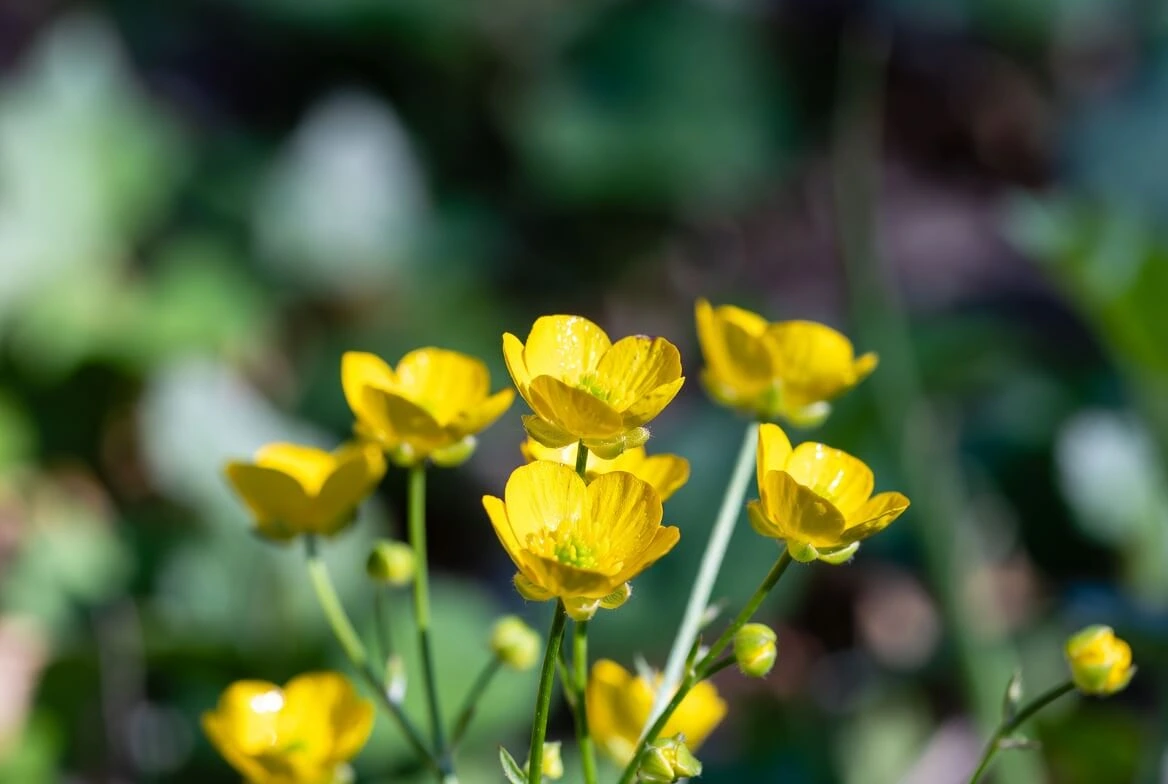
Creeping buttercup earned its name. It literally creeps via runners across your lawn. Each plant sends out stolons (above-ground stems) that root at nodes. One plant becomes five plants becomes twenty plants in a single season.
How creeping buttercups dominate:
- Spreads by runners that root every few inches
- Self-seeds aggressively
- Thrives in thin, weak lawns
- Loves moisture and shade
- Outcompetes grass easily
I had a 10-foot circle of buttercups that turned into a 40-foot section in three months. Just sat back and watched it happen because I thought they were pretty. They’re pretty until they’re everywhere.
The “Do You Like Butter?” Game (And Why It Actually Works)
Remember holding a buttercup under your chin as a kid? If it reflected yellow, you supposedly liked butter. Turns out there’s real science behind this childhood game.
Buttercup flowers have uniquely reflective petals. They contain air layers beneath the surface that act like mirrors. This reflection is literally unique in the plant world.
The petals curve inward and reflect light onto the flower center. This increases heat, warms the pollen, and attracts pollinators.
So yeah, they do reflect yellow light. The butter thing is just folklore, but the reflection is legit.
The Toxicity Issue You Need to Know
All buttercup plants are poisonous. Not “might cause a tummy ache” poisonous. Actually toxic.
They contain protoanemonin, which causes:
- Skin irritation and blistering
- Vomiting and diarrhea if ingested
- Mouth blisters in livestock
- Contact dermatitis
I learned this the hard way pulling them bare-handed. Got a rash across both palms that lasted three days.
Safety rules for handling buttercups:
- Always wear gloves
- Long sleeves when pulling large amounts
- Don’t let kids or pets eat them
- Livestock usually avoid them (too bitter)
- Wash hands thoroughly after contact
The irony? Cows grazing in buttercup-rich fields supposedly gave creamier butter. But buttercups are toxic to cows. The folklore doesn’t match reality.
Growing Persian Buttercups (The Good Kind)
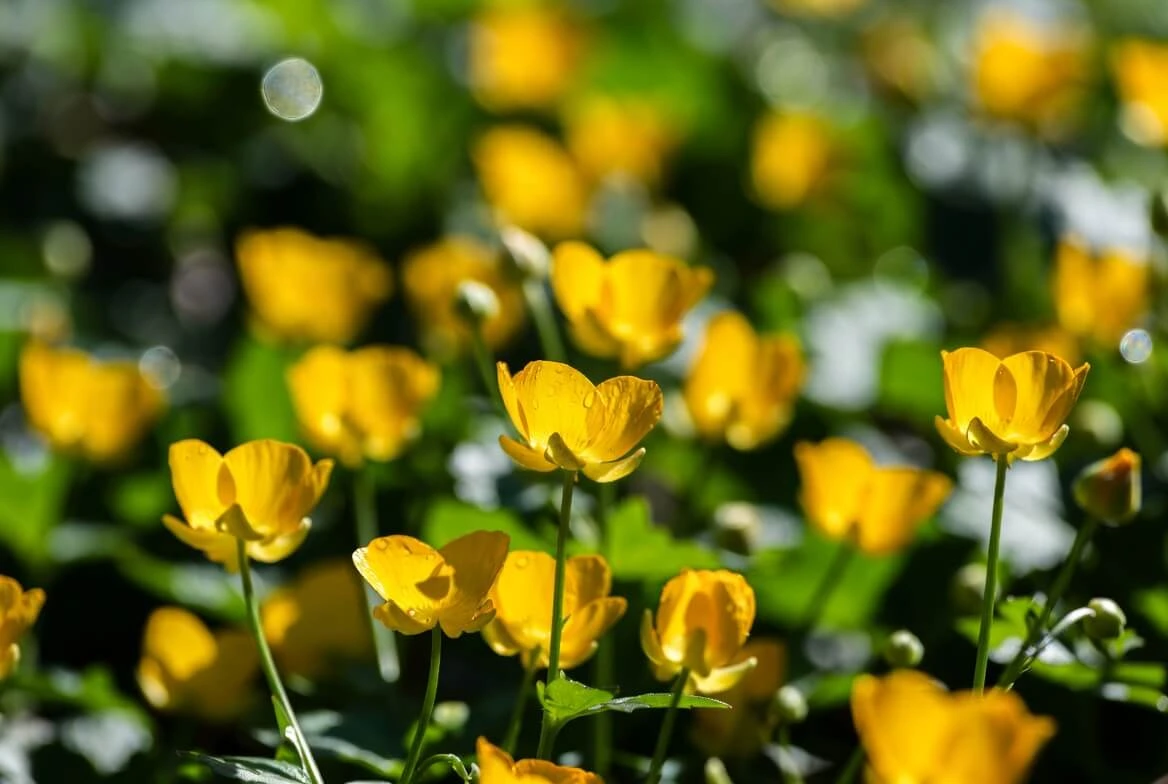
Persian buttercups are the ones you actually want. Those rose-like blooms florists charge $8 per stem for. They’re completely different from wild buttercups. Grown from corms, not runners. Die back after blooming. Actually stay where you plant them.
Persian buttercup requirements:
- Full sun (6+ hours daily)
- Well-drained soil
- Cool spring temperatures (50s-60s)
- Soak corms 3-4 hours before planting
- Plant 2 inches deep, 6-9 inches apart
- Pre-sprout for best results
I covered the full Persian buttercup process in another article, but the key point: these are high-maintenance flowers that reward precision. Wild buttercups? Zero maintenance. They just show up and dominate.
For detailed ranunculus growing instructions, see our ranunculus planting guide at Zoned Garden.
Identifying Which Buttercup Plant You Have
Not sure if your buttercup flowers are friends or foes? Here’s how to tell.
Creeping buttercup:
- Glossy yellow petals (5-7 per flower)
- Spreads by runners along ground
- Three-lobed, serrated leaves
- Hairy stems
- Blooms May to August
- Forms dense mats
Meadow buttercup:
- Taller (2-3 feet when blooming)
- Branched flower clusters
- Five glossy yellow petals
- Deeply divided leaves
- Blooms April to October
- Found in meadows, not lawns typically
Bulbous buttercup:
- Bulb-like swelling at stem base
- Five shiny yellow petals
- Hairy stems
- Three-lobed leaves
- Blooms March to May
- Found in grasslands
Persian buttercup:
- Multi-layered petals (looks like roses)
- Many colors (not just yellow)
- Long stems
- Grown from corms
- Doesn’t spread aggressively
- Garden plant, not wildflower
I had a creeping buttercup. The worst kind. The one that spreads fastest and is hardest to eliminate.
Controlling Wild Buttercups in Your Lawn
Prevention beats cure with buttercups. A thick, healthy lawn doesn’t give them space to establish. But if they’re already there? You’ve got work ahead.
Removal strategies:
- Pull before they seed (wear gloves!)
- Mow flowers off immediately if you can’t pull yet
- Apply post-emergent broadleaf herbicide
- Use glyphosate carefully (will kill grass too)
- Best time: late winter when plants are small
- Expect 2-3 years to fully eliminate
I spent two years fighting a creeping buttercup. Pulled hundreds of plants. Mowed constantly. Finally used selective herbicide in March. Still see occasional plants pop up from the seed bank.
Why they’re so hard to eliminate:
- Seeds remain viable in soil for years
- Runners root at every node
- Fragments can regrow
- Thrive in conditions grass hates (shade, moisture)
- Pull one, three more appear from seeds
The seed bank is the real problem. You can remove every visible plant and still have buttercups next year from dormant seeds.
The Folklore and History of Buttercup Flowers
Buttercups have been around for 20+ million years. Fossils show them in Miocene layers. The name comes from their butter-yellow petals that look like tiny cups. In Scottish Gaelic, they’re called “buidheag” – meaning any small yellow thing. Same word for egg yolk.
Buttercup folklore:
- Associated with fairies in Celtic mythology
- Picking them attracts fairy mischief (or blessings)
- Symbolize humble joy and childish innocence
- Victorian flower language: simple affection
- Chinese herbalists used them for wounds (dangerous – they’re toxic)
The fairy connection comes from their tendency to grow in sunny meadows where fairies supposedly danced. I don’t believe in fairies but I do believe buttercups dance. Wind catches those glossy petals and entire fields shimmer yellow. Beautiful until they’re in your lawn.
When Buttercup Plants Are Actually Good
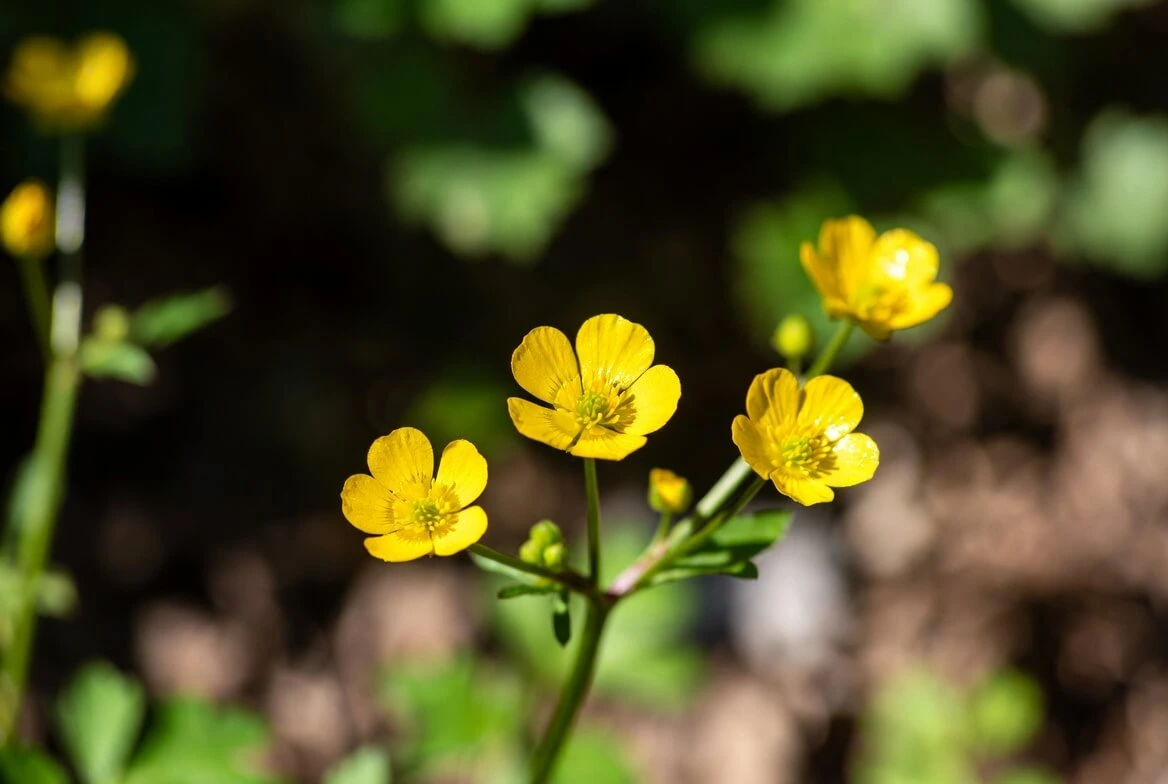
Not all buttercup flowers are enemies. Some have legitimate value.
Ecological benefits:
- Early food source for bees
- Hummingbirds visit them
- Provide pollen when little else blooms
- Native species support local ecosystems
- Deer and rabbit resistant (the toxicity helps)
Garden-worthy varieties:
- Persian buttercup (Ranunculus asiaticus)
- Mount Cook buttercup
- Grass-leaved buttercup
- Fair maids of France
- Canary buttercup
These ornamental types don’t spread aggressively. They stay where planted and provide stunning cut flowers. The wild types? Leave them in actual meadows and wild areas. Not in maintained lawns.
For more information on beneficial wildflowers, check our wildflower gardening guide at Zoned Garden.
Buttercup Flowers FAQs
Are buttercup flowers poisonous to touch?
They can cause skin irritation and blistering due to protoanemonin. Always wear gloves when handling buttercups. Most people experience mild irritation, but some have stronger reactions. The sap is more irritating than touching dry petals.
How do I get rid of buttercups in my lawn?
Maintain thick, healthy grass to prevent establishment. Pull existing plants before they seed (wear gloves). Mow flowers immediately if pulling isn’t possible. Apply post-emergent broadleaf herbicide in late winter. Expect 2-3 years to fully eliminate due to persistent seed banks.
What’s the difference between Persian buttercups and wild buttercups?
Persian buttercups (Ranunculus asiaticus) are cultivated flowers with layered petals in many colors, grown from corms. Wild buttercups are invasive weeds with simple five-petaled yellow flowers that spread aggressively by runners and seeds.
Do buttercups come back every year?
Most wild buttercups are perennials that return annually and spread aggressively. Persian buttercups are technically perennial but often treated as annuals in cold zones. Creeping buttercups are the most persistent, spreading by runners and self-seeding.
Why are buttercup petals so shiny?
Buttercup petals contain unique air layers beneath the surface that reflect light like mirrors. This creates their distinctive gloss and the yellow reflection in the childhood “butter test.” The reflection warms the flower center and attracts pollinators.
The Real Deal on Buttercup Plants
Know what you’re dealing with before you act. Ornamental Persian buttercups? Gorgeous, expensive, worth growing if you nail the requirements.
Wild creeping buttercups invading your lawn? Aggressive weeds that need immediate control before they dominate. The problem happens when people see yellow flowers and think “pretty wildflowers” instead of “invasive spreader that’ll take over in six months.” I made that mistake. It cost me two years and a lot of work fixing it.
Now I grow Persian buttercups in containers where I can control them. And I pull any wild buttercup flowers the second they appear in my lawn.