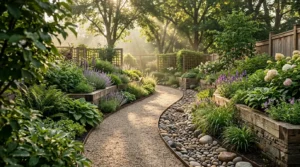
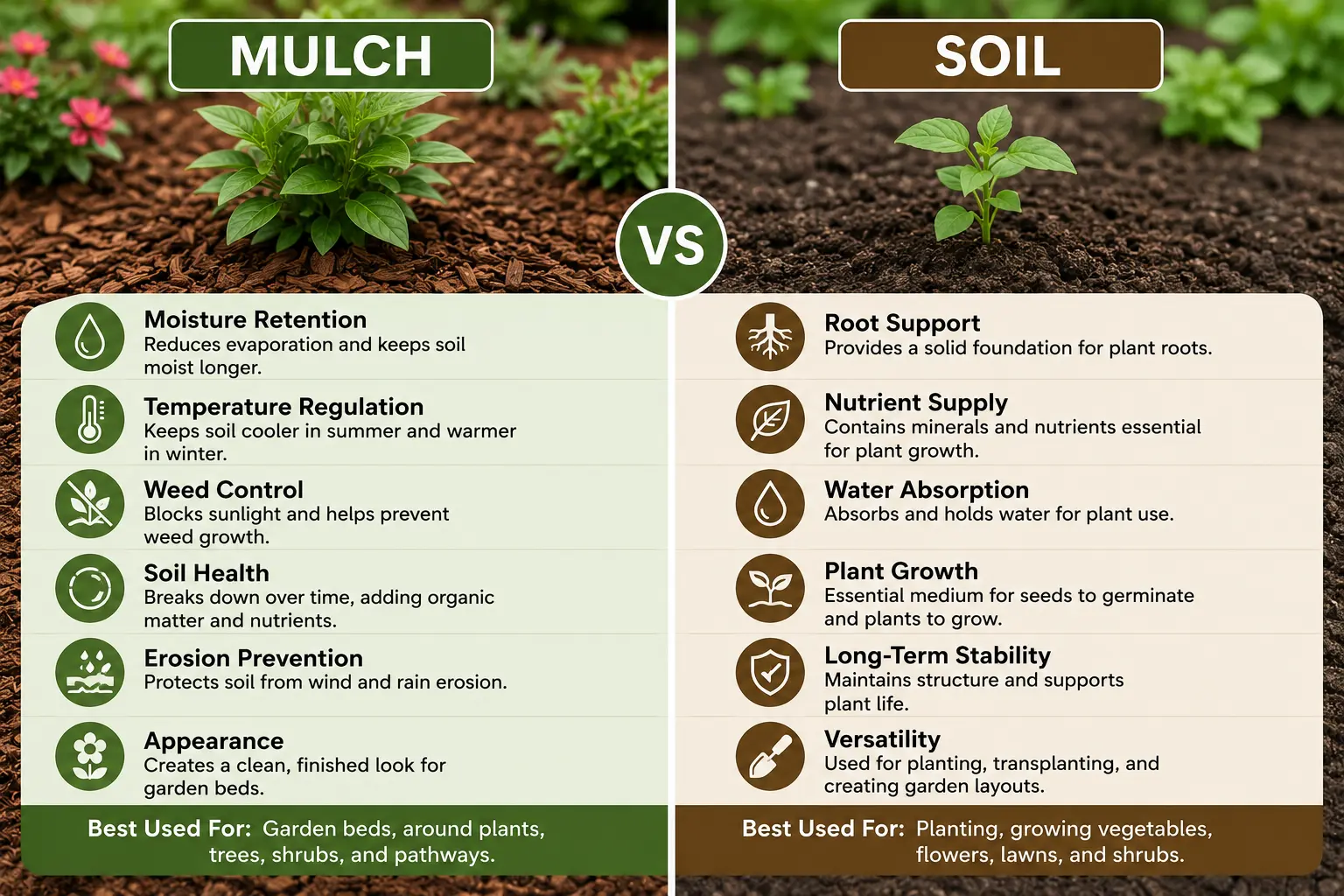
Mulch and soil are not the same thing, and using them wrong wastes money and hurts your plants. Soil is where roots grow. Mulch sits on top to protect it. Both serve different purposes, and most healthy gardens need both working together.
This guide covers exactly what separates mulch from soil, when to use each one, what happens if you mix them up, and how to combine them for the healthiest results in 2026. Whether you are building a new raised bed, refreshing a flower border, or starting a vegetable garden from scratch, this gives you a clear, practical framework.
Mulch vs Soil: The Quick Answer
Soil is a growing medium. Mulch is a protective cover.
Soil contains minerals, organic matter, water, and air. Plant roots develop inside soil, absorbing nutrients and anchoring the plant. Without soil — or an equivalent growing medium — plants do not survive.
Mulch sits on the soil surface. Mulch does not feed plants directly. Mulch protects soil from drying out, temperature swings, erosion, and weed pressure. Organic mulches — wood chips, straw, shredded leaves — slowly break down and add organic matter to soil over time. Inorganic mulches — gravel, rubber, landscape fabric — do not break down but still control weeds and retain moisture.
The biggest mistake gardeners make is treating these 2 materials as interchangeable. Planting directly into mulch starves roots of nutrients. Skipping mulch over exposed soil means faster moisture loss, more weeds, and temperature stress on roots.
What Is Garden Soil?
Garden soil is a mixture of minerals, organic matter, water, and air. Roots develop inside soil, drawing water, nitrogen, phosphorus, potassium, and trace minerals needed for growth. Good garden soil holds moisture without becoming waterlogged and drains excess water so roots do not rot.
3 main types of garden soil:
- Topsoil: The uppermost soil layer, rich in organic matter and nutrients. Used to fill garden beds, level terrain, and establish new planting areas.
- Garden soil (bagged): Pre-blended topsoil improved with compost or fertilizer. Best for in-ground beds and borders.
- Potting soil: Specially blended for containers and raised beds. Contains perlite or vermiculite for drainage. Do not use standard garden soil in pots — it compacts and restricts root growth.
When to Use Garden Soil
Use garden soil in these 4 situations:
- Building a new garden bed from scratch — fill the bed with a quality soil mix before planting
- Improving compacted or nutrient-poor ground — till in compost-amended soil to improve structure and fertility
- Topping up a raised bed that has sunk — add 2 to 4 inches (5 to 10 cm) of fresh soil or compost each spring
- Starting seeds indoors — use potting soil or seed-starting mix for containers and trays
What Is Mulch?
Mulch is any material spread over the soil surface as a protective layer. Mulch does not feed roots directly. Mulch protects the soil environment so roots can do their job more effectively.
Studies show organic mulch reduces soil moisture evaporation by up to 70%. Mulched garden beds need watering only 2 to 3 times per week compared to daily watering for bare soil in summer heat.
2 main categories:
- Organic mulch: Wood chips, bark, straw, shredded leaves, grass clippings, compost. These decompose over 1 to 3 years, adding organic matter to soil as they break down. Need replacing annually or every 2 years.
- Inorganic mulch: Gravel, pea gravel, rubber chips, landscape fabric. Long-lasting — no annual replacement needed. Do not improve soil fertility. Best for paths, driveways, and ornamental beds where low maintenance matters most.
4 Key Benefits of Mulch
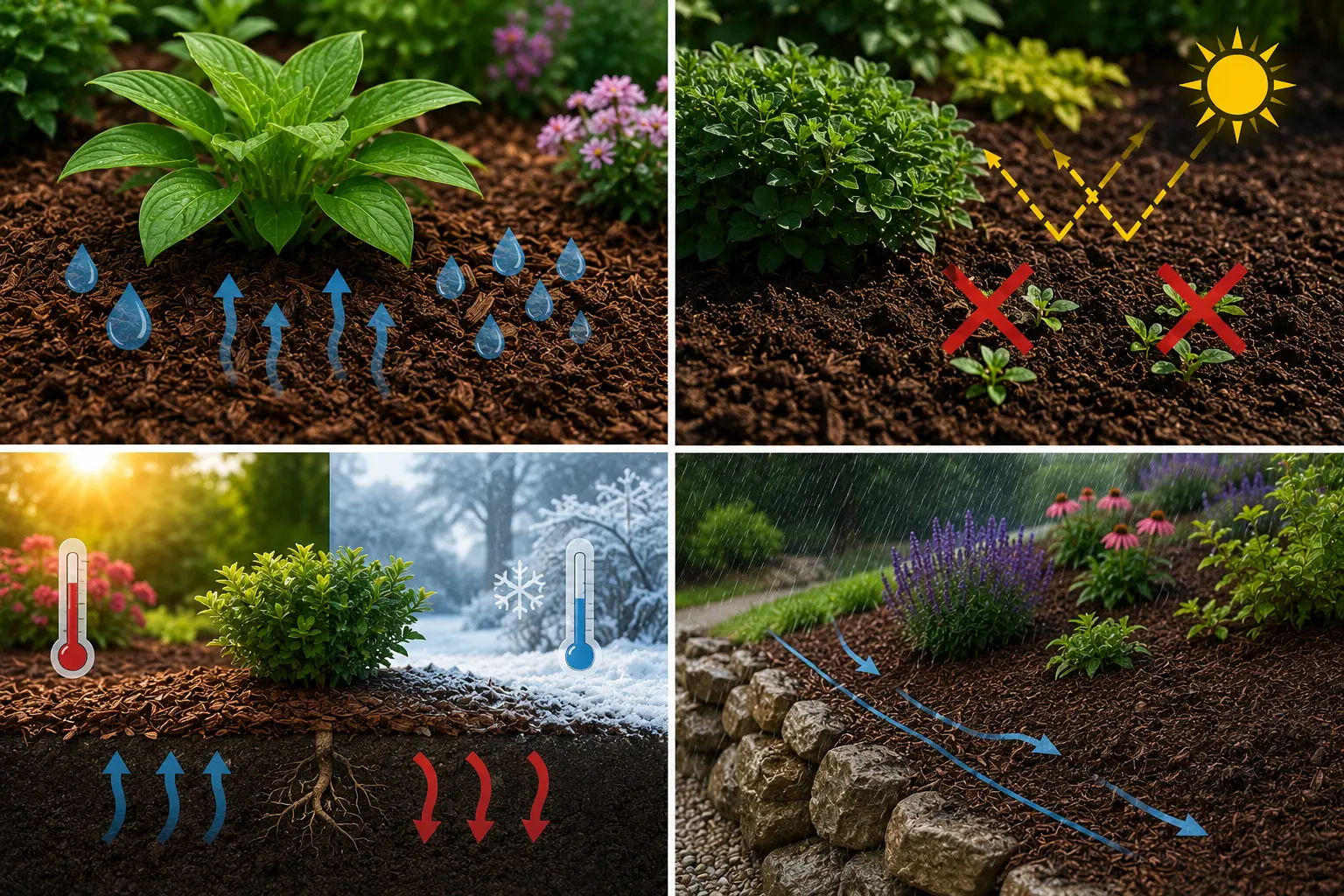
- Moisture retention: Reduces evaporation by up to 70%, cutting watering frequency in summer
- Weed suppression: A 2 to 3 inch (5 to 8 cm) layer blocks sunlight from reaching weed seeds, preventing germination
- Temperature regulation: Keeps soil cooler in summer heat and insulates roots against early frosts in autumn
- Erosion control: Prevents rain and wind from washing away topsoil, especially important on slopes and raised beds
When to Use Mulch
Apply mulch in these 5 situations:
- After planting — spread 2 to 3 inches (5 to 8 cm) around plants, keeping mulch 2 inches clear of stems and trunks to prevent rot
- In summer — to reduce watering frequency and prevent soil from drying and cracking
- Before winter — to insulate roots from hard frosts, particularly for perennials in USDA Zones 4 to 6
- Around trees and shrubs — use a wide ring of wood chips, minimum 3 feet (90 cm) in diameter, to protect the root zone
- In vegetable gardens — straw or shredded leaves between rows keeps soil moist and clean, reducing disease splash from rain
Mulch vs Soil: 6 Key Differences
These 6 differences determine which one your garden needs right now.
1. Function
Soil is a growing medium where roots develop. Mulch is a surface cover that protects soil. Soil feeds plants. Mulch protects the soil that feeds plants.
2. Placement
Soil is worked into the ground or fills containers and raised beds. Mulch sits on top of soil — never mixed in. Mixing mulch into soil disrupts soil structure and binds up nitrogen.
3. Nutrient content
Garden soil contains nitrogen, phosphorus, potassium, and trace minerals ready for root absorption. Fresh mulch — especially wood chips — contains minimal plant-available nutrients. Organic mulch releases nutrients slowly as it decomposes over 12 to 24 months.
4. Lifespan
Good garden soil lasts for years with proper care and annual top-dressing. Organic mulch breaks down in 1 to 2 years and needs replacing. Inorganic mulch (gravel, rubber) lasts 5 to 10 years.
5. Cost
Bagged garden soil costs $5 to $12 per 40 lbs (18 kg). Bulk topsoil runs $10 to $50 per cubic yard. Bagged bark mulch costs $4 to $8 per 2 cubic feet. Bulk wood chip mulch costs $20 to $45 per cubic yard. Per square foot, mulch covers more area than soil at lower cost.
6. Water behavior
Well-amended garden soil holds moisture while draining excess water. Mulch slows surface evaporation, keeping underlying soil moist 50% to 70% longer than bare soil in dry conditions.
Best Types of Organic Mulch for Garden Beds
5 organic mulch types perform best in home gardens. Each suits different plants and conditions.
Wood chips and bark
Best for trees, shrubs, and perennial borders. Wood chips break down slowly over 2 to 3 years, gradually improving soil organic matter. Apply 3 to 4 inches (8 to 10 cm) deep. Avoid piling against tree trunks — this causes rot and attracts pests. Fresh wood chips temporarily tie up nitrogen in the top inch of soil, so do not till them in.
Straw
Best for vegetable gardens and newly seeded lawns. Straw decomposes in one season, adding organic matter quickly. Apply 2 to 3 inches (5 to 8 cm) deep between vegetable rows. Straw keeps soil clean, reduces disease splash, and breaks down fast enough to till in at season end. Use straw — not hay. Hay contains weed seeds.
Shredded leaves
Free from your own yard and highly effective. Shredded leaves decompose faster than whole leaves, adding nutrients and improving soil structure. Apply 2 to 3 inches (5 to 8 cm) deep. Unshredded leaves mat together and block water penetration.
Compost as mulch
Compost works as both a soil amendment and a surface mulch. Applied 1 to 2 inches (2.5 to 5 cm) deep over existing soil, compost feeds soil microorganisms, suppresses weeds, and retains moisture. Top-dress raised beds with 1 inch of compost each spring before planting. This is the single most effective annual maintenance step for long-term soil health.
Grass clippings
Apply in thin layers of 1 inch (2.5 cm) maximum. Thick layers of fresh clippings mat together, block airflow, and develop an odor as they ferment. Allow clippings to dry for 1 to 2 days before applying, or mix with wood chips to prevent matting.
For more on plant-specific care and soil needs, read our guide on growing chrysanthemums — including the right soil mix for long-term perennial performance.
How to Use Mulch and Soil Together
Most productive gardens use both in a specific layered order. The sequence matters.
Step 1: Prepare the soil. Remove weeds and debris. For a new bed, fill with quality garden soil or a mix of topsoil and compost in a 2:1 ratio. For an existing bed, top-dress with 1 to 2 inches (2.5 to 5 cm) of compost and work it into the top 4 to 6 inches (10 to 15 cm) of existing soil.
Step 2: Plant. Place seeds, seedlings, or transplants directly into prepared soil. Water thoroughly.
Step 3: Apply mulch. Spread 2 to 3 inches (5 to 8 cm) of organic mulch over the soil surface around your plants. Keep mulch at least 2 inches (5 cm) away from plant stems and tree trunks to prevent rot.
Step 4: Water. Water the mulch layer after application so it settles and makes contact with the soil surface.
Step 5: Refresh annually. Top up mulch each spring as it decomposes. Add fresh compost to soil each season. Over time, decomposing organic mulch feeds the soil beneath it, reducing the need for additional fertilizer.
If you grow plants with specific soil requirements, see our detailed Aralia Fabian care guide for an example of how soil mix and moisture management work together for tropical plants.
5 Common Mulch and Soil Mistakes to Avoid
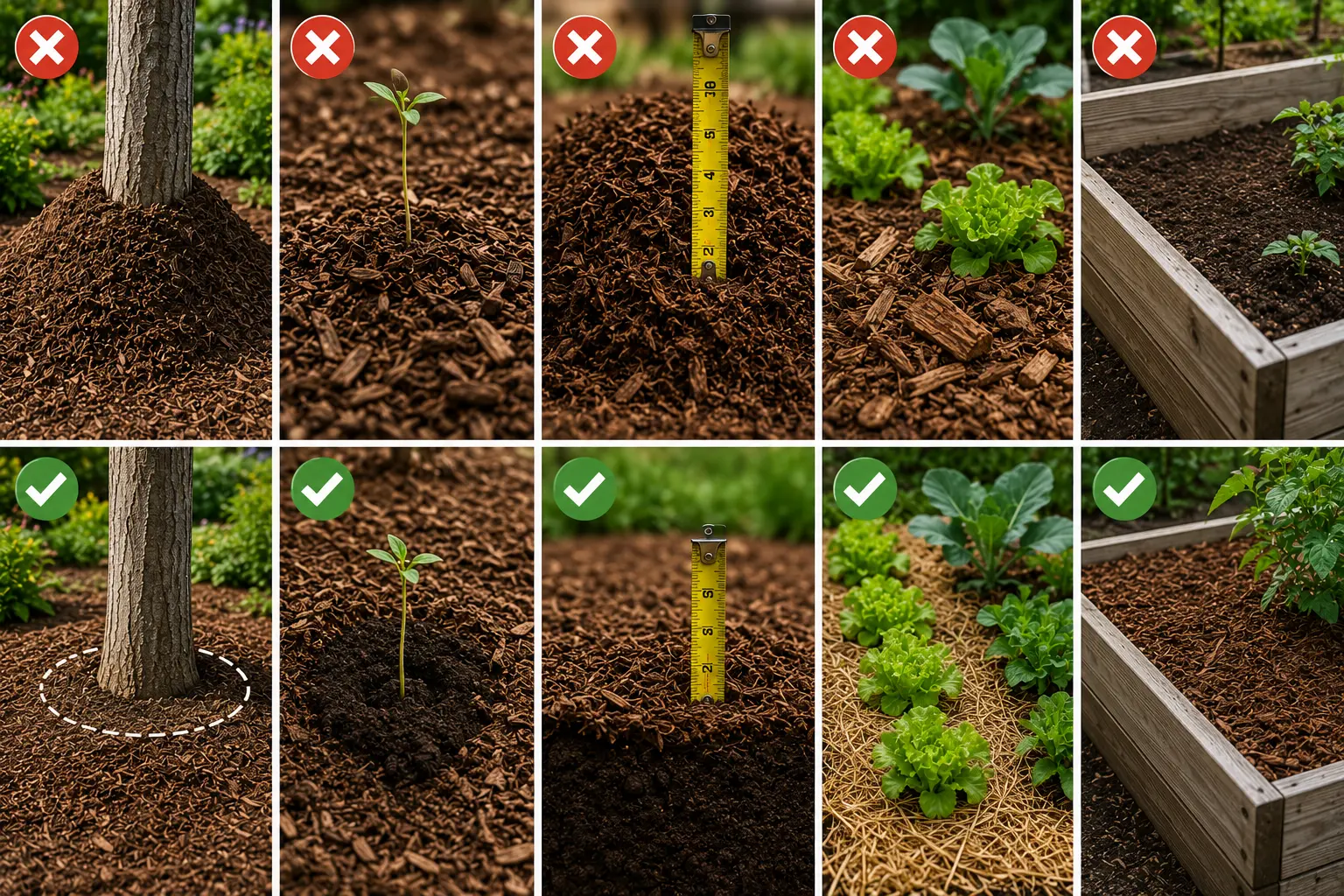
Volcano mulching
Piling mulch against tree trunks in a volcano shape traps moisture against the bark, causes rot, and invites pests. Keep mulch flat and 2 inches (5 cm) clear of trunks.
Planting in mulch instead of soil
Mulch has no usable nutrients for new plant roots. Seeds sown into mulch germinate poorly or fail. Always plant into prepared soil, then apply mulch on top afterward.
Applying mulch too thick
More than 4 inches (10 cm) of mulch suffocates soil, blocks water penetration, and prevents oxygen from reaching roots. Stick to 2 to 3 inches (5 to 8 cm) for most applications.
Using fresh wood chips near vegetables
Fresh wood chips temporarily bind up nitrogen in the top soil layer. Use aged wood chips or bark for vegetable beds. Straw or shredded leaves work better between vegetable rows.
Skipping mulch on raised beds
Raised bed soil dries faster than ground-level beds because of increased airflow and drainage. Uncovered raised beds lose moisture rapidly in warm weather. Apply mulch between plants in raised beds just as you would in the ground.
Mulch vs Soil by Plant Type
Different plants need different combinations. Here are 4 common scenarios.
Vegetable gardens
Soil first: fill beds with a mix of topsoil, compost, and a small amount of perlite for drainage. Mulch after planting with straw, shredded leaves, or grass clippings between rows. Refresh soil with compost each season. Replace mulch annually.
Flower borders
Prepare soil with garden soil and compost before planting. Apply 2 to 3 inches (5 to 8 cm) of bark mulch or wood chips after planting. Bark mulch gives flower borders a clean, finished appearance and suppresses weeds all season.
Trees and shrubs
Trees and established shrubs do not need new soil added annually. Instead, spread a ring of wood chip mulch 3 to 6 feet (90 to 180 cm) in diameter around the base each spring. This mimics the natural forest floor — decomposing organic matter feeds the soil as it breaks down.
Container plants and raised beds
Use potting soil or a raised bed mix — not standard garden soil, which compacts in containers and blocks drainage. Apply a thin 1-inch (2.5 cm) layer of compost or fine bark mulch on top of raised beds between plants to conserve moisture.
For zone-specific planting advice and soil preparation tips matched to your climate, browse our bush peony growing guide — a deep-dive example of how soil depth and mulch timing affect long-lived perennials.
Mulch vs Topsoil: Is There a Difference?
Yes — topsoil and garden soil are not identical, and neither is the same as mulch.
Topsoil is the raw uppermost layer of earth — typically the top 2 to 8 inches (5 to 20 cm) of ground. Quality varies widely depending on where it is sourced. Bulk topsoil from landscaping suppliers may contain weed seeds, clay, or debris. Garden soil is topsoil that has been screened, blended with compost, and prepared specifically for plant growing.
For new garden beds, use quality garden soil or a mix of topsoil and compost — not raw bulk topsoil alone. For raised beds, use a dedicated raised bed mix with good drainage. For mulching, use wood chips, bark, straw, or shredded leaves — never use topsoil as a surface mulch. Topsoil spread on the surface compacts, creates a crust, and does not provide the weed suppression or moisture retention mulch does.
Frequently Asked Questions
Can I use mulch instead of soil?
No. Mulch does not replace soil. Roots need soil to develop, absorb nutrients, and anchor the plant. Mulch only works as a surface cover on top of soil. Planting directly into mulch produces weak, nutrient-starved plants.
How deep should mulch be?
Apply 2 to 3 inches (5 to 8 cm) for most garden beds. Woody mulches like bark chips can go up to 4 inches (10 cm) around trees and shrubs. Keep all mulch at least 2 inches (5 cm) away from plant stems and tree trunks.
Can I put mulch on top of soil without mixing it in?
Yes — and you should. Mulch belongs on the surface only. Mixing mulch into soil disrupts structure and ties up nitrogen as it decomposes. Lay mulch on top after planting and let it stay there.
What is better for weed control — mulch or soil?
Mulch. A 2 to 3 inch (5 to 8 cm) layer of organic or inorganic mulch blocks light from reaching weed seeds, preventing germination. Bare soil is a weed invitation. Soil itself does not suppress weeds.
How often do I need to replace mulch?
Organic mulch — wood chips, straw, shredded leaves — needs replacing every 1 to 2 years as it decomposes. Check mulch depth each spring. Top up to maintain 2 to 3 inches (5 to 8 cm). Inorganic mulch like gravel lasts 5 to 10 years before needing attention.
Does mulch turn into soil over time?
Yes — organic mulch slowly decomposes into humus, which improves soil organic matter. This process takes 1 to 3 years depending on mulch type and climate. Wood chips decompose slower than straw or shredded leaves. This is one of the key long-term benefits of organic mulch: it feeds soil as it breaks down.
If you’re managing a plant with specific humidity and moisture needs, our rabbit foot fern care guide covers soil moisture management in detail.
Final Verdict: Use Both
Mulch and soil solve different problems. Soil feeds and supports roots. Mulch protects soil from drying out, temperature stress, weed pressure, and erosion. Every productive garden uses both.
Start with quality garden soil or a raised bed mix. Plant into it. Then apply 2 to 3 inches (5 to 8 cm) of organic mulch on top. Refresh mulch each spring. Add compost to soil each season. Over time, decomposing mulch feeds the soil beneath, reducing fertilizer needs and improving soil structure year after year.
This simple system — soil below, mulch above — works for vegetable beds, flower borders, trees, shrubs, and raised beds alike. It saves water, reduces weeding time, and builds long-term soil health with minimal effort.