
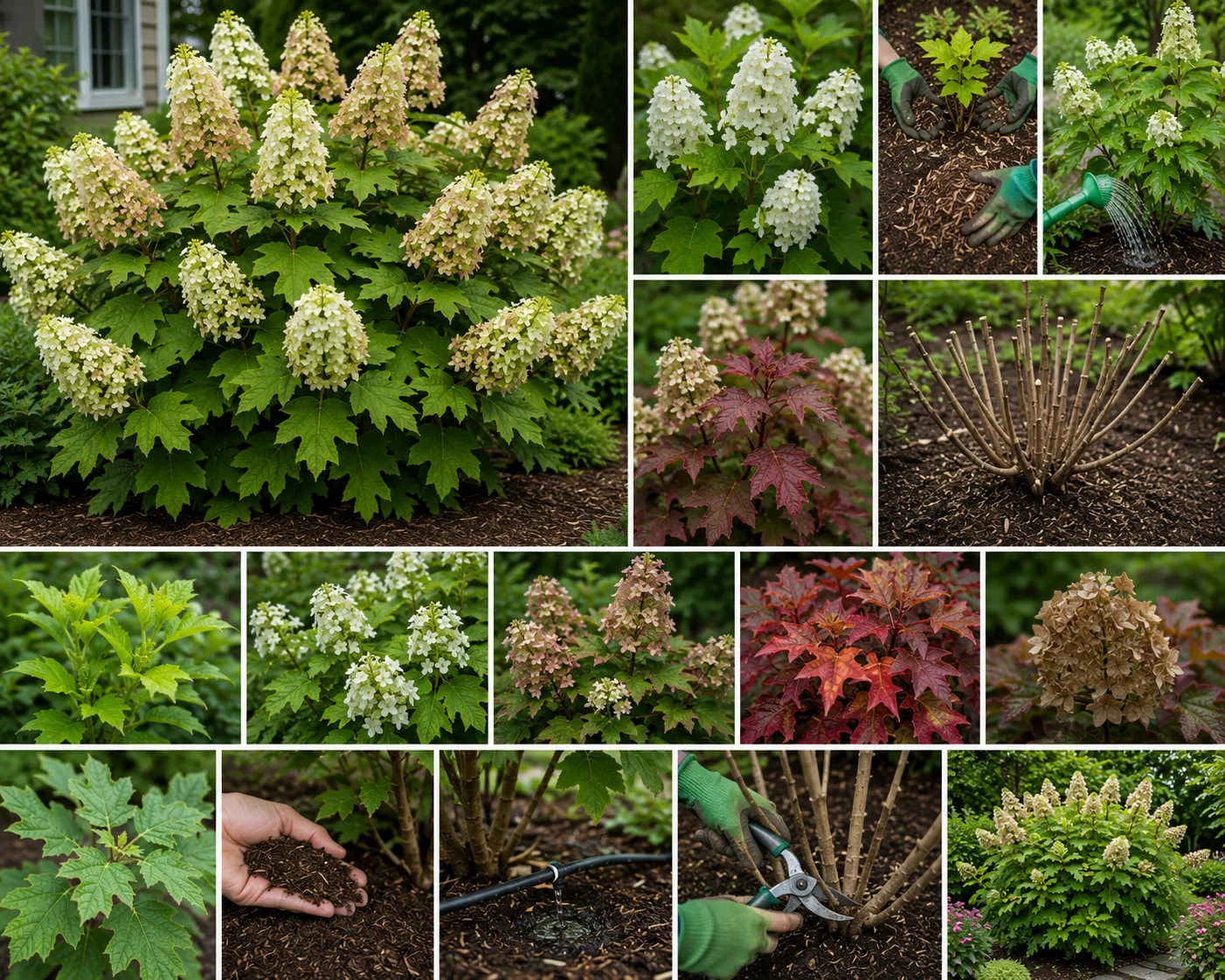
Oak leaf hydrangea (Hydrangea quercifolia) thrives in part shade, moist well-draining soil with a pH of 5.0–6.5, and USDA Zones 5–9. Plant in a spot that gets morning sun and afternoon shade, water deeply once or twice a week during the first growing season, and never cut the stems in fall — this shrub blooms on old wood, meaning fall pruning removes next year’s flowers entirely.
Below: exact planting steps, sun and water requirements, a pruning schedule that protects bloom wood, fertilizer timing, 6 top varieties, and a complete seasonal care calendar. Every section covers what competitors miss.
What Is Oak Leaf Hydrangea?
Oak leaf hydrangea is a deciduous native shrub from the southeastern United States, found naturally from North Carolina south to Florida and west to Louisiana. The botanical name Hydrangea quercifolia translates directly to ‘oak-leaved hydrangea’ — the deeply lobed, 3–7-point leaves closely resemble the leaves of an oak tree.
This shrub delivers 4 seasons of visual interest in a single plant: cone-shaped white flower panicles in early summer, deep red and burgundy fall foliage, and attractive peeling cinnamon-colored bark through winter. No other hydrangea species offers all 4 of those traits together.
Mature size ranges from 3 feet (0.9 m) in dwarf varieties to 8 feet (2.4 m) tall and wide in standard cultivars. Unlike bigleaf hydrangeas (H. macrophylla), oak leaf hydrangea tolerates drought once established and handles heat and humidity better than any other hydrangea species.
Oak Leaf Hydrangea — Quick Facts
| Feature | Detail |
| Botanical Name | Hydrangea quercifolia |
| Plant Type | Deciduous multi-stemmed shrub |
| USDA Zones | 5–9 (some cultivars to Zone 5a) |
| Mature Height | 3–8 ft (0.9–2.4 m) depending on variety |
| Mature Width | 3–8 ft (0.9–2.4 m) |
| Bloom Time | Late May – July |
| Flower Color | Creamy white, aging to pink, tan, or green |
| Fall Foliage | Red, mahogany, burgundy, purple |
| Winter Interest | Peeling cinnamon-colored exfoliating bark |
| Sun | Part shade — morning sun, afternoon shade |
| Soil pH | 5.0–6.5 (slightly acidic) |
| Bloom Type | Old wood — never prune in fall |
| Drought Tolerance | Moderate once established (Year 2+) |
| Deer Resistance | Moderate — more resistant than other hydrangeas |
Sun Requirements
Oak leaf hydrangea grows best in part shade — specifically 4–6 hours of direct morning sun followed by afternoon shade. In USDA Zones 5–6, the plant tolerates more sun, including full sun sites with adequate moisture. In Zones 7–9, afternoon shade is non-negotiable. Direct afternoon sun in southern climates scorches the large leaves and causes visible wilting by 2 PM even in well-watered plants.
Too little light creates its own problems. Deep shade — under a dense forest canopy or on a north-facing wall — produces fewer blooms, weaker fall color, and increased powdery mildew from poor air circulation. The minimum is 4 hours of direct light per day.
| Light Level | Result | Best For |
| Full sun (6+ hrs) | Leaf scorch in Zones 7–9; acceptable in Zones 5–6 with water | Northern gardens only |
| Part shade (4–6 hrs morning) | Best blooms, best fall color, healthy growth | All zones — ideal |
| Dappled shade all day | Fewer blooms, good leaf health, reduced fall color | Hot southern gardens |
| Deep shade (<3 hrs) | Leggy growth, minimal bloom, powdery mildew risk | Not recommended |
Soil Requirements
Plant oak leaf hydrangea in slightly acidic, well-draining soil with a pH of 5.0–6.5. Soil outside that range locks up iron and other micronutrients, causing yellowing leaves even when fertilizer is applied. Test soil pH with an inexpensive garden meter before planting — amend with sulfur to lower pH or agricultural lime to raise it.
The ideal soil is rich in organic matter, with a texture that drains freely but holds enough moisture to stay consistently damp between waterings. Heavy clay traps water around roots and causes root rot within 1–2 seasons. Sandy soil drains too fast and stresses the plant during dry spells.
To improve either extreme, work 3–4 inches (7.5–10 cm) of finished compost into the top 12 inches (30 cm) of soil before planting. Compost improves clay drainage and increases sandy soil water retention simultaneously.
How to Plant Oak Leaf Hydrangea
Plant in spring or fall — avoid summer planting. Summer heat stresses newly planted roots before they establish. Fall planting in Zones 5–7 gives roots 8–10 weeks to anchor before the ground freezes. Spring planting in all zones works well with consistent watering through the first summer.
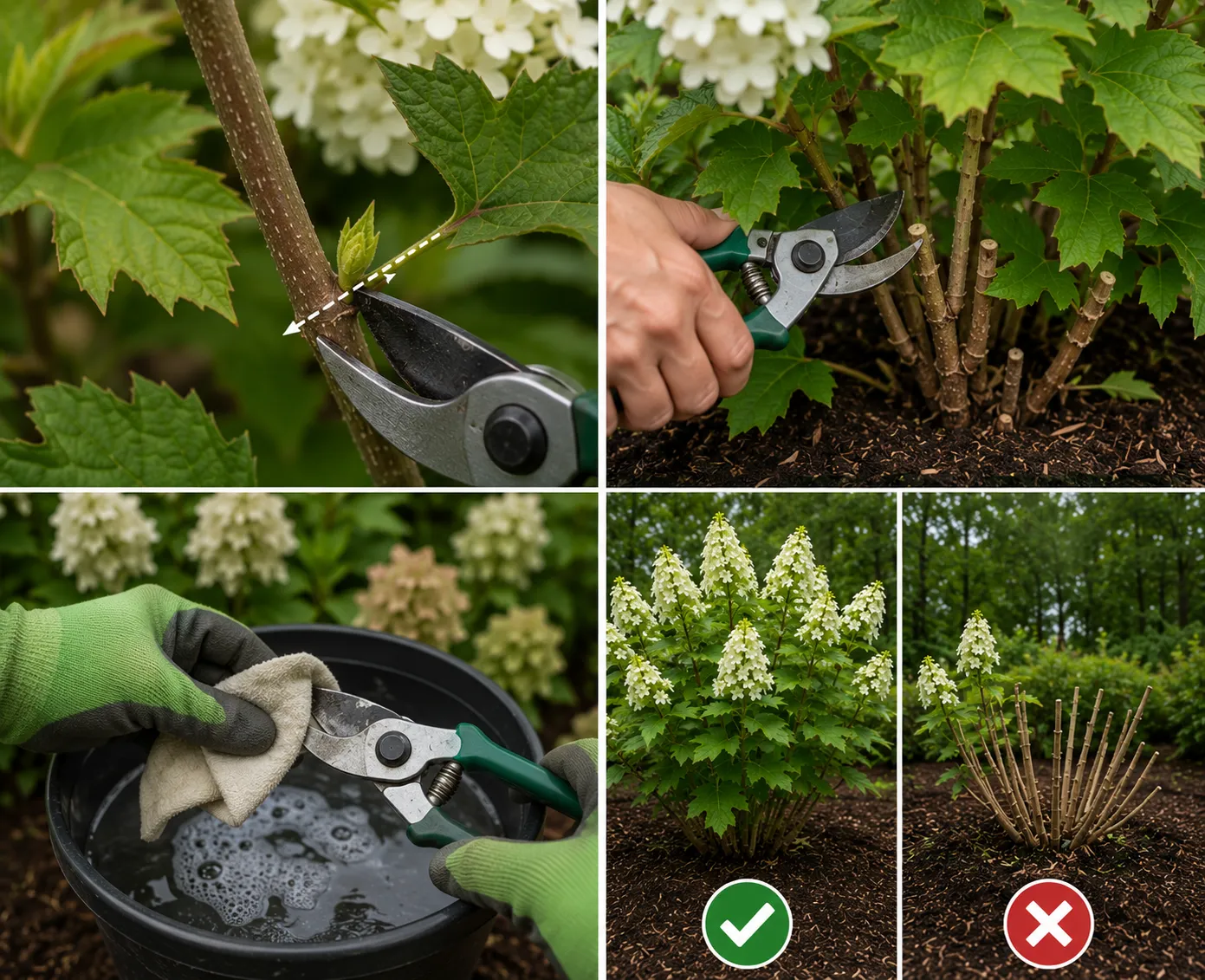
Step-by-Step Planting Instructions
- Choose the site: Confirm 4–6 hours of morning sun, afternoon shade, and good air circulation. Avoid low spots where water pools after rain.
- Dig the hole: Dig 2–3 times wider than the root ball and the same depth. Never dig deeper than the root ball height — planting too deep causes crown rot.
- Amend the soil: Mix one part finished compost with two parts native soil. Work compost into the hole walls and base.
- Set the plant: Place the root ball so the top sits level with or 1–2 inches (2.5–5 cm) above surrounding soil. High planting improves drainage away from the crown.
- Backfill and firm: Fill in with amended soil, pressing gently to eliminate air pockets. Do not compact the soil — firm it with your hands, not your foot.
- Water thoroughly: Apply 2–3 gallons (7.5–11 liters) of water directly after planting to settle the soil and saturate the root zone.
- Apply mulch: Spread 2–3 inches (5–7.5 cm) of shredded bark or leaf mulch over the root zone. Keep mulch 2 inches (5 cm) away from the main stem to prevent rot.
- Space correctly: Space dwarf varieties 3–4 feet (0.9–1.2 m) apart. Space standard varieties 6–8 feet (1.8–2.4 m) apart. Tight spacing restricts air circulation and promotes fungal disease.
For more on shrub spacing and planting depth by zone, see our complete shrub planting guide.
Watering Oak Leaf Hydrangea
Water newly planted oak leaf hydrangea 2–3 times per week during the first growing season, applying 1–2 gallons (3.8–7.5 liters) per session. The goal is to keep the root zone consistently moist but never waterlogged. Established plants — in the ground for 2 or more years — need watering only during dry stretches of 7–10 days with no rainfall.
Use these 3 watering rules:
- Water deeply, not frequently. One deep weekly watering of 2 gallons (7.5 liters) develops deeper roots than daily shallow sprinkles of 0.5 gallons (1.9 liters).
- Water at the base, not overhead. Overhead watering wets the foliage and increases leaf spot and powdery mildew risk. A soaker hose or drip line at the root zone is the most effective method.
- Check soil moisture before watering. Insert a finger 2 inches (5 cm) into the soil. Water only when soil at that depth feels dry. Overwatering causes root rot faster than drought stress.
Mulch is the single most effective watering aid. A 2–3 inch (5–7.5 cm) layer of organic mulch reduces soil moisture evaporation by up to 70%, cutting required watering frequency in half during summer. For zone-specific watering schedules, use the Zoned Garden watering schedule tool.
Fertilizing Oak Leaf Hydrangea
Fertilize once in early spring with a balanced slow-release fertilizer — 10-10-10 or 12-4-8 N-P-K ratio — applied at the rate of 1 cup (237 ml) per 1 foot (30 cm) of plant height. Apply around the drip line, not directly against the stem. Water in thoroughly after application.
Oak leaf hydrangea has 3 fertilizing rules that differ from other hydrangea species:
- Never fertilize after July 1. Late-season nitrogen pushes new soft growth that winter cold kills back. This frost damage on new growth eliminates next year’s bloom wood and can permanently weaken the plant structure.
- Avoid high-phosphorus fertilizers in acidic soil. Most acidic soils already contain adequate phosphorus. Excess phosphorus blocks iron and zinc uptake, causing interveinal chlorosis — yellow leaves with green veins.
- Soil pH matters more than fertilizer rate. A plant in soil with pH 6.8 will not respond well to fertilizer regardless of quantity. Adjust pH to 5.0–6.5 before applying any fertilizer product.
Note on flower color: Unlike bigleaf hydrangeas (H. macrophylla), oak leaf hydrangea flower color does not change with soil pH. The creamy white to aged-pink color sequence is genetically fixed in Hydrangea quercifolia — aluminum sulfate or lime amendments do not alter bloom color.
Pruning Oak Leaf Hydrangea
Oak leaf hydrangea blooms on old wood — stems that grew the previous season carry this year’s flower buds. Fall pruning removes those buds and eliminates the entire next bloom season. The correct time to prune is immediately after flowering ends in mid to late summer, or in early spring to remove only dead or damaged wood.
When to Prune
- Deadheading (optional): Remove spent flower heads immediately after blooming — typically July or August — by cutting just below the flower cluster. This is optional; dried flower heads provide winter interest and wildlife value.
- Shaping cut: Prune to shape or control size immediately after flowers fade, before August 1. Cutting after August 1 removes developing flower buds that formed for the following year.
- Dead wood removal: Remove dead, diseased, or crossing branches in early spring, once buds begin to swell. This is the only recommended pruning in spring.
- Never prune in fall or winter. Fall and winter cuts remove flower buds. The plant looks dormant, but bud tissue is present on every stem from late summer onward.
How to Prune — 4 Steps
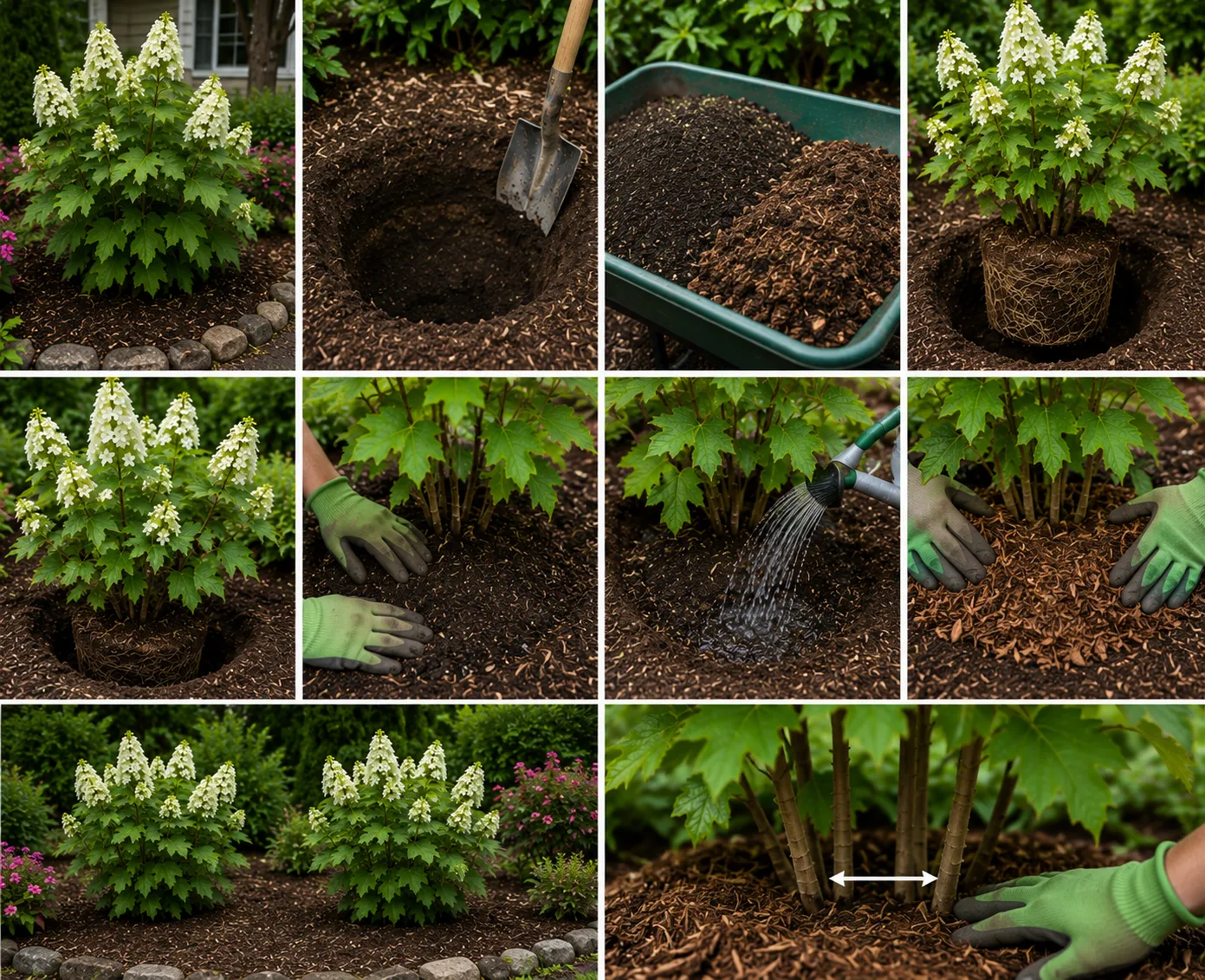
- Identify the cut point: Locate a healthy outward-facing bud node on the stem. Cut 1/4 inch (0.6 cm) above that node at a 45-degree angle slanting away from the bud.
- Use bypass pruners: Bypass pruning shears — not anvil-type — make clean cuts that heal faster. Anvil blades crush stem tissue and create entry points for disease.
- Disinfect between plants: Wipe blades with a 10% bleach (sodium hypochlorite) solution between plants. One infected stem spreads leaf spot to every subsequent cut.
- Remove no more than 1/3 of total growth: Removing more than 1/3 of the plant in one session stresses the root system and delays the following year’s bloom cycle by 4–8 weeks.
The same old-wood pruning principle applies to crape myrtles how wrong pruning permanently damages woody shrubs.
USDA Zone Growing Guide
Oak leaf hydrangea grows reliably in USDA Zones 5–9. Zone 5 plants need crown protection in exposed sites. Zone 9 plants need consistent afternoon shade and supplemental summer watering. The native range — Zones 7–9 in the southeastern U.S. — represents peak performance conditions.
| Zone | Conditions | Key Care Adjustments | Best Varieties |
| Zone 5 | Cold winters, -20°F (-29°C) min | Mulch crown 3–4 in (7.5–10 cm). Choose cold-hardy cultivars. Plant in sheltered south-facing spot. | Pee Wee, Ruby Slippers, Sike’s Dwarf |
| Zone 6 | Moderate winters, -10°F (-23°C) min | Standard care. Mulch lightly. Fall planting recommended. | Alice, Snowflake, Gatsby Moon |
| Zone 7 | Mild winters, 0°F (-18°C) min | Ideal native range conditions. Minimal intervention needed. | All varieties perform well |
| Zone 8 | Warm, humid summers | Increase afternoon shade. Water 2x weekly in summer. Improve drainage. | Alice, Ruby Slippers, Gatsby Star |
| Zone 9 | Hot summers, 20°F (-7°C) min | Full afternoon shade required. Weekly deep watering. Select heat-tolerant cultivars. | Alice (most heat tolerant) |
6 Best Oak Leaf Hydrangea Varieties
These 6 cultivars cover the full size range from compact 3-foot dwarfs to 8-foot landscape anchors. Each has distinct traits that suit specific garden situations.
1. Alice
Size: 8 ft tall × 8 ft wide (2.4 m × 2.4 m). Zones 5–9. Alice produces the largest flower panicles of any oakleaf variety — up to 12 inches (30 cm) long — and develops the most intense crimson fall foliage. Best for large foundation plantings or as a specimen shrub. Requires the most space but delivers the most visual impact per plant.
2. Snowflake
Size: 5–6 ft tall × 6 ft wide (1.5–1.8 m × 1.8 m). Zones 5–9. Snowflake produces double-petaled flowers — each floret has 2 layers of sterile sepals — giving the panicle a fuller, heavier appearance than single-flowered varieties. Flower heads age from white to deep pink. Strong fall color in burgundy and purple.
3. Pee Wee
Size: 3–4 ft tall × 3–4 ft wide (0.9–1.2 m × 0.9–1.2 m). Zones 5–9. The most compact standard variety. Pee Wee fits foundation plantings, small gardens, and container growing. Proportionally smaller flower panicles match the reduced plant size. Fall color intensity equals standard-sized varieties.
4. Ruby Slippers
Size: 3.5–4 ft tall × 5 ft wide (1.1–1.2 m × 1.5 m). Zones 5–9. Ruby Slippers turns flower color from white to deep ruby red faster than other varieties — typically within 3 weeks of bloom opening. This rapid color shift provides extended seasonal interest and pairs well with white or chartreuse companion plants.
5. Gatsby Moon
Size: 6 ft tall × 6 ft wide (1.8 m × 1.8 m). Zones 5–9. Gatsby Moon produces double flowers with a tendency to nod gracefully under their own weight. The flower heads dry on the stem and hold their structure through winter, providing skeletal garden interest until spring. Particularly effective as a cut flower — both fresh and dried.
6. Sike’s Dwarf
Size: 2–3 ft tall × 3–4 ft wide (0.6–0.9 m × 0.9–1.2 m). Zones 5–9. The smallest available cultivar and the best choice for containers, low borders, or tight foundation spots under windows. Bloom proportions match plant size. Fall color is less intense than larger varieties but still produces visible reds and oranges.
Seasonal Care Calendar
This calendar consolidates every care task by season. Use it as your annual reference.
Spring (March–May)
- Remove winter mulch as soil warms. Pull mulch back from the crown when red growth shoots emerge.
- Cut dead wood only. Wait until buds swell visibly before making any pruning cuts — oak leaf hydrangea leafs out later than most shrubs.
- Apply balanced slow-release fertilizer (10-10-10) around the drip line. One application per season.
- Check soil pH. Adjust with sulfur if pH has risen above 6.5 over winter.
- Refresh mulch layer to 2–3 inches (5–7.5 cm) after fertilizing. Mulch depth and type guide for best materials by zone.
Summer (June–August)
- Water 1–2 times weekly if rainfall totals less than 1 inch (2.5 cm) per week. Apply 1–2 gallons (3.8–7.5 liters) per session directly at the root zone.
- Deadhead spent panicles if desired — cut just below the flower head. Stop all pruning after August 1.
- Monitor for powdery mildew in humid conditions. Improve air circulation by removing crossing interior branches. Treat with neem oil spray if mildew covers more than 20% of foliage.
- Check for leaf spot. Remove fallen infected leaves from the soil surface — do not compost.
Fall (September–November)
- Do not prune. Every stem carries bud tissue for next year’s flowers. Cutting now eliminates next year’s bloom season entirely.
- Allow foliage to develop full fall color — reds, mahogany, burgundy. Leave flower heads on the plant for winter interest and wildlife seed value.
- Apply 2–3 inches (5–7.5 cm) of fresh mulch over the root zone before the ground freezes. In Zone 5, use 3–4 inches (7.5–10 cm).
- Plant new shrubs in fall in Zones 6–9 — cooler temperatures reduce transplant stress and give roots 8–10 weeks to establish before dormancy.
Winter (December–February)
- Leave the plant structure undisturbed. Peeling cinnamon bark and dried flower panicles provide ornamental winter interest.
- In Zone 5, wrap young plants or newly planted specimens with burlap if exposed to north winds. Avoid plastic wrapping — it traps moisture and encourages fungal growth.
- Plan spring pruning during winter dormancy — identify dead wood visually so cuts are ready when buds swell in March or April.
Common Problems and Solutions
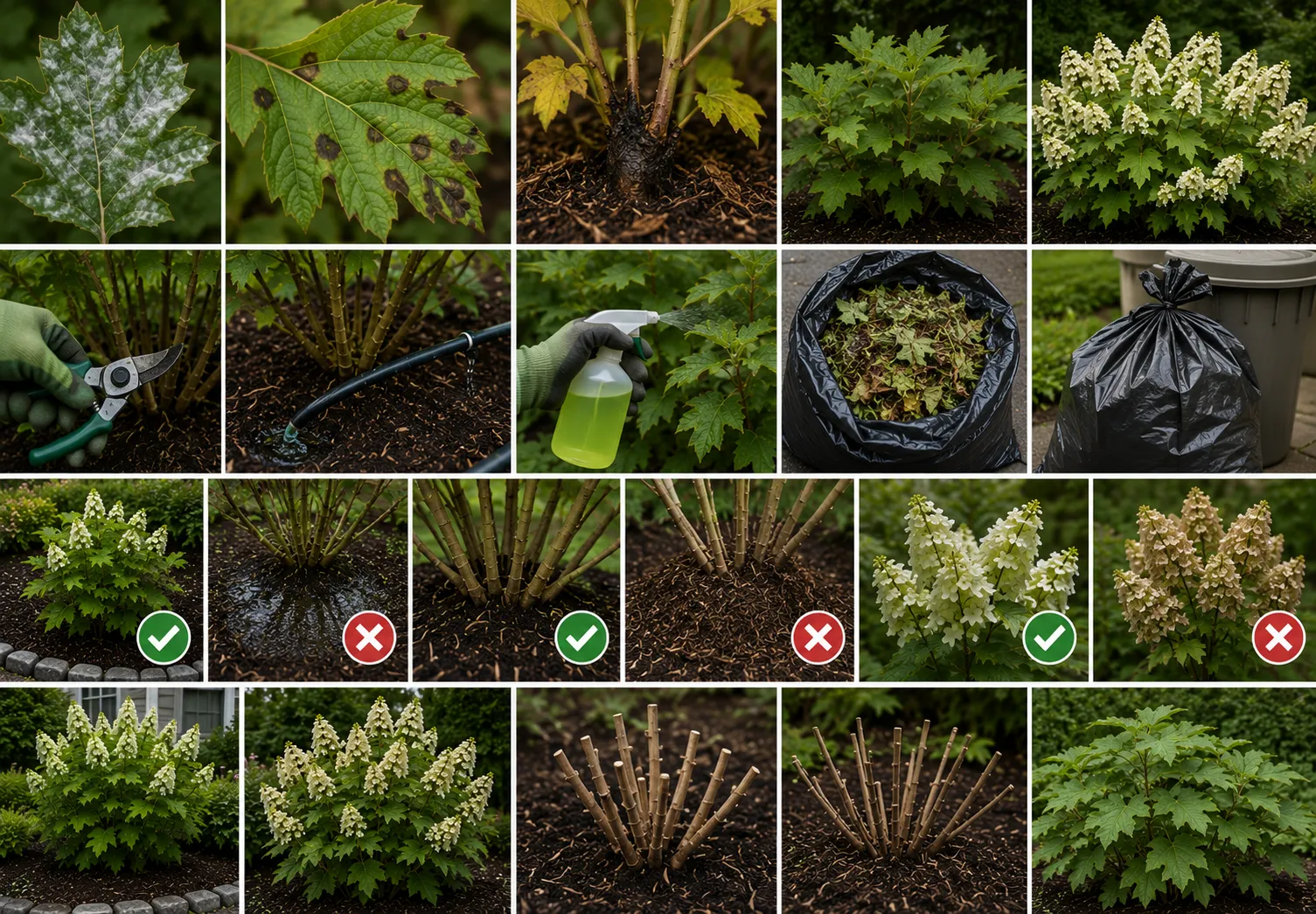
Powdery Mildew
Powdery mildew appears as white or gray powder on upper leaf surfaces, typically in late summer when nights cool and humidity stays high. It does not usually threaten plant survival but weakens foliage and reduces fall color intensity.
3 proven fixes: Improve air circulation by removing crossing interior branches. Water at soil level only — overhead watering creates ideal mildew conditions. Apply neem oil spray (2 tbsp / 30 ml per gallon of water) at first sign of infection, repeating every 7–10 days.
Leaf Spot
Leaf spot produces dark brown or black circular spots on leaves, usually in late summer. Minor leaf spot does not require treatment. Remove and dispose of fallen infected leaves in household trash — not compost — to prevent spores overwintering in the soil.
Root Rot
Root rot develops in poorly draining soil or overwatered sites. Early signs include yellowing leaves that wilt despite moist soil, and soft brown tissue at the crown. Prevention is the only reliable solution: plant in well-draining soil, never allow water to pool at the base, and keep mulch away from the stem.
No Blooms
Oak leaf hydrangea that produces healthy foliage but no flowers was almost always pruned at the wrong time. Fall or winter pruning removes every flower bud. Confirm the plant is not being pruned incorrectly. Other causes include deep shade (less than 3 hours of light), overfertilization with high-nitrogen products, or a Zone 5 plant that lost stems to winter kill before buds could develop.
Do’s and Don’ts — Quick Reference
| ✔ Do | ✘ Don’t |
| Plant in part shade — 4–6 hrs morning sun | Plant in deep shade or full afternoon sun (Zones 7–9) |
| Keep soil pH at 5.0–6.5 | Let pH rise above 6.5 without correcting it |
| Water at the root zone with a soaker hose | Water overhead — increases mildew and leaf spot |
| Prune immediately after blooming (before August 1) | Prune in fall, winter, or spring before buds swell |
| Apply mulch 2–3 in (5–7.5 cm) around the root zone | Pile mulch directly against the main stem |
| Fertilize once in early spring at the drip line | Fertilize after July 1 or apply nitrogen-heavy products |
| Remove fallen infected leaves and dispose in trash | Compost diseased foliage — spores survive composting |
| Space plants 6–8 ft (1.8–2.4 m) for air circulation | Plant too close — restricted airflow causes fungal disease |
5 Frequently Asked Questions
Does oak leaf hydrangea need full sun or shade?
Part shade — 4–6 hours of morning sun with afternoon shade — produces the best blooms and fall color. Full sun works in Zones 5–6 with consistent watering. Deep shade reduces bloom count and intensifies powdery mildew. Afternoon sun in Zones 7–9 scorches leaves visibly within one growing season.
Why is my oak leaf hydrangea not blooming?
The most common cause is fall or winter pruning, which removes the old wood that carries next year’s flower buds. Check pruning timing first. Other causes — in order of frequency — are deep shade (fewer than 3 hours of sun), late-summer pruning after August 1, high-nitrogen fertilizer applied in summer, and Zone 5 winter dieback that killed bud wood before it could flower.
How fast does oak leaf hydrangea grow?
Oak leaf hydrangea grows 1–2 feet (30–60 cm) per year once established, reaching mature size in 4–6 years. Growth in Year 1 is slow — the plant prioritizes root development over top growth. From Year 2 onward, annual growth increases measurably. Do not judge the plant’s vigor in its first season.
Can oak leaf hydrangea grow in containers?
Yes — dwarf varieties including Pee Wee and Sike’s Dwarf grow successfully in containers with a minimum 15-gallon (57-liter) volume. Container plants dry out 2–3 times faster than ground-planted shrubs and need watering every 2–3 days in summer. Move containers to a sheltered, unheated garage or shed in winter in Zones 5–6 — exposed container roots freeze at temperatures that ground-planted roots survive easily.
Does oak leaf hydrangea change color like bigleaf hydrangea?
No — oak leaf hydrangea flower color does not change with soil pH. Bigleaf hydrangeas (H. macrophylla) shift between pink and blue based on soil aluminum availability, which pH controls. Oak leaf hydrangea flower color is genetically fixed: creamy white when first opening, then aging to pink, tan, or beige as the panicles dry. No soil amendment changes this sequence.
Start Growing Oak Leaf Hydrangea This Season
Choose a part-shade site, amend your soil to pH 5.0–6.5, plant in spring or fall, and never prune after August 1. Those 4 rules account for the overwhelming majority of oak leaf hydrangea success and failure in home landscapes.
This shrub outlives most garden plants when placed correctly — established specimens have persisted in southern gardens for 40+ years. The first growing season requires consistent watering and patience. From Year 2 onward, the plant mostly takes care of itself.