Indiana planting zones range from 5b in the northwest corner to 7a along the Ohio River, based on the 2023 United States Department of Agriculture (USDA) Plant Hardiness Zone Map. Most Hoosier gardeners now garden in zone 6a or 6b. Your planting zone decides which perennials survive winter in your garden, when you transplant tomato seedlings, and how long your growing season runs.
This gardening guide covers all 4 Indiana growing zones with their counties and cities, frost dates for 6 major cities, a month-by-month planting calendar, and the vegetables, fruits, and flowers that grow best in each garden zone.
What Planting Zone Is Indiana In?
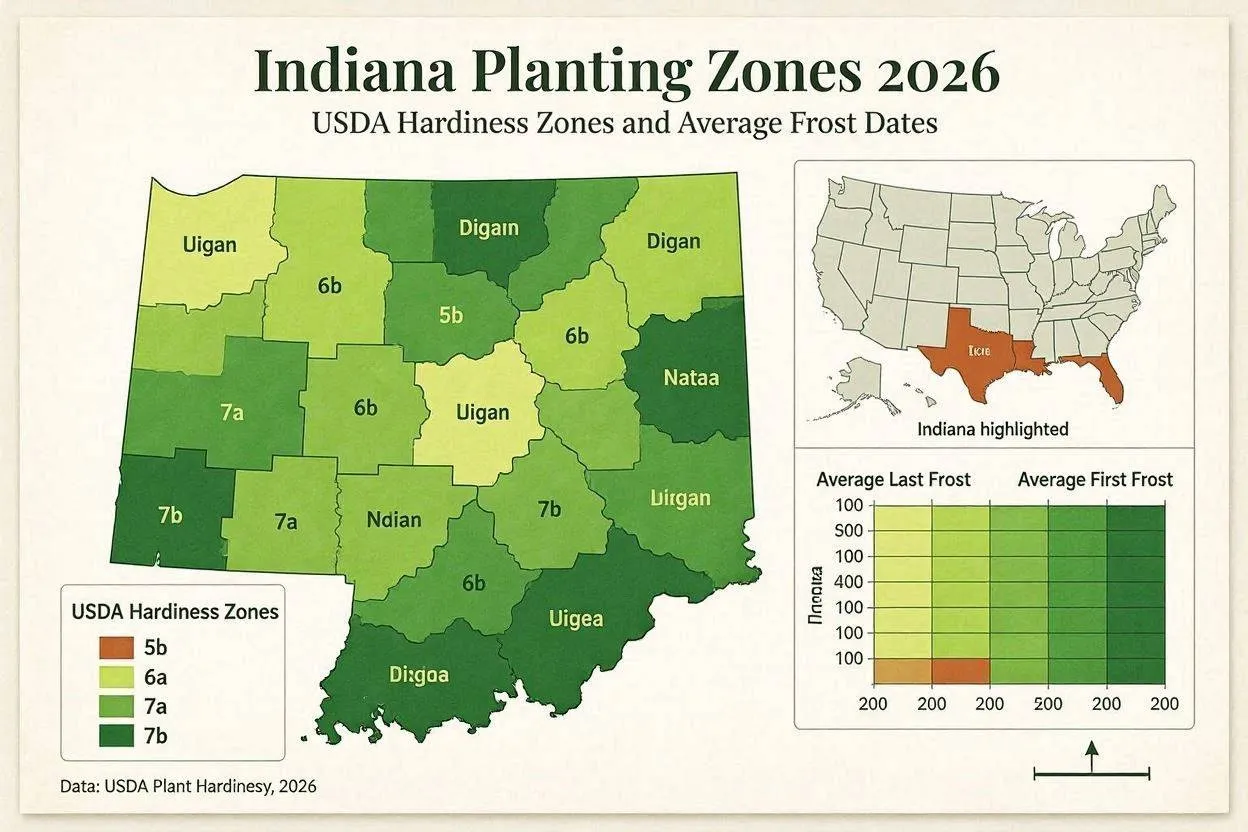
Indiana sits in USDA hardiness zones 5b, 6a, 6b, and 7a. Each gardening zone reflects the average annual extreme minimum temperature recorded between 1991 and 2020, which tells gardeners which plants, shrubs, and perennials survive winter in their garden beds.
| Zone | Winter Low (°F) | Winter Low (°C) | Where in Indiana |
| 5b | -15 to -10°F | -26 to -23°C | Northwest pockets near Lake Michigan |
| 6a | -10 to -5°F | -23 to -21°C | Northern and central Indiana |
| 6b | -5 to 0°F | -21 to -18°C | Central and southern Indiana |
| 7a | 0 to 5°F | -18 to -15°C | Southern border along the Ohio River |
The state runs about 270 miles (435 km) from north to south. That distance creates a full 20°F (11°C) spread in winter lows, which changes what you can grow. A gardener in Gary plants a colder, shorter-season garden than a gardener in Evansville, even though both tend soil in the same state. Nursery plant tags list these zone numbers, so knowing yours makes every plant purchase safer.
How the 2023 USDA Map Changed Indiana Gardening Zones
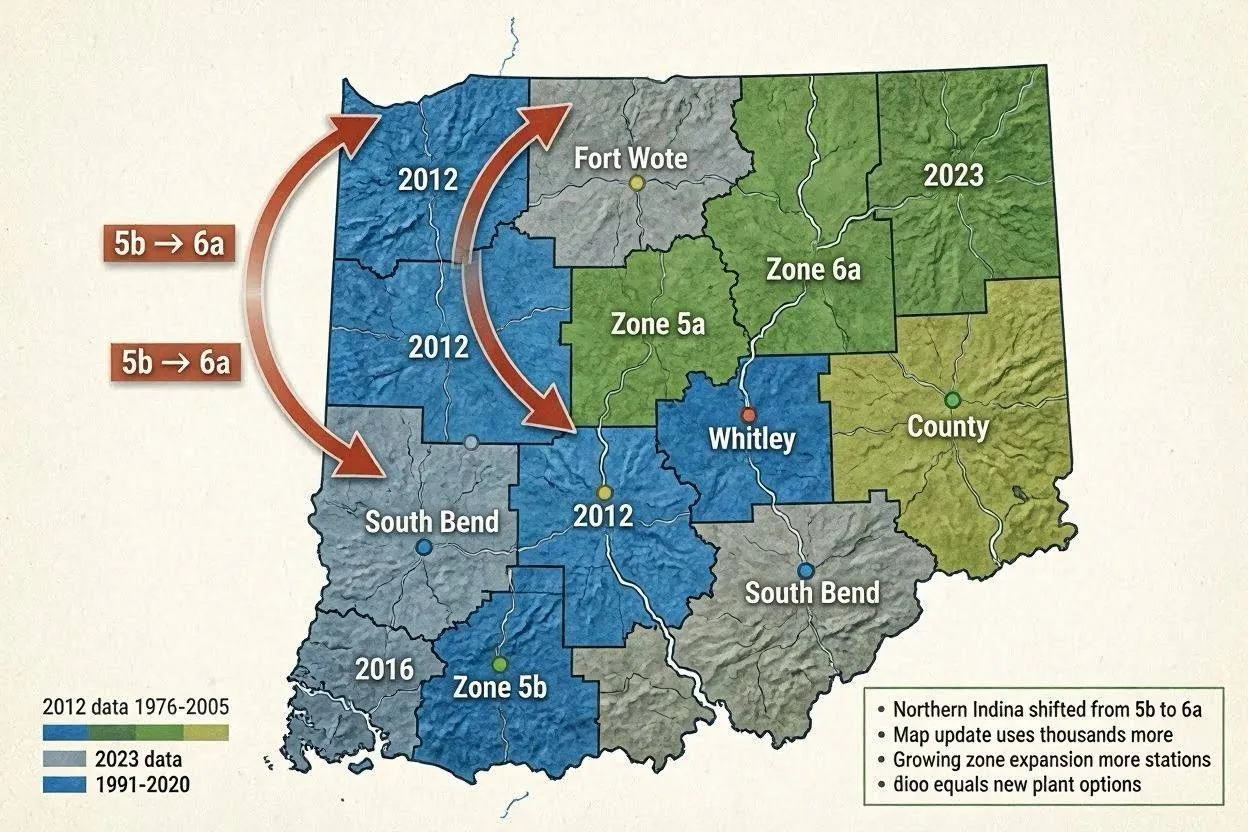
The 2023 USDA update shifted most of Indiana a half-zone warmer, expanding what gardeners can plant. The previous map, released in 2012, used weather data from 1976 to 2005. The current map uses data from 1991 to 2020, collected from thousands of additional weather stations.
Three changes matter for Indiana gardeners:
- Northern Indiana moved from 5b to 6a. Fort Wayne, South Bend, and Whitley County sat in zone 5b on the 2012 map. Gardeners in all three areas now plant by zone 6a rules.
- Zone 7a entered Indiana for the first time. Counties along the Ohio River, including Posey, Vanderburgh, and Warrick, now grow zone 7a plants.
- Zone 5b shrank to small pockets. Only scattered gardens in Lake, Porter, LaPorte, Jasper, and Newton counties remain in 5b.
If you planted perennials 5 years ago rated for zone 5, they still thrive in your garden today. The warmer rating opens new planting options rather than closing old ones. Gardeners in the new 6a areas can now grow crape myrtle and certain fig varieties that failed in their gardens under the old zone ratings.
Indiana Garden Zones by Region, City, and County
Indiana’s 92 counties split across 4 growing zones. Find your garden’s zone below.
Zone 5b — Northwest Indiana
Zone 5b covers the coldest gardens in Indiana, with winter lows of -15 to -10°F (-26 to -23°C). Lake-effect weather off Lake Michigan drives these temperatures and shortens the planting season.
- Counties (partial): Lake, Porter, LaPorte, Jasper, Newton, Starke, Pulaski, White, Benton, Montgomery
- Cities: Crown Point, Valparaiso, Crawfordsville (parts of each)
- Season length: roughly 155 to 165 frost-free days
Gardeners here plant frost-tender crops in mid to late May and harvest into early October. Cold-hardy perennials, including hostas, daylilies, and coneflowers, bloom year after year in 5b gardens without winter protection.
Zone 6a — Northern and Central Indiana
Zone 6a is the largest planting zone in Indiana, with winter lows of -10 to -5°F (-23 to -21°C). It stretches across the entire northern border and covers much of central Indiana.
- Counties: LaGrange, Steuben, Allen, Elkhart, St. Joseph, Kosciusko, Whitley, Tippecanoe, and more than 25 others
- Cities: Fort Wayne, South Bend, Elkhart, Lafayette, Kokomo, Muncie, Martinsville
- Season length: roughly 160 to 175 frost-free days
This zone grows nearly every common vegetable, fruit tree, and flowering perennial sold at Indiana garden centers and nurseries. Apples, tart cherries, and pears produce reliable harvests in backyard orchards here.
Zone 6b — Central and Southern Indiana
Zone 6b covers Indianapolis and most of southern Indiana, with winter lows of -5 to 0°F (-21 to -18°C). It ranks as the second-largest zone in the state.
- Counties: Marion, Shelby, Monroe, Lawrence, Knox, Daviess, Jefferson, down to Crawford
- Cities: Indianapolis, Carmel, Fishers, Bloomington, Terre Haute, Vincennes, Bedford, Madison
- Season length: roughly 165 to 185 frost-free days
The longer season lets 6b gardeners grow long-maturity crops, including sweet potatoes, okra, and 100-day sweet corn varieties. Peach trees also perform well on sites with good air drainage.
Zone 7a — Ohio River Valley
Zone 7a is the warmest planting zone in Indiana, with winter lows of 0 to 5°F (-18 to -15°C). It follows the southern border where the Ohio River moderates winter temperatures.
- Counties: Posey, Vanderburgh, Warrick, plus parts of Gibson, Pike, Dubois, Perry, Spencer, Harrison, Floyd, and Clark
- Cities: Evansville, Jeffersonville, New Albany
- Season length: roughly 175 to 195 frost-free days
Gardeners in 7a sow the earliest spring seeds and harvest the latest fall crops in Indiana. Cold-hardy figs, American persimmons, and rosemary survive most winters in these gardens with a thick mulch layer and a sheltered planting spot.
Indiana Frost Dates by City: When to Plant
Frost dates tell gardeners when to sow seeds, when to transplant seedlings, and when to protect tender plants. Northern gardens frost about 2 to 3 weeks earlier in fall and thaw 2 to 3 weeks later in spring than southern gardens.
| City | Zone | Average Last Spring Frost | Average First Fall Frost | Frost-Free Days |
| South Bend | 6a | May 1–10 | Oct 5–15 | 160–175 |
| Fort Wayne | 6a | May 1–15 | Sep 25–Oct 10 | 155–175 |
| Indianapolis | 6b | Apr 21–May 9 | Oct 7–20 | 165–185 |
| Terre Haute | 6b | Apr 21–May 5 | Oct 5–15 | 165–180 |
| Bloomington | 6b | Apr 11–25 | Oct 15–25 | 175–190 |
| Evansville | 7a | Apr 11–23 | Oct 12–25 | 175–195 |
These dates are 30-year averages, not guarantees. Indiana springs swing hard. A warm week in April often ends with a 28°F (-2°C) night that kills unprotected seedlings in early May. Keep row covers ready over your garden beds until 2 weeks past your average last frost date.
What to Plant in Indiana Planting Zones
Every Indiana zone supports a productive vegetable garden, fruit patch, and flower bed. Match your plant choices to your zone number and frost dates, then prepare your soil with compost before planting.
Vegetables
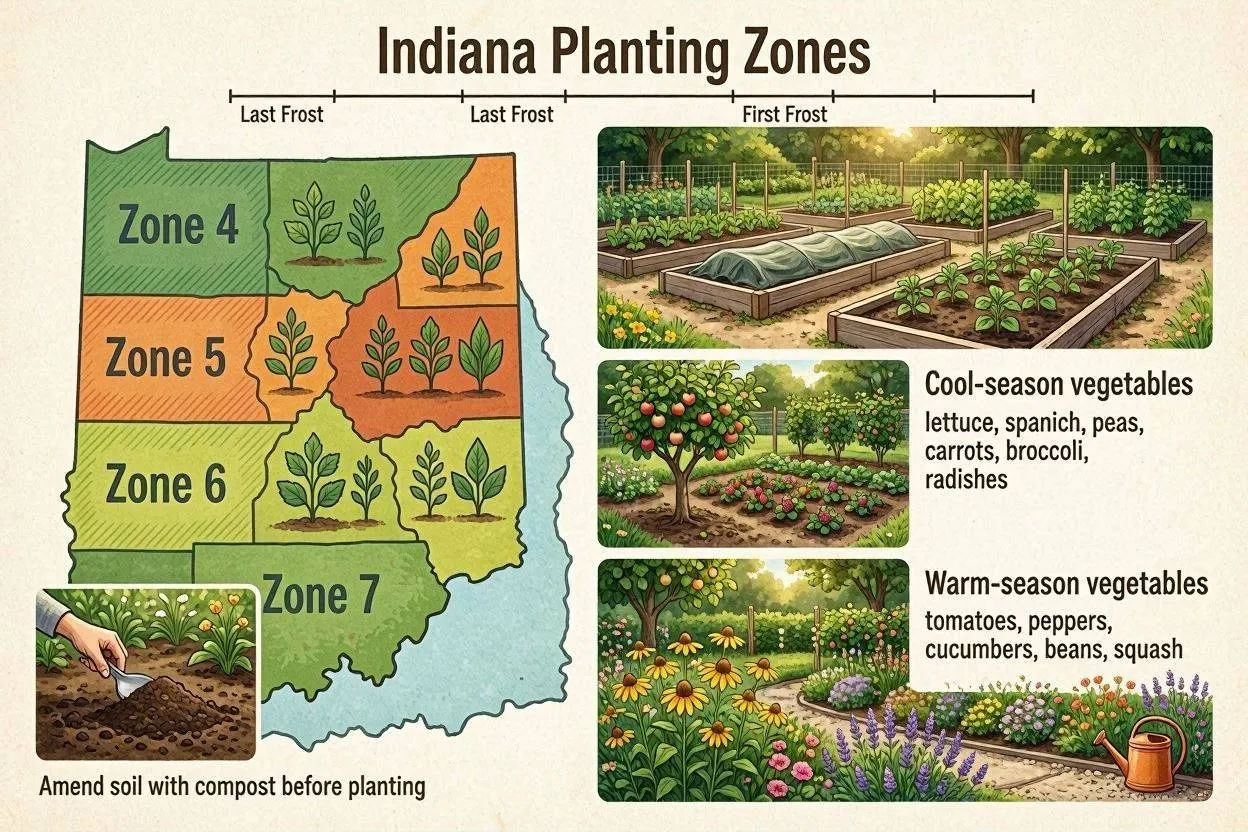
Cool-season vegetables, including lettuce, spinach, peas, broccoli, carrots, and radishes, grow in all 4 Indiana zones. Sow them 2 to 4 weeks before your last frost.
Warm-season vegetables, including tomatoes, peppers, cucumbers, squash, green beans, and sweet corn, go in the ground after frost danger passes. Gardeners in zones 6b and 7a can add okra and sweet potatoes, which need the extra heat and season length southern Indiana provides.
Fruits
Apples, pears, tart cherries, and plums produce fruit in every Indiana zone. Blueberries work statewide if your soil pH sits between 4.5 and 5.5. Blackberries, raspberries, grapes, and strawberries also grow across the state.
Peaches and sweet cherries need zones 6a or warmer plus a site with air drainage, since late frosts kill their early blossoms. Fig trees survive only in 6b and 7a, and only with winter protection.
Flowers and Perennials
Coneflowers, black-eyed Susans, daylilies, hostas, phlox, and asters return every year in all Indiana zones. Native plants, including butterfly milkweed, bee balm, and goldenrod, handle Indiana clay soil and feed pollinators from May through October.
For trees and shrubs, eastern redbud, serviceberry, flowering dogwood, and panicle hydrangea thrive statewide. Buy perennials rated at least one half-zone colder than your own for insurance against a harsh winter.
Indiana Planting Calendar: Month-by-Month Gardening Tasks
- January–February: Order seeds. Start onions, peppers, and broccoli indoors under lights.
- March: Start tomatoes indoors. In zones 6b–7a, direct-sow peas and spinach late in the month.
- April: Sow carrots, lettuce, beets, and kale outdoors. Transplant cabbage and broccoli.
- May: Plant tomatoes, peppers, and squash after your last frost. Zone 5b gardeners wait until May 15–20.
- June: Mulch beds. Sow a second round of beans and zucchini.
- July: Start fall broccoli and cabbage seeds. Harvest early tomatoes and cucumbers.
- August: Sow fall spinach, lettuce, and radishes. Water deeply during dry spells.
- September: Harvest storage crops. Cover tender plants on cold nights.
- October: Plant garlic. Pull frost-killed annuals and compost clean debris.
- November–December: Mulch perennials. Wrap young fruit tree trunks against rabbits and voles.
Shift each task 1 to 2 weeks later if you garden in zone 5b, or 1 to 2 weeks earlier in zone 7a gardens.
How to Find Your Exact Indiana Planting Zone

Enter your ZIP code at planthardiness.ars.usda.gov to see your garden’s precise zone. The USDA tool zooms to a half-mile resolution, which matters for Indiana gardeners because zone lines cut through single counties. Marion County alone contains both 6a and 6b gardens.
Your county extension office offers a second option. Purdue Extension runs offices in all 92 Indiana counties, and their master gardeners give free planting, soil, and zone advice specific to your township.
3 Microclimate Factors That Shift Your Garden’s Zone
Your garden can run a half-zone warmer or colder than the official map. Watch these 3 factors before planting:
- Elevation and slope. Cold air sinks. Valley floors and low spots frost 1 to 2 weeks earlier than nearby hilltops.
- Water and pavement. Lake Michigan, the Ohio River, and city concrete all hold heat. Downtown Indianapolis runs warmer than rural Marion County on the same night.
- Wind exposure. Open, windy garden sites lose heat fast. A south-facing wall creates a warm pocket where gardeners grow zone 7 plants in a zone 6 garden.
FAQs
Did Indiana planting zones change in the 2023 USDA update?
Yes. Most of northern Indiana moved from zone 5b to 6a, and zone 7a appeared along the Ohio River for the first time. Gardeners across the state can now grow plants rated a half-zone warmer than before.
What planting zone is Indianapolis in?
Indianapolis sits in gardening zone 6b, with pockets of 6a on the city’s north side. Winter lows average -5 to 0°F (-21 to -18°C), and gardeners plant frost-tender crops after the last spring frost, which lands between April 21 and May 9.
When should I plant tomatoes in Indiana?
Plant tomato seedlings outdoors between May 1 and May 20, depending on your zone. Southern gardeners in zones 6b and 7a transplant in early May, while zone 5b gardeners in northwest Indiana wait until May 15 or later.
What is the warmest planting zone in Indiana?
Zone 7a is the warmest, covering Evansville, New Albany, and gardens along the Ohio River. It gives gardeners 175 to 195 frost-free days, the longest growing season in the state.
Can I grow plants rated for a warmer zone in Indiana?
Yes, with protection. A south-facing wall, thick mulch, and wind shelter let zone 6 gardeners grow select zone 7 plants like figs and rosemary. Expect some plant losses in unusually cold winters.
Conclusion
Indiana planting zones run from 5b to 7a, and your zone shapes every gardening decision you make. The 2023 USDA map moved most Hoosier gardens a half-zone warmer, so northern gardeners now plant by zone 6a rules and southern gardeners along the Ohio River grow zone 7a plants. Check your ZIP code on the USDA map, learn your frost dates, and match your vegetables, fruits, and perennials to your zone. A gardener who plants by zone loses fewer plants, harvests earlier, and grows a healthier garden every season. Start with 3 crops from your zone’s planting list this spring, and build from there.
Ready to plant your Indiana garden with confidence? Look up your ZIP code on the USDA map, mark your frost dates on your gardening calendar, and pick 3 crops from your zone’s planting list to sow this season. Bookmark this gardening guide and check back before each planting window. Have a question about growing in your specific county? Drop it in the comments and we’ll answer within 48 hours.