
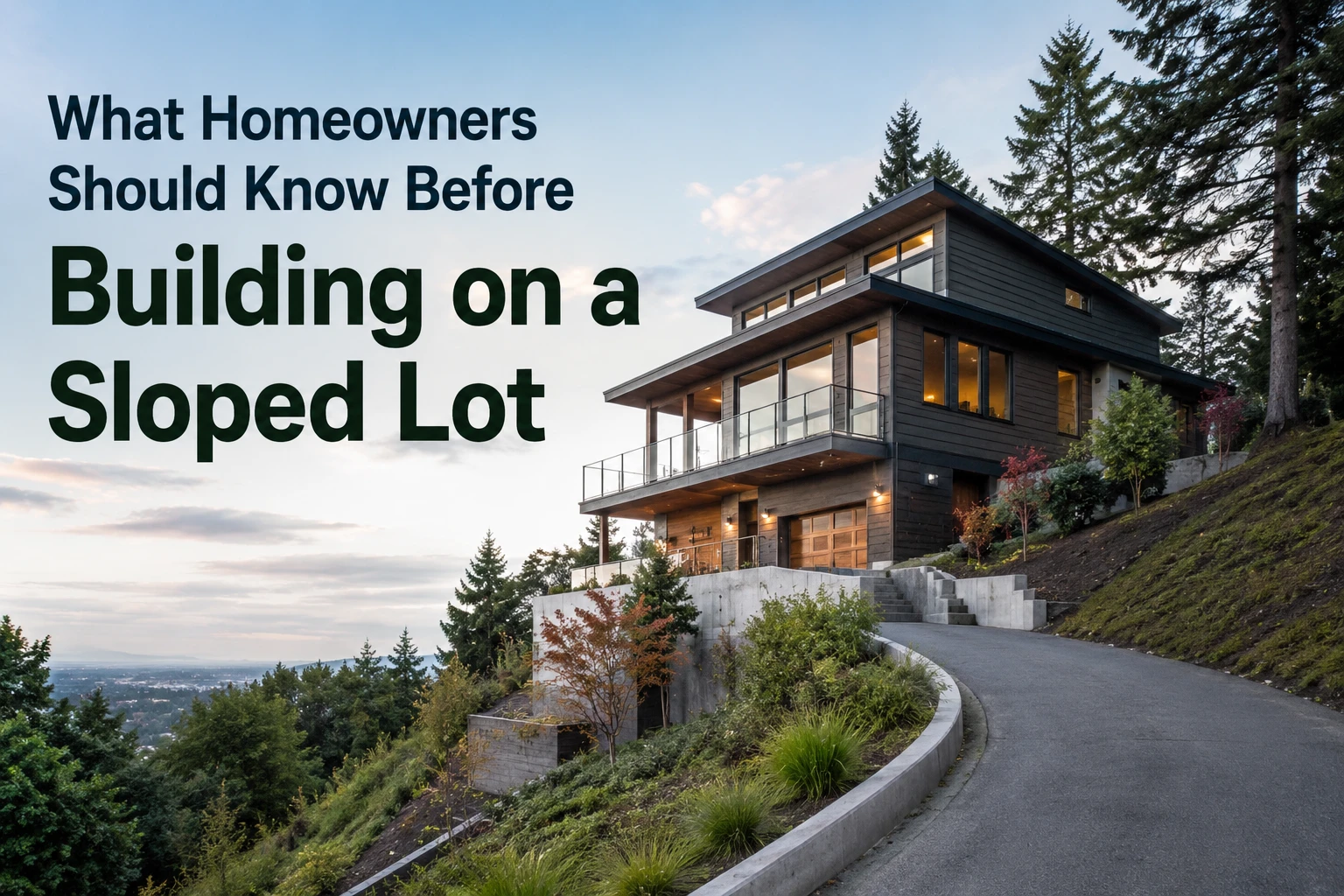
Building on a sloped lot can create some of the most visually impressive residential properties in California. Hillside homes often offer better views, more privacy, improved natural light, and stronger long-term property appeal. However, many homeowners underestimate how much terrain conditions can influence construction complexity, permitting, drainage, and overall project cost.
Before purchasing a hillside property or beginning construction, it’s important to understand how slope conditions affect both design and buildability.
Not Every Sloped Lot Is the Same
Two hillside properties with similar square footage can require dramatically different construction approaches depending on soil stability, slope angle, drainage conditions, retaining requirements, and site accessibility.
In many California cities, especially throughout Los Angeles and surrounding hillside communities, residential projects may also require additional grading review, engineering analysis, or specialized permitting approvals before construction can begin.
This is why experienced custom home planning becomes especially important during the earliest stages of a project.
Site Access Can Significantly Affect Construction Costs
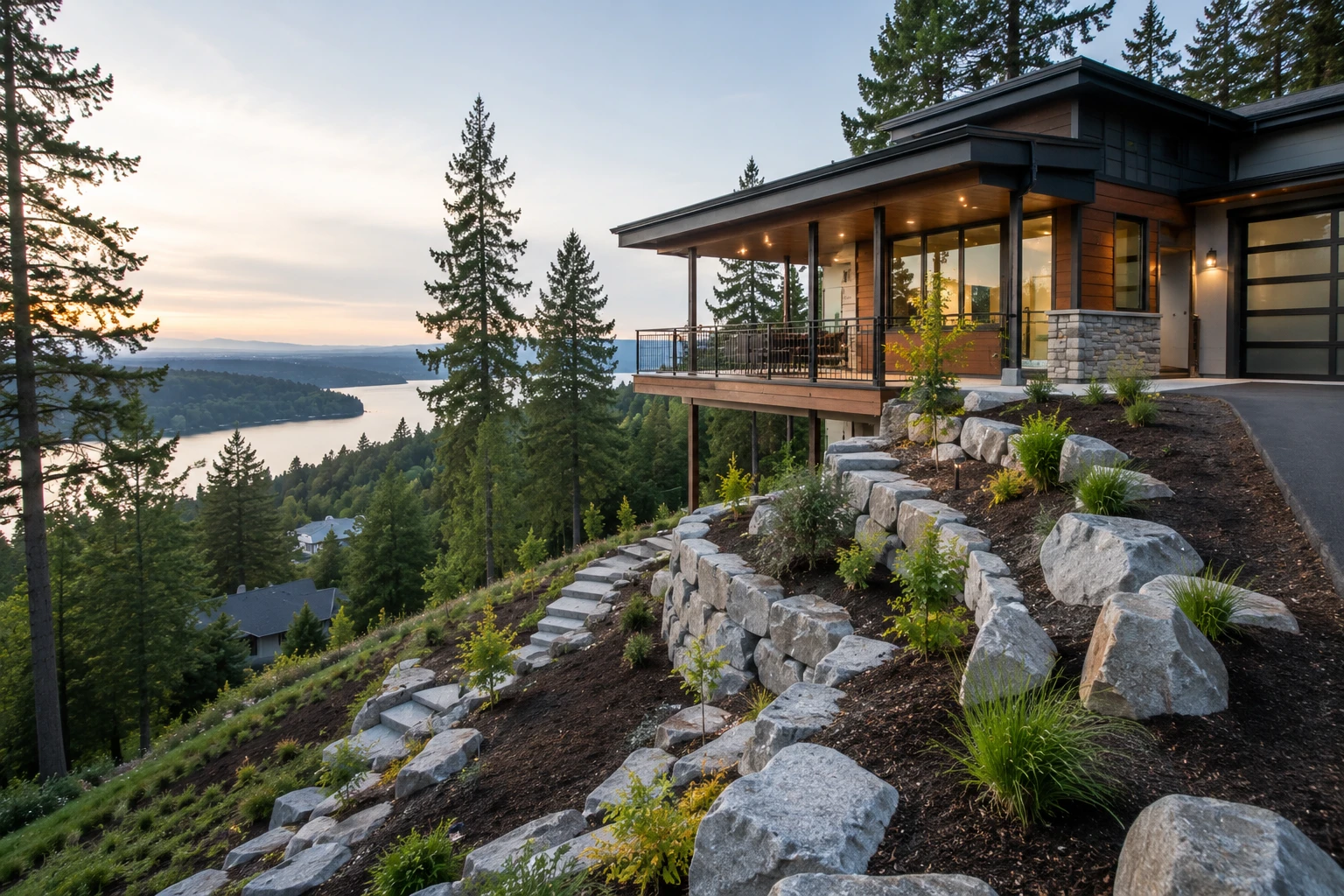
One of the most overlooked hillside challenges is construction access.On flatter lots, crews and materials can usually move efficiently throughout the property. Sloped sites, however, often create limitations for excavation equipment, concrete delivery, scaffolding, framing logistics, and material staging.Restricted access may increase labor time and reduce construction efficiency, especially on tighter urban hillside properties.
In some cases, builders may need:
- Specialized foundation systems
- Retaining walls
- Additional structural reinforcement to stabilize portions of the structure safely.
Drainage Planning Matters More Than Most Homeowners RealizeWater management is one of the most technically important aspects of hillside residential construction.
Unlike flat lots, sloped properties naturally accelerate water movement across the site. Without a properly engineered grading and drainage strategy, hillside homes can become vulnerable to erosion, hydrostatic pressure buildup, soil displacement, water intrusion, foundation stress, and long-term structural deterioration.
Effective hillside planning typically involves careful coordination between:
- grading Design
- Retaining Systems
- Surface Drainage
- Subdrain Installation
- Foundation Engineering
- Overall site runoff management
Even relatively minor drainage oversights can become expensive to correct after construction is completed.This level of coordination between terrain conditions, architecture, and structural engineering is one reason many homeowners work with a professional residential design team before finalizing plans for a sloped-lot project.
Hillside Permitting Can Take Longer
Many California hillside projects undergo a far more rigorous approval process than standard residential developments due to terrain sensitivity, grading considerations, and site-access constraints.
Depending on the jurisdiction, homeowners may be required to complete slope stability analysis, geotechnical investigation, retaining wall engineering review, drainage evaluation, wildfire access compliance, and detailed grading documentation before permits can be approved. In hillside areas throughout California, multiple municipal departments often review the same project simultaneously, which can further extend approval timelines.
If these site-specific requirements are not identified early in the planning phase, projects frequently encounter correction cycles, redesign requests, and additional engineering coordination during permitting.
A well-structured pre-construction strategy helps minimize these risks by addressing technical constraints before full architectural development begins, ultimately reducing costly revisions, approval delays, and construction inefficiencies later in the project timeline.
The Right Lot Can Still Be an Excellent Investment
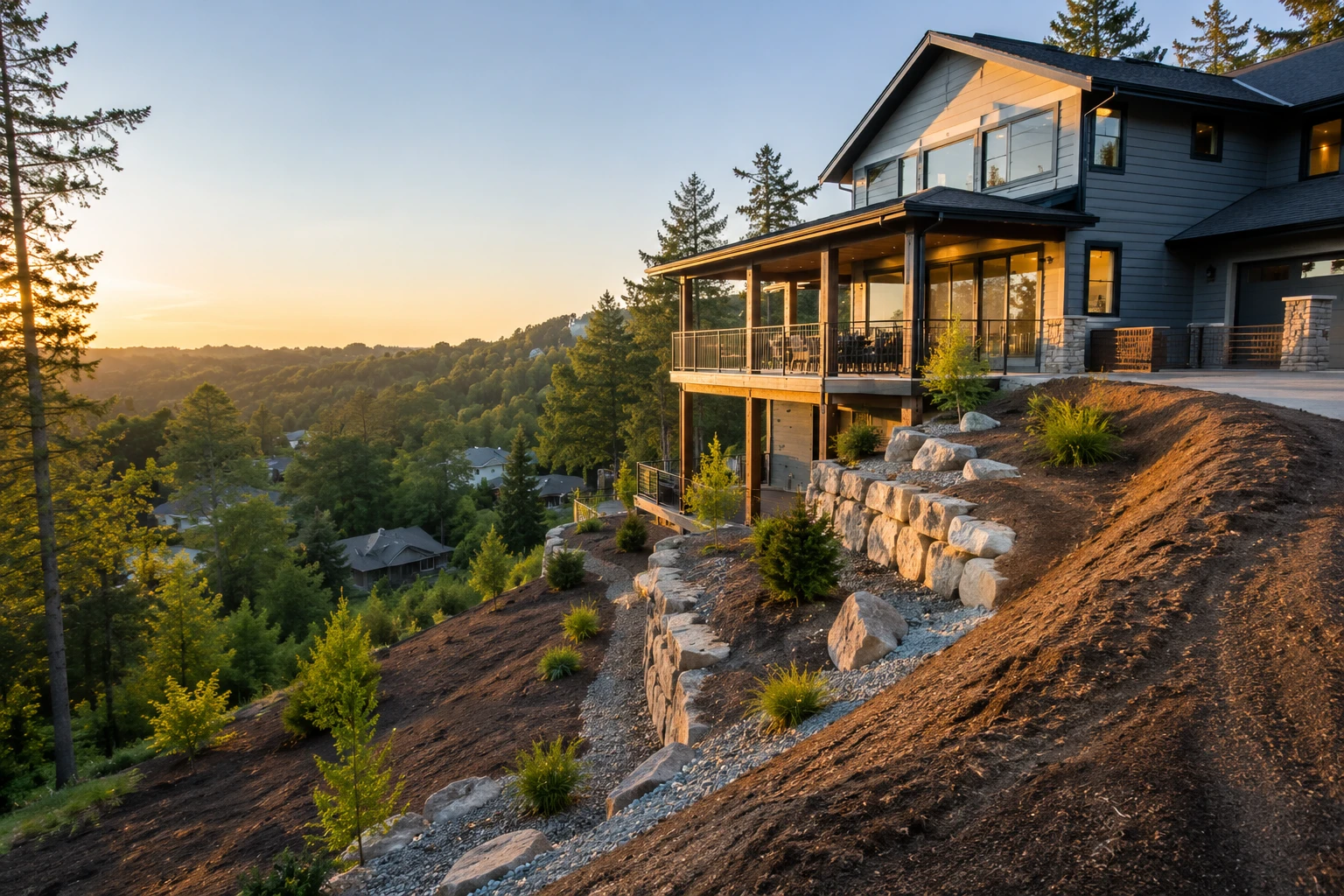
Despite the additional complexity, hillside homes continue to remain highly desirable throughout California.With the right planning approach, sloped lots can create exceptional views, stronger architectural character, improved privacy, unique outdoor living opportunities, and excellent long-term resale value.
The key is understanding the property’s limitations before design and construction begin — not after permits are already under review. Careful planning early in the process usually saves both time and construction cost later.
FAQs
Is building on a sloped lot more expensive than building on flat land?
Yes, hillside construction is typically more expensive because sloped lots often require additional excavation, grading, retaining walls, specialized foundations, drainage systems, and structural engineering. Costs can vary significantly depending on slope angle, soil conditions, accessibility, and local permitting requirements in California.
What type of foundation is usually required for a hillside home?
The foundation type depends on the terrain and soil stability. Many hillside homes use caisson foundations, grade beams, stepped foundations, or reinforced retaining systems to help stabilize the structure and manage slope-related pressure. A geotechnical evaluation is usually required before final foundation design begins.
Why is drainage so important when building on a sloped lot?
Sloped properties naturally accelerate water runoff, which can increase the risk of erosion, hydrostatic pressure, foundation stress, and soil movement if drainage is not properly engineered. Effective hillside construction typically includes grading plans, retaining systems, subdrains, and controlled runoff management to protect long-term structural stability.