
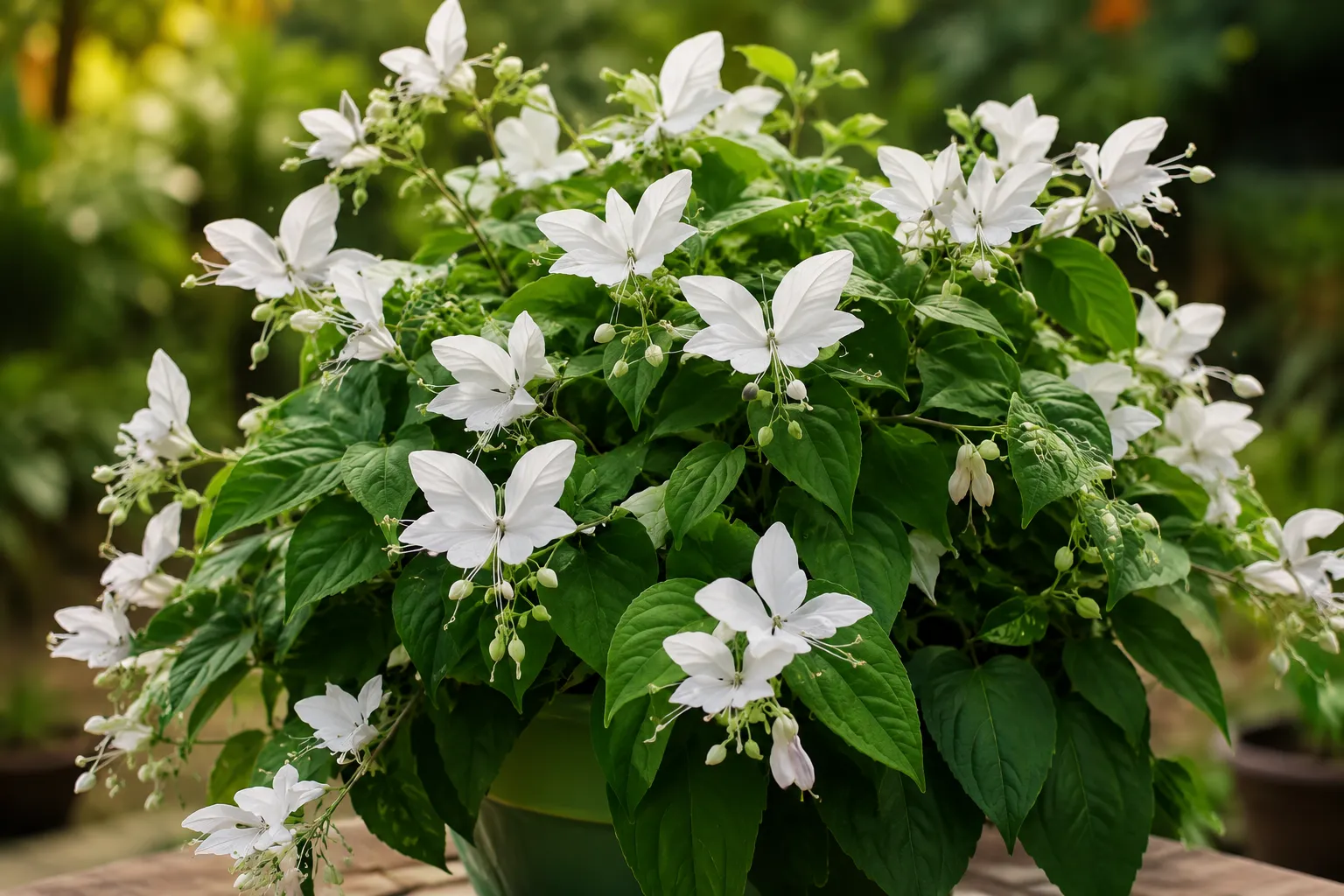
Butterfly plant care is straightforward, provide full sun (6–8 hours daily), well-drained soil with a pH of 6.0–7.5, and water 1 inch per week until established. After that, the plant is largely drought-tolerant. This guide covers everything — varieties, planting, watering, pruning, and fixing the 7 most common problems.
The term “butterfly plant” most often refers to Buddleja davidii (Buddleia), a fast-growing deciduous shrub also called summer lilac. It blooms from late spring through the first frost in USDA Zones 5–10, attracting butterflies, bees, and hummingbirds with fragrant 5- to 12-inch flower spikes.
Need pruning basics first? Read our guide on How to Prune Shrubs
Butterfly Plant Varieties: 6 Types Worth Growing
Butterfly bushes fall into 2 size categories. Standard varieties reach 5–10 feet tall and 5–10 feet wide. Dwarf varieties stay 2–4 feet tall and 2–4 feet wide — ideal for small gardens or containers.
Standard Varieties
- ‘Black Knight’ — deep purple flowers, grows 6–8 feet, strong fragrance
- ‘Royal Red’ — rich magenta-red spikes, 6–8 feet, highly attractive to pollinators
- ‘White Profusion’ — clean white blooms, 5–7 feet, lighter scent
Dwarf & Sterile Varieties (Recommended for Most Gardeners)
- ‘Lo & Behold Blue Chip’ — sterile (no seed spread), 2–3 feet, lavender-blue flowers
- ‘Miss Violet’ — compact 3–4 feet, deep violet, excellent for cottage gardens
- ‘Pugster Amethyst’ — extra-large flower heads on a tidy 3-foot frame
Pro Tip: Choose a sterile, non-seeding variety like ‘Lo & Behold’ if butterfly bush is classified invasive in your state (Oregon, Washington, some Mid-Atlantic states).
Butterfly Plant Growing Zones & Climate Requirements

Butterfly bush is recommended for USDA Hardiness Zones 5 to 10. In Zones 5–6, the plant dies back to the root crown each winter and regrows in spring — behaving more like a perennial than a shrub. In Zones 8–10, it stays semi-evergreen year-round.
Zone 5–6: Expect late emergence (late April to mid-May). Wait until you see new growth before pruning. The plant is not dead — it’s dormant.
Zone 7–8: Moderate winters. Plants leaf out earlier. Prune in late winter before bud break.
Zone 9–10: Near-evergreen. May need hard pruning every spring to control size and encourage fresh flowering wood.
Sunlight Requirements
Butterfly plants need full sun: at least 6 hours of direct sunlight daily, with 8+ hours preferred for maximum bloom production. In partial shade, plants grow leggy, produce fewer flowers, and become more prone to pests.
Plant butterfly bush where it gets unobstructed morning and afternoon sun. Avoid planting under trees — shade causes spindly growth and poor flowering.
Soil: What Works and What Kills Butterfly Plants
Butterfly plants grow in average, well-drained soil. They perform poorly in wet, waterlogged conditions. Root rot is the fastest way to kill one.
- Ideal soil pH: 6.0 to 7.5 (slightly acidic to neutral)
- Best soil type: loam or sandy loam with good drainage
- Avoid: heavy clay that holds water
- Amendment tip: add coarse sand or perlite to improve drainage in clay soil
Critical planting tip: Plant ‘high’ — set the root ball slightly above ground level to create a small mound. Water drains away instead of pooling at the base.
Do not amend clay soil with compost before planting a butterfly bush. Amended pockets in clay soil trap water around the roots. Plant directly into your native soil. Pair correct soil with the right watering routine: Watering Schedule Guide
Butterfly Plant Watering: How Much and How Often
Water 1 inch (2.5 cm) per week during the first growing season. Once established (after the first full season), butterfly bush is drought-tolerant and needs water only during extended dry periods — roughly every 2–3 weeks without rain.
Watering by Growth Stage
- Weeks 1–4 after planting: water every 2–3 days to settle roots
- Month 2 through end of first season: water when the top 2 inches (5 cm) of soil feel dry
- Established plant: water deeply once every 2–3 weeks in dry weather
Signs of overwatering: wilting despite wet soil, yellowing leaves, mushy stems at the base. Wilted leaves alone don’t mean the plant is dry — check soil first.
Signs of underwatering: crispy leaf edges, wilting in afternoon heat when soil is bone dry.
Fertilizing Butterfly Plants
Butterfly plants need minimal fertilizer. Over-fertilizing pushes leafy growth at the expense of flowers. A thin layer of compost or a single application of balanced slow-release fertilizer in early spring is enough for the full season.
Do not fertilize mid-season or in fall. Late fertilizing triggers soft new growth that gets damaged by early frost.
How to Prune Butterfly Plants (The Right Way)
Butterfly bushes bloom on new wood. Hard pruning in early spring — before new growth begins — is the most important annual task.
Annual Spring Pruning
- Timing: late winter to early spring, once frost risk passes but before new buds swell
- Cut all stems back to 12–18 inches (30–45 cm) from the ground
- Use sharp bypass pruners or loppers — clean cuts heal faster
- In cold zones, wait until you see green buds before cutting
Deadheading During the Season
Remove spent flower spikes immediately after blooming. This prevents self-seeding and triggers the plant to produce a new flower spike within 4–6 weeks, extending the bloom season through frost.
Do not deadhead in fall if you want to leave seed heads for birds over winter.
7 Common Butterfly Plant Problems (With Fixes)
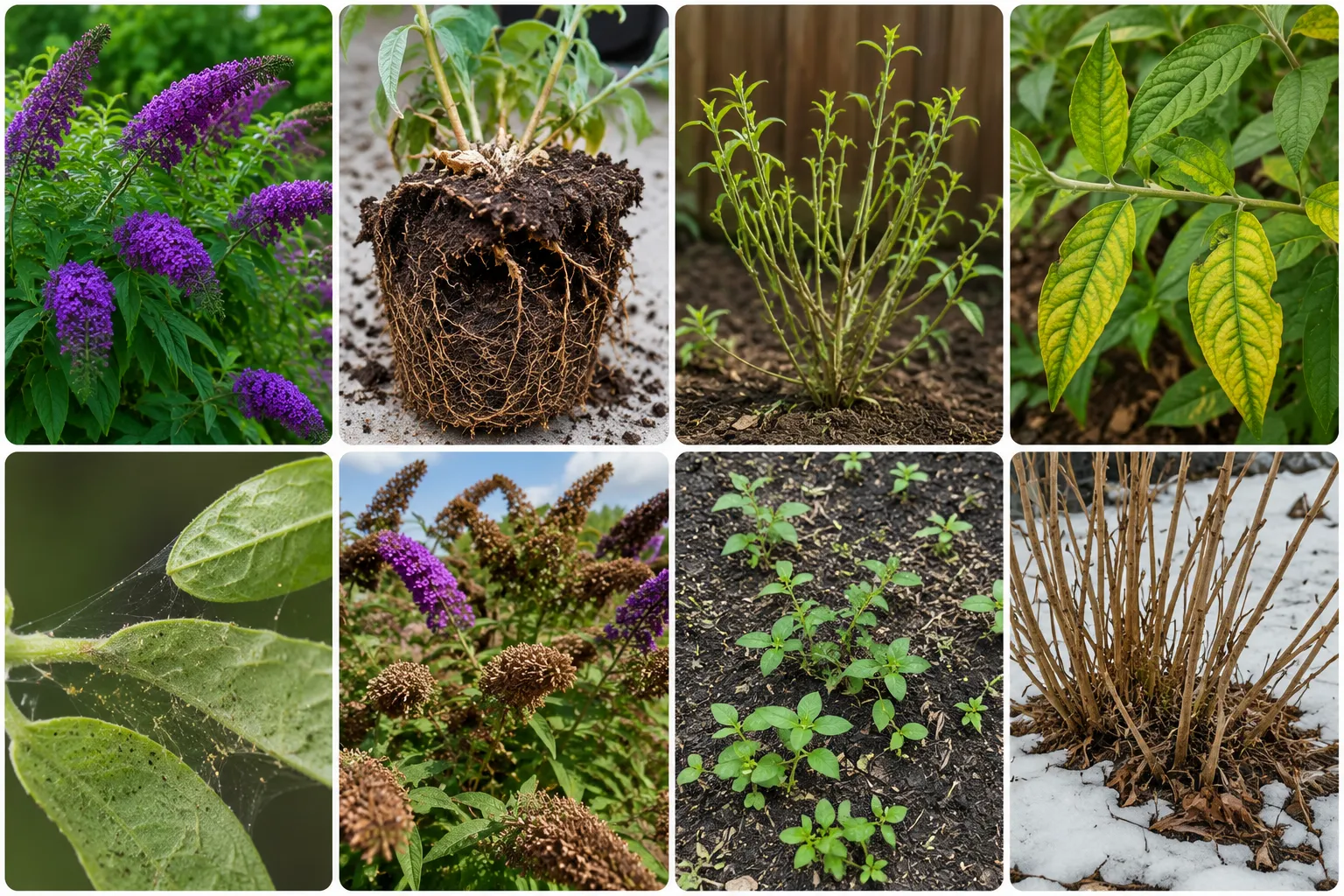
1. Plant Not Blooming
Cause: insufficient sunlight (fewer than 6 hours), overwatering, or excess nitrogen fertilizer. Fix: move to full sun, reduce watering, skip high-nitrogen feeds.
2. Root Rot
Cause: waterlogged soil or clay without drainage. Symptoms: wilting despite wet soil, black mushy roots. Fix: improve drainage before replanting; do not save a severely rotted plant.
3. Leggy, Spindly Growth
Cause: not enough sun, or skipping annual hard pruning. Fix: cut back hard in spring and relocate to a sunnier spot.
4. Leaf Yellowing
Cause: 3 possible triggers — overwatering (most common), poor drainage, or iron chlorosis in high-pH soil. Fix: check drainage first, then test soil pH.
5. Spider Mites
Appear during hot, dry summers. Look for fine webbing on leaf undersides. Fix: spray with a strong jet of water or apply neem oil every 7 days for 3 weeks.
6. Self-Seeding / Invasive Spread
Buddleia davidii self-seeds aggressively. Fix: deadhead every spent bloom before seed heads form, or replace with a certified sterile variety like ‘Lo & Behold.’
7. Winter Die-Back
Normal in Zones 5–6. The plant is dormant, not dead. Do not cut it back until you see new green buds in spring — cutting too early removes protected growth nodes.
Propagating Butterfly Plants
Propagate by stem cuttings in summer. Seed propagation works but is less reliable for named varieties.
- Step 1: Take a 4–6 inch (10–15 cm) cutting from the tip of a healthy, non-flowering stem in June–August
- Step 2: Remove leaves from the bottom half
- Step 3: Dip the cut end in rooting hormone powder
- Step 4: Insert into a pot of moist perlite or seed-starting mix
- Step 5: Cover loosely with plastic and place in bright indirect light
- Step 6: Roots develop in 4–6 weeks — transplant once roots are 1–2 inches long
Companion Plants for a Pollinator Garden
Butterfly bush provides nectar but is not a host plant for butterfly caterpillars. Pair it with true host plants to support the full butterfly lifecycle.
- Milkweed (Asclepias tuberosa) — host plant for Monarch butterflies
- Coneflower (Echinacea) — seeds feed birds in fall
- Ornamental grasses — provide winter structure and insect habitat
- Lavender — extends the pollinator season with early blooms
For year-round structure alongside butterfly bush, see: Best Evergreen Shrubs
Mulching: When to Use It and When to Skip It
Mulching around butterfly bush depends on your soil type.
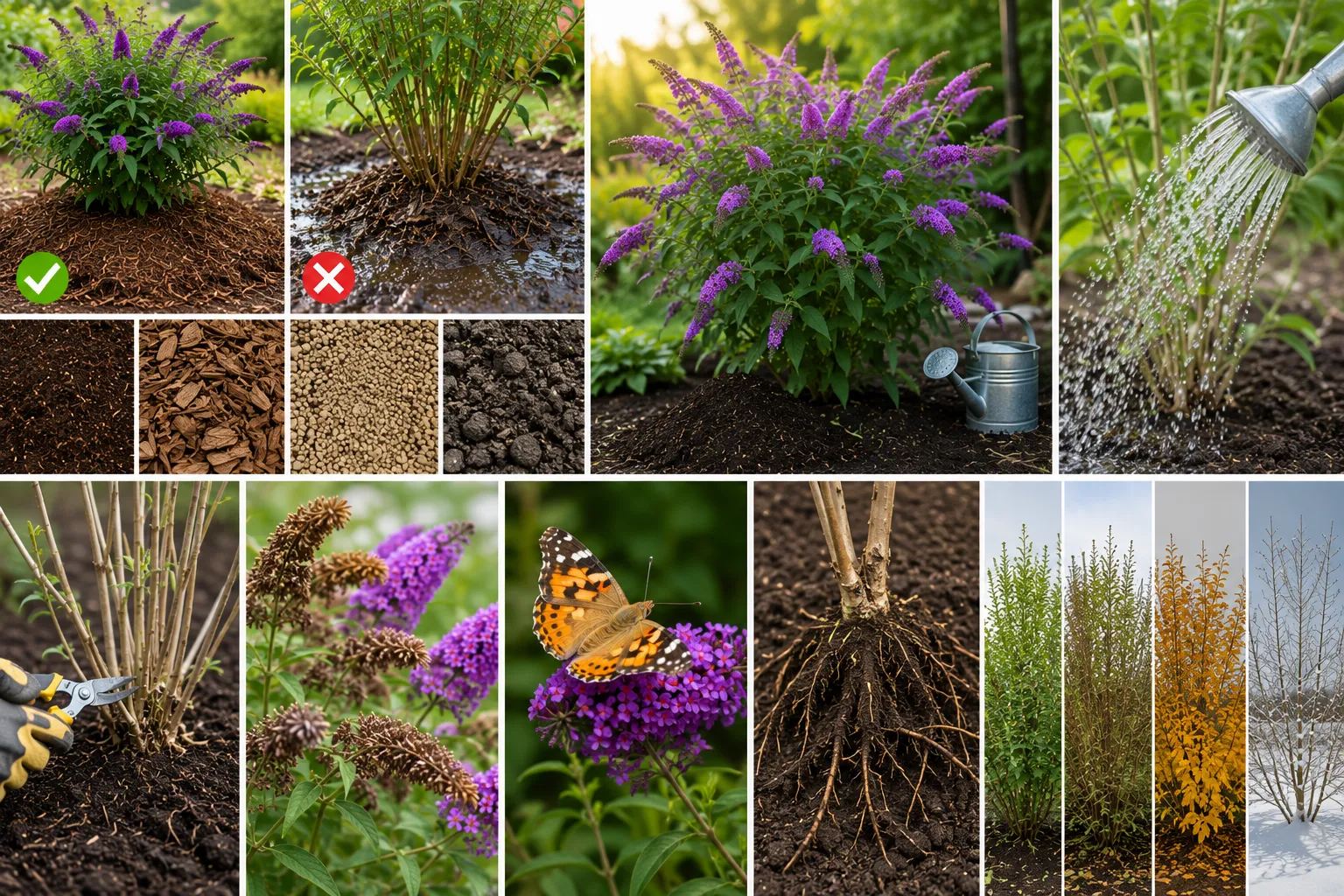
Well-drained sandy or loam soil: apply 2–3 inches (5–7.5 cm) of mulch in fall to protect roots from frost. Keep mulch 3 inches away from the stem base.
Heavy clay soil: skip mulch entirely. Mulch holds extra moisture in clay and worsens drainage around the roots.
Quick Butterfly Plant Care Summary
Sunlight: 6–8 hours of full sun daily
Water: 1 inch/week until established; drought-tolerant after first season
Soil: well-drained loam, pH 6.0–7.5
Fertilizer: thin compost layer in spring only
Pruning: hard prune to 12–18 inches in early spring; deadhead spent blooms
Hardiness Zones: 5–10 (dies back to roots in Zones 5–6 each winter)
Common Problems: 7 total — root rot, no blooms, leggy growth, spider mites, self-seeding, leaf yellowing, winter die-back
If butterfly bush feels like too much work, explore our Low Maintenance Shrubs guide
Frequently Asked Questions
Does butterfly plant come back every year?
Yes. In Zones 5–10, butterfly bush returns each year. In colder zones (5–6), it dies back to the root crown and regrows from the base each spring. It is not an annual.
How fast does butterfly plant grow?
Fast. Butterfly bush grows 2–3 feet per season under good conditions. A plant cut to 12 inches in spring regularly reaches 5–6 feet by midsummer.
Is butterfly plant toxic to dogs or cats?
Butterfly bush (Buddleia) is listed as non-toxic to dogs and cats by the ASPCA. Still, keep pets from eating large quantities of any plant material.
How do I stop butterfly bush from spreading?
Deadhead every spent flower before seed heads form. Alternatively, replace the plant with a sterile cultivar — varieties like ‘Lo & Behold Blue Chip’ produce no viable seed.
Can butterfly plant grow in pots?
Yes. Dwarf varieties (2–4 feet) grow well in containers of 15 gallons (57 liters) or larger. Use well-draining potting mix, water more frequently than in-ground plants, and move containers to a sheltered spot in winter in Zones 5–6.
Final Thoughts on Butterfly Plant Care
Butterfly plant care is genuinely low-effort once you get the basics right. Give it full sun, plant it in well-drained soil, hard prune it every spring, and deadhead spent blooms through the season. Do those 4 things and it rewards you with months of fragrant color and a garden full of pollinators.
The mistakes that kill butterfly plants are almost always the same: too much water, too little sun, or skipping the annual spring prune. Avoid those 3 errors and you will have a thriving, long-lived shrub for years to come.
If invasive spread is a concern in your region, choose a sterile dwarf variety. You get all the beauty with none of the spread. There is no reason to avoid this plant entirely — just plant the right cultivar for your location.
Whether you are building a pollinator garden from scratch or adding one standout shrub to an existing border, butterfly plant earns its place. Plant it once, prune it hard each spring, and it will be one of the easiest, most rewarding plants in your garden.