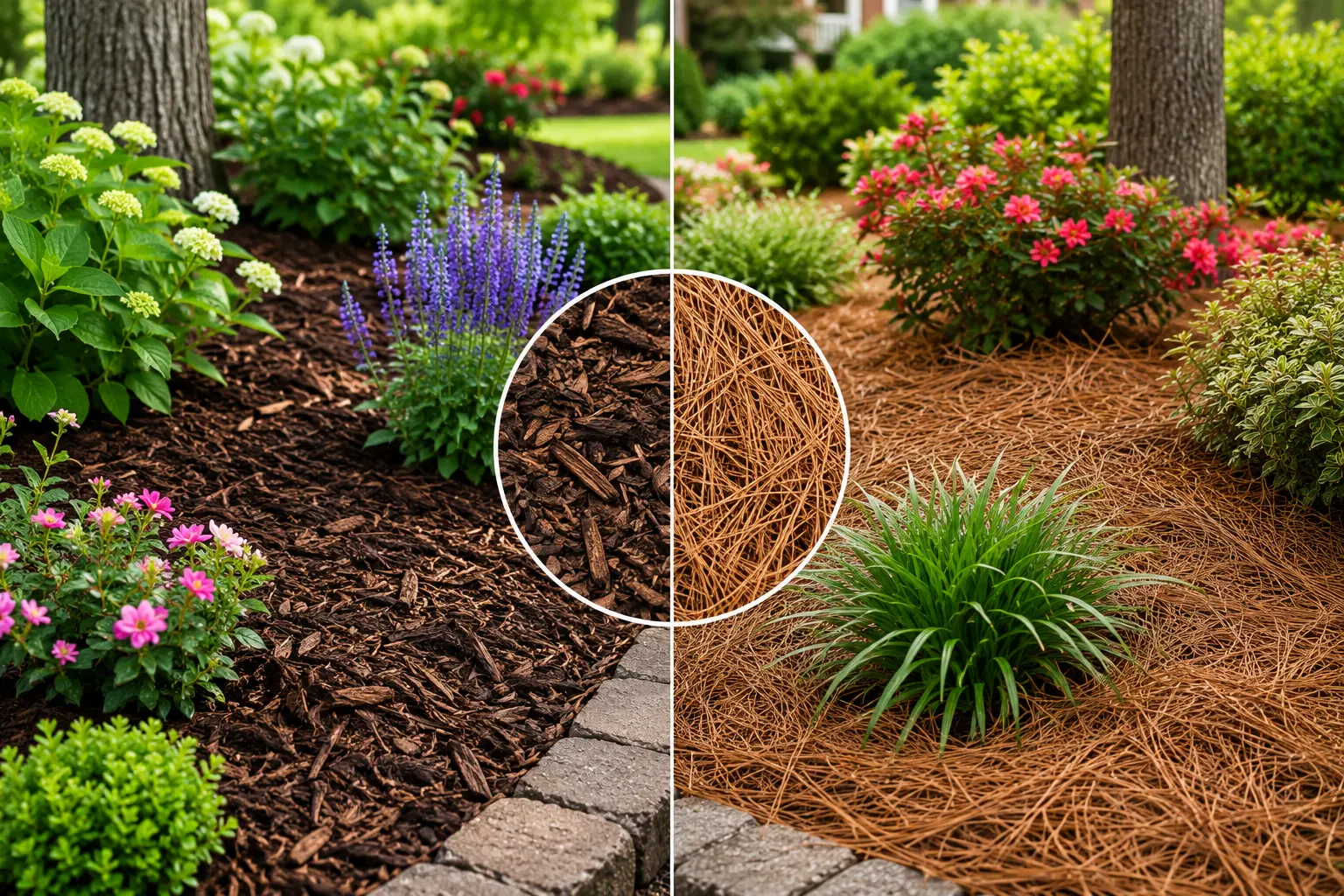
Both mulch and pine straw protect soil, reduce weeding, and conserve moisture. The difference is in how they do it, how long they last, what they cost, and which plants perform better under each one. Choosing the wrong material for your situation wastes money and creates more maintenance work, not less.
This guide breaks down every practical difference between mulch and pine straw — cost, lifespan, soil impact, erosion control, best plant matches, and maintenance. By the end, you will know exactly which one fits your garden in 2026.
Mulch vs Pine Straw: The Quick Answer
Use wood mulch for moisture retention, soil enrichment, and a clean manicured look. Use pine straw for slopes, acid-loving plants, erosion-prone areas, and lower upfront cost.
Pine straw is technically a type of mulch. Mulch is any material spread over soil as a protective cover — wood chips, bark, straw, compost, pine needles, gravel. When people say ‘mulch vs pine straw’ they mean wood mulch (shredded bark or wood chips) compared specifically to pine needle mulch.
Neither is universally better. Both suppress weeds, regulate soil temperature, and retain moisture. The right choice depends on your slope, your plants, your climate, and how much maintenance work you want each year.
What Is Wood Mulch?
Wood mulch is shredded or chipped wood material spread over soil as a protective layer. The most common types sold at garden centers are shredded hardwood, cedar bark, pine bark nuggets, and dyed wood chips.
Wood mulch decomposes over 2 to 3 years, slowly releasing organic matter into the soil beneath it. As it breaks down, it feeds soil microorganisms and earthworms, gradually improving soil structure and fertility. This long decomposition cycle is one of wood mulch’s biggest advantages — it builds soil health passively over multiple seasons.
Bagged wood mulch costs $4 to $8 per 2 cubic feet (0.06 cubic meters). Bulk hardwood mulch from a landscaping supplier runs $20 to $45 per cubic yard (0.76 cubic meters). One cubic yard covers approximately 100 square feet (9.3 square meters) at 3 inches (8 cm) deep.
What Is Pine Straw?
Pine straw is the fallen needles of pine trees — raked, dried, and baled. Longleaf pine straw has needles measuring 10 to 18 inches (25 to 45 cm) long with a rich reddish-brown color. Short-needle pine straw from loblolly, slash, or shortleaf pines measures 4 to 8 inches (10 to 20 cm) and has a lighter brown tone.
Pine straw is most widely used in the southeastern United States — Florida, Georgia, the Carolinas — where longleaf pine trees are common and baled pine straw is cheap or free. Gardeners in pine-heavy regions often rake their own directly from under existing trees.
A bale of pine straw covers 35 to 45 square feet (3.3 to 4.2 square meters) at 3 inches (8 cm) deep and costs $4 to $7. It is significantly cheaper per square foot covered than wood mulch.
Pine needles naturally interlock as they settle, which is why pine straw outperforms wood mulch on slopes — interlocked needles resist washing away in heavy rain far better than loose wood chips or shredded bark.
7 Key Differences Between Mulch and Pine Straw
These 7 factors determine which material fits your specific garden situation.
1. Erosion control
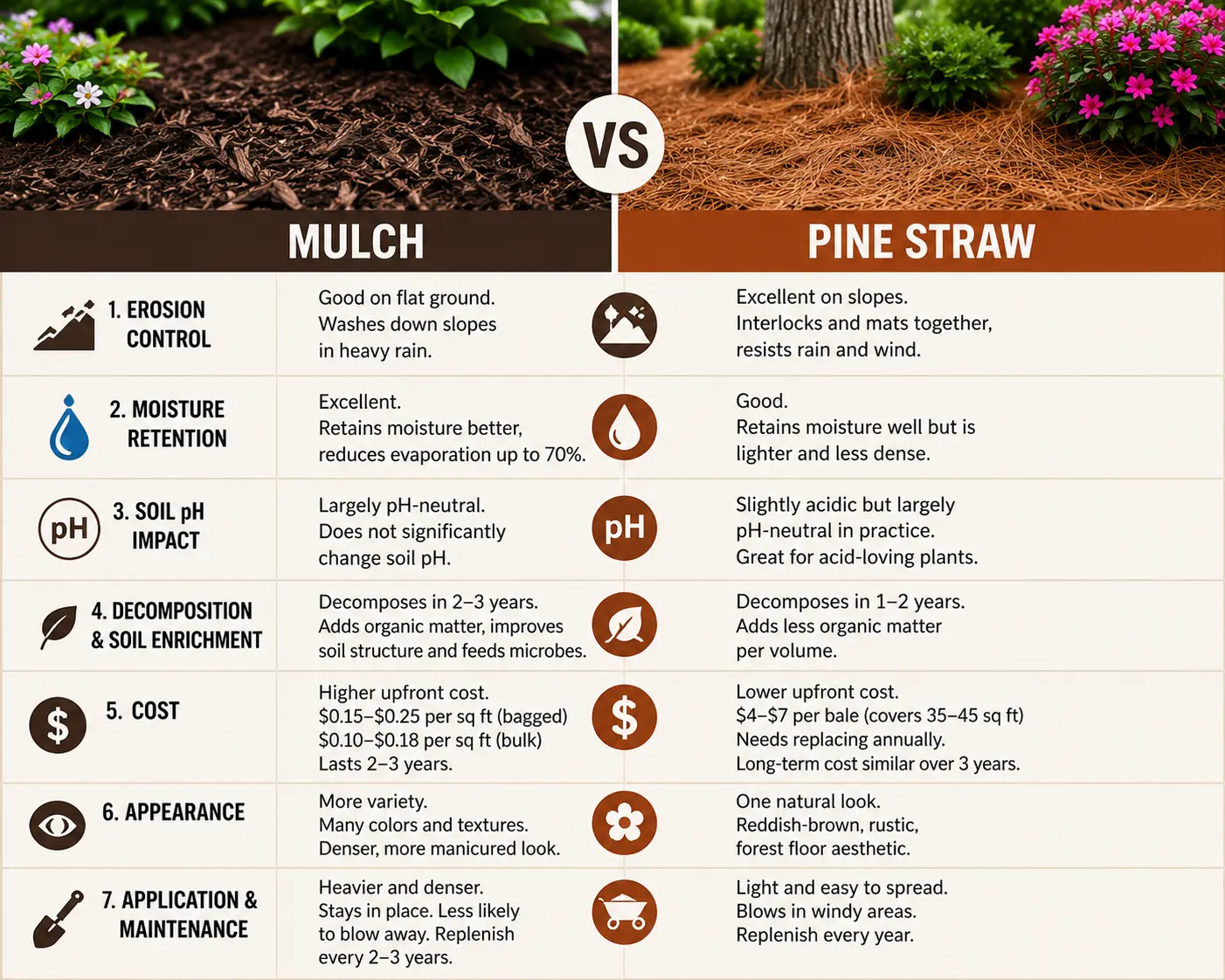
Pine straw wins on slopes. Pine needles interlock and mat together as they settle, forming a stable layer that resists rain and wind. Wood mulch — especially lightweight shredded material — washes down slopes in heavy rainfall. On flat ground, both perform equally well. If your garden has any slope steeper than a gentle grade, pine straw holds position significantly better.
2. Moisture retention
Wood mulch wins for moisture. A 3-inch (8 cm) layer of wood chips or shredded bark retains soil moisture more effectively than pine straw, reducing evaporation by up to 70% in summer heat. Pine straw retains moisture well but is lighter and less dense, so it loses some ground to wood mulch in extended dry periods. Mulched beds using wood chips typically need watering 2 to 3 times per week in summer versus daily for uncovered soil.
3. Soil pH impact
Both are largely pH-neutral in practice. Pine straw is slightly acidic but does not significantly lower soil pH as it sits on the surface. The myth that pine straw makes soil acidic enough to harm most plants is not supported by evidence. Pine straw does perform best with acid-loving plants — azalea, camellia, rhododendron, blueberry, hydrangea — but this is because those plants naturally grow under pine canopies, not because pine straw dramatically alters soil chemistry.
4. Decomposition and soil enrichment
Wood mulch enriches soil more over time. Shredded hardwood and bark decompose over 2 to 3 years, adding organic matter that improves soil structure and feeds soil microorganisms. Pine straw decomposes in 1 to 2 years but adds less organic material per volume as it breaks down. For long-term soil building, wood mulch is more effective. For annual refreshing with minimal work, pine straw is faster to apply and replace.
5. Cost
Pine straw is cheaper upfront. One bale covers 35 to 45 square feet (3.3 to 4.2 square meters) for $4 to $7. Wood mulch at the same depth costs $0.15 to $0.25 per square foot for bagged product and $0.10 to $0.18 per square foot in bulk. For large areas, pine straw saves 30% to 50% on material cost. However, pine straw needs replacing annually versus every 2 to 3 years for wood mulch, so long-term costs are comparable over a 3-year period.
6. Appearance
Wood mulch offers more visual variety. Shredded hardwood, cedar bark, pine bark nuggets, and colored mulch come in colors from deep chocolate brown to warm red and natural gray. Pine straw has a single natural reddish-brown look that mimics a forest floor. Both look clean and finished when freshly applied. Pine straw has a lighter, more rustic aesthetic. Wood mulch gives a denser, more manicured appearance suited to formal landscapes.
7. Application and maintenance
Pine straw is faster and easier to apply. A bale of pine straw weighs 15 to 25 lbs (7 to 11 kg) and spreads by hand quickly. Wood mulch is heavier — a 2 cubic foot bag weighs 20 to 40 lbs (9 to 18 kg) — and requires raking to spread evenly. For large garden beds, pine straw cuts labor time significantly. Pine straw also needs only spot-refreshing in thin areas rather than a full reapplication.
For plants that perform best with pine straw — particularly acid-loving perennials — see our complete bush peony guide for zone-specific mulching and soil care advice.
When to Choose Pine Straw
Pine straw is the better choice in these 5 situations.
Sloped garden beds
Pine straw’s interlocking needle structure holds firm on grades where wood mulch slides or washes. Apply at 3 inches (8 cm) deep on slopes. Even in heavy rain, interlocked pine needles stay in place while keeping soil erosion minimal.
Acid-loving plants
Azalea, camellia, rhododendron, blueberry, gardenia, and mountain laurel all thrive with pine straw. These plants naturally grow under pine canopies. Pine straw feels at home around them, does not introduce materials foreign to their natural environment, and the slight acidity from needle decomposition benefits them over time.
Large areas on a budget
For covering 500 square feet (46 square meters) or more, pine straw saves significant money upfront. One cubic yard of wood mulch covers about 100 square feet (9.3 square meters) at 3 inches deep. The same coverage in pine straw costs 30% to 50% less.
Slug-prone gardens
Slugs dislike crawling through pine straw. The sharp, dry texture of pine needles deters slugs better than the moist, dense surface of wood mulch. If hostas, lettuce, or other slug-vulnerable plants are in your beds, pine straw reduces slug pressure without chemicals.
Low-effort annual refresh
Pine straw spot-refreshes easily — just fluff existing straw and add a thin layer over bare patches. Wood mulch requires more effort to spread evenly during annual top-up. For gardeners maintaining large properties with limited time, pine straw is faster to manage year over year.
When to Choose Wood Mulch
Wood mulch is the better choice in these 5 situations.
Flat garden beds needing deep moisture retention
On flat ground in hot or dry climates, wood mulch holds soil moisture more effectively than pine straw. A 3-inch (8 cm) layer of shredded hardwood reduces watering needs by up to 70% in summer. For vegetable gardens and flower borders in USDA Zones 7 to 10, wood mulch saves significantly more water over the growing season.
Building long-term soil health
Wood mulch breaks down into humus over 2 to 3 years, steadily adding organic matter that improves soil structure, water retention, and microbial activity. For new garden beds on compacted or nutrient-poor ground, wood mulch builds soil quality passively with no additional effort.
Formal or polished landscape design
Wood mulch — especially double-shredded hardwood, cedar bark, or dyed mulch — gives garden beds a clean, finished appearance that suits formal landscape designs. Pine straw reads as rustic and natural, which works beautifully in informal or woodland garden settings but can look out of place in structured, symmetrical landscapes.
Windy gardens
Pine straw blows in strong wind. If your garden is exposed to regular wind, pine straw needs constant topping up in bare patches. Wood mulch — particularly coarser bark nuggets or wood chips — stays in place in all but the most extreme conditions.
Around trees and large shrubs
A wide ring of wood chip mulch 3 to 6 feet (90 to 180 cm) in diameter around tree bases mimics the natural forest floor and protects roots from mower damage, temperature stress, and moisture loss. Wood chips around trees decompose slowly and feed the root zone year after year without annual replacement.
If you grow ornamentals that need specific moisture management and mulch placement, our chrysanthemum growing guide covers mulching and soil care for perennial beds in detail.
Mulch vs Pine Straw for Weed Control
Wood mulch provides slightly stronger weed suppression than pine straw. A dense 3-inch (8 cm) layer of shredded wood blocks light from reaching weed seeds more completely than the lighter, fluffier layer pine straw forms.
Pine straw still suppresses weeds effectively at 3 inches (8 cm) depth. Where pine straw falls short is in areas with aggressive perennial weeds — dandelion, bindweed, creeping grass — that push through lighter materials. For those problem areas, wood mulch performs better.
Neither mulch type eliminates weeds entirely. Weed seeds blow in from above and germinate on the mulch surface. The advantage is that weeds growing in loose mulch pull out by hand far more easily than weeds rooted in bare compacted soil.
Mulch vs Pine Straw for Soil Temperature
Both materials insulate soil against temperature extremes. An MSU study found organic mulch regulates soil temperature by up to 18°F (10°C) at midday compared to bare soil.
Wood mulch performs slightly better at summer heat insulation because its denser structure reflects and absorbs heat more evenly. Pine straw insulates well but its lighter, airier structure allows slightly more temperature transfer.
For winter frost protection, both work well. Apply either material in late autumn at 3 to 4 inches (8 to 10 cm) deep around perennial root zones in USDA Zones 4 to 6 before the first hard freeze. This insulates roots and slows ground freeze, giving plants extra protection through cold snaps.
For plants that need winter root protection through mulching, see our Lagerstroemia floribunda care guide — which covers seasonal mulching for heat-loving flowering trees.
Mulch vs Pine Straw by Plant Type
Match your ground cover to what you are growing. Here is a direct breakdown for 5 common garden types.
Acid-loving shrubs — azalea, camellia, rhododendron, blueberry
Use pine straw. These plants grow naturally in pine forests. Pine straw suits their root environment, deters slugs that damage tender foliage, and creates the slightly acidic surface layer their roots prefer. Apply at 3 inches (8 cm) deep and refresh annually.
Vegetable gardens
Use straw mulch or wood chips, not pine straw. Vegetable gardens need maximum moisture retention in summer heat and a material that breaks down quickly to feed soil between seasons. Straw mulch between rows keeps soil moist and clean. Wood chips work well around permanent crops like asparagus and fruit bushes.
Trees and large shrubs
Use wood chips. Spread a ring 3 to 6 feet (90 to 180 cm) wide around tree bases. Wood chips decompose slowly, protect the root zone, and improve soil over years without annual replacement. Avoid pine straw around trees in windy areas — it blows out of wide rings easily.
Flower borders
Either works, but choose based on aesthetics. Wood mulch gives a formal, clean look. Pine straw gives a natural, informal look. Both suppress weeds and retain moisture equally well in flat flower beds. In areas with slug pressure, pine straw reduces slug damage to hostas and other soft-leafed perennials.
Slopes and hillsides
Use pine straw. No other organic mulch matches pine straw for erosion control on slopes. Interlocked needles stay in place through heavy rain and wind. Wood mulch on slopes requires anchoring or edging to prevent washout, adding installation time and cost.
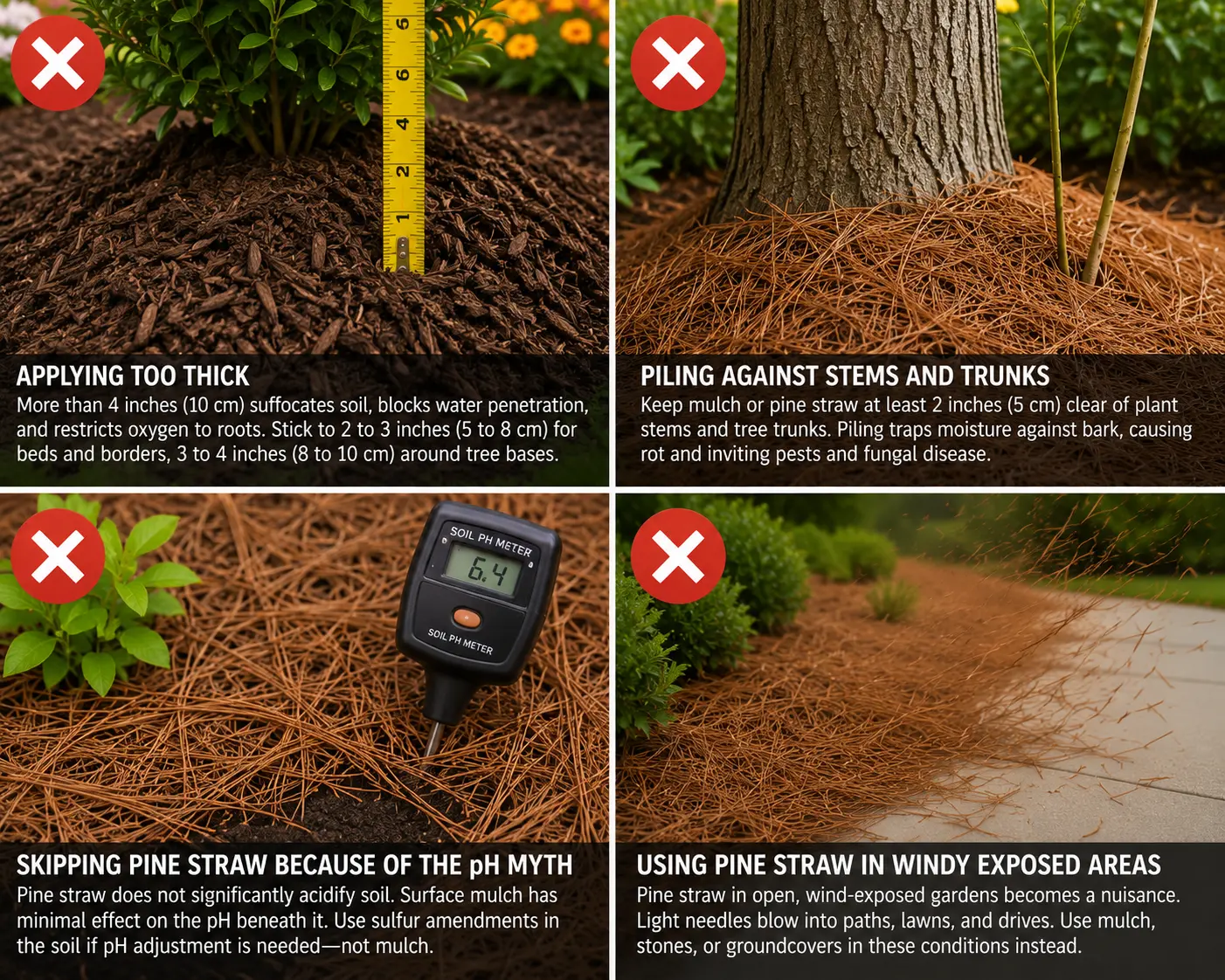
4 Common Mistakes with Mulch and Pine Straw
Applying too thick
More than 4 inches (10 cm) of either material suffocates soil, blocks water penetration, and restricts oxygen to roots. Both wood mulch and pine straw at excessive depth create a waterproof mat that repels rain rather than letting it through. Stick to 2 to 3 inches (5 to 8 cm) for beds and borders, 3 to 4 inches (8 to 10 cm) around tree bases.
Piling against stems and trunks
Whether you use wood mulch or pine straw, keep material at least 2 inches (5 cm) clear of plant stems and tree trunks. Both materials trap moisture against bark when piled up, causing rot and creating entry points for pests and fungal disease. Keep the base of every plant and tree clear.
Skipping pine straw because of the pH myth
Pine straw does not significantly acidify soil. Surface mulch has minimal effect on the pH of the soil beneath it. If your soil needs pH adjustment, use sulfur amendments worked into the root zone — not mulch. Choose or avoid pine straw based on performance factors, not this widely repeated myth.
Using pine straw in windy exposed areas
Pine straw in an open, wind-exposed garden becomes a maintenance problem. Light needles blow into paths, lawns, and neighboring beds constantly. In windy gardens, use wood chips, bark nuggets, or coarse shredded hardwood — all of which are heavy enough to stay in place without constant replacement.
Can You Use Both Mulch and Pine Straw in the Same Garden?
Yes — and many experienced gardeners do. Using different materials in different zones of the same garden is a practical approach when your conditions vary.
A common split: use wood chips around trees and in formal front beds for a clean look, and use pine straw on sloped side beds or around acid-loving shrubs at the back. Each material does its best work in the zone most suited to it.
Do not layer pine straw on top of existing wood mulch or vice versa. Mixed layers create uneven decomposition and can trap excess moisture against soil. Start fresh with one material per bed zone.
For plants that need careful soil moisture management around their root zone, our rabbit foot fern care guide shows how mulch and moisture interact for sensitive container and garden plants.
Frequently Asked Questions
Does pine straw make soil acidic?
No — not significantly. Pine straw sitting on the soil surface does not lower soil pH enough to affect most plants. Soil pH is driven by amendments worked into the root zone, not surface mulch. Pine straw suits acid-loving plants because it mimics their natural growing environment, not because it dramatically changes soil chemistry.
How long does pine straw last compared to wood mulch?
Pine straw lasts 1 to 2 years before needing replacement. Wood mulch lasts 2 to 3 years. Longleaf pine straw holds up longer than short-needle varieties. In wet climates, both decompose faster than in dry conditions.
Which is cheaper — mulch or pine straw?
Pine straw is cheaper per square foot covered. A bale covering 35 to 45 square feet costs $4 to $7. Equivalent coverage in bagged wood mulch costs $8 to $15. Over 3 years, costs even out because wood mulch needs replacing less often.
Is pine straw good for vegetable gardens?
Pine straw works between vegetable rows for weed control and moisture retention, but regular straw or wood chips are better choices. They decompose faster, add more organic matter, and blend more easily into vegetable bed soil at season end.
Which is better for weed control — mulch or pine straw?
Wood mulch provides slightly stronger weed suppression because its denser layer blocks light more completely. Both control weeds well at 3 inches (8 cm) deep. For aggressive perennial weeds, wood mulch performs better.
Can pine straw blow away?
Yes — in windy areas, pine straw is a problem. Lightweight needles lift and scatter in strong wind. Longleaf pine straw interlocks better than short-needle varieties and resists blowing more effectively. In consistently windy gardens, use wood chips or bark nuggets instead.
Final Verdict
Choose pine straw for slopes, acid-loving plants, large areas on a budget, and slug-prone beds. Choose wood mulch for flat beds needing strong moisture retention, long-term soil building, formal aesthetics, and windy gardens.
If your garden has both flat and sloped areas, or both formal beds and naturalistic planting zones, use both materials in the zones where each performs best. There is no rule that says you pick one.
The worst outcome is bare soil — no ground cover at all. Both mulch and pine straw outperform exposed soil on every measure: moisture retention, weed control, soil temperature regulation, erosion, and long-term soil health. Start with either one. Adjust as you learn what your specific garden needs.