
Here’s the deal – prayer plant care isn’t rocket science, but it’s not exactly beginner territory either. I’ve watched people who can keep literally any plant alive struggle with this one. Then I’ve seen others nail it on their first try. The difference? Understanding what this plant actually needs versus what everyone says it needs.
Let me break down everything I’ve learned the hard way so you don’t have to.
Why Is It Called a Prayer Plant (And Why It Matters)
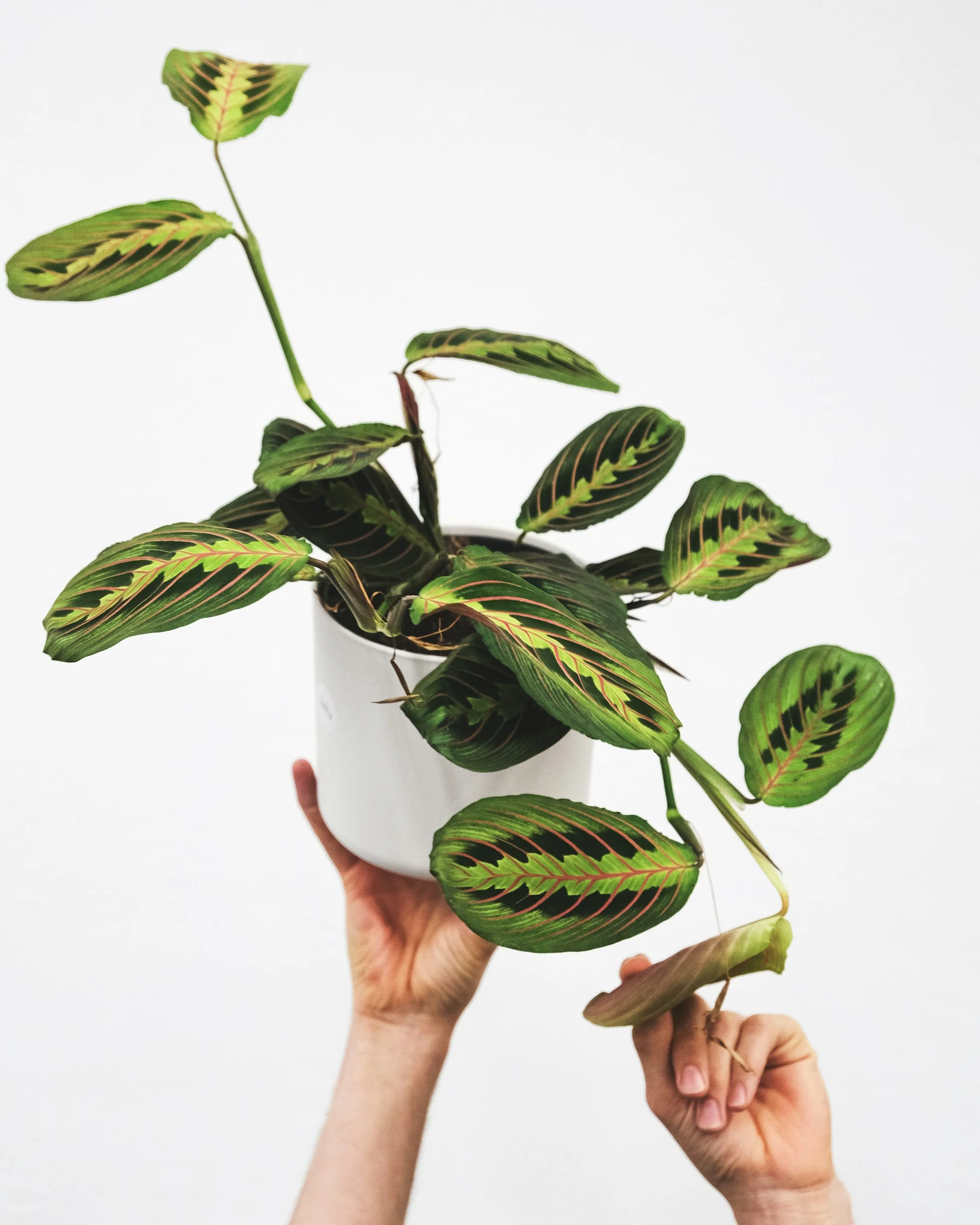
The prayer plant (Maranta leuconeura) gets its name from something you’ll notice pretty quickly – its leaves fold up at night like praying hands.
During the day, the leaves stay flat to absorb moisture and light. At night, they fold inward to retain water and funnel it toward the center of the plant. It’s not just for show – it’s a survival mechanism from its native Brazilian rainforest habitat.
I used to think I was seeing things when I’d catch movement out of the corner of my eye. Turns out, these leaves actually move throughout the day. My partner would literally say “that plant just moved!” at least once a week before I figured out what was happening.
This behavior tells you something crucial about prayer plant care indoors – this plant evolved in humid, warm conditions where water retention matters. Keep that in mind for everything else.
Prayer Plant Care: Light Requirements That Actually Work
Bright to medium indirect light. That’s your sweet spot. Here’s what works in real life:
Good light setups:
- 6-7 feet from a south-facing window
- Near east-facing windows (gentle morning sun)
- Bright bathrooms with frosted windows
- Well-lit rooms without direct rays
What kills prayer plants:
- Direct afternoon sun (scorches leaves instantly)
- Dark corners (causes leggy, stretched growth)
- Too much low light (yellow leaves, slow growth)
I killed my first prayer plant by putting it in what I thought was “bright indirect light.” It was actually pretty dim. The plant got leggy and weak, then eventually gave up on me. When I moved my second attempt to a spot about 6 feet from a south window? Completely different experience.
For more tips on optimizing indoor plant lighting, we’ve got detailed guides that cover every scenario.
Watering: Where Most People Lose
Prayer plant care gets tricky here because these plants are picky about water in multiple ways.
The watering formula:
- Keep soil evenly moist (not wet, not dry)
- Water when top inch of soil feels dry
- Spring/summer: once or twice weekly
- Fall/winter: once weekly
- Never let it completely dry out
- Never let it sit in water
But here’s the kicker – the water type matters just as much as frequency.
Use distilled, filtered, or rainwater. Tap water has minerals and chemicals that cause brown crispy leaf tips. I learned this after wondering why my plant looked progressively worse despite “perfect” watering.
Switched to distilled water, and within a month the new growth stopped crisping up. The old damaged leaves stayed brown, but everything new came in healthy.
If you must use tap water, let it sit out for 24 hours so chemicals can evaporate. Better yet, just grab distilled water from the store. It’s cheap and saves you the headache.
 Humidity: The Non-Negotiable Factor
High humidity isn’t optional for prayer plant care. It’s mandatory. These plants come from Brazilian rainforests. They expect moisture in the air, not just in the soil.
Humidity solutions that work:
- Run a humidifier nearby (aim for 60-65%)
- Place pot on pebble tray filled with water
- Group with other plants
- Keep in naturally humid rooms (bathrooms)
- Daily misting helps but isn’t enough alone
Without proper humidity, you’ll see brown edges creeping in from the leaf margins. That’s your early warning system. I tried keeping prayer plants without a humidifier initially. Recipe for disaster. The leaves crisped up no matter what I did with watering. Added a humidifier set to 65%, and suddenly everything stabilized.
Some varieties like Calathea ‘White Fusion’ and Stromanthe ‘Triostar’ need even more humidity than basic Maranta. Others like Calathea ‘Makoyana’ are more forgiving.
Soil and Fertilizer Requirements
Use well-draining, loamy, acidic soil. A traditional potting mix usually works fine, or make your own:
DIY soil recipe:
- 2 parts sphagnum peat moss
- 1 part loamy soil
- 1 part perlite or coarse sand
The soil should retain moisture without staying waterlogged. Root rot kills these plants fast.
Fertilization schedule:
- Every 2 weeks during spring/summer
- Once monthly in winter
- Use water-soluble houseplant fertilizer
- Dilute to half-strength (this is important)
Too much fertilizer burns the roots. Too little, and growth slows to nothing. Half-strength is the safe zone. Check out our guide on proper fertilization for tropical houseplants for more detailed feeding schedules.
Temperature and Environment
Keep temperatures between 60-80°F (18-27°C). Pretty standard household temperatures work fine.
What to avoid:
- Cold drafts from windows or doors
- Direct heat from vents or radiators
- Sudden temperature swings
- Anything below 60°F
Prayer plants are tropical. They don’t do cold.
Prayer Plant Propagation: The Easy Way
Prayer plant propagation is actually straightforward – divide the plant while repotting.
Step-by-step process:
- Remove plant from pot
- Gently shake soil off roots
- Work roots apart to create divisions
- Each new plant needs good roots and several stems
- Pot in shallow containers with fresh mix
- Water thoroughly and let drain
- Keep in warm, humid spot with bright indirect light
Spring or summer is the best time. The plant recovers faster in the active growing season. I’ve propagated about a dozen prayer plants this way. The success rate is probably 90% when you keep humidity high during establishment.
Prayer Plant Problems: Troubleshooting Common Issues
Brown crispy leaves:
- Usually underwatering or low humidity
- Could be tap water minerals
- Check for spider mites underneath
Yellow leaves:
- Overwatering leading to root rot
- Not enough light
- Too much direct sun (looks bleached)
Dropping leaves:
- Temperature shock
- Pest infestation
- Extreme humidity changes
- Over-fertilization
Curling leaves:
- Thirsty plant (needs water)
- Air too dry
- Root issues
How to Revive a Prayer Plant That’s Struggling
How to revive a prayer plant depends on what’s wrong, but here’s the emergency protocol:
- Check roots for rot (brown, mushy = bad)
- If root rot exists, trim dead roots and repot in fresh soil
- Move to proper light (bright indirect)
- Switch to distilled water immediately
- Add humidity via humidifier or pebble tray
- Stop fertilizing until plant recovers
- Remove dead/dying leaves
I revived a prayer plant that looked completely done. It had maybe 3 leaves left, all crispy around the edges. Switched to distilled water, added a humidifier, moved it to better light. It took almost a year, but it fully recovered. The key is patience. New growth will look healthy if conditions are right, even if old growth stays damaged.
Varieties Worth Trying
Easiest prayer plants for beginners:
- Maranta leuconeura ‘Lemon Lime’
- Maranta leuconeura kerchoveana (Rabbit’s Tracks)
- Calathea ‘Makoyana’
More challenging but gorgeous:
- Calathea ‘White Fusion’
- Stromanthe ‘Triostar’
- Calathea ‘Ornata’
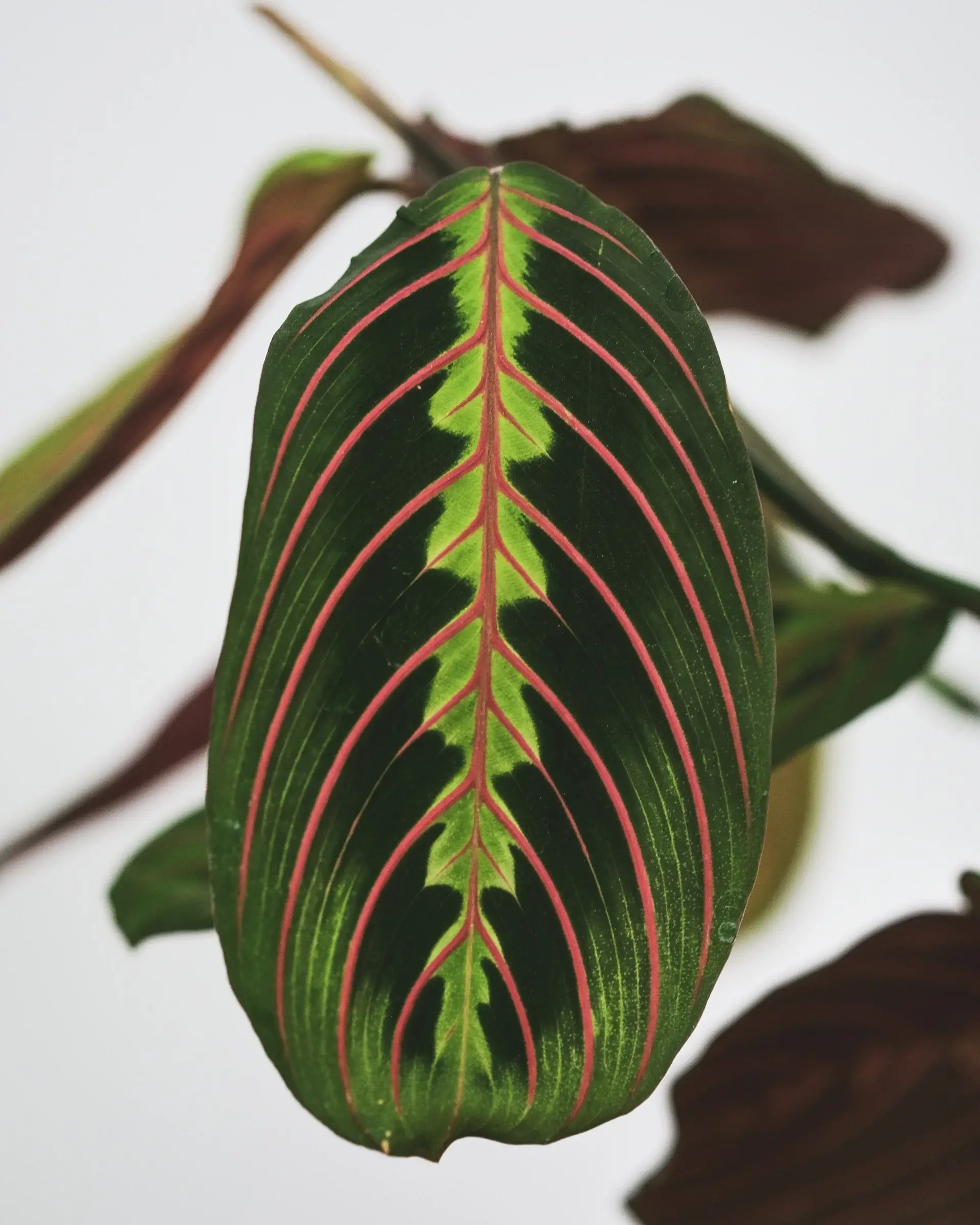
The red prayer plant with its herringbone pattern and red veins is the classic choice. It’s not the easiest, but it’s not the hardest either.
FAQs
Is prayer plant care difficult?
Prayer plant care is moderately challenging. It’s not a “set it and forget it” plant like a snake plant, but it’s manageable once you nail the humidity and watering routine.
Can I use tap water for my prayer plant?
Not recommended. Tap water chemicals cause brown leaf tips. Use distilled, filtered, or rainwater for best results.
Why are my prayer plant leaves turning brown?
Brown leaves usually mean underwatering, low humidity, or mineral buildup from tap water. Check all three factors.
How often should I water my prayer plant?
Water when the top inch of soil feels dry – typically once or twice weekly in summer, once weekly in winter. Keep soil evenly moist but never waterlogged.
Are prayer plants pets safe?
Yes, prayer plants are non-toxic to cats and dogs, making them a safe choice for pet owners.
Do prayer plants clean the air? Yes, prayer plants are among houseplants known for air-purifying qualities, though the effect is modest in typical home settings.
Final Thoughts on Prayer Plant Care
Look, prayer plants are fussy. Anyone who tells you they’re “easy” either has perfect conditions naturally or hasn’t kept one long enough.
But they’re not impossible. With proper humidity, distilled water, and consistent care, these plants will thrive. The leaf patterns alone make them worth the effort.
The biggest mistakes I see? Using tap water and skipping the humidifier. Fix those two things, and you’re already ahead of most people struggling with prayer plant care indoors.
Start with an easier variety like Maranta ‘Lemon Lime’ if you’re new. Once you dial in the care routine, you can level up to the more demanding Calathea varieties.
Read Our More Blogs About Plant Care.