Here’s the truth about rattlesnake plant care – it’s way easier than most calatheas, but people still manage to kill them.
I’ve watched plant collectors who own dozens of calatheas say the rattlesnake is their favorite because it’s “not that picky compared to others.” Then I’ve seen beginners struggle because they’re following advice meant for drama queen plants like Calathea ornata.
Let me break down what actually works versus what the internet tells you.
What Is the Rattlesnake Plant (And Why It’s Actually Manageable)
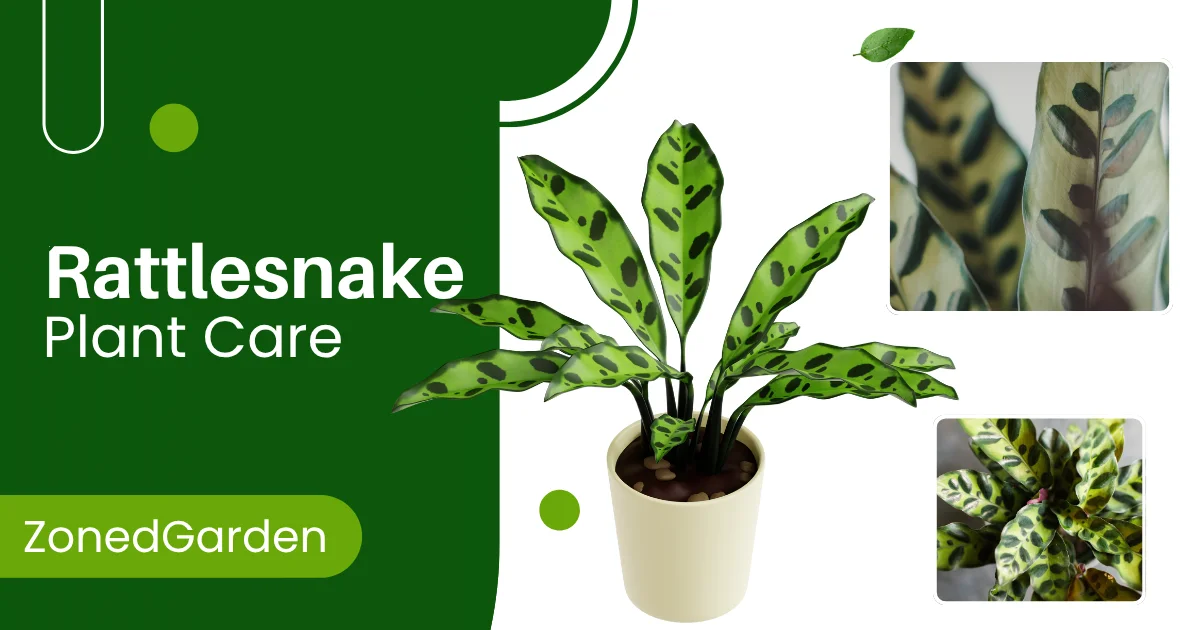
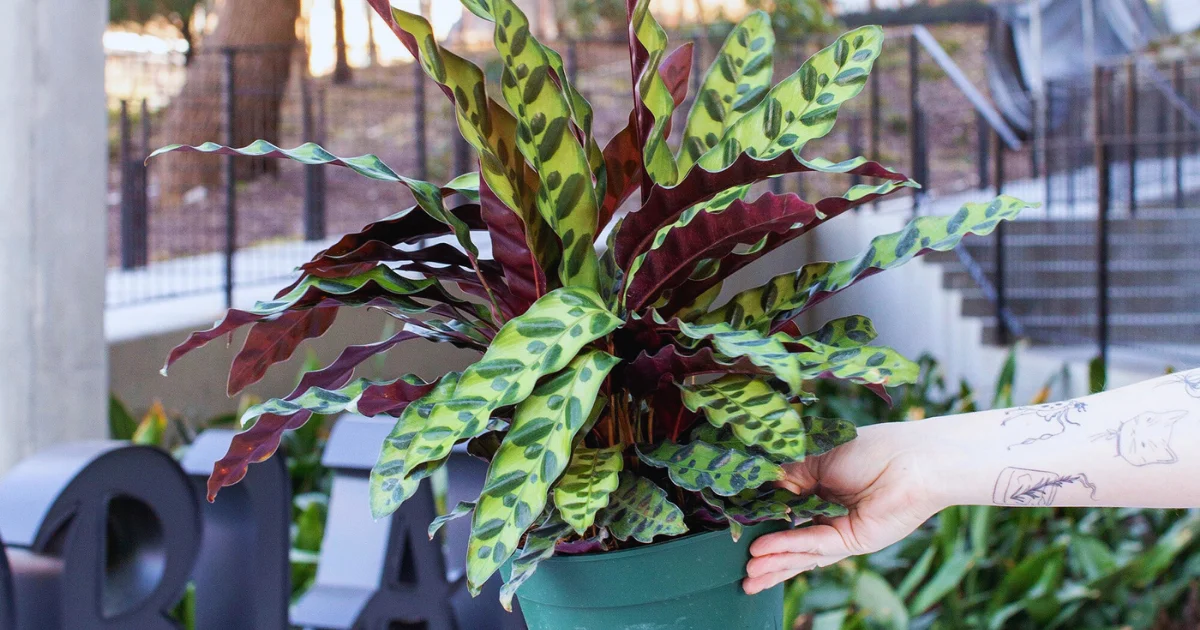
The rattlesnake plant (Goeppertia insignis, formerly Calathea lancifolia) is a tropical evergreen from Brazilian rainforests with long, wavy leaves covered in dark green spots that look like rattlesnake markings.
The undersides are a rich purple, and the leaves fold up at night then reopen at sunrise. It’s called nyctinasty – basically the plant’s way of sleeping.
Here’s what matters for care: this plant typically reaches 20 inches tall indoors, grows at a moderate to fast pace when happy, and is considered the second-easiest calathea to keep alive (after Calathea ‘Freddie’).
One grower who owns “a LOT of Calathea plants” told me they haven’t had a single leaf crunch up on their rattlesnake plant. That’s saying something when you compare it to Calathea ornata, which people literally call “the devil’s houseplant.”
Rattlesnake Plant Care: Light Requirements
Bright indirect light. Filtered light. Not direct sun.
What works:
- Bright spot in a well-lit room
- Near a window without intense afternoon sun
- Diffuse harsh light with drapes
- Early morning sun is tolerable
- Medium to bright indirect light
What kills it:
- Intense direct sunlight (scorches leaves)
- Full sun exposure (fades color and burns)
- Too little light (markings fade, growth slows)
If green spots appear on the leaves, you’re giving it too much direct light. If the vibrant spotted markings start fading, it needs more light.
The plant will reorient itself toward light quickly, so rotate it every few days to keep growth even. Or just let it angle naturally and do its own thing. For more on proper lighting for prayer plant family members, we’ve got comprehensive guides.
Watering: The Key to Rattlesnake Plant Care
This plant “generally enjoys to stay damp constantly” according to experienced growers. But there’s nuance here.
Summer watering:
- Water frequently to keep soil moist
- About once a week typically
- Top inch or two can dry before watering
- Keep consistently moist but not soggy
Winter watering:
- Reduce frequency
- Allow top layer to fully dry
- Less water during dormant period
Critical rules:
- Water until it just trickles from drainage holes
- Don’t let water stream out the bottom
- Never let plant sit in standing water
- Bottom watering is okay, just not too much
Here’s what happens when you mess up: yellowing leaves mean overwatering or underwatering (check the soil to figure out which). Curling leaves mean the plant isn’t getting enough water or needs more light.
Water quality matters:
- Use distilled water
- Filtered water works great
- Rainwater is ideal
- Tap water causes mineral buildup and brown tips
I’ve seen people use all-purpose Miracle Gro without noticing ill effects from dissolved salts, but that’s with distilled water. Tap water plus fertilizer? Recipe for crispy edges.
Soil and Container Setup
Use well-draining soil that holds moisture. Sounds contradictory, but it’s not.
Soil options that work:
- Light sandy soil
- Two parts peat moss + one part perlite
- Well-draining potting mix with perlite and bark
- Slightly acidic or neutral pH
- Avoid alkaline soils
The container must have drainage holes. Cover holes with rocks (one per hole), add a 1-inch soil layer with perlite mixed in.
One grower mentioned bottom watering works but tends to make the bottom too wet, preventing roots from growing there. Keep that in mind if you prefer that method.
Check out our guide on optimal soil mixes for tropical houseplants for detailed recipes.
Humidity and Temperature Requirements
Room temperatures between 60-75°F (18-24°C) work fine. Don’t overthink it.
The humidity part? That’s where rattlesnake plant care gets interesting.
Good news first: This plant is less picky about humidity compared to Calathea ornata and other drama queens. One grower said they haven’t had crunchy leaves without extraordinary humidity measures.
Humidity solutions:
- Stand pot on tray with wet pebbles
- Run a humidifier nearby
- Keep a cup of water near the plant
- Group with other plants
- Place in naturally humid rooms
Critical humidity warning: Don’t mist with full water droplets. That’s asking for bacterial and fungal infections. Some moisture is fine, but not soaking wet leaves.
Temperature dangers:
- Keep away from air conditioning units
- Avoid heating vents
- No cold drafts
- No sudden temperature changes
- Poor ventilation kills these
Drafts and extreme fluctuations will cause limp stems and overall unhappiness.
Fertilizer and Feeding Schedule
Feed monthly during spring and summer with balanced liquid fertilizer.
The schedule:
- Once a month growing season
- Diluted formula
- Follow product label
- Stop completely in winter
- Resume in spring
This plant isn’t a huge feeder, so don’t go crazy with fertilizer. Too much burns roots and causes brown tips.
Rattlesnake Plant Problems: Troubleshooting Common Issues
Brown leaf edges:
- Low humidity (most common)
- Commercial leaf shine products (avoid these)
- Overly dry air
- Foliage curling up accompanies this
Curling leaves:
- Not enough water
- Needs more light
- Plant trying to conserve moisture
Yellow leaves:
- Overwatering or underwatering
- Check soil moisture to determine which
Fading leaf patterns:
- Too little light
- Move to brighter indirect spot
Green spots on leaves:
- Too much direct sunlight
- Move back from window
Limp or rotting stems:
- Overwatering when temperature drops
- Sitting in standing water
- Root rot developing
- Move to warmer spot without fluctuations
Slow or stopped growth:
- Plant’s needs aren’t being met
- Check light, water, humidity, temperature
- Adjust accordingly
For detailed troubleshooting guides for prayer plant problems, we cover every scenario.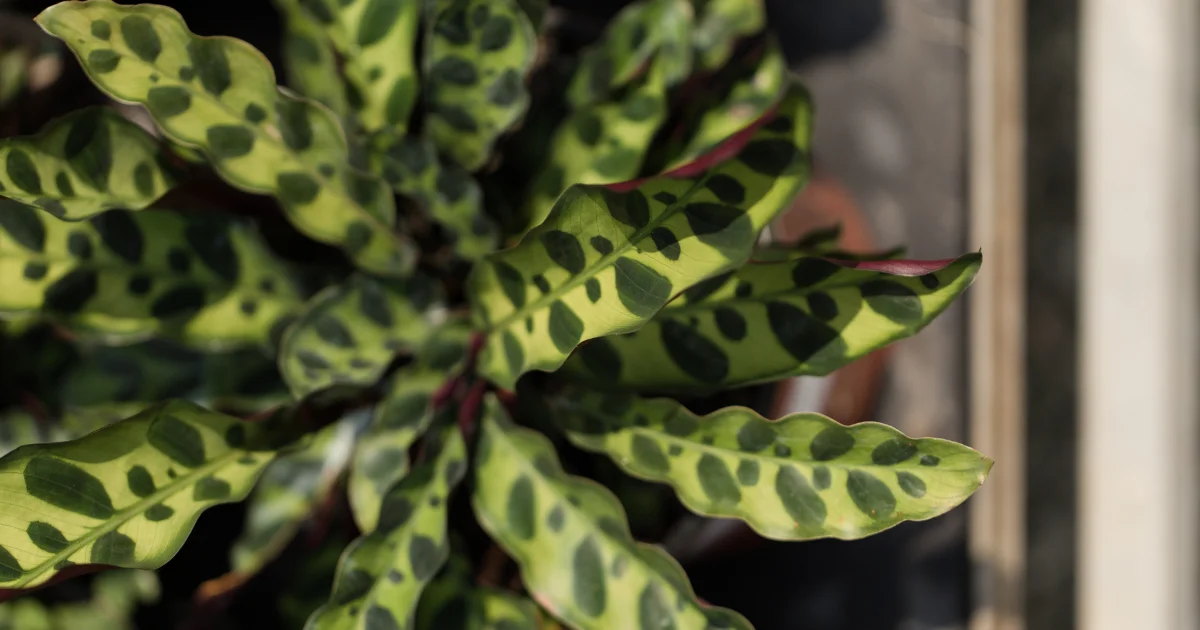
Pest Management
The thick leaves attract pests, but it’s manageable.
Watch for:
- Spider mites (most common)
- Aphids
- Mealybugs
- Scale
Check leaf undersides regularly for webbing, small spider-like insects, or other invaders.
Treatment options:
- Gentle insecticidal soap
- Neem oil
- Soft cloth with soapy water
- Wash insects off leaves
Treat problems quickly before they spread. Remove dead or decaying leaves since they attract pests. Also, fungal leaf spots can occur from wetting leaves when watering. This is why you shouldn’t mist with full droplets.
Propagation Made Simple
Propagate by division in spring when repotting. It’s easy.
The process:
- Water plant day before (reduces stress)
- Lay potted plant on side
- Squeeze or tap to loosen
- Pull out by base
- Gently brush off soil
- Tease roots apart with fingers
- Don’t force anything to break
- Trim damaged roots
- Plant divisions in fresh soil
- Water until it drains
Optional greenhouse effect: loosely place clear plastic bag over new plants until established. Don’t let plastic touch leaves. Seed propagation is extremely difficult and not recommended. Stick with division.
The Honest Take on Difficulty
One experienced grower said: “I almost don’t call this guy a Calathea because they’re not that picky compared to others.”
Another called them “drama queens” but admitted they’re “relatively hard to kill” and “can make a great comeback once you figure out why they’re mad.”
Compared to the infamous Calathea ornata that people try three times before giving up? The rattlesnake plant is a walk in the park.
FAQs
Is rattlesnake plant care difficult?
No, it’s the second-easiest calathea. Challenging for absolute beginners but manageable with proper light, moisture, and humidity.
How often should I water my rattlesnake plant?
About once weekly, keeping soil consistently moist in summer. In winter, let the top inch or two dry before watering. Use distilled or filtered water only.
Why are my rattlesnake plant leaves curling?
Curling means the plant needs water or more light. Check soil moisture first, then evaluate light conditions.
What causes brown edges on rattlesnake plant leaves?
Low humidity is the main culprit. Also avoid commercial leaf shine products and check for spider mites on leaf undersides.
Do rattlesnake plants need high humidity?
They prefer high humidity but are less demanding than other calatheas. A pebble tray or nearby humidifier usually suffices.
Why does my rattlesnake plant stand up at night?
It’s called nyctinasty – the leaves fold up at night as the plant’s way of sleeping, then reopen at sunrise. Completely normal behavior
How to care for rattlesnake plant?
Keep it in bright, indirect light, water when the top inch of soil is dry, and maintain high humidity for healthy growth.
Final Thoughts on Rattlesnake Plant Care
The rattlesnake plant is proof that not all calatheas are impossible drama queens. While it needs specific conditions, it’s forgiving enough that experienced growers call it their favorite. Bright indirect light, consistently moist soil with distilled water, reasonable humidity, and stable temperatures. That’s the formula.
If you’ve been intimidated by prayer plant family members, start here. Skip the Calathea ornata that’ll taunt you for months. The rattlesnake variety actually wants to live.
When rattlesnake plant problems pop up, they’re usually fixable by adjusting one factor. Yellow leaves? Check watering. Brown edges? Add humidity. Fading patterns? More light.
This plant grows fast when happy and bounces back from mistakes. It’s the calathea that gives you a fighting chance.