
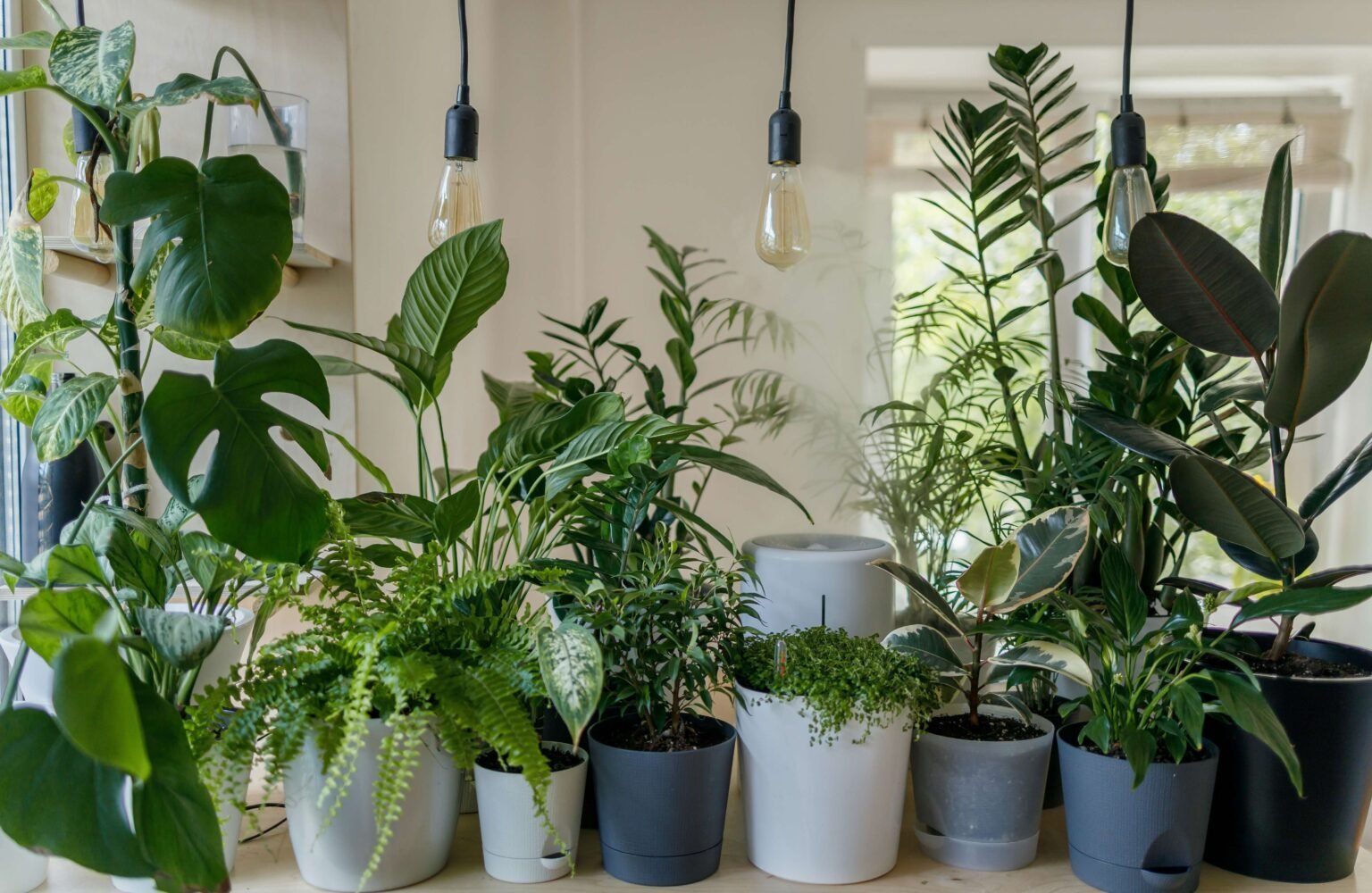
Most people kill houseplants because they choose the wrong plant for their space — not because they lack care skills. A snake plant in a dark corner thrives. A fiddle leaf fig in the same spot dies within weeks.
This guide covers the top 10 house plants based on 5 factors: ease of care, adaptability to indoor light, air quality benefits, pet safety, and visual impact. Each entry includes exact care specs so you know what you’re getting before you buy.
| Who This Guide Is For Beginners starting with 1-2 plants, experienced plant parents expanding a collection, and anyone who has killed houseplants before and wants to understand exactly why — and what to grow instead. |
Why Houseplants Are Worth Growing Indoors
Indoor plants do more than decorate a room. A 1989 NASA Clean Air Study found that specific houseplants remove benzene, formaldehyde, and trichloroethylene from indoor air. Studies since then confirm that plants in workspaces reduce stress and increase productivity by up to 15%.
Beyond air quality, houseplants regulate indoor humidity by releasing moisture through transpiration. In dry winter months, a cluster of 5-6 plants raises room humidity by 5-10%, which benefits both plants and people sharing the space.
The practical benefit: most of the top 10 house plants on this list require 10-15 minutes of care per week. The return — cleaner air, better mood, and a living focal point in any room — is disproportionate to the effort.
Quick Comparison: Top 10 House Plants at a Glance
| Plant | Light | Water | Difficulty | Pet Safe | Air Clean |
| 1. Pothos | Low–High | Every 1–2 wks | Beginner | No | Yes |
| 2. Snake Plant | Low–Bright | Every 2–6 wks | Beginner | No | Yes |
| 3. Monstera | Medium–Bright | Every 1–2 wks | Intermediate | No | Yes |
| 4. Peace Lily | Low–Medium | Weekly | Beginner | No | Yes |
| 5. ZZ Plant | Low–Bright | Every 2–4 wks | Beginner | No | No |
| 6. Spider Plant | Medium–Bright | Weekly | Beginner | Yes | Yes |
| 7. Rubber Plant | Medium–Bright | Every 1–2 wks | Intermediate | No | Yes |
| 8. Philodendron | Medium–Bright | Every 1–2 wks | Beginner | No | Yes |
| 9. Parlour Palm | Low–Medium | Every 1–2 wks | Beginner | Yes | Yes |
| 10. Fiddle Leaf Fig | Bright Indirect | Every 1–2 wks | Advanced | No | No |
1. Pothos (Epipremnum aureum) — Best for Beginners
Pothos is the single most forgiving houseplant available. It survives low light, irregular watering, and inconsistent temperature. A pothos in a hanging basket trails 6-10 feet (1.8-3 m). A pothos on a shelf stays compact with regular trimming.
The plant comes in 10+ varieties. Golden Pothos has yellow-streaked green leaves. Neon Pothos glows bright chartreuse. Marble Queen has white-and-green variegation. All share the same care requirements.
Pothos Care Requirements
| Light | Tolerates low light; grows faster in medium to bright indirect light. Avoid direct sun — leaves burn. |
| Water | Water when the top 1 inch (2.5 cm) of soil dries out. Every 7-14 days in summer, every 14-21 days in winter. |
| Humidity | Average home humidity (40-60%) is fine. No misting needed. |
| Soil | Standard well-draining potting mix. Add perlite (1 part perlite to 3 parts soil) for better drainage. |
| Mature Size | Trails 6-10 ft (1.8-3 m). Stays compact with regular trimming. |
| Pet Safe? | No — toxic to cats and dogs if ingested. |
Common Pothos Problems
- Yellow leaves: Almost always overwatering. Let the top 2 inches (5 cm) dry before the next water.
- Brown leaf tips: Low humidity or fluoride in tap water. Switch to filtered or rainwater.
- Leggy growth: Insufficient light. Move 2-3 feet closer to a window.
Pothos propagates easily in water. Cut a stem with 2-3 nodes below a leaf. Place the cut end in a glass of water and follow our propagation guide on ZonedGarden for step-by-step instructions.
2. Snake Plant (Sansevieria trifasciata) — Best for Low Light
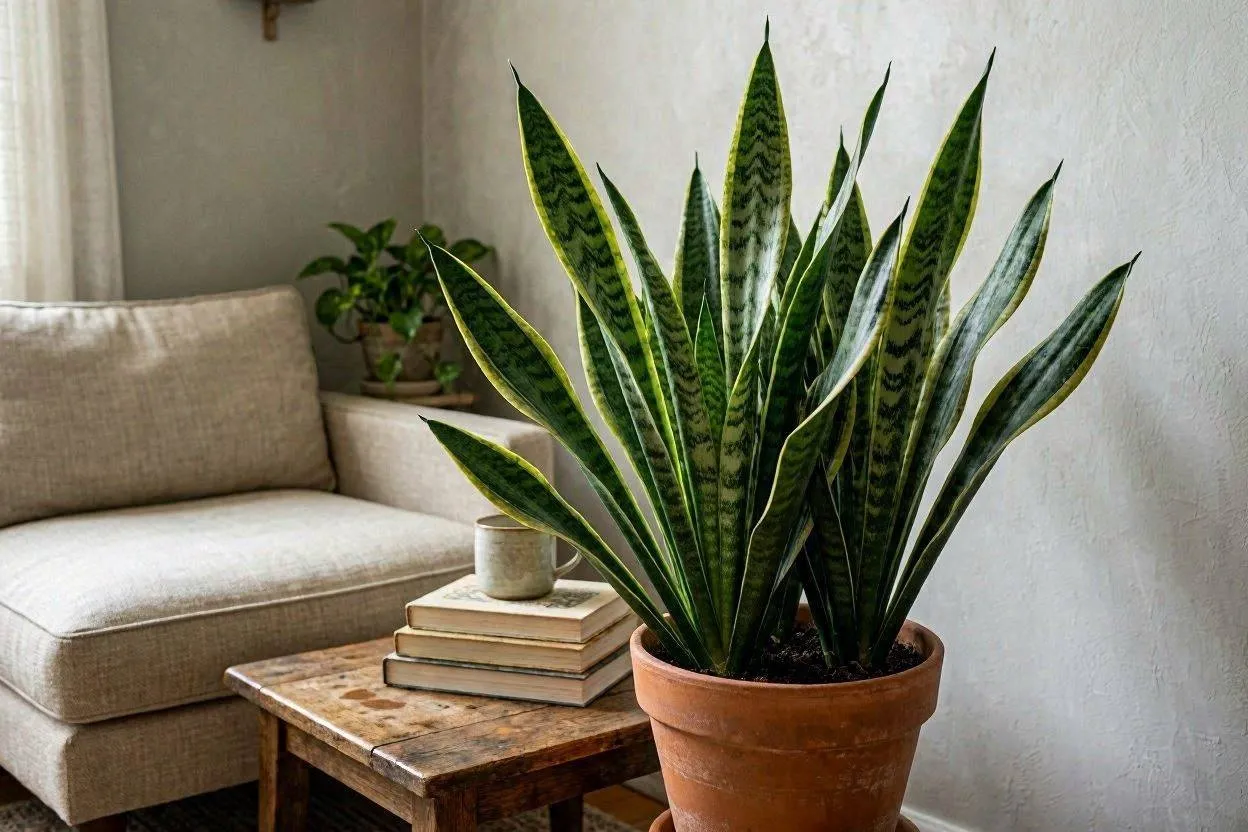
The snake plant ranks as the most drought-tolerant houseplant on this list. It stores water in thick rhizomes underground, which means it survives 4-6 weeks without watering in winter. NASA listed the snake plant as one of the top air-purifying plants, specifically for removing formaldehyde and benzene.
The Laurentii cultivar — tall green leaves with yellow margins — reaches 3-4 feet (90-120 cm) indoors. The Moonshine variety has silver-green leaves and stays shorter at 18-24 inches (45-60 cm). Both handle neglect equally well.
Snake Plant Care Requirements
| Light | Thrives in low light but grows fastest in bright indirect light. Tolerates north-facing windows where most plants fail. |
| Water | Every 2-6 weeks depending on season. In winter, some growers water as infrequently as once a month. Always let soil dry completely between waterings. |
| Humidity | Tolerates dry air. No humidity adjustments needed. |
| Soil | Fast-draining cactus or succulent mix. Never use standard potting mix without perlite — it holds too much moisture. |
| Mature Size | 18 inches to 4 feet (45-120 cm) tall depending on cultivar. |
| Pet Safe? | No — toxic to cats and dogs if ingested. |
Why Snake Plants Die
Root rot from overwatering kills 90% of snake plants. The signs: mushy base, yellowing leaves, and a sour smell from the soil. To fix it: unpot the plant, cut off all brown mushy roots with sterilized scissors, dust cut ends with cinnamon (a natural antifungal), and repot in fresh dry cactus mix. Skip watering for 2 weeks after repotting.
| Pro Tip — Snake Plant Snake plants release oxygen at night, making them one of the few plants suited for bedrooms. Place one within 3 feet (1 m) of your bed for the most benefit. |
3. Monstera Deliciosa — Best Statement Plant
Monstera deliciosa is the most visually distinctive plant on this list. The fenestrations — natural splits and holes in the leaves — develop as the plant matures and reaches for more light. Young plants have solid, uncut leaves. Leaves with 5-8 fenestrations indicate a healthy, well-lit plant.
Indoors, Monstera deliciosa reaches 6-10 feet (1.8-3 m) tall over 3-5 years. The plant is a natural climber and benefits from a moss pole at 12-18 inches (30-45 cm) height to develop larger, more fenestrated leaves.
Monstera Care Requirements
| Light | Medium to bright indirect light. East-facing windows work best. Avoid direct afternoon sun — it burns the large leaves. |
| Water | Water when the top 2 inches (5 cm) of soil dry out. Roughly every 7-10 days in summer, every 14 days in winter. |
| Humidity | Prefers 50-60% humidity. Wipe leaves monthly with a damp cloth to remove dust and improve light absorption. |
| Soil | Well-draining mix: 60% potting soil, 20% perlite, 20% orchid bark works well. |
| Mature Size | 6-10 ft (1.8-3 m) tall, 3-5 ft (90-150 cm) wide indoors. |
| Pet Safe? | No — toxic to cats and dogs if ingested. |
Monstera Varieties Worth Knowing
- Monstera deliciosa: The standard species. Large split leaves, fast growth, widely available.
- Monstera adansonii: Smaller leaves with more dramatic holes. Better for compact spaces.
- Monstera thai constellation: Cream-variegated leaves. Slower growing, significantly more expensive.
| Internal Link For indoor plants that grow equally bold without the size commitment, read our Aralia Fabian Stump plant care guide at ZonedGarden — it covers a compact architectural plant that thrives in similar conditions. |
4. Peace Lily (Spathiphyllum) — Best for Low-Light Flowering
Peace lily is the only plant on this list that flowers reliably in low-light conditions. The white spathes — technically modified leaves, not true flowers — appear 1-2 times per year, typically in spring and again in fall. A healthy plant produces 3-10 blooms per flowering cycle.
Peace lilies communicate their watering needs clearly: when they need water, leaves droop dramatically. Water the plant, and leaves recover within 2-3 hours. This feedback mechanism makes peace lilies one of the most beginner-friendly plants for learning watering habits.
Peace Lily Care Requirements
| Light | Low to medium indirect light. Thrives in north-facing rooms where other flowering plants fail. More light = more flowers. |
| Water | Weekly in summer. Every 10-14 days in winter. Water when leaves begin to slightly droop — this is the plant’s signal. |
| Humidity | Prefers higher humidity (50%+). Bathrooms and kitchens suit peace lilies well. |
| Soil | Rich, well-draining potting mix with peat or coco coir. Keep consistently moist but not soggy. |
| Mature Size | 1-4 ft (30-120 cm) tall depending on variety. |
| Pet Safe? | No — toxic to cats, dogs, and humans if ingested. Keep away from children. |
Getting a Peace Lily to Bloom Again
Peace lilies stop blooming when they receive insufficient light or when root-bound in a too-small pot. Move the plant 2-3 feet closer to a window with indirect light. If the plant has been in the same pot for 2+ years, repot it into a container 2 inches (5 cm) larger in diameter. Apply a balanced liquid fertilizer (10-10-10 NPK) monthly during spring and summer.
5. ZZ Plant (Zamioculcas zamiifolia) — Best for Neglect
The ZZ plant stores water in underground rhizomes the size of potatoes. This storage system allows the plant to survive 4-8 weeks without water. No other non-succulent houseplant matches this drought tolerance.
ZZ plants grow slowly — expect 6-12 inches (15-30 cm) of new growth per year. The tradeoff: they almost never die from neglect, making them the single best plant for people who travel frequently or forget to water.
ZZ Plant Care Requirements
| Light | Tolerates low light better than nearly any other houseplant. Grows best in bright indirect light but survives in dim office corners. |
| Water | Every 2-4 weeks. In winter, once a month is sufficient. Never water if soil is still moist at 2 inches (5 cm) depth. |
| Humidity | Tolerates very dry air. Normal home humidity is fine. |
| Soil | Fast-draining potting mix with added perlite or coarse sand. |
| Mature Size | 2-4 ft (60-120 cm) tall at maturity. |
| Pet Safe? | No — toxic to cats and dogs. |
ZZ Plant Black Stem Problem
Black stems at the base indicate root rot from overwatering. Check the rhizomes: if they are firm and white, the plant recovers with less water. If rhizomes are soft and brown, remove the affected ones, let the healthy parts dry for 24 hours, and repot in fresh dry mix.
6. Spider Plant (Chlorophytum comosum) — Best Pet-Safe Option
Spider plant is one of only 2 plants on this list that is safe for cats and dogs. It produces small offshoots called spiderettes or pups, which trail from the mother plant on long stems. A single spider plant produces 10-20 pups per year — more than enough to propagate a collection or share with other plant owners.
Spider plants clean indoor air effectively. The NASA study ranked spider plants among the top performers for removing carbon monoxide, xylene, and formaldehyde. In a standard 10×10 ft (3×3 m) room, 2 spider plants provide meaningful air-cleaning benefit.
Spider Plant Care Requirements
| Light | Medium to bright indirect light. Tolerates low light but variegation fades. Avoid direct sun — tips brown. |
| Water | Weekly in summer when actively growing. Every 10-14 days in winter. |
| Humidity | Average home humidity works well. Thrives in bathrooms with higher natural humidity. |
| Soil | Standard all-purpose potting mix. Good drainage is more important than soil composition. |
| Mature Size | 6-12 inches (15-30 cm) tall; trails 2-3 ft (60-90 cm) with pups. |
| Pet Safe? | Yes — non-toxic to cats, dogs, and children. |
Propagating Spider Plant Pups
Cut a pup with scissors when it has visible roots 0.5-1 inch (1-2.5 cm) long. Place it in a small pot with moist potting mix. Keep the soil consistently moist for 2-3 weeks while roots establish. After 3 weeks, treat it as an adult plant and reduce watering frequency.
7. Rubber Plant (Ficus elastica) — Best for Bold Foliage
Rubber plants produce large, glossy leaves — up to 12 inches (30 cm) long — in deep green, burgundy, or variegated patterns depending on the cultivar. Left unpruned, rubber plants grow 6-10 feet (1.8-3 m) indoors over 3-5 years. Regular pruning keeps them compact and encourages branching.
Rubber Plant Care Requirements
| Light | Medium to bright indirect light. Burgundy cultivars need more light to maintain their deep color. |
| Water | Water when the top inch (2.5 cm) of soil dries out. Every 7-14 days in summer, less in winter. |
| Humidity | Average home humidity is sufficient. Wipe leaves monthly with a damp cloth. |
| Soil | Well-draining all-purpose potting mix with perlite. |
| Mature Size | Up to 10 ft (3 m) tall indoors with no pruning. |
| Pet Safe? | No — toxic to cats, dogs, and humans if sap contacts skin. |
Best Rubber Plant Varieties
- Ficus elastica ‘Burgundy’: Deep wine-red leaves. Needs bright light to maintain color.
- Ficus elastica ‘Tineke’: Green and cream variegation with pink edges. Most striking variety.
- Ficus elastica ‘Ruby’: Pink-toned variegation. Slowest growing of the three.
To develop a bushier rubber plant with multiple branches rather than a single trunk, read our complete rubber plant pruning guide at ZonedGarden. It covers the exact pruning timing and technique that produces branching within 6-8 weeks.
8. Heartleaf Philodendron (Philodendron hederaceum) — Best Trailing Plant
The heartleaf philodendron is the easiest philodendron species for beginners. Heart-shaped, glossy green leaves grow on trailing vines that reach 4-8 feet (1.2-2.4 m) indoors. Unlike pothos, which it resembles, philodendron leaves are a softer, more velvety texture and a deeper green.
Philodendron Care Requirements
| Light | Medium to bright indirect light. Tolerates lower light than pothos. Avoid direct sun. |
| Water | Water when the top inch (2.5 cm) of soil dries. Every 7-14 days in summer. |
| Humidity | Prefers 50%+ humidity but tolerates average home conditions. |
| Soil | Well-draining potting mix. Add perlite for improved drainage. |
| Mature Size | Trails 4-8 ft (1.2-2.4 m). |
| Pet Safe? | No — toxic to cats and dogs if ingested. |
Philodendron vs. Pothos — Key Differences
3 differences help identify them: Philodendron leaves have a slight velvety texture; pothos leaves are waxy. Philodendron petioles (leaf stems) are round; pothos petioles have a slight indentation. Philodendron new leaves emerge from a sheath called a cataphyll; pothos new leaves unfurl directly.
9. Parlour Palm (Chamaedorea elegans) — Best for Tropical Feel
The parlour palm is the most popular indoor palm species and the second pet-safe plant on this list. It grows slowly — 6-8 inches (15-20 cm) per year indoors — and rarely exceeds 3-4 feet (90-120 cm) in a home setting. Victorian homes favored it in the 1800s for the same reason modern decorators do: it looks elegant without demanding attention.
Parlour Palm Care Requirements
| Light | Low to medium indirect light. Tolerates north-facing windows. Avoid direct sun — fronds yellow and burn. |
| Water | Every 7-14 days in summer. Every 2-3 weeks in winter. Let the top 1-2 inches (2.5-5 cm) dry between waterings. |
| Humidity | Prefers 50%+ humidity. Mist fronds weekly or use a pebble tray with water beneath the pot. |
| Soil | Well-draining potting mix. Do not use cactus mix — parlour palms prefer slightly more moisture retention. |
| Mature Size | 3-4 ft (90-120 cm) tall indoors. |
| Pet Safe? | Yes — non-toxic to cats and dogs. |
Brown Frond Tips on Parlour Palm
Brown tips on parlour palm fronds have 3 causes: fluoride in tap water, low humidity below 30%, or overfertilizing. Switch to filtered water, increase humidity with a pebble tray, and reduce fertilizer to once every 2 months. Brown tips do not recover — trim them with clean scissors at a slight diagonal to maintain a natural look.
10. Fiddle Leaf Fig (Ficus lyrata) — Best for Advanced Growers
The fiddle leaf fig is the most challenging plant on this list and the most rewarding when it thrives. Large, violin-shaped leaves reach 12-18 inches (30-45 cm) long on a plant that grows to 6-10 feet (1.8-3 m) indoors. Interior designers use fiddle leaf figs as focal points in living rooms, offices, and lobbies.
The challenge: fiddle leaf figs hate change. Moving the plant, changing the watering schedule, or exposing it to drafts triggers leaf drop. Once established in a location with consistent bright indirect light, the plant is stable and fast-growing — up to 2 feet (60 cm) per year.
Fiddle Leaf Fig Care Requirements
| Light | Bright indirect light. East-facing windows are ideal. 4-6 hours of morning sun with afternoon shade. This is non-negotiable — insufficient light causes leaf drop. |
| Water | Every 7-10 days. Water thoroughly until it drains from the bottom. Empty the drainage saucer after 30 minutes. Never let the plant sit in water. |
| Humidity | Prefers 30-65% humidity. Avoid heating vents and air conditioning drafts. |
| Soil | Well-draining potting mix: standard potting soil with 20% perlite. |
| Mature Size | 6-10 ft (1.8-3 m) tall indoors. Grows 2 ft (60 cm) per year in ideal conditions. |
| Pet Safe? | No — toxic to cats, dogs, and humans. |
Why Fiddle Leaf Figs Drop Leaves
Leaf drop has 4 causes: overwatering (most common), underwatering, sudden temperature change, or relocation stress. Check the soil first. If the top 2 inches (5 cm) are wet, stop watering and let it dry completely before the next water cycle. If the soil is bone dry, the plant is underwatered. After identifying the cause, don’t move the plant again — fiddle leaf figs take 3-4 weeks to stop dropping leaves after a move, even if they move to a better location.
| Important Note Fiddle leaf figs are not recommended as a first houseplant. Start with pothos, snake plant, or ZZ plant. Build confidence with lower-maintenance species before committing to this one. |
How to Care for Indoor House Plants: 5 Universal Rules

These 5 rules apply to all 10 plants on this list. Master them and plant deaths become rare.
Rule 1: Overwatering Kills More Houseplants Than Underwatering
Root rot from overwatering causes 70% of indoor plant deaths. The fix: always check soil moisture before watering. Push a finger 1-2 inches (2.5-5 cm) into the soil. Water only if dry at that depth. Most houseplants on this list prefer to dry out slightly between waterings — not completely, not never.
Rule 2: Drainage Holes Are Non-Negotiable
Every pot must have drainage holes. Pots without drainage accumulate water at the bottom, where roots sit in stagnant moisture and rot. Use a pot with drainage holes inside a decorative outer pot. Empty the outer pot 30 minutes after watering.
Rule 3: Light Requirements Are Plant-Specific
‘Low light’ does not mean no light. It means the plant tolerates light levels too dim for most species — like a room with a north-facing window. Snake plants and ZZ plants handle this well. Fiddle leaf figs and rubber plants need significantly brighter conditions. Match the plant to the actual light in your space before buying.
Rule 4: Fertilize Lightly and Seasonally
Fertilize houseplants from April through September when they actively grow. Use a balanced liquid fertilizer (10-10-10 NPK ratio) at half the recommended dose. Diluting prevents fertilizer burn on roots. Stop fertilizing entirely from October through March — feeding dormant plants causes salt buildup in the soil.
Rule 5: Repot When Root-Bound, Not on a Schedule
Repot a plant when roots grow out of drainage holes or circle visibly in the pot. Move up one pot size (2 inches / 5 cm larger in diameter) — not two. Oversized pots hold excess moisture around roots and increase root rot risk. The best time to repot is spring, when plants begin active growth.
For more detailed plant-specific care guides — including propagation, pest management, and seasonal care schedules — visit ZonedGarden’s complete indoor plant care collection.
How to Choose the Right House Plant for Your Space
Answer these 4 questions before buying any houseplant:
- How much light does the space get? Hold your hand 12 inches (30 cm) from the wall nearest the window at midday. A sharp shadow = bright indirect light. A faint shadow = medium light. No shadow = low light. Match the plant to this reading.
- How often will you realistically water? Be honest. Daily? Weekly? Monthly? Choose a plant that matches your actual schedule, not your ideal schedule.
- Do you have pets or children? If yes, choose spider plant or parlour palm from this list. Both are non-toxic to cats, dogs, and children.
- How much space is available? A fiddle leaf fig needs 4-6 square feet (0.4-0.6 m²) of floor space. A pothos in a hanging basket needs 6 inches (15 cm) of shelf space. Match the mature size of the plant to your available space.
4 Common Houseplant Pests and How to Treat Them
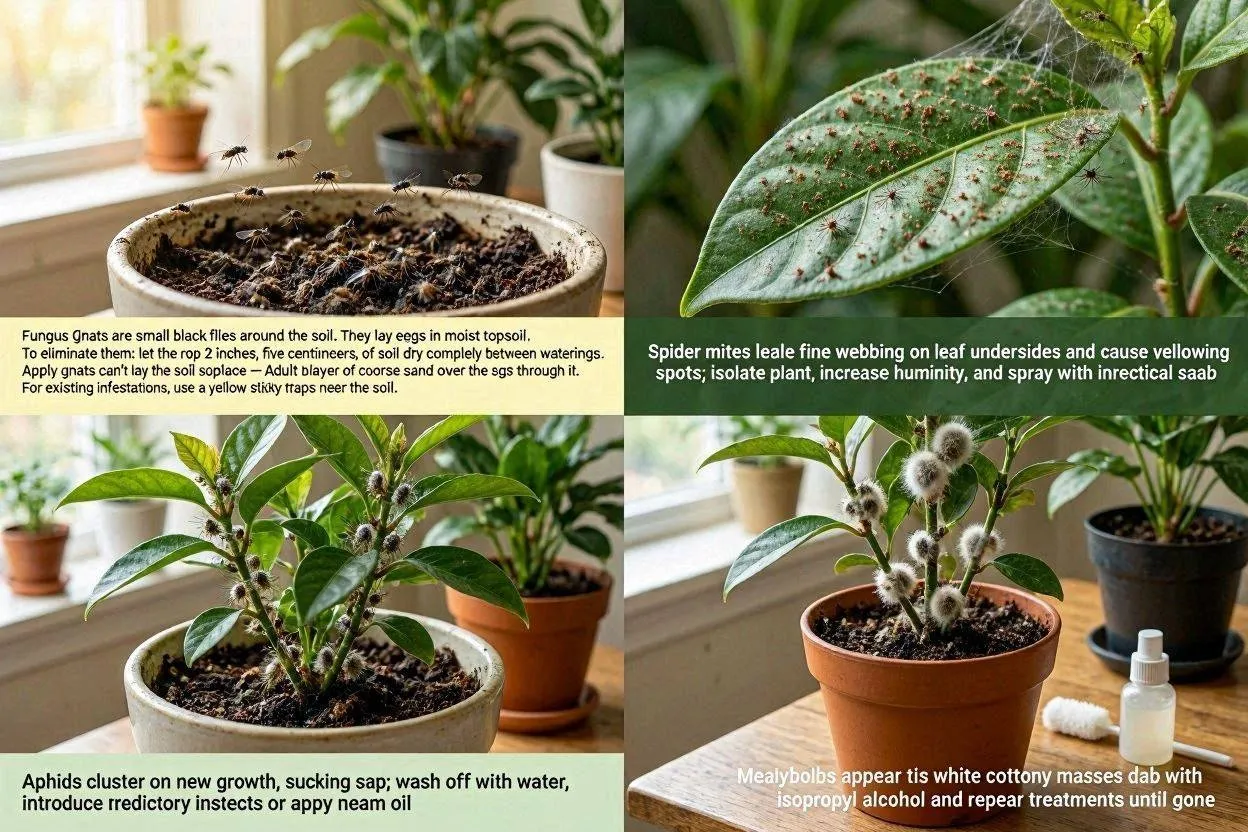
Fungus Gnats
Fungus gnats are small black flies around the soil. They lay eggs in moist topsoil. To eliminate them: let the top 2 inches (5 cm) of soil dry completely between waterings. Apply a layer of coarse sand over the soil surface — adult gnats can’t lay eggs through it. For existing infestations, use yellow sticky traps near the soil.
Spider Mites
Spider mites leave fine webbing on leaf undersides and cause stippled, yellowing leaves. They thrive in dry conditions. Spray the plant — especially leaf undersides — with a neem oil solution (2 tbsp / 30 ml neem oil per gallon / 3.8 L of water with a few drops of dish soap). Repeat weekly for 3 weeks to break the life cycle.
Mealybugs
Mealybugs appear as white cottony clusters in leaf joints and on stems. Dab individual bugs with a cotton swab soaked in 70% isopropyl alcohol. For larger infestations, spray the entire plant with diluted neem oil. Isolate the affected plant immediately — mealybugs spread quickly to neighboring plants.
Scale
Scale insects look like small brown bumps on stems and the undersides of leaves. Scrape them off with an old toothbrush, then treat with neem oil spray. Scale is harder to eliminate than other pests — consistent treatment every 7 days for 4-6 weeks clears most infestations.
For detailed pest identification and treatment guides specific to indoor plants, explore ZonedGarden’s plant problems section — the same diagnostic approach works for all houseplants on this list.
Frequently Asked Questions
| What is the easiest house plant to keep alive? The pothos and ZZ plant are the 2 easiest houseplants to keep alive. Pothos tolerates low light and irregular watering. The ZZ plant stores water in underground rhizomes and survives 4-8 weeks without watering. Both recover from neglect that would kill most other species. |
| Which house plants are safe for cats and dogs? 2 plants on this top 10 list are safe for cats and dogs: spider plant (Chlorophytum comosum) and parlour palm (Chamaedorea elegans). Pothos, snake plant, ZZ plant, monstera, peace lily, rubber plant, philodendron, and fiddle leaf fig are all toxic to cats and dogs if ingested. |
| What house plants clean indoor air? 7 of the top 10 house plants on this list clean indoor air according to the NASA Clean Air Study: pothos, snake plant, peace lily, spider plant, rubber plant, philodendron, and parlour palm. Snake plant is specifically effective at removing formaldehyde. Peace lily removes ammonia and benzene. Spider plant targets carbon monoxide and xylene. |
| How often should I water indoor plants? Watering frequency depends on the plant species, pot size, and season. As a general guide: most tropical houseplants (pothos, philodendron, monstera) need water every 7-14 days in summer. Drought-tolerant species (snake plant, ZZ plant) need water every 2-6 weeks. Always check soil moisture at 1-2 inches (2.5-5 cm) depth before watering. Never water by calendar alone. |
| What is the best house plant for low light? The 3 best houseplants for low light conditions are the snake plant (Sansevieria trifasciata), ZZ plant (Zamioculcas zamiifolia), and peace lily (Spathiphyllum). All 3 tolerate north-facing rooms and spaces 6-8 feet (1.8-2.4 m) from a window where most plants fail. Snake plants and ZZ plants additionally tolerate near-complete neglect. |
| How do I know when to repot a houseplant? Repot a houseplant when: roots grow out of drainage holes, roots circle visibly around the inside of the pot, the plant dries out within 2-3 days of watering (root-bound plants absorb water extremely fast), or growth has slowed significantly despite good light and regular fertilizing. Move up one pot size — 2 inches (5 cm) larger in diameter. Repot in spring for best results. |
| Can house plants grow without sunlight? No houseplant grows without any light source. All plants need at least low-level light to photosynthesize. However, 3 plants on this list — snake plant, ZZ plant, and pothos — tolerate office fluorescent lighting as their only light source. They grow slowly in these conditions but survive long-term. Natural light, even low indirect light from a north-facing window, produces significantly better growth. |
| What is the best house plant for a bedroom? The 3 best bedroom houseplants are the snake plant, peace lily, and pothos. Snake plants release oxygen at night — unusual for plants, which typically release carbon dioxide in darkness. Peace lilies improve air humidity slightly, benefiting sleep quality in dry rooms. Pothos is the most forgiving choice for beginners who are less consistent about care. |
Conclusion
Most houseplants die from one mistake: choosing a plant that doesn’t match the space. A pothos in a dark bathroom outlives a fiddle leaf fig in a bright living room — because the pothos belongs there and the fiddle leaf fig doesn’t.
Start with the light test. Hold your hand near the window at midday and read the shadow. That single reading eliminates 80% of bad plant choices before you spend a dollar.
Check soil before watering — always. Root rot from overwatering kills more houseplants than any pest, disease, or neglect. Push a finger 1-2 inches (2.5-5 cm) into the soil. Wet soil means wait.
Match the plant to your actual habits, not your ideal habits. If you travel 2 weeks per month, buy a ZZ plant or snake plant — not a peace lily or spider plant. Honesty about your schedule keeps plants alive longer than any care tip.
Every pot needs drainage holes — no exception. Water that stays at the root zone becomes rot within days. This one rule, applied consistently, prevents more plant deaths than anything else on this list.
If you’re starting out, pick 1 plant from the beginner tier — pothos, snake plant, or ZZ plant. Get comfortable with its watering rhythm over 3-4 months before adding more. Confidence with 1 plant builds the instincts that make the next 9 easier.
For zone-specific growing guides, propagation tutorials, and seasonal plant care advice, visit ZonedGarden.com.