
A Lawn That Stays Green, Thick, and Healthy All Year

A healthy lawn starts with 3 things done right: watering deeply and infrequently, mowing at the correct height for your grass type, and aerating at the right time of year. This collection covers every lawn care topic — from grass seed watering schedules to front yard landscaping ideas that increase home value by 7–15%.

Expert guides
0 +
Grass Types
0 +
USDA zones
0 +

Best Time to Water Lawn: Morning, Evening, and Seasonal Guide

Water your lawn between 6 a.m. and 10 a.m. This is the best time to water grass. Morning temperatures are cooler, wind is calm, and water soaks into the soil before midday heat causes evaporation. Grass blades dry before nightfall, which prevents fungal disease. Key Takeaways ✓   Best time: 6–10 a.m. — cool temperatures, low evaporation, dry blades by nightfall. ✓   Second-best: 4–6 p.m. — blades dry before dark. Never water after 6 p.m. ✓   Avoid midday (10 a.m.–4 p.m.) — up to 50% of water evaporates before reaching roots. ✓   Avoid night watering — wet grass overnight invites fungal

Read Full Guild »

All lawn guides

The 6 Main Grass Categories

Every grass type falls into one of these 6 categories. Understanding which category your grass belongs to determines when to water, when to aerate, when to fertilize, and how short to mow. Getting this right from the start prevents years of wasted effort and dead patches.

Cool-Season Grasses

Thrive in soil temperatures of 50–65°F (10–18°C). Active growth in spring and fall. Go dormant (not dead) in summer heat above 90°F (32°C). Aerate in fall — late August through October — during active growth.
Best examples:Kentucky Bluegrass, Tall Fescue, Fine Fescue, Perennial Ryegrass

Warm-Season Grasses

Thrive in soil temperatures of 65–90°F (18–32°C). Peak growth from May through September. Go dormant and turn tan in fall — this is normal, not disease. Aerate in late spring during active growth.
Best examples:Bermuda, Zoysia, St. Augustine, Centipede, Bahia

Transition Zone Grasses

Grasses used in zones 6–7 where neither cool-season nor warm-season grasses thrive perfectly year-round. Require careful selection — wrong choice leads to summer die-back or winter dormancy problems.
Best examples:Tall Fescue (most adaptable), Zoysia (heat-tolerant), Turf-type Ryegrass

Fine-Texture Grasses

Narrow blade width under 3mm. Creates a dense, carpet-like appearance ideal for formal lawns, golf courses, and high-visibility front yards. Requires more precise maintenance than coarse grasses.
Best examples: Fine Fescue, Creeping Bentgrass, Kentucky Bluegrass, Zoysia (Emerald variety)

Native & Low-Input Grasses

Species native to North American regions that evolved without irrigation or fertilization. Grow 8–12 inches tall naturally, require mowing only 1–2 times per year, and survive drought that kills conventional lawns.
Best examples: Buffalo Grass, Blue Grama, Prairie Dropseed, Sideoats Grama

Drought-Tolerant Grasses

Grasses that survive extended dry periods — 3–6 weeks without rain — without permanent damage. Critical for zones 8–11 and areas under water restrictions. Once established, most need zero supplemental irrigation.
Best examples: Bermuda, Buffalo Grass, Zoysia, Bahia, Tall Fescue (deep-rooted)

Match Task to Grass Type & Season

Every lawn care task has a correct timing window that depends on your grass type. Aerating at the wrong time delays recovery by a full season. Fertilizing at the wrong time promotes disease. This table maps the 10 most important lawn tasks to the correct timing for both cool-season and warm-season grasses.

Lawn Care Task Cool-Season Grass Warm-Season Grass Key Rule
Aeration Late Aug – Oct May – June Aerate during active growth — always
Overseeding Late Aug – Sept Late spring (after last frost) Soil temp must be 50–65°F (10–18°C)
Fertilizing (first application) Early spring (soil 55°F+) Late spring (soil 65°F+) Never fertilize dormant grass
Watering schedule 1–1.5 in/week, 2–3 sessions 1–1.5 in/week, 2–3 sessions Deep and infrequent beats shallow and daily
Best watering time 6–10 a.m. year-round 6–10 a.m. year-round Morning drying prevents fungal disease
First mow of season When grass reaches 3.5 inches (8.9 cm) When grass reaches 2.5 inches (6.4 cm) Never remove more than ⅓ of blade height
Mowing height (summer) 3–4 inches (7.5–10 cm) — raise in heat 1–2.5 inches (2.5–6.4 cm) — varies by species Taller = deeper roots = drought resistance
Weed control Pre-emergent in early spring Pre-emergent in early spring Apply before soil reaches 55°F (13°C)
Fall dormancy prep Final fertilization in Oct–Nov Reduce watering; no fertilizing after Aug Potassium-rich fertilizer improves winter hardiness
Winter lawn care Keep off lawn when frozen to avoid crown damage Dormant — no action needed in most zones Foot traffic on frozen grass breaks stems permanently

What to Do With Your Lawn — Season by Season

Lawn care timing determines whether effort translates into results. Fertilizing in the wrong season, aerating at the wrong time, or overseeding too late costs an entire growing season. Here is what to prioritize in each season for both cool-season and warm-season lawns.

Spring

Apply pre-emergent weed control before soil reaches 55°F (13°C). Begin mowing when grass reaches its target height. First fertilizer application for warm-season grass once soil hits 65°F (18°C). Overseed thin areas of cool-season lawn in early spring. Test soil pH — target 6.0–7.0 for most grasses.

Summer

Raise mowing height by 0.5–1 inch (1.3–2.5 cm) to reduce heat stress. Water 1–1.5 inches per week in 2–3 deep sessions. Apply second fertilizer to warm-season grasses in mid-summer. Avoid heavy foot traffic on cool-season grass during dormancy — it is not dead, just stressed.

Fall

Best season for cool-season lawn renovation. Aerate in late August through October, overseed immediately after, then fertilize. Apply final potassium-rich fertilizer to warm-season grass before dormancy. Mow cool-season grass to 2.5–3 inches before first frost to reduce snow mold risk.

Winter

In zones 3–6, lawn enters full dormancy — no mowing, fertilizing, or aerating. Stay off frozen turf to prevent crown damage. In zones 7–10, cool-season overseeding on warm-season lawns keeps grass green through mild winters. Address bare spots with soil amendments now for spring seeding.

Keep Your Lawn Healthy & Productive

The most common reason lawns fail is not disease, pests, or poor seed — it is incorrect care at the wrong time. These 6 principles apply to virtually every grass type in every zone.

Deep and infrequent — always

Water 1–1.5 inches (25–38 mm) per week in 2–3 sessions rather than shallow daily sprinkles. Deep watering drives roots 6–10 inches (15–25 cm) into soil, building drought resistance. Shallow daily watering keeps roots in the top 2 inches (5 cm) — where they burn out in summer heat. Use a tuna can placed on the lawn to measure 1 inch of applied water per session.

Never remove more than ⅓ of blade height

Removing more than one-third of the grass blade in a single mow stresses the plant, exposes soil to sun, and triggers a recovery growth surge that weakens root reserves. Mow cool-season grasses at 3–4 inches (7.5–10 cm) and warm-season grasses at 1–2.5 inches (2.5–6.4 cm) depending on species. Keep blades sharp — dull blades tear grass rather than cut it, creating entry points for disease.

Aerate once per year during active growth

Aeration removes plugs of compacted soil, allowing water, oxygen, and fertilizer to reach roots. Lawns receiving moderate foot traffic benefit from annual aeration. Core aeration removes plugs 0.5–0.75 inches (1.3–1.9 cm) in diameter — these break down naturally within 2 weeks. Timing by grass type is the single most important aeration rule.

Match fertilizer N-P-K to the season

Spring applications prioritize nitrogen (N) for green-up and growth. Summer applications use balanced formulas — high nitrogen in summer heat promotes disease. Fall applications prioritize potassium (K) to harden grass for winter. Soil test every 2–3 years — most lawn failures trace to pH imbalance, not nutrient deficiency. Target pH 6.0–7.0 for most grasses; 5.5–6.5 for centipede and St. Augustine.

Pre-emergent timing determines success

Pre-emergent herbicide prevents weed seeds from germinating — apply before soil reaches 55°F (13°C) in spring, typically 2 weeks before forsythia blooms in your zone. Post-emergent herbicides kill established weeds but stress lawn grass if applied in summer heat above 85°F (29°C). A thick, properly fed lawn is the best long-term weed control — weeds fill gaps, not established turf.

Overseed at the same time you aerate

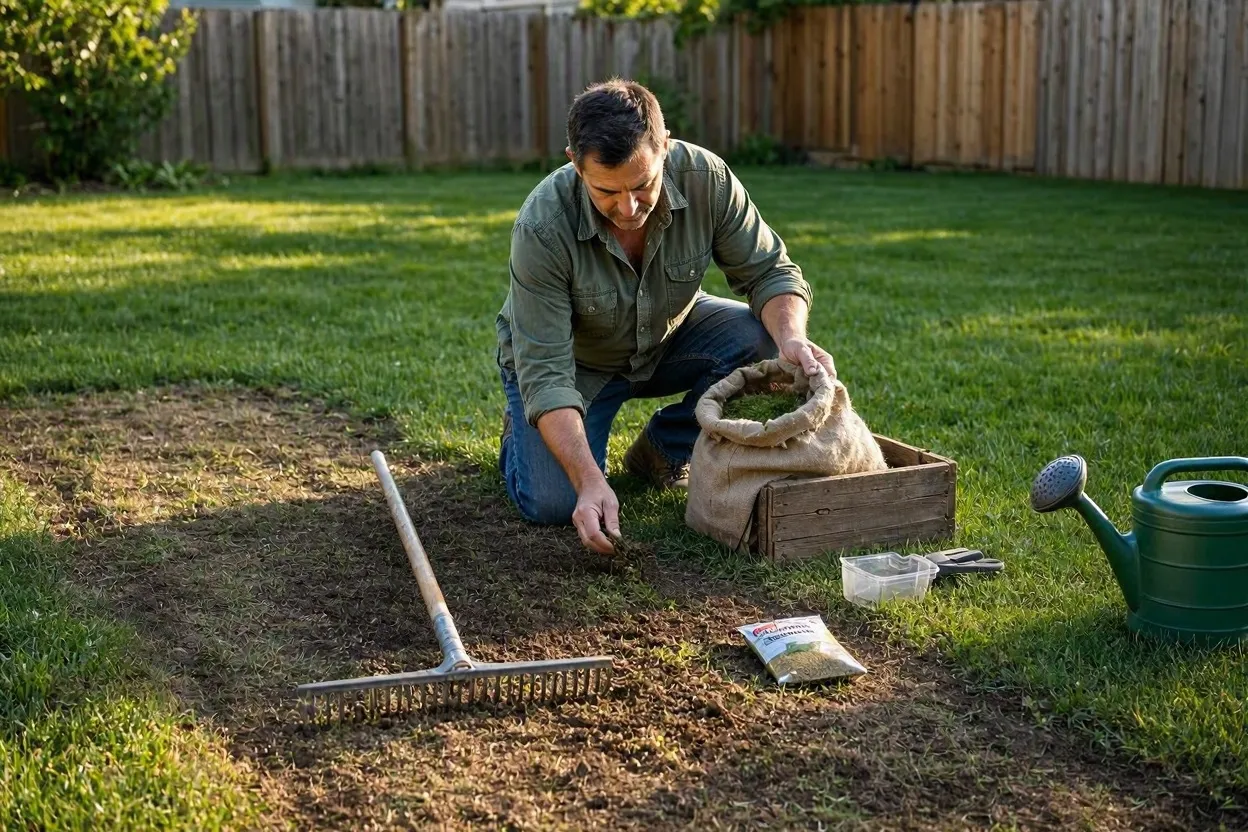
Overseeding after aeration dramatically increases germination rates — seed falls into the aeration holes and makes direct soil contact. Use the same grass species as your existing lawn, or a compatible blend. Apply at the recommended seeding rate: Kentucky Bluegrass at 2–3 lbs per 1,000 sq ft (0.9–1.4 kg per 93 m²); Tall Fescue at 6–8 lbs per 1,000 sq ft (2.7–3.6 kg per 93 m²). Follow the grass seed watering schedule exactly for 8 weeks after overseeding.

Everything You Need to Know About Lawn Care

Whether you are establishing your first lawn from seed or renovating an established yard, understanding the fundamentals makes the difference between a lawn that thrives for decades and one that requires constant repair every season.

Why Watering Technique Matters More Than Watering Frequency

Most homeowners water their lawns too often and too shallowly. Daily 10-minute sprinkler runs keep water in the top 1–2 inches (2.5–5 cm) of soil — exactly where summer heat evaporates it. Grass roots follow water. Shallow watering builds shallow roots. The result is a lawn that wilts in the first week of drought and burns out in July heat. Switching to 2–3 deep weekly sessions that deliver 0.5 inches (13 mm) each time pushes roots 6–10 inches (15–25 cm) deep within one growing season.

Cool-Season vs. Warm-Season Grass: Which Is Right for Your Zone?

Cool-season grasses (Kentucky Bluegrass, Tall Fescue, Ryegrass) thrive in zones 3–7 where summers stay below 90°F (32°C) for extended periods. Warm-season grasses (Bermuda, Zoysia, St. Augustine) dominate zones 7–11 where summers are hot and humid. Zone 6–7 is the transition zone — neither grass type performs perfectly year-round. Tall Fescue is the most adaptable choice for the transition zone because of its deep root system and heat tolerance.

Choosing Grass by USDA Zone

USDA hardiness zones define minimum winter temperatures — but lawn grass selection also depends on summer heat, humidity, and rainfall patterns. A grass rated for zone 7 may fail in hot, humid Southeast zone 7 summers while thriving in cool, dry Pacific Northwest zone 7 conditions. At Zoned Garden, all lawn guides include regional performance notes beyond zone numbers alone. Zone 6 in New England, the Midwest, and the Pacific Northwest describes 3 completely different growing environments.

How Much Seed, Fertilizer, and Water Does Your Lawn Need?

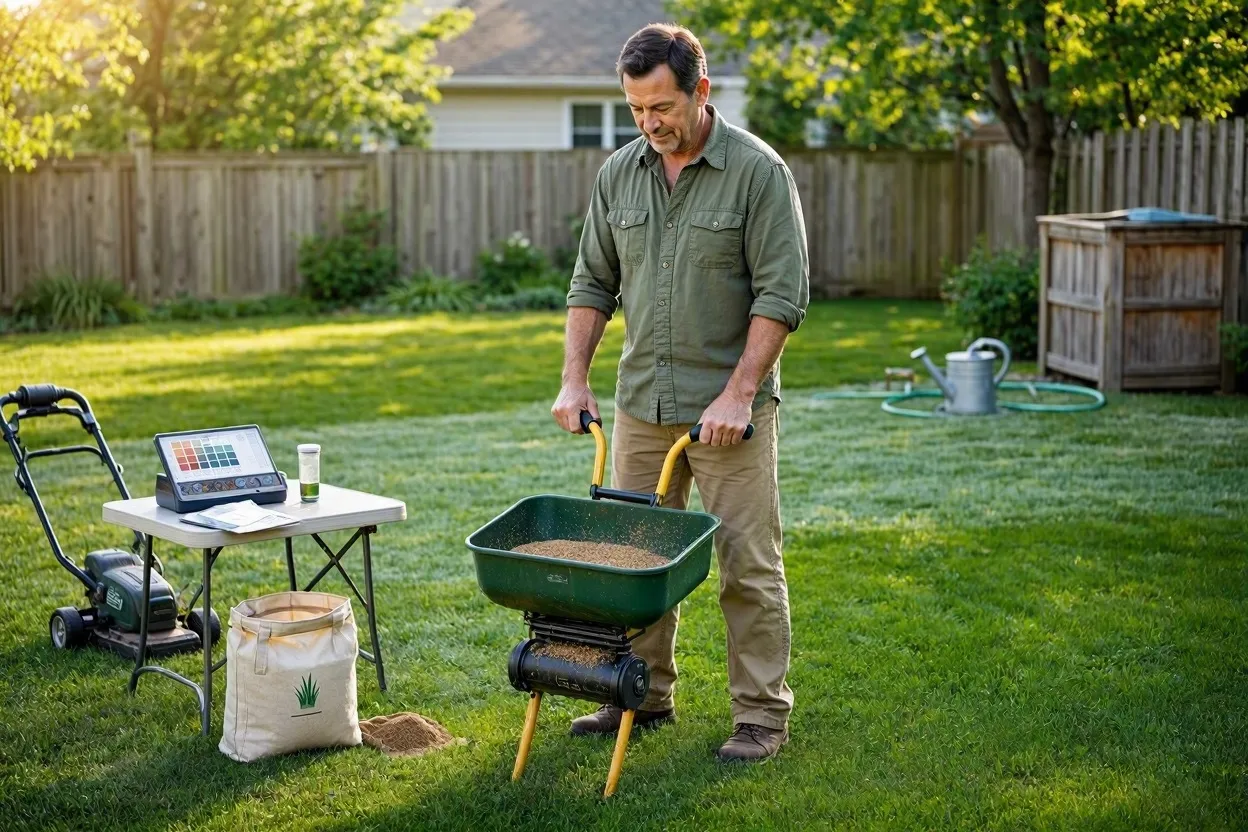
Accurate lawn measurement prevents both undersupplying and oversupplying inputs. Use the Measure My Lawn tool to calculate your exact square footage. Standard application rates: grass seed at 2–8 lbs per 1,000 sq ft (0.9–3.6 kg per 93 m²) depending on species; starter fertilizer at 4–6 lbs per 1,000 sq ft (1.8–2.7 kg per 93 m²); water at 1 inch (25 mm) per week. A 5,000 sq ft (465 m²) lawn needs 5 inches (127 mm) of water per week total — equivalent to 3,115 gallons (11,788 liters) from sprinklers or rain.