Prune at the Right Time — and Every Cut Makes Your Plant Stronger

Wrong pruning timing costs a full season of growth or flowers. One wrong cut on the wrong plant in the wrong month triggers dieback, disease entry, or permanent structural damage. This collection covers the correct pruning technique, timing, and tool for every plant — from crape myrtles and palms to raspberries and shrubs.

Expert guides
0 +
Plant Types
0 +
Seasonal Windows
0

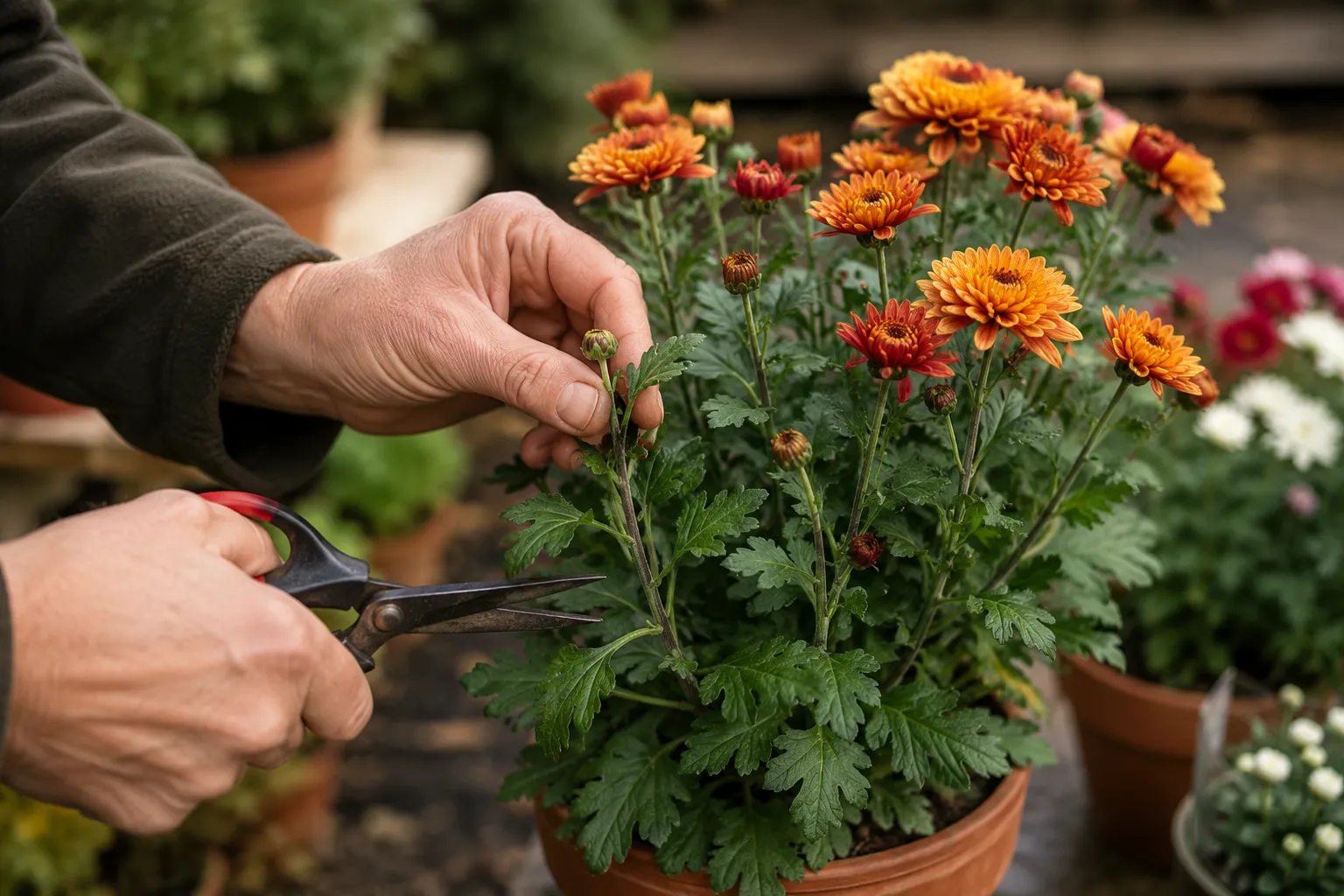
When to Prune Chrysanthemum: Pinching, Deadheading & Cutback Guide (2026)

Prune chrysanthemums 3–5 times across the growing season — starting with the first pinch in late spring and ending with a hard cutback after the first frost. Every pruning step serves a different purpose and hits a different part of the plant’s growth cycle. Most gardeners pinch once and wonder why their mums look thin by fall. The issue is timing and repetition. Chrysanthemums (Chrysanthemum morifolium) respond to pruning by branching harder — but only when cuts happen at the right growth stage. Cut too late, and you remove the very stems that carry fall buds. This guide covers every

Read Full Guild »
All Pruning Guides

The 6 Types of Pruning Cuts

Every pruning task uses one of these 6 cut types. Choosing the wrong cut for the goal damages plant structure, promotes disease, and triggers unwanted regrowth. Understanding cut types before picking up the pruner prevents the most costly pruning mistakes.

Thinning Cut

Removes an entire branch back to its point of origin — the parent branch or trunk. Creates no regrowth stub. Opens the canopy to light and air without changing the plant's natural shape. The most structurally sound pruning cut for trees and large shrubs.
Best for: Overcrowded canopy, crossing branches, dead wood removal

Heading Cut

Removes the growing tip of a branch — stimulating multiple new shoots from buds below the cut. Creates denser, bushier growth. Used for formal hedges and shaping. Heading cuts on trees produce weak, fast-growing water sprouts that must be managed annually.
Best for:: Hedges, formal topiaries, fruiting cane plants (raspberries)

Deadheading

Removes spent flower heads before seed sets. Redirects plant energy from seed production to new flower or fruit bud development. Extends the blooming period by 2–6 weeks for repeat-blooming plants. Does not require sterilized tools for most flowering plants.
Best for::Roses, coneflowers, dahlias, lavender, repeat-blooming shrubs

Pinching

Removes the terminal growing tip by hand — pinching between thumb and forefinger. Promotes branching and compact growth. No tools needed. Used on young plants and annuals during active growing season to build fuller, denser structure before flowering.
Best for:: Basil, coleus, petunias, chrysanthemums, young perennials

Rejuvenation Pruning

Cuts the entire plant back to 6–12 inches (15–30 cm) from ground level to force a complete flush of healthy new growth. Used on overgrown, woody, or declining shrubs that have become unproductive. Takes 1–2 seasons to recover fully. Only appropriate for shrubs — never trees.
Best for:: Forsythia, lilac, spirea, butterfly bush, overgrown boxwood

Crown Reduction

Reduces the overall size of a tree or large shrub by cutting back main branches to lateral branches at least one-third the diameter of the removed limb. Preserves natural shape better than topping. Never removes more than 25% of canopy in one session. Requires proper collar cuts to prevent rot.
Best for:: Trees outgrowing space, utility line clearance, storm-damaged canopies

When to Prune — Plant by Plant

Pruning timing determines whether a plant blooms, fruits, and recovers well — or loses a full season’s performance. This table maps the correct pruning window for every major plant category.

Plant Prune When Avoid Pruning Cut Type Key Rule
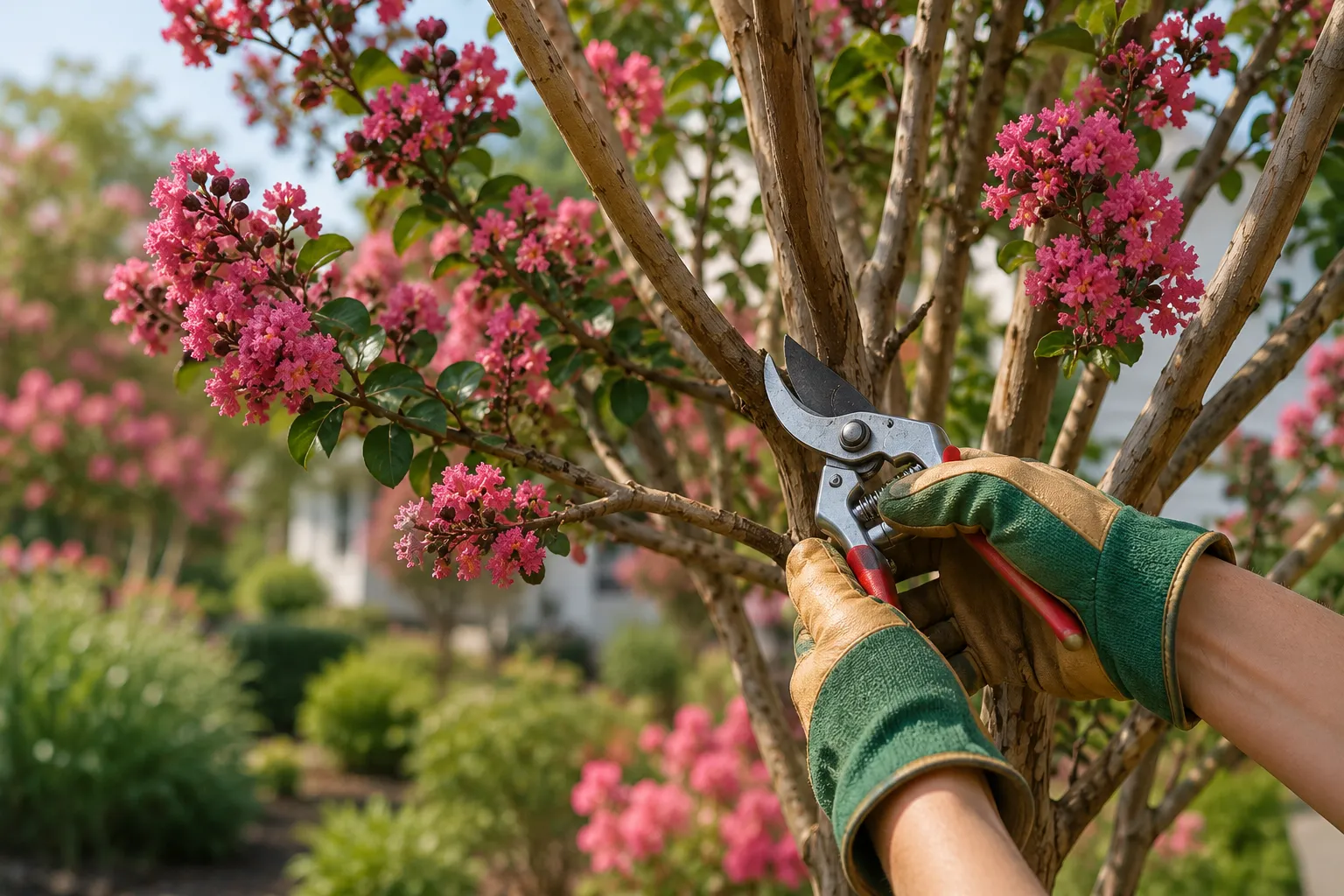
Crape myrtle Late Jan – early March Never cut main trunks Thinning only Remove dead wood and water sprouts — never "crape murder"
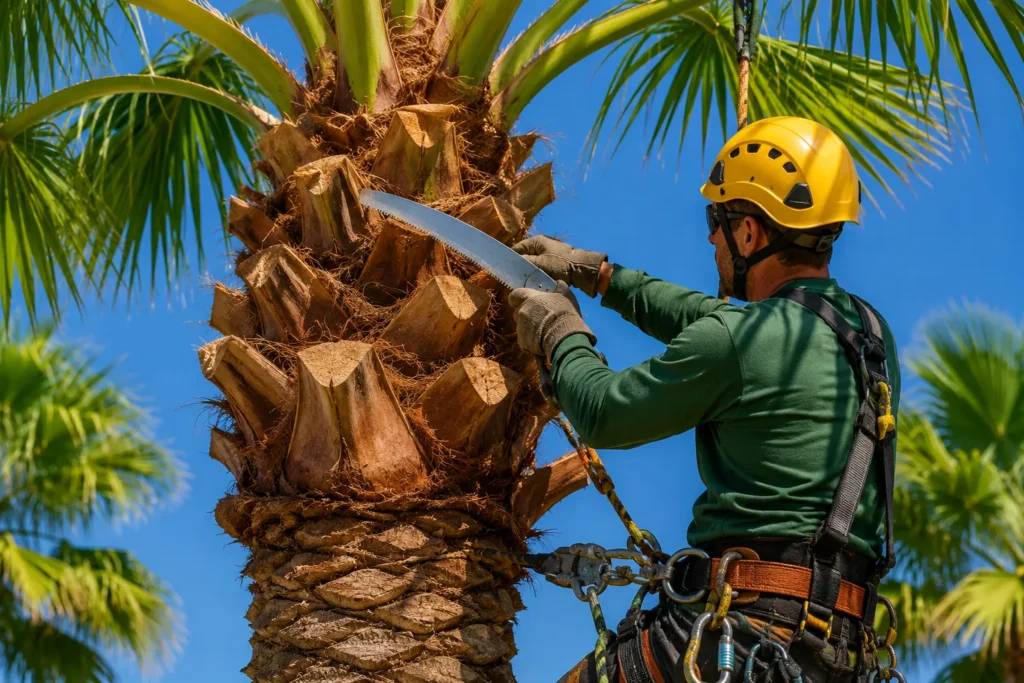
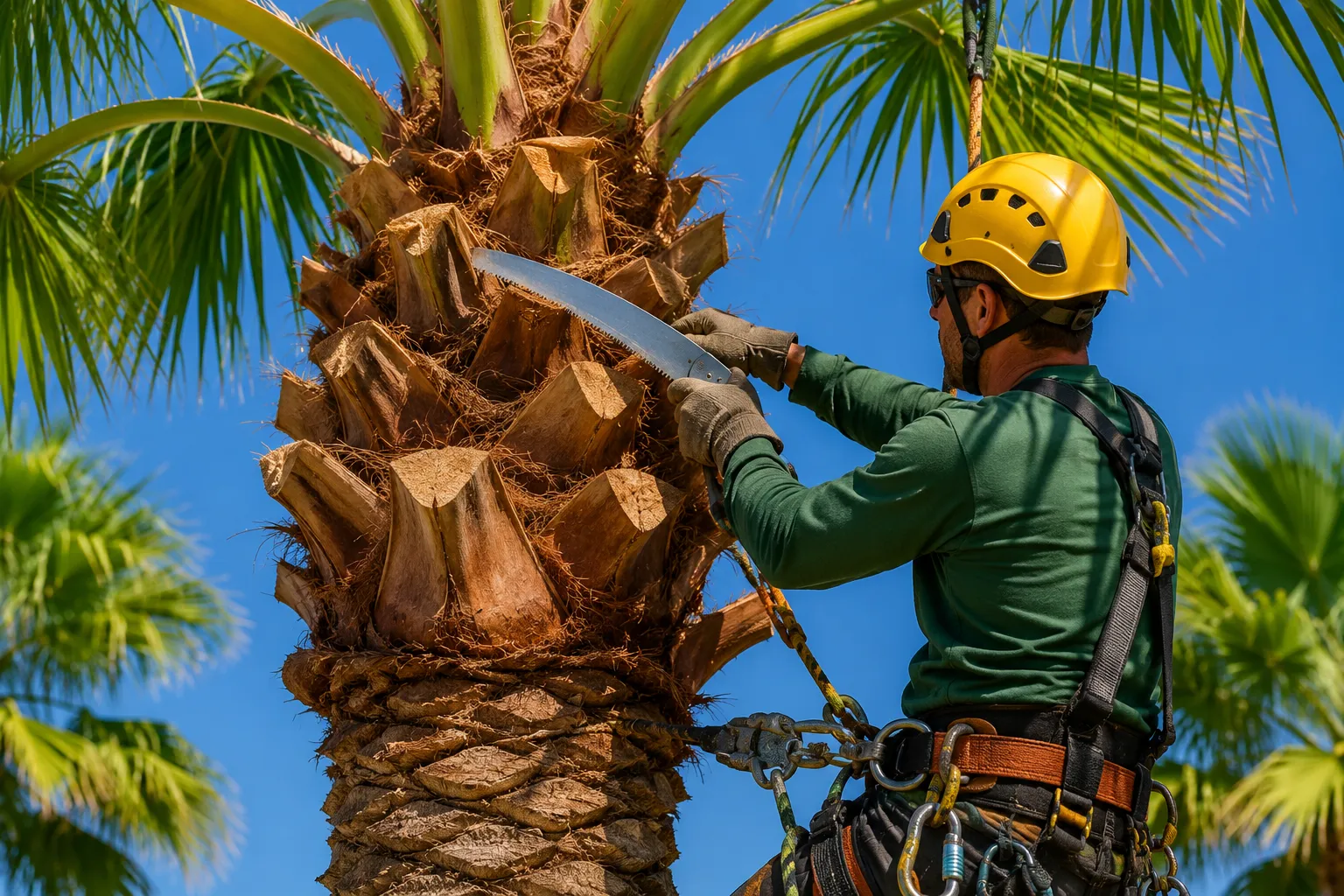
Palm tree Once annually — any season Never cut green fronds Removal of dead fronds only Only fully brown fronds — leave all green fronds untouched
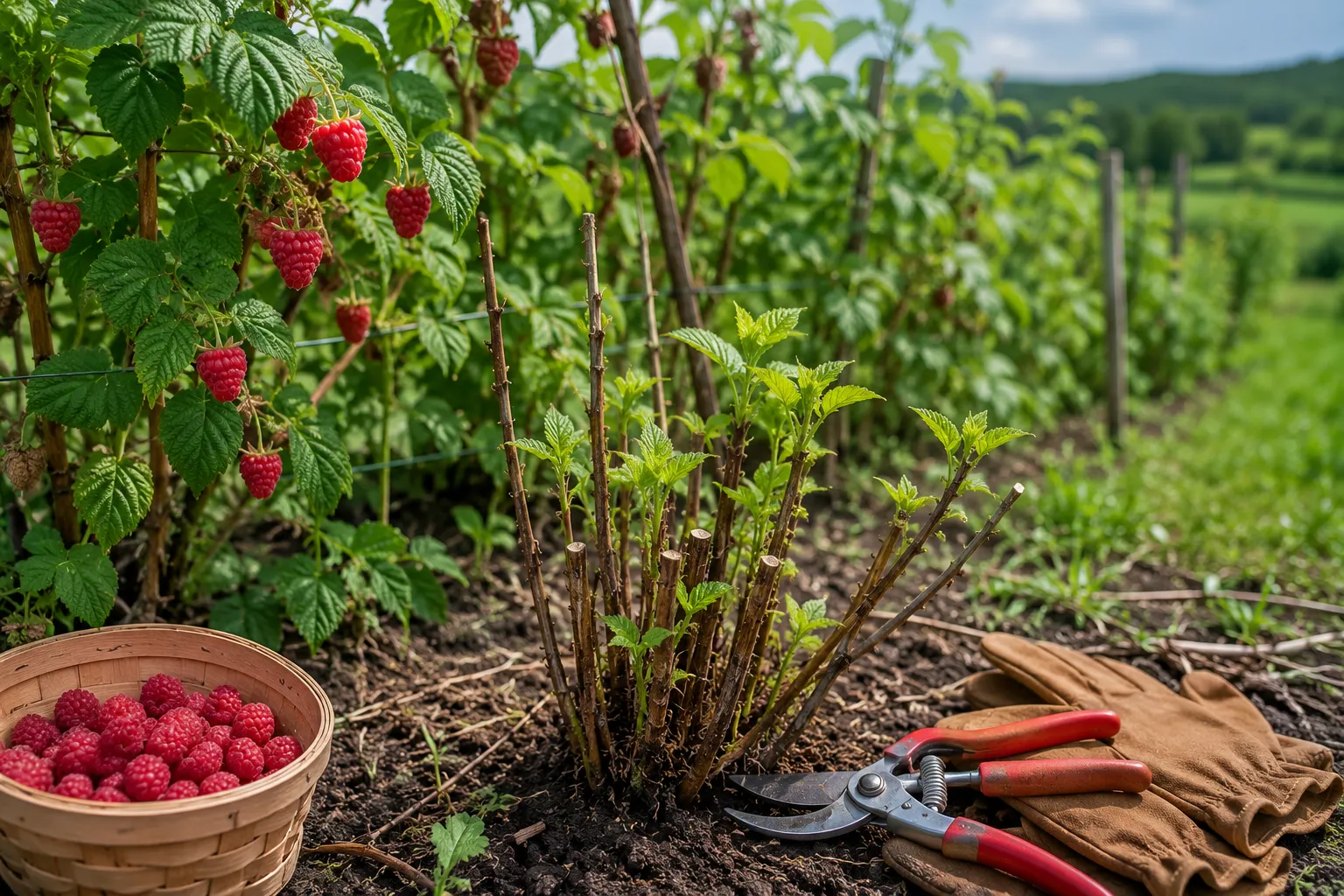
Summer raspberries After harvest + early spring Mid-summer (disrupts fruiting) Heading + thinning Remove floricanes after harvest; thin primocanes in spring
Everbearing raspberries Late winter (for 1 crop) or twice yearly (for 2 crops) During fruit set Heading cut to ground or partial Cutting all canes to ground in winter = 1 fall crop only
Spring-blooming shrubs (lilac, forsythia, azalea) Immediately after bloom Fall and early spring Thinning + light shaping Blooms on old wood — fall pruning removes next year's flower buds
Summer-blooming shrubs (hydrangea, butterfly bush) Late winter – early spring Summer and fall Heading cut + thinning Blooms on new wood — prune before growth starts
Evergreen shrubs (boxwood, holly) Late spring after new growth hardens Late summer and fall Light shaping only New growth must harden before shaping — typically 4–6 weeks after flush
Deciduous trees Late winter while dormant Fall (disease risk) and mid-summer Thinning + crown reduction Dormant pruning minimizes disease entry and maximizes wound closure
Fruit trees (apple, pear, cherry) Late winter while dormant Summer (except cherries — prune in summer to avoid disease) Thinning + heading Open center or central leader structure — never remove more than 25%
Roses (hybrid tea, floribunda) Early spring when forsythia blooms Fall (promotes tender growth before frost) Heading to outward-facing bud Cut at 45° angle, 0.25 inches (6 mm) above outward-facing bud

When to Prune — Season by Season

Pruning season determines plant health, flowering performance, and disease risk for the next 12 months. The right timing window varies by plant type — but these seasonal guidelines apply to the majority of trees, shrubs, and fruiting plants in zones 4–9.

Spring

Prune summer-blooming shrubs (hydrangea, butterfly bush, crape myrtle) in early spring before new growth starts. Prune roses when forsythia blooms — soil temperature is the reliable signal, not calendar date. Complete all dormant pruning on fruit trees before buds break. Spring-blooming shrubs (lilac, forsythia) must NOT be pruned until after bloom.

Summer

Prune spring-blooming shrubs (forsythia, lilac, azalea, rhododendron) immediately after flowers fade — within 2–4 weeks of bloom end. Deadhead repeat-blooming roses and perennials to extend flowering. Lightly shape evergreen hedges after new growth hardens. Prune cherry trees in summer to reduce silver leaf disease risk.

Fall

Avoid major pruning in fall in zones 4–7 — cuts heal slowly in cooling temperatures and new growth triggered by pruning is killed by first frost. Light deadheading is acceptable. Collect and dispose of pruned material from disease-prone plants (roses, fruit trees) — do not compost. Palm trees can be pruned in fall to remove dead fronds before winter winds.

Winter

Best season for dormant pruning of deciduous trees, fruit trees, and most summer-blooming shrubs. Wounds close faster in spring when made in late winter. No foliage means structure is visible — making structural cuts easier and more accurate. Sterilize tools between plants during winter pruning to prevent disease spread between dormant plants.

6 Pruning Rules Every Gardener Must Know

The most expensive pruning mistakes are not about which branch to cut — they are about tool sharpness, cut angle, timing, and how much to remove. These 6 principles prevent the errors that cost full seasons of growth and flowering.

Sharp tools are the most important pruning variable

A dull pruner crushes plant tissue instead of cutting it cleanly. Crushed tissue dies back 0.5–1 inch (1.3–2.5 cm) beyond the cut, creating a stub of dead wood that invites fungal disease and insect entry. Sharpen hand pruners before every major pruning session. A sharp pruner cuts stems cleanly with one squeeze — if it takes 2 or more squeezes on pencil-thick wood, the blade is dull. Sharpen loppers and saws after every 4–6 hours of use.

Sterilize tools between plants — especially diseased ones

Pruning tools transfer fungal spores, bacterial pathogens, and viral infections from plant to plant. Sterilize blades between every plant during fire blight season (spring) for apple and pear trees. Wipe blades with 70% isopropyl alcohol or a 10% bleach solution (1 part bleach to 9 parts water) between cuts when working on disease-prone plants. For routine pruning of healthy plants in the same session, sterilize between species — not between cuts.

Cut at 45° — angled away from the bud

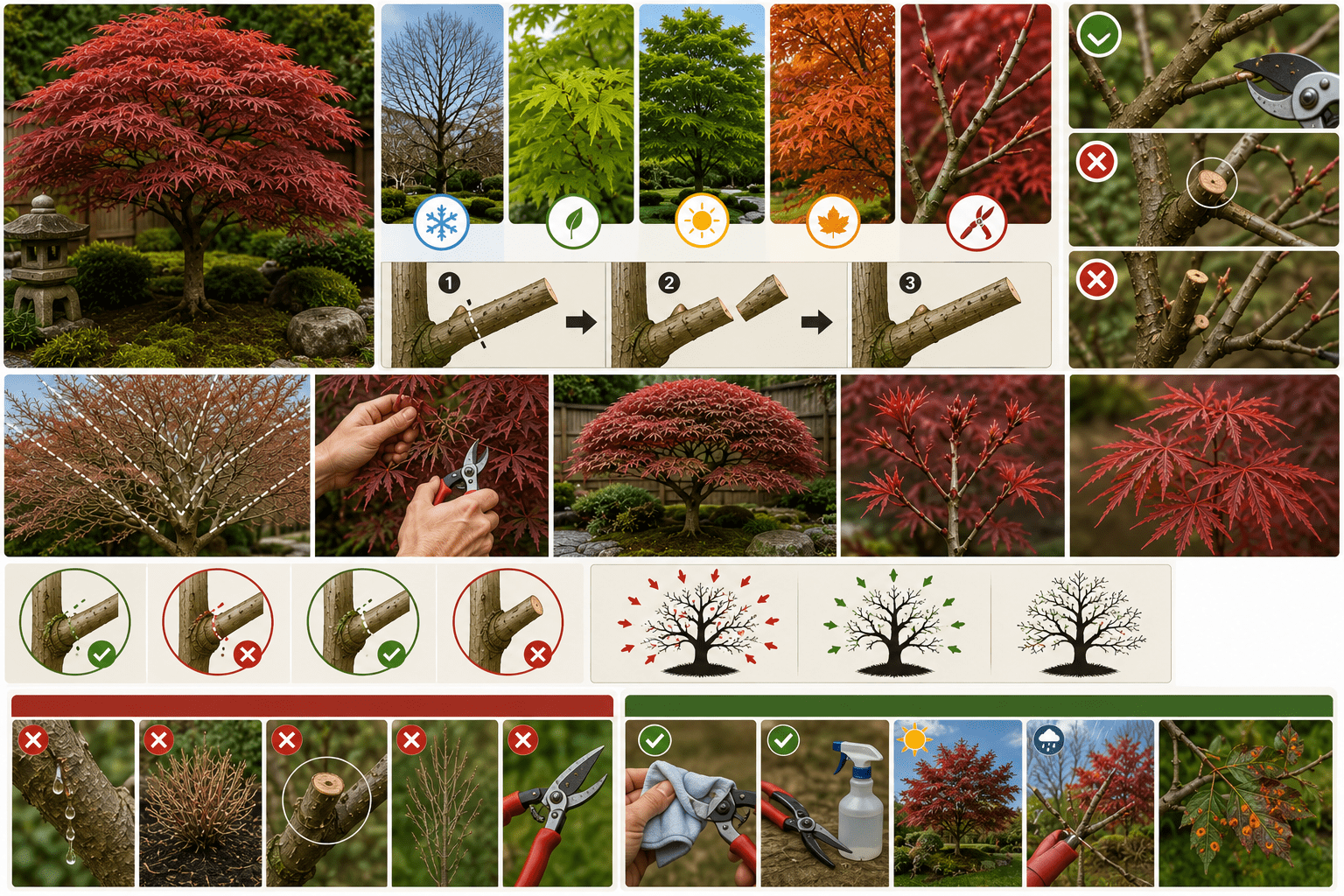
A 45° angled cut sheds water away from the wound and from the bud directly below, reducing rot risk. A flat horizontal cut pools water on the wound surface. A cut made too close to the bud (less than 0.25 inches / 6 mm) damages the bud. A cut made too far from the bud (more than 0.5 inches / 12 mm) leaves a dead stub. For tree branches, cut just outside the branch collar — the swollen ring at the branch base — never flush to the trunk.

Never remove more than 25–30% in one season

Removing more than 25–30% of a plant's canopy in a single pruning session triggers stress responses — rapid, weak regrowth, reduced root reserves, and increased disease susceptibility. For rejuvenation pruning of severely overgrown shrubs, spread the work over 3 years: remove one-third of the oldest stems each year. For trees, 15–20% is the safer maximum. The exception is cane fruits (raspberries, blackberries) where full removal of spent canes is correct and healthy.

Most pruning wounds need no sealant

Research from the U.S. Forest Service confirms that pruning wound sealants — tar-based or paint-based products — trap moisture against wood, promote fungal growth, and slow the natural wound-closure process. Healthy plants form callus tissue over clean cuts within one growing season without any treatment. Wound sealant is appropriate in 1 specific situation: oak trees pruned during spring (February–June) in areas with oak wilt disease — sealant prevents beetle access to fresh cuts during the disease's active transmission window.

Dispose of diseased prunings — never compost them

Prunings from healthy plants are excellent compost material, adding carbon and nutrients. Prunings from diseased plants — fire blight cankers, black spot-infected rose canes, powdery mildew-covered branches, or plants with any fungal lesions — must be bagged and disposed of in household waste, never composted. Most home compost piles do not reach the 140°F (60°C) temperatures required to kill plant pathogens. Composting diseased material reintroduces the same disease to the garden every time compost is applied.

Everything You Need to Know About Pruning

Whether you are making your first pruning cut on a rose or managing mature fruit trees, understanding how plants respond to pruning makes every cut purposeful and every season more productive.

Why Pruning Timing Matters More Than Technique

A perfect cut made at the wrong time causes more damage than an imperfect cut made at the right time. Pruning spring-blooming shrubs in fall removes every flower bud that formed over summer — the plant loses an entire bloom season. Pruning oaks in spring in oak wilt zones introduces beetles that vector the fatal fungus directly into fresh wounds. Pruning roses in fall in zone 5 stimulates tender new growth that freezes in the first hard frost, weakening the plant heading into winter.

Old Wood vs. New Wood — The Most Important Pruning Distinction

Old wood is growth from the previous season or earlier. New wood is growth from the current season. Spring-blooming shrubs — forsythia, lilac, azalea, rhododendron, viburnum — set flower buds on old wood during the previous summer and fall. Pruning these plants in fall or early spring removes all the flower buds set the previous year. The plant leafs out normally but does not flower.

Choosing the Right Pruning Tool for the Job

Hand pruners (bypass or anvil) handle stems up to 0.75 inches (1.9 cm) in diameter. Bypass pruners — where two blades pass each other — produce cleaner cuts on living wood. Anvil pruners — where one blade closes onto a flat plate — are better for dead wood. Loppers extend reach and leverage for branches up to 1.5 inches (3.8 cm) in diameter. Pruning saws handle branches above 1.5 inches (3.8 cm) efficiently — never use loppers on branches that require a saw, as the forcing action splits wood and tears bark.

How to Identify Pruning Mistakes Before They Cost a Season

4 pruning mistakes are recognizable within 4–8 weeks of the cut. Stub dieback — dead wood extending 0.5 inches (1.3 cm) or more from the cut — indicates either a dull tool or a cut made too far from the lateral branch or bud. Water sprout regrowth — clusters of thin, fast-growing upright shoots below the cut — indicates the plant is under stress from over-pruning or an improper cut. Failure to bloom the following season on a flowering shrub indicates fall pruning removed flower buds set on old wood.