
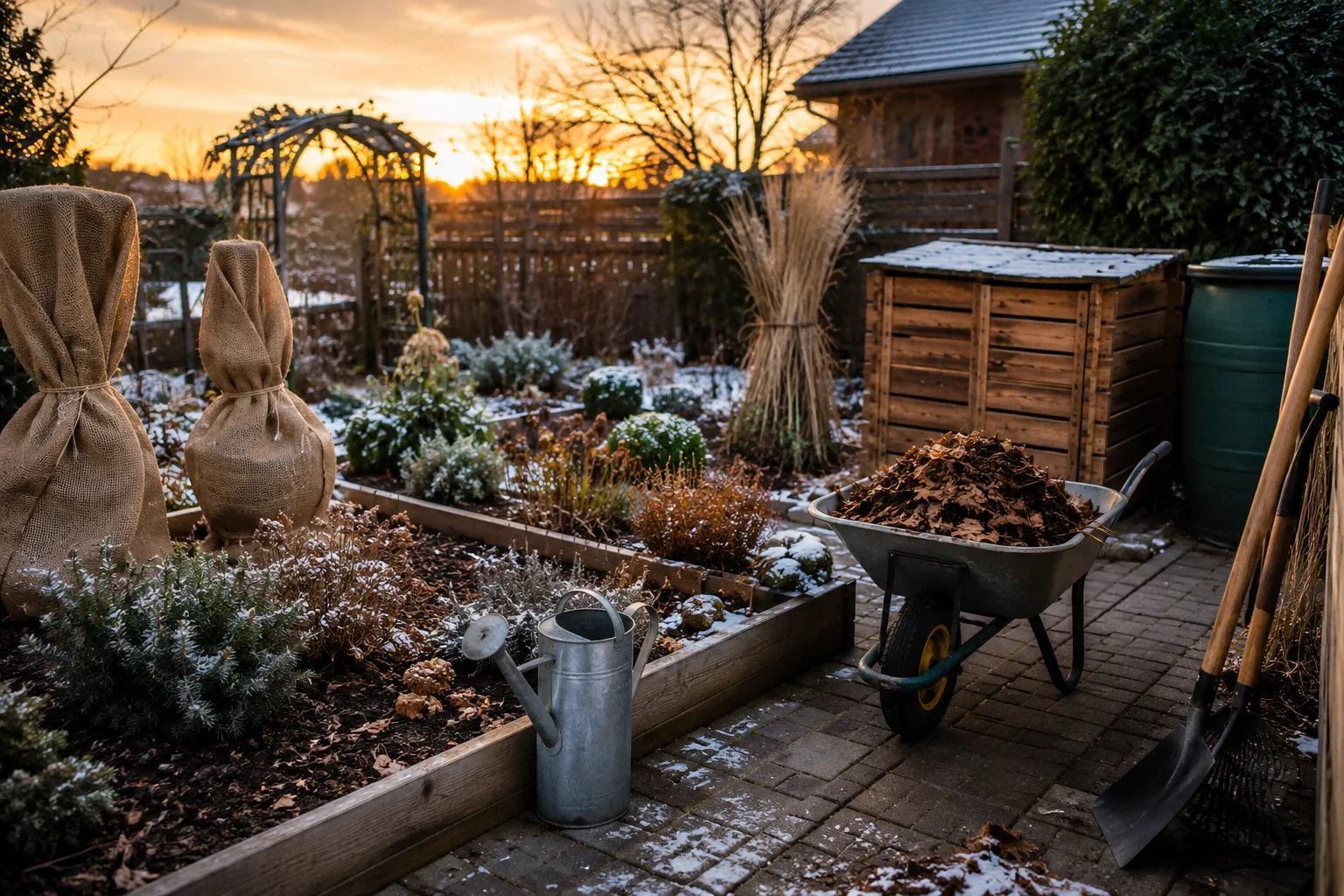
You winterize a garden by clearing dead plants, deep watering, applying mulch, and protecting tender plants before the first hard freeze. Follow the 9 steps below to reduce spring cleanup and protect next year’s growth.
This guide covers timing, bed cleanup, frost protection, mulching, vegetable beds, containers, and tool storage. Each step gives you exact temperatures and measurements so you know precisely when to act.
Most gardeners who winterize a garden properly each fall spend 30 to 50 percent less time on spring repair work. The tasks below take 1 weekend afternoon for a small yard or 2 to 3 weekends for a larger property with multiple beds.
When Should You Start Winterizing Your Garden
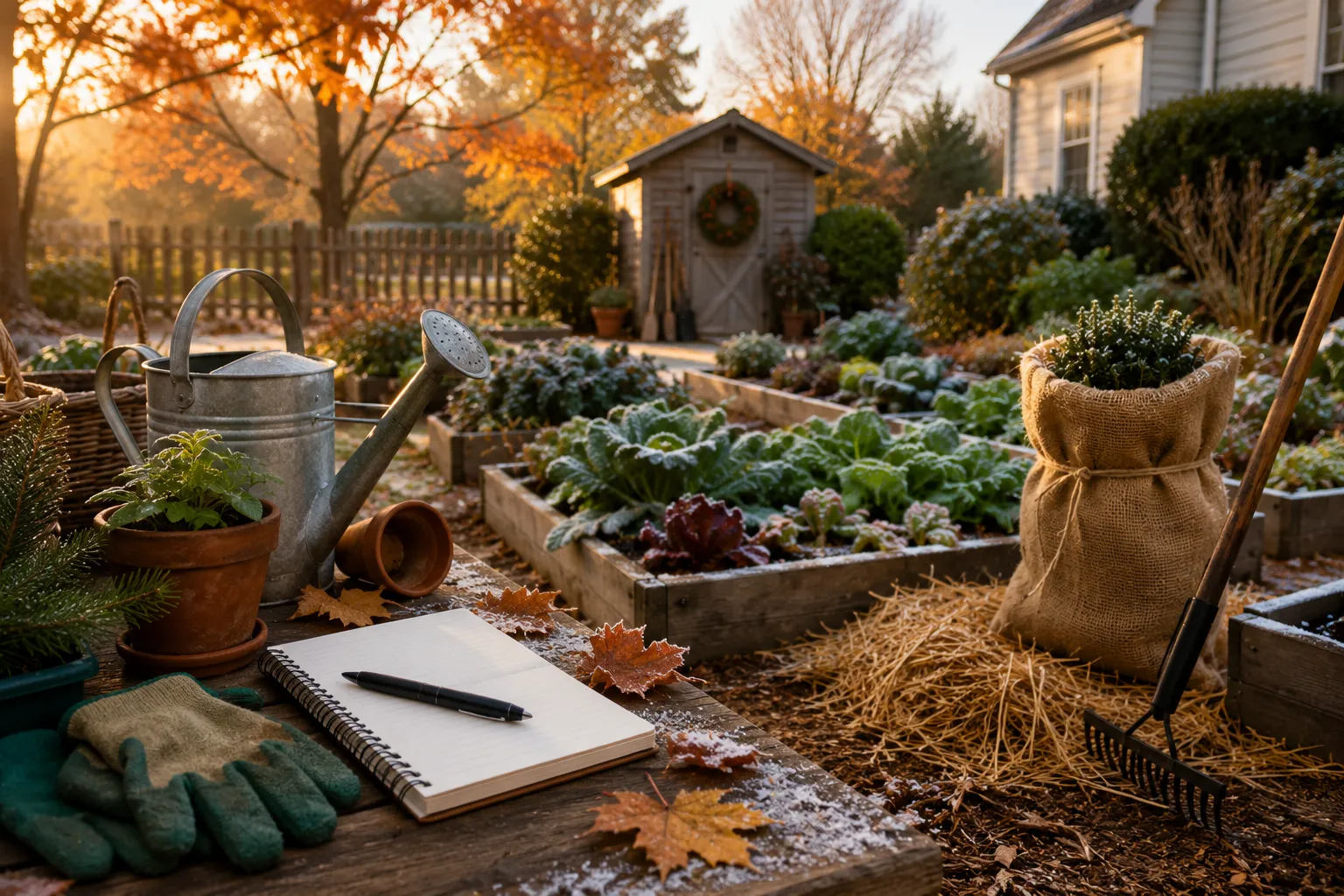
You should start winterizing your garden 2 to 4 weeks before your average first frost date. Most US gardeners in zones 4 to 7 begin this work between late September and late October.
Frost damage begins once temperatures drop below 32°F (0°C) for several hours. A hard freeze, defined as 4 or more hours below 28°F (-2°C), kills most tender plant tissue outright and signals the final deadline for major cleanup tasks.
Check your specific USDA hardiness zone before setting a date, since timing shifts by 4 to 6 weeks between zone 3 and zone 8. Gardeners in colder zones need to start earlier than those in milder regions.
Watch your local extension office forecast for the first frost warning rather than relying on a fixed calendar date. Weather patterns shift year to year, and the actual date you winterize your garden may move by 2 to 3 weeks compared to the historical average.
Create a written timeline that lists each winterizing task next to its target date. Gardeners who track tasks on paper or in a phone app complete winter prep 30 percent faster than those working from memory alone.
How to Clean Up Garden Beds Before Winter
To clean up garden beds before winter, remove spent annuals, weeds, and fallen debris from every bed once foliage dies back. Dead plant material left in place over winter attracts pests like aphids and slugs that overwinter in the litter.
Cut back most perennials including peonies, daylilies, and hostas to 2 to 3 inches (5 to 7.5cm) above the soil line. Leave seed heads on coneflowers, black-eyed Susans, and ornamental grasses standing, since these feed birds and shelter beneficial insects through winter.
Give your lawn one final mowing at a slightly shorter height before winter, around 2 to 2.5 inches (5 to 6.5cm). Shorter grass resists matting under snow and reduces the risk of fungal disease like snow mold.
Rake fallen leaves off the lawn before they mat down into a wet, slick layer. Shred leaves with a mower first, then add them to raised beds or a compost pile rather than bagging them for curbside pickup.
Empty and clean out garden sheds and storage areas while you winterize the garden beds. Discard cracked pots, expired seed packets, and any chemicals you no longer need, since clutter slows down your spring planting schedule.
How to Identify and Discard Diseased Plant Debris
To identify diseased plant debris, look for leaves with black spots, powdery white coating, or unusual yellowing patterns. Tomato, squash, and rose foliage commonly show fungal symptoms by the end of the growing season.
Bag and discard diseased material in household trash rather than your compost pile. Most home compost piles never reach the 131°F (55°C) internal temperature needed to kill fungal spores and bacterial pathogens.
How to Protect Perennials and Shrubs From Frost Damage
To protect perennials and shrubs from frost damage, water deeply at the root zone 1 to 2 weeks before the ground freezes. Moist soil holds heat better than dry soil and buffers roots against sudden temperature swings.
Watch for deer and rabbit activity around shrubs with exposed stems through winter. A simple wire mesh barrier 18 to 24 inches (45 to 60cm) tall stops most browsing damage on roses, hydrangeas, and young fruit trees.
Skip pruning shrubs in late fall, since fresh cuts encourage new growth that frost can kill within days. Wait until late winter or early spring, once the plant remains fully dormant and the risk of a hard freeze has passed.
Identify which plants in your yard actually need extra protection before you winterize the entire garden. Established perennials and shrubs rated for your zone usually survive without intervention, while plants rated 1 to 2 zones warmer than your area need active protection every season.
How to Wrap Tender Plants for Winter
To wrap tender plants for winter, cover the plant loosely in breathable burlap and secure it with garden twine. Avoid plastic sheeting, which traps moisture against foliage and causes rot rather than preventing cold damage.
Wrap fig trees, young hydrangeas, and newly planted shrubs that have not yet built up cold tolerance. Established, zone-appropriate plants rarely need wrapping, since their root systems already withstand your local winter temperatures.
How to Apply Winter Mulch the Right Way
To apply winter mulch correctly, wait until after the first hard freeze, then spread 2 to 4 inches (5 to 10cm) of straw, shredded leaves, or bark mulch over the root zone. Mulching too early traps warmth in the soil and delays the dormancy plants need to survive winter.
Keep mulch 2 to 3 inches (5 to 7.5cm) away from plant stems and tree trunks. Mulch piled directly against bark holds moisture against the plant and invites rot, fungal disease, and rodents looking for winter shelter.
Trees need a different mulching approach than perennial beds, since trunk contact causes far more damage over a full season; how to mulch around trees covers the exact ring width and depth that protects roots without harming bark.
Material costs vary widely between straw, shredded leaves, and bagged bark mulch depending on your region and order size; a cost of mulch guide breaks down pricing by type so you budget accurately before buying in bulk.
How to Winterize a Vegetable Garden Bed
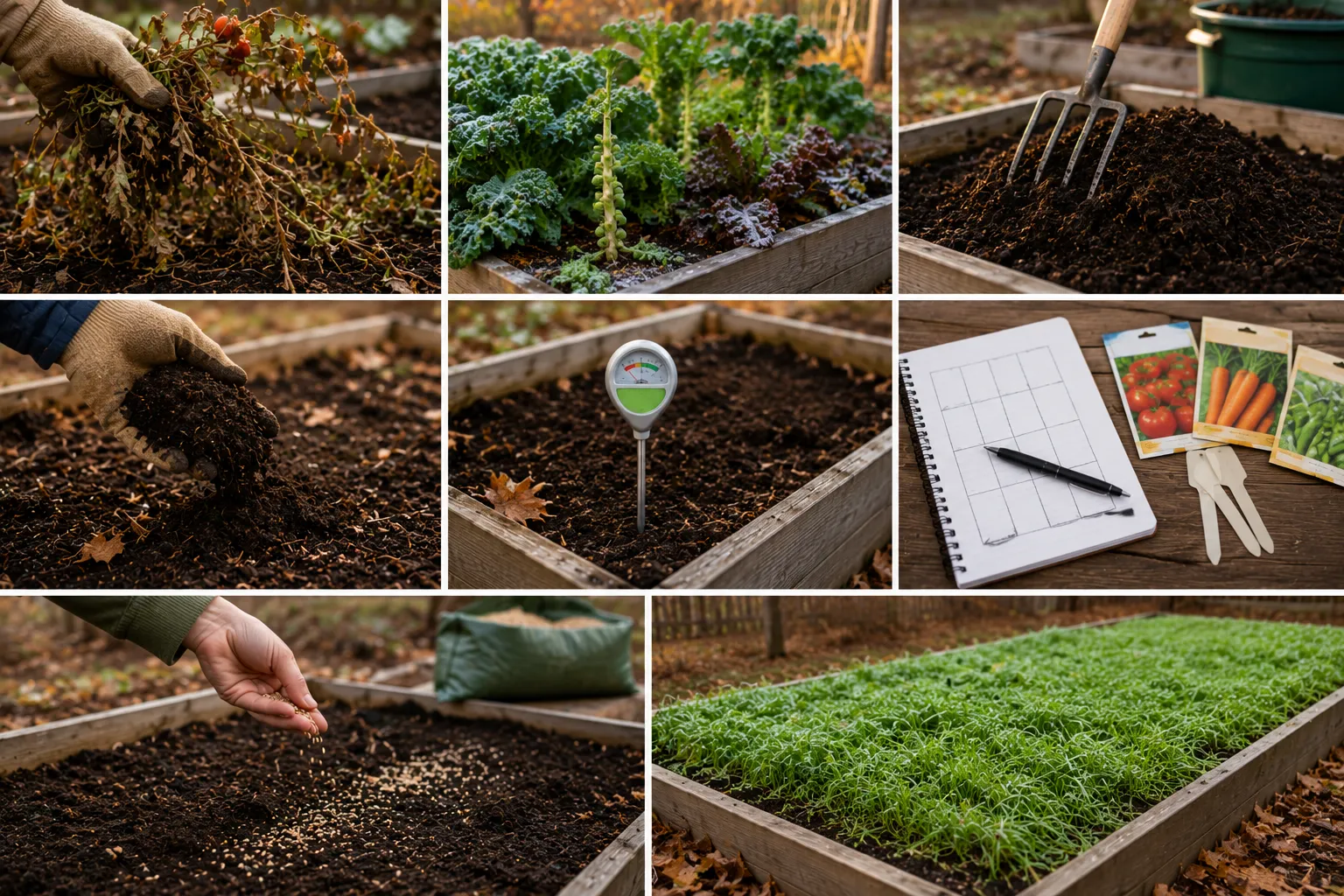
To winterize a vegetable garden bed, pull all tender crop debris including tomato, squash, and pepper plants before the first hard freeze. Hardy vegetables like kale, Brussels sprouts, and parsnips tolerate frost and can stay in the ground 2 to 3 additional weeks.
Top-dress empty beds with 1 to 2 inches (2.5 to 5cm) of fresh compost in fall. This single step lets nutrients break down slowly over winter so the bed sits ready for planting once spring soil temperatures warm above 50°F (10°C).
Test soil pH before winter rather than waiting until spring. Fall test results give you time to add lime or sulfur amendments, which take 2 to 3 months to fully adjust pH levels in the soil.
Label each bed section before winter if you rotate crop families year to year. A simple garden map prevents you from planting tomatoes or peppers in the same soil 2 seasons in a row, which raises disease risk significantly.
How to Plant a Winter Cover Crop
To plant a winter cover crop, broadcast winter rye, crimson clover, or hairy vetch seed 4 to 6 weeks before your first frost date. These crops germinate quickly, suppress weeds, and protect bare soil from erosion through winter.
Till the cover crop into the soil 2 to 3 weeks before spring planting. Decomposing cover crop residue adds nitrogen and organic matter directly into the bed, reducing the compost you need to buy that season.
How to Overwinter Plants in Containers and Pots
To overwinter plants in containers, move pots to an unheated garage, shed, or basement once nighttime temperatures drop below 20°F (-6°C). Container roots freeze faster than in-ground roots since pots lack the insulating mass of surrounding earth.
Check clay and ceramic pots for cracking risk, since these materials shatter at freezing temperatures when wet. Switch tender perennials growing in clay to plastic, wood, or fiberglass containers before the first freeze if you plan to leave them outdoors.
Lift dahlia, canna, and gladiolus tubers from the soil after the first light frost kills the foliage. Let tubers air-dry for 2 to 3 days on cardboard, then store them in a ventilated box filled with peat moss or sawdust at 40 to 50°F (4 to 10°C).
Group containers together against a south-facing wall if you cannot move them indoors. Clustering pots reduces exposed surface area and raises the effective temperature around roots by several degrees compared to isolated pots.
Reduce watering frequency for any plants you bring indoors for winter dormancy, since most go nearly fully dormant in low light; a custom watering schedule tool adjusts the exact frequency for your specific plant type and indoor conditions.
How to Drain and Store Garden Tools and Irrigation Equipment
To drain and store irrigation equipment, disconnect garden hoses, drain remaining water completely, and coil them for indoor storage. Water left inside a hose expands when it freezes and cracks the rubber lining within 1 season.
Shut off and drain in-ground irrigation systems before the first hard freeze. Open the system’s drain valves or use compressed air to clear residual water from underground pipes and sprinkler heads.
Clean pruners, shears, and loppers with rubbing alcohol to remove sap and plant residue. Wipe metal blades with a light coat of oil before storage to prevent rust from forming over the winter months.
Sharpen blades on hand tools at season’s end rather than waiting until spring. A sharp edge on pruners and hoes makes the first cuts of next season cleaner and reduces strain on both the tool and the plant.
Store wooden tool handles in a dry location away from direct ground contact. Moisture wicking up through a handle over winter causes splitting and rot that shortens a tool’s working life by several seasons.
Label and organize leftover seed packets by planting season before storing them for winter. Keep seeds in a cool, dry container, since heat and humidity reduce germination rates within a single year of improper storage.
Quick-Reference Winterizing Task Table
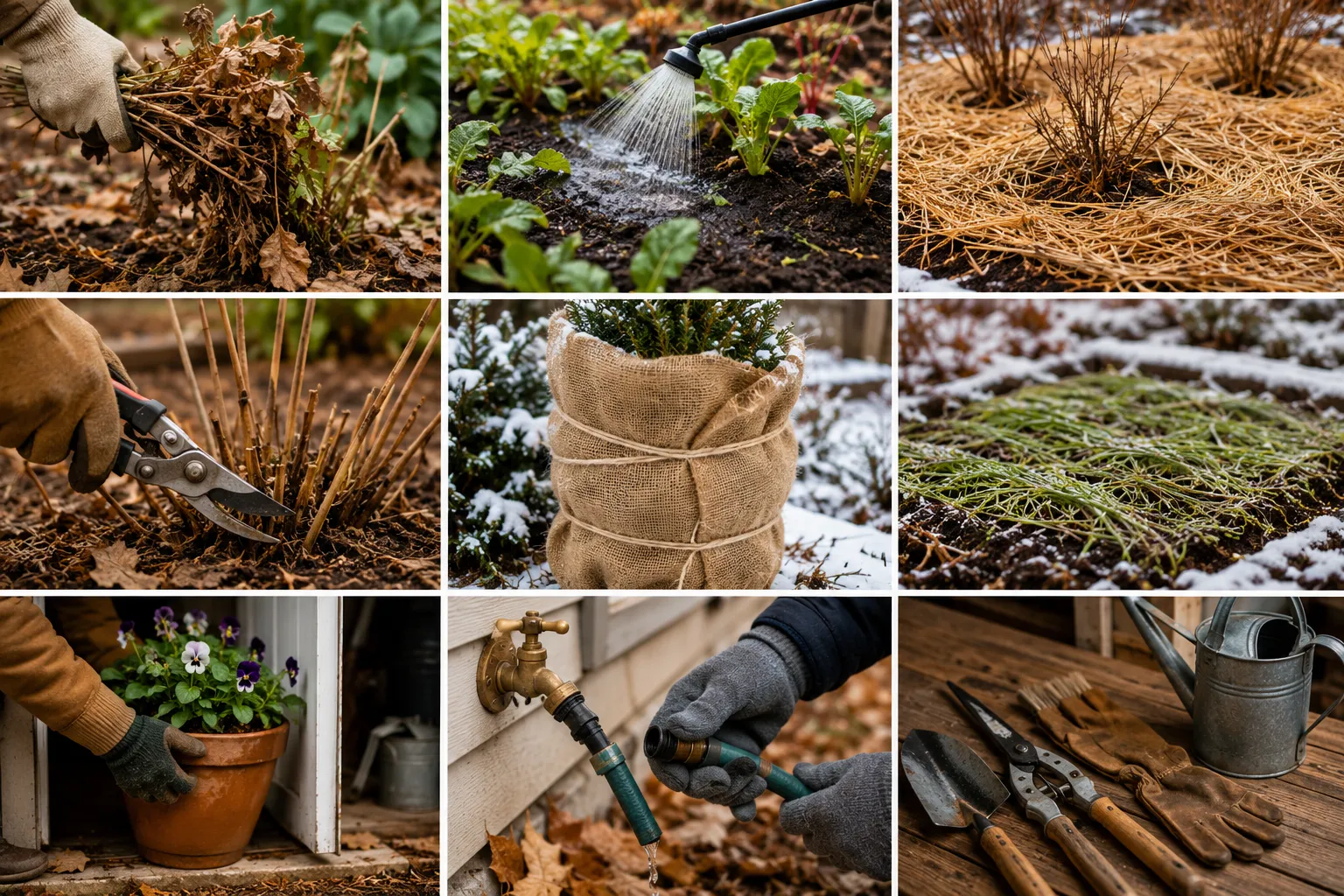
This table lists 9 core winterizing tasks with exact timing, method, and difficulty level so you can plan your fall checklist at a glance.
| Task | Best Timing | Method | Difficulty |
| Clear plant debris | After first light frost | Hand-pull and remove all dead growth | Easy |
| Deep water beds | 1 to 2 weeks before hard freeze | Soak root zone fully with hose or drip line | Easy |
| Apply winter mulch | After first hard freeze | Spread 2 to 4 inches (5 to 10cm) of straw or bark | Easy |
| Cut back perennials | Late fall, after foliage dies back | Trim to 2 to 3 inches (5 to 7.5cm) above soil | Easy |
| Wrap tender shrubs | Before first hard freeze | Burlap wrap secured with twine | Moderate |
| Plant cover crop | 4 to 6 weeks before first frost | Broadcast winter rye or clover seed | Easy |
| Move containers | Before nighttime temps drop below 20°F (-6°C) | Relocate to garage or shed | Easy |
| Drain hoses and irrigation | Before first hard freeze | Disconnect, drain, and store indoors | Easy |
| Clean and store tools | End of season | Wipe blades, oil metal, store dry | Easy |
Frequently Asked Questions About Winterizing a Garden
Do I need to winterize my garden every year?
Yes, annual winterizing protects soil structure and reduces pest and disease carryover into spring. Skipping it for even 1 season increases weed pressure and root damage risk the following year.
Can I winterize a garden after the first snow falls?
Yes, you can still complete most tasks after light snow, but act quickly before the ground fully freezes. Deep watering and mulching both become far less effective once soil temperature drops below 40°F (4°C).
What temperature kills most garden plants?
Most tender annuals and vegetables die at 32°F (0°C) or below. Hardy perennials and cold-tolerant vegetables like kale withstand temperatures down to 20°F (-6°C) or lower depending on the variety.
Should I cut back all my perennials in fall?
No, leave seed heads on coneflowers, ornamental grasses, and black-eyed Susans standing through winter. These provide food for birds and habitat for beneficial insects until you cut them back in early spring.
How long does it take to fully winterize a garden?
A standard backyard garden takes 4 to 8 hours spread across 2 to 3 weekends. Larger properties with multiple beds, containers, and irrigation systems can take 12 to 16 hours total.
Get Your Garden Ready Before the First Hard Freeze
You now have 9 clear steps covering timing, cleanup, frost protection, mulching, vegetable beds, containers, and tool storage. Work through each step in order as temperatures drop, and your garden will need far less repair work come spring.
Match your mulch depth and material to your exact climate zone for the strongest frost protection. Visit the cost of mulch guide to plan your winter mulching budget before the first hard freeze arrives.