
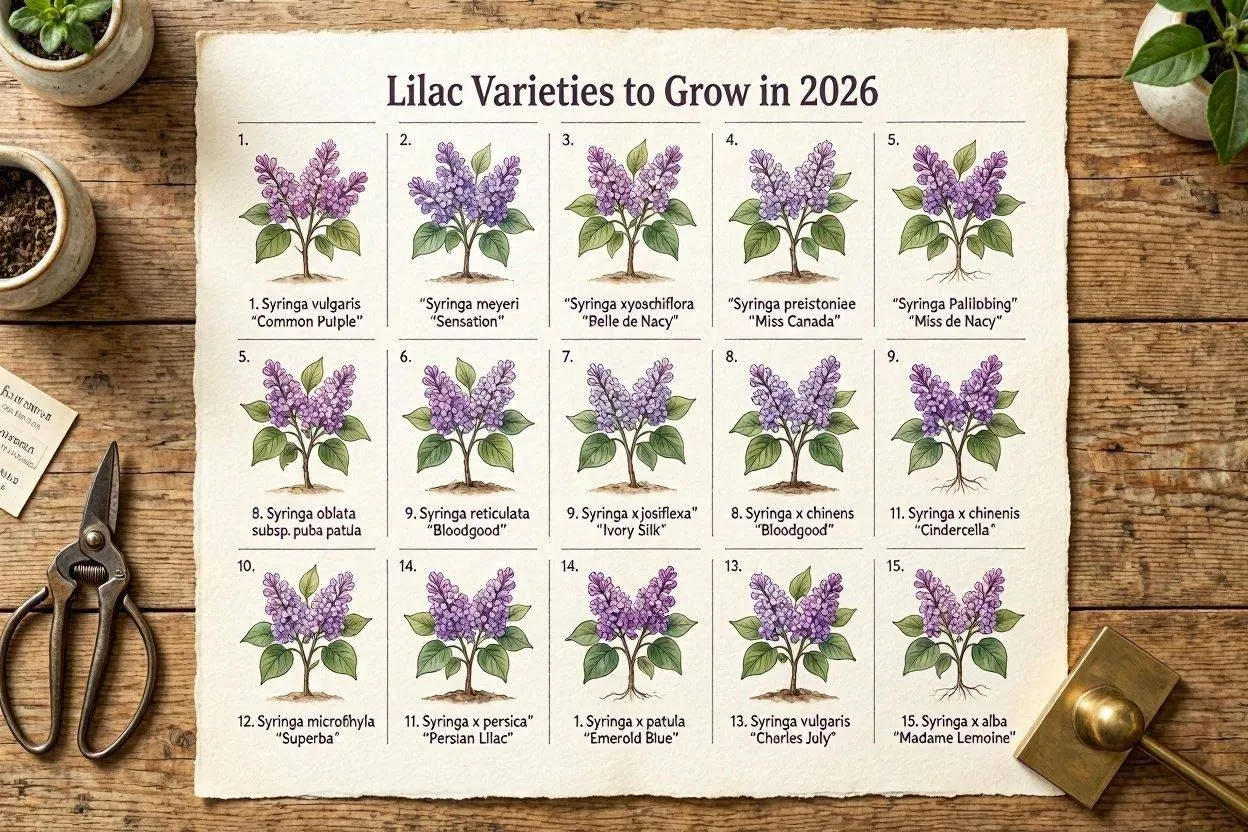
Lilac varieties fall into 4 main groups: common shrubs (Syringa vulgaris), dwarf and compact shrubs, reblooming types, and Japanese tree lilacs (Syringa reticulata). The right group depends on your garden size, USDA zone, and whether you want fragrance, extended bloom time, or low-maintenance growth.
The genus Syringa contains more than 25 species and thousands of cultivars. This guide cuts through the noise. You get 15 named varieties organized by type, a quick-reference care table, exact size and zone data in both imperial and metric, and a clear answer to which variety fits your specific landscape.
What Are the Main Lilac Variety Groups?

Lilac varieties group into 4 categories by size and bloom behavior. Each category serves a different landscape role.
- Common shrubs (Syringa vulgaris): grow 8–15 feet (2.4–4.6 m) tall and include the French hybrid cultivars bred by the Lemoine nursery in France starting in the 1870s.
- Dwarf and compact shrubs: stay under 6 feet (1.8 m). Varieties like Palibin and Baby Kim suit container planting, borders, and small urban gardens.
- Reblooming types: flower in spring and again in late summer or fall. The Bloomerang series, bred by Proven Winners, is the most widely available rebloomer in US nurseries.
- Japanese tree lilacs (Syringa reticulata): grow 20–30 feet (6–9 m) and bloom 3–4 weeks after common shrub types, extending the lilac season into early summer.
Lilac Varieties Quick-Reference Table
The table below lists 10 named lilac varieties with type, mature size, bloom time, USDA zone, and care difficulty. Use the Difficulty column to match your maintenance expectations before you plant.
| Variety | Type | Mature Size | Bloom Time | USDA Zone | Difficulty |
| ‘Sensation’ | Common shrub | 8–10 ft (2.4–3 m) | Mid-spring | Zones 3–7 | Easy |
| ‘Charles Joly’ | French hybrid | 10–12 ft (3–3.7 m) | Mid-spring | Zones 3–7 | Easy |
| ‘Beauty of Moscow’ | French hybrid | 10–12 ft (3–3.7 m) | Mid-spring | Zones 3–7 | Moderate |
| Miss Kim | Korean shrub | 4–5 ft (1.2–1.5 m) | Late spring | Zones 3–8 | Easy |
| Palibin | Dwarf Korean | 4–5 ft (1.2–1.5 m) | Mid–late spring | Zones 3–7 | Easy |
| Baby Kim | Dwarf compact | 2–3 ft (0.6–0.9 m) | Late spring | Zones 3–8 | Easy |
| Bloomerang Purple | Reblooming | 4–6 ft (1.2–1.8 m) | Spring + summer | Zones 3–7 | Easy |
| ‘Ivory Silk’ | Japanese tree | 20–25 ft (6–7.6 m) | Early summer | Zones 3–7 | Easy |
| ‘Tinkerbelle’ | Compact tree | 8 ft (2.4 m) | Late spring | Zones 3–7 | Easy |
| ‘Lavender Lady’ | Low-chill shrub | 10–12 ft (3–3.7 m) | Mid-spring | Zones 6–9 | Moderate |
Top Lilac Varieties by Type: Named Cultivars and What Sets Them Apart
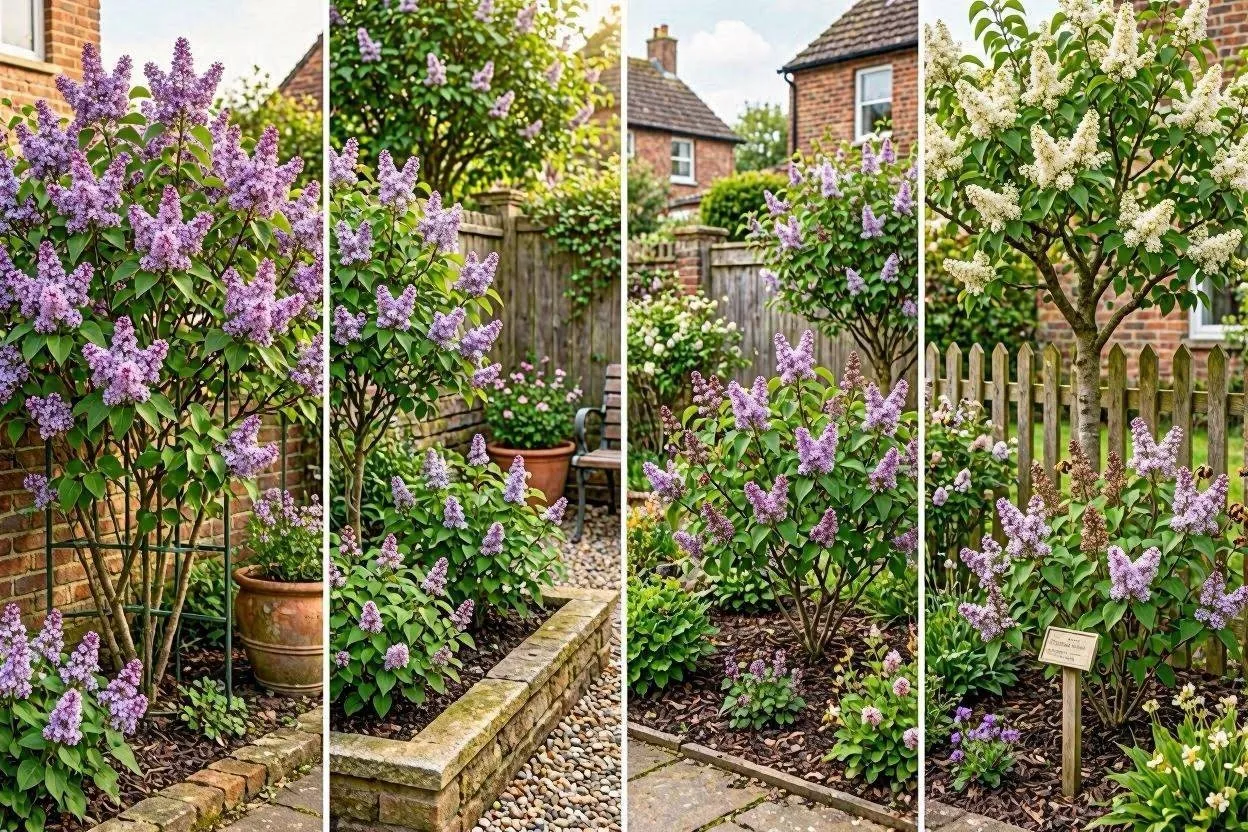
Common Shrub Lilac Varieties (Syringa vulgaris)
To grow common shrub lilacs, plant them in full sun with at least 6 hours of direct light daily and well-draining soil at a pH of 6.0–7.0. These varieties produce the classic large flower panicles associated with the word ‘lilac.’ Most grow reliably in USDA Zones 3–7.
‘Sensation’ (Syringa vulgaris ‘Sensation’)
‘Sensation’ produces single purple florets edged in white — the only bi-color common lilac widely available in US nurseries. Mature height reaches 8–10 feet (2.4–3 m) with an equal spread. Bloom time is mid-spring. Hardy in Zones 3–7.
‘Charles Joly’ (Syringa vulgaris ‘Charles Joly’)
‘Charles Joly’ is a French hybrid from the Lemoine nursery. It produces double dark purple-red flower panicles up to 10 inches (25 cm) long and is one of the most fragrant cultivars available. Mature height: 10–12 feet (3–3.7 m). Hardy in Zones 3–7.
‘Beauty of Moscow’ (Syringa vulgaris ‘Krasavitsa Moskvy’)
‘Beauty of Moscow’ is a Russian hybrid that opens pink buds into fully double white flowers — one of the most visually dramatic common lilacs. Plants grow 10–12 feet (3–3.7 m) tall and 8 feet (2.4 m) wide. Hardy in Zones 3–7.
Dwarf and Compact Lilac Varieties
To grow dwarf lilac varieties, choose a location with good air circulation to reduce powdery mildew — a fungal disease that affects compact types more than open-grown shrubs. Most dwarf varieties stay under 6 feet (1.8 m) and tolerate container planting.
Miss Kim (Syringa pubescens subsp. patula ‘Miss Kim’)
Miss Kim grows 4–5 feet (1.2–1.5 m) tall and wide with icy lavender flower clusters that open slightly later than common lilacs, extending the bloom season by 1–2 weeks. Foliage turns burgundy-red in fall — a trait most lilac shrubs lack. Hardy in Zones 3–8.
Palibin (Syringa meyeri ‘Palibin’)
Palibin (Dwarf Korean Lilac) is the smallest true shrub form, reaching 4–5 feet (1.2–1.5 m) tall and slightly wider than tall. Flower panicles are smaller than common lilac types but appear in dense clusters over the entire shrub. Palibin grows well in containers. Hardy in Zones 3–7.
Baby Kim (Syringa ‘Baby Kim’)
Baby Kim is the smallest lilac available, reaching only 2–3 feet (0.6–0.9 m) tall and 3 feet (0.9 m) wide. It produces non-fading purple flowers with shiny green foliage and extended hardiness from Zones 3–8. Baby Kim suits containers on balconies and small patios where larger shrubs would overwhelm the space.
Reblooming Lilac Varieties
To get repeat blooms from reblooming lilac varieties, deadhead spent spring flower clusters promptly. Deadheading prevents seed set and redirects plant energy into producing a second flush of flowers in late summer. Without deadheading, the summer and fall rebloom is weak.
Bloomerang Purple (Syringa ‘Penda’)
Bloomerang Purple flowers in spring, then reblooms continuously from July through frost — the longest bloom window of any lilac variety in this guide. It grows 4–6 feet (1.2–1.8 m) tall and wide. Hardy in Zones 3–7. Bloomerang is the most-planted reblooming lilac in North America. It also shows spring-blooming shrub characteristics that pair well with hydrangeas for multi-season interest.
Flowerfesta Purple (Syringa meyeri ‘SMNSMLPRP’)
Flowerfesta Purple stays under 50 inches (127 cm) tall, making it one of the most compact reblooming lilacs available. It produces larger flower panicles than other meyeri varieties and has a sweet fragrance. Hardy to Zone 5a.
Japanese Tree Lilac Varieties (Syringa reticulata)
To grow Japanese tree lilacs, give them full sun and at least 20 feet (6 m) of horizontal clearance at planting. These varieties grow into single- or multi-trunk trees. They bloom 3–4 weeks after common shrub types, bridging the gap between late spring and early summer.
‘Ivory Silk’ (Syringa reticulata ‘Ivory Silk’)
‘Ivory Silk’ is the most compact Japanese tree lilac, growing 20–25 feet (6–7.6 m) tall and 15 feet (4.6 m) wide with a densely branched, upright canopy. Creamy white flower panicles reach 12 inches (30 cm) long and attract pollinators in early summer. Reddish bark and white trunk speckles provide winter interest. Hardy in Zones 3–7.
‘Tinkerbelle’ (Syringa x ‘Bailbelle’)
‘Tinkerbelle’ is a compact tree-form lilac that grows 8 feet (2.4 m) tall and 4–5 feet (1.2–1.5 m) wide — significantly smaller than standard Japanese tree lilacs. Wine-red flower buds open to pink blooms with a spicy fragrance. Hardy in Zones 3–7.
Which Lilac Varieties Grow Best by USDA Hardiness Zone?
Matching lilac varieties to your USDA zone prevents bloom failure caused by insufficient winter chill. Most Syringa vulgaris cultivars require 6–8 weeks of temperatures below 40°F (4.4°C) to set flower buds. In warmer zones, only low-chill varieties produce reliable flowers.
Zones 3–5 (coldest climates): All common shrub types, French hybrids, Miss Kim, Baby Kim, and ‘Ivory Silk’ tree lilacs thrive. Preston lilacs — a hybrid group including ‘Miss Canada’ and ‘Donald Wyman’ — breed specifically for Zone 2 hardiness.
Zones 6–7 (mid-range climates): All varieties above plus Bloomerang types. This is the ideal range for lilacs. Powdery mildew risk increases — choose mildew-resistant cultivars like ‘New Age Lavender’ (Syringa vulgaris ‘New Age Lavender’) and Miss Kim in these zones.
Zones 8–9 (mild-winter climates): Restrict planting to low-chill varieties bred for warm winters. ‘Lavender Lady’, ‘Blue Skies’, and ‘Angel White’ are the 3 cultivars most reliably bred for Zone 8. Expect reduced fragrance intensity in these zones — chill deficiency affects oil development in the flowers.
Check your zone using the USDA Plant Hardiness Zone Map before purchasing a shrub. Proper winter preparation also helps — following a winterize your garden protocol in fall protects shallow roots in Zone 5 and colder.
How to Choose a Lilac Variety for a Small Garden
To choose a lilac variety for a small garden, filter first by mature height, then by bloom time, then by zone. You need a variety that fits its permanent space without annual pruning to control size — frequent cutting removes next year’s flower buds.
Best Lilac Varieties for Containers and Patios
Baby Kim (2–3 ft / 0.6–0.9 m) and Palibin (4–5 ft / 1.2–1.5 m) are the only true container-suitable lilac varieties. Both tolerate the restricted root space of a 15–20 gallon (57–76 liter) container when watered consistently. Plant containers in full sun and water when the top 2 inches (5 cm) of soil dry out. Move containers into an unheated garage or shed in Zone 5 winters — container roots experience temperatures 10–15°F (5–8°C) colder than in-ground roots.
Best Lilac Varieties for Hedges and Screens
‘Sensation’, ‘Charles Joly’, and ‘Beauty of Moscow’ all grow dense enough for informal hedges when planted 6 feet (1.8 m) apart. For a formal privacy screen, choose Syringa vulgaris cultivars in the 10–15 foot (3–4.6 m) height range and plant them 5 feet (1.5 m) apart. A screen of 5 plants creates a 25 foot (7.6 m) barrier within 4–5 years. Proper shrub pruning timing — always immediately after flowering ends — protects next year’s buds on all hedge lilacs.
How to Plant Lilac Varieties Correctly

To plant lilac varieties correctly, follow these 6 steps in order to avoid the 2 most common failure points: planting too deep and planting in shade.
- Choose a site with full sun — minimum 6 hours daily, 7+ hours preferred.
- Test soil pH. Lilacs perform best at pH 6.5–7.0. Amend with garden lime to raise pH below 6.0.
- Dig a hole twice as wide as the root ball and the same depth. Do not plant deeper than the nursery container soil line.
- Position the plant so the crown sits level with or 1 inch (2.5 cm) above surrounding soil grade.
- Backfill with the same soil removed — no amendments needed in the planting hole.
- Water deeply at planting, then once per week for the first 8 weeks. Reduce to once every 2 weeks after root establishment.
Lilac Varieties and Powdery Mildew: Which Types Are Most Resistant?
Powdery mildew (caused by the fungus Microsphaera syringae) coats lilac leaves with a white powdery film in late summer. The disease is cosmetic in mild cases but reduces photosynthesis and weakens shrubs when severe. Resistance varies significantly by variety.
High mildew resistance: Miss Kim, Palibin, Baby Kim, ‘New Age Lavender’, ‘New Age White’. All are meyeri or compact pubescens types with better air circulation through their dense growth.
Moderate mildew resistance: ‘Bloomerang Purple’, ‘Tinkerbelle’, ‘Ivory Silk’. These types develop some mildew in hot, humid summers but recover without treatment.
Lower mildew resistance: ‘Charles Joly’, ‘Beauty of Moscow’, ‘Sensation’ and other large Syringa vulgaris French hybrids. These produce the strongest fragrance and largest flower panicles but need annual airflow management — avoid planting closer than 8 feet (2.4 m) apart and never plant against a wall with restricted air movement.
Apply a sulfur-based fungicide at the first sign of white coating, before the fungus sporulates. Remove and bag — do not compost — any heavily infected foliage in fall.
Frequently Asked Questions: Lilac Varieties
Do lilac varieties rebloom more than once?
Yes. Reblooming lilac varieties, including Bloomerang Purple and Flowerfesta Purple, flower in spring and again from July through first frost. Standard Syringa vulgaris cultivars bloom once per year in spring and do not rebloom.
What is the longest-blooming lilac variety?
Bloomerang Purple provides the longest total bloom window — spring flowering plus continuous late summer and fall rebloom from July until frost. The spring bloom lasts 2–3 weeks. The rebloom extends 6–10 additional weeks depending on fall frost date in your zone.
Which lilac variety has the strongest fragrance?
French hybrid Syringa vulgaris cultivars produce the strongest fragrance. ‘Charles Joly’ and ‘Beauty of Moscow’ consistently rank at the top of fragrance evaluations. Japanese tree lilacs (Syringa reticulata) like ‘Ivory Silk’ have a lighter, less sweet scent.
Can you grow lilac varieties in Zone 8 or Zone 9?
Yes, with the right cultivar. Low-chill varieties bred for warm winters — ‘Lavender Lady’, ‘Blue Skies’, and ‘Angel White’ — grow in Zone 8. No standard Syringa vulgaris cultivar reliably blooms in Zone 9 due to insufficient winter chill hours.
How far apart should lilac varieties be planted?
Space standard shrub lilacs 8–10 feet (2.4–3 m) apart to allow mature canopy spread and airflow. Dwarf varieties like Palibin and Miss Kim need 4–5 feet (1.2–1.5 m) of spacing. Japanese tree lilacs need 15–20 feet (4.6–6 m) of clearance in all directions.
Final Selection Guide for Lilac Varieties
The right lilac variety starts with 3 fixed facts about your garden: your USDA zone, your available planting space, and your maintenance preference. Confirm your zone first. Then match the variety to your space: Baby Kim and Palibin for containers and tight borders, Miss Kim and ‘Sensation’ for foundation plantings and hedges, ‘Ivory Silk’ for open lawn specimens, and Bloomerang Purple if extended bloom matters more than maximum fragrance.
All of these varieties grow in full sun with well-draining soil. None require specialty fertilizers. All perform best when pruned immediately after their spring bloom — never in fall, which removes flower buds already set for next year.