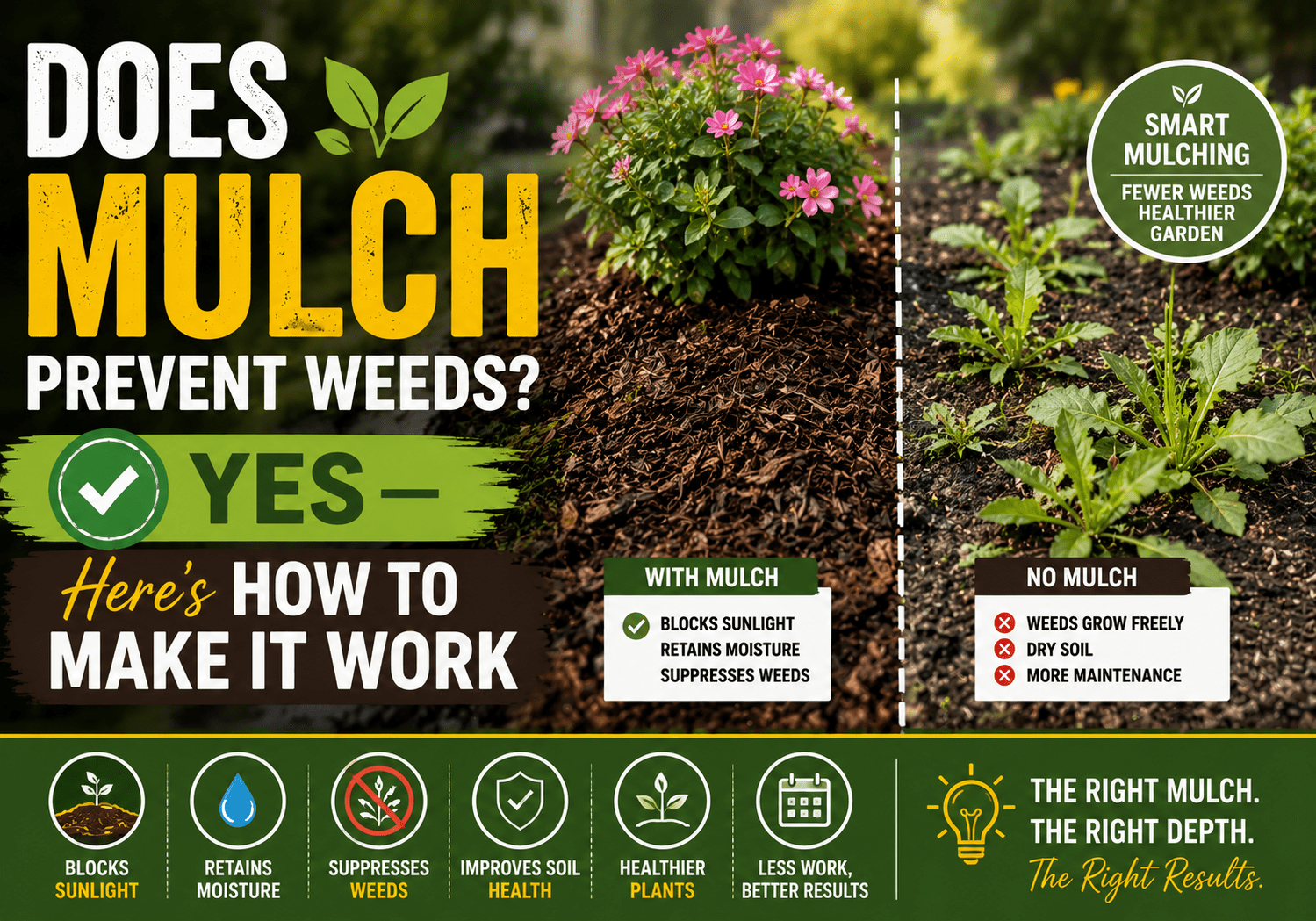
Yes, mulch prevents weeds — up to 90% of weed seeds fail to germinate under a proper mulch layer, according to Iowa State Extension research. A 3-inch (7.6 cm) layer of shredded hardwood or bark mulch blocks the sunlight weed seeds need to sprout and physically stops seedlings from pushing through. Mulch does not eliminate weeds completely — perennial weeds with deep root systems push through regardless of depth — but it dramatically cuts the time you spend pulling weeds each season.
| Mulch Depth | Weed Suppression Rate | Best For |
| Under 2 inches (5 cm) | 30–50% | Temporary top-up only |
| 2–3 inches (5–7.6 cm) | 75–85% | Annual flower beds, vegetable gardens |
| 3–4 inches (7.6–10 cm) | 90–98% | Ornamental beds, shrub borders |
| Over 4 inches (10+ cm) | High but risks root suffocation | Not recommended for planted beds |
Sources: University of Vermont Extension, Iowa State Extension, UC IPM Weed Management Guidelines
How Mulch Prevents Weeds: 3 Mechanisms
Mulch works through 3 separate mechanisms — light exclusion, physical obstruction, and microclimate disruption. Understanding all 3 explains why depth and mulch type matter so much.
1. Light Exclusion
Most weed seeds require red-light exposure at 600–700 nm wavelength to trigger germination. A dense mulch layer absorbs and scatters this light, reducing photosynthetically active radiation (PAR) at the soil surface by 85–95%. Without sufficient light, weed seeds stay dormant or exhaust their energy reserves and die.
This mechanism works only while the mulch layer stays thick. Once organic mulch compresses and thins to under 2 inches (5 cm), enough light reaches the soil to restart germination.
2. Physical Obstruction
Emerging weed seedlings lack the structural strength to push through even modest mulch depths. Research from the University of Vermont Extension shows 2 inches of shredded hardwood bark reduces seedling emergence by 92% versus bare soil. At 3 inches, suppression exceeds 98% for light-germinating annual weed species including lambsquarters, chickweed, and purslane.
This is why mulch particle size matters. Fine triple-shredded mulch interlock tightly, leaving almost no gaps for seedling emergence. Coarse single-shredded or bark nugget mulch leaves larger air gaps — seedlings navigate through more easily, especially at shallow depths.
3. Microclimate Disruption
Mulch moderates soil temperature and holds moisture, creating stable conditions your plants prefer — but disrupting the warm, dry, disturbed soil that opportunistic weeds need. Annual weeds like crabgrass, pigweed, and lambsquarters germinate best in hot, bare, sun-exposed soil. A mulched bed denies them all 3 conditions simultaneously.
Best Mulch for Weed Prevention: Type-by-Type Comparison
Not all mulches suppress weeds equally. The 3 factors that determine weed control effectiveness are particle density (how tightly pieces interlock), decomposition rate (how fast the barrier thins), and whether the mulch is organic or inorganic.
| Mulch Type | Weed Suppression | Decomposes | Notes |
| Triple-shredded hardwood | Excellent (95–98%) | 1–2 years | Densest barrier; best for weed-heavy beds |
| Double-shredded hardwood | Very Good (90–95%) | 1–2 years | Good coverage, natural texture |
| Shredded bark (cedar/cypress) | Very Good (88–94%) | 2–3 years | Natural oils add minor insect deterrence |
| Pine bark nuggets | Good (75–85%) | 2–3 years | Gaps between nuggets reduce light block |
| Pine straw | Good (70–80%) | 1–2 years | Best on slopes; seeds blow off less than chips |
| Straw (not hay) | Good (70–80%) | 6–12 months | Seed-free; ideal for vegetable beds |
| Compost (screened) | Moderate (50–60%) | 3–6 months | Enriches soil but thins fast; layer on top only |
| Rubber mulch | Excellent (90–95%) | None (10–15 yrs) | No soil benefit; best for paths and playgrounds |
| Gravel / river rock | Good with fabric (85–90%) | Permanent | Fabric required underneath; reflects heat |
| Landscape fabric alone | Very Good (85–90%) | 3–5 years | Degrades under UV; impedes soil gas exchange |
| Hay | Poor — introduces weeds | 6–12 months | Contains viable weed and grass seeds. Avoid. |
Organic vs Inorganic Mulch for Weed Control
Organic mulch (wood chips, bark, straw, pine needles) delivers strong weed suppression plus long-term soil improvement. As organic mulch breaks down, it feeds soil biology, improves drainage, and adds organic matter — creating healthier growing conditions that make your plants more competitive against weeds over time.
Inorganic mulch (rubber, gravel, landscape fabric) creates stronger initial barriers and lasts longer without replacement. Rubber mulch provides 10–15 years of weed control without thinning. Gravel lasts permanently. Neither improves soil — both are better suited to permanent hardscape beds, paths, or play areas than planted garden beds.
For a full comparison of organic and inorganic options suited to your planting zone, see our guide on organic vs inorganic mulch for home gardens.
How Deep Should Mulch Be to Stop Weeds?
3 inches (7.6 cm) is the correct depth for weed suppression in most garden beds. This depth blocks 90–98% of annual weed germination without risking root suffocation.
| Mulch Type | Recommended Depth | Why |
| Fine-textured (triple-shred, compost) | 2 inches (5 cm) | Packs tightly — deeper risks waterlogging |
| Standard shredded hardwood/bark | 3 inches (7.6 cm) | Best balance of suppression and aeration |
| Coarse bark nuggets / wood chips | 4 inches (10 cm) | Larger gaps need more depth to block light fully |
| Pine straw | 3–4 inches (7.6–10 cm) | Fluffy texture compresses — apply thicker |
| Rubber mulch (playgrounds) | 3–6 inches (7.6–15 cm) | Deeper required for fall height protection |
| Gravel (with landscape fabric) | 2–3 inches (5–7.6 cm) | Fabric does primary weed work; gravel is cover |
Keep mulch 6 inches (15 cm) away from plant stems and tree trunks. Mulch piled against stems traps moisture and causes crown rot. Around trees, maintain a donut-shaped ring — mulch up to the drip line but keep the root flare fully exposed.
Why Weeds Still Grow Through Mulch
4 reasons weeds appear in mulched beds — and mulch is only at fault in 1 of them:
1. Perennial Weeds With Deep Root Systems
Bindweed, nutsedge, dandelion, and creeping thistle grow from established rhizomes and taproots below the mulch layer. No mulch depth stops them — roots simply push upward through any barrier. The only effective solution is physical removal before mulching. Pull or dig the entire root system, not just the top growth.
Nutsedge is particularly aggressive — it produces underground tubers (nutlets) that survive for years and regenerate even when tops are removed. Hand removal combined with spot treatment is the only reliable control.
2. Wind-Blown and Bird-Deposited Seeds
Weed seeds land on top of mulch from wind, birds, and foot traffic — completely bypassing the light-blocking barrier. These seeds germinate in the thin organic layer that forms on top of decomposing mulch. Raking mulch in early spring disrupts this surface layer and removes newly germinated seedlings before they establish.
3. Mulch Applied Too Thin
Weed suppression drops by 40–50% when mulch depth falls below 2 inches (5 cm), according to mulching research. This is the most common and fixable reason weeds appear in mulched beds. Measure your current depth — if bare soil shows through the mulch, replenish immediately.
Mulch compresses and decompresses with moisture cycles, and organic materials thin as they decompose. A bed mulched at 3 inches in spring may measure 1.5 inches by midsummer in hot climates. Top-off applications mid-season maintain the weed barrier.
4. Mulch Containing Weed Seeds
Hay, uncomposted grass clippings, and low-quality bulk mulch sometimes contain viable weed or grass seeds. Hay always contains seed — never use it as mulch. Straw (seed-free stalk residue) is a safe substitute. Always inspect bales for green sprouts before use.
Low-quality dyed bulk mulch occasionally contains debris from contaminated wood sources. Buy from suppliers who can confirm their mulch is heat-treated or aged — high-temperature composting kills most weed seeds.
How to Apply Mulch to Prevent Weeds: Step-by-Step
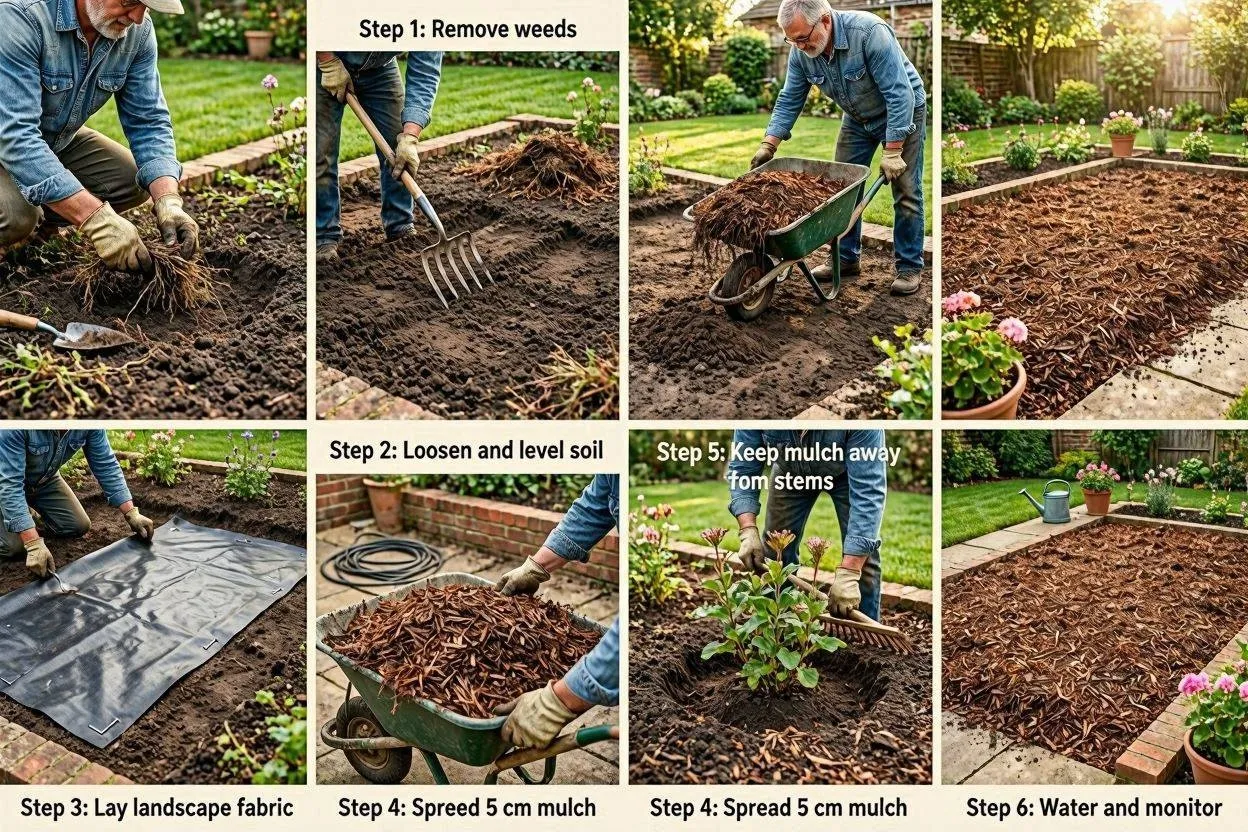
Proper installation determines whether mulch works or wastes your money. These 6 steps give you maximum weed suppression from the first season:
- Remove all existing weeds first. Pull annuals at the root. Dig perennial weeds — bindweed, dandelion, thistle — completely out including root systems. Mulching over established perennial weeds does not kill them.
- Clear dead plant material and debris. Remove fallen leaves, dead stems, and decomposed mulch that has turned into soil — this thin layer feeds weed seeds that land on the surface.
- Wet the soil lightly before mulching. Moist soil gives plants a moisture reserve as mulch goes on and helps the mulch layer settle evenly without creating dry air pockets.
- Optionally add cardboard or newspaper (sheet mulching). A single layer of plain cardboard or 4–6 sheets of newspaper laid directly on bare soil creates an additional light-blocking barrier that breaks down over 3–6 months. Wet it thoroughly before adding mulch on top. This method is particularly effective for beds converting from lawn or heavily weeded areas.
- Apply mulch at the correct depth for your type. Standard shredded bark: 3 inches (7.6 cm). Coarse nuggets: 4 inches (10 cm). Fine-textured: 2 inches (5 cm). Use a ruler or marked stick to check depth — guessing consistently underapplies.
- Keep mulch 6 inches (15 cm) away from plant stems. Work outward from the stem, not inward. Never mound mulch against trunks or crown areas of perennials.
Does Mulch Kill Existing Weeds?
No, mulch does not reliably kill established weeds. Mulch is a preventative tool, not a cure for active weed infestations. Here is what actually happens when you mulch over weeds:
| Weed Type | What Happens Under Mulch | Action Required |
| Annual weeds (chickweed, crabgrass, purslane) | Die within days without sunlight | Mulch suppresses effectively — pull first for best results |
| Biennial weeds (foxglove, mullein) | Weakened but may survive 2–4 weeks | Remove before mulching if visible |
| Perennial weeds — shallow (clover, creeping charlie) | Suppressed but regrow from roots | Dig out roots before mulching |
| Perennial weeds — deep (bindweed, nutsedge, dandelion) | Push through any mulch depth | Full root removal required — mulch alone fails |
| Weed seeds already in soil | Prevented from germinating by light block | Mulch handles this — no action needed |
For stubborn perennial weeds, use our zone-specific weed removal guide to identify weed species by USDA zone and choose the most effective removal method before mulching.
Sheet Mulching: The Most Effective Method for Weed-Heavy Beds
Sheet mulching combines cardboard or newspaper with organic mulch on top — creating the most effective weed barrier available without chemicals. University and extension studies consistently rate sheet mulching as the top non-chemical weed suppression method for home gardens.
How Sheet Mulching Works
Cardboard blocks light completely at the soil surface. As it decomposes over 3–6 months, it adds organic matter rather than leaving a gap like landscape fabric does. Earthworms are attracted to cardboard, accelerating soil improvement below the mulch.
Step-by-Step Sheet Mulching
- Mow or cut existing vegetation to ground level. Do not remove — leave stems in place.
- Lay overlapping cardboard sheets or 4–6 layers of plain newspaper (no glossy pages) directly on the soil. Overlap edges by 6 inches (15 cm) to eliminate light gaps at seams.
- Wet the cardboard thoroughly — dry cardboard repels water initially.
- Apply 3–4 inches (7.6–10 cm) of organic mulch on top. Shredded bark or wood chips work best over cardboard.
- Water the completed bed to help settle mulch and continue wetting the cardboard below.
Sheet mulching is the best approach for beds converting from lawn, heavily weeded areas, or new landscape installations where full weed removal is impractical. The method is 100% chemical-free and improves soil structure as materials decompose.
Landscape Fabric vs Mulch for Weed Control
Landscape fabric combined with mulch on top provides 85–95% weed suppression — but landscape fabric alone has significant long-term problems.
| Comparison | Landscape Fabric + Mulch | Mulch Alone |
| Initial weed suppression | 85–95% | 75–98% depending on depth |
| Soil improvement over time | None — fabric blocks organic matter transfer | Yes — organic mulch feeds soil as it decomposes |
| Lifespan | 3–5 years before UV degradation | Annual renewal required |
| Cost | Higher (fabric + mulch material) | Lower (mulch only) |
| Weed seeds on surface | Germinates in dust layer on top of fabric | Same — surface seeds still germinate |
| Best use case | Permanent inorganic beds (rock, gravel) | Planted beds with ongoing soil health goals |
| Worst use case | Vegetable gardens, annual flower beds | High foot-traffic paths |
Landscape fabric degrades under UV exposure — woven polypropylene becomes brittle in 3–5 years, tears at planting holes, and allows weed roots to grow through gaps and anchor into the fabric itself. Removing deteriorated landscape fabric is time-consuming and expensive.
Use landscape fabric only under inorganic mulches (gravel, river rock) in permanent beds where no replanting is planned. For any bed with plants, mulch alone or sheet mulching delivers better long-term results.
Does Mulch Prevent Weeds in Vegetable Gardens?
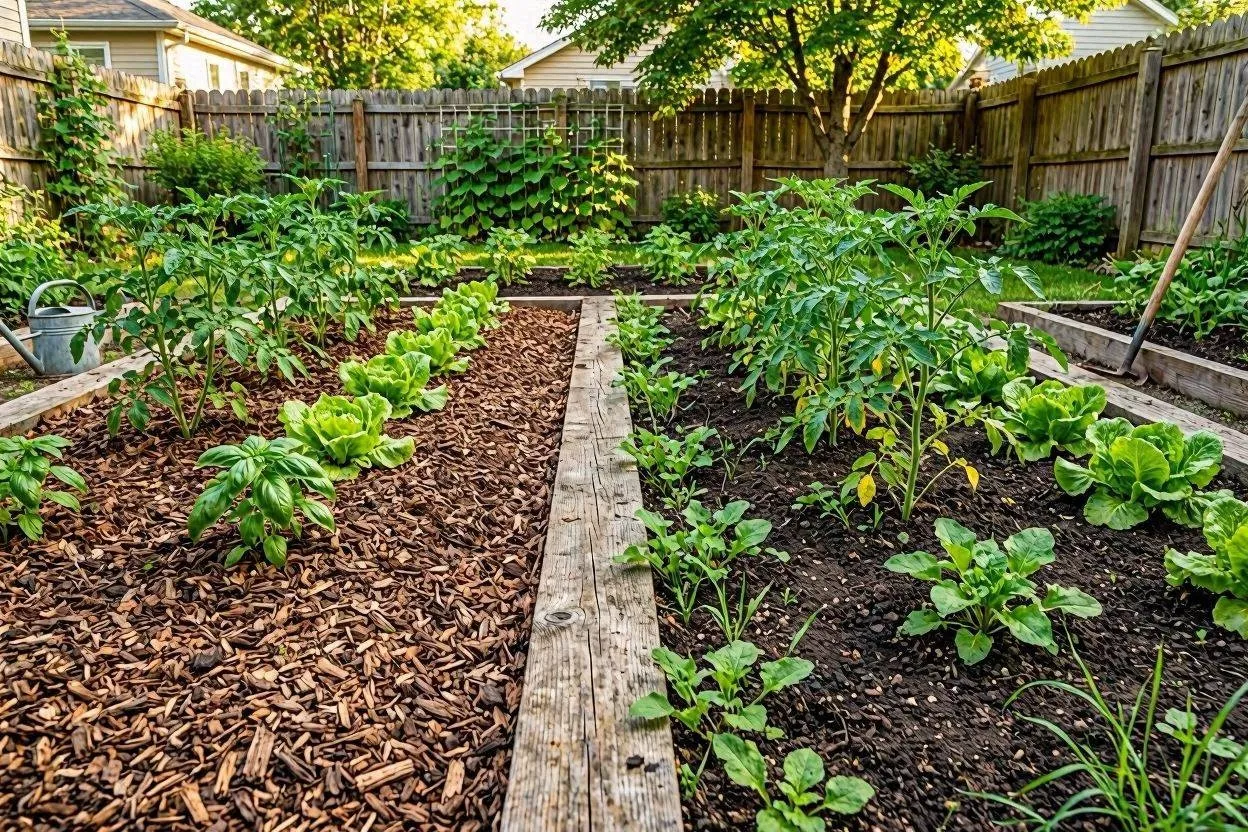
Yes, mulch is one of the best weed management tools for vegetable gardens — but the mulch type matters more here than in ornamental beds.
Best Mulch Types for Vegetable Garden Weed Control
- Straw (not hay): $20–$40 per bale, covers 35–45 sq ft at 3 inches. Seed-free, lightweight, and improves soil. The top choice for vegetable beds. Inspect bales for green sprouts before use — low-quality straw sometimes contains grain seeds.
- Shredded leaves: Excellent weed suppression at 3–4 inches. Slightly acidic — best for tomatoes, peppers, and squash. Shred leaves before applying to prevent matting.
- Grass clippings: Apply in thin 1-inch (2.5 cm) layers only — thick layers mat and block water. Let clippings dry briefly before applying. Do not use clippings from lawns treated with herbicides within 2 weeks.
- Wood chips (untreated): $0 from local tree services. Excellent weed suppression. Keep away from plant stems — wood chips against stems encourages disease in vegetable plants.
- Avoid: dyed mulch, rubber mulch, or any treated wood products near edible plants
For specific mulch recommendations by vegetable type and growing zone, see our best mulch for vegetable gardens guide on ZonedGarden.com.
When to Apply Mulch for Best Weed Control
Apply mulch in early spring before weed seeds germinate — this is the highest-impact timing for weed prevention. Applying after weeds have already emerged reduces effectiveness significantly.
| Timing | Weed Control Effectiveness | Notes |
| Early spring (before soil warms) | Best — stops seeds before germination | Ideal timing in all USDA zones |
| Late spring (after soil warms) | Good — suppresses summer annual weeds | Pull visible weeds first |
| Summer | Moderate — annual weeds already germinating | Top-off existing mulch if thinning |
| Fall | Good — prevents cool-season weed germination | Protects soil over winter; renew in spring |
| Winter | Low weed pressure — maintenance only | Good time to pre-book bulk delivery for spring |
Mulch application timing differs by 4–6 weeks across USDA hardiness zones. In Zone 4 (Minnesota, Wisconsin), spring mulching starts in May. In Zone 9 (California, Florida), February application catches winter weed cycles. Use our USDA hardiness zone guide to find your zone’s ideal mulching window.
When Mulch Alone Is Not Enough
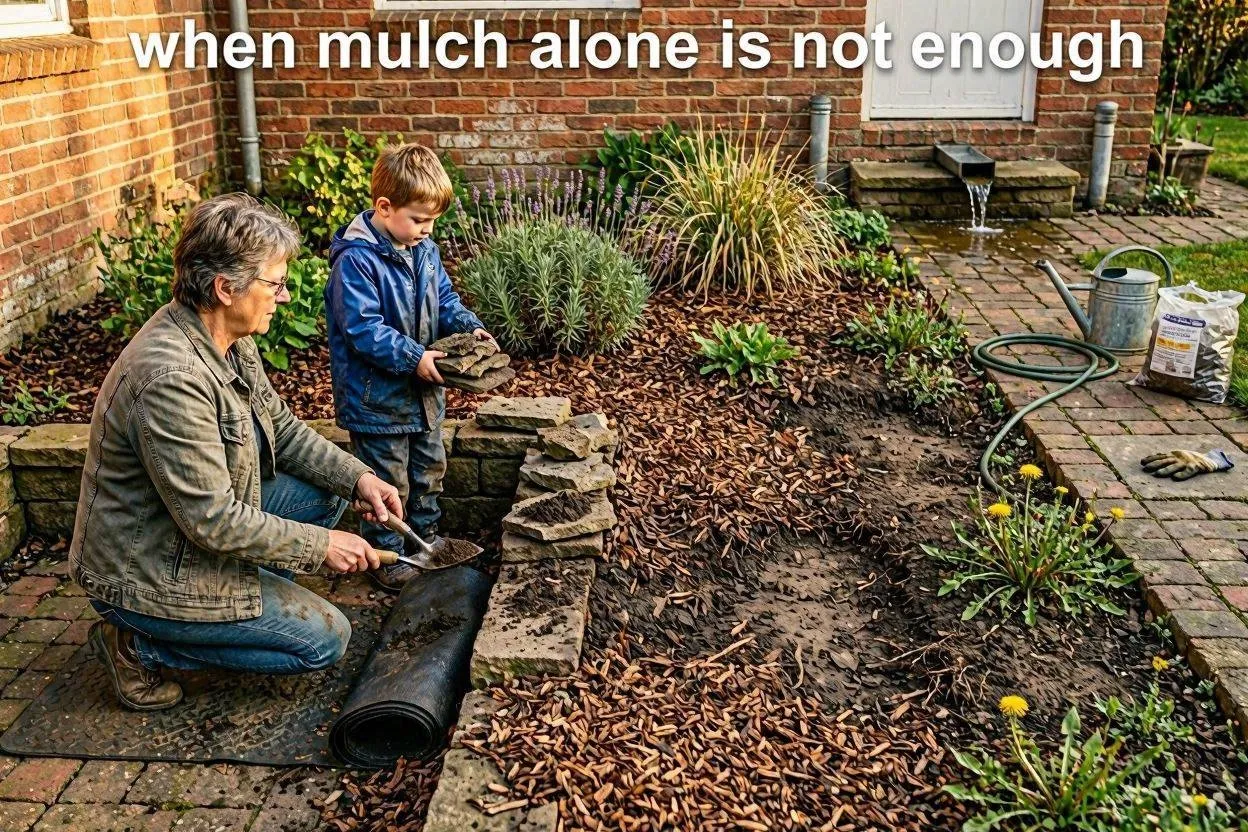
3 situations require additional weed control measures beyond mulch:
- Established perennial weed infestations: Bindweed, nutsedge, and thistle regrow from deep root systems. Physical removal before mulching is mandatory. Spot-treat remaining growth with targeted organic control (acetic acid-based herbicide or manual digging) after mulching.
- Heavily weeded new beds: Use sheet mulching with cardboard underneath to create a complete light block before adding the mulch layer. Cardboard smothers vegetation completely over 6–8 weeks while improving soil.
- High weed pressure in vegetable rows: Combine mulch between rows with a pre-emergent corn gluten meal application in early spring. Corn gluten meal prevents seed germination for 4–6 weeks and adds 10% nitrogen to the soil — 100% organic and safe around edibles.
Maintaining Mulch for Ongoing Weed Suppression
Replenish mulch once a year — twice in hot climates where organic materials break down fast. Check depth in midsummer: if you can see bare soil patches or depth has dropped below 2 inches (5 cm), top off immediately.
3 maintenance tasks that keep mulch working all season:
- Rake in early spring: Loosen compacted or matted mulch to restore aeration and disrupt surface weed seeds that germinated over winter.
- Hand-pull surface weeds while small: Weeds in mulched beds pull out cleanly — mulch keeps soil soft and loose. A small weed removed in 5 seconds becomes a 10-minute job once established.
- Top off to restore depth: Add enough mulch to bring total depth back to 3 inches. Calculate the gap: current depth subtracted from 3 inches gives the top-off depth needed. Use our Garden Area Calculator to get the exact cubic yards needed for your beds.
Understanding how much mulch costs helps you budget the annual top-off accurately — most beds need 0.5–1 cu yd per application to restore the weed barrier.
Frequently Asked Questions
Does mulch prevent weeds completely?
No, mulch does not prevent weeds completely. A 3-inch layer blocks 90–98% of annual weed seed germination. Perennial weeds with deep rhizomes push through regardless of depth. Windblown and bird-deposited seeds land on top of mulch and germinate in the surface layer. Mulch cuts total weed pressure dramatically — it does not eliminate it.
What is the best mulch to prevent weeds?
Triple-shredded hardwood is the most effective weed-suppressing mulch for ornamental beds at $35–$55 per cu yd. The fine, interlocking particles leave minimal light gaps. For vegetable gardens, straw at $20–$40 per bale is best — seed-free, improves soil, and safe around edibles.
How deep does mulch need to be to stop weeds?
3 inches (7.6 cm) stops 90–98% of annual weeds. Under 2 inches (5 cm), suppression drops to 30–50%. Coarse bark nuggets need 4 inches (10 cm) because larger pieces leave light gaps. Fine-textured mulches like triple-shred work well at 2–3 inches. Never exceed 4 inches in planted beds — deeper mulch can suffocate roots.
Will mulch kill weeds that are already growing?
Mulch kills annual weeds that are already growing by cutting off their sunlight. Annual weeds die within days under 3 inches of mulch. Perennial weeds with established root systems — bindweed, dandelion, nutsedge — survive and push through. Remove perennial weeds by the root before applying mulch.
Can weeds grow through mulch?
Yes — 3 types of weeds grow through mulch: perennial weeds growing from root systems below the mulch, wind-blown seeds that land on top of the mulch layer, and weeds that were present before mulching was applied. Proper bed prep before mulching eliminates the third category. Nothing stops the first two entirely.
Does rubber mulch prevent weeds better than wood mulch?
Rubber mulch provides similar weed suppression to triple-shredded wood at comparable depths — roughly 90–95% for annual weeds. Rubber mulch does not decompose, maintaining its depth for 10–15 years without replacement. Wood mulch decomposes and requires annual top-off. Rubber offers no soil improvement; wood mulch improves soil biology over time. Rubber is best for permanent non-planted areas; wood is better for garden beds.
Should I put landscape fabric under mulch?
No, not for planted garden beds. Landscape fabric under mulch impedes the organic matter transfer that improves soil over time, degrades under UV in 3–5 years, and becomes difficult to remove once weed roots grow through it. Use sheet mulching (cardboard) instead — it blocks weeds equally well, decomposes into organic matter, and costs nothing. Reserve landscape fabric for permanent inorganic beds with gravel or river rock.
Does mulch prevent weeds in raised beds?
Yes, mulch works particularly well in raised beds because the contained environment limits weed seed sources to wind and birds only — no underground root systems encroaching from surrounding soil. Straw, shredded leaves, or wood chips at 2–3 inches depth control 85–95% of weeds in raised beds. The closed environment also makes hand-pulling any remaining weeds faster and cleaner.
Conclusion: Making Mulch Work as a Weed Barrier
Mulch prevents up to 90% of annual weeds when applied at 3 inches deep on a properly prepared, weed-free bed. That is the honest answer — powerful, but not absolute.
The 2 conditions that determine whether mulch succeeds are bed preparation and depth maintenance. Remove all perennial weeds before applying mulch — their roots survive anything. Check depth mid-season and top off when it drops below 2 inches. Do these 2 things and mulch delivers its full weed-suppression potential.
For weed-heavy problem beds, sheet mulching with cardboard underneath provides the strongest non-chemical weed control method available. It is free, improves soil, and outperforms landscape fabric in every planted bed situation.
Mulch also conserves moisture, moderates soil temperature, and feeds soil biology as it breaks down — meaning weed control is one benefit among several. Over 3–5 years of consistent mulching, the weed seed bank in your soil depletes and beds become progressively easier to maintain.
Before your next mulch application, use the Garden Area Calculator on ZonedGarden.com to calculate exactly how much mulch your beds need — both for the right depth and to avoid the cost of ordering too much or running short mid-project.