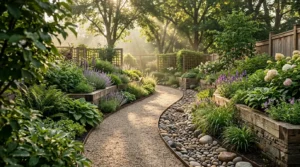
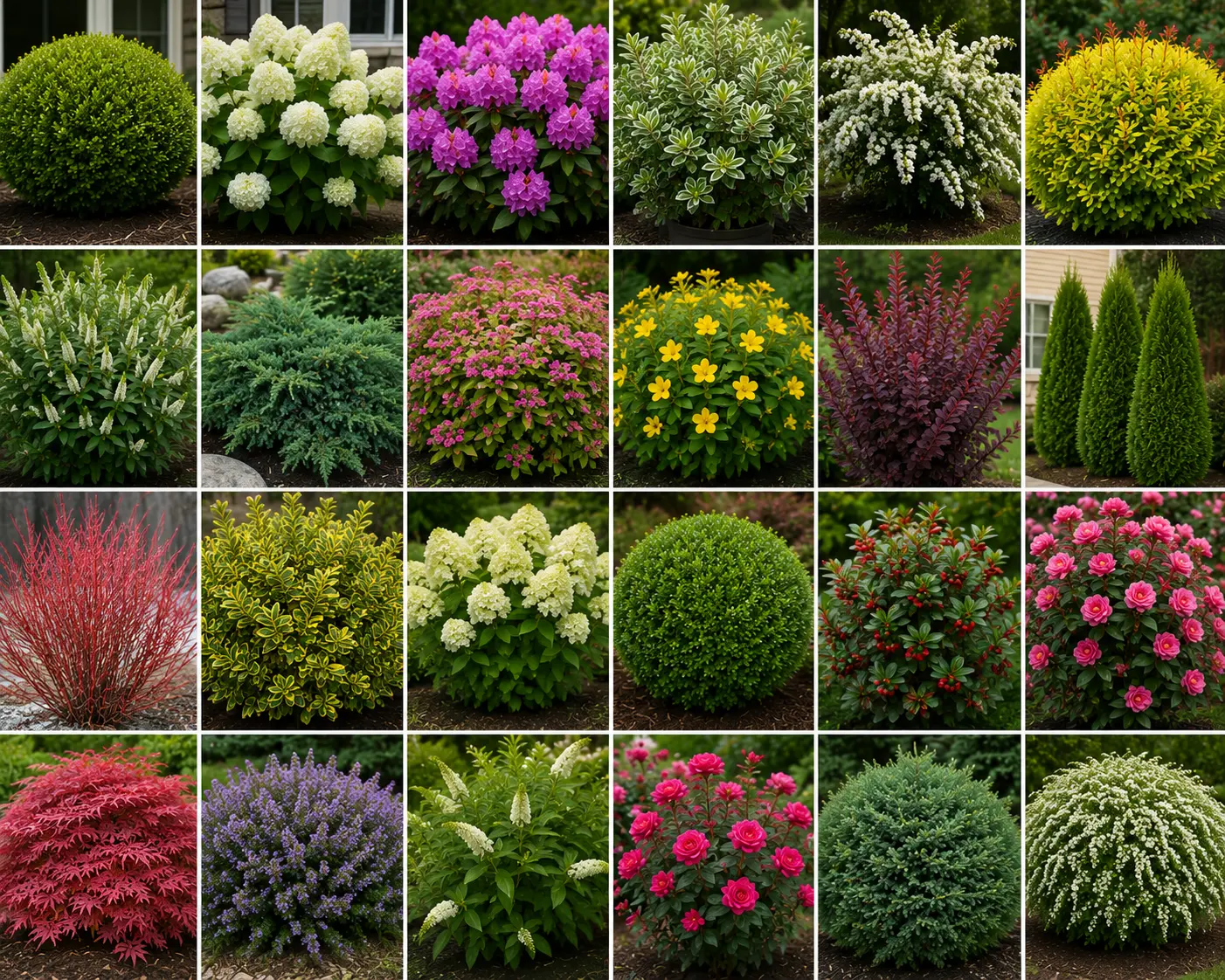
There are 5 main types of shrubs: evergreen, deciduous, flowering, fruiting, and dwarf. Each type serves a different purpose in the garden — from year-round privacy screens to seasonal color bursts. Pick the wrong type and you’ll spend years fighting a plant that doesn’t fit your space, zone, or goal.
This guide breaks down every shrub category with specific examples, size ranges, bloom times, and growing conditions. No filler — just what you need to choose and grow the right shrub.
What Is a Shrub?
A shrub is a woody perennial plant with multiple stems rising from or near the ground level, typically growing between 1 foot (30 cm) and 13 feet (4 m) tall. That size range sets shrubs apart from trees (single trunk, taller) and herbaceous perennials (soft stems that die back to the ground).
Shrubs live for years. They produce woody growth that persists through winter. Most require minimal care once established — one of the biggest advantages over annuals or tender perennials.
3 defining characteristics of shrubs:
- Multiple stems — at or near the base, not a single trunk
- Woody growth — stems don’t die back completely each winter
- Perennial — lives 3+ years, often decades
5 Main Types of Shrubs
Shrubs divide into 5 categories based on leaf behavior, bloom habit, and function:
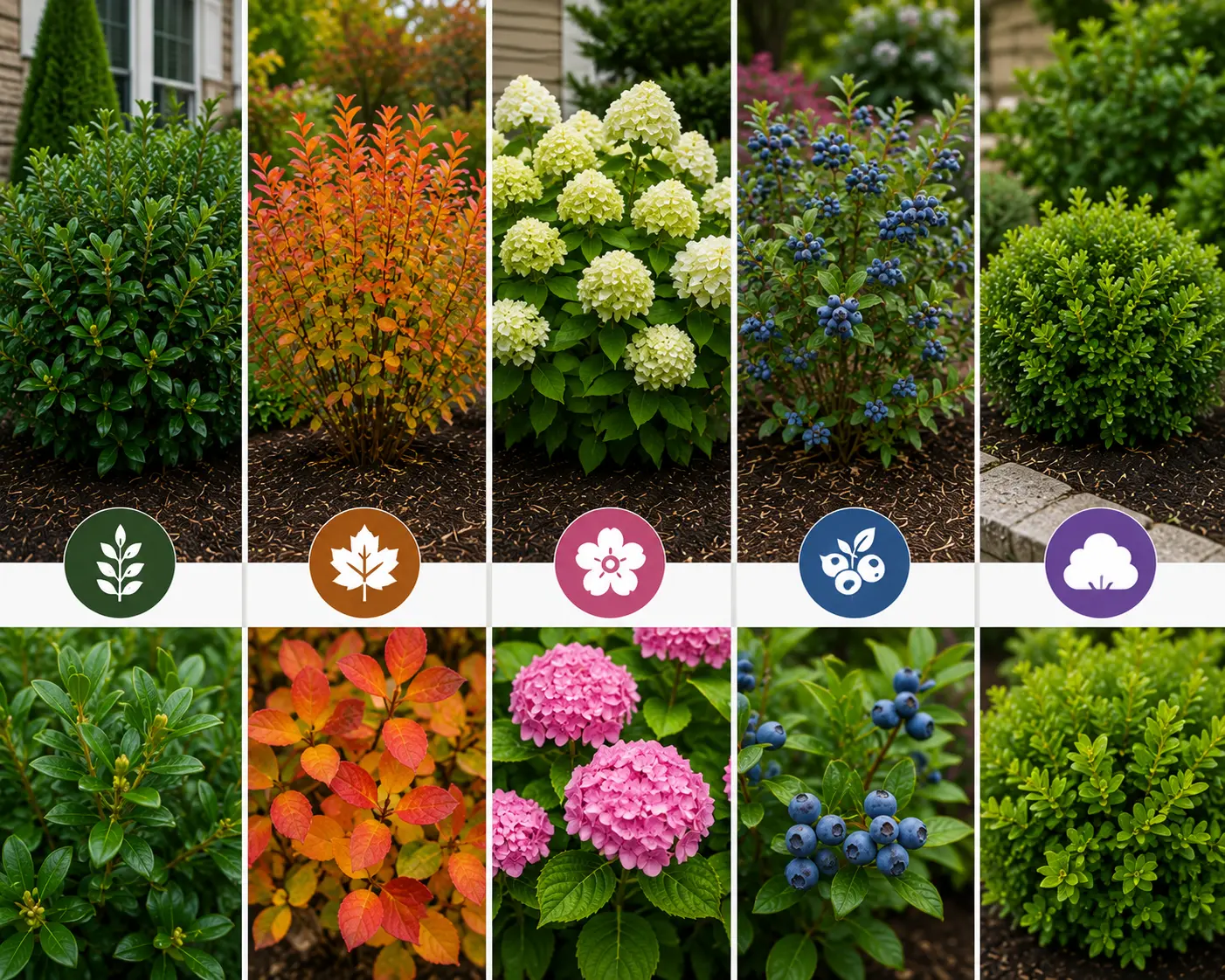
- Evergreen shrubs — keep leaves year-round
- Deciduous shrubs — drop leaves each fall
- Flowering shrubs — grown primarily for blooms
- Fruiting shrubs — produce edible or ornamental berries/fruits
- Dwarf/compact shrubs — smaller varieties for tight spaces
One shrub can belong to multiple categories. A hydrangea is deciduous AND flowering. A dwarf boxwood is evergreen AND compact. Use the categories as filters, not boxes.
1. Evergreen Shrubs
Evergreen shrubs retain their foliage 12 months a year, providing structure, privacy, and color even in January. They split into 2 sub-types: broadleaf evergreens (wide flat leaves) and needled evergreens (conifers with needles or scales).
Broadleaf Evergreen Shrubs
These hold wide, flat leaves year-round. Most thrive in zones 5–9. Popular examples:
- Boxwood (Buxus spp.) — 1–15 ft (0.3–4.5 m) tall. Dense, clippable into any shape. Zones 4–9. Full sun to part shade. The classic foundation and hedge shrub.
- Holly (Ilex spp.) — 3–15 ft (0.9–4.5 m). Red or yellow berries attract birds from October through winter. Most require male + female plants for fruit. Zones 3–9.
- Rhododendron — 2–8 ft (0.6–2.4 m). Massive spring bloom clusters in pink, purple, red, or white. Prefers acidic soil (pH 4.5–6.0), part shade. Zones 4–9.
- Azalea (evergreen type) — 2–6 ft (0.6–1.8 m). Smaller leaves, dense habit. Spring blooms. Excellent under tree canopy in zones 5–9.
- Mountain Laurel (Kalmia latifolia) — 7–15 ft (2.1–4.5 m). Native to eastern North America. Stunning late-spring flowers. Zones 4–9.
- Camellia — 6–12 ft (1.8–3.6 m). Glossy leaves, rose-like blooms from October through March. Zones 6–10.
Want a flowering broadleaf evergreen that blooms all season? Pair azaleas with bush peonies in your mixed border for spring-through-summer color.
Needled Evergreen Shrubs (Conifers)
These carry needles or scale-like leaves. Most are highly cold-hardy and low-maintenance.
- Juniper (Juniperus spp.) — ranges from ground-hugging 6-inch creepers to 12-ft upright columns. Extremely drought tolerant. Zones 3–9.
- Arborvitae (Thuja spp.) — 3–20 ft (0.9–6 m) depending on variety. Fast growing, columnar. Top privacy screen. Zones 3–8.
- Mugo Pine (Pinus mugo) — 3–5 ft (0.9–1.5 m). Slow growing, rounded. Excellent for rock gardens or low borders. Zones 2–8.
- Dwarf Alberta Spruce — 6–10 ft (1.8–3 m) at maturity, gaining only 2–4 inches (5–10 cm) per year. Perfect accent plant. Zones 3–8.
- False Cypress (Chamaecyparis spp.) — 3–30 ft depending on cultivar. Feathery texture, gold or blue foliage options. Zones 4–8.
2. Deciduous Shrubs
Deciduous shrubs drop all leaves in fall and regrow them in spring. The advantage: many deliver 3 seasons of interest — spring blooms, summer foliage, and fall color — before going dormant. Bare stems in winter can still add structure if chosen well.
8 top deciduous shrubs to know:
- Lilac (Syringa vulgaris) — 6–15 ft (1.8–4.5 m). Intensely fragrant purple, pink, or white flowers in May. Zones 3–7. Needs a cold winter to bloom.
- Forsythia — 6–10 ft (1.8–3 m). First shrub to bloom each spring, covered in bright yellow flowers before leaves emerge. Zones 4–9.
- Hydrangea — 3–10 ft (0.9–3 m). Multiple species: panicle types (Zones 3–8), bigleaf (Zones 5–9), smooth (Zones 3–9). Summer blooms last weeks.
- Viburnum — 3–15 ft. Fragrant spring flowers, strong fall color, winter berries. Deer resistant. Zones 2–8 depending on species.
- Ninebark (Physocarpus opulifolius) — 5–10 ft (1.5–3 m). Native North American shrub. Stunning burgundy or gold foliage. Extremely tough. Zones 2–8.
- Spirea — 2–5 ft (0.6–1.5 m). Cascading white or pink flowers. ‘Gold Flame’ variety adds orange-red spring foliage. Zones 3–9.
- Weigela — 6–9 ft (1.8–2.7 m). Trumpet-shaped red, pink, or white flowers attract hummingbirds. Reblooms lightly in summer. Zones 4–9.
- Rose of Sharon (Hibiscus syriacus) — 8–12 ft (2.4–3.6 m). Blooms July through September — long after other shrubs finish. Zones 5–9.
For long-season flower color, pair deciduous shrubs with chrysanthemums — mums take over right as shrubs begin winding down in late summer.
3. Flowering Shrubs
Flowering shrubs are chosen specifically for their blooms, though most also bring structure and foliage interest. They cover every season — from witch hazel in February to rose of Sharon in September.
Spring Flowering Shrubs
Spring bloomers set the tone for the entire growing season. 5 reliable picks:
- Forsythia — yellow flowers on bare branches in March–April
- Azalea — massive color in April–May, evergreen and deciduous varieties
- Lilac — fragrant clusters in May, zones 3–7
- Mock Orange (Philadelphus) — white, intensely fragrant flowers in late May–June
- Kerria japonica — bright yellow flowers, arching stems, tolerates heavy shade
Spring shrubs pair beautifully with tree peonies and bush peonies, which bloom in the same May–June window.
Summer Flowering Shrubs
- Hydrangea — June through August, long-lasting blooms, dries on the shrub for winter interest
- Butterfly Bush (Buddleia) — July–September. Attracts dozens of butterfly species. Cut hard in spring.
- Rose of Sharon — July–September. One of the last flowering shrubs of summer
- Crape Myrtle (Lagerstroemia) — June–September in zones 6–10. Full care guide here.
- Potentilla — all summer, yellow or orange flowers, extremely tough, zones 2–7
Fall and Winter Flowering Shrubs
- Encore Azalea — reblooms from August through frost in zones 6–10
- Camellia — October through March in zones 6–10. Flowers when almost nothing else blooms
- Witch Hazel (Hamamelis) — January–February. Fragrant yellow or red flowers appear on bare branches. Zones 3–8
- Mahonia — yellow flowers in winter, followed by blue berries in spring. Zones 5–9
4. Fruiting Shrubs
Fruiting shrubs produce edible or ornamental fruit, adding both harvest value and wildlife habitat. Many double as flowering shrubs, giving you blooms in spring and fruit from summer into winter.
Edible Fruiting Shrubs
- Blueberry (Vaccinium spp.) — 2–8 ft (0.6–2.4 m). Self-fertile or plant 2 varieties for bigger harvest. Needs acidic soil (pH 4.5–5.5). Zones 3–10 depending on variety.
- Raspberry — 4–6 ft (1.2–1.8 m). Summer or fall bearing. Spreads by suckers — contain with barriers. Zones 3–9.
- Currant (Ribes spp.) — 3–6 ft (0.9–1.8 m). Red, white, or black fruit. Tolerates shade better than most fruiting shrubs. Zones 3–8.
- Gooseberry — 3–5 ft (0.9–1.5 m). Tart fruit, extremely cold-hardy. Zones 3–6.
- Elderberry (Sambucus nigra) — 6–12 ft (1.8–3.6 m). Native North American species. Large clusters of dark purple berries. Zones 3–9.
Ornamental Fruiting Shrubs
- Holly (Ilex spp.) — Red or yellow berries persist through winter, feeding birds. Most are evergreen.
- Beautyberry (Callicarpa) — Electric purple berries cover stems in fall. One of the most striking fall displays. Zones 5–9.
- Viburnum — Red, orange, or black berries follow spring flowers. Strong wildlife value.
- Snowberry (Symphoricarpos) — White or pink berries. Native. Shade tolerant. Zones 3–7.
5. Dwarf and Compact Shrubs
Dwarf shrubs stay under 3 feet (90 cm) at maturity, making them ideal for borders, rock gardens, containers, and small front yards where full-size shrubs would overwhelm the space.
Dwarf doesn’t mean slow — many are simply genetic miniatures of full-size plants with the same flowering, fruiting, or foliage qualities.
Top Dwarf Evergreen Shrubs
- Dwarf Mugo Pine — 3–5 ft (0.9–1.5 m). Globe-shaped. Almost zero maintenance. Zones 2–8.
- Sprinter Boxwood — 3–4 ft. 3× faster growing than standard boxwood but stays compact. Zones 4–9.
- Dwarf Alberta Spruce — perfectly conical. Gains 2–4 inches (5–10 cm) per year. Zones 3–8.
- Compact Holly varieties — ‘Compact Japanese Holly’ stays 2–3 ft. Dense, dark green.
Top Dwarf Flowering Shrubs
- Bobo Panicle Hydrangea — 2.5–3 ft (75–90 cm). Full-size blooms on a compact frame. Zones 3–8.
- Tiny Wine Ninebark — 3–4 ft. Deep burgundy foliage, pink flowers. Zones 3–7.
- Pugster Blue Butterfly Bush — 2–3 ft. Sterile (non-invasive). Deep blue-purple spikes. Zones 5–9.
- Dwarf Korean Lilac (Syringa meyeri ‘Palibin’) — 4–5 ft. Fragrant pink-purple flowers. More compact than standard lilac. Zones 3–7.
- Little Princess Spirea — 2–3 ft. Rose-pink flowers all summer. Zones 3–8.
Choosing Shrubs by Landscape Purpose
Shrubs for Privacy and Screening
Fast-growing, dense shrubs that form effective screens:
- Arborvitae ‘Green Giant’ — gains 3–5 ft (0.9–1.5 m) per year. Reaches 30–40 ft at maturity, but stays narrow. Most popular privacy shrub/tree in North America.
- Forsythia — spreads fast, fills gaps. Summer privacy after blooming.
- Viburnum odoratissimum — evergreen, fast, dense. Zones 8–11.
- Nellie Stevens Holly — 15–25 ft. Dense, spiny leaves deter intruders. Zones 6–9.
Shrubs for Pollinators and Wildlife
These 6 shrubs feed the most beneficial insects and birds:
- Butterfly Bush — attracts 20+ butterfly species
- Elderberry — fruit eaten by over 40 bird species
- Clethra — top nectar source for bees and butterflies in late summer
- Native Viburnums — fruit persists into winter for migrating birds
- Spicebush (Lindera benzoin) — host plant for Spicebush Swallowtail butterfly
- Beautyberry — berries eaten by mockingbirds, catbirds, and robins
Growing for pollinators? Combine flowering shrubs with chrysanthemums for fall color that keeps feeding bees into October.
Deer Resistant Shrubs
No shrub is 100% deer-proof when food is scarce. These 5 are consistently avoided:
- Boxwood — bitter taste deters deer reliably
- Russian Sage (Perovskia) — aromatic foliage
- Barberry — thorny stems protect the plant (check invasive status by region)
- Spirea — generally not preferred by deer
- Inkberry Holly — native, deer resistant, thrives in wet areas. Zones 4–9
Shrubs for Shade
Most flowering shrubs need sun. These 5 actually thrive in shade:
- Rhododendron — prefers dappled shade, especially afternoon shade in hot climates
- Mountain Laurel — native to shaded woodland edges
- Oakleaf Hydrangea (H. quercifolia) — more shade tolerant than other hydrangeas, stunning exfoliating bark
- Mahonia — thrives in deep shade, blooms in winter
- Kerria japonica — one of the few shrubs that blooms well in heavy shade
Growing plants in challenging low-light spots? Rabbit foot ferns pair well with shade shrubs as understory companions under rhododendrons and mountain laurel.
Shrubs by USDA Hardiness Zone
USDA Plant Hardiness Zones (PHZM) define minimum winter temperatures a plant survives. Match shrubs to your zone before buying.
Cold Climate Shrubs — Zones 3 and 4
These survive winters down to -40°F (-40°C):
- Arctic Fire Red-Twig Dogwood — brilliant red stems all winter. Zone 2–9
- Korean Spice Viburnum — most fragrant spring flower of any shrub. Zone 4
- Miss Kim Lilac — compact 4–5 ft, later blooming than standard lilac. Zone 3
- Common Ninebark — native, tough, exfoliating bark for winter interest. Zone 2
Moderate Climate Shrubs — Zones 5 and 6
- Bigleaf Hydrangea — iconic blue and pink mopheads. Zone 5–9
- Knock Out Rose — blooms every 5–6 weeks frost to frost. Disease resistant. Zone 5–11
- Weigela — mid-May flush of tubular flowers, hummingbird favorite. Zone 4–9
- Boxwood — foundation planting standard. Zone 4–9
Warm Climate Shrubs — Zones 7–10
- Camellia — winter blooming. Zone 6–10
- Gardenia — intensely fragrant white flowers. Zone 7–11
- Crape Myrtle — summer blooming, colorful bark, spectacular fall foliage. Zone 6–10. See our full Lagerstroemia care guide.
- Bougainvillea — technically a shrub/vine. Brilliant bracts in zones 9–11
- Plumbago — clear blue flowers all summer. Zone 8–11
How to Choose the Right Shrub
Answer these 5 questions before buying any shrub:
- What is your USDA zone? Never buy outside your range.
- How much sun does the spot get? Full sun = 6+ hours. Part shade = 3–6 hours. Deep shade = under 3 hours.
- What is the mature size? Plant for the size at 10 years, not the size at purchase.
- What is your soil type? Rhododendrons die in alkaline soil. Hydrangeas change color based on pH.
- What is the primary goal? Privacy, flowers, fruit, wildlife, or year-round structure?
One mistake beginners make: buying a shrub because it looks good at the nursery in May. Check bloom time, mature height, and zone before the impulse buy.
How to Plant and Care for Shrubs
When to Plant
Spring and fall are the 2 best times to plant shrubs. Fall planting (September–October in most zones) gives roots time to establish before summer heat. Spring planting works well too — just water consistently through the first summer.
Avoid planting in July and August in zones 5–9 unless you can water daily.
How to Plant a Shrub — 6 Steps
- Dig the hole 2× wider than the root ball but no deeper. Set the crown (where stem meets roots) at or slightly above soil level.
- Amend lightly — mix in 25% compost if soil is very poor. Don’t add fertilizer at planting.
- Remove packaging — burlap, wire baskets, and containers all need to come off before backfilling.
- Backfill with native soil — pack gently to eliminate air pockets.
- Water deeply — soak the root zone thoroughly at planting. 1 inch (2.5 cm) of water per week for the first growing season.
- Mulch 2–3 inches (5–7.5 cm) deep — keep mulch 2 inches away from the stem to prevent rot.
Pruning Shrubs
Prune at the wrong time and you lose a year of flowers. Here are the 3 rules:
- Spring bloomers: prune immediately after flowering (May–June). Examples: lilac, forsythia, azalea, rhododendron
- Summer bloomers: prune in late winter or early spring before new growth. Examples: butterfly bush, rose of Sharon, crape myrtle, hydrangea paniculata
- Bigleaf hydrangea (H. macrophylla): prune lightly or not at all — blooms on old wood. Remove only dead stems in spring
Learn more about seasonal plant maintenance in our chrysanthemum care guide — mums need similar timed pruning to maximize blooms.
Fertilizing
Most shrubs need one feeding per year in early spring. Use a balanced granular fertilizer (10-10-10) for general shrubs. Acid-loving shrubs (azalea, rhododendron, blueberry) need acidifying fertilizer with sulfur.
Don’t fertilize shrubs after July — late fertilizing pushes soft new growth that winter will kill.
5 Shrub Planting Mistakes to Avoid
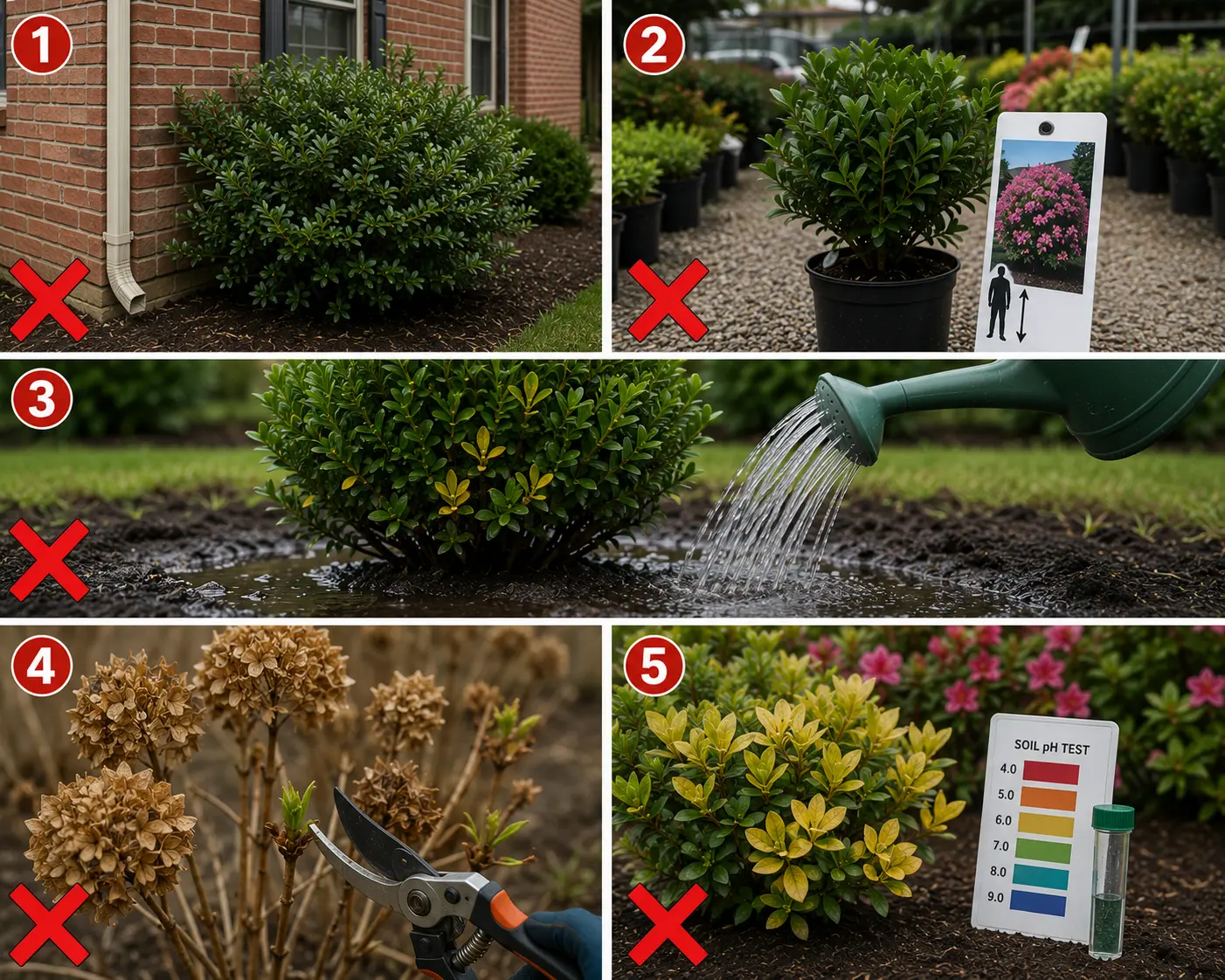
- Planting too close to the house — foundation shrubs need 3–4 ft (0.9–1.2 m) clearance from walls. Most people plant too close, then spend years fighting overgrowth.
- Buying without checking mature size — a ‘small’ shrub at the nursery can hit 15 ft in 10 years. Check the tag.
- Overwatering established shrubs — most shrubs tolerate drought better than wet feet. Root rot kills more shrubs than drought.
- Pruning bigleaf hydrangeas in fall or spring — you cut off the flower buds. Leave them alone except to remove dead wood.
- Ignoring soil pH — plant an azalea in alkaline soil and it turns yellow and dies slowly. Test pH before planting acid-loving shrubs.
Shrub vs Tree: What Is the Difference?
A shrub has multiple stems from the base. A tree has a single dominant trunk. The line blurs with multi-stem trees and large shrubs. Size alone doesn’t define the difference — some shrubs exceed 15 ft while some trees stay under 10 ft.
Some plants can be either depending on how they’re trained. Crape myrtles grow as large shrubs or small trees. Lilacs in zone 5 often act as shrubs but can become tree-like in zone 7.
For a deeper dive into multi-stem flowering plants that blur this line, see our guide to peony colors and types — tree peonies develop woody stems that persist year to year, similar to shrubs.
Frequently Asked Questions
What is the fastest growing shrub for privacy?
Arborvitae ‘Green Giant’ grows 3–5 ft (0.9–1.5 m) per year — the fastest of any reliable privacy shrub. Forsythia and viburnum also fill in quickly but offer less year-round screening because they’re deciduous.
What shrubs grow in full shade?
Rhododendron, mountain laurel, mahonia, kerria, and oakleaf hydrangea all grow in full or deep shade. Most flowering shrubs need at least 4 hours of sun to bloom well — shade-tolerant shrubs either bloom lightly or are grown primarily for foliage.
What shrubs stay small permanently?
True dwarf varieties like Bobo Hydrangea (2.5 ft), Tiny Wine Ninebark (3–4 ft), and dwarf mugo pine (3–5 ft) stay genuinely compact without heavy pruning. Avoid pruning ‘dwarf’ cultivars of large shrubs unless you want to fight the plant constantly.
Can shrubs survive in containers?
Yes. Dwarf shrubs survive in containers, but they need more watering (daily in summer), winter protection in zones 5 and colder (the roots are above ground and freeze more easily), and repotting every 2–3 years. Use containers at least 18 inches (45 cm) wide and deep for most shrubs.
How do I know if a shrub is evergreen or deciduous?
Check in January. If it has leaves, it’s evergreen. If it’s bare, it’s deciduous. At the nursery in spring both look similar — read the tag or ask.
Final Thoughts
Shrubs are the foundation of any well-designed garden. Get the type right — evergreen for structure, deciduous for seasonal drama, flowering for color, fruiting for wildlife, dwarf for tight spaces — and you’ll spend less time managing plants and more time enjoying them.
The best shrub is the one that fits your zone, your light conditions, and your space. Everything else is details.
Explore more plant guides on ZonedGarden to build a layered, four-season garden with the right plants for your specific conditions.