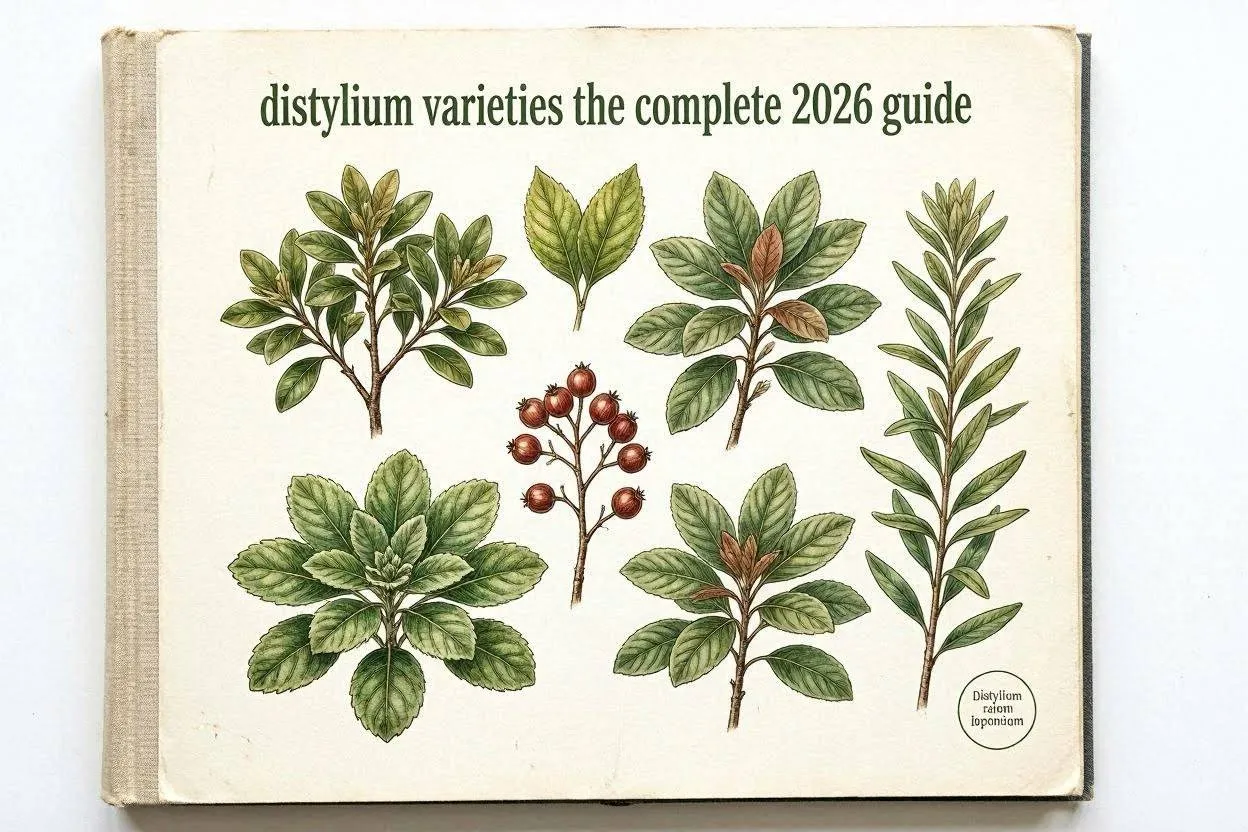
8 widely available distylium varieties grow across U.S. gardens in USDA Zones 6b–9: Vintage Jade, Coppertone, Blue Cascade, Cinnamon Girl, Linebacker, Emerald Heights, Bayou Bliss, and Swing Low. Each variety is a hybrid of 2 Asian species — Distylium racemosum and Distylium myricoides — developed by Dr. Michael Dirr at the University of Georgia and Plant Introductions Inc. in the late 1990s.
Distylium varieties are broadleaf evergreen shrubs in the Hamamelidaceae (witch hazel) family. They produce small reddish-maroon flowers from January through March — the only major landscape shrubs that bloom in mid-winter — and hold glossy foliage year-round in Zones 7–9. This guide gives you exact size data in feet and meters, zone-specific use cases, and a quick-reference table so you can match the right distylium variety to your landscape without guessing.
What Are Distylium Varieties and Why Are They Used?
Distylium varieties are compact, evergreen shrubs grown primarily as boxwood substitutes and low-maintenance foundation plants in warm-climate landscapes. All current commercial distylium hybrids descend from crosses between Distylium racemosum — native to Japan and China — and Distylium myricoides, which contributes the layered, horizontally arching branch structure that defines the genus’s distinctive look.
Gardeners in Zones 7–9 have moved away from boxwood, Indian hawthorn, and cherry laurel due to boxwood blight, boxwood leafminer, and other disease issues. Distylium fills that gap with no significant pest or disease damage recorded across any of the current commercial cultivars, high deer and rabbit resistance, and the ability to grow in full sun to part shade. The plants also tolerate wet soil and standing water, which makes them viable for rain gardens and low-lying landscape spots where boxwood fails within one season.
8 Distylium Varieties: Quick Comparison Table
The table below compares all 8 commercially available distylium varieties by mature size in feet and meters, USDA hardiness zones, new growth foliage color, best landscape use, and difficulty rating.
| Variety | Mature Size (H × W) | USDA Zones | New Growth Color | Best Landscape Use | Difficulty |
| Vintage Jade | 2 ft × 6–8 ft (0.6 m × 1.8–2.4 m) | 6b–9 | Glossy dark green | Groundcover, low border | Easy |
| Coppertone | 3–4 ft × 4–5 ft (0.9–1.2 m × 1.2–1.5 m) | 7a–9 | Copper-red to blue-green | Foundation, mass planting | Easy |
| Blue Cascade | 2–3 ft × 4–5 ft (0.6–0.9 m × 1.2–1.5 m) | 7a–9 | Purple-bronze to blue-green | Low hedge, accent | Easy |
| Cinnamon Girl | 2–3 ft × 4–6 ft (0.6–0.9 m × 1.2–1.8 m) | 6b–9 | Plum-purple to blue-green | Mass planting, compact hedge | Easy |
| Linebacker | 8–10 ft × 6–8 ft (2.4–3 m × 1.8–2.4 m) | 7a–9 | Red-orange to dark green | Privacy screen, tall hedge | Easy |
| Emerald Heights | 5–6 ft × 8–9 ft (1.5–1.8 m × 2.4–2.7 m) | 7a–9 | Dark green (consistent) | Mid-height hedge, border | Easy |
| Bayou Bliss | 3–4 ft × 3–4 ft (0.9–1.2 m × 0.9–1.2 m) | 7–9 | Blue-green new growth | Boxwood substitute, container | Easy |
| Swing Low | 2–3 ft × 3–4 ft (0.6–0.9 m × 0.9–1.2 m) | 7–9 | Fine-textured dark green | Edging, small spaces | Easy |
Compact Distylium Varieties for Foundation Planting and Borders
Vintage Jade Distylium — Best for Groundcover
Vintage Jade (Plant Patent 23,128, First Editions) is the most spreading distylium variety, reaching only 2 feet (0.6 m) tall but spreading 6–8 feet (1.8–2.4 m) wide at maturity. The growth habit resembles a wide, flat juniper more than a mounding shrub, with layered horizontal branches that hold glossy deep green foliage year-round.
Plant Vintage Jade in USDA Zones 6b–9 in foundation planting strips, along walkways, or on sloped banks where you need low-growing groundcover coverage. Winter flowers appear as small red clusters from February through March. Vintage Jade is one of 2 distylium varieties cold-hardy to Zone 6b — the other is Cinnamon Girl — making both the top choices for gardeners at the northern edge of the distylium cold-hardiness range.
Coppertone Distylium — Best for Year-Round Foliage Color
Coppertone (Plant Patent 25,304, First Editions) grows 3–4 feet (0.9–1.2 m) tall by 4–5 feet (1.2–1.5 m) wide with a rounded, mounding habit. New foliage emerges copper-red to bronze-purple in spring, then matures to blue-green — giving the plant 2 distinct seasonal foliage appearances on the same branches. Winter brings small red strappy flowers that hold on stems from January through March.
Grow Coppertone in USDA Zones 7a–9. The coppery new growth color is most vivid in a site with 4–6 hours of direct sun daily. In part shade, new growth still colors but the copper tone is less saturated. Coppertone makes an excellent foundation planting under low windows, massed in 3-foot (0.9 m) spacing along a driveway, or placed in containers as a patio specimen in Zones 8–9.
Blue Cascade Distylium — Best for Low Hedges
Blue Cascade (Plant Patent 24,409, First Editions) grows 2–3 feet (0.6–0.9 m) tall and 4–5 feet (1.2–1.5 m) wide with compact, spreading growth and dark blue-green foliage that holds its color all year. New growth in spring shows a bronze-reddish-purple flush before maturing to the characteristic blue-green. Plant Blue Cascade in Zones 7a–9 as a low, informal hedge, a front-of-border accent, or in mass plantings 3 feet (0.9 m) apart to form a dense, weed-suppressing groundcover.
Cinnamon Girl Distylium — Most Cold-Hardy Compact Variety
Cinnamon Girl (First Editions, also selected as 2023 Louisiana Super Plant by LSU AgCenter) grows 2–3 feet (0.6–0.9 m) tall by 4–6 feet (1.2–1.8 m) wide. New growth flushes plum-purple before maturing to blue-green — the most dramatic new-growth color display of any distylium variety. Small-leaf texture gives Cinnamon Girl a finer appearance than other hybrids.
Cinnamon Girl grows in USDA Zones 6b–9, matching Vintage Jade for cold hardiness at the northern limit. The compact spreading habit works well for mass plantings used as tall groundcover, low borders at 3–4 foot (0.9–1.2 m) spacing, and as a direct boxwood substitute in Zone 6b landscapes where boxwood blight pressure is high.
Mid-Size Distylium Varieties for Hedges and Screens
Emerald Heights Distylium — Best Mid-Size Variety
Emerald Heights grows 5–6 feet (1.5–1.8 m) tall by 8–9 feet (2.4–2.7 m) wide with a rounded, spreading habit and consistently dark green foliage. Emerald Heights differs from compact distylium varieties in that its new growth does not show significant copper or purple tones — the foliage remains dark green year-round. This predictable color makes Emerald Heights the best distylium variety for formal hedges and structured borders where uniform color is the priority.
Plant Emerald Heights in Zones 7a–9 at 5-foot (1.5 m) spacing for a dense mid-height privacy buffer along property lines, or at 6-foot (1.8 m) spacing for a natural-form screen. Emerald Heights fills the size gap between compact varieties like Coppertone and the largest upright variety, Linebacker, giving you a mid-height option for spaces that need more screening than a 4-foot mound but less height than an 8-foot hedge.
Bayou Bliss Distylium — Best Boxwood Alternative
Bayou Bliss (Southern Living Plant Collection) grows 3–4 feet (0.9–1.2 m) tall and wide with paired, evenly spaced leaves that give the shrub a structured, formal silhouette. Bayou Bliss produces the most symmetrical branching pattern of all distylium varieties, which makes it the most direct boxwood substitute for formal garden designs. New growth is blue-green without a strong copper or purple flush, giving the plant a consistent year-round appearance.
Plant Bayou Bliss in USDA Zones 7–9 as a clipped formal hedge, a symmetrical foundation planting on either side of an entryway, or in containers for patio and courtyard planting. The 3–4 foot (0.9–1.2 m) size fits foundation strips under most residential windows without obstructing views.
Large Distylium Varieties for Privacy Screens and Tall Hedges
Linebacker Distylium — Best for Tall Hedges and Screening
Linebacker (Plant Patent pending, First Editions) is the only distylium variety with a primarily upright, barrel-shaped growth habit. Linebacker reaches 8–10 feet (2.4–3 m) tall by 6–8 feet (1.8–2.4 m) wide — taller than wide at maturity, unlike every other distylium variety that grows wider than tall. New foliage is red-orange in spring before maturing to shiny dark green held year-round. Linebacker grows in Zones 7a–9.
Plant Linebacker in a single row at 5–6 foot (1.5–1.8 m) spacing as a tall privacy screen or security hedge. Linebacker replaces Japanese privet (wax-leaf ligustrum) and sweet viburnum in situations that need height and density without the invasive seed production those species cause in the South. This low-maintenance growth habit parallels the approach you find in other tough southern specimens like the ones covered in the Vitex tree care guide — full screening and structure with minimal annual input.
Swing Low Distylium — Best Fine-Textured Variety
Swing Low (First Editions) grows 2–3 feet (0.6–0.9 m) tall by 3–4 feet (0.9–1.2 m) wide with the finest leaf texture of any distylium variety. Leaves are smaller, more densely arranged, and have a distinctly bluish cast on dark green foliage. The overall appearance is more delicate than other hybrids. Swing Low grows in Zones 7–9 and works well for edging along walkways, small-space foundation plantings, and mixed borders where fine texture creates contrast against bold-leaved plants.
How to Choose the Right Distylium Variety for Your Landscape

To choose the right distylium variety, identify your available space first — mature width at full size determines spacing and position more than any other factor. Every distylium variety grows wider than standard nursery labels suggest when planted in full sun and given 5+ years in the ground.
Distylium Variety Selection by Space and Use
Foundation strips under windows under 3 feet (0.9 m) tall: choose Vintage Jade (2 feet / 0.6 m height), Swing Low (2–3 feet / 0.6–0.9 m), or Cinnamon Girl (2–3 feet / 0.6–0.9 m). Space these 4–5 feet (1.2–1.5 m) apart to allow mature spread without overcrowding in 5 years.
Foundation strips 3–5 feet (0.9–1.5 m) tall: choose Coppertone, Blue Cascade, or Bayou Bliss at 3–4 feet (0.9–1.2 m) height. Plant these 4–5 feet (1.2–1.5 m) apart. For gardeners in Zone 6b, Cinnamon Girl and Vintage Jade are the only 2 reliable cold-hardy options in this size range.
Mid-height privacy screens and hedges 5–6 feet (1.5–1.8 m) tall: choose Emerald Heights planted 5–6 feet (1.5–1.8 m) apart. This variety fills in as a dense informal screen within 3–4 growing seasons and reaches privacy height in the same time that slower alternatives like American holly or Nellie Stevens holly need just to establish.
Tall privacy screens 8–10 feet (2.4–3 m): choose Linebacker at 5–6 foot (1.5–1.8 m) spacing. In a warm climate with multiple invasive-tendency landscape shrubs to replace, Linebacker delivers the same year-round screening without the invasive seeding problems of Japanese privet or the cold-tender foliage issues of cherry laurel in cold-snap years. The same logic applies when you compare this planting strategy to how crape myrtle varieties are chosen by height and use case — size and function drive the selection first, aesthetics second.
How to Grow Distylium Varieties: Sun, Soil, and Watering
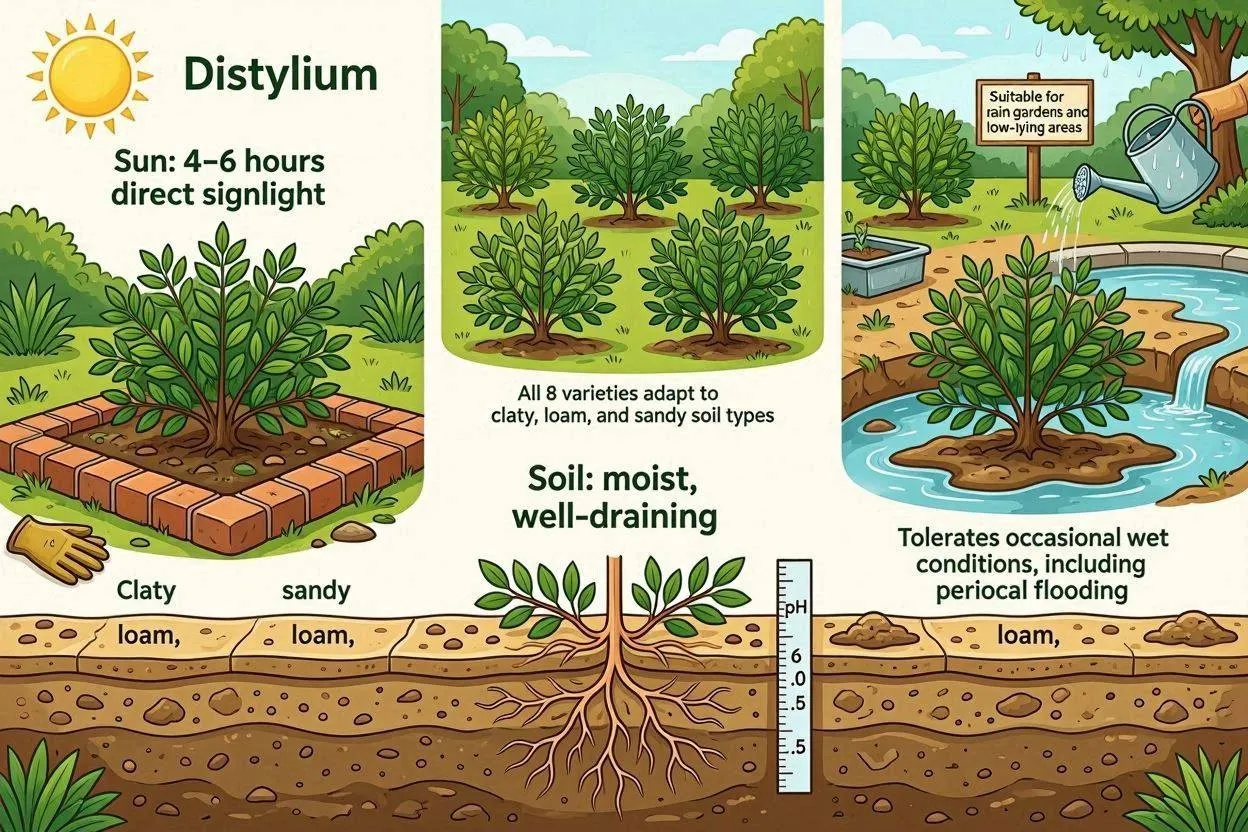
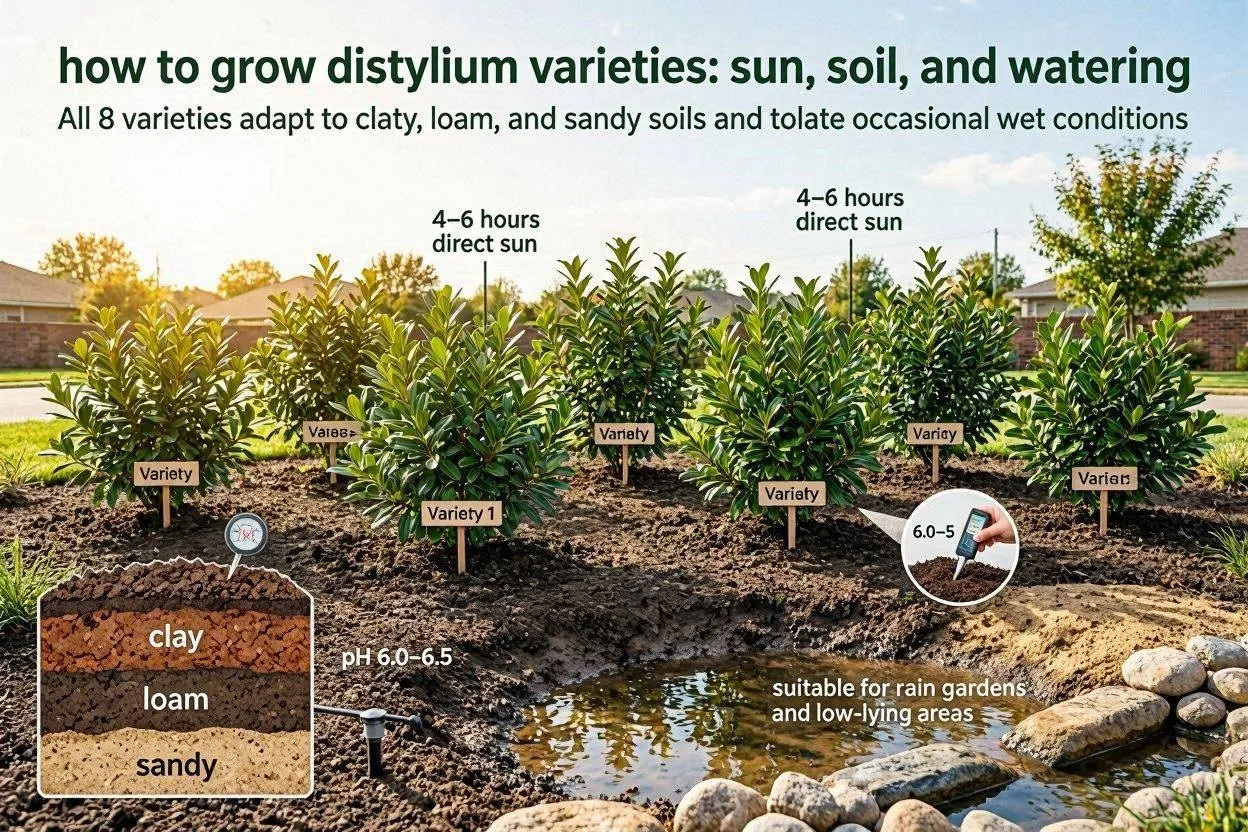
To grow distylium varieties successfully, plant in a site with 4–6 hours of direct sunlight and moist, well-draining soil with a pH of 6.0–6.5. All 8 varieties adapt to clay, loam, and sandy soil types and tolerate occasional wet conditions including periodic flooding, which makes distylium suitable for rain gardens and low-lying landscape areas.
Sun Requirements for Distylium Varieties
All distylium varieties grow in full sun to part shade. Full sun — 6+ hours of direct light daily — produces the most compact growth and the most vivid new-growth foliage color on copper-toned varieties like Coppertone and Cinnamon Girl. Part shade — 3–4 hours of direct light — produces acceptable growth but a looser, more open shrub form. Deep shade under tree canopies with fewer than 3 hours of sun results in weak, floppy stems and significantly reduced flower production.
Watering Distylium Varieties After Planting
Water newly planted distylium 2 times per week for the first 8–12 weeks after planting to establish the root system. Apply 1–2 gallons (3.8–7.6 liters) of water per session directly at the root zone, not over the foliage. After 12 weeks, reduce watering to once per week during the first summer. Established plants — those in the ground for 1 full growing season — tolerate drought without supplemental irrigation in Zones 7–9. Water established plants only during extended dry periods exceeding 3 consecutive weeks without rainfall.
How to Prune Distylium Varieties Without Damaging the Plant
To prune distylium varieties, tip prune in late winter immediately after flowering ends — February through March in most southern zones — or in early June to stimulate new growth and a denser canopy. Distylium does not require annual pruning to maintain health or flower production. Pruning is a shaping tool only.
Avoid pruning in late summer or fall. Late-summer cuts stimulate new growth that hardens off poorly before winter. In Zone 7 gardens, fall pruning on newly established plants causes dieback that reduces plant size and delays canopy fill-in by one full growing season. The same principle applies to other southern evergreen shrubs — check the winterize your garden guide for the complete fall task sequence that protects shrubs across all USDA zones.
Distylium tolerates heavy renovation pruning — cutting stems back by one-half to two-thirds — without dying. Renovation cuts are only needed if an older plant outgrows its space. Make renovation cuts in early spring before growth begins and expect one full growing season for the plant to recover its canopy density.
Distylium Varieties as Boxwood Alternatives: What Makes Them Different
Distylium varieties replace boxwood in landscapes primarily because boxwood faces 2 unmanageable threats in most of the American South and increasingly in the Mid-Atlantic: boxwood blight (Calonectria pseudonaviculata) and boxwood leafminer (Monarthropalpus flavus). Boxwood blight kills entire plants within one season. Leafminer causes chronic foliage damage that reduces the shrub to a sparse, unattractive shell over 3–5 years.
Distylium varieties show no susceptibility to boxwood blight, boxwood leafminer, or any comparable fungal or insect pest in documented field trials at Clemson University and Louisiana State University AgCenter. Distylium also tolerates soil conditions — including wet clay — that boxwood cannot survive. The 1 practical difference between boxwood and distylium is flower timing: boxwood flowers in spring and summer; distylium flowers exclusively in winter, January through March.
Frequently Asked Questions About Distylium Varieties
Are distylium varieties deer resistant?
Yes. All distylium varieties show high deer and rabbit resistance due to their tough, leathery evergreen foliage. No distylium variety is completely deer-proof during extreme food scarcity, but distylium withstands browsing pressure better than boxwood, Indian hawthorn, or azalea in regions with consistent deer activity.
Which distylium variety is best for Zone 6b?
Cinnamon Girl and Vintage Jade are the 2 distylium varieties rated to Zone 6b — the coldest zone any current distylium hybrid survives reliably. Both tolerate winter lows of 0°F to -5°F (-18°C to -21°C) without root damage in established plants. All other distylium varieties are rated Zone 7a or warmer, where winter lows stay above 0°F (-18°C).
Can distylium varieties grow in wet or clay soil?
Yes. All distylium varieties tolerate wet soil, periodic flooding, and heavy clay without root rot or foliage decline. This soil tolerance is one of the key advantages over boxwood, which dies in wet clay within a single season. For best results, plant distylium in a site where excess water drains within 24 hours — prolonged standing water lasting more than 72 hours reduces growth rate even in wet-tolerant cultivars.
Do distylium varieties need fertilizer?
No, not routinely. Apply a balanced slow-release fertilizer (10-10-10 or 12-4-8) once in spring — March or April in most zones — to support new growth and maintain foliage density. Skip fertilizer in the first year after planting if the soil was amended with compost at planting time. Over-fertilizing with high-nitrogen products produces excessive soft growth that increases disease susceptibility and reduces foliage compactness.
Can distylium varieties grow in containers?
Yes. Compact varieties — Bayou Bliss, Swing Low, Blue Cascade, and Cinnamon Girl — grow in containers with a minimum 15-gallon (57-liter) volume with drainage holes. Container-grown distylium dries out 2–3 times faster than ground-planted shrubs and needs watering every 3–4 days in summer. In Zone 7, move containers to a sheltered, unheated garage or shed during hard freezes below 10°F (-12°C) — container roots freeze at temperatures that in-ground roots tolerate easily.
Choosing the Right Distylium Variety for Your Garden
The 8 distylium varieties cover every landscape size category from the 2-foot (0.6 m) spreading groundcover of Vintage Jade to the 10-foot (3 m) upright screen of Linebacker. Choose by space and function first: compact growers for foundation strips and low borders; mid-size varieties for informal hedges and mass plantings; and Linebacker for tall privacy screening. Filter by cold hardiness second — Zone 6b gardeners have 2 reliable options (Cinnamon Girl, Vintage Jade), while Zone 7a–9 gardeners can grow all 8 varieties.
Plant all distylium varieties in well-draining soil with a pH of 6.0–6.5, water 2 times per week for the first 8–12 weeks, and tip prune only after winter bloom ends in March if shaping is needed. No other regular maintenance is required. Distylium’s zero-pest record, deer resistance, and winter bloom window make it the most practical broadleaf evergreen alternative for foundation planting, hedging, and mass planting in Zones 6b–9.